
Journalist

Lee Jaeho
-
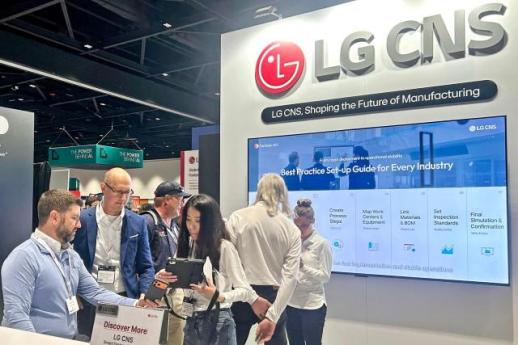 LG CNS pushes AI-powered smart factory platform into North America SEOUL, May 20 (AJP) - LG CNS announced it has stepped up efforts to expand its artificial intelligence-driven smart factory business in North America, positioning its proprietary Factova platform as a gateway for small and mid-sized manufacturers seeking to automate production lines. The IT services arm of South Korea's LG Group said Wednesday that it was the only Korean firm to exhibit at IoT Tech Expo 2026 in San Jose, California, held from Monday to Tuesday, an event that draws about 8,000 industry professionals and roughly 200 global technology and manufacturing companies. This year's lineup included IBM, SAP and Deloitte as exhibitors, with Nvidia and Schneider Electric featured as conference speakers. At the booth, LG CNS showcased Factova MES, a modular manufacturing execution system that uses AI to collect and analyze shop-floor data in real time, alongside Factova Control, an equipment integration solution already deployed across more than 100,000 machines at manufacturing sites in Korea and abroad. The company said the tools cut inefficiencies in production and enable predictive maintenance by flagging anomalies in motor current, temperature and vibration before failures occur. LG CNS also unveiled AI offerings tailored for high-precision industries such as semiconductors, displays, aerospace and medical devices, along with a Gen AI safety and environment service that lets field workers report incidents through smartphone photos and voice memos for automatic logging and response guidance. "Backed by smart factory expertise and AX capabilities accumulated at large-scale manufacturing sites, we are accelerating our push into the North American market," said Shin Jae-hoon, head of LG CNS' smart factory division, adding that the company aims to bring AI-driven factory intelligence within reach of small and mid-sized manufacturers. 2026-05-20 10:36:29
 -
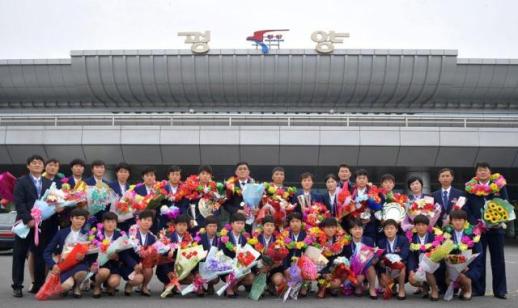 North Korean footballers get hero's welcome home after record fifth Asian Cup title SEOUL, May 20 (AJP) - Young North Korean footballers received a hero's welcome as they returned home after winning the Asian Football Confederation (AFC) U-17 Women's Asian Cup, state media reported on Wednesday. North Korea beat Japan 5-1 in the final in Jiangsu, China last Sunday to win the biennial tournament for a record fifth time, successfully defending the title it won in Indonesia in 2024. According to the state-run Korean Central News Agency, the players were "greeted with flower garlands and bouquets" at Pyongyang International Airport by senior party officials, sports officials, their family members and others upon their arrival the previous day. They then rode in a flower-decorated bus through the main streets of Pyongyang, greeted by large crowds waving and cheering as it passed. The country's official newspaper Rodong Sinmun also reported that streets in Pyongyang were filled with "joy and excitement." Meanwhile, players from North Korea's Naegohyang Women's Football Club, currently in South Korea, are set to face Suwon FC Women in the semifinal of the AFC Women's Champions League in Suwon, Gyeonggi Province later in the day. Their visit marked the first time a North Korean team had traveled to South Korea for a sporting event in seven years and five months, since the International Table Tennis Federation World Tour Grand Finals in Incheon in December 2018. But North Korean media have remained mum on their visit. 2026-05-20 10:05:15
 -
 ASIA DEEP INSIGHT: Korea-Japan shuttle diplomacy evolving to civilian-led partnership Andong in May 2026 was not merely a provincial Korean city. It became a symbolic stage in the diplomatic history of Northeast Asia. Under the evening winds of Hahoe Village and the cascading sparks of the traditional Seonyu Julbulnori fire ritual, President Lee Jae-myung and Prime Minister Sanae Takaichi sent a message to the world that extended far beyond the formalities of another summit meeting. It was, in essence, a declaration that relations between South Korea and Japan are beginning to move beyond an era defined primarily by historical grievance and emotional confrontation toward one shaped by strategic coexistence and shared prosperity. The summit revolved around five central themes: institutionalizing cooperation in supply chains and energy security; firmly establishing shuttle diplomacy; expanding collaboration in artificial intelligence and advanced technologies; deepening civilian-led exchanges in culture and tourism; and managing historical disputes while building a future-oriented partnership. What made this meeting particularly consequential was the international context in which it unfolded. The Middle East remains unstable. Risks surrounding the Strait of Hormuz continue to threaten global energy markets. Strategic rivalry between the United States and China is intensifying. Russia, China, and North Korea are drawing closer together. In such a world, Seoul and Tokyo can no longer afford to conduct diplomacy through the lens of historical emotion alone. The era now emerging is one of overlapping crises, where energy, supply chains, finance, technology, and security are inseparably intertwined. When President Lee spoke of “a peaceful Korean Peninsula with no need to fight,” and Prime Minister Takaichi emphasized “the free and secure navigation of the Strait of Hormuz,” these were not rhetorical flourishes. They reflected a sober recognition that Northeast Asia and the broader Indo-Pacific are entering a period of profound instability. The world today is moving into three simultaneous conflicts. The first is military conflict. The wars in Ukraine and the Middle East have already entered prolonged phases. The second is technological conflict. Competition over artificial intelligence, semiconductors, quantum computing, and space technology has evolved into a new form of industrial Cold War between Washington and Beijing. The third is the conflict over supply chains. LNG, crude oil, rare earth minerals, food security, and battery materials are no longer simply economic concerns; they have become pillars of national survival. In such an environment, South Korea and Japan are too deeply interconnected economically to remain trapped in perpetual confrontation. South Korea possesses strengths in memory semiconductors, batteries, shipbuilding, and advanced manufacturing. Japan remains dominant in materials, components, precision engineering, and foundational industrial technologies. The two nations compete fiercely, yet they are also profoundly interdependent. Serious disruption in one economy would inevitably reverberate through the other. One of the most significant aspects of this summit was the discussion of LNG and crude oil swap arrangements. This was not merely a conversation about energy transactions. It represented the early architecture of a Korea–Japan energy security framework. Japan possesses one of the world’s most sophisticated LNG storage and strategic reserve systems. South Korea maintains globally competitive refining, petrochemical, and shipbuilding infrastructure. If the two countries institutionalize emergency energy-sharing and joint reserve mechanisms, they could substantially mitigate shocks arising from instability in the Middle East. More importantly, the summit hinted at the emergence of a broader Asian supply-chain order. Prime Minister Takaichi’s proposal to deepen resource cooperation with other Asian nations was strategically significant. Implicit within it was the vision of a wider economic-security network linking South Korea, Japan, ASEAN, India, and Australia. At the same time, the geopolitical environment is changing rapidly. American leadership is no longer as stable or predictable as it once was. The second administration of President Donald Trump has embraced an unapologetically transactional form of nationalism. China continues to expand both its economic and military reach. Russia is deepening strategic coordination with Beijing, while North Korea accelerates its nuclear and missile capabilities. Under these circumstances, sustained hostility between Seoul and Tokyo would become a strategic burden for both sides. In this sense, the summit in Andong was diplomacy driven less by idealism than by survival. Previous Korea–Japan summits were often consumed by emotional confrontation over historical memory. This summit, by contrast, was conducted in the language of energy security, supply chains, artificial intelligence, and regional stability. That distinction matters. Equally significant was the summit’s emphasis on regional diplomacy. For decades, Korea–Japan diplomacy revolved almost exclusively around Seoul and Tokyo. This time, however, the diplomatic stage expanded to Andong and Nara, the hometowns of the two leaders. That was more than symbolism. It suggested a transition from capital-centered diplomacy toward diplomacy rooted in local culture, regional identity, and everyday human exchange. Annual people-to-people exchanges between the two countries have already reached approximately 13 million visits. Younger generations increasingly view the neighboring country not primarily as a historical adversary, but as a space of travel, culture, employment, entrepreneurship, and creativity. K-pop and Japanese animation, Korean dramas and Japanese hot-spring culture, Korean digital platforms and Japanese craftsmanship are more likely to converge than collide. That is why Korea–Japan relations must now evolve beyond state-centered diplomacy into a civilian-led community of economy, culture, and tourism. The possibilities are extensive: a Northeast Asian tourism belt connecting Busan, Fukuoka, Osaka, and Jeju; joint AI startup funds; youth entrepreneurship exchanges; Korea–Japan semiconductor graduate institutes; and even cooperative space-development projects. Europe overcame centuries of war to build the European Union. Northeast Asia may not replicate that model directly, but it can begin with practical economic and cultural cooperation. President Lee’s emphasis on artificial intelligence cooperation was particularly important. AI is not simply another industry. It is a foundational technology that will shape the future balance of civilization itself. The United States dominates platforms and capital. China commands scale and manufacturing capacity. South Korea and Japan, by combining technology, manufacturing precision, culture, and content, could help construct an alternative Northeast Asian model for the AI age. Korean semiconductor expertise paired with Japanese materials and equipment technologies could become globally competitive at the highest level. Moreover, the AI era will require new forms of cooperation in digital ethics, privacy protection, and transnational cybercrime prevention. The summit’s discussion of coordinated responses to cross-border scam crimes reflected the beginning of that transition. Yet formidable obstacles remain. Historical disputes continue to represent the most volatile fault line in Korea–Japan relations. The issues of wartime labor, the comfort women tragedy, and the Dokdo/Takeshima territorial dispute could easily resurface. Historical revisionism within segments of the Japanese right also remains a serious concern. At the same time, anti-Japanese sentiment is still periodically exploited within South Korean domestic politics. But the time has come for both countries to move from the politics of resentment to the politics of survival. This does not mean forgetting history. On the contrary, genuine remembrance requires the wisdom to build a future beyond endless hostility. The Confucian principle of yeokjisaji — placing oneself in the position of the other — and the broader East Asian diplomatic tradition of qiú tóng cún yì (“seeking common ground while preserving differences”) offer a more sustainable path forward. South Korea, too, must engage in honest self-reflection. Conservatives have sometimes minimized historical grievances in the name of security cooperation, while progressives have at times instrumentalized anti-Japanese sentiment for domestic political purposes. A more mature balance is now required. Historical issues must be addressed with principle, but not transformed into endless cycles of emotional mobilization. Economic and technological cooperation must be approached as questions of long-term national survival. Youth exchanges should be elevated to the level of national strategy. Local governments and private enterprises must deepen practical collaboration. Shared frameworks for AI governance, digital ethics, and data protection should be institutionalized. Most importantly, genuine reconciliation cannot be achieved solely through summit diplomacy. It must emerge gradually through the daily experiences of ordinary citizens — through tourism, food, sports, art, scholarship, and friendship. Over time, such exchanges become the strongest foundations for peace. There is also a deeper dimension that deserves attention. The future of Korea–Japan relations cannot be sustained by economics and security alone. It must also engage the spiritual and civilizational traditions of both nations. Japan possesses the tradition of Shinto. Unlike Christianity or Buddhism, Shinto is not centered upon a single canonical scripture. Rather, its worldview has been shaped through texts such as the Kojiki, the Nihon Shoki, and ancient ritual prayers known as norito. Through these traditions, Japanese civilization cultivated a profound respect for nature, ancestry, and communal harmony. Korea, meanwhile, preserves the philosophical legacy of the Cheonbu-gyeong. Its vision of harmony between heaven, earth, and humanity has deeply influenced Korean ideas of communal ethics and the spirit of Hongik Ingan — the ideal of benefiting humanity broadly. The spiritual traditions of the two nations are not identical. Yet both ask fundamentally similar questions: How should human beings live in harmony with nature? How should communities coexist without destroying one another? Historically, Korea and Japan were never connected solely through conflict. The exchanges between Baekje and ancient Japan, the transmission of Buddhism and Chinese characters, architectural influences, ceramics, music, industrial knowledge, and modern cultural interactions all testify to centuries of mutual influence. The challenge today is not to erase history, but to confront it honestly while refusing to remain imprisoned by it. Japan must rediscover the Shinto tradition’s respect for nature and communal balance in modern form. Korea must reinterpret the harmonizing philosophy of the Cheonbu-gyeong and the spirit of Hongik Ingan for the AI era. On that foundation, the two countries can cooperate in semiconductors, artificial intelligence, energy security, tourism, youth exchange, and regional diplomacy. That is why the summit in Andong carried significance far beyond protocol. It posed a larger civilizational question: can Korea and Japan move from the emotional burdens of the past toward the shared construction of a future? The sparks of Andong’s traditional Julbulnori fire ritual scatter briefly across the river before reconnecting in streams of light. In many ways, that image captures the history of Korea and Japan themselves. The two nations have often drifted apart through conflict and pain, yet geography, history, economics, and culture continue to draw them back together. The transformations reshaping the world are now too immense for either country to remain trapped in inherited antagonisms. In the age of AI revolution, supply-chain warfare, energy insecurity, and intensifying great-power rivalry, Seoul and Tokyo face a historic choice: remain prisoners of the past, or become co-architects of a shared future. The summit in Andong did not fully answer that question. But it began, cautiously yet unmistakably, to move in that direction. Shuttle diplomacy must now become more than a diplomatic mechanism. It must evolve into a platform for Northeast Asian coexistence and shared prosperity. And at the center of that transformation must stand not governments alone, but citizens; not ideology, but future generations; not resentment, but the long work of civilization itself. *The author is a senior columnist of AJP 2026-05-20 09:18:12
 -
 Samsung Live: Samsung faces 'D-Day' as last-ditch labor talks spilled over into execution eve SEOUL, May 20 (AJP) - Samsung Electronics and its largest labor union will head back to the negotiating table on Wednesday morning after grueling, marathon talks failed to reach a breakthrough overnight, leaving the tech giant just hours away from a historic full-scale strike. The closed-door session is scheduled to reconvene at 10 a.m. at the National Labor Relations Commission (NLRC) in Sejong, marking the third round of post-mediation talks. The immediate eve-of-strike meeting comes after Tuesday's session stretched for over 14 hours, spilling past midnight before arbitrators called a recess at 12:30 a.m. on Wednesday. The fate of the dispute now hinges heavily on management's next move. NLRC Chairman Park Soo-keun revealed early Wednesday that while multiple bones of contention exist, the two sides failed to agree on the single most critical issue. Park noted that Samsung management is expected to present its finalized, comprehensive stance when the meeting resumes. The final scenario is clear-cut: if Samsung accepts the NLRC's ultimate compromise proposal, a tentative agreement will be reached, which the union will then put to a member vote. However, if management rejects the proposal, or if the union membership subsequently votes it down, the unprecedented 18-day walkout involving up to 50,000 workers will officially commence on Thursday, May 21. Due to the ticking clock and the need for subsequent voting procedures, Wednesday's session is expected to wrap up swiftly by late morning or early afternoon. The South Korean government remains on high alert, having previously hinted at the potential invocation of its rare "emergency adjustment powers" to legally freeze the strike should the final talks collapse and threaten the national economy. 2026-05-20 07:06:26
 -
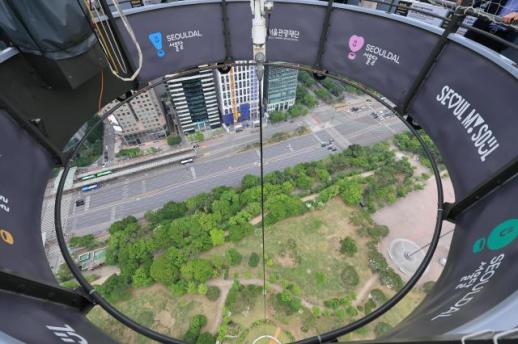 Rides to see and feel Seoul by water and sky SEOUL, May 19 (AJP) - The Han River has always cut Seoul in two. Rising from the Taebaek Mountains and emptying into the Yellow Sea, it served for millennia as Korea's commercial artery — grain barges, merchant boats, wartime supply lines threading through the heart of the peninsula. Then the expressways came, the subway came, and the river was quietly pensioned off into a parkland backdrop while the roads above filled up and stayed that way. Anyone who has sat on the Olympic-daero at 8 a.m. watching the minutes tick by knows exactly how that arrangement has worked out. Last September, Seoul decided the river had been idle long enough. The Hangang Bus — Seoul's new water transit service — connects seven docks stretching from Jamsil in the east to Magok in the west, running hybrid-electric vessels along a route that doubles, depending entirely on your disposition, as either a commute or a sightseeing cruise. The full end-to-end journey runs about 75 minutes; an express service linking Magok, Yeouido and Jamsil cuts that to around 54. The adult fare is 3,000 won — teenagers pay 1,800 won, children 1,100 won — and the service integrates with Seoul's T-money transit system and Climate Card, meaning you can transfer from the subway and barely notice the seam. Getting here wasn't entirely smooth sailing. The project was announced in late 2023, a joint operating company was incorporated in mid-2024, and most of 2025 was spent in trial runs and regulatory preparation before commercial operations finally began on September 18. Since then, more than 270,000 passengers have climbed aboard — enough to suggest that Seoul was, in fact, ready for this. On a Tuesday morning at Jamsil Dock, the floating terminal had the low-key energy of a platform unsure whether it was transit or tourism and had decided, sensibly, not to choose. Passengers stood with paper tickets and transit cards. Some looked out toward the water. The boat arrived at 9:45 with no particular fanfare, and by 10 a.m. it had slipped away from the dock without a horn or a whiff of diesel — just the city, suddenly visible on both sides at once. That, it turns out, is the whole trick. From the middle of the Han, Seoul reorganizes itself. The south bank presents its polished face: gleaming high-rises, newly built riverside towers, the architectural confidence of a city that has decided it likes what it's become. The north bank is quieter — older residential areas, large apartment complexes sitting less showily along the water. Most Seoulites see the river from one shore. From the Hangang Bus, you're the center line. The bridges overhead become landmarks rather than obstacles; the gaps between them, brief windows of open sky. The boat itself is closer to a commuter ferry than a leisure cruise. Seats are arranged in rows, a small snack counter divides the fore and aft sections, and an electronic display up front shows current location, weather, temperature and fine dust levels. Life jackets and emergency equipment line the floating gangway. It is, in other words, properly set up — neither a tourist novelty rigged for Instagram nor a purely functional workhorse. Somewhere usefully in between. Passing under Banpo Bridge, a sign read "7.75m." The concrete span filled the view for a long moment. The boat passed beneath with the unhurried confidence of something that does this every few hours and has stopped thinking about it. On board, the mood divided neatly between pragmatists and romantics. Lee Nu-rim, a 21-year-old soldier on leave, was using the service as an actual commute. He'd spotted it through a social media advertisement and realized his route home happened to match the Apgujeong-to-Yeouido leg. "It felt like I could enjoy the Han River and get home at the same time," he said. He probably wouldn't take it every day, he admitted — partly because not all vessels have the upper deck seen in promotional materials, and seats fill quickly — but the fact of it clearly pleased him. Foreign visitors skipped the ambiguity entirely and called it what it looked like. Kei, 32, from the UK, said it was "lovely" to travel by river through a new city — visitors usually move through streets and landmarks, he noted, and rarely get time to slow down and take the water in. Anna, 29, from Mexico, was quietly amazed by the price. "In my country, something like this would cost much more," she said, which is almost certainly true of most countries. Cristtel, 45, also from Mexico, put the whole proposition most cleanly: "People are used to moving fast now, so maybe it is not for everyone's daily commute. But if you are not in a rush and want to enjoy the scenery, this is exactly right." She could have written the brochure. Seoul Tourism could do worse than to hire her. By the time Yeouido came into view — the golden 63 Building catching the morning light and throwing it in long streaks across the water, doing what old landmarks do when they want you to remember them — the 70-minute ride had accomplished something Seoul's subway system, for all its legendary frequency and coverage, structurally cannot: it had slowed the city down. At nearby Yeouido Park, another novel ride in Seoul was waiting. Between KBS and the financial district, a giant white sphere stood over the grass. The words “SEOUL MY SOUL” and a smiling face were printed on its surface. From a distance, it looked like a piece of city branding. Up close, it resembled a childhood amusement park ride enlarged to an almost unreal scale. This was SEOULDAL, a tethered helium balloon that rises up to 130 meters above Yeouido. The official materials describe it as a 22-meter-wide full-moon-shaped gas balloon. Each ride takes about 15 minutes from boarding to landing, with a maximum capacity of 20 passengers depending on weather conditions. The adult fare is 25,000 won. Before boarding, staff explained the safety rules. The balloon cannot operate in poor weather or strong winds. That explanation felt abstract on the ground. It became much more concrete once the door closed. The passenger platform was shaped like a doughnut, open to views on all sides. That meant the ground was visible almost everywhere. For anyone afraid of heights, the design was not entirely comforting. As the balloon began to rise, the sound of heavy metal cables and machinery replaced the noise of the park below. The safety briefing that had sounded reassuring minutes earlier suddenly disappeared from memory. The plan to calmly film the view from above also faded quickly as sweaty hands gripped the railing. About five minutes later, the operator announced that the balloon had reached its highest point and that passengers could move around to enjoy the view. Only then did the city become visible again. The National Assembly building, the bridges over the Han River and the cars moving along Yeouido’s roads all looked unexpectedly small. Buildings that dominate the skyline from the ground appeared like miniatures. The river stretched out below, and the city, usually too close and too busy to take in, briefly became something that could be seen from a distance. For foreign tourists, Seoul Dal has already become searchable as a destination. Seoul Tourism Organization materials say foreign passengers account for about 44 percent of Seoul Dal riders. Milita, 34, and Carsten, 31, from Germany, had found the balloon through a travel app KLOOK, where it appeared as a recommended place to visit. They had arrived in Korea just one day earlier and were beginning a two-and-a-half-week trip that would take them from Seoul to Jeju, Busan and back to Seoul. The two had ridden hot air balloons before, but said this was their first time on a tethered helium balloon. They were looking forward to “seeing the city buildings from above,” they said. Seoul runs fast. It has always run fast. The transfers, the countdowns, the twelve-lane arterials — the entire urban rhythm is calibrated to velocity. The Hangang Bus and SEOULDAL offer very different experiences. One moves slowly across the river. The other lifts passengers vertically into the sky. But both change the usual angle from which people see Seoul. But the Han was never really about speed. For most of its history it moved goods and people at the pace the current allowed, and the city arranged itself around that. The expressways changed the equation. The Hangang Bus, in its modest, 3,000-won way, is suggesting it might be time to revisit the terms. The city is often experienced at speed — through subway transfers, road traffic, office towers and crowded sidewalks. On the river, that speed slows down. In the sky, the city briefly becomes small enough to observe. Travel Tip The Hangang Bus operates across seven docks from Magok to Jamsil, with stops at Mangwon, Yeouido, Apgujeong, Oksu and Ttukseom. Adult fare 3,000 won; youth 1,800 won; children 1,100 won. T-money transfers and Climate Card accepted. From March 2026, eastern (Jamsil–Yeouido) and western (Magok–Yeouido) routes operate as separate services — check timetables at the Hangang Bus website before boarding. 2026-05-19 21:29:52
 -
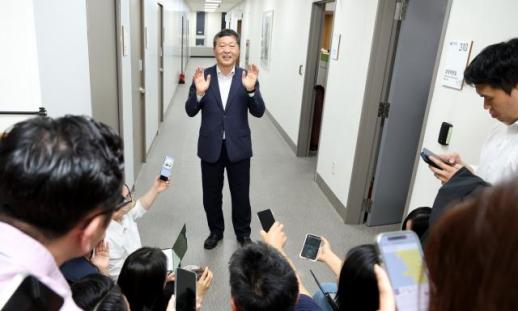 Samsung Live: Govt to mediate if talks fail in settlement by 10 p.m. SEOUL, May 19 (AJP) -The South Korean government is ready to put up its mediation version if Samsung Electronics Co. and its largest labor union fail to reach a wage agreement by 10 p.m. as it endeavors to stop a potentially disruptive strike at the world’s largest memory chipmaker planned for Thursday. "We will see if the management and union come to a settlement by around 10 p.m., and it will be decided whether an agreement is reached or whether a mediation is necessary,” Park Soo-keun, chairman of the National Labor Relations Commission (NLRC), told reporters during the second round of post-mediation talks. Park said that if management accepts a compromise proposal after internal review, the union must still put the deal to a membership vote. “If the proposal is rejected in the vote, the union would proceed with a strike,” he said. Park also signaled that the commission itself would step in with a formal mediation proposal should management refuse to accept a negotiated compromise. Under South Korea’s post-mediation process, the NLRC may present a compromise proposal combining elements from both sides if direct negotiations fail. But if either labor or management rejects the proposal, talks collapse — a scenario that could sharply raise the likelihood of a strike. Samsung Electronics Co. and its largest labor union resumed government-led wage mediation Tuesday, with the looming possibility of reaching a last-minute deal to avert an 18-day strike scheduled to begin Thursday. The renewed negotiations came days after the first round of mediation ended without an agreement, as the two sides remained divided over performance-based bonuses tied to booming artificial intelligence-related semiconductor earnings. “Both labor and management are making concessions,” Park said earlier in the day, adding that one or two key issues remained unresolved. Labor and management remain sharply split over how to structure bonuses during the ongoing global memory chip supercycle. Samsung has proposed maintaining the current excess profit incentive system while allowing the bonus pool to be calculated based on 10 percent of operating profit. The company also proposed introducing a separate special compensation framework to create a more flexible incentive structure. The union, meanwhile, is demanding fixed performance bonuses equivalent to 15 percent of the semiconductor division’s operating profit and the removal of payout caps. The two sides have reportedly narrowed differences on eliminating the current bonus ceiling set at 50 percent of annual salary, according to industry sources. However, disagreements remain over whether bonuses should also be distributed to loss-making business units and whether any revised framework should be formally institutionalized. The union has reportedly proposed allocating 70 percent of the semiconductor bonus pool across the entire division, while distributing the remaining 30 percent based on individual business unit performance. Management, however, argues that such a structure could reward loss-making divisions and weaken the company’s performance-based compensation principles. 2026-05-19 20:27:26
 -
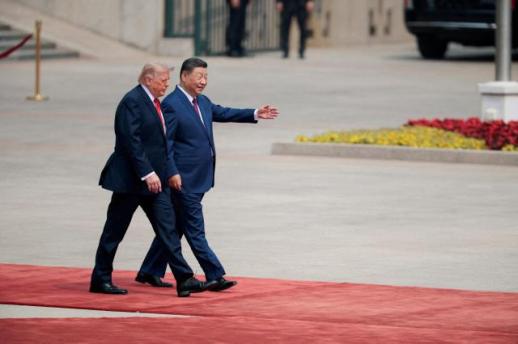 ASIA DEEP INSIGHT: The Curtain has risen on the great U.S.-China AI war The U.S.-China summit held in Beijing in May 2026 appeared calm on the surface. President Donald Trump and President Xi Jinping projected an image of management rather than confrontation. In the aftermath of the meeting, both sides reiterated the familiar diplomatic line that “dialogue will continue,” and financial markets responded with a measure of cautious relief. Yet the true significance of this summit lay far beyond the choreography of diplomacy. What unfolded in Beijing was, in effect, the formal opening act of a new era of geopolitical rivalry centered on artificial intelligence, semiconductors, energy, manufacturing, supply chains, data and digital platforms. If the Cold War between the United States and the Soviet Union was defined by nuclear weapons, the emerging struggle between Washington and Beijing is increasingly being defined by AI and semiconductor supremacy. Perhaps the most symbolic moment of the summit came before the talks even began. President Trump reportedly made a stop en route to China in order to bring Nvidia chief executive Jensen Huang aboard Air Force One. This was not a mere anecdote. It revealed where Washington’s strategic priorities now truly lie. Elon Musk, Tim Cook and other leading figures from the American technology industry were already part of the economic delegation. Yet the last-minute inclusion of the world’s most influential AI chip executive underscored a deeper reality: advanced semiconductors are no longer simply commercial products. They have become instruments of national strategy. The global AI race is now fundamentally about who can secure the largest supply of AI accelerators, build the most powerful AI data centers and process the greatest volume of data at scale. Artificial intelligence is no longer a narrow software industry. It is rapidly becoming the operating infrastructure of modern civilization itself, linking together energy systems, semiconductor manufacturing, cooling technologies, cloud networks and industrial automation. During the summit, Xi Jinping invoked the notion of the “Thucydides Trap,” warning that the world had reached a historic crossroads. This was not a casual historical reference. It was a carefully calibrated strategic signal directed at Washington. Beijing was effectively cautioning that continued military, economic and technological pressure against China could push both powers into a destabilizing cycle of confrontation. At the heart of China’s thinking lies what may be described as the framework of the “Three Ts”: Taiwan, Trade and Technology. On Taiwan, Beijing made unmistakably clear that it would not retreat from what it views as a core sovereignty issue. Any significant escalation of American military involvement in the Taiwan Strait, from China’s perspective, risks becoming the direct trigger for a major geopolitical collision. On trade, China no longer sees itself merely as the world’s low-cost factory. In sectors such as electric vehicles, batteries, solar energy, drones, telecommunications equipment and portions of the AI ecosystem, Chinese firms have already become globally competitive. Washington’s attempt to restrict China’s rise increasingly carries the unintended consequence of limiting American companies’ own access to one of the world’s largest markets. Technology, however, was the true center of gravity of the summit. For years, the United States has attempted to slow China’s AI advancement through export controls on semiconductor manufacturing equipment and advanced AI chips. Yet China’s drive toward technological self-reliance has accelerated far more rapidly than many in Washington anticipated. Huawei stands as the clearest example. Once viewed primarily as the target of American sanctions, the company has instead become a symbol of China’s determination to build an indigenous technology ecosystem. Through its Ascend AI processors and CloudMatrix architecture, Huawei is attempting to construct a distinctly Chinese AI infrastructure. To be sure, Nvidia’s H200 and next-generation Blackwell systems still maintain substantial advantages in raw chip performance, memory bandwidth, power efficiency and software ecosystems. But China has adopted a different strategic philosophy. Rather than competing chip by chip, Beijing is increasingly focused on scaling systems by clustering hundreds or thousands of processors together to maximize overall computational throughput. In simple terms, China’s strategy prioritizes scale over elegance. Even at the cost of lower efficiency and higher power consumption, Beijing is willing to deploy enormous state-backed capital to achieve strategic autonomy. More importantly, China’s ambitions extend far beyond consumer-facing AI chatbots. Beijing aims to integrate AI across the entirety of industrial civilization itself — what Chinese strategists increasingly describe as manufacturing AX, or AI transformation. From automobile production and robotics to logistics, ports, smart grids, industrial automation and defense systems, AI is being embedded into the physical economy. This is not merely industrial upgrading. It is an attempt to redefine the architecture of modern industry. Equally significant is the issue of cost. Chinese AI firms are rapidly driving down the cost of AI inference and token generation through a combination of state subsidies, inexpensive infrastructure, abundant data and aggressive optimization. This dramatically lowers the barrier for Chinese startups and manufacturers to deploy AI at scale. The United States, of course, remains the world’s dominant AI superpower. Nvidia, OpenAI, Google, Microsoft, Amazon and Meta continue to lead the world in advanced AI models, semiconductor design, cloud infrastructure and global digital platforms. Yet Washington faces a growing strategic dilemma. China remains too large a market for American technology firms to ignore. The more aggressively the United States tightens export restrictions, the more rapidly China accelerates domestic substitution. Over time, this could produce a scenario in which American firms find themselves structurally excluded from the Chinese market altogether. That, ultimately, may be the scenario Jensen Huang fears most. Today, Nvidia remains indispensable. But if China succeeds in building a sufficiently mature domestic AI ecosystem, future generations of Chinese developers and enterprises may no longer depend on American chips at all. In this sense, American sanctions risk unintentionally strengthening the very technological self-sufficiency they were designed to prevent. The world is therefore moving steadily toward technological decoupling. In the age of globalization, American technology, Korean memory chips, Taiwanese foundries and Chinese assembly lines formed a deeply integrated supply chain. Today, however, that architecture is beginning to fracture into competing geopolitical blocs centered around Washington and Beijing. History offers repeated warnings about the dangers of excessive concentration of power. As the Tao Te Ching observed, “What is overly strong cannot endure forever.” Sun Tzu likewise argued that “the supreme art of war is to subdue the enemy without fighting.” The ultimate outcome of the U.S.-China technology rivalry may therefore depend less on outright victory than on whether the two powers can avoid allowing competition to harden into irreversible fragmentation. For South Korea, this emerging order presents profound challenges. South Korea remains one of the world’s leading semiconductor powers. Samsung Electronics and SK hynix dominate much of the global HBM market, a critical foundation of the AI era. Yet Korea does not possess America’s platform dominance or China’s vast domestic scale and state-driven industrial system. Recent rhetoric in Seoul about becoming an “AI G3” power reflects understandable national ambition. But realistically speaking, overtaking the United States or China in overall AI dominance is extraordinarily difficult. America commands unmatched global capital and digital ecosystems, while China possesses enormous scale and centralized strategic mobilization capacity. South Korea therefore requires a different strategy. First, Korea must establish itself as a core AI infrastructure power. Its greatest strengths lie in memory semiconductors and advanced manufacturing. In the emerging era of inference AI, energy efficiency and memory optimization may become even more important than sheer GPU horsepower. Korea should aim to lead the next generation of memory architectures, advanced packaging and low-power AI semiconductor systems. Second, Korea should position manufacturing AX as a national strategic priority. The country already possesses world-class industrial capabilities across automobiles, shipbuilding, steel, semiconductors, batteries and biotechnology. In integrating AI into manufacturing, Korea may in fact enjoy advantages that even the United States lacks. Third, Seoul must maintain strategic balance between Washington and Beijing. Korea’s economy remains deeply connected to both American technology and Chinese markets. A rigid alignment with either side risks destabilizing the foundations of Korean industry itself. Fourth, Korea’s sovereign AI strategy should focus less on competing directly in giant foundation models and more on sector-specific vertical AI applications in manufacturing, medicine, finance, defense, robotics and logistics. The Beijing summit may have appeared subdued on the surface. But beneath the diplomatic calm, a vast technological cold war is already taking shape. The United States seeks to contain China’s rise. China seeks to overcome dependence through self-reliance. And caught between them, South Korea is entering one of the most consequential strategic periods in its modern history. The Thucydides Trap is no longer defined by battleships and missiles alone. It is now being shaped by GPUs and HBM memory, AI data centers and electrical grids, large language models and industrial AI transformation. The coming decade will not simply determine which nation develops better technology. It may determine which country defines the operating standards of the next industrial civilization itself. South Korea now faces a defining question: will it remain merely a supplier of critical components, or can it emerge as a central architect of the AI-powered manufacturing age? The answer to that question may shape not only Korea’s future, but the future balance of power across Asia and the world. *The author is a senior columnist of AJP. 2026-05-19 20:14:56
 -
 Digital hermitage exhibition opens at Seoul's Oil tank culture park SEOUL, May 19 (AJP) - A digital exhibition of Russia's Hermitage Museum, considered one of the world's three greatest museums, is being held at the Oil Tank Culture Park in Sangam, Mapo-gu, Seoul. On Monday, May 18, diplomatic envoys from 31 countries, including Russia, visited the exhibition featuring majestic masterpieces created over centuries. Russian Ambassador to South Korea Georgy Zinoviev emphasized, "What I want to stress is that this project is the first attempt in the history of the Hermitage Museum and the first digital exhibition held overseas." About 30 representative masterpieces selected by the Hermitage have been digitally reborn through cutting-edge technology, marking a significant milestone as the first case combining a world-class museum's curation with digital technology. The exhibition employs ultra-precise scanning technology used in the aerospace industry. The digital works faithfully reproduce the original's materiality and three-dimensionality by precisely implementing brushstrokes, canvas texture, and even color layers. 2026-05-19 18:02:06
 -
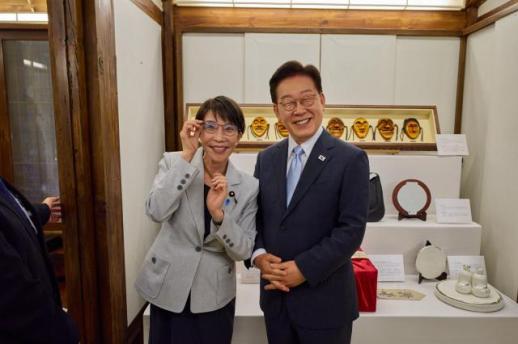
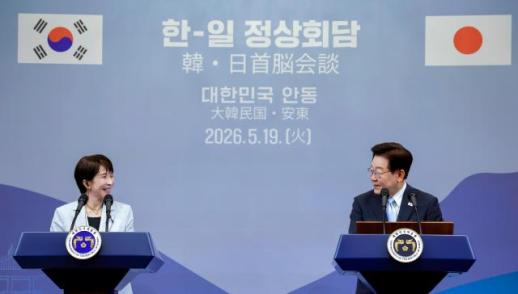 Lee, Takaichi agree to deepen energy, supply chain cooperation SEOUL, May 19 (AJP) - South Korean President Lee Jae Myung and Japanese Prime Minister Sanae Takaichi agreed on Tuesday to expand cooperation on energy security and supply chains amid the prolonged conflict in the Middle East. After a summit at Lee's hometown of Andong, a historic city in southern South Korea, the two leaders shared the view that Seoul and Tokyo need to work more closely together as global supply chains and energy markets face growing uncertainty. "We agreed to further expand cooperation on supply chains," Lee said at a joint press conference following the summit. Lee said Takaichi also proposed cooperation with other Asian countries facing supply disruptions. Japan has announced plans to push for "Power Asia," a program designed to provide about US$10 billion in financial support to Southeast Asian countries and others struggling to secure crude oil and petroleum products. Lee said South Korea and Japan also agreed to strengthen cooperation in liquefied natural gas and crude oil, calling them key energy sources for both countries. "We agreed to further strengthen cooperation in LNG and crude oil," Lee said. "We also agreed to deepen information sharing and communication channels regarding crude oil supply, demand and reserves." Both sides did not clearly say in their joint press remarks whether they would lend each other surplus crude oil in the event of a supply shortage. Tuesday's summit came as Seoul and Tokyo have been trying to maintain momentum in improving relations through the so-called shuttle diplomacy between the neighboring countries. Calling it his fourth summit with Takaichi since she took office in October, Lee said, "This truly shows the essence of shuttle diplomacy between South Korea and Japan." The meeting was especially symbolic, coming just months after Lee visited Takaichi’s hometown of Nara in January. "After visiting your hometown of Nara in January and receiving such warm hospitality, I am deeply honored and pleased to welcome you today here in Andong, where I was born and raised," Lee told Takaichi at the start of the talks. Lee said the two countries have continued to expand cooperation in recent months, citing a bilateral supply chain partnership signed in March and a memorandum of cooperation between the two countries' police agencies aimed at strengthening joint responses to scam crimes. "Our relations are moving forward toward the future without a day's pause," Lee said. He also pointed to working-level talks on DNA testing related to victims of the Chosei coal mine and a consultative body on shared social issues as examples of new areas of cooperation. Lee said the worsening international environment has made cooperation among friendly countries more urgent. "The international situation is now in the midst of a storm," Lee said. "Cooperation and communication among friendly countries are needed more than ever." He said South Korea and Japan had both joined international efforts related to the Strait of Hormuz including initiatives led by France and the U.K., to help ensure maritime safety and freedom of navigation. He also said the two countries helped each other secure seats on flights for citizens stranded in the Middle East. On regional security, Lee said he and Takaichi reaffirmed the importance of South Korea-U.S. cooperation and trilateral cooperation among South Korea, the U.S. and Japan. Lee also said he emphasized the need for South Korea, Japan and China to respect one another, cooperate and seek common interests to promote regional peace and stability. On North Korea, Lee said he explained his government's goal of building "a peaceful Korean Peninsula where there is no need to fight," allowing the two Koreas to coexist peacefully and grow together. The wording contrasted with Lee's remarks after his January summit with Takaichi in Nara, when he said the two sides reaffirmed their commitment to the complete denuclearization of the Korean Peninsula and lasting peace. Lee's statement Tuesday did not include the phrase "denuclearization of the Korean Peninsula." Takaichi thanked Lee and South Korea for the welcome and said she was pleased to continue shuttle diplomacy in Andong. "I am very pleased that we are able to practice shuttle diplomacy here in Andong, President Lee's hometown," Takaichi said. She said the international community is facing "an extremely difficult time" including the situation in the Middle East, and called for South Korea and Japan to play a greater role in regional stability. "Through the leadership of President Lee and myself, it is very important to steadily develop the positive momentum in Japan-South Korea relations," Takaichi said. "It is also important for our two countries to play a central role in stabilizing the Indo-Pacific region." Takaichi said she hoped to have a candid exchange of views "for the interests of both sides and for peace and stability in the region and the international community." South Korean officials attending the talks included Foreign Minister Cho Hyun, national security adviser Wi Sung-lac, policy chief Kim Yong-beom and presidential chief of staff Kang Hoon-sik. The Japanese side included Chief Cabinet Secretary Masanao Ozaki, National Security Secretariat Secretary General Keiichi Ichikawa and Japanese Ambassador to South Korea Koichi Mizushima. 2026-05-19 18:00:58
 -
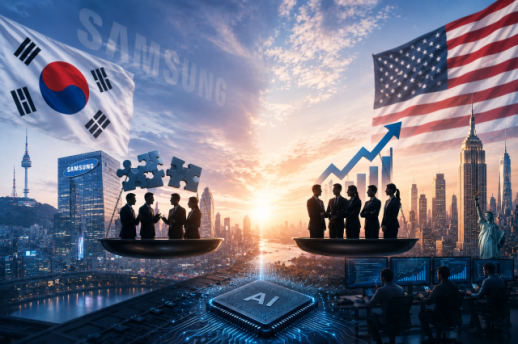 Samsung strike threat highlights widening Korea-U.S. divide in AI-era pay SEOUL, May 19 (AJP) - With memory giants Samsung Electronics and SK Hynix posting operating margins above 70 percent and quarterly chip profits of $25 billion to $35 billion, South Korea's AI-boom windfall has laid bare a compensation system still tethered to the industrial era — and the workers who built it want their share. Marathon government-mediated labor talks, watched closely by the president, politicians and investors alike, underscore the national stakes: Samsung alone accounts for roughly 20 percent of Korea's outbound shipments, and any disruption to its chipmaking lines would reverberate far beyond the factory floor. At the center of the dispute is the bonus cap. The National Samsung Electronics Union is demanding that 15 percent of operating profit be allocated to bonuses and that existing caps be abolished — a demand that has reignited a broader debate over whether South Korean companies need more transparent, equitable compensation systems. "The problem isn't the money. There just aren't clear and transparent standards," said a 31-year-old employee at a large Seoul-based company. The tension reflects a structural divergence from the United States, where AI-driven growth has largely translated into intensified talent competition and equity-based rewards. In Korea, the same boom has triggered recurring labor conflict. Wage data illustrate how much Korean pay growth depends on bonuses. According to the Ministry of Employment and Labor's Labor Force Survey, special payments — including performance bonuses — rose 8.1 percent in the first half of 2025, far outpacing the 2.9 percent increase in fixed wages. Yet profit-sharing has been uneven in application. Ministry data submitted to lawmaker Kim Ui-sang of the People Power Party on May 8 show that 43.8 percent of employers with 300 or more workers and 46.2 percent of those with over 1,000 employees pay bonuses based on annual income — compared with just 6.4 percent of companies with fewer than 300 staff. Korea's so-called performance-sharing system distributes bonuses based on overall corporate results rather than individual contribution, in contrast to the more individualized, equity-driven models common at U.S. tech firms. And even within the chip sector, the rewards remain concentrated at the top. Samsung works with roughly 150 suppliers and some 35,000 subcontracted workers — none of whom are party to the bonus dispute. "In the U.S., compensation is increasingly treated as a function of measurable contribution and strategic importance rather than role equivalence," said Erik Cambria, a professor of artificial intelligence at Nanyang Technological University in Singapore. He said major U.S. tech companies are rapidly shifting toward selective compensation structures, concentrating equity and long-term incentives on engineers and researchers viewed as critical to AI development. The scale is striking. OpenAI's average stock-based compensation reached approximately $1.5 million per employee in 2025, among the highest levels in the industry, according to financial data reviewed by The Wall Street Journal. Meta reported $20.4 billion in share-based compensation that year, while Alphabet reported $27.1 billion. The demand for high-impact AI talent is also surging. U.S. job postings for "forward-deployed engineers" — specialists who integrate AI systems directly into enterprise operations — jumped roughly 729 percent over the past year, rising from 643 openings in April 2025 to 5,330 in April 2026, according to Indeed. "While AI is standardizing routine execution, the ability to create strategic value is becoming increasingly concentrated among a small group of 'superstar' talent," said Choi Jae-pil, a management professor at Sungkyunkwan University Graduate School of Business. Choi noted that AI could make performance assessments more quantifiable and transparent, potentially making differentiated pay structures more palatable to workers — but cautioned that the shift would be harder to implement in Korea, where cash bonuses and group-based compensation remain the norm. Structural differences in the labor market compound the problem, analysts say. "Dissatisfied workers in the U.S. can easily move to other firms, pushing companies to offer better compensation to retain talent," said Shin Hyun-han, a finance professor at Yonsei University. In Korea, changing jobs carries greater risks — income loss, social stigma and career uncertainty — leaving workers with fewer exit options and more internal grievance. "Even higher bonuses may not fully resolve the frustrations of workers who feel they cannot leave," Shin said. Korean firms also tend to rely on managers' subjective judgment, often informing employees of evaluation standards only after assessments are completed — partly, Shin said, out of concern that explicit criteria could expose companies to legal challenges. U.S. companies, by contrast, tend to disclose KPIs and OKRs upfront, driven by greater labor mobility and competition for talent. The simmering tensions within Samsung — spanning both its chip and non-chip divisions — reflect a broader sense of exclusion among workers who see record-breaking profits celebrated at the top while little trickles down. "We can only watch with envy," said an employee at a parts manufacturer, who said bonuses flow mainly to flagship companies while suppliers and subcontractors are left out. "The problem is that the standards constantly change or remain unclear." Yet experts warn that importing the U.S. model wholesale carries its own risks. "Higher rewards in the U.S. also come with greater risks, including layoffs and income volatility," said Kim Jin-young, an economics professor at Korea University. "If workers expect to share in profits, they must also be willing to share the risks when business conditions deteriorate." 2026-05-19 18:00:47