
Journalist

Lee Su Wan
-
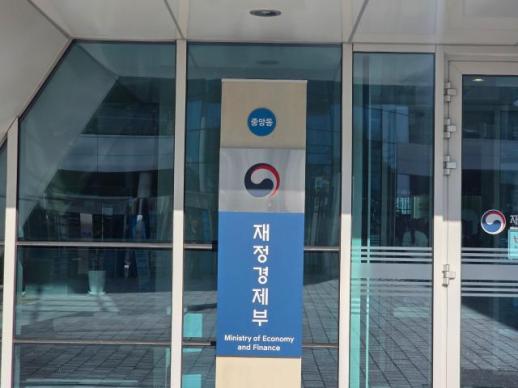 Government Enhances Effectiveness of National Contract Dispute Mediation System The government is taking steps to enhance the effectiveness of the National Contract Dispute Mediation System by listening to the voices of small and medium-sized enterprises facing disputes. On May 13, the Ministry of Finance and Economy held the "2026 First National Contract Dispute Mediation System Briefing Session" in collaboration with the Korea Federation of Small and Medium Businesses. The National Contract Dispute Mediation System allows procurement companies to request mediation from the National Contract Dispute Mediation Committee, which proposes solutions to resolve disputes. The committee is chaired by the Director of the National Treasury at the Ministry of Finance and Economy and consists of 15 members, including four government representatives and ten private sector members. Mediation cases surged from just one in 2014 to 60 last year, with projections indicating that this year will exceed 100 cases. Since the system's introduction, the acceptance rate for claims was 50.0%, and the mediation success rate was 35.7% last year. During the briefing, the Ministry provided explanations about the National Contract Dispute Mediation System and shared mediation case studies. It also discussed major types of disputes arising during the national contract process and potential solutions, focusing on real-life examples. Additionally, one-on-one customized pre-consultations were offered to companies currently experiencing disputes or anticipating them. The government is working to improve the utilization of the National Contract Dispute Mediation Committee by implementing various system enhancements. Starting June 11, the period for filing objections and mediation requests against contracting agencies will be extended from 20 days to 30 days. A proposed amendment to the National Contract Act aimed at increasing the effectiveness of the mediation system has also been submitted to the National Assembly. This amendment seeks to establish a financial system that allows the committee to issue binding decisions and enables companies to apply for mediation without prior objections. Furthermore, it will allow contracting agencies and the committee to review and recommend corrections to contract conditions and unfair clauses in advance. The proposal also includes increasing the number of mediation committee members from the current 15 to 30 and providing assistance from public defenders for small and medium enterprises. Lee Joo-hyun, Director of Procurement Contract Policy at the Ministry, stated, "We will strengthen the effectiveness and accessibility of the National Contract Dispute Mediation System so that it can become a trusted solution in the field." Yang Chan-hwa, Executive Director of the Korea Federation of Small and Medium Businesses, expressed support for the proposed amendment, hoping it will pass quickly to help safeguard the rights of small procurement companies.* This article has been translated by AI. 2026-05-13 17:18:20
 -
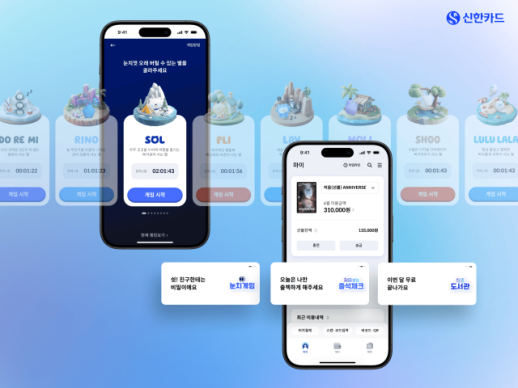 Shinhan Card Integrates Payments and Asset Management with SOL Pay Shinhan Card's lifestyle finance platform, Shinhan SOL Pay, is expanding its offerings by integrating payment, asset management, travel, and convenience services into a comprehensive financial platform. As of the end of February, Shinhan Card reported that the number of subscribers to Shinhan SOL Pay has reached approximately 20 million. The company aims to encourage customers to use Shinhan SOL Pay across various payment scenarios, thereby accumulating data to enhance customer experiences and build a virtuous ecosystem. Shinhan SOL Pay includes features such as a payment function called 'Pay,' transaction management under 'My,' asset management based on My Data in 'Assets,' a collection of discounts and events in 'Benefits,' and loan product recommendations in 'Finance,' all within a single app. The payment infrastructure is also being expanded. Shinhan Card has introduced the industry's first iPhone touch payment service, allowing iPhone users to make payments at all merchants without a physical card. It also offers global payment features such as Android-based NFC payments and UnionPay and Line Pay QR payments. Additionally, a dedicated platform for teenagers, 'SOL Pay First,' has been launched as an industry first. This platform is tailored to the financial lives of teenagers, prominently displaying their spending and remaining balance for the month, along with payment and transfer functions on the main screen. Services specifically designed for overseas travel have also been enhanced. Through 'SOL Travel+,' users can access discounts and cashback benefits for accommodations, shopping, and dining, as well as features to block overseas won payments and prevent fraudulent transactions abroad.* This article has been translated by AI. 2026-05-13 17:18:00
 -
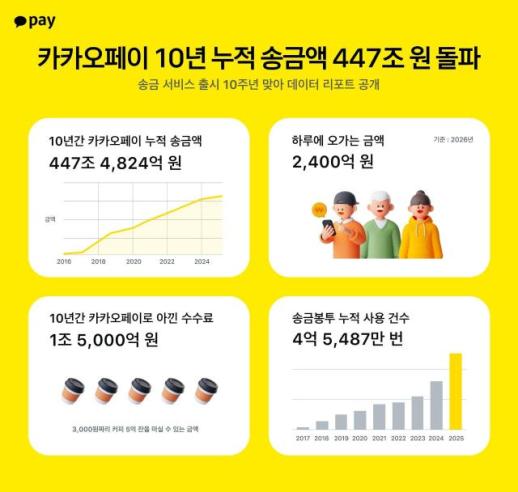 KakaoPay Expands Payment Platform with 1.13 Million Merchants KakaoPay is strengthening its competitiveness as a comprehensive payment platform by expanding into overseas payments, membership services, and utility bill payments.As of May 13, KakaoPay reported that it launched South Korea's first simple payment service for online transactions in 2014 and introduced offline payment services in 2018. Currently, KakaoPay is available at 1.13 million merchants nationwide. It also supports payments at 3 million locations through Samsung Pay and 1.1 million small business stores via Zero Pay.Users can utilize QR and barcode payments at various offline merchants, including convenience stores, cafes, restaurants, movie theaters, and supermarkets. The service also supports Samsung Pay's Magnetic Secure Transmission (MST) and Zero Pay's QR scanning method. Membership points such as Happy Points, CJ ONE, and Shinsegae Points are automatically accumulated during transactions.KakaoPay is also expanding its overseas payment services. It supports QR payments in over 50 countries and regions, including China, Japan, Southeast Asia, Europe, and the Americas, based on the AlipayPlus network. The introduction of NFC-based 'Tap & Go' payments allows mobile transactions at approximately 150 million Mastercard merchants worldwide.The company has enhanced its lifestyle services as well. KakaoPay's membership program allows users to accumulate and use points from over 40 partner programs with a single barcode. Through its electronic billing payment service, users can view and pay utility bills such as electricity, gas, local taxes, communication fees, and apartment management fees via KakaoTalk and KakaoPay.* This article has been translated by AI. 2026-05-13 17:17:22
 -
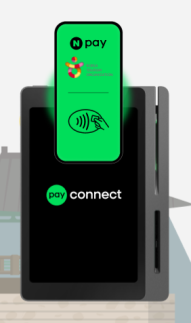 Naver Pay Expands to Offline Payments with 86 Trillion Won in Transactions Naver Pay (Npay) is accelerating its expansion into the offline payment market by leveraging its point ecosystem and the integrated terminal 'Npay Connect.' The service is transitioning from an online-centric model to encompass offline store operations and marketing, broadening its reach as a platform for small businesses. According to Naver Financial, Npay maintained its position as the leader in South Korea's mobile payment market with an annual transaction volume of 86.1 trillion won last year. The growth is attributed to the expansion of its point ecosystem, with approximately 60% of the population experiencing benefits from Npay points last year. The launch of the offline integrated terminal 'Npay Connect' in November is expected to further accelerate this expansion. The terminal supports various payment methods, including cash, cards, QR codes, mobile payments, and Near Field Communication (NFC), as well as the facial recognition payment service 'Facesign' introduced in March. Customers can immediately use the service at stores featured in Naver's existing 'Smart Place' service, which includes reviews, coupons, and orders. For small businesses, this offers the dual benefits of securing reviews and enhancing operational efficiency. Npay Connect can also be utilized in a mini kiosk format, reducing labor costs associated with the ordering and payment process. Since the launch of Npay Connect, collaborations with local governments, banks, and franchises have expanded, establishing it as a model for regional economic revitalization and mutual growth. In Seoul, Naver is working with the Seoul Credit Guarantee Foundation and Hana Bank on a guarantee loan program for small businesses, while in the Gyeongbuk, Jeonbuk, and Jeju regions, it is promoting local currency initiatives in partnership with regional banks. Naver Pay is also enhancing compatibility with existing payment markets. The company plans to complete integration with all Value-Added Network (VAN) companies by the end of this year and improve compatibility with major Point of Sale (POS) systems, allowing for the installation of Npay Connect without replacing existing POS systems.* This article has been translated by AI. 2026-05-13 17:16:47
 -
 KB Kookmin Bank Launches QR Payment Service in Indonesia KB Kookmin Bank is expanding its QR payment service throughout Indonesia, intensifying its efforts in the local easy payment market.Since May 1, KB Kookmin Bank has been offering the cross-border QR payment service, known as the 'KB Star Banking Overseas Payment Service,' across Indonesia.This cross-border QR payment service connects domestic financial institutions with overseas payment agencies through the Financial Payment Agency, enabling QR payments via financial applications in both countries.Last October, KB Kookmin Bank demonstrated the QR payment service between the two countries at the '2025 Indonesia Digital Finance Festival (FEKDI).'With this service expansion, customers can use the KB Star Banking app to make payments at over 32 million merchants across Indonesia.Notably, KB Kookmin Bank has established a direct link to Indonesia's national QR payment network, QRIS, based on the Financial Payment Agency's payment infrastructure, allowing local currency transactions without double currency conversion. This development reduces customer fees and enhances payment convenience. QRIS is Indonesia's national standard QR code payment system, developed in collaboration with the payment service industry and introduced by the central bank in 2019.A KB Kookmin Bank official stated, "Through this service expansion, we have improved accessibility and convenience for customers to make payments abroad in a familiar way. We will continue to expand our global payment infrastructure to provide better financial services."* This article has been translated by AI. 2026-05-13 17:16:17
 -
 Clean protest rolls through Seoul as climate activists bicycle to National Assembly SEOUL, May 13 (AJP) - Civic group members staged a bicycle protest on Tuesday urging the National Assembly to promptly revise the Carbon Neutrality Act. The Climate Constitutional Petition Group held a press conference in front of the Constitutional Court in Seoul announcing a 'Climate Bicycle March from the Constitutional Court to the National Assembly' before beginning the march. In August 2024, the Constitutional Court ruled that the Carbon Neutrality Act violated the principle against insufficient protection by failing to include specific carbon reduction plans for 2031~2049, ordering the National Assembly to revise it by February 2026. However, the National Assembly has still not completed the revision despite exceeding the deadline. Civic groups criticized the National Assembly for prioritizing political logic over protecting citizens' basic rights, urging prompt implementation of revisions in line with the Constitutional Court's decision. 2026-05-13 17:16:17
 -
 The Rise of Mobile Payments: A Shift in Financial Transactions Mobile payments are rapidly replacing cash and physical cards, becoming the central method for everyday transactions. As their use expands across online shopping, brick-and-mortar stores, and money transfers, experts say they are transforming overall financial consumer behavior. According to the financial sector, the average daily usage of mobile payment services last year reached 35.57 million transactions, totaling 1.1053 trillion won. This marks increases of 14.9% and 14.6%, respectively, from the previous year. Mobile payment services utilize biometric authentication methods such as fingerprints and facial recognition to process transactions. The average daily usage and amount for mobile remittance services also saw increases of 2.9% and 7.3%, reaching 7.42 million transactions and 978.5 billion won. Notably, the transaction amounts for electronic financial service providers like Naver Pay, Kakao Pay, and Toss Pay surged by 24.6%, totaling 606.41 billion won compared to 486.85 billion won the previous year. Prepaid balances within mobile payment platforms are also growing rapidly. As of the end of the first quarter of this year, the combined prepaid balance for Naver Pay, Kakao Pay, and Toss Pay reached 990.2 billion won, an 11.5% increase from 888.1 billion won during the same period last year. This increase indicates a shift beyond simple payment functions, as more funds are being retained and utilized within the platforms. Big tech companies like Naver, Kakao, and Toss are leveraging user data obtained through mobile payments to expand into broader financial services, including loans, investments, and insurance. Data accumulated during transactions, such as spending patterns and frequency of use, can be utilized for personalized financial product recommendations and enhanced credit evaluations. Industry analysts suggest that the payment features used daily by consumers are crucial touchpoints that increase platform engagement and encourage connections to other financial services. They predict that effectively linking payment data to financial services will be key to future platform competitiveness. In response to the diminishing presence of physical cards, card companies are accelerating their digital transformation and enhancing mobile payment services. Last year, the average daily transaction volume for physical cards fell by 0.4% to 1.4 trillion won, marking a decline for the second consecutive year. In contrast, non-physical card transactions using mobile devices increased by 7.3% to 1.7 trillion won. Card companies are not only strengthening their own app-based mobile payment features but also expanding integrations with external platforms like Apple Pay and Samsung Wallet. Major card issuers, including Shinhan Card and KB Kookmin Card, are focusing on enhancing their apps while integrating various services such as asset management, loans, and membership programs to boost platform competitiveness. Some card companies are enhancing user convenience by expanding features like asset tracking and benefit recommendations within their apps. They are also strengthening contactless payment services based on NFC and QR codes to adapt to the shift toward mobile-centric payment environments. The structure of card benefits is also being restructured around digital consumption patterns. There is ongoing competition to attract customers by enhancing discounts and rewards tailored to online shopping, delivery apps, streaming services, and mobile payment usage. Industry experts believe that future competition in the payment market will extend beyond simple fee collection to a battle for data and platform dominance. The ability to connect payment services with a diverse range of financial services is emerging as a critical factor in determining market competitiveness. An industry insider stated, "After successfully establishing mobile payment systems in the e-commerce market, mobile payment providers are now venturing into offline spaces to secure more merchants and users. The convenience already provided by online mobile payment services will be complemented by monetary benefits, while offline will focus on enhancing payment convenience as a key competitive advantage." 2026-05-13 17:15:41
 -
 NH Nonghyup Bank Accelerates Digitalization with NH Pay NH Nonghyup Bank is advancing the digitalization of everyday life through its NH Pay service. NH Pay has launched a convenient payment service linked to both Nonghyup Bank accounts and agricultural cooperative accounts. When linked, payment amounts are settled directly from the bank account. The bank has revamped its existing app infrastructure to allow NH Pay to be used seamlessly across various apps from its affiliated companies. A notable example is the integration of the Nonghyup Card and NH Pay into a single mobile application. This integration is based on cloud technology, and a new integrated spending analysis service will be created by linking NH MyData. This aims to enhance the versatility of NH Pay, according to NH Nonghyup Bank. The bank is particularly focused on intuitively changing the app's user environment based on user behavior patterns. This approach is designed to reduce the time consumers spend navigating the app and to improve overall usability. NH Nonghyup Bank has a strong presence in rural areas across the country, particularly in agricultural regions, and has established a significant market share that other financial institutions do not possess. As NH Pay expands across all affiliates, it is expected to attract a more diverse customer base. Additionally, NH Pay is expanding its business by offering overseas payment services. Customers who register their UnionPay cards with NH Pay can easily make payments at local UnionPay merchants abroad.* This article has been translated by AI. 2026-05-13 17:15:00
 -
 KOSPI flies to new highs after Lee clarifies controversial 'AI dividend' slip SEOUL, May 13 (AJP) - South Korea’s benchmark KOSPI returned to record-setting climb Wednesday after President Lee Jae Myung moved to calm investor concerns over controversial remarks by his top policy aide suggesting that gains from the country’s AI boom could be redistributed more broadly to the public. In a post on X on Wednesday, Lee accused some media outlets of distorting comments made by presidential policy chief Kim Yong-beom regarding a proposed “national dividend” linked to the artificial intelligence boom. Lee said Kim’s remarks referred to the possible redistribution of excess tax revenue generated from extraordinary profits in the AI sector — not the direct redistribution of corporate profits themselves. “What Kim Yong-beom referred to was a review of ways to distribute to the public part of the government’s excess tax revenue generated from extraordinary profits in the AI sector,” Lee wrote. Lee added that Kim had already clarified the proposal concerned excess tax revenue rather than corporate earnings, but “misleading reports” continued circulating despite follow-up explanations. “Political criticism and attacks that are not based on facts ultimately harm democracy,” Lee said. The clarification helped ease fears of possible government intervention in corporate earnings tied to South Korea’s booming semiconductor and AI sectors, which have driven much of the market’s recent rally. The KOSPI erased earlier losses and gained 2.63 percent to a new closing high 7,844.01. Chipmakers also renewed bull march, with Samsung Electronics rising 1.79 percent to 284,000 won and SK hynix surging 7.68 percent to 1,976,000 won. 2026-05-13 17:14:46
 -
 K-Bank Launches Lottery Ticket Sales with Easy Recharge Service K-Bank is entering the lottery ticket sales market by utilizing its easy recharge service, making it the only bank to offer such a service. K-Bank has partnered with Donghaeng Lottery to introduce a convenient recharge service that allows customers to quickly and easily top up their deposits for online lottery purchases. The easy recharge service enables customers to fund their K-Bank accounts with the desired deposit amount and recharge their accounts with just one click when purchasing lottery tickets, such as Lotto and Pension Lottery, on the Donghaeng Lottery website. Previously, customers had to create a virtual account after mobile authentication and deposit funds into that account to recharge their deposits. Now, customers can simply keep the amount they wish to recharge in their K-Bank account and recharge it instantly with a single click, without any additional procedures. Since February of this year, customers can also purchase Donghaeng Lottery tickets through mobile platforms, expanding access beyond online sales. The scale of online lottery sales is capped at 5% of the previous year's sales. This year, the online purchase limit for Lotto is approximately 380 billion won, which is expected to benefit K-Bank significantly. K-Bank is also expanding its payment services through collaborations with payment companies. Customers can register their K-Bank debit cards with Naver Pay and earn rewards when making purchases above a certain amount at Naver Pay merchants. Additionally, K-Bank has launched K-Bank Pay and a dedicated loan service called Shopping Money Loan. K-Bank Pay is a payment service based on account transfers using QR codes and barcodes. It can be used at all offline Zero Pay merchants and, unlike Zero Pay, is also available for online merchants.* This article has been translated by AI. 2026-05-13 17:12:25