
Journalist

Lee Wang-hwi
-
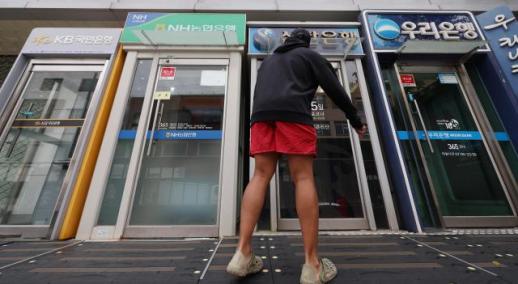 Financial Sector Divided on Inclusive Finance Policies A divide is emerging in the financial sector regarding the government's policies aimed at expanding productive and inclusive finance. While domestic financial holding companies have emphasized the importance of inclusive finance, their business reports filed in the United States indicate that these policies could pose risks to profitability and asset soundness. According to the financial sector on May 14, KB, Shinhan, and Woori Financial Groups included the productive and inclusive finance policies as a new item under "investment risk factors" in their business reports submitted to the U.S. Securities and Exchange Commission (SEC) at the end of last month. This marks the first time that references to productive and inclusive finance have appeared in the investment risk factors section of these reports. KB Financial noted in its report that the implementation of inclusive finance policies may necessitate adjustments in business practices, potentially increasing the risk of customer defaults. Similarly, Shinhan Financial specified the possibility of a decline in soundness as an investment risk associated with its response to inclusive finance policies. Woori Financial mentioned that engaging in productive finance could lead to unintended costs or losses. Industry insiders explained that the inclusion of these risk factors in U.S. reports reflects the need to disclose potential risks that could affect corporate performance, as failing to do so could expose them to class-action lawsuits. However, the troubling aspect is that this information was not included in the domestic business reports submitted to the Financial Supervisory Service. This discrepancy has raised questions about the commitment to policy cooperation domestically while separately acknowledging risks in overseas disclosures. The five major financial groups have actively supported government policies, proposing a total of 70 trillion won in inclusive finance support over the next five years, aiming for 2030. A financial authority official stated, "While it is true that inclusive finance is directly related to the soundness of financial institutions, it is regrettable that such information emerged through foreign disclosures. We hope that the improvements being made to increase the funding capacity of banks will be taken into account." The recent controversy surrounding the private bad debt management company, Sangnoksoo, has also drawn renewed attention in light of the financial sector's inclusive finance initiatives. Sangnoksoo was established in 2003 by major banks and credit card companies to manage a surge in long-term overdue debts during the credit card crisis. However, revelations that it has been collecting on long-term overdue debts for over 20 years have sparked accountability discussions within the financial sector. The controversy intensified as it was reported that Sangnoksoo's shareholders received over 40 billion won in dividends over the past five years, raising concerns about the inconsistency between the push for enhanced financial support for the underprivileged and the practices of debt collection and dividend distribution. In response, President Lee Jae-myung has been delivering strong messages to the financial sector, emphasizing the importance of inclusive finance. On May 14, he stated on his X (formerly Twitter) account, "Finance is a quasi-public business based on national issuance power and monopolistic licensing, and it must fulfill its public responsibilities. We will swiftly and maximally secure financial support for the underprivileged and inclusive finance."* This article has been translated by AI. 2026-05-14 16:50:19
 -
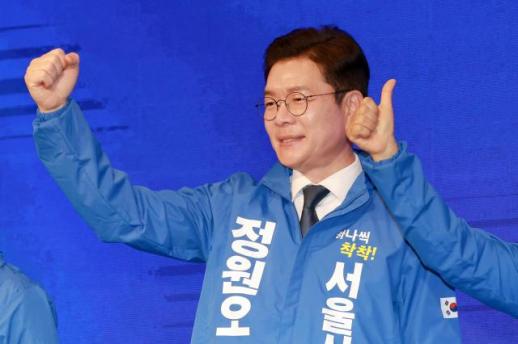 Candidates Register as Election Campaigns Heat Up Ahead of Local Elections The ruling and opposition parties officially kicked off their election campaigns on May 14, as candidates registered for the June 3 local elections and National Assembly by-elections. The Democratic Party of Korea, which has formed a campaign committee for national normalization, and the People Power Party, which launched a campaign to prevent the cancellation of indictments, are expected to engage in fierce competition. The Democratic Party aims to reclaim local power and secure its positions in the by-elections, while the People Power Party hopes to perform well in the metropolitan areas of Seoul and Busan, as well as in its stronghold of Yeongnam. The National Election Commission is accepting candidate registrations at local election offices from May 14 until 6 p.m. on May 15. Both the Democratic Party and the People Power Party have completed their candidate nominations for the local elections and by-elections, leading to a staggered registration process. In the by-elections, the Democratic Party has nominated candidates for all 14 districts, while the People Power Party has put forward candidates for 13 districts, excluding the difficult-to-fill areas of Gunsan, Gimje, and Buan. Among the districts considered a mini-general election, 13 are currently held by the Democratic Party, with the exception of Daegu Dalseong. On this day, the Democratic Party's candidates for metropolitan mayor included Jeong Won-o (Seoul), Choo Mi-ae (Gyeonggi), Park Chan-dae (Incheon), Kim Boo-kyum (Daegu), Jeon Jae-soo (Busan), Kim Kyung-soo (Gyeongnam), Min Hyung-bae (Jeonnam-Gwangju), Lee Won-taek (Jeonbuk), Park Soo-hyun (Chungnam), and Heo Tae-jeong (Daejeon). The People Power Party's candidates for metropolitan mayor include Oh Se-hoon (Seoul), Yang Hyang-ja (Gyeonggi), Yoo Jeong-bok (Incheon), Choo Kyung-ho (Daegu), Park Hyung-jun (Busan), Park Wan-soo (Gyeongnam), Lee Jeong-hyun (Jeonnam-Gwangju), Kim Tae-heum (Chungnam), Lee Jang-woo (Daejeon), and Choi Min-ho (Sejong). Additionally, Jeong Yi-han, the candidate for Busan Mayor from the Reform Party, has completed his registration, and Jo Eung-cheon, the candidate for Gyeonggi Governor, is expected to submit his application through a representative at 5 p.m. on the same day. Kwon Young-guk, the Justice Party's candidate for Seoul Mayor, also proceeded with the registration process. Furthermore, Kim Kwan-young, who was expelled from the Democratic Party due to allegations of distributing money envelopes, has registered as an independent candidate. He is set to face off against Lee Won-taek, who has been implicated in allegations of covering meal expenses. Among the Democratic Party's candidates for the by-elections are Song Young-gil (Incheon Yeonsu-gap), Ha Jung-woo (Busan Buk-gu-gap), Kim Yong-nam (Gyeonggi Pyeongtaek-eul), and Kim Nam-jun (Incheon Gyeyang-eul). The People Power Party's candidates Park Jong-jin (Incheon Yeonsu-gap), Park Min-sik (Busan Buk-gu-gap), Lee Jin-sook (Daegu Dalseong-gun), and Yoo Ui-dong (Gyeonggi Pyeongtaek-eul) have also completed their registrations. In Pyeongtaek-eul, Jo Guk, the leader of the Jo Guk Innovation Party, and Kim Jae-yeon, the permanent representative of the Progressive Party, have finalized their candidate registrations. Han Dong-hoon, a former leader of the People Power Party running as an independent in Busan Buk-gu-gap, is scheduled to register on May 15. Meanwhile, even after completing candidate registration, only preliminary campaign activities such as distributing business cards and wearing uniforms are allowed until May 20. Official campaigning will take place from May 21 to June 2, during which candidates can conduct street rallies and distribute campaign materials. Early voting is scheduled for May 29 and will last for two days. 2026-05-14 16:47:58
 -
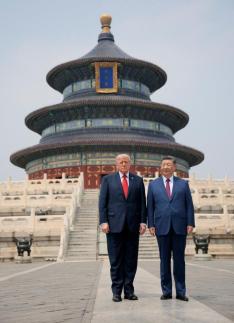 China Insight: What the rain-soaked Temple of Heaven revealed about Trump-Xi summit President Donald Trump and President Xi Jinping met once again in Beijing on May 14. A summit between the leader of the world’s foremost superpower and the head of the world’s second-largest economy invariably carries global significance. Yet this meeting possessed an unusually heavy symbolism and strategic gravity. The wars in Ukraine and the Middle East, the intensifying contest for artificial intelligence supremacy, the semiconductor conflict, the Taiwan question, rare-earth export controls, supply-chain restructuring, the future of dollar dominance, and the internationalization of the yuan have all converged at the same historical moment. This summit was therefore far more than a routine diplomatic engagement. In many respects, it amounted to a grand strategic exploration of who will shape the architecture of the mid-21st century world order — and how that order will ultimately be constructed. The United States seeks to preserve the existing framework of global primacy. China, meanwhile, seeks to accelerate the emergence of a multipolar order. Between those two ambitions, the world watches with equal measures of anxiety and expectation. The two leaders met for more than two hours at the Great Hall of the People in Beijing. Following the formal talks, they moved together to the Temple of Heaven, the sacred imperial site where Chinese emperors once prayed for peace, prosperity, and abundant harvests under the Mandate of Heaven. A state banquet followed later that evening. China’s decision to include the Temple of Heaven in the summit itinerary was no accident. The site is far more than a tourist destination. It is one of the great symbolic spaces of Chinese civilization itself — a place where the emperors of the Ming and Qing dynasties affirmed what traditional China regarded as heavenly legitimacy and cosmic order. It represents continuity, historical consciousness, and civilizational permanence. The image of Trump and Xi walking together along the rain-darkened stone paths of the Temple of Heaven therefore carried extraordinary symbolic weight. Trump reportedly remarked only briefly that the scene was “beautiful.” More notable was his unusual restraint regarding Taiwan, a subject on which he has often spoken bluntly in the past. The silence itself was revealing. It reflected the complicated strategic reality now confronting the United States. America remains the world’s most powerful nation. Yet it no longer possesses the effortless strategic dominance that defined the immediate post-Cold War era. The war in Ukraine drags on. Conflict between Iran and Israel threatens to widen across the Middle East. Inside the United States, fiscal deficits, high interest rates, industrial hollowing, and deepening social polarization continue to intensify. Washington seeks to contain China’s rise in artificial intelligence and advanced semiconductors. Yet it also understands an uncomfortable reality: the global supply chain itself cannot easily function without China. Beijing faces its own profound vulnerabilities. China’s property crisis, local-government debt burdens, youth unemployment, and weak domestic consumption have created structural strains throughout the economy. Nevertheless, China remains the world’s largest manufacturing power and continues to dominate critical sectors ranging from rare earths and batteries to solar panels and electric vehicles. Above all, Beijing sought through this summit to project an unmistakable message to the world: China considers itself not merely a modern nation-state, but a civilization-state standing as an equal to the United States. That is precisely why the Temple of Heaven mattered. The United States is a relatively young republic, barely 250 years old. China sees itself as the inheritor of a civilization stretching back five millennia. Xi Jinping’s decision to host Trump at the Temple of Heaven was therefore not simply ceremonial diplomacy. It was an assertion that China is not a temporary geopolitical actor, but an enduring civilization shaped by history, philosophy, and cultural continuity. The summit itself revolved around six principal themes. The first was trade and tariffs. Trump, acutely aware of American farmers and industrial workers as a crucial political constituency, is believed to have pressed strongly for expanded Chinese purchases of American soybeans, grain, and agricultural products, while continuing to raise concerns about trade imbalances. China, facing slowing economic momentum, likewise requires a degree of stability in access to American markets. The second issue was semiconductors and artificial intelligence. The United States has tightened restrictions on exports of advanced AI chips and semiconductor technologies in an effort to slow China’s technological ascent. China, meanwhile, has accelerated domestic substitution efforts centered around companies such as Huawei. This is no longer merely a technological competition. It is increasingly a struggle over who will shape the operating system of the future global civilization. The third issue concerned rare earths and supply chains. China has increasingly employed rare-earth export controls as a strategic instrument. Because critical sectors — electric vehicles, semiconductors, defense systems, and renewable energy infrastructure — remain deeply dependent upon Chinese-controlled supply chains, Washington’s efforts to diversify away from China face immense practical limitations. The fourth issue was Taiwan. It was perhaps the most sensitive topic of the summit and also the one approached with the greatest caution. Xi reportedly warned that mishandling the Taiwan issue could dangerously increase the possibility of direct confrontation between the two powers. The United States cannot easily abandon Taiwan, yet neither can it afford a full-scale military conflict with China. As a result, the Taiwan Strait is increasingly emerging as one of the world’s most dangerous geopolitical flashpoints. The fifth issue involved the Middle East. As tensions between Iran and Israel intensify, Washington increasingly recognizes the importance of China’s relationship with Tehran. China has sought to present itself as a stabilizing diplomatic force in the region, particularly after previously helping facilitate rapprochement between Saudi Arabia and Iran. The sixth issue concerned the deeper structure of the global financial system itself. Beneath the formal agenda lay an invisible but highly consequential competition between dollar dominance and the internationalization of the Chinese yuan. Should the yuan continue expanding its role in energy settlements and global trade, the foundations of the postwar financial order could gradually begin to shift. Yet perhaps the summit’s most important message was this: even amid rivalry, dialogue continues. The United States and China compete fiercely, but they also remain deeply dependent upon one another. China cannot easily thrive without the American market and financial system. Nor can the United States fully disentangle itself from the manufacturing and supply-chain infrastructure centered in China. The global economy itself would struggle to survive a complete rupture between the two powers. For Northeast Asia, the summit may mark the beginning of a new strategic phase. China will likely intensify efforts to limit American involvement in Taiwan. The United States, meanwhile, is expected to deepen security coordination with Japan and South Korea. Japan may continue accelerating military normalization, while North Korea will closely monitor every shift in the relationship between Washington and Beijing. In that sense, Northeast Asia is increasingly becoming the principal front line of great-power competition. The original Cold War was centered largely upon military confrontation between the United States and the Soviet Union. The emerging strategic rivalry of the 21st century, however, is likely to be far more complex — an intertwined contest involving artificial intelligence, semiconductors, energy systems, maritime power, finance, and supply chains. What, then, should South Korea understand from all this? Seoul must look not through the lens of emotion, but through the lens of structure. The United States remains South Korea’s indispensable security ally. China remains one of its most important economic partners. Korea cannot survive by choosing only one side in absolute terms. Its challenge is therefore not blind alignment, but the cultivation of strategic balance grounded in technological strength, industrial competitiveness, and diplomatic sophistication. South Korea already possesses globally competitive capabilities in semiconductors, artificial intelligence, shipbuilding, nuclear energy, batteries, and defense manufacturing. The essential task is not to think of Korea merely as a “middle power,” but as a genuine strategic state capable of exercising meaningful influence within a rapidly changing Northeast Asian order. The rain falling over the Temple of Heaven was more than weather. It may well have been a signal that the world itself is entering a new season. And along those rain-soaked paths, America and China — two powers moving according to profoundly different historical clocks — were quietly calculating the future of the same world. *The author is a senior columnist of AJP. 2026-05-14 16:47:17
 -
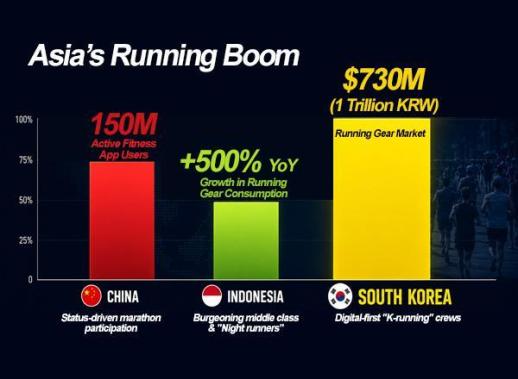 How Korea's jogging craze became Samsung's Asian health gambit SEOUL, May 14 (AJP) - South Koreans are lacing up in record numbers — and they're taking their smartwatches with them. Walk through Seoul on any weekend morning and the evidence is everywhere: colour-coordinated running crews streaming through Han River parks, Strava segments being contested with the intensity of corporate quarterly targets, and, at every major sports retailer, empty shelves. "During marathon season, running attire and gear are completely sold out on and offline," a Lululemon Korea representative told AJP. "High-performance gear across all major brands becomes nearly impossible to find, even for those willing to pay a premium." The numbers behind the scene are striking. South Korea's running participation rate jumped from 4.8 percent in 2024 to 7.7 percent in 2025. One in three Korean adults now wears a smartwatch. The domestic running gear market has surpassed 1 trillion won ($730 million). What began during the COVID-19 pandemic as an escape from shuttered gyms has evolved into something far more elaborate: a data-intensive, socially networked lifestyle sport with its own aesthetic codes, digital rituals, and — inevitably — growing pains. The phenomenon even has its own villain arc. "Nuisance running," or minpye — where large organised crews block pedestrian pathways — has become a fixture of local media debate. Korea's running boom, it turns out, is social enough to cause traffic. Samsung is paying close attention to all of it. At a media briefing in Seoul on Thursday, the company revealed that its Samsung Health platform has reached 77 million monthly active users globally. The pitch from Samsung's MX Business Digital Health Team was pointed: the winner of Asia's health technology war will not be the brand that tracks the fastest kilometre split. It will be the one that understands the runner's entire life. "Running is merely one component of our broader goal," said Choi Jun-il, Vice President at Samsung's Digital Health Team. "Because we manage everything from sleep and diet to mental health, stress measurement, and heart health, we believe we have a clear point of differentiation from competitors like Apple or Garmin." The strategy is anchored in holistic data rather than athletic performance alone — a distinction that matters in a market where elite runners have shifted their priorities accordingly. Eun-ju Kwon, a former national marathon record holder and Samsung Health ambassador, put it plainly: "Instead of just focusing on my pace, what matters most to me now is whether I slept well. I check my sleep and energy scores every morning." Korea, in Samsung's view, is the testbed. The rest of Asia is the market. And that market is vast and wildly varied. China has over 150 million active fitness app users, where marathon participation has become a premier status symbol among the urban professional class. Indonesia is experiencing something closer to an explosion: regional e-commerce data shows running gear consumption surged more than 500 percent year-on-year, driven by a growing middle class and a distinctive "night runner" culture shaped by the country's tropical climate. Samsung's Galaxy Watch BioActive sensor — tracking six advanced running metrics including ground contact time and vertical oscillation — is designed to adapt to each of these local cultures rather than impose a single template. The logic extends well beyond sport. Biometric data from hundreds of millions of daily users, aggregated and analysed at scale, is among the most valuable datasets an AI-era technology company can hold. Samsung's running play is, at its core, a data accumulation strategy dressed in moisture-wicking fabric. Korea exported its pop culture. It exported its cinema. Now it is attempting to export its running culture — and the digital infrastructure that comes with it. The shoes may be Korean. The ambition is continental. 2026-05-14 16:46:27
 -
 South Korea's Foreign Minister Condemns Attack on HMM Cargo Ship Namwoo Cho Hyun, South Korea's Foreign Minister, stated on May 14 that the attack on the HMM cargo ship Namwoo and other civilian vessels is "unjustifiable and unacceptable under any circumstances." He emphasized the government's commitment to ongoing consultations with relevant countries regarding the incident. During a press briefing at the Ministry of Foreign Affairs in Jongno-gu, Seoul, Cho announced that the government will conduct a further investigation into the attack on the Namwoo and take necessary measures based on the findings. A senior official from the Foreign Ministry noted that the wreckage of the vessel was initially at the South Korean consulate in Dubai but has since been moved to the South Korean embassy in Abu Dhabi. The official stated, "We expect to bring the wreckage to Korea as soon as possible. Once it arrives, we believe that the specialized investigation agency at the Ministry of National Defense will conduct a thorough examination to uncover various details." In addition to analyzing the wreckage of the aircraft engine, the investigation will also accelerate on-site assessments. The Ministry of National Defense dispatched a technical analysis team consisting of over ten experts from the Agency for Defense Development (ADD) and other institutions to Dubai on May 13. The team plans to conduct a detailed investigation and analyze various pieces of evidence while collaborating with relevant countries to establish accurate facts. Closed-circuit television (CCTV) footage is also a critical factor in the investigation. The senior official mentioned that the shipowner has cited various reasons for not releasing the CCTV footage that captured the aircraft. "I have not seen it yet, but there are currently differing opinions. However, we hope to persuade them to release the footage, which could become part of the investigation process," the official said. Cho added, "We will closely monitor the developments of the war in the Middle East and changes in the international order following the conflict, particularly in terms of their impact on our citizens and national interests. We will make agile and multifaceted efforts to turn various crises into opportunities." Meanwhile, the Foreign Ministry warned against overinterpreting comments made by a senior official who stated that while the possibility of an attack from entities other than Iran is currently unknown, it is not likely based on common sense, as there were no pirates in the vicinity. During a regular briefing in the afternoon, Foreign Ministry spokesperson Park Il emphasized, "The government will work to identify the cause of the incident and the perpetrator through the analysis of the recovered aircraft engine wreckage and the dispatch of the technical analysis team for further investigation. We wish to refrain from mentioning specific countries at this time, as the perpetrator has not yet been identified, and we will take necessary measures based on confirmed facts from the investigation."* This article has been translated by AI. 2026-05-14 16:44:56
 -
 Korean Scholarship Foundation and Labor Welfare Corporation Join New Leap Fund The Korean Scholarship Foundation and the Labor Welfare Corporation have expressed their intention to join the New Leap Fund, confirming their commitment to financial authorities. Following the controversy surrounding the private bad bank, Sangnoksoo SPC, the review of long-term delinquent loans has expanded, prompting discussions about including policy-related bonds held by public institutions into the New Leap Fund. The New Leap Fund is a program designed to purchase unsecured loans under 50 million won that have been delinquent for over seven years, supporting debt restructuring or loan cancellation. Its aim is to assist borrowers who are struggling to return to normal financial life due to long-term delinquencies. As of May 14, there are a total of 2,735 financial institutions holding long-term delinquent loans. Of these, 2,718 have joined the New Leap Fund, while 17 have not. Among the non-participating institutions, 15 are lending companies, and the remaining two are the Korean Scholarship Foundation and the Labor Welfare Corporation. Both agencies recently communicated their intent to join the New Leap Fund to the Financial Services Commission. The estimated total of long-term delinquent loans held by the two institutions is around 60 billion won. The Korean Scholarship Foundation's long-term delinquent loans exceed 25 billion won and include debts from young borrowers who have failed to repay their student loans on time. The Labor Welfare Corporation's long-term delinquent loans are estimated at about 37 billion won, primarily consisting of policy loans such as worker stabilization funds. These loans are significant as they differ from typical financial institution loans, being policy-related loans like student loans and worker stabilization funds. A high proportion of long-term delinquents in student loans are young individuals, while the Labor Welfare Corporation's loans are mainly used by low-wage workers in need of living expenses. Despite aligning with the New Leap Fund's goal of supporting vulnerable borrowers, these institutions had previously been excluded from the program. Notably, long-term delinquents on student loans can utilize the existing debt restructuring system of the Credit Recovery Commission, but the benefits are more limited compared to the New Leap Fund. The maximum principal reduction rate under the Credit Recovery Commission is around 70%, while the New Leap Fund allows for reductions of up to 80%. The delay in the Korean Scholarship Foundation's inclusion in the New Leap Fund has meant that long-term student loan delinquents have not been able to access relatively favorable debt restructuring benefits. The delay in joining the fund has been attributed to legal grounds and internal procedural issues rather than a lack of willingness to participate. Public institutions manage loan claims according to relevant laws, so selling claims to the Korea Asset Management Corporation requires separate legal grounds and decision-making processes. The Korean Scholarship Foundation lacks clear legal grounds under current law to sell student loan claims to KAMCO, necessitating legal adjustments. The Labor Welfare Corporation has also been reviewing the feasibility and procedures for selling policy loan claims. The atmosphere has changed following the Sangnoksoo SPC controversy. Concerns were raised that Sangnoksoo SPC had not transferred long-term delinquent loans incurred during the card crisis to the New Leap Fund, prompting the Financial Services Commission to strengthen its review of institutions holding long-term delinquent loans. KB Kookmin Bank's long-term personal credit delinquent loans, which were transferred to KB Star Asset Securitization Company, are also set to be sold to the New Leap Fund. A financial industry official stated, "The intention of the two institutions to join the fund is significant in reducing the blind spots of the New Leap Fund. However, for the actual sale of claims and debt restructuring to proceed after the agreement is signed, legal adjustments and institutional procedures must be expedited."* This article has been translated by AI. 2026-05-14 16:42:50
 -
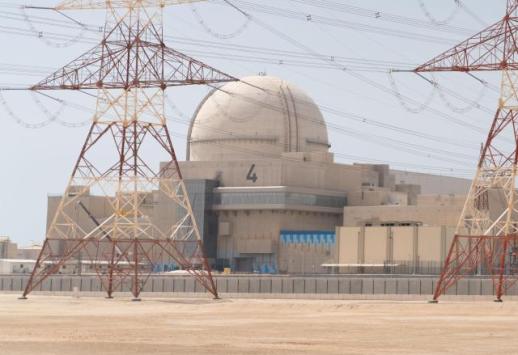 AI Fuels Nuclear Renaissance: Opportunities for K-Nuclear Exports As global electricity demand surges due to the rise of artificial intelligence (AI), nuclear energy is re-emerging as a key power source. With countries worldwide expanding their nuclear capabilities, South Korea, which has experience operating the UAE's Barakah Nuclear Power Plant and possesses APR1400 reactor technology, is seeing new export opportunities arise.According to the International Energy Agency (IEA), global electricity demand is projected to increase by about 40% by 2035 compared to 2024 levels. If the transition to carbon neutrality accelerates, this increase could exceed 50%. The demand surge is attributed to the expansion of AI, data centers, the semiconductor industry, and electric vehicles.Domestically, the situation mirrors this trend. The South Korean government's preliminary forecast for electricity demand in 2040 estimates consumption at 657.6 TWh under a baseline scenario and 694.1 TWh under an upper scenario. This represents an increase of up to 11.1% compared to the previous forecast of 624.5 TWh for 2038.The growth in electricity demand is steepening due to the expansion of AI data centers and advanced manufacturing. Under the upper scenario, maximum electricity demand in 2040 is expected to reach 138.2 GW, a potential increase of up to 37% compared to last year's supply capacity of 100.9 GW.The analysis indicates that electricity demand has surged significantly during the electrification of data centers and industrial sectors. Data center electricity demand is projected to rise to 42.1 TWh by 2040, nearly five times the 8.2 TWh expected in 2025 and significantly higher than the previous 2038 forecast of 30 TWh.Electricity demand from the industrial and transportation sectors is also expected to spike to a maximum of 119.4 TWh by 2040, driven by increased electric arc furnace production in the steel industry, the transition to hydrogen-based steelmaking, and the expansion of electric vehicle adoption.As electricity demand grows faster than anticipated due to the electrification of data centers and industries, securing stable power sources has become a common challenge worldwide.The IEA forecasts that the combined share of renewable energy and nuclear power in global electricity generation will exceed 50% for the first time in 2030. This indicates a shift in energy strategies among countries, balancing the expansion of renewable energy with the stability provided by nuclear power.In the United States, major tech companies are increasing investments in nuclear power to secure stable, carbon-free energy. Companies like Google, Amazon, and Microsoft are exploring investments in small modular reactors (SMRs) and power purchase agreements (PPAs) based on nuclear energy. The U.S. government is also accelerating support for the revitalization of its nuclear industry.In Europe, there is a noticeable return to nuclear energy. Even within the European Union, which has maintained an anti-nuclear stance, concerns about energy security and stable electricity supply are prompting a reevaluation of nuclear power. Poland's new nuclear project is seen as a benchmark for the future restoration of Europe's nuclear ecosystem.This renewed focus on the competitiveness of South Korea's nuclear technology is noteworthy. South Korea has established its competitiveness in large nuclear power projects based on its experience in constructing and operating the Barakah Nuclear Power Plant and its APR1400 technology. The recent success in securing a new nuclear project in the Czech Republic has further fueled expectations for additional overseas contracts.Industry insiders believe that the increasing electricity demand in the AI era could lead to a restructuring of the global nuclear market, opening new export opportunities for South Korea's nuclear industry.One industry representative stated, "As competition for electricity intensifies in the AI era, the importance of securing stable power sources is growing. A favorable market environment is being created for K-nuclear, which has the operational experience of the Barakah plant and the APR1400 technology."* This article has been translated by AI. 2026-05-14 16:40:58
 -
 Andy Weir's 'Project Hail Mary' Reclaims Top Spot on Bestseller List Andy Weir's science fiction novel Project Hail Mary continues to capture readers' attention, bolstered by its recent film adaptation. It has reclaimed the number one spot on the bestseller list at major bookstores like Kyobo Bookstore and Yes24. As of May 14, Yes24 reported that Project Hail Mary returned to the top during the second week of May, maintaining its long-term popularity. After five consecutive weeks at number one in April, it briefly dropped to second place due to Children's Day but has now risen back to the top. Kyobo Bookstore also confirmed that Project Hail Mary has regained the number one position, surpassing Common Siblings 22, which has a strong fan base among young readers. Both bookstores are seeing a strong performance in fiction. At Kyobo Bookstore, seven novels are listed in the top ten, including Hello, I Said and Grapefruit Apricot Club. Yang Gyu-ja's Contradiction, which had seen a slight decline, climbed four spots this week to reach number seven, showcasing its resilience. The market response to classic literature is also robust. Hermann Hesse's Siddhartha rose five places to number nine, likely due to increased sales ahead of Buddha's Birthday. Chekhov's Short Stories saw a staggering 13.8-fold increase in sales, debuting at number 19. Yes24 also reported strong sales in fiction. Hello, I Said, which ranked fourth, has consistently remained in the top tier since author Kim Ae-ran's appearance on a TV talk show in April. The Boy from the Sea, ranked eighth (third in fiction/poetry/drama), saw a 62.6% increase in sales compared to the previous week. It has gained international attention as a candidate for the 2026 Dublin Literary Award and is now making waves in the domestic bestseller list.* This article has been translated by AI. 2026-05-14 16:38:22
 -
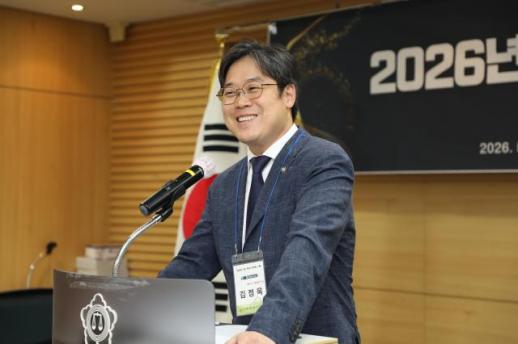 Korean Bar Association Hosts Mentoring Event for New Lawyers Senior lawyers stepped in as guides for new attorneys who recently passed the 15th Bar Exam and are beginning their legal careers. On May 13, the Korean Bar Association's Young Lawyers Committee successfully held the "2026 New Lawyer Mentoring" event at the seminar room of the Korean Bar Association headquarters in Seocho-dong, Seoul. The event was designed for 120 new lawyers to provide practical strategies for adapting to the rapidly changing legal environment and enhancing their professional skills. The atmosphere was serious yet vibrant, filled with the enthusiasm of new lawyers and heartfelt advice from their seniors. In his opening remarks, Kim Jung-wook, President of the Korean Bar Association, assessed the current legal market as challenging due to the surge in the number of lawyers and the rise of legal tech and AI. He encouraged the new lawyers to boldly challenge new areas of work based on their accumulated passion, stating, "If you do so, you will surely achieve meaningful success." He also expressed hope that the connections between seniors and juniors would provide significant support in their long journey ahead. Jo Soon-yeol, President of the Seoul Bar Association, also urged the new lawyers in his remarks to explore various paths in public service, corporate law, litigation, and international law, while emphasizing the importance of integrity and commitment to the right path. Kim Ji-soo, Chair of the Young Lawyers Committee, welcomed the attendees by acknowledging the mixed feelings of excitement and uncertainty that come with starting a new career, hoping that the event would help alleviate those feelings. The highlight of the event was a special lecture titled "Career Seminar for New Lawyers," conducted by Kim Seung-hyun, Vice President of the Korean Bar Association. He shared specific strategies for becoming a "chosen lawyer" in the job market. He emphasized that when writing a resume, it is crucial to connect work-related strengths with specific examples, rather than relying on common background stories, to create a "unique small difference." He also provided practical tips on interview attitudes, timing for job transitions, and preparation tailored to various institutions such as law firms, in-house counsel, and public agencies, which received a positive response. Following the lecture, 36 senior lawyers from diverse fields, including employment, private practice, courts, prosecution, startups, and in-house counsel, participated as mentors in group mentoring sessions. New lawyers openly shared their practical challenges and career concerns, while mentors responded with vivid experiences and insights from the field. One new lawyer expressed satisfaction, saying, "I had many concerns about my career after passing the exam, but hearing specific advice from current seniors has clarified my direction moving forward." A representative from the Korean Bar Association stated, "We plan to continue providing various support programs and networking opportunities to help new lawyers develop their expertise with pride." 2026-05-14 16:37:09
 -
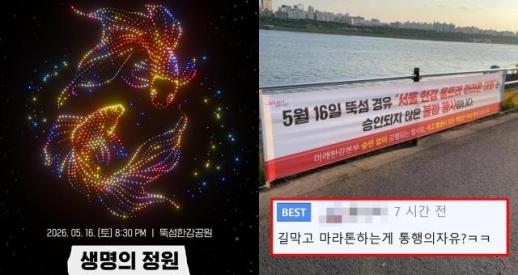 Seoul City and Ultra Marathon Organizers Clash Over Legality of Event The upcoming Seoul Han River Ultra Marathon is causing a significant clash between Seoul City and the event organizers, leading to confusion among participants. The city has even hung banners at the event site declaring it an "unauthorized illegal event" as tensions escalate. The controversy began when banners were installed around Ttukseom Han River Park, stating, "The Seoul Han River Ultra Marathon on May 16 is an unauthorized illegal event," and warning that "the organizers will bear all responsibility in case of accidents, as the event is being held without approval from the Han River Headquarters." In response, the organizing committee for the Seoul Han River Ultra Marathon quickly pushed back. They issued an official statement asserting that the event is a legitimate one conducted through proper procedures, claiming that Seoul City and certain related agencies are exerting excessive pressure under the pretext of citizen inconvenience and safety concerns. The committee emphasized that the organizers do not have the authority to forcibly control citizen traffic and that participants must adhere to the guidance of safety personnel on-site. They stressed that the Han River is a space for all citizens and that running is a freely chosen activity. However, the backdrop to this conflict includes a large-scale drone show scheduled for the same day in the Han River area. It is believed that the city may have deemed it challenging to manage safety effectively with both a massive influx of spectators for the drone show and the lengthy 100km ultra marathon occurring simultaneously. Indeed, ultra marathons are known for their extended operational hours and significant variations in participant stamina, making them more complex to manage safely. Concerns have been raised about the potential for accidents, especially in a space like Han River Park, which is popular for walking and cycling among citizens. Participants eagerly awaiting the marathon expressed their frustration, stating, "I have already paid for the entry fee, accommodation, and transportation, yet suddenly I am being treated as part of an illegal event," and questioned, "Why should participants feel anxious due to the conflict between Seoul City and the organizers?" Conversely, some participants have demanded refunds, citing the city's negative stance toward the event. Meanwhile, there are growing complaints among Seoul residents about the frequency of running events in the city center and around Han River Park. Online commenters have remarked, "Traffic jams and inconveniences occur every weekend," and "It's difficult to enjoy a walk along the Han River due to running events," with some noting, "With the drone show alone attracting crowds, the addition of a 100km marathon would have made congestion severe."* This article has been translated by AI. 2026-05-14 16:34:10