

According to the International Energy Agency (IEA), global electricity demand is projected to increase by about 40% by 2035 compared to 2024 levels. If the transition to carbon neutrality accelerates, this increase could exceed 50%. The demand surge is attributed to the expansion of AI, data centers, the semiconductor industry, and electric vehicles.
Domestically, the situation mirrors this trend. The South Korean government's preliminary forecast for electricity demand in 2040 estimates consumption at 657.6 TWh under a baseline scenario and 694.1 TWh under an upper scenario. This represents an increase of up to 11.1% compared to the previous forecast of 624.5 TWh for 2038.
The growth in electricity demand is steepening due to the expansion of AI data centers and advanced manufacturing. Under the upper scenario, maximum electricity demand in 2040 is expected to reach 138.2 GW, a potential increase of up to 37% compared to last year's supply capacity of 100.9 GW.
The analysis indicates that electricity demand has surged significantly during the electrification of data centers and industrial sectors. Data center electricity demand is projected to rise to 42.1 TWh by 2040, nearly five times the 8.2 TWh expected in 2025 and significantly higher than the previous 2038 forecast of 30 TWh.
Electricity demand from the industrial and transportation sectors is also expected to spike to a maximum of 119.4 TWh by 2040, driven by increased electric arc furnace production in the steel industry, the transition to hydrogen-based steelmaking, and the expansion of electric vehicle adoption.
As electricity demand grows faster than anticipated due to the electrification of data centers and industries, securing stable power sources has become a common challenge worldwide.
The IEA forecasts that the combined share of renewable energy and nuclear power in global electricity generation will exceed 50% for the first time in 2030. This indicates a shift in energy strategies among countries, balancing the expansion of renewable energy with the stability provided by nuclear power.
In the United States, major tech companies are increasing investments in nuclear power to secure stable, carbon-free energy. Companies like Google, Amazon, and Microsoft are exploring investments in small modular reactors (SMRs) and power purchase agreements (PPAs) based on nuclear energy. The U.S. government is also accelerating support for the revitalization of its nuclear industry.
In Europe, there is a noticeable return to nuclear energy. Even within the European Union, which has maintained an anti-nuclear stance, concerns about energy security and stable electricity supply are prompting a reevaluation of nuclear power. Poland's new nuclear project is seen as a benchmark for the future restoration of Europe's nuclear ecosystem.
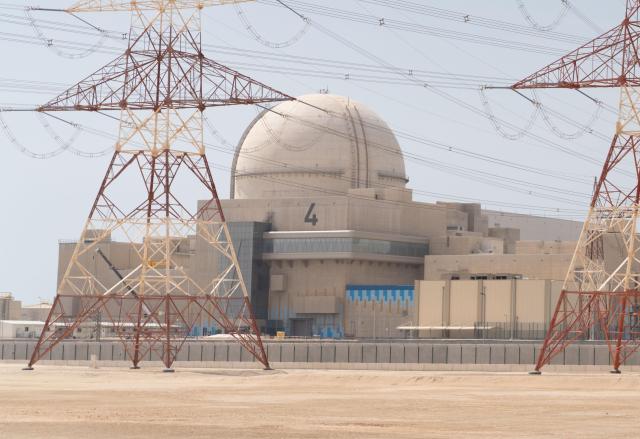
This renewed focus on the competitiveness of South Korea's nuclear technology is noteworthy. South Korea has established its competitiveness in large nuclear power projects based on its experience in constructing and operating the Barakah Nuclear Power Plant and its APR1400 technology. The recent success in securing a new nuclear project in the Czech Republic has further fueled expectations for additional overseas contracts.
Industry insiders believe that the increasing electricity demand in the AI era could lead to a restructuring of the global nuclear market, opening new export opportunities for South Korea's nuclear industry.
One industry representative stated, "As competition for electricity intensifies in the AI era, the importance of securing stable power sources is growing. A favorable market environment is being created for K-nuclear, which has the operational experience of the Barakah plant and the APR1400 technology."
* This article has been translated by AI.
Copyright ⓒ Aju Press All rights reserved.