

Journalist

Lester Munson
-
 South Korea, Japan agree to resume naval search and rescue drills after nine-year hiatus SEOUL, January 30 (AJP) - South Korea and Japan agreed on Friday to resume bilateral naval search and rescue exercises for the first time in nine years and to institutionalize annual defense ministers’ talks, as the two countries seek to restore military cooperation based on mutual trust. South Korean Defense Minister Ahn Gyu-back and Japanese Defense Minister Shinjiro Koizumi agreed on the importance of advancing defense cooperation following their meeting at the headquarters of the Japan Maritime Self-Defense Force in Yokosuka, Kanagawa. “The two sides agreed to resume a humanitarian search and rescue exercise between the Republic of Korea Navy and the Japan Maritime Self-Defense Force,” according to a joint statement released after their talks. The Korea–Japan SAREX program began in 1999 and had been held biennially until it was suspended after the 10th exercise in 2017. Bilateral defense cooperation stalled amid diplomatic and military tensions in 2018, including a controversy over the use of Japan’s Rising Sun flag, the naval ensign of its Maritime Self-Defense Force during an international fleet review held in Jeju, and a separate dispute involving alleged radar targeting and low-altitude flight between a South Korean naval vessel and a Japanese patrol aircraft. The two sides had initially sought to resume the drills in November last year, but the plan fell through after Japan declined to provide aerial refueling support for South Korea’s Air Force aerobatic team, the Black Eagles, citing the team’s training flights near the Dokdo islets. The decision led to a broader suspension of defense exchanges at the time. Following a phone call between Ahn and Koizumi on Dec. 26 last year, Japan agreed to provide refueling support for the Black Eagles, helping pave the way for the resumption of bilateral defense engagement. The ministers also shared the view that closer cooperation is necessary to maintain peace and stability in the region amid a deteriorating security environment. They reaffirmed their commitment to the complete denuclearization of the Korean Peninsula and to continuing trilateral cooperation among South Korea, the U.S. and Japan. 2026-01-30 17:45:56
 -
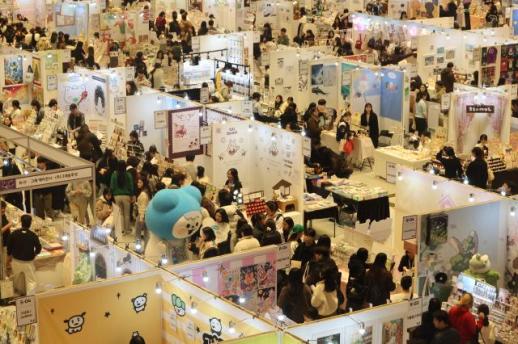 K-goods at Illustration Fair Seoul 2026 SEOUL, January 30 (AJP) - K-illustration Fair Seoul 2026 is taking place at COEX Hall D in Gangnam, Seoul. The fair opened on the 29th and runs through Feb. 1 for four days. Approximately 600 booths are showcasing a variety of domestic and international illustrations, independent publications, and merchandise. The event operates from 11 a.m. to 6 p.m. daily. The fair is scheduled to be held at BEXCO in Busan in July and at COEX Magok in August. 2026-01-30 17:40:07
 -
 LG Elec profit slumps in 2025 on restructuring costs, media business losses SEOUL, January 30 (AJP) - LG Electronics reported a sharp decline in operating profit in 2025, as hefty one-off restructuring costs and persistent weakness in its media and entertainment business weighed heavily on earnings, overshadowing steady growth in its core home appliance and vehicle component units. The South Korean electronics maker said its annual operating profit fell 27.5 percent from a year earlier to 2.48 trillion won ($1.8 billion), after slipping into an operating loss in the fourth quarter amid rising cost burdens. LG posted an operating loss of 109 billion won in the October–December period, marking its first quarterly loss in nine years, as delayed demand recovery for display-based products, intensifying competition in the global TV market and increased marketing expenses eroded profitability. Earnings were further pressured by several trillion won in non-recurring costs related to a company-wide voluntary retirement program implemented in the second half of the year, the company said. While revenue growth continued, profitability deteriorated as cost pressures outpaced sales expansion. The company’s media and entertainment division swung to an operating loss of 751 billion won for the year, reversing a profit recorded a year earlier, as sluggish global TV demand and price competition from Chinese rivals weighed on margins. By contrast, LG’s core businesses delivered relatively resilient performance. The home appliance division posted operating profit of 1.28 trillion won, supported by production optimization, price adjustments and cost controls aimed at mitigating tariff-related risks. The vehicle solutions unit also delivered its strongest performance on record, with operating profit rising to 559 billion won, driven by smoother conversion of order backlogs into sales. Business-to-business revenue, including vehicle components, heating, ventilation and air conditioning, and component solutions, rose 3 percent year on year to 24.1 trillion won, reflecting the company’s ongoing shift toward so-called “quality growth” areas. Subscription-based appliance services and direct-to-consumer sales channels continued to expand, with subscription revenue jumping 29 percent to nearly 2.5 trillion won. LG said the restructuring measures are expected to help ease fixed-cost burdens over the medium to long term, while efforts are under way to strengthen competitiveness in its media business. Looking ahead, the company said it plans to reinforce its OLED and LCD product lineup and expand its webOS-based advertising and content ecosystem. LG also highlighted growing opportunities in cooling solutions for artificial intelligence data centers, including plans to commercialize liquid-cooling technologies and deepen related partnerships. Shares of LG Electronics closed down 1.8 percent at 99,100 won on Friday. 2026-01-30 17:38:35
 -
 EU envoy to Seoul speaks out SEOUL, January 30 (AJP) - Ugo Astuto, head of the Delegation of the European Union to South Korea, addresses press on issues from Greenland to Russia at the Maehwa Hall of the Press Center in Jung-gu, Seoul, on Jan. 30. 2026. 2026-01-30 17:37:18
 -
 From security to Artic exploration, EU and Korea have a lot to work on - EU envoy to Seoul SEOUL, January 30 (AJP)-The European Union seeks to deepen cooperation on Arctic security and maritime logistics with South Korea, readying itself for the Artic shipping era by sailing a 3,000-TEU container ship from Busan to Rotterdam this July, said European Union Ambassador Ugo Astuto Friday. Speaking to press for the first time at the Seoul Press Center, Astuto noted that the strategic importance of the Arctic is being redefined by both climate change and shifting geopolitical alliances. He observed that while the region offers new economic possibilities, it is also facing increased militarization from Russia, now in its fourth year of aggression against Ukraine. The push for closer ties follows a period of diplomatic friction between the EU and the United States regarding the Arctic. European officials have expressed concern over renewed American interest in Greenland, an autonomous territory of Denmark. While some in Washington have framed the territory as a strategic necessity for American security, the EU has remained firm on Danish sovereignty and the rights of the local population. "It is for the Greenlanders to decide," Astuto said regarding the recent diplomatic standoff. "They are a sovereign people and they will take their own decisions as to their future." He noted that Denmark is an EU member and that the EU will act as a "catalyst" for support in increasing security in the Arctic, particularly as Russia seeks to strengthen its military footprint in the region. This backdrop of transatlantic tension makes South Korea's upcoming maritime project particularly significant. The South Korean government has announced plans to conduct a pilot operation of a 3,000 TEU container ship from Busan to Rotterdam between July and August to prepare for the opening of the Arctic shipping era. Astuto said the EU is currently drafting a new Arctic policy paper to reflect these changed circumstances. He suggested that South Korea’s expertise in shipbuilding and polar navigation provides a natural opening for dialogue. "There is a possibility for a conversation to be engaged within this framework," he said, provided that such cooperation respects the fragile environment and the peace of the region. The ambassador also linked the security of the Indo-Pacific directly to that of Europe, pointing to the nexus between Moscow and Pyongyang. "Security in Europe and security in the Indo-Pacific are interconnected," Astuto said. "We see graphic evidence of this in the deployment of North Korean troops in support of Russia against Ukraine." He noted that in exchange for manpower, North Korea is receiving military technology and battlefield experience, particularly regarding the use of drones. This has led the EU to seek record-high defense budgets and closer industrial ties with South Korea. Astuto observed that South Korean defense companies have already become "major suppliers" to several EU member states, a trend he expects to grow as the Russian threat persists. On the economic front, the ambassador addressed the rise of protectionism and the unpredictability of global trade. He described South Korea as an "outstanding example" of a like-minded democracy that shares the EU’s commitment to rules-based multilateralism. Regarding the Carbon Border Adjustment Mechanism (CBAM), which has caused concern among South Korean exporters, Astuto clarified that the policy is an environmental measure rather than a trade barrier. "CBAM is not a trade measure; CBAM is an environmental measure," he said. "The purpose is to make some of the most polluting industries, such as steel or cement, green." He said a two-year transitional period was designed to allow for "intense conversation" with partners like South Korea to ensure that heavily polluting industries can transition to green energy without facing double taxation. The ambassador reiterated the need for reliable supply chains in an era of economic coercion as he ended the conference. "As an advanced democracy, we must have reliable supply chains in place and this means that we can work together at de-risking," Astuto said. He confirmed that a dedicated dialogue channel between the EU and South Korea is being established to address these vulnerabilities, with a first meeting expected to take place soon to discuss ways to "reduce dependencies and increase diversification." 2026-01-30 17:35:50
 -
 Uzbekistan and Türkiye expand strategic partnership through trade and transport links SEOUL, January 30 (AJP) - The diplomatic relationship between Uzbekistan and Türkiye has evolved into a substantive, comprehensive strategic partnership, moving beyond formal definitions to include deep economic and regional cooperation. Recent high-level meetings in January 2026 confirmed that both nations have established a permanent institutional framework to manage their bilateral ties. The primary vehicle for this cooperation is the High-Level Strategic Cooperation Council, led by the presidents of both countries. A fourth meeting of the council is set for later in 2026. This structure is supported by direct dialogue between President Shavkat Mirziyoyev and President Recep Tayyip Erdoğan, who maintain regular contact to coordinate government and business activities. Regional security and international policy also feature prominently in the relationship. During a 4+4 format meeting in January 2026, officials from both sides discussed the situations in Afghanistan, Gaza, Ukraine, and Syria. The two countries also work together within the Organization of Turkic States (OTS) to align their approaches to digital development, transport, and the economy across the Turkic world. Economic engagement has become a major driver of the relationship. Bilateral trade exceeded 3 billion USD in 2025, with a medium-term goal of 5 billion USD and a long-term target of 10 billion USD. Turkish investment in Uzbekistan reached 2.2 billion USD in 2024 and grew to 2.9 billion USD during the first ten months of 2025. By the end of last year, more than 2,100 companies with Turkish capital were operating in Uzbekistan. On January 21, 2026, the Joint Strategic Planning Group met for the fourth time to review the Action Plan from the Joint Economic Commission (JEC). This commission oversees practical trade initiatives and industrial cooperation. For Uzbekistan, these ties bring in Turkish technical expertise and capital, while Turkish businesses gain access to a growing market of 38 million people. Transport links also expanded significantly in 2025, particularly in the aviation sector. There are now 97 weekly flights connecting eight different destinations, including Tashkent, Samarkand, Ankara, Istanbul, and Izmir. This increase in flight frequency is designed to improve business mobility, tourism, and the potential for air cargo growth. Energy and education remain key areas of focus. Turkish companies are currently helping to modernize Uzbekistan's energy grid and develop renewable energy projects. Additionally, branches of several Turkish universities have opened in Uzbekistan to facilitate student and faculty exchanges. Tourism has also grown, with Türkiye now among the top five sources of visitors to Uzbekistan. Alisher Kadirov, a department head at the Institute of Strategic and Regional Studies under the President of Uzbekistan, noted that future efforts will likely focus on industrial projects aimed at third-country exports and the expansion of multimodal logistics. 2026-01-30 17:33:18
 -
 SK hynix marches toward historic milestone in otherwise lackluster Asian market SEOUL, January 30 (AJP) — SK hynix continued its relentless advance Friday, propelled by frenzied retail buying toward the symbolic 1-million-won milestone, even as broader Asian markets struggled for direction. The chipmaker's surge briefly lifted Korea's benchmark KOSPI above the 5,300 level earlier in the session, though the index later pared gains to finish nearly flat at 5,224.36. The junior KOSDAQ retreated 1.29 percent to 1,149.44, taking a breather after a stunning run earlier this week. The won weakened to 1,441 per dollar as the greenback strengthened globally. The move followed reports that former Federal Reserve governor Kevin Warsh is emerging as a leading candidate to become the next Fed chair, a development that pushed U.S. Treasury yields higher and added pressure on emerging-market currencies. Heavy retail buying offset selling by foreign investors and institutions. Individual investors snapped up a net 2.30 trillion won worth of shares, while foreigners and institutions sold a net 1.97 trillion won and 424.7 billion won, respectively. Market attention remained firmly on SK hynix, which continued to outperform on strong AI-related demand. The shares extended gains into afternoon trading, buoyed by rising interest from global retail investors and a target-price upgrade from Citigroup. Citing expectations of sharp increases in DRAM and NAND prices, Citi raised its target price to 1.4 million won. Despite intermittent profit-taking, strength in high-bandwidth memory (HBM) and sustained AI-driven demand underpinned additional buying, sending the stock up 5.57 percent to close at 909,000 won. Gains, however, were largely confined to SK hynix. Most heavyweight stocks retreated, with Samsung Electronics edging down 0.12 percent to 160,500 won. Samsung Biologics slid 1.75 percent to 1,745,000 won, Samsung Life Insurance fell 1.93 percent to 188,300 won, and LG Energy Solution dropped 4.44 percent to 398,000 won. In the defense and aerospace sector, Hanwha Aerospace closed unchanged at 1,300,000 won. Shipbuilding stocks weakened, with HD Hyundai Heavy Industries falling 2.21 percent to 575,000 won and Hanwha Ocean down 2.40 percent to 138,500 won. Auto shares extended declines as tariff-related cost concerns continued to weigh on the sector. Hyundai Motor tumbled 5.30 percent to 500,000 won, while affiliate Kia slipped 1.48 percent to 152,600 won. Elsewhere in Asia, Japan's Nikkei 225 dipped 0.10 percent to 53,322.85 amid unease over potential shifts in U.S. monetary-policy leadership. China’s Shanghai Composite fell 0.96 percent to 4,117.95. 2026-01-30 17:23:04
 -
 Ferry service along Han River to fully resume in March after safety checks SEOUL, January 30 (AJP) - Seoul's water ferry service along the Han River is expected to resume full operations in early March, the Seoul Metropolitan Government said on Friday. The service was halted on some routes due to technical glitches after its bombastic launch in September last year. The city government had planned to resume the service in January, but it was delayed as safety inspections and other checks by the Ministry of Interior and Safety took longer than expected. The ministry found numerous violations in regulatory compliance and facility management, prompting it to issue over 50 corrective measures. The city government is now required to submit detailed plans and proposed actions by mid-February to ensure the service resumes in March. Once fully resumed, the service will offer about 16 one-way trips daily, gradually expanding to more routes with up to 12 ferry boats, including express trips, serving as a new transportation option for commuters and tourists while allowing them to enjoy a scenic cruise along the river in the heart of Seoul. A city official vowed, "We will prioritize safety to restore public trust while making the service more convenient for commuters and other users." 2026-01-30 17:08:26
 -
 Foreign visitors to South Korea recover to pre-pandemic levels SEOUL, January 30 (AJP) - The number of foreign visitors to South Korea last year surpassed pre-pandemic levels, according to data released by the Korea Tourism Organization on Friday. The country welcomed about 18.94 million visitors last year, up 8.2 percent from the previous record of 17.50 million in 2019, just before the coronavirus pandemic closed borders around the world. Chinese visitors accounted for the most with 5.48 million, followed by Japan with 3.65 million, Taiwan with 1.89 million, the U.S. with 1.48 million, and Hong Kong with 620,000. In December alone, South Korea saw 1.52 million visitors, up 19.5 percent from the same month a year earlier. With visitor numbers from China gradually recovering to 77.4 percent from levels seen in 2019, Taiwan led the rebound with a 181.4 percent increase, followed by the U.S. at 136.5 percent, driven in part by the popularity of K-pop and other cultural attractions. Outbound travel by South Koreans also recovered to 29.55 million last year. During the Christmas holiday season in December, some 2.75 million people traveled overseas, seeing a recovery to 117.3 percent compared to the same month in 2019. 2026-01-30 15:50:46
 -
 Samsung SDI signs major battery deal in US, possibly with Tesla SEOUL, January 30 (AJP) - Samsung SDI has signed a large battery supply contract in the United States for energy storage systems, the company said on Friday. Samsung SDI said details of the contract, including its value and duration, will remain confidential until Jan. 1, 2030. The counterparty was not also disclosed, but industry officials widely view Tesla as the leading candidate. Tesla has been actively securing battery supplies for ESS, including a 6 trillion won contract signed in July with LG Energy Solution for lithium iron phosphate, or LFP, batteries. The sources said the size and confidentiality period suggest the deal could be worth trillions of won. Samsung SDI said its U.S. unit, Samsung SDI America, signed the agreement with a U.S. customer. The company is increasingly focusing on ESS sales to help offset a temporary slowdown in electric-vehicle demand. Market attention has centered on Tesla, which has been diversifying its battery supply chain as demand grows for its large-scale ESS product, the Megapack. In November, speculation emerged that Samsung SDI would supply Tesla with about 10 gigawatt-hours of batteries annually for three years. At the time, Samsung SDI said it was in talks but had not finalized a deal. Roughly two months later, the company confirmed it had signed a supply contract, without naming the customer. The agreement comes as the industry prepares for what some analysts have described as an “AI power shock.” Data centers running generative AI services such as ChatGPT require stable, round-the-clock electricity, increasing reliance on ESS to store power from intermittent renewable sources such as solar and wind. Samsung SDI has traditionally focused on high-output, high-energy-density nickel-cobalt-aluminum batteries, but has been expanding into lower-cost LFP batteries as part of its technology strategy. The company has begun operating an ESS production line at StarPlus Energy, its joint venture plant with Stellantis, and plans to expand U.S. ESS battery production capacity to about 30 gigawatt-hours a year by the end of this year. It is also moving to convert a production line to manufacture LFP batteries for ESS, with operations targeted by year’s end. Analysts said the new order could help support Samsung SDI’s profitability as electric-vehicle demand growth slows, with the rapidly expanding North American ESS market emerging as a new source of cash flow. Research firm SNE Research forecasts the region’s ESS market will grow from 55 gigawatt-hours in 2023 to 181 gigawatt-hours in 2035. A Samsung SDI official declined to confirm the customer’s identity but said demand for grid-scale ESS is rising sharply. “With the arrival of the AI era, we will strengthen order-winning efforts centered on North America and diversify our lineup, including LFP, to secure market leadership,” the official said. * This article, published by Aju Business Daily, was translated by AI and edited by AJP. 2026-01-30 15:45:28