

Journalist

Lester Munson
-
 Hyundai Motor chairman joins Canada envoy team to back submarine bid SEOUL, January 26 (AJP) - Hyundai Motor Group Chairman Chung Eui-sun is joining a special envoy team to support South Korea’s bid for the Canadian Patrol Submarine Project, government and industry officials said on Monday. Chung will depart for Canada later in the day to back the government-led effort, the officials said. A defense-industry envoy team, including Presidential Chief of Staff Kang Hoon-sik and Industry Minister Kim Jeong-gwan, will also leave for Canada on Monday to promote South Korea’s bid for the project. The government requested participation from major industrial groups including Hyundai Motor Group, Hanwha Group, HD Hyundai and Korean Air. Chung will be joined by Hanwha Group Vice Chairman Kim Dong-kwan and Ju Won-ho, head of HD Hyundai Heavy Industries’ naval and medium-sized ship business division. The CPSP is a major defense procurement program to build up to 12 diesel-powered submarines. Construction costs are estimated at up to 20 trillion won ($15 billion), while the total value of the project could reach as much as 60 trillion won when including 30 years of maintenance, repair and operations (MRO), according to officials. A consortium formed by Hanwha Ocean and HD Hyundai Heavy Industries has been shortlisted alongside Germany’s Thyssenkrupp Marine Systems (TKMS) and is competing in the final stage of the tender. A decision is expected in June. Canada has been seeking industrial offsets as part of the procurement, including investment and other forms of compensation from potential suppliers in South Korea and Germany. Offsets typically involve arrangements such as technology transfers, local production or export opportunities for components as part of major defense contracts. * This article, published by Aju Business Daily, was translated by AI and edited by AJP. 2026-01-26 10:30:59
 -
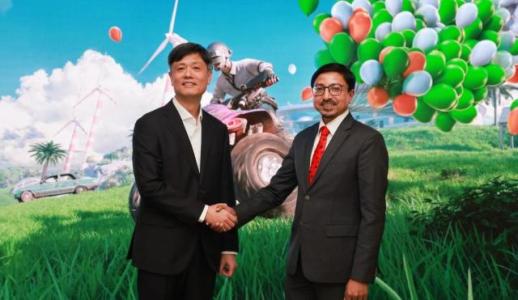 Krafton executives meet Indian ambassador to discuss tech investment SEOUL, January 26 (AJP) - Krafton announced on January 23 that it held talks with Indian Ambassador to South Korea Gourangalal Das at its Seoul headquarters to outline plans for expanded technology cooperation and investment in India. Ambassador Das met with senior Krafton executives, including Board Chairman Chang Byung-gyu and Kim Nak-hyung, the head of the company's India and emerging markets division. Deputy Chief of Mission Nishi Kant Singh also attended. The group exchanged views on the current state of India's technology ecosystem, covering artificial intelligence, digital content, and entertainment. They also discussed how private sector investment from South Korea could support broader industrial growth in India. The talks centered on the "KRAFTON-NAVER-MIRAEASSET Unicorn Growth Investment Fund." This investment vehicle is being established by Krafton in partnership with Naver and Mirae Asset Group. The fund, which targets a total size of up to 1 trillion won, aims to pool resources from leading South Korean corporations to support startups. Krafton intends to use this initiative to increase its mid-to-long-term investments in promising Indian technology firms. "India is rapidly growing as a core hub for global technology innovation, and it is significant that South Korean companies are expanding long-term cooperation and investment centered on the Indian market," Ambassador Das said. "We expect that private sector-led investment, including that of Krafton, will play an important role in helping Indian technology companies and startups grow and leap into the global market." Chairman Chang noted that Krafton views the region as more than just a consumer base. "For Krafton, India is not merely a market for overseas sales but a strategic partner country where we have built trust and standing through 'Battlegrounds Mobile India'," Chang said. "Based on this experience, the Unicorn Growth Investment Fund will serve as a starting point to expand cooperation with promising Indian enterprises beyond gaming into various industrial sectors." Krafton stated it plans to continue identifying investment targets through the fund and will look for further opportunities to link the South Korean and Indian technology sectors. 2026-01-26 10:14:29
 -
 S-Oil's annual operating profit tumbles 31.7% on weak petrochemical margins SEOUL, January 26 (AJP) - South Korean refiner S-Oil reported a 31.7 percent plunge in operating profit for 2025, dragged down by mounting losses in its petrochemical division amid a prolonged industry downturn. The company posted an operating profit of 288.2 billion won ($198.8 million) for the year, down from 422.1 billion won in 2024, according to a regulatory filing on Monday. Annual revenue slipped 6.5 percent to 34.25 trillion won as global oil prices softened throughout the year. S-Oil swung to a net profit of 216.9 billion won, reversing the previous year's loss, buoyed by a robust fourth quarter that defied the broader annual decline. The October-December period delivered an operating profit of 424.5 billion won, surging 90.9 percent from a year earlier. The refiner's lubricant business emerged as the sole bright spot, generating 582.1 billion won in operating profit. However, both the refining and petrochemical segments sank into the red, posting operating losses of 157.1 billion won and 136.8 billion won, respectively. Looking ahead, S-Oil projected favorable market conditions for 2026, citing expectations that global demand growth would outpace capacity additions from new refineries and paraxylene plants. The company also anticipates continued support from low crude prices and subdued official selling prices. The refiner's massive Shaheen Project, a crude-to-chemicals complex, has reached 93.1 percent completion as of Jan. 14. S-Oil said it aims to achieve mechanical completion by June and commence commercial operations by December. S-Oil shares traded at 95,600 won on Monday morning, down 3.92 percent from the previous market closure. 2026-01-26 10:04:06
 -
 OPINION: Behind the seizure of military power, is the Chinese military system strengthening or weakening SEOUL, January 26 (AJP) - A national military is both a tool of power and the ultimate safeguard for a country's survival. Historically, military control has rested on a balance between two pillars: political oversight and the autonomy of a professional military organization. When these two elements are in balance, a military grows stronger. When only control remains and autonomy vanishes, the military ceases to be an army and becomes a political organ. What is currently unfolding within the People’s Liberation Army (PLA) is a process where this balance is collapsing. On the surface, recent personnel reshuffles within the Central Military Commission (CMC) appear to be an extension of anti-corruption efforts and the establishment of discipline. However, looking at the scope and depth of the purges, as well as the nature of the individuals removed, this is not a simple cleanup of corruption. It is a political restructuring that changes the very nature of the military power structure. The military command elite is being dismantled, and the collective military decision-making system is effectively ceasing to function. Originally, while the CMC centered on a single chairman, practical military judgments were made through discussion and coordination among vice chairmen and members. Strategy, operations, theater command, weaponry systems, and joint operation doctrines were the domain of professional military elites. Recent trends, however, move toward dismantling this group and concentrating the responsibility for military judgment into the hands of the top political leader alone. The core of this change is more evident in who remains rather than who was removed. It is symbolic that the survivors are not from combat command lines but from inspection and political backgrounds. This signifies that internal control, loyalty management, and political security have become higher priorities than actual combat capability. This is the moment a military organization shifts from a system prioritizing combat efficiency to one prioritizing political trust. The problem begins here. Modern warfare is no longer a matter of troop size or equipment quantity. It is a complex conflict combining intelligence, space, cyber, AI, and electronic warfare. Such wars require rapid judgment from field commanders, creative responses to unexpected situations, and horizontal collaboration rather than a top-down structure. However, when the fear of purges dominates an organization, officers choose "safe judgments" over proactive ones. Reporting increases and responsibility moves upward while field autonomy disappears. The military may appear safer, but it does not become stronger. Another structural issue is the collapse of responsibility distribution. In a collective leadership system, military failures are absorbed within the institution. But when supreme decision-making power is concentrated in an individual, failure is directly linked to that individual. This may make a leader more cautious, but it also increases the risk of excessive information control and self-confirmation bias. A structure where only the information a leader wants to hear is reported may look powerful on the outside, but it is actually the most vulnerable. These internal structural changes have repercussions for the international order. It is difficult to conclude whether China will become more aggressive or more cautious. One thing is certain: predictability is decreasing. As the military becomes politicized, it becomes harder for outsiders to analyze China’s actions through military logic, as political considerations are likely to override strategic calculations. The Taiwan issue must also be viewed through this lens. While large-scale military actions tend to be suppressed during periods of internal military restructuring, the temptation to use external tension for internal cohesion also exists. The United States and its allies are likely to perceive this uncertainty as a threat and strengthen their defensive systems. Consequently, a paradox emerges where China’s internal military maintenance stimulates an external arms race. The Korean Peninsula cannot avoid indirect impacts. If the strategic focus of the Chinese military weakens, its crisis management capabilities in surrounding regions may also decline. When combined with the North Korean variable, this becomes a new factor of instability. The process of reorganizing into a control-centered military rather than a strong one increases uncertainty for neighboring countries rather than providing a sense of stability. Looking back at history, there have been many leaders who completely seized control of their militaries, but cases where those militaries remained strong for long are rare. A strong military stands on expertise and trust, not fear. Balance is maintained only when political power controls the military while allowing the autonomous space necessary for the military to prepare for war on its own. Where China stands now is both the pinnacle of power and an institutional testing ground. The more important question than whether the leadership succeeded in seizing the military is this: Does that military remain in a structure capable of fighting a modern war? The completion of control can, paradoxically, be the beginning of vulnerability. This is the point the international community must watch. 2026-01-26 09:43:24
 -
 OPINION: Xi Jinping reshapes military power structure through high-level purges SEOUL, January 26 (AJP) - Reports from Beijing on January 24 regarding the Chinese military indicate more than a routine personnel reshuffle. The announcements signal a profound realignment of the power structure within the Chinese Communist Party. The initiation of investigations into Zhang You-xia, vice chairman of the Central Military Commission (CMC), and Liu Zhen-li, chief of the Joint Staff Department, for "serious violations of discipline and law" targets two pillars at the apex of the People’s Liberation Army (PLA) command chain. The move has drawn immediate attention from diplomatic and security circles in New York, London, and Tokyo. The PLA serves as the ultimate guarantor of Communist Party rule, making its internal stability a critical factor in global security and Chinese domestic politics. For decades, the operating principle of Chinese politics has been that "the party commands the gun." However, the military has historically functioned as a complex ecosystem of revolutionary families, regional factions, and patronage networks. Even during the reform and opening-up era following Deng Xiaoping, the military maintained an independent sphere through economic interests and defense procurement. The anti-corruption campaign led by President Xi Jinping over the past decade has focused on dismantling these independent power centers. The previous downfalls of former CMC vice chairmen Xu Cai-hou and Guo Bo-xiong served as early indicators. Subsequent purges within the Rocket Force and equipment procurement divisions demonstrated that no department was exempt. The current investigations represent a symbolic peak in this process, sending a clear message that no individual, regardless of rank, is untouchable. Strategic analysts in Washington and on Wall Street are focusing on the structural consequences of these moves rather than the moral justifications. Reliability and continuity are essential assets in any military organization. When the top command is shaken, decision-making often becomes rigid, and mid-level officers may adopt a passive stance to avoid scrutiny. This "fear of approval" can delay sensitive matters such as defense procurement, the deployment of new power systems, and joint combat training. The leadership’s decision to proceed despite these risks suggests that long-term control is being prioritized over short-term efficiency. As China faces critical challenges including military modernization goals, the Taiwan issue, and strategic competition with the United States, the leadership appears determined to consolidate the command structure under a single point of authority. This creates a tension between political loyalty and combat readiness. While external observers question whether prioritizing loyalty weakens professional expertise, the perspective from Beijing is that corruption and factionalism inherently limit actual combat effectiveness, regardless of how modern the weaponry is. Consequently, anti-corruption efforts are framed not merely as a moral discourse but as a logic for rebuilding military strength. However, the process increases internal uncertainty and raises questions abroad regarding the stability of the Chinese military. With Chinese military activities in the East China Sea, South China Sea, and Taiwan Strait already serving as primary variables in international tension, these command changes affect the strategic calculations of neighboring countries. It remains unclear whether the military will become more aggressive once internal consolidation is complete or if it will show more restrained movement under centralized control to manage risks. Analysts suggest these events also reflect a generational shift. The era of the "Red Second Generation" military elite—descendants of revolutionary elders—is fading, replaced by a structure centered on personal loyalty networks. This aligns with broader shifts in Chinese politics toward higher power concentration and the weakening of collective leadership. The ongoing purge is likely to continue as the leadership aims for a "flawless military" ahead of the PLA’s centenary. However, historical precedent suggests that stability is rarely sustained through increased control alone. The long-term durability of the organization will likely depend on whether these measures are eventually balanced with institutionalized rules and predictable procedures. 2026-01-26 09:29:59
 -
 Vietnam stays South Korea's No. 3 trading partner for fourth year SEOUL, January 26 (AJP) - Vietnam remained South Korea’s third-largest trading partner for a fourth consecutive year as South Korean exports topped $700 billion for the first time last year, according to government and industry data released on Monday. Vietnam also generated South Korea’s second-largest trade surplus, after the United States. South Korea’s exports to Vietnam rose 7.6 percent from a year earlier to $62.8 billion in 2025, data from the Ministry of Trade, Industry and Energy and the Korea International Trade Association (KITA) showed. Imports from Vietnam increased 11.7 percent to $31.8 billion, lifting total bilateral trade 9 percent to $94.5 billion from $86.8 billion a year earlier. By trade volume, Vietnam ranked third among South Korea’s trading partners, behind China at $272.7 billion and the United States at $196.2 billion. Vietnam overtook Japan in 2022 to become South Korea’s third-largest trading partner and has held that position for four straight years. Its export growth rate of 7.6 percent ranked second among major destinations, behind Taiwan’s 44.4 percent, which officials attributed to Taiwan’s role as a hub for artificial intelligence semiconductor production. South Korea recorded a $31 billion trade surplus with Vietnam last year, its second-largest after a $49.5 billion surplus with the United States. Vietnam briefly became South Korea’s top surplus market in 2022, with $34.2 billion, and has ranked second for the past three years. Officials said the expansion was driven largely by strong semiconductor exports. South Korea’s semiconductor shipments to Vietnam surged 36.7 percent from a year earlier to $24.7 billion, supported by growing global investment in artificial intelligence and data centers. Trade between South Korea and Vietnam has expanded sharply since the two countries established diplomatic relations in 1992. Two-way trade has increased about 190-fold from roughly $500 million, with the trade structure shifting from labour-intensive goods such as textiles and apparel to higher-value products including semiconductors and wireless communications equipment. Following the signing of a bilateral free trade agreement in 2014, trade more than tripled from around $30 billion to $94.5 billion. Exports of consumer goods linked to the Korean Wave, including cosmetics and food products, have also risen. South Korea is also a key trading partner for Vietnam. Based on Vietnam Customs data analysed by KITA, South Korea ranked as Vietnam’s second-largest source of imports and fourth-largest export destination from January through November last year. * This article, published by Aju Business Daily, was translated by AI and edited by AJP. 2026-01-26 09:24:40
 -
 Korean Air invests in drone startup to boost unmanned aircraft capabilities SEOUL, January 26 (AJP) - Korean Air has made a strategic investment in drone specialist Pablo Air, aiming to secure core unmanned-aircraft technologies and expand its presence beyond its traditional aviation business. The two companies signed a strategic equity investment agreement on Jan. 23 at Korean Air’s Seosomun office in central Seoul, according to Korean Air, Monday. Pablo Air specializes in swarm artificial intelligence technology, which allows multiple drones to operate as a coordinated group, similar to birds flying in formation. Pablo Air has demonstrated its technological competitiveness by becoming the first company in South Korea to reach Stage 4 of a five-stage “swarm coordination” technology framework, according to Korean Air. Korean Air said the deal forms part of its mid- to long-term growth strategy in aerospace, which it has identified as a key future business area. The company plans to apply Pablo Air’s swarm AI autonomous-flight algorithms, integrated control platform, and small- and medium-sized drone development capabilities to its own medium- and large-sized unmanned aircraft, expanding its footprint in the defense sector. The partnership goes beyond financial backing and is intended to support Pablo Air’s stable growth by combining the infrastructure of a large corporation with the agility of a technology venture, Korean Air said. The two sides plan to conduct joint research and development on swarm flight, explore new business models, and share unmanned-aircraft technologies and business expertise. “This investment is a strategic choice to secure future competitiveness in a rapidly changing industrial environment and part of our efforts to build a healthy industrial ecosystem,” a Korean Air official said. “We will continue to pursue technological innovation and shared growth by strengthening cooperation with capable small and venture companies.” Korean Air operates a dedicated unmanned-aircraft business unit and develops drones domestically. It said it has produced multiple systems now in use by the South Korean military and local governments, including medium-altitude surveillance and reconnaissance drones, low-observable unmanned wingmen, division-level reconnaissance drones, multipurpose unmanned helicopters and vertical takeoff-and-landing unmanned aircraft. * This article, published by Aju Business Daily, was translated by AI and edited by AJP. 2026-01-26 09:10:09
 -
 Korea's two largest chipmakers to report earnings and HBM plans on same day this week SEOUL, January 26 (AJP) - Samsung Electronics and SK hynix, the world's two largest memory makers based in South Korea, are set to report record earnings on the same day - Thursday - this week in full display of the strength of the current semiconductor upcycle. Instead of numbers, the market would be watching what the leading chipmakers would reveal about their high-bandwidth memory (HBM) strategies and capacity plans during conference calls. It will be the first time the two companies announce earnings on the same day. Industry watchers suspect SK hynix, which has traditionally reported after Samsung, adjusted its schedule to limit advance disclosure of sensitive information, including HBM supply plans. Samsung on Jan. 8 released preliminary fourth-quarter results showing revenue of 93 trillion won and operating profit of 20 trillion won, both quarterly records. The figures marked year-on-year increases of 22.7 percent and 208.2 percent, respectively. The strong performance was driven by Samsung’s Device Solutions (DS) division, centered on memory chips. Securities analysts estimate DS operating profit exceeded 16 trillion won, with the memory business alone generating more than 17 trillion won in operating profit. In contrast, Samsung’s Device eXperience (DX) division, which includes consumer electronics, underperformed amid sluggish demand and cost pressures linked to memory chips. Operating profit at the Mobile eXperience (MX) unit is estimated to have fallen to around 1.5 trillion won, down from 3.6 trillion won in the previous quarter. SK hynix is also expected to renew quarterly record, just one quarter after joining the “10 trillion won club” for the first time in its history. According to financial data firm FnGuide, SK hynix’s fourth-quarter consensus forecast calls for revenue of 30.519 trillion won and operating profit of 16.062 trillion won, up 54.39 percent and 98.72 percent from a year earlier. The estimate would mark its first quarter surpassing 30 trillion won in revenue, with some brokerages expecting operating profit to exceed current projections. Consensus estimates for full-year operating profit in 2025 stand at 43.53 trillion won for Samsung and 44.4 trillion won for SK hynix. As semiconductors enter what the market describes as a “super cycle,” some analysts project the two companies’ combined operating profit could reach 200 trillion won this year, with Samsung alone estimated to post 120 trillion won. Investors are closely watching commentary on next-generation HBM, including supply plans for HBM4 and mass production timelines for HBM4E, a seventh-generation product. SK hynix will begin its conference call at 9 a.m., followed by Samsung at 10 a.m. During third-quarter earnings calls in October, both companies said all HBM production capacity for 2026 had already been sold out. Competition is expected to intensify this year after Samsung — previously seen as trailing SK hynix in HBM — confirmed shipments of its 12-layer HBM3E products to Nvidia. “Their HBM guidance will offer important clues about the future direction of their semiconductor strategies,” a semiconductor industry official said. 2026-01-26 07:19:18
 -
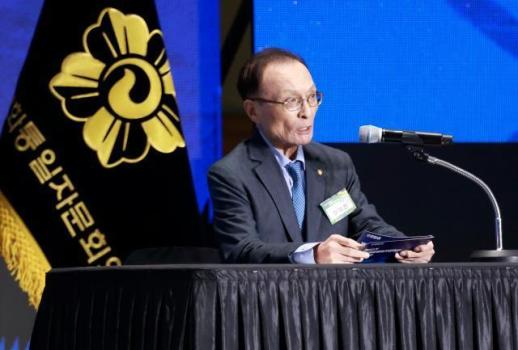 Former prime minister Lee Hae-chan dies in Viet Nam SEOUL, January 25 (AJP) - Former South Korean Prime Minister Lee Hae-chan died at a hospital in Viet Nam on Sunday after suffering a heart attack the previous day. He was 74 years old. The Peaceful Unification Advisory Council (PUAC), a presidential consultative body, said, "The senior vice chairperson died at 2:48 p.m. local time," adding it is currently discussing arrangements for transporting his body to Seoul and funeral services with his family and relevant authorities. Just a day after arriving in Ho Chi Minh City to attend a PUAC meeting, Lee was rushed to a hospital after collapsing around noon on Saturday. He had reportedly complained of flu-like symptoms before his departure from Seoul. As his condition suddenly worsened, he planned to cut his trip short and return home, but collapsed before he could do so. He underwent a stent insertion procedure and remained unconscious in the intensive care unit (ICU). Senior presidential aide Cho Jung-sik and several ruling party lawmakers hurriedly flew to the Southeast Asian country shortly after his collapse to support Lee and arrange his return to Seoul, but he succumbed to his illness after a daylong battle. Born in 1952 in Cheongyang, South Chungcheong Province, Lee joined South Korea's democratic movement in the 1970s while studying at Seoul National University, opposing strongman Park Chung-hee's "Yushin" or "revitalizing" reform, which undermined democratic checks and balances and would have allowed Park to maintain an authoritarian grip on power indefinitely. Since beginning his political career at the age 36 in 1988, the seven-term lawmaker held several key ministerial positions including education minister in 1998 under the late President Kim Dae-jung and prime minister in 2004 under the late President Roh Moo-hyun, overseeing the relocation of the administrative capital to Sejong to promote balanced regional development. Throughout his career, the seasoned lawmaker held numerous roles in liberal parties and served as leader of the ruling Democratic Party (DP) from 2018 to 2020 during the Moon Jae-in administration. Having retired from politics in 2020, Lee, widely regarded as an expert in political strategies, remained a steady and influential hand within the liberal camp throughout his final years. 2026-01-25 17:33:30
 -
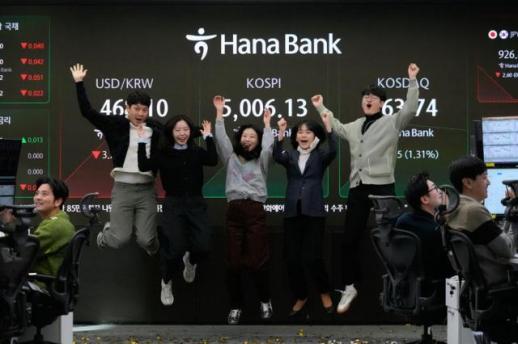 Foreign investors' holdings of South Korean stocks hit highest level in nearly six years SEOUL, January 25 (AJP) - Foreign investors' share of stocks on South Korea’s benchmark KOSPI climbed to its highest level in five years and nine months in January, according to figures released by the Korea Exchange on Sunday. The total market capitalization of KOSPI‑listed companies stood at 3,759.72 trillion Korean won (roughly US$2.55 trillion) as of early this month, with foreign holdings valued at 1,398.03 trillion won, accounting for about 37.18 percent, the highest since April 2020. The surge was driven by strong buying in sectors such as shipbuilding, defense, and nuclear energy, following heavy purchases of chip-related stocks in the second half of last year. Foreign investors' buying spree, which began in September last year, pushed their share of KOSPI stocks to 35 percent by late October and 37 percent on Jan. 7, before dipping slightly to 36.85 percent a few weeks later. The KOSPI's strong rally at the start of the new year drove overall market capitalization sharply higher, with the index surpassing the historic 5,000-point milestone for the first time since the country's stock market began trading nearly 70 years ago. Market analysts attribute the foreign buying to expectations of large shipbuilding orders, while the surge in defense and nuclear energy stocks has to do with heightened geopolitical tensions surrounding Greenland following U.S. President Donald Trump's repeated threats to secure the Danish territory. South Korean stocks with the highest net buying by foreign investors during the first 23 days of this year were Hanwha Ocean, with 942.6 billion won, followed by Doosan Enerbility at 829.3 billion won. They also snapped up shares of Naver worth 529.8 billion won, HD Hyundai Heavy Industries worth 519.7 billion won, Celltrion worth 513.9 billion won, and Hanwha Aerospace worth 385.1 billion won. 2026-01-25 16:58:05