


Latest by
-
 South Korea to Require English Disclosures for All KOSPI-Listed Companies Starting Next March Starting in May, the number of listed companies required to file disclosures in English will jump to 265 from 111. Disclosure items will expand and some deadlines will be shortened. To raise the KOSPI market’s international standing, South Korea will also move up the start of mandatory English disclosures for all KOSPI-listed companies to next March, more than a year earlier than planned. The Financial Services Commission said it approved revisions to the “Regulations on Issuance and Disclosure of Securities” and the Korea Exchange’s disclosure rules for the KOSPI, KOSDAQ and KONEX markets at a regular meeting on Tuesday. Under the revisions, companies subject to mandatory English disclosures will increase from 111 in the current first phase to 265 in the second phase. The first phase, introduced in 2024, applied to listed companies with assets of at least 10 trillion won and foreign ownership of at least 5%, or assets of at least 2 trillion won and foreign ownership of at least 30%. From May, the second phase will cover all KOSPI-listed companies with assets of at least 2 trillion won. The list of items that must be disclosed in English will also grow. In addition to shareholder meeting results, companies must file in English all 55 categories of major management matters related to business and investment activities, as well as fair disclosures and inquiry disclosures. For KOSPI-listed companies with assets of at least 10 trillion won, the deadline will be shortened from “within three business days after filing the Korean-language disclosure” to, in principle, same-day disclosure. The third phase, which makes English disclosures mandatory for all KOSPI-listed companies, will begin next March instead of May 2028. That would expand the coverage to 848 companies. The commission said the move reflects “the KOSPI market’s status as South Korea’s flagship market and strong interest from global investors.” Starting in March, companies will also be required to disclose shareholder vote tallies. Until now, they disclosed only whether each agenda item passed. Under the revisions, companies must disclose, on the day of the meeting, the voting results for each item, including the percentages for votes in favor, against and abstentions. In regular filings such as annual reports, they must provide not only percentages but also the number of shares. Executive compensation disclosures will also become more detailed starting in May, after criticism that current disclosures do not clearly show the link between company performance and pay and make it hard to understand how compensation is calculated. Companies will add total shareholder return and operating profit for the past three years to executive pay disclosures. They must also provide specific reasons and calculation standards for each component of compensation. Because stock-based compensation for executives has been disclosed separately from pay, it has been difficult to gauge total compensation. Going forward, companies must disclose restricted stock and other stock-based awards together with total executive compensation and detailed, individual compensation information. They must also include the cash-equivalent value of unrealized stock-based compensation.* This article has been translated by AI. 2026-01-28 18:03:34
 -
 Korean GM Workers Rally Against Mass Layoffs at Sejong Logistics Contractor "Direct and subcontract workers have united. Bring out the real boss now." Direct employees and subcontract workers at Korean GM rallied together over mass layoffs involving subcontract workers at the company’s Sejong logistics center. On Jan. 28, about 300 members of the Korean Confederation of Trade Unions and the Korean GM branch of the Korean Metal Workers’ Union held a joint rally outside the west gate of Korean GM’s Bupyeong plant, demanding that the company immediately reverse what they called unfair dismissals of Sejong logistics subcontract workers. Despite temperatures of minus 3 degrees Celsius, protesters chanted, "Bring out the real boss now." About 50 laid-off workers from Woojin Logistics, a Sejong logistics center contractor, wore closure notices on their backs to protest the dismissals. The union said Korean GM "preemptively fired subcontract workers with bargaining power" ahead of the March implementation of revisions to Articles 2 and 3 of the Trade Union Act, known as the Yellow Envelope Act. Woojin Logistics workers formed a union in June last year, citing low pay and forced overtime, the union said. Korean GM later terminated its contract with Woojin Logistics, and 120 workers were laid off effective Jan. 1 this year. Park Ok Ju, head of the KCTU’s North Chungcheong regional headquarters, said Korean GM promised to resolve the issue through talks while saying it would ensure employment succession, but then carried out layoffs. She also criticized what she described as shifting blame to striking workers after consumer complaints emerged over parts supply disruptions. The Sejong logistics union expressed regret that months of protests have disrupted parts supplies. About 1.5 million Chevrolet vehicles are registered in South Korea, raising concerns that a prolonged dispute could increase inconvenience for drivers. Sun Ji Hyun, co-chair of a joint committee supporting the GM parts logistics union, said workers understood the impact on consumers and felt sorry, but argued that ignoring what she called injustice because of inconvenience would make it impossible to correct wrongdoing by GM’s capital. Direct employees said they would also support efforts to resolve the dispute. The union claimed the Sejong layoffs, along with Korean GM’s plan to close nine company-run service centers in South Korea, signals restructuring. It said it has filed for an injunction with the Incheon District Court to block the closures. Ahn Gyu Baek, head of the Korean GM union branch, said a special labor-management meeting was held the previous day to seek withdrawal of the service-center closure plan. He warned that if both the service-center issue and the Sejong parts logistics dispute are not resolved, labor-management relations this year will head toward a breakdown. The union said it delivered a request for negotiations to Korean GM headquarters, urging the parent company to take responsibility for resolving the dispute. It also said it plans to hold a performance on Jan. 29 at the Chevrolet Daejeon Center with vehicle owners to oppose the service-center closures. Kim Gi Yeon, secretary-general of the KCTU’s North Chungcheong regional headquarters, said Korean GM is taking steps in advance to undermine the intent of the Yellow Envelope Act revisions. He said the moves appear to reflect the possibility of downsizing or withdrawal from South Korea ahead of the completion of a 2028 agreement between global GM and the Korea Development Bank.* This article has been translated by AI. 2026-01-28 18:03:00
 -
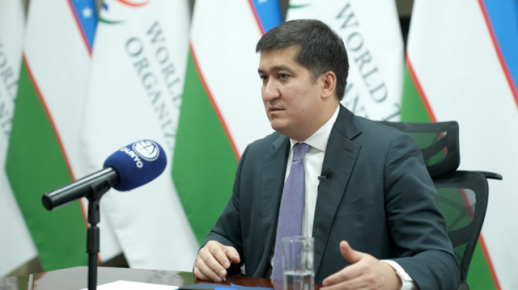 Uzbekistan to retain trade protection rights during World Trade Organization accession SEOUL, January 28 (AJP) - Azizbek Urunov, the Special Representative of the President of Uzbekistan on World Trade Organization (WTO) issues, announced on January 26 that the country will maintain the right to protect specific economic sectors as it enters the final stages of its accession process. This measure is intended to support national industries facing temporary difficulties or pressure from imports while aligning with international trade rules. The move follows nearly a decade of systemic economic reforms initiated by President Shavkat Mirziyoyev in 2017. While Uzbekistan originally applied for WTO membership in 1994, negotiations only entered an active phase in 2020 after the country liberalized its currency policy, revised foreign trade regulations, and eliminated exclusive rights held by state enterprises to meet global standards. As a developing nation, Uzbekistan is utilizing WTO provisions that allow member states to implement trade remedies, including anti-dumping, countervailing, and safeguard measures. These tools are designed to prevent unfair competition, such as foreign companies selling products at artificially low prices to dominate the domestic market. Under these rules, developing countries can apply protective measures for up to eight years, and in certain circumstances, up to ten years. World Bank estimates suggest that WTO membership could increase the gross domestic product of Uzbekistan by approximately 17 percent over the next five to seven years. The country's economy has grown significantly over the last decade, with the gross domestic product rising from 50 billion dollars to approximately 147 billion dollars by the end of 2025. Accession is also expected to provide Uzbekistan with legal mechanisms to challenge discriminatory trade barriers in Geneva. Urunov noted that the country currently faces obstacles where partners may accept raw materials but restrict the import of processed goods with high added value. Membership would allow these disputes to be settled through the universal principles of the WTO. "As a developing country, Uzbekistan, in accordance with WTO agreements, retains the right to protect certain sectors of the economy in the event of specific difficulties," Urunov said. "WTO membership sends an international signal that the country’s economy operates under transparent, predictable and investor-friendly rules." Uzbekistan is currently preparing national specialists to manage these trade protection mechanisms and is drafting new laws to regulate their application. The government aims to complete the final stage of negotiations to support its "Uzbekistan - 2030" development strategy. 2026-01-28 18:00:04
 -
 Ecuador Protests After ICE Agents Try to Enter Consulate in Minneapolis U.S. Immigration and Customs Enforcement agents tried to enter Ecuador’s consulate in Minneapolis on Monday but left after consulate staff blocked them, according to The Washington Post. Ecuador’s Foreign Ministry said in a statement that it immediately submitted a letter of protest to the U.S. Embassy in Ecuador, demanding steps to ensure such an incident does not happen again at any Ecuadorian consulate in the United States. The ministry said the agents attempted to enter the building at about 11 a.m., but staff stopped them and activated emergency response procedures to ensure the safety of Ecuadorian citizens inside. The U.S. Department of Homeland Security did not provide a separate response to the Post’s request for comment. Video shared online shows ICE agents approaching the entrance as staff rushed to the door and said, “This is the Ecuadorian consulate. You cannot enter.” One agent warned that he would arrest a staff member if touched, but the agents ultimately left after staff repeatedly said they could not come in. Under international law, law enforcement in a host country cannot enter a foreign diplomatic mission without consent from consular or ambassadorial officials. An exception applies when there is an immediate threat to life, such as a fire, in which case consent is presumed. The incident occurred during an ongoing federal immigration enforcement operation in Minneapolis. The Post reported the operation has drawn criticism and legal challenges over its tactics, and that controversy has intensified after federal agents this month fatally shot two U.S. citizens, Rene Good and Alex Pretti. Minneapolis City Council President Elliott Payne said he spoke with Ecuador’s ambassador, who said he believes the ICE agents tried to enter the consulate by mistake. Payne also said ICE agents entered a cafe near the consulate and threatened protesters, saying, “We will come back and arrest all of you.” The cafe is known as a frequent gathering spot for protesters in northeast Minneapolis.* This article has been translated by AI. 2026-01-28 18:00:00
 -
 Fire at Scrap Yard in Cheonan Extinguished; No Injuries Reported A fire broke out at a scrap yard in Cheonan, South Korea, officials said. Fire authorities said the blaze was reported at about 5:17 p.m. on the 28th at a scrap yard in Seonghwan-eup, in Cheonan’s Seobuk-gu district. Officials responded after residents reported seeing black smoke and fully extinguished the fire 22 minutes later. No injuries were reported. Earlier, Cheonan sent an emergency text alert at about 5:28 p.m., warning residents to avoid inhaling smoke and asking drivers to take alternate routes.* This article has been translated by AI. 2026-01-28 17:57:53
 -
 South Korea’s Law Firm Won Wins 3 Categories at ABLJ 2025 Korea Law Firm Awards Law Firm Won said Jan. 28 it won three categories — defense industry, ESG and entertainment and sports — at the “Korea Law Firm Awards 2025,” announced by Asian Business Law Journal (ABLJ). ABLJ, a legal media outlet covering Asia, conducts annual surveys of companies and law firms in the region to select top performers. Won’s latest results extend its streak to two straight wins in ESG and three straight in entertainment and sports, while marking its first win in the defense industry category. In its assessment, ABLJ said that amid the rapid growth of South Korea’s defense industry, Won strengthened its defense legal advisory capabilities by bringing in attorneys Lee Tae Hwi and Lee Su Dong as partners. Won’s defense industry team, made up of experts with Army, Navy and Air Force backgrounds, cited its track record after a reorganization, including being appointed to represent the Ministry of National Defense in a lawsuit involving 45 billion won in alleged unjust enrichment. The firm said it has also been supporting South Korean defense companies’ overseas expansion and is carrying out a policy research project to help address the Cybersecurity Maturity Model Certification, or CMMC, which it described as a key requirement for entering the U.S. market. Won’s ESG Center said it systematized advisory capabilities across ESG last year and expanded into compliance and risk after Lee Tae Kyung joined as co-head. The firm said its practical approach has been well received, including work on ESG disclosure risk analysis and response strategies, corporate governance advice, guidance on sustainability reports and support for responding to ESG ratings. Won’s media and entertainment team said it has built fast, high-quality advisory capabilities based on experience across film, drama and animation. As K-content has expanded globally, the firm said advisory work has grown for collaboration, co-production and overseas investment with Southeast Asian production companies. It also said it operates a structured system to verify copyrights and related rights for international co-productions and is leading overseas IP protection projects with partner law firms and Interpol as concerns rise over copyright infringement on illegal distribution sites. Lee Yoo Jung, Won’s managing partner, said the firm’s first win in defense and its continued wins in entertainment and sports and ESG reflect efforts to respond early to industry changes. “We will continue to provide precise and effective solutions to the complex risks companies face,” Lee said.* This article has been translated by AI. 2026-01-28 17:57:28
 -
 LG Household & Health Care Reports 2025 Operating Profit Down 62.8% LG Household & Health Care said in a regulatory filing on Tuesday that its 2025 consolidated revenue fell 6.7% from a year earlier to 6.3555 trillion won, while operating profit dropped 62.8% to 170.7 billion won. Fourth-quarter revenue declined 8.5% to 1.4728 trillion won, and the company posted an operating loss of 72.7 billion won, swinging to a loss from a year earlier. The company said results weakened as it booked large one-time costs tied to an aggressive overhaul of distribution channels and workforce-efficiency measures, including a voluntary retirement program. By division, annual Beauty revenue fell 16.5% to 2.35 trillion won, and operating profit turned negative with a loss of 97.6 billion won. The company said it made visible progress diversifying overseas markets, helped by brands including The Face Shop and VDL, but performance was hurt as it continued efforts to strengthen brand health, including adjusting duty-free volumes, and incurred voluntary retirement costs. The Home Care & Daily Beauty business posted annual revenue of 2.2347 trillion won and operating profit of 126.3 billion won, up 2.8% and 3.1%, respectively. The Refreshment business reported annual revenue of 1.7707 trillion won and operating profit of 142.0 billion won, down 2.9% and 15.5%. An LG Household & Health Care official said the company will focus on developing key brands in high-growth channels and regions and will refine its digital marketing strategy to offer customers a more differentiated experience.* This article has been translated by AI. 2026-01-28 17:51:23
 -
 U.N. Command Says South Korea’s Proposed DMZ Law Violates Armistice The U.N. Command said a ruling party-backed bill on the “peaceful use” of the Demilitarized Zone conflicts with the Korean War armistice. A U.N. Command official told reporters on Tuesday afternoon at the Dragon Hill Lodge Hotel on the Yongsan base that if the DMZ bill passes, it would “directly violate” the armistice and would be tantamount to the South Korean government declaring it is not subject to the agreement. The official said jurisdiction over the DMZ south of the Military Demarcation Line rests entirely with the U.N. Command. The bill would allow the South Korean government to exercise authority over access to the DMZ for nonmilitary, peaceful purposes. The Ministry of Unification has backed the legislation, linking it to “territorial sovereignty.” The U.N. Command reiterated its long-held position that the U.N. commander is responsible not only for military matters in the DMZ but also for civil administration and relief projects. The command also argued that the armistice preamble’s statement that the provisions are “purely military in character” is meant to underscore that the armistice is not a peace treaty. Unification Minister Jeong Dong Young, responding to questions at the National Assembly’s Foreign Affairs and Unification Committee, said, “What the U.N. Command said is the U.N. Command’s position, and the National Assembly’s enactment of a law is the legislature’s exclusive legislative authority.” Separately, the U.N. Command explained why it once denied a DMZ entry request by Kim Hyun Jong, first deputy director of the National Security Office. Kim later received approval and visited the DMZ. The U.N. Command official said it received Kim’s application in late November, around the time a South Korean officer was injured in an explosion inside the DMZ. The official said the command had reports that new unexploded ordnance, mines and various shells were being found daily at Baekma Hill, and it suggested Kim visit another location for safety reasons. * This article has been translated by AI. 2026-01-28 17:51:00
 -
 Fire Reported in Cheonan’s Seobuk District; Residents Warned About Smoke A fire broke out in Cheonan in South Chungcheong Province’s Seobuk District. Cheonan city sent an emergency text alert on Tuesday saying a fire was reported at about 5:17 p.m. at 661-2 Seonghwan-ri, Seonghwan-eup, Seobuk District. The city urged nearby residents to watch for smoke inhalation and asked drivers to take alternate routes. * This article has been translated by AI. 2026-01-28 17:48:00
 -
 Forum Urges Sustainable Use of Pyeongchang Olympic Legacy for Winter Sports Tourism The 'K-Winter Sports Tourism Global Competitiveness Forum' was held on Jan. 27 at the Athens Hall of the Olympic Parktel in Seoul to discuss the future of the Pyeongchang Winter Olympics legacy and ways to boost winter sports tourism. Discussions centered on how to use key Olympic facilities — including Pyeongchang Alpensia and the Jeongseon Alpine Ski Center — as sustainable assets embedded in local communities and industry, rather than limiting debate to whether they should be dismantled. Environmental issues were treated as matters to manage and consider, but the focus remained on practical strategies to keep the legacy in active use. The forum was co-hosted by the Korea Sports Tourism Marketing Association, the Korea Sports Industry Association and the Asian Ski Federation. Kim Nak Gon, head of a residents' committee in Sukam-ri, Jeongseon, attended along with about 40 Jeongseon residents, who shared local views on how the facilities should be used. Rep. Jin Jong Oh of the People Power Party said in congratulatory remarks that world-class venues such as the Jeongseon Alpine Ski Center should not be easily given up and should be considered national assets. He said institutions and policies should support their use so they can contribute to tourism, local economies and jobs. Kim Jin Sun, who served as the first chairman of the Pyeongchang Winter Olympics organizing committee and is a former Gangwon governor, said environmental considerations are a given, but the more important choice is how to carry the facilities forward with the region. He said Olympic legacy sites are public assets whose value should be increased through management and use, not dismantling. In a keynote presentation, Kim Ki Hong, a former secretary-general of the Pyeongchang Winter Olympics organizing committee, said debate over the legacy has moved beyond simple pro-and-con positions. He said the time has come to develop workable on-the-ground models and operating strategies, rather than continuing what he called wasteful arguments over whether to keep the facilities. He added that Olympic venues, including the Jeongseon Alpine Ski Center, have strong potential to link international competitions, national team training and visitor experiences. Kim Tae Dong, a researcher at the Gangwon Research Institute, said the Jeongseon Alpine Ski Center is the only facility in South Korea that meets international standards for an Olympic downhill course, calling it irreplaceable sports infrastructure. He said it should be developed into a key hub for winter sports tourism through systematic management and phased-use strategies, rather than short-term cost calculations. He said a combined-use model linking training, competitions and experiential tourism could also help expand longer-stay tourism in Jeongseon and across the Gangwon region. Seok Kang Hun, a professor at the Korea National University of Transportation, said major overseas Winter Olympics host countries use venues for multiple functions rather than a single purpose. He said sustainability is secured when international events, athlete development and programs for general tourists operate together. Han Seung Jin, a professor at Eulji University, said the Olympic legacy debate is not about whether to leave facilities behind, but how they will be used. He said sustainability requires designing repeatable uses along with an operating body and a funding model.* This article has been translated by AI. 2026-01-28 17:45:45