

Journalist

Lester Munson
-
 Naver Cloud Launches Defense AI Task Force to Target Military Market Naver Cloud is establishing a new organization dedicated to defense artificial intelligence (AI) and is set to enter the defense AI market. According to industry sources on May 31, Naver Cloud will launch a Defense AI Transformation (AX) Task Force (TF) on June 1, which will be led by CEO Kim Yoo-won. The Defense AX TF will integrate AI model development, business development, and marketing functions. Its goal is to develop AI models specialized for the defense sector and promote their commercialization. A notable feature of this initiative is the deployment of Forward Deployment Engineers (FDE) who will work directly in defense settings to design and implement customized AI solutions. The FDE will collaborate with AI research and development teams and business departments to provide services optimized for defense needs. Naver Cloud's decision to create this organization comes amid a growing global AI competition that is expanding into security domains, highlighting the increasing importance of technological independence and data sovereignty in the defense sector. In areas dealing with sensitive information, such as military secrets, the ability to build and operate services independently of foreign AI models and infrastructure is considered a key competitive advantage. Naver Cloud emphasizes its strengths, including its proprietary super-large AI model, HyperCLOVA X, along with its cloud infrastructure and data centers. The company plans to develop AI solutions tailored to defense and security environments and expand related business operations. Industry observers are watching closely to see if Naver Cloud can establish a business model similar to that of the American AI firm Palantir, which has grown by providing data analytics platforms to government, defense, and intelligence agencies.* This article has been translated by AI. 2026-05-31 19:12:00
 -
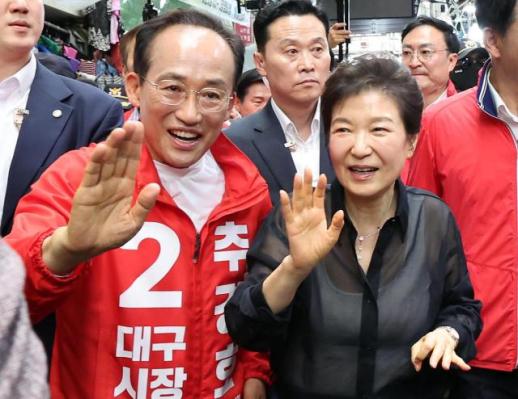 Park Geun-hye Supports Choo Kyung-ho Ahead of Local Elections in Daegu Former President Park Geun-hye visited Seomun Market in Daegu on May 31 to support Choo Kyung-ho, the People Power Party candidate for mayor, just three days before the June 3 local elections. Dressed in a black long-sleeve shirt and jeans, Park arrived at the market around 4 p.m. and greeted Choo and other People Power Party candidates running in Daegu. Supporters gathered at the market welcomed her with applause and waved South Korean flags. Park also exchanged friendly greetings with citizens shopping at the market and urged them to support Choo. After touring the market with Choo for about 20 minutes, Park expressed her gratitude, saying, "Seeing all of you gives me renewed energy, even if I feel a bit tired." She emphasized the significance of Seomun Market, stating, "This market is a symbol of conservatism, and I know that the economy in Daegu is struggling right now." Park expressed her belief that Choo is the right person to revitalize the local economy, highlighting his experience as the head of the Office for Government Policy Coordination under her administration and as the Minister of Economy under the Yoon Suk-yeol administration. "He will do better than anyone else in improving the economy," she asserted. Park urged the crowd, saying, "If you all provide overwhelming support, Choo Kyung-ho will revive the Daegu economy and repay you all. Please believe in him and support him generously." This marks Park's second public appearance in support of Choo, following her visit to Chilseong Market in Daegu on May 23, which was her first campaign event for the local elections. 2026-05-31 18:36:00
 -
 An Se-young Claims Singapore Open Title, Secures Fourth Win of the Season An Se-young, the world No. 1 in women's singles badminton, secured her fourth title of the season by defeating Japan's Akane Yamaguchi, ranked third, 2-1 (21-11, 17-21, 21-19) in the final of the 2026 BWF World Tour Super 750 Singapore Open on May 31. This victory marks An's third career title at this tournament, following her wins in 2023 and 2024. With this win, she has now claimed four titles this season, adding to her earlier victories at the Malaysia Open, India Open, and the Asian Championships last month. An's win also improved her head-to-head record against Yamaguchi to 18 wins and 15 losses, extending her current winning streak against her to four matches. In the semifinals held the previous day, An overcame headaches and dizziness to defeat China's Chen Yufei, ranked fourth. The final match proved challenging as well, but An maintained her focus. After a tied score of 6-6 in the first set, she scored five consecutive points to lead 11-6, eventually taking the set 21-11. However, the second set saw Yamaguchi mount a strong comeback. At a critical moment tied at 17-17, An allowed Yamaguchi to score four consecutive points, losing the set. The third set was fiercely contested, with both players exchanging leads. An faced a setback when Yamaguchi scored three consecutive points to lead 16-19. Yet, demonstrating remarkable concentration, An rallied with four straight points to regain the lead at 20-19. She sealed the match by forcing an error from Yamaguchi on the final match point. With her fourth title of the season secured, An will compete next at the BWF World Tour Super 1000 Indonesia Open, which begins on June 2, aiming for consecutive victories.* This article has been translated by AI. 2026-05-31 18:18:00
 -
 SSG Landers Set Unwanted Record with 12-Game Losing Streak The SSG Landers, mired in a prolonged slump, have set an unwanted franchise record with a 12-game losing streak in the KBO League. On May 31, SSG lost 6-2 to the Hanwha Eagles at Daejeon Hanwha Life Eagles Park. This defeat marks SSG's 12th consecutive loss since May 17, surpassing the previous franchise record of 11 losses set twice during the team's time as the SK Wyverns (from June 22 to July 5, 2000, and from August 28 to September 9, 2020). Additionally, this streak exceeds the previous record for the longest losing streak since the Shinsegae Group acquired the team in 2021, which was eight games in May 2024. The all-time longest losing streak in KBO League history is 18 games, set by the Sammi Superstars in 1985 and the Hanwha Eagles in 2020. Furthermore, SSG has recorded 20 losses (with 5 wins and 1 tie) in May alone, marking the second-highest monthly loss total in KBO history, following the 22 losses recorded by the Kiwoom Heroes in May 2022. During the game, SSG's starting pitcher, Takeda Shota, performed relatively well, allowing only 2 runs over 5 innings, keeping the score tied at 2-2. However, in the seventh inning, with one out and runners on first and third, SSG surrendered a run on a ground ball by Hanwha's Lee Won-seok, falling behind 3-2. In the eighth inning, SSG's closer, Jo Byeong-hyeon, gave up three consecutive RBIs to No Si-hwan, Kim Tae-yeon, and Shim Woo-jun, leading to three additional runs and sealing the team's fate. SSG's offense struggled as well, managing only four hits throughout the game. Jeong Jun-jae recorded two hits in three at-bats with one walk, while Choi Jeong contributed one hit and two RBIs in four at-bats, but their efforts were overshadowed by the team's defeat.* This article has been translated by AI. 2026-05-31 17:57:00
 -
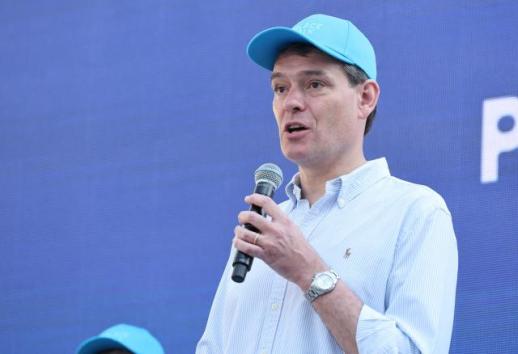 Diplomats Enchanted by the Blend of History and Modernity at Seoul Walking Event On May 31, diplomats from various countries participated in the '2026 Seoul Foreign Palace Walking Event,' organized by Aju Economy News. The event began at Gwanghwamun Square in the heart of Seoul and featured a route that included Gyeongbokgung Palace, Changgyeonggung Palace, and Jogyesa Temple, captivating participants with the unique scenery created by the blend of past and present. Jacques Plis, Luxembourg's ambassador to South Korea, expressed his admiration for the sight of the historic palace surrounded by skyscrapers. "This event has changed my impression of Seoul. Walking through the historical spaces of Seoul along a well-planned route made me feel more deeply connected to Korean history," he said. "The ancient palace in the city seamlessly connects the past and present. This event serves as a wonderful bridge linking Korea's historical legacy, its current state, and its future." Rai Mulendema Hamwina, the deputy chief of mission at the Zambian Embassy, noted that it was his first time representing an African nation at the event. He expressed amazement at the sight of people walking in traditional hanbok attire and the impressive traditional Korean architecture. "Even after hundreds of years, the buildings are maintained as if they were built yesterday. Where else in the world can you find such unique palaces? The architectural techniques of the past are simply astonishing," he remarked.* This article has been translated by AI. 2026-05-31 17:54:00
 -
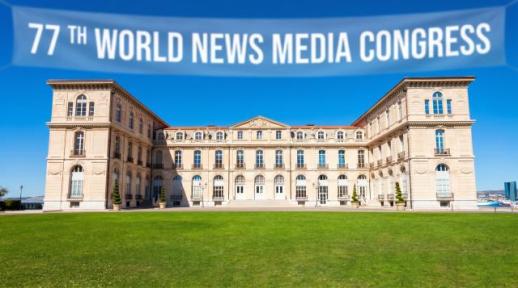 World News Media Congress Returns to France After 30 Years, AI Takes Center Stage Marseille—The 77th World News Media Congress (WNMC26), organized by the World Association of News Publishers (WAN-IFRA), will kick off on June 1 in Marseille, France, marking the event's return to the country after nearly 30 years since it was last held in Paris in 1995. This year’s congress is particularly notable as artificial intelligence (AI) has emerged as a central theme in the news industry. Over the course of three days, more than 1,000 publishers, editors, and CEOs from over 60 countries are expected to attend. Following last year’s congress in Krakow, this event is anticipated to be a major international platform for discussing strategies, technologies, and revenue models that will shape the future of the global media industry. This year, AI has been elevated to a central focus of the event. For the first time, WAN-IFRA has organized an independent track titled "AI in Media," positioning it alongside two other key themes: "Future of Journalism" and "Revenue & Growth." Industry experts believe that generative AI has progressed beyond a mere productivity tool, now reshaping the entire landscape of news production, content distribution, revenue generation, and audience engagement. The rise of AI as a pivotal topic in the news industry can be traced back to the launch of OpenAI's ChatGPT in late 2022, which marked a significant turning point. Since then, generative AI has rapidly become a disruptive force across the entire media ecosystem, influencing everything from news production to search and consumption environments. One of the most immediate impacts has been a decline in search traffic. According to digital analytics firm Similarweb, global traffic to major news websites dropped by approximately 26% in the year following Google's introduction of its AI search summary feature, "AI Overviews." Some media outlets have reported search traffic declines of over 90%, shaking the digital advertising revenue models that heavily rely on search. The conflict between media companies and big tech over content acquisition has also intensified. In December 2023, The New York Times filed a copyright infringement lawsuit against OpenAI and Microsoft, prompting similar legal disputes in Canada, India, and Denmark. Conversely, organizations like the Associated Press, Axel Springer, and News Corp have opted for collaborative models by signing content licensing agreements with OpenAI. In its recent annual report, WAN-IFRA defined AI as a "defining pillar" of its activities. The "Newsroom AI Catalyst" program, co-managed with OpenAI, currently includes participation from 145 newsrooms worldwide. This shift marks a departure from previous congress themes. Last year’s Krakow congress focused on "Mastering Media's New Playbook," addressing AI as part of discussions on data strategy, trust restoration, and digital transformation. The 2024 congress in Copenhagen will also emphasize "Building the Future of News Media in the AI Era," but will approach AI as one element of digital innovation. In contrast, this year’s congress highlights AI as an independent strategic agenda, indicating that the news industry is entering a significant transitional phase in the generative AI era. At the congress, Ajou Media will showcase examples of newsroom innovation and global expansion utilizing AI. The company is redesigning the entire news production process, including article generation, translation, video production, and multilingual platform operations, based on AI. They plan to share strategies for newsroom innovation and revenue growth, drawing on their experience in providing services in five languages, including Korean and English. The congress theme is "Rising Voices, Emerging Risks, Inspiring Futures." WAN-IFRA explained that this reflects the search for new opportunities and a sustainable future amid a transformative industry landscape characterized by the spread of AI, increasing platform dependence, declining news credibility, and changes in business models. The choice of Marseille as the host city is also significant. Founded around 600 B.C., Marseille is France's oldest city and the largest port city in the Mediterranean, serving as a gateway connecting Europe, Africa, and the Middle East. WAN-IFRA described the selection of Marseille as a choice to highlight "new voices emerging from traditional centers of power." The congress will take place at the Palais du Pharo, a 19th-century palace built by Napoleon III. Co-hosts include BFM TV, RMC Radio, and the regional daily newspaper La Provence, all part of the French media group CMA Media. The World News Media Congress, which began in 1948, originated from the founding congress of FIEJ, WAN-IFRA's predecessor. At that time, the delegation was invited to the Élysée Palace in Paris, and the congress has since been held in major cities around the world, including Seoul, Cape Town, Taipei, Istanbul, Moscow, and Hong Kong. Currently, WAN-IFRA represents over 3,000 news companies and 60 publisher associations across 120 countries, making it the largest organization of news publishers globally, representing approximately 18,000 media outlets. In addition to the main sessions, the congress will feature pre-congress deep dives on technology, business, content, and innovation, as well as table talks on media sustainability, revenue diversification, the future of print newspapers, and the news creator ecosystem. All sessions will be conducted in English, with real-time translation services available in over 50 languages powered by AI. During the event, WAN-IFRA will also hold the prestigious "Golden Pen of Freedom" award ceremony and the "Digital Media Awards Worldwide." Notably, the Digital Media Awards have recently introduced categories for "Best Use of AI in Newsrooms" and "Best Use of AI in Revenue Strategies," reflecting the growing importance of AI competitiveness as a key evaluation criterion. Following the congress, a post-training program will be held on June 4-5, allowing participants to visit major media outlets in Paris.* This article has been translated by AI. 2026-05-31 17:51:00
 -
World News Media Congress Returns to France After 30 Years, AI Takes Center Stage Marseille—The 77th World News Media Congress (WNMC26), organized by the World Association of News Publishers (WAN-IFRA), will kick off on June 1 in Marseille, France, marking the event's return to the country after nearly 30 years since it was last held in Paris in 1995. This year's congress is notable for being the first to prominently feature artificial intelligence (AI) as a core topic in the news industry. Over three days, more than 1,000 publishers, editors, and CEOs from over 60 countries are expected to attend. Following last year's congress in Krakow, this event is anticipated to be a major international platform for discussing strategies, technologies, and revenue models that will shape the future of the global media industry. This year, AI has been elevated to a central theme of the event. WAN-IFRA has introduced a dedicated track titled "AI in Media," alongside two other key topics: "Future of Journalism" and "Revenue & Growth." Industry experts believe that generative AI is transforming the entire news production process, from content creation and distribution to revenue generation and audience engagement. The rise of AI as a focal point in the news industry can be traced back to the release of OpenAI's ChatGPT in late 2022, which marked a pivotal moment. Since then, generative AI has rapidly become a significant factor impacting the entire media ecosystem, from news production to search and consumption environments. One of the most immediate effects has been a decline in search traffic. According to digital analytics firm Similarweb, global traffic to major news sites dropped by approximately 26% in the year following Google's introduction of its AI search summary feature, "AI Overviews." Some media outlets have reported search traffic declines exceeding 90%, raising concerns about the sustainability of digital advertising revenue models that heavily rely on search. The conflict over content acquisition between media companies and big tech firms has also intensified. In December 2023, The New York Times filed a copyright infringement lawsuit against OpenAI and Microsoft, prompting similar legal disputes in Canada, India, and Denmark. Conversely, organizations like the Associated Press, Axel Springer, and News Corp have opted for collaborative models by signing content licensing agreements with OpenAI. In its recent annual report, WAN-IFRA identified AI as a "defining pillar" of its activities. The "Newsroom AI Catalyst" program, co-managed with OpenAI, currently involves 145 newsrooms worldwide. This shift marks a departure from previous congress themes. Last year's Krakow congress focused on "Mastering Media's New Playbook," addressing AI as part of discussions on data strategy, trust restoration, and digital transformation. The upcoming 2024 congress in Copenhagen will also emphasize AI's role in shaping the future of news media, but will approach it as one element of digital innovation. In contrast, this year's congress highlights AI as an independent strategic agenda, signaling a significant transition for the news industry into the generative AI era. At the congress, Aju Media will showcase examples of newsroom innovation and global expansion utilizing AI. The company is redesigning the entire news production process, including article creation, translation, video production, and multilingual platform management, based on AI. They plan to share strategies for newsroom innovation and revenue growth, drawing on their experience operating services in five languages, including Korean and English. The congress theme is "Rising Voices, Emerging Risks, Inspiring Futures." WAN-IFRA explained that it aims to explore new opportunities and sustainable futures amid the simultaneous challenges of AI proliferation, increasing platform dependency, declining news credibility, and evolving business models. The choice of Marseille as the host city carries symbolic significance. Founded around 600 B.C., Marseille is France's oldest city and the largest port city in the Mediterranean, serving as a gateway connecting Europe, Africa, and the Middle East. WAN-IFRA described the selection of Marseille as a choice to highlight "new voices emerging from traditional centers of power." The congress will take place at the Palais du Pharo, a 19th-century palace built by Napoleon III. Co-hosts include BFM TV, RMC Radio, and the regional daily newspaper La Provence, all part of the French media group CMA Media. The World News Media Congress, established in 1948, began with the founding congress of its predecessor, FIEJ, where delegates were invited to the Élysée Palace in Paris. Since then, it has been held in major cities around the world, including Seoul, Cape Town, Taipei, Istanbul, Moscow, and Hong Kong. Currently, WAN-IFRA represents over 3,000 news organizations and 60 publisher associations across 120 countries, making it the largest association of news publishers globally, representing approximately 18,000 media outlets. In addition to the main sessions, the congress will feature pre-congress deep dives on technology, business, content, and innovation, as well as table talks on media sustainability, revenue diversification, the future of print newspapers, and the news creator ecosystem. All sessions will be conducted in English, with real-time translation services available in over 50 languages powered by AI. During the event, WAN-IFRA will also hold the prestigious "Golden Pen of Freedom" awards ceremony and the Digital Media Awards Worldwide. Notably, the Digital Media Awards have recently introduced categories for "Best Use of AI in Newsrooms" and "Best Use of AI in Revenue Strategies," reflecting the growing importance of AI competitiveness as a key evaluation criterion. Following the congress, a post-training program will be held on June 4-5, allowing participants to visit major media outlets in Paris.* This article has been translated by AI. 2026-05-31 17:51:00
-
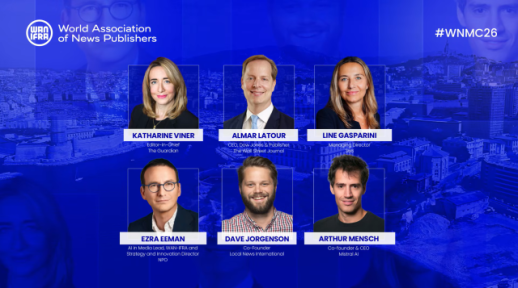 World News Media Congress to Open in Marseille, Focus on AI and Journalism The 77th World News Media Congress, organized by the World Association of Newspapers and News Publishers (WAN-IFRA), will kick off on June 1 in Marseille, France. More than 1,000 executives, editors, and technology representatives from over 60 countries will gather to examine the future of journalism in the wake of the rise of generative artificial intelligence (AI). Key topics of the congress include 'AI in Media,' 'Future of Journalism,' and 'Revenue & Growth.' Discussions will focus on how generative AI is transforming news production and distribution, protecting copyright for media companies, and exploring new revenue models and innovations in newsrooms in the AI era. The event will feature executives from major global media outlets such as The New York Times, The Guardian, and POLITICO, along with digital policy leaders from the European Union, who will share insights on the future of journalism and the media industry in the age of AI. Notably, Seo Hye-seung, Editor-in-Chief of Aju Media Group's English news agency AJP, will represent South Korea as a key speaker at this year's congress. Recognized for Aju Media's innovative use of AI, she is the only speaker invited from South Korea. In her session titled 'How AI is Changing the News Experience,' Seo will discuss Aju Media's model of producing content in five languages and expanding its audience beyond South Korea. A. G. Sulzberger, Chairman and Publisher of The New York Times, will deliver the keynote address on 'AI, Journalism, and the Uncertain Future of the Public Sphere.' Over the three-day congress, prominent media leaders, including Goli Sheikholeslami, CEO of POLITICO, Katharine Viner, Editor-in-Chief of The Guardian, and Phil Chetwynd, Global News Director at AFP, will share their perspectives on the role of journalism in a rapidly changing media landscape driven by AI innovation.* This article has been translated by AI. 2026-05-31 17:51:00
 -
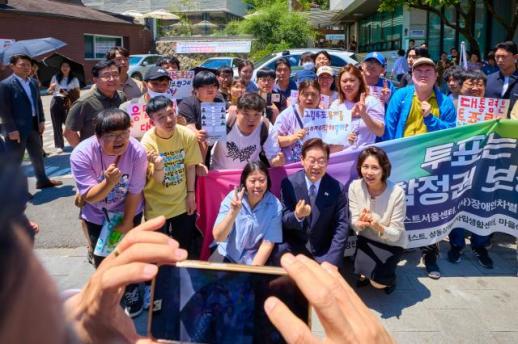 President Lee Vows to Intensify Investigation into False Comments Related to Social Disasters President Lee Jae-myung stated on May 31 that authorities will conduct a more thorough investigation and impose strict penalties regarding false comments related to social disasters.On this day, President Lee shared an article on his X (formerly Twitter) account titled, "50s Man Arrested for Second Harm through False Comments on Social Disasters," highlighting the arrest of a man in his 50s who allegedly posted over 3,000 defamatory and insulting comments related to disasters over four years since 2022.President Lee criticized the situation, saying, "This is the third arrest related to false comments. It is beyond comprehension. Why is this happening? Imagine if your own family were victims of such comments. Shouldn't we put ourselves in their shoes?"* This article has been translated by AI. 2026-05-31 17:51:00
 -
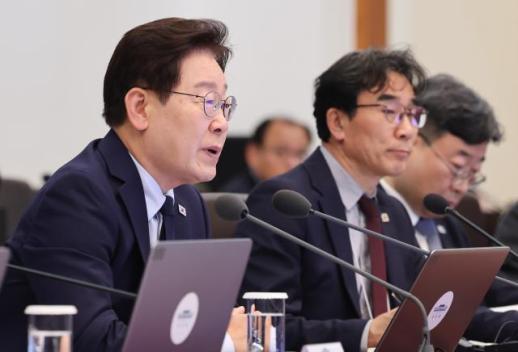 South Korea's Economic Recovery: Semiconductor Boom and Market Gains Amid Challenges When President Lee Jae-myung's administration took office last year, the outlook for South Korea's economy was bleak, marred by domestic stagnation, a sluggish construction sector, and concerns over a trade war initiated by the United States. However, one year later, the South Korean economy is showing signs of a quicker-than-expected recovery. The semiconductor supercycle and increased investment in artificial intelligence (AI) have propelled exports and the stock market, leading to upward revisions in growth forecasts. Nonetheless, challenges such as reliance on semiconductor-driven growth, high inflation, and fiscal pressures remain unresolved. The most notable achievement is the rebound in economic growth. In March, the Organization for Economic Cooperation and Development (OECD) revised its growth forecast for South Korea down from 2.1% to 1.7% due to the impact of the Middle East conflict and global uncertainties. However, as the semiconductor market improved more rapidly than anticipated, the Bank of Korea and the Korea Development Institute (KDI) have since raised their growth projections to the mid-2% range. The OECD's upcoming economic outlook, set to be released on June 4, is also expected to reflect a more optimistic growth forecast for South Korea. Exports have become a key driver of economic recovery. Last year, South Korea's exports reached a record $709.3 billion, surpassing the $700 billion mark for the first time. This year, the surge in semiconductor exports, fueled by increased investment in AI data centers and rising demand for high-bandwidth memory (HBM), has continued. The Korea Institute for Industrial Economics and Trade has projected that exports could exceed $900 billion this year. The capital market has also transformed. The KOSPI index has surpassed 8,000 points, reaching an all-time high since the government's inauguration, and market capitalization has significantly increased. The government's initiatives to modernize the capital market, the introduction of domestic market return accounts (RIA), and optimism surrounding the semiconductor sector have contributed to expectations of alleviating the 'Korea discount.' The current account surplus also reached a record high of $73.3 billion in the first quarter. The government has supported economic recovery through active fiscal policies. Large-scale financial injections, including the 'war supplementary budget,' consumer recovery coupons, and support for those affected by high energy prices, have aimed to stimulate domestic demand and assist vulnerable populations. Investments in AI, semiconductors, energy, and regional balanced development have also been expanded to secure growth momentum. However, there are concerns about whether the benefits of economic recovery are spreading across all industries. A recent report from the National Assembly Budget Office indicated that while semiconductor production capacity has increased by 80 percentage points over the past five years, non-semiconductor manufacturing capacity has declined by 14 percentage points. This suggests that the recovery in manufacturing and domestic industries, excluding semiconductors, remains relatively weak. Many still perceive the economic climate as chilly. The steel, petrochemical, and construction sectors continue to struggle, and small business owners are facing ongoing challenges. The government, in its recent Green Book assessing the economic situation, has identified persistent downside risks due to geopolitical tensions stemming from the Middle East conflict. High energy prices and exchange rate fluctuations are also pressing concerns. International oil prices remain elevated due to the prolonged situation in the Middle East, and the won-dollar exchange rate has fluctuated around 1,500 won. There are fears that rising producer prices could translate into higher consumer prices, further burdening households. Fiscal soundness remains a pressing issue. While active fiscal measures have played a role in the recovery process, there are concerns that growth and tax revenues heavily depend on the performance of large semiconductor companies and the booming asset market. Additionally, increasing pension and welfare expenditures due to an aging population, along with the potential for repeated supplementary budgets, are factors that could heighten the long-term fiscal management burden. Tax policy is also at a crossroads. The government has announced plans to strengthen the residency requirements for long-term holding tax exemptions and reduce tax benefits for rental businesses, signaling a shift toward a 'residency-centered, investment profit taxation' system. The aim is to redesign the tax system to enhance equity by taxing actual investment profits rather than transaction taxes. Former Minister of Trade, Industry and Energy Joo Hyung-hwan identified AI and demographic changes as the biggest long-term threats to the economy. He emphasized the need to reform regulations in personal data, finance, and the labor market to align with the AI era, while also advocating for educational reforms to cultivate talent. He urged the aggressive development of future growth industries such as semiconductors, biotechnology, batteries, nuclear power, and power equipment, encouraging companies to focus on core businesses through industrial restructuring.* This article has been translated by AI. 2026-05-31 17:48:00