

Journalist

Lester Munson
-
 China Vows Strong Response to EU Trade Protectionism Chinese state media has strongly criticized the European Union's (EU) pressure tactics, warning that it will "fight back to the end." This response comes as the EU considers implementing import quotas and additional tariffs in response to the issue of overproduction from China. On May 29, the social media account "Yuyuantantian," affiliated with China Central Television (CCTV), stated, "If the EU insists on enforcing its so-called 'overproduction tools,' China could immediately launch countermeasures, including anti-discrimination investigations and security checks on industries and supply chains." It emphasized that the Ministry of Commerce has made it clear it will firmly retaliate if national interests and corporate rights are infringed upon. The media outlet further warned, "If the EU stubbornly pushes forward with its 'overproduction tools,' China will take immediate action and implement comprehensive countermeasures. Trade friction is neither unfamiliar nor frightening to China. We will fight to the end (奉陪到底)." The EU's proposed 'overproduction tools' refer to mechanisms that would allow for the imposition of import quotas or additional tariffs to counteract the influx of low-priced goods from China. The EU is set to hold a special meeting to discuss unfair trade practices related to China and potential responses. Ahead of the meeting, Stefan Sejourne, the EU Commissioner for Prosperity and Industrial Strategy, warned that European industries in chemicals, metals, and clean technologies are at risk of being undermined by unfair competition from China. He indicated that the EU would systematically mobilize measures such as import quotas and tariffs. In response, Yuyuantantian criticized the EU's increasingly radical economic and trade policies toward China, stating, "The EU's shift toward trade protectionism is a result of long-term decline in European industries and lobbying by vested interest groups." It added that the EU, facing difficulties, is avoiding necessary structural reforms by raising barriers instead of addressing the root causes. China has also hinted at potential retaliation against European products. Yuyuantantian noted, "European products such as meat, alcohol, luxury goods, and cosmetics hold significant market shares in China. If the EU defines Chinese products as overproduced based on the logic that 'production capacity exceeds domestic demand,' it should consider whether the same criteria apply to European products sold in China." This suggests that a wide range of European consumer goods could become targets of China's response. The Chinese government has also issued an official response. Mao Ning, a spokesperson for the Chinese Foreign Ministry, stated during a briefing the previous day, "The EU should view the China-EU trade relationship comprehensively and objectively and adhere to its free trade commitments." She indicated that China would closely monitor the EU's actions and take necessary measures to safeguard its legitimate rights and interests. This exchange comes amid the EU's recent expansion of its measures against China across various sectors, including industry, telecommunications, and digital platforms. The EU is advancing the Industrial Acceleration Act (IAA), which prioritizes 'production within Europe' for public procurement and subsidies in strategic industries such as batteries, electric vehicles, and solar energy. Additionally, it is pushing for amendments to cybersecurity laws to exclude Chinese telecommunications companies like Huawei from European networks, thereby tightening regulations on Chinese firms. Recently, the EU imposed a fine of 200 million euros (approximately $349 million) on the Chinese e-commerce platform Temu for selling illegal products that did not meet safety standards. On the same day, it initiated an investigation into JD.com's acquisition of the German electronics distributor Ceconomy under foreign subsidy regulations (FSR), suspecting that JD.com may have received favorable financial and tax benefits from the Chinese government, potentially distorting competition in the EU market. The FSR was introduced to prevent companies receiving foreign government subsidies from distorting market competition by acquiring EU firms or participating in public tenders.* This article has been translated by AI. 2026-05-29 15:22:00
 -
 Debate Over 'Social Solidarity Wage' Amid Semiconductor Boom Raises Concerns This year, Samsung Electronics and SK Hynix, the leading players in the artificial intelligence (AI) semiconductor market, are projected to report unprecedented operating profits of around 350 trillion won and 250 trillion won, respectively. This remarkable windfall has sparked excitement across South Korean society.As substantial excess profits are anticipated, a nationwide debate has emerged over how to distribute these gains. Signs of subtle fractures are appearing within the government and political circles. While the presidential office and economic ministries emphasize the need to boost investment and enhance industrial competitiveness, the Ministry of Employment and Labor and labor groups are advocating for the sharing of excess profits. Notably, Minister of Employment and Labor Kim Young-hoon’s recent proposal for a 'Korean-style social solidarity wage' has intensified the controversy. Although the intention is to discuss the distribution structure of excess profits, concerns from various sectors are significant.The global semiconductor market is effectively in a state of war. The United States is pushing domestic investments through the CHIPS Act, while China is mobilizing national subsidies to bolster its semiconductor industry. Taiwan's TSMC and U.S. companies like NVIDIA and Intel are pouring astronomical amounts into the AI semiconductor race.Amid this backdrop, mixed messages regarding the use of excess profits are complicating the situation domestically, leading to market confusion. Companies are left uncertain whether the government is encouraging investment expansion or pressuring them to return excess profits. This has led to complaints that the government is effectively twisting corporate arms.The mention of a Korean-style social solidarity wage should have been approached with caution. The European social democracy model has already shown significant limitations. Even Germany and France have long shifted their focus toward labor market flexibility and enhancing corporate competitiveness. Simply labeling it 'Korean-style' does not change its essence. The idea of socially distributing corporate excess profits is likely to be interpreted by the market as a signal for increased government intervention.However, it is not necessary to taboo social discussions. The concentration of excess profits in specific industries and companies in the AI era is not unique to South Korea. In the U.S. and Europe, debates over taxing platform companies and big tech, as well as wealth redistribution, continue. It is also crucial to consider how to leverage the semiconductor industry's boom as a catalyst for national economic recovery.The method and pace of this discussion are key. The government should focus on establishing a calm framework for public discourse rather than rushing into distribution debates. It is essential to align the messages from the presidential office, economic team, and labor ministry. The market prioritizes consistency in policy direction. Increasing unnecessary uncertainty is problematic for the government.Particularly, recent global industrial competition has shifted from corporate rivalry to a national effort. The U.S., China, Japan, and Europe are all concentrating national resources on supporting their semiconductor industries. If South Korea becomes overly absorbed in the debate over corporate profit distribution, it risks allowing its competitors to gain an advantage.The debate over excess profits in the semiconductor sector is not merely a distribution issue. It is a matter that impacts the future industrial competitiveness and growth strategy of the South Korean economy. The government must approach this issue from a long-term perspective focused on the growth and expansion of the industrial ecosystem, rather than immediate political messaging. Above all, what is needed now is not provocative topics that escalate conflicts, but rather a refined ability to create social consensus while minimizing market confusion.* This article has been translated by AI. 2026-05-29 15:18:00
 -
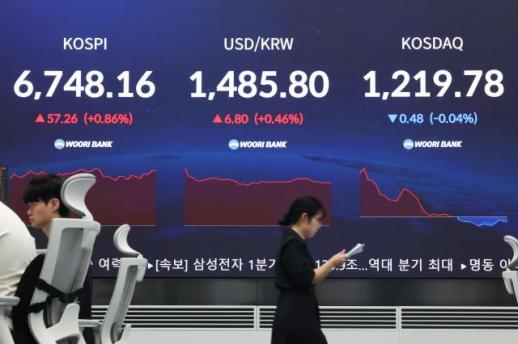 Korea's tax revenue brims from strong stock and corporate earnings SEOUL, May 29 (AJP) - South Korea’s national tax revenue expanded sharply during the first four months of this year on track for excess revenue of 25.2 trillion won ($17 billion) this year on blistering stock market rally and corporate earnings, the government said Friday. According to the Ministry of Economy and Finance on Friday, cumulative national tax revenue from January to April reached 164.1 trillion won ($109.7 billion), adding 21.9 trillion won from the same period last year. The tax collection progress rate came to 39.5 percent against budgeting, faster than 38.0 percent a year earlier. For the single month of April, national tax revenue stood at 55.2 trillion won, climbing 6.3 trillion won on year. The finance ministry cited expansions in securities transaction taxes, corporate income taxes, and personal income taxes as the primary catalysts for the monthly gain. Securities transaction tax collections jumped by 1.1 trillion won, fueled by expanding transaction turnover and higher tax rates. According to the finance ministry, the trading volume of listed shares in March soared to 1,449.4 trillion won, nearly quadrupling from the 357.1 trillion won recorded in the same month last year. Since the beginning of the year, the domestic equity market has experienced a massive influx of retail capital, with trading activity concentrating heavily around semiconductor and artificial intelligence (AI) sectors. Market observers noted that the relentless upward momentum of mega-cap tech stocks, such as Samsung Electronics and SK hynix, combined with an investment frenzy into single-stock leveraged exchange-traded funds (ETFs) and exchange-traded notes (ETNs), further amplified the trading surge. Corporate tax collections also advanced by 2.2 trillion won, reflecting a sharp turnaround in corporate profitability. The finance ministry explained that the annual operating profits of companies listed on the benchmark KOSPI rose 29.5 percent on an individual basis and 25.4 percent on a consolidated basis last year. Personal income taxes rose by 1.3 trillion won, driven by expanded corporate bonus payouts and a rise in capital gains from stock liquidations. Value-added tax (VAT) collections also ticked up by 300 billion won, supported by an expansion in import values. By item, cumulative figures for the January-April period showed that personal income taxes expanded by 5.9 trillion won year-on-year. Over the same four-month span, securities transaction taxes and corporate taxes increased by 3.1 trillion won and 3.2 trillion won each. 2026-05-29 15:16:51
 -
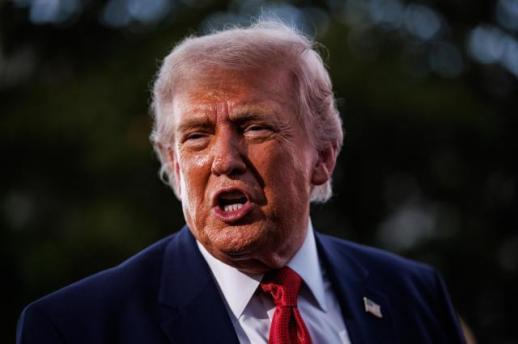 Trump Honors Late NHL Star Claude Lemieux as a 'Warrior on Ice' President Donald Trump publicly paid tribute to Claude Lemieux, a star of the National Hockey League (NHL), who has passed away. Lemieux won the Stanley Cup four times and was known for his fierce competitiveness in the playoffs. On May 28, Trump wrote on Truth Social, "Claude Lemieux was a true legend in hockey and one of the fiercest competitors in the sport's history." He also noted that Lemieux was close to his family and a "great Trump supporter." Trump highlighted Lemieux's four championships and his impressive playoff record of 80 goals. Lemieux won the Stanley Cup in 1986 with the Montreal Canadiens, in 1995 and 2000 with the New Jersey Devils, and in 1996 with the Colorado Avalanche. Lemieux died at the age of 60. The NHL Alumni Association and the Montreal Canadiens announced his passing. Local authorities reportedly believe his death was a result of suicide. In 1995, he led New Jersey to its first Stanley Cup victory and received the Conn Smythe Trophy as the most valuable player in the playoffs. Over his regular-season career, he played 1,215 games, scoring 379 goals and providing 407 assists. In the playoffs, he played 234 games, recording 80 goals and 78 assists. Trump also extended his condolences to Lemieux's family, including his son Brendan and Deborah, saying, "You and your father were warriors on the ice."* This article has been translated by AI. 2026-05-29 15:16:00
 -
 SpaceX Worker Dies in Steel Beam Collapse at Starbase; OSHA Investigation Underway A worker from a subcontractor died at SpaceX's Starbase facility in Texas after a steel beam collapsed. Local authorities have ruled the incident an accident, but the Occupational Safety and Health Administration (OSHA) has launched a separate investigation. According to a report from the Cameron County Sheriff's Office confirmed by The Wall Street Journal on May 28, Jose Luis Bautista Jr., an employee of Delta Fabrication and Machine, fell to his death on May 15. The cause of death was blunt force trauma. The accident occurred while modifications were being made to a building designed to house SpaceX's next-generation Starship rocket. Starbase is a corporate city established by SpaceX in 2025 and serves as a hub for Starship development. Bautista was working inside the building with his brother, replacing steel structures at the time of the incident. The report indicates that Bautista was using a scissor lift to ascend approximately 40 to 50 feet. He then secured himself to a steel beam that was about 60 feet high using a safety harness and strap. The beam weighed approximately 7,700 pounds. Shortly after, the beam tilted and collapsed. Bautista fell, striking a metal structure before landing on the concrete floor. He was transported to a hospital but was pronounced dead. The site supervisor stated to authorities that Bautista may have believed the beam was secured to the ground. However, this is merely the account of a site representative and not the final result of the safety investigation. While the sheriff's office has concluded the death was accidental, OSHA's workplace safety investigation is still ongoing. Delta and SpaceX did not immediately respond to requests for comment from The Wall Street Journal. Starbase city officials expressed condolences to the family but noted that issues related to SpaceX's workplace fall outside the city's jurisdiction.* This article has been translated by AI. 2026-05-29 15:06:00
 -
 Comedian Maeng Seung-ji Announces Retirement from Stand-Up Comedy Maeng Seung-ji, a former comedian turned actress, has announced her retirement from stand-up comedy. On May 28, Maeng shared on her social media, "I am retiring as a comedian now. I spent two years in public comedy after being recruited, received a rookie award, and enjoyed my time as a comedian on almost all MBC entertainment shows and SBS as well." She continued, "I haven’t done public comedy for over ten years, and it sometimes feels strange to be called a comedian. I think it’s time to retire. Honestly, it’s hard to adapt when I have to force myself to be funny as a comedian on air." Maeng added, "Rather than working as a comedian, I have been focusing more on acting and production. I will continue with my work in acting, broadcasting, and production, and I will strive to bring good energy as much as I can." On the same day, when a fan asked on Instagram if she was no longer a comedian, Maeng replied, "Yes, I haven’t been a public comedian for ten years. In my heart, I have already retired, and I plan to fully retire starting in the second half of this year." She also stated, "I will continue with the acting and broadcasting work I have been doing. Life is long, and I enjoyed being a comedian. I want to enjoy the second chapter of my life moving forward." Maeng Seung-ji debuted as a comedian in 2013 as part of MBC's 20th talent recruitment and gained recognition through shows like 'The Path of Comedy' and 'Section TV Entertainment Communication.'* This article has been translated by AI. 2026-05-29 15:02:00
 -
 22 Leaders in Film Industry Discuss Holdbacks; Choi Hwi-young Calls for Compromise "As this dialogue has been difficult to establish, we must create meaningful outcomes. Your determination and compromise are both necessary," Choi Hwi-young, Minister of Culture, Sports and Tourism, stated during the inaugural meeting of the 'Public-Private Council for Improving Korean Film Distribution' held in Jung-gu, Seoul, on May 29. Choi expressed hope that with key figures from the film industry gathered, they could engage in meaningful discussions to achieve a balanced revenue structure and a healthy ecosystem, urging participants to share their perspectives openly and listen to one another. The newly launched council includes 22 influential decision-makers with substantial impact across the entire film distribution process. Participants include Choi, Yoon Sang-hyun, CEO of CJ ENM, Kim Jong-yeol, CEO of Lotte Cultureworks, Lee Eun, representative of the Korean Film Producers Association, Jeong Jong-min, CEO of CGV, and Nam Yong-seok, CEO of Megabox, among others, representing various sectors of production, distribution, and exhibition, as well as TVOD and SVOD. The council was established under government leadership to normalize the revenue structure of Korean cinema amid a rapidly changing industry landscape and to foster a cooperative ecosystem between theaters and online video services (OTT). During the meeting, Choi emphasized the importance of voluntary agreements within the industry. He noted, "The council is the starting point for efforts to restore the revenue structure and cooperative ecosystem of Korean cinema. I hope sustainable solutions can be achieved through voluntary agreements rather than regulations imposed by the government." He added that the government’s role is to facilitate discussions and provide support, ultimately hoping that the industry will take the lead in creating sustainable rules. The council plans to sequentially discuss the establishment of a voluntary agreement regarding appropriate holdbacks (the grace period before films are shown in additional markets after theatrical release) and the industry's demands for improving the exhibition environment. However, significant differences in perspectives among stakeholders are expected to lead to challenges in future discussions. For instance, while the theater industry demands institutional measures to guarantee a certain holdback period to prevent audience attrition, producers and distributors oppose uniform regulations citing the need to recover investments. Choi reiterated the importance of industry cooperation to sustain the recovery of the film sector. "The heart of the film market has begun to beat again," he said, emphasizing that creating a normal and healthy ecosystem is our ultimate goal. He urged all parties to bring the next challenges to the table and collaborate to ensure the revived spark does not extinguish.* This article has been translated by AI. 2026-05-29 14:58:00
 -
 Yuhan Corporation Receives Approval for Clinical Trial of MASH Drug 'YH25724' Yuhan Corporation announced on May 29 that it has received approval from the Ministry of Food and Drug Safety for its clinical trial plan (IND) for the MASH treatment candidate 'YH25724'. The drug targets metabolic dysfunction-associated steatotic liver disease (MASH), which is gaining attention as a next-generation growth area following obesity treatments, with an estimated 440 million patients worldwide. YH25724 is a dual-action biopharmaceutical candidate that simultaneously targets fibroblast growth factor 21 (FGF21) and glucagon-like peptide-1 (GLP-1). It utilizes Yuhan's protein engineering technology and Genexine's long-acting antibody fusion platform (HyFc). Preclinical studies have shown improvements in fatty liver, anti-fibrotic effects, and reductions in hepatocyte damage and inflammation. This clinical trial marks the first phase of YH25724's domestic testing. It will be conducted on adults with a single dose and a 12-week repeated dosing regimen. The company plans to evaluate the safety, tolerability, pharmacokinetics (PK), and pharmacodynamics (PD) of the drug. Kim Yeol-hong, head of R&D at Yuhan Corporation, stated, "We plan to confirm safety and tolerability across various doses and explore preliminary proof of concept. We expect to begin recruiting clinical trial participants within the year."* This article has been translated by AI. 2026-05-29 14:58:00
 -
 Massage Chairs and Healthcare Devices Expand into Comprehensive Wellness Solutions The massage chair and healthcare industry is rapidly evolving into comprehensive wellness solution providers, leveraging sophisticated product designs, medical device certifications, and artificial intelligence (AI) technology. According to industry sources, Seragem has adopted the slogan 'AI Wellness Home' this year, diversifying its portfolio to include spinal medical devices (Master Series), massage chairs (Pause Series), a depression treatment device called 'MindFit', water purifiers, and beauty devices, all aimed at promoting 'whole home wellness'. In response, Bodyfriend is enhancing its 'healthcare robot' concept with new products featuring AI capabilities, such as the '733', 'Da Vinci AI', and 'Quantum AI'. The company is also running a major marketing campaign called 'AI Healthcare Robot Festa', offering discounts on flagship products through partnership cards and family bundles until the end of this month. The financial performance of these expanding companies has shown mixed results. Seragem reported a consolidated revenue of 549.8 billion won last year, a 0.7% increase from the previous year, while its operating profit surged by 1,091% to 25.8 billion won. The company also achieved a net profit of 1.9 billion won, marking a return to profitability. However, Seragem's revenue has not exceeded 500 billion won since peaking at 667.1 billion won in 2021 and 750.2 billion won in 2022, with figures dropping to 584.7 billion won in 2023 and 546 billion won in 2024. A Seragem representative stated, "The massage chair market is currently a red ocean, making it difficult to significantly increase sales. We are preparing to develop and launch follow-up items for 'whole home wellness'." Bodyfriend, on the other hand, recorded a revenue of 422.6 billion won and an operating profit of 11.5 billion won last year, reflecting a 3.3% decrease in revenue and a 49% drop in operating profit compared to the previous year. Over the past five years, Bodyfriend's performance has been as follows: 2021 (revenue 591.3 billion won, operating profit 68.5 billion won), 2022 (revenue 522 billion won, operating profit 24.1 billion won), 2023 (revenue 419.7 billion won, operating profit 16.7 billion won), and 2024 (revenue 436.9 billion won, operating profit 22.6 billion won). After threatening to surpass 600 billion won post-COVID-19, revenue has recently stabilized around 400 billion won. Bodyfriend has identified overseas technology exports as a potential recovery strategy. Since 2023, the company has been exporting advanced robotics technology that goes beyond simple massage functions to directly correct body posture in China. A Bodyfriend representative noted, "After contracts with major Chinese distributors began in 2024, our overseas performance surged from 11.5 billion won in 2023 to 45 billion won last year, thanks to technology exports. We have set an overseas performance target of 80 billion won for this year." Conversely, newer entrants are facing deeper challenges. According to the audit report of Bokjeongjehyung, which operates the Kojima brand, the company recorded revenues of 73.6 billion won and an operating profit of 600 million won last year, marking increases of 8.4% and 13.95%, respectively, from the previous year. The performance trend for Bokjeongjehyung shows revenues of 155.5 billion won and operating profit of 20.1 billion won in 2021, 114.9 billion won and operating profit of 1.7 billion won in 2022, 79.1 billion won with an operating loss of 5.4 billion won in 2023, and 67.9 billion won with an operating loss of 4.3 billion won in 2024. Kojima attributed its return to operating profit last year to its competitive lineup focused on value-oriented products. Since February, the company has actively marketed its high-spec massage chair 'Kaiser X', which features patented technology. A Kojima representative stated, "We are also focusing on developing new product categories, such as an EMS low-frequency massager that aids in muscle recovery before and after exercise, entering the sports recovery market. We aim to introduce a wide range of massage devices that meet consumer needs from value-oriented to premium through continuous research and development." 2026-05-29 14:56:00
 -
 WSJ: Hezbollah Drone Attacks Become Key Factor in Lebanon Ceasefire Hezbollah's use of suicide drones has emerged as a critical factor on Israel's northern front. As Israeli military casualties rise, the pressure on the military has intensified, impacting the Lebanon ceasefire and U.S.-Iran negotiations. According to the Wall Street Journal on May 28, Israeli officials report that Hezbollah drones have become the primary concern on the northern front, surpassing traditional weapons such as anti-tank missiles. The Israeli military stated that of the 11 soldiers killed since the ceasefire between Israel and Lebanon took effect in April, seven died from drone strikes. Hezbollah is adapting its tactics by utilizing first-person view (FPV) drones and night vision equipment. Recent footage released by the group showed an FPV drone targeting the fuel tanks of Israeli vehicles, employing a method that has been used in the Ukraine conflict to maximize damage through explosions. The increase in casualties has also highlighted vulnerabilities in the Israeli military's defenses. Experts noted instances where troops and vehicles were clustered together or where protective measures were inadequately implemented. Concerns were also raised about equipment, such as munitions, being exposed outdoors. The Israeli military has announced efforts to enhance protective equipment and soldier training while targeting drone production and launch facilities in southern Lebanon. However, soldiers on the ground reported that despite Hezbollah's shift to nighttime operations, they have not received clear response guidelines. Within Israel, calls for a tougher stance have grown. Residents in the north and politicians from both parties are urging Prime Minister Benjamin Netanyahu to take stronger military action. Netanyahu stated this week that Israel is "expanding operations in Lebanon," and the military has conducted successive strikes in southern Lebanon and parts of Beirut. This issue also poses challenges for ongoing negotiations led by the United States. As the U.S. and Iran discuss a peace agreement, Iran insists that a halt to fighting in Lebanon must be part of the terms. Conversely, Israel has conveyed to the U.S. that it should retain the ability to conduct military operations against Hezbollah even after any agreement. While the ceasefire is a result of an agreement between the Israeli and Lebanese governments, there are limitations due to the government's inability to control Hezbollah. Observers warn that if Hezbollah's drone attacks continue, the Lebanon ceasefire and U.S.-Iran negotiations could become increasingly unstable.* This article has been translated by AI. 2026-05-29 14:54:00