

Journalist

Lester Munson
-
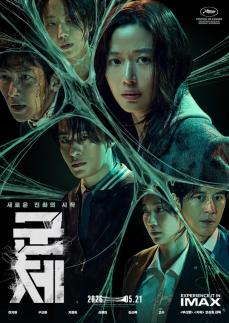 Korean Film 'Gunchae' Surpasses 2 Million Viewers, Eyes Global Success Gunchae, the latest film by director Yeon Sang-ho, has surpassed 2 million viewers domestically and is showing promising signs of success in international markets. The film secured overseas distribution rights in 124 countries prior to its release, and in Malaysia, it quickly climbed to the top ranks of all-time Korean film box office hits. With approximately 800,000 viewers remaining to reach its break-even point, there is growing interest in whether Yeon’s K-zombie genre can create a sustainable revenue model through both domestic box office sales and international rights.According to the Korean Film Council's integrated ticketing system, Gunchae recorded a cumulative audience of 2,000,005 by the afternoon of May 25. As of May 26, the total audience count stands at 2,169,097. The film set a record for the fastest 2 million viewers among 2026 releases, surpassing popular films such as The King’s Affection, Salmokji, and Project Hail Mary.Gunchae had a strong opening, achieving the highest box office score of the year on its first day. It continued to break records, reaching 1 million viewers in the shortest time and now 2 million, outpacing the previous record set by the 2025 hit, Zombie Daughter, by one day.From a profitability perspective, Showbox reports that Gunchae's break-even point is approximately 3 million viewers, based on confirmed domestic revenue. With the current cumulative audience of 2,169,097, it has about 800,000 viewers left to reach that threshold. The film has maintained its position at the top of the box office, suggesting that the timeline to reach break-even could be accelerated based on weekend attendance trends.Internationally, the response to Gunchae has been swift. The film was pre-sold to 124 countries before its release. As it prepares for its world premiere in the Midnight Screening section at the 79th Cannes Film Festival, it has already garnered interest from overseas distributors. North American distributor Well Go cited Yeon Sang-ho's proven track record with films like Train to Busan as a key reason for their acquisition, while Taiwanese distributor Movie Cloud highlighted the film's unique portrayal of infected individuals as evolving intelligent beings rather than mere zombies.In Malaysia, Gunchae has shown remarkable early success. Released on May 22, the film grossed 7 million ringgit by May 25. On its third day, it surpassed 5.75 million ringgit, exceeding the final box office total of 5.5 million ringgit for the 2024 film, The Grave. Currently, the top two all-time Korean film box office hits in Malaysia are Yeon Sang-ho's Train to Busan and Peninsula, with Gunchae now joining the ranks, indicating a strong consumer interest in Yeon's zombie universe in the local market.The international rollout continues, with Gunchae opening in Taiwan and Malaysia on May 22, followed by releases in France, Singapore, and the Philippines on May 27, Australia and New Zealand on June 11, and North America on August 28. A release in Japan is also scheduled for 2027. The film's domestic box office revenue, pre-sold rights, and key international market performances are creating a robust financial structure.A Showbox representative stated, "Director Yeon Sang-ho is a well-known creator in international markets. There was significant interest at Cannes, with numerous requests for interviews from foreign media, and the overseas response has been enthusiastic. Distributors in the U.S. and France have also given positive evaluations of the film. Although Malaysia is still in the early stages of release, the rapid box office performance is promising, and we look forward to the reactions from other countries as they release."In an interview, Yeon expressed his relief at the domestic success, stating, "I’m glad. If we reach break-even quickly, I’ll be able to relax, but since the break-even point is 3 million, I think we’ll have more leeway once we surpass that."He also shared his thoughts on audience reactions, saying, "I watched it in 4DX with my daughter yesterday, and it was lively. When I made the film 'Face', I met viewers who engaged deeply, but this time, it definitely felt like a blockbuster with a lively atmosphere. I’m glad to feel that vibe."Regarding the reactions at Cannes, Yeon noted, "The audience at the Cannes Film Festival can’t be considered typical viewers. The festival is a gathering of film enthusiasts and has a celebratory atmosphere, making it hard to gauge general reactions. However, it was nice to meet Korean audiences right after returning from Cannes. It feels like ages ago that Cannes was just last week."Gunchae depicts isolated survivors in a quarantined building facing off against infected individuals that evolve in unpredictable ways due to a mysterious infection. This film is the latest from Yeon Sang-ho, who has expanded the K-zombie genre with Train to Busan and Peninsula, featuring actors Jeon Ji-hyun, Koo Kyo-hwan, Ji Chang-wook, Shin Hyun-bin, and Kim Shin-rok.With its rapid domestic success, international pre-sales, and strong early performance in Malaysia, Gunchae is being highlighted as a case study in the revenue structure of Korean genre films. As it approaches its break-even point with about 800,000 viewers remaining, there is keen interest in how far Yeon’s K-zombie franchise will extend its success in both domestic and international markets.* This article has been translated by AI. 2026-05-28 14:18:00
 -
 LS Shares Drop for Second Consecutive Day Following Revised Earnings Report LS Corp. is experiencing a decline in stock prices for the second consecutive day due to the impact of a revised quarterly report. As of 2:07 PM on May 28, the company’s shares were trading at 458,500 won, down 9.74% (49,500 won) from the previous trading day. This follows an 8.14% drop in the stock market the day before, indicating a continuing downward trend. The recent decline is attributed to a correction in the first-quarter order backlog figures. LS announced on May 27 that it would reissue its quarterly report to correct some calculation errors made in the report submitted on May 15. Following the revision, LS's total order backlog decreased from 18.2681 trillion won to 16.7390 trillion won, a reduction of approximately 1.5291 trillion won. The company stated that this change was due to a simple clerical error. The order backlog is considered a key indicator for predicting future revenue and performance, and the correction has negatively affected investor sentiment. Notably, the stock price had surged in the short term following the previous report due to heightened expectations for orders, leading to a reversal of those gains. Market analysts view this adjustment not as a sign of deteriorating performance or a fundamental issue with the orders themselves, but rather as a temporary decline in confidence and supply-demand instability resulting from the correction process. However, since the order backlog is directly linked to future performance visibility, investors are keen to monitor upcoming disclosures and performance trends to assess the resolution of uncertainties.* This article has been translated by AI. 2026-05-28 14:14:00
 -
 Controversy Arises Over 'I Am SOLO' Cast Dinner Without Kyung-soo and Soon-ja A controversy has erupted after the official account of a restaurant franchise posted a photo of the cast from the 31st season of ENA and SBS Plus's 'I Am SOLO' during a dinner gathering, accompanied by an inappropriate caption. On May 28, various online communities shared a post from the restaurant's official account featuring a photo of the 'I Am SOLO' 31st season cast dining together after a live broadcast. Notably, the photo did not include Kyung-soo and Soon-ja. The controversy stemmed from the caption that read, "Thanks for coming, but I’m not thankful..." A user commented, "The owner isn’t thankful for the customers," to which the account responded, "It’s not just that I’m not thankful; I cried this morning." The post quickly spread online, with some users suggesting it was a public jab at specific cast members. This comes amid heightened tensions among the 'I Am SOLO' 31st season cast following Soon-ja's recent revelations and ongoing discussions about group dynamics. Observers noted that the restaurant's official account seemed to be joining the fray of the controversy. Users reacted with comments such as, "Even if they are customers, it's crossing the line for an official account to say that," and, "If they had stayed silent, it would have been better." Others criticized the emotional response from the account, calling it inappropriate and a failure in risk management. Conversely, some defended the account, stating, "It must be tough for those involved," and, "I can imagine how bad the atmosphere was after filming." Others felt the post was meant as a joke but had been blown out of proportion. Meanwhile, the 'I Am SOLO' 31st season continues to face internal conflicts and discussions surrounding group dynamics following Soon-ja's additional disclosures. Previously, Soon-ja claimed she felt psychological pressure during group meetings and chats, and the release of unedited footage has further fueled the online debate. 2026-05-28 14:12:00
 -
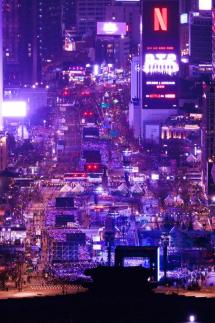 BTS Concert Sparks Surge in Hotel Prices in Busan; Authorities Launch Inspections The South Korean government is taking action to prevent price gouging and reservation cancellations ahead of the BTS concert scheduled for June in Busan. The National Tax Service and the Fair Trade Commission will conduct special on-site inspections, and businesses found in violation may face severe penalties, including suspension of operations. On May 28, the Ministry of Economy and Finance and the Ministry of Culture, Sports and Tourism held a task force meeting co-chaired by Vice Minister Kang Gi-ryong and Director Kang Jeong-won of the Tourism Policy Bureau. Authorities are concerned that some hotels in Busan may unilaterally cancel existing reservations or excessively raise accommodation prices as the concert date approaches. There are particular worries about high rates and non-compliance with posted prices at hotels near the concert venue. To alleviate the burden on tourists, the government is securing alternative accommodations, including university dormitories, religious facilities, public training centers, and youth training facilities. So far, around 1,300 alternative lodging options have been secured in Busan and nearby areas like Yangsan and Changwon, with reservations being processed or announced sequentially. Information is available through 'Visit Busan' and the Korea Tourism Organization's 'Visit Korea.' Busan City is encouraging participation from regular-priced hotels through the 'Fair Accommodation Challenge' and is considering options for foreign homestays. The government plans to quickly review and announce measures to increase late-night bus and train services between Busan and Seoul. A multi-agency special inspection will also take place. On May 29 and June 8-9, joint inspections involving the National Tax Service, Fair Trade Commission, Ministry of Health and Welfare, Ministry of the Interior and Safety, and Busan City will focus on price collusion, compliance with posted rates, and hygiene conditions at hotels near the concert venue. Violating establishments will face immediate corrective orders and operational suspensions. Additionally, Busan City will conduct a special investigation until June 15. If unreported lodging operations, non-posted or misleading rates, or violations of hygiene standards are found, criminal charges and administrative penalties will be pursued. The government is also strengthening its consumer complaint reporting system. Reports of reservation cancellations and other issues received through the tourism inconvenience reporting center '1330' or local number '120' will be immediately communicated to local governments for on-site inspections, and relevant information will be shared with the National Tax Service to investigate potential tax evasion. In the long term, the government aims to implement a 'Price Assurance System' to prevent price gouging. Under this system, lodging providers would be required to report and publicly disclose their seasonal rates in advance, with penalties for exceeding reported prices. Unilateral reservation cancellations will also be subject to sanctions, with plans to finalize related legal amendments within the year.* This article has been translated by AI. 2026-05-28 14:10:00
 -
 Lotteria Launches Season 4 of Young Farmers Circulation Project Lotteria is expanding its support for young farmers as part of its efforts to strengthen a cooperative supply chain based on domestic agricultural products. On May 28, Lotteria GRS announced the launch of Season 4 of its Young Farmers Circulation Project, which provides logistics support to young farmers in the Chungnam region. The Young Farmers Circulation Project is a social contribution program aimed at helping young farmers settle and engage in agricultural activities. It operates by providing financial assistance and market access to alleviate the burdens faced by young farmers with limited cultivation experience during their initial settlement phase. Since last year, Lotteria has been offering practical support, including agricultural supplies, seedlings, mentoring, and expanded market connections. This year, in light of rising international oil prices increasing transportation costs for agricultural products, the company has also expanded its logistics support. The agricultural products produced by young farmers will undergo processing through partner companies and will be used as ingredients for new menu items at Lotteria in the second half of the year. This arrangement allows young farmers to secure stable supply channels while strengthening Lotteria's domestic raw material supply chain. A Lotteria GRS representative stated, "Creating an environment where young farmers can settle stably is the starting point for a sustainable food industry. We plan to continue expanding a circular structure where young farmers, local communities, and consumers can grow together." Additionally, Lotteria GRS has been recognized for its contributions to building cooperative growth models and giving back to local communities, receiving a commendation from the Minister of SMEs and Startups at last year's 'Large and Small Enterprises Cooperative Growth Awards.'* This article has been translated by AI. 2026-05-28 14:10:00
 -
 Hyundai Home Shopping Expands Beauty Store 'Coasis' to Four Locations Hyundai Home Shopping is expanding its offline beauty business by opening multiple locations of its beauty store 'Coasis.'On May 28, Hyundai Home Shopping announced that it will open the second Coasis store at Hyundai Department Store in Cheonho on May 29. Next month, the company plans to sequentially open the third and fourth stores at Hyundai Outlet Garden Five and Dongdaemun.Coasis was first introduced in December 2025 at the Hyundai Premium Outlet Space One in Namyangju, Gyeonggi Province. The first store features over 90% skincare products and is designed with lower display heights to cater to female customers in their 40s and 50s. This approach has attracted an average of more than 2,000 visitors daily, with sales exceeding targets by over 50%.The second store will occupy 61 square meters (approximately 19 pyeong) in the basement level of Hyundai Department Store Cheonho. It will include a new section for international skincare brands to meet the demand for high-performance cosmetics among department store shoppers.The Garden Five store, set to open on June 5, will be 133 square meters (approximately 42 pyeong) and will feature a perfume zone showcasing domestic fragrance products, catering to its customer base of women in their 30s and 40s. The fourth store will open on June 12 on the second floor of Hyundai Outlet Dongdaemun, covering 124 square meters (approximately 37 pyeong).Hyundai Home Shopping plans to collaborate with domestic cosmetics brands to increase its exclusive product offerings from the current 30 to 60 by the end of the year. Han Kwang-young, CEO of Hyundai Home Shopping, stated, "We aim to develop each store into a unique beauty landmark that provides distinct enjoyment beyond simple product sales."In the first quarter of this year, Hyundai Home Shopping reported a consolidated operating profit of 65.3 billion won, a 35.9% increase compared to the same period last year. Revenue during the same period was 978.5 billion won, reflecting a 1.9% increase.* This article has been translated by AI. 2026-05-28 14:08:00
 -
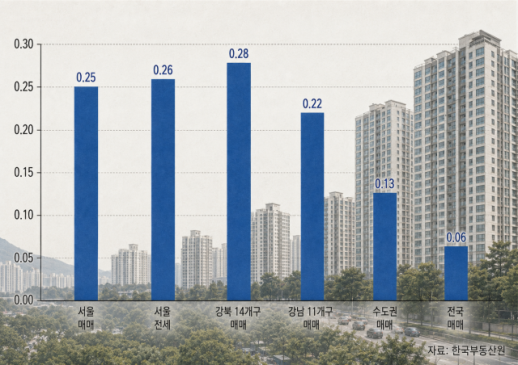 Seoul Apartment Prices Rise Slower, But Demand Expands to Outer Areas Seoul's apartment prices have seen a slight decrease in the rate of increase over the past week, but the upward trend is spreading beyond the Gangnam area to large complexes in the northern and southwestern outskirts. Initially, high-priced complexes near the Han River and those undergoing redevelopment drove the market up, but recently, demand has shifted to mid- to low-priced complexes and those near subway stations, supporting prices across Seoul. According to the Korea Real Estate Agency's report on weekly apartment price trends for the fourth week of May, as of May 25, the average sale price of apartments in Seoul rose by 0.25% compared to the previous week. While this is a slowdown from the previous week's increase of 0.31%, it significantly exceeds the national average of 0.06% and the metropolitan area’s increase of 0.13%. The agency noted that while localized price increases occurred in redevelopment areas and large complexes, some regions experienced a slowdown in transactions as sellers and buyers adopted a wait-and-see approach. Notably, the price increase is not confined to the Gangnam area. The 14 districts in Gangbuk saw a rise of 0.28%, surpassing the 0.22% increase in the 11 districts of Gangnam. In particular, the Buk-gu district rose by 0.42%, driven by major complexes in Mia and Beon-dong, while Jung-gu increased by 0.41%, primarily in the Sindang and Hwanghak-dong areas. Gwangjin and Seongbuk districts also saw increases of 0.37% and 0.34%, respectively. In Gangnam, not only traditional high-priced areas are seeing increases. Gangseo and Guro districts rose by 0.32%, while Songpa increased by 0.28%, and Yeongdeungpo and Gwanak districts both saw increases of 0.27%. The buying trend is also spreading to relatively affordable areas such as Gayang and Hwagok-dong, as well as Gaebong and Gocheok-dong, in addition to Jamsil and Bangi-dong. The jeonse market is also influencing sale prices. During the same period, the average jeonse price for apartments in Seoul rose by 0.26%. Although this is a decrease from the previous week's increase of 0.29%, it remains at a high level. As inquiries from tenants continue to rise, demand is accumulating in preferred complexes and areas near subway stations, leading to price increases for well-maintained listings. The rise in jeonse prices could stimulate demand for purchasing in the Gangbuk and outer areas. In Seongbuk, jeonse prices increased by 0.44%, primarily in large complexes in Gileum and Donam-dong, while Seongdong (0.42%), Dobong (0.41%), and Gwangjin (0.40%) also showed high increases. As the burden of jeonse prices grows, there is a greater likelihood that buyers will move to more affordable outer complexes or large developments. A similar trend is observed in the Gyeonggi region. Sale prices increased by 0.09%, a slowdown from the previous week, but areas like Dongtan in Hwaseong rose by 0.49%, Jungwon in Seongnam by 0.41%, and Gwangmyeong by 0.30%. While there remains buying interest in areas with good access to Seoul or demand for large complexes and smaller units, cities like Icheon and Pyeongtaek saw declines of 0.22% and 0.14%, respectively. Industry experts view the Seoul apartment market as undergoing a reallocation of buying interest across different price ranges rather than entering a phase of overheating. High-priced complexes are experiencing selective transactions due to price burdens and regulatory impacts, while mid-priced complexes in the 1 billion to 1.5 billion won range and those near subway stations are supported by genuine demand. A real estate industry official stated, "While the rate of increase in Seoul's housing prices has slowed, it does not mean that buying interest has diminished. The high-priced areas in Gangnam are taking a breather, while genuine buyers feeling the pressure of jeonse prices are shifting towards large complexes and developments in Gangbuk and the southwestern areas, gradually changing the market's balance." He added, "As long as jeonse prices continue to rise, it will be difficult for sale prices to decline significantly."* This article has been translated by AI. 2026-05-28 14:02:00
 -
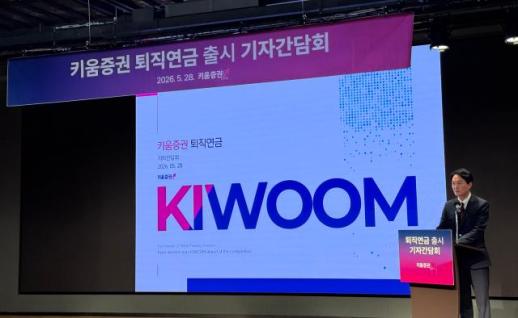 Kiwoom Securities Enters Retirement Pension Market with Innovative Fee Structure Kiwoom Securities, recognized as a retail powerhouse, holds approximately 25% market share in the retail sector, maintaining its position as the top player in South Korea for 21 consecutive years. However, its focus on retail has been seen as a weakness due to a lack of diversity in its revenue portfolio. Now, Kiwoom is venturing into a new area. As the 47th retirement pension provider in South Korea, it plans to enter the 500 trillion won retirement pension market starting in June. The company aims to leverage its retail strengths to compete in the online retirement pension platform market, with a goal of achieving a 10% market share in the retirement pension sector within the next decade. The industry is closely watching to see if Kiwoom's entry will disrupt the market. On May 28, Kiwoom Securities held a press conference at TP Tower in Yeouido, Seoul, to unveil its roadmap for entering the retirement pension market. CEO Eom Joo-sung stated, "We will enhance our customers' long-term asset returns through bold fee innovations, reflecting our philosophy that Kiwoom can only grow if our customers grow." Kiwoom will officially launch its retirement pension business on June 1. The company plans to establish its own performance benchmarks for retirement pension returns and will not charge management fees if these benchmarks are not met. The target return rate is currently being considered to be slightly above deposit interest rates. Additionally, Kiwoom will waive management and asset management fees for the first year across all retirement pension schemes, including defined benefit (DB) and defined contribution (DC) plans, in line with the government's policy to reduce fee burdens and to accelerate the acquisition of initial subscribers. The company is also focusing on expanding its product lineup. Song Soo-yeol, head of the pension consulting team, noted, "We have secured a higher number of principal-protected products compared to other providers and have registered retirement pension funds and performance-based products based on our existing fund lineup. We have also registered most ETFs available from other providers." This strategy targets the retirement pension asset transfer system implemented last year. The transfer process can be cumbersome if the products in existing retirement accounts are not available with the new provider, requiring liquidation and cash conversion. Kiwoom aims to minimize these inconveniences to enhance its competitiveness in attracting new clients transferring their savings from banks and insurance companies to securities firms. For the first time, Kiwoom will offer foreign RP products to all retirement pension clients, including individuals and corporations. The company plans to gradually introduce a variety of products, starting with foreign RP, followed by bonds and ELS based on asset sizes, leveraging the regulatory allowance for foreign investments in retirement pensions. Kiwoom has worked to ensure that the platform environment enjoyed by existing stock trading clients is extended to retirement pensions. The system allows for real-time trading of retirement pension ETFs within the same framework as stock trading, addressing previous inconveniences such as needing to transfer funds to a separate account or difficulties in checking real-time transaction balances. The company has also strengthened its non-face-to-face processing system. A dedicated web system has been established to allow corporate clients to handle everything from enrollment to deposits and benefit payments online without the need for complex paperwork or seals. Kiwoom Securities believes that changes in the retirement pension market will favor online platform providers. Historically, corporate sales relied heavily on branch networks, but with the market expanding and the proportion of individual investors increasing, the influence of online platforms is growing. Byun Young-dae, head of the pension platform division, stated, "The retirement pension market has surpassed 500 trillion won in accumulated funds and is transitioning from a phase of quantitative growth to qualitative competition. As trends in pension investments spread and the asset transfer system is implemented, the capabilities of online investment platforms will become increasingly important." Kiwoom Securities has set a goal of achieving a 10% market share in the retirement pension sector within the securities industry by 2035 and aims to rank among the top five based on accumulated funds. As of the end of the first quarter of this year, Mirae Asset Securities led the market with 42.44 trillion won, followed by Samsung Securities (23.27 trillion won), Korea Investment & Securities (22.59 trillion won), Hyundai Motor Securities (18.86 trillion won), NH Investment & Securities (10.75 trillion won), and KB Securities (8.90 trillion won). Byun added, "The retirement pension market is expected to grow to 1,200 trillion won by 2035. In our first year of entry, we will focus on stabilizing the business while leveraging Kiwoom's retail strengths to achieve our long-term goals."* This article has been translated by AI. 2026-05-28 14:02:00
 -
 AJP Focus: The perils of chip boom SEOUL, May 28 (AJP) -The world is at the threshold of the artificial-intelligence revolution, and at the heart of that revolution sits the semiconductor — with Korea at the heart of the semiconductor. Only a few years ago memory prices had collapsed, inventories had swollen, and Samsung Electronics and SK hynix were enduring a brutal downturn alongside the rest of the slowing global economy. Then the AI era rewrote the board almost overnight. The generative-AI surge that followed ChatGPT sent data-center and AI-server investment soaring, and machines built to think like humans demanded a different order of memory altogether — faster, denser, and unlike anything ordinary DRAM could deliver. That demand has a name: high-bandwidth memory, or HBM. The AI industry today orbits Nvidia, yet inside Nvidia's beating heart sits Korean memory. If America supplies the platforms and the software of the age, Korea supplies its memory. Small wonder the market now speaks of a semiconductor supercycle unlike any in four decades. And yet this is precisely the moment for cold clarity, because prosperity has always clouded human judgment. Korea has a habit of treating whichever industry happens to be surging as if it were the country's permanent destiny — heavy and chemical industries in the 1970s, shipbuilding and steel in the 1980s, IT and chips in the 1990s, real estate and construction in the 2000s, and more recently the fevers around platforms and batteries. Each time, a single sector was mistaken for the fate of the whole nation. But the history of industry has always been a history of cycles. Booms breed overinvestment; overinvestment breeds oversupply; oversupply ends in collapsing prices and painful restructuring. That is the cold, repeating logic of industrial capitalism, and semiconductors are no exception. In the 1980s, Japanese chipmakers nearly owned the memory market, and the world declared the future Japanese. Then bubbles burst, structures shifted, and American pressure bore down, and Japan's lead unraveled. Korea inherited that crown — Samsung rising to dominance, SK Hynix to world rank — but never on a smooth road. The industry survived countless slumps, price crashes, and financial crises. That survival is exactly why this moment matters most: the boom is the dangerous hour. The dispute now roiling Korean society looks like a quarrel over wages, but it runs far deeper. Labor, management, politicians, and the financial markets are colliding over how to divide record profits. Workers say the record was built on their devotion; shareholders insist the earnings of a listed company belong, first, to its owners; politicians invoke a third logic entirely — that chips are a national strategic asset. The trouble is that all three claims have begun to collide, because the semiconductor has quietly stopped being a mere industry. It is at once an export engine, a security asset, the gravitational center of the stock market, and the vessel of the country's youthful ambition. At some point it began to be treated as if it were the nation itself. That is where the danger I would call the "semiconductor disease" begins. Economists speak of the Dutch Disease — the way one overpowering sector can warp an entire economy out of balance, named for how a natural-gas boom hollowed out Dutch manufacturing. Korea now faces its own variant. The Korean stock market has, in effect, become the semiconductor market: when Samsung and SK hynix rise, the whole index rises; when chips wobble, the whole economy shakes. Over the long run that is not a healthy structure. Once a nation leans this heavily on a single sector, that sector's cycle becomes the nation's fate. Why hardware is not enough The deeper issue is the nature of the AI era itself. People speak as if AI will grow forever, but technology has never moved that way. The dot-com bubble, the LCD industry, solar power, batteries — each rode its own vast cycle. AI, too, will meet oversupply, price wars, shifting standards, geopolitical risk, and China's pursuit. The China variable is decisive. Even under American sanctions, Beijing is pouring national resources into building a self-sufficient chip ecosystem. A technology gap still exists — but the surest way to lose an industrial war is to underestimate how fast a rival is closing it. Japan chased America; Korea chased Japan; China now chases Korea. This battlefield has no permanent victor. Nor will the contest stay confined to memory. The competition ahead will be an ecosystem war binding chips to energy, software to cloud, data centers to robotics, AI platforms to defense and quantum computing. Korea holds the world's finest memory technology, but memory alone cannot guarantee the future. The real winner of the AI age will not be whoever makes the best chip; it will be whoever commands the whole ecosystem. America's strength is not Nvidia alone but OpenAI and Microsoft, Google and Amazon, Meta and Tesla — platform, cloud, data center, and software woven into one fabric. Korea remains far too hardware-centric. So the question Korea must truly wrestle with is not how to split this year's profits. It is how to prepare next-generation AI architecture, breakthroughs in power efficiency, AI software and data sovereignty, talent, a place in the reordered global supply chain, industrial diversification, and an energy strategy. Power, above all, is decisive: AI data centers devour electricity, which is why America's tech giants now scramble for nuclear, LNG, and renewables. Chip competitiveness will increasingly mean energy competitiveness. Three great transitions are moving at once — the AI revolution, the U.S.–China contest for supremacy, and the remaking of energy and supply chains — and the semiconductor sits where all three axes meet. America sees chips as a matter of security, China as a matter of survival, Europe as a cause worth vast subsidy. The semiconductor has become a strategic asset of modern civilization. Which is all the more reason to stay cold-eyed. The crisis begins the moment one grows drunk on the boom. 居安思危 — in times of peace, think of danger. Korea's chip industry sits at the very summit of the world; paradoxically, that may be its most perilous moment. History has never long tolerated the arrogant victor. The industries that survive are never the ones intoxicated by today's boom, but the ones that prepared for tomorrow's crisis. What is needed now is not applause but a clear strategy. Labor must think in terms of long-term competitiveness; companies must build the future ecosystem rather than chase quarterly results; government must weigh the whole structure of national industry above political popularity. Above all, balance. The semiconductor is Korea's core strategic industry — but it must not become a "semiconductor disease" that swallows the nation whole. The AI era has only just begun, and Korea stands in the middle of a vast historical turn. The countries that endure are not those drunk on present success but those preparing for future crisis. Let the chip be a source of national pride — and let Korea, at the same time, prepare for a future that reaches beyond it. That is the true national strategy, and the condition of survival in the age of AI. 2026-05-28 14:00:29
 -
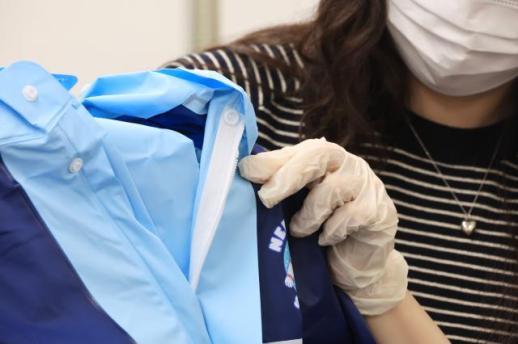 Be aware of hazardous substances in children's products sold online SEOUL, May 28 (AJP) - A slew of children's products purchased online from overseas websites have been found to pose safety concerns, according to a recent inspection. The Seoul Metropolitan Government inspected some 32 children's products including umbrellas, raincoats, clothing, and toys purchased from overseas online platforms such as AliExpress, Temu, and Shein, and found that 10 of them failed to meet safety guidelines set by the Ministry of Trade, Industry and Resources. Many were found to contain hazardous substances including lead, phthalate plasticizers, and nonylphenol, with some exceeding permitted limits by as much as 5.8 times. Safety hazards such as sharp edges and loosely attached umbrella ribs were also identified, prompting the city government to request that the platforms suspend sales of the affected products. The city government plans to conduct another round of inspections next month, along with follow-up measures. 2026-05-28 14:00:03