

Journalist

Lester Munson
-
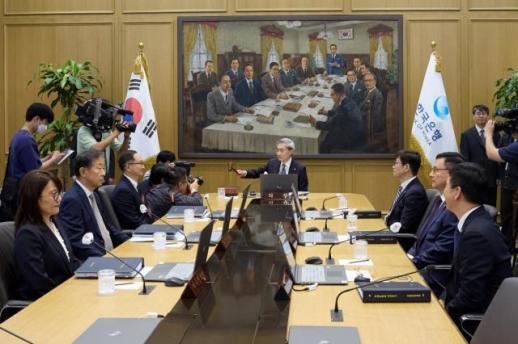 Bank of Korea Raises Growth Forecast to 2.6%, Holds Key Rate Steady for Eighth Time The Bank of Korea has kept its key interest rate steady for the eighth consecutive time. The economic growth forecast has been raised by 0.6 percentage points, bolstered by a semiconductor boom. As the Middle East conflict continues, inflation expectations have also been adjusted upward. During its monetary policy meeting on May 28, the Bank of Korea's Monetary Policy Committee decided to maintain the key interest rate at 2.50% for the eighth time, following freezes in July, August, October, and November of last year, as well as January, February, and April of this year. The committee stated, "While inflationary pressures have increased due to the Middle East conflict, growth is expanding more than expected, supported by strong exports, and risks to financial stability persist. However, given the high uncertainty surrounding the developments in the Middle East and their ripple effects, we believe it is appropriate to maintain the current key interest rate and continue to monitor the situation's impact on growth and inflation." The economic growth outlook has shown stronger-than-expected performance. On this day, the Bank of Korea revised its real GDP growth forecast for the year to 2.6%, also raising next year's forecast to 2.1%. Previously, in February, the forecasts were set at 2.0% for this year and 1.8% for next year. Earlier this year, South Korea achieved a surprising growth rate that significantly exceeded the Bank of Korea's initial forecast of 0.9%. The GDP growth rate for the first quarter was 1.7%, driven by the semiconductor sector. With the semiconductor boom, the possibility of achieving $900 billion in exports this year has also emerged. The ongoing Middle East conflict is believed to have influenced this monetary policy decision. In April, the Monetary Policy Committee noted the significant uncertainty stemming from the conflict and indicated it would maintain the current key interest rate while monitoring the situation. The conflict has also put upward pressure on prices. Consequently, the Bank of Korea has adjusted its consumer price inflation forecast for the year from 2.0% to 2.7%, an increase of 0.5 percentage points. The inflation forecast for next year has also been raised from 2.0% to 2.3%. The exchange rate has remained around 1,500 won. As of 10:15 a.m. on this day, the won-dollar exchange rate stood at 1,503.8 won in the Seoul foreign exchange market. The ongoing difficulties in ceasefire negotiations in the Middle East have heightened the preference for safe-haven assets, with the exchange rate maintaining the 1,500 won level for nine consecutive trading days since May 15.* This article has been translated by AI. 2026-05-28 10:37:05
 -
Bank of Korea Raises Economic Growth Forecast to 2.6%, Holds Key Rate Steady for Eighth Time The Bank of Korea has kept its key interest rate steady for the eighth consecutive time. The economic growth forecast has been raised significantly by 0.6 percentage points, buoyed by a semiconductor boom. However, inflation expectations have also increased due to the prolonged conflict in the Middle East. During its monetary policy meeting on May 28, the Bank of Korea's Monetary Policy Committee decided to maintain the key interest rate at 2.50%. This marks the eighth consecutive freeze, following similar decisions in July, August, October, and November of last year, as well as January, February, and April of this year. The committee stated, "While inflationary pressures have risen due to the Middle East conflict, growth is expanding more than expected, supported by strong exports. However, risks to financial stability persist. Given the high uncertainty surrounding the developments in the Middle East and their potential impacts, we believe it is appropriate to maintain the current interest rate level and further assess the situation's effects on growth and inflation." The economic growth rate is showing stronger-than-expected performance. On this day, the Bank of Korea adjusted its real GDP growth forecast for this year to 2.6%. The forecast for next year was also raised to 2.1%. Previously, in February, the forecasts were 2.0% for this year and 1.8% for next year. Earlier this year, South Korea's economy achieved a surprising growth rate that significantly exceeded the Bank of Korea's initial forecast of 0.9%. In the first quarter, the GDP growth rate was 1.7%, driven by the semiconductor sector. With the semiconductor boom, there are now expectations that this year's exports could reach $900 billion. The ongoing conflict in the Middle East has also influenced this monetary policy decision. In April, the committee noted the high uncertainty stemming from the conflict and decided to maintain the current interest rate while monitoring the situation. The Middle East conflict is exerting upward pressure on prices. Consequently, the Bank of Korea has revised its consumer price inflation forecast for this year from 2.0% to 2.7%, an increase of 0.5 percentage points. The inflation forecast for next year has also been raised from 2.0% to 2.3%, compared to the February estimates. The exchange rate is currently hovering around 1,500 won. As of 10:15 a.m. in the Seoul foreign exchange market, the won-dollar exchange rate stands at 1,503.8 won. The ongoing difficulties in ceasefire negotiations in the Middle East have heightened the preference for safe-haven assets. The exchange rate has remained around the 1,500 won level for nine consecutive trading days since May 15.* This article has been translated by AI. 2026-05-28 10:36:36
-
Bank of Korea Raises Growth Forecast to 2.6%, Holds Interest Rate Steady for Eighth Time The Bank of Korea has kept its benchmark interest rate steady for the eighth consecutive time. The central bank raised its economic growth forecast significantly, citing a semiconductor boom, while also adjusting its inflation expectations due to the ongoing Middle East conflict. During a monetary policy meeting on May 28, the Bank of Korea's Monetary Policy Committee decided to maintain the benchmark interest rate at 2.50%. This marks the eighth consecutive month of holding the rate steady, following similar decisions in July, August, October, and November of last year, as well as January, February, and April of this year. The decision to hold rates was influenced by better-than-expected economic performance and the prolonged conflict in the Middle East. On this day, the Bank of Korea revised its real GDP growth forecast for this year to 2.6%, up from previous estimates. The forecast for next year was also raised to 2.1%, compared to earlier projections of 2.0% for this year and 1.8% for next year made in February. Earlier this year, South Korea's economy achieved a surprising growth rate that exceeded the Bank of Korea's initial estimate of 0.9%. In the first quarter, GDP growth reached 1.7%, driven largely by the semiconductor sector. As a result, there are indications that exports could reach $900 billion this year. The ongoing conflict in the Middle East has also played a role in the central bank's monetary policy decision. In April, the Monetary Policy Committee noted the significant uncertainties posed by the conflict and decided to maintain the current interest rate while monitoring the situation. Inflationary pressures are rising due to the Middle East conflict. Consequently, the Bank of Korea has adjusted its consumer price inflation forecast for this year to 2.7%, an increase of 0.5 percentage points from previous estimates. The inflation forecast for next year was also raised from 2.0% to 2.3% compared to the February outlook. The exchange rate has remained around 1,500 won. As of 10:15 a.m. on this day, the won-dollar exchange rate was 1,503.8 won. The ongoing difficulties in ceasefire negotiations in the Middle East have heightened the preference for safe-haven assets, with the exchange rate maintaining the 1,500 won level for nine consecutive trading days since May 15.* This article has been translated by AI. 2026-05-28 10:36:21
-
 Hai Phong City in Vietnam Expands Cooperation with South Korea for Innovation and Circular Agriculture Hai Phong City in Vietnam, home to numerous South Korean companies including LG Electronics, is advancing its goal of becoming a global innovation city through enhanced scientific and technological cooperation with South Korea. The city is working on a strategic partnership with the Korea Institute of Science and Technology (KIST), hosting Techfest Hai Phong 2026, and implementing a circular agriculture technology transfer project, all aimed at achieving its goal of entering the "Top 200 Global Innovation Cities" by 2030. On May 26, local media including Bao Dau Tu reported that the Hai Phong Department of Science and Technology held a meeting to discuss the implementation of a memorandum of understanding (MOU) signed with KIST. The meeting introduced Techfest Hai Phong 2026 and officially launched the 2026 Startup Innovation Talent Discovery Competition. The collaboration will focus on six key areas: infrastructure, talent, networking, commercialization, research, and investment. A key infrastructure project is the establishment of the "KIST-Hai Phong Tech Hub." Plans for its establishment and operational regulations are expected to be finalized by August, with an official launch set for December. In the area of technology commercialization, an in-depth survey will connect KIST's technology supply database with local business needs, and a matching forum will be held during Techfest 2026 for South Korean tech companies and local businesses to meet directly. Joint research initiatives will also be undertaken. In November, a survey will assess the technology needs of key companies and the status of marine bio and pharmaceutical resources, with plans to select one pilot joint research project to commence in December. Nguyen Cao Tang, director of the Hai Phong Department of Science and Technology, stated, "This is a concrete action to implement the central government's Resolution No. 57 and the national startup innovation strategy. Science and technology and innovation are key conditions that determine long-term competitiveness." Hai Phong has maintained double-digit economic growth for 11 consecutive years, with an economic scale reaching $29.4 billion (approximately 44 trillion won). The city has also set a target of 13-14% average annual growth in gross regional domestic product (GRDP) from 2026 to 2030. According to a recent StartupBlink report, Hai Phong ranks 765th among the world's top 1,000 startup ecosystems and 23rd in Southeast Asia, establishing itself as one of Vietnam's four major cities. KIST has expressed a strong commitment to expanding cooperation. KIST President Oh Sang-rok remarked, "This MOU is not just a document but a technology partnership based on trust," emphasizing their intention to develop Hai Phong into an innovation hub for northern Vietnam and Southeast Asia. During the event, agreements for technology transfer projects and business cooperation between South Korean and Vietnamese companies were also signed. KOICA Project Underway Meanwhile, in the Leu Khiem area of Hai Phong, the Korea International Cooperation Agency (KOICA) is actively promoting the IBS project. The Songja Investment Development Cooperative is collaborating with EcoHopia and KIST to introduce a circular agriculture and environmental treatment model utilizing organic waste and aquatic plants. Do Thi Thuy Ha, representative of the cooperative, noted, "Of the approximately 3,300 tons of household waste generated daily, 70-80% is organic material," stressing the urgent need to enhance processing capacity through technological modernization. Kim Won-bae, representative of EcoHopia, stated, "We aim to transfer technology to Vietnam and strengthen self-reliance capabilities." Techfest Hai Phong 2026 is scheduled for August 4-5 at Vietnam Maritime University, featuring 120-150 technology booths and delegations from six countries. The event will cover strategic technologies such as semiconductors, quantum technology, AI, IoT, and robotics. A startup competition focused on Smart City Operations will also take place, with Hai Phong promising tax incentives and sandbox applications in the semiconductor and AI sectors. In addition, Hai Phong is leveraging its collaboration with KIST to simultaneously promote technology transfer, talent development, and the expansion of international networks, accelerating its strategy to establish itself as a key gateway for South Korean technology and an innovation hub in Southeast Asia.* This article has been translated by AI. 2026-05-28 10:36:00
 -
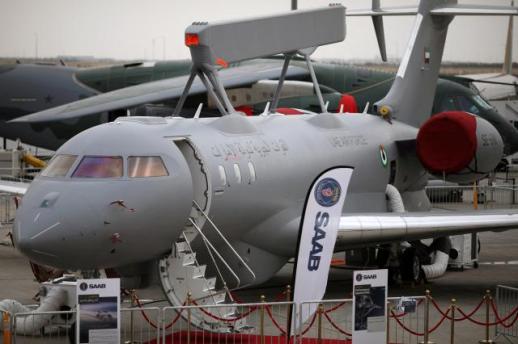 Canada Chooses Swedish Saab Over Boeing for Next-Gen Early Warning Aircraft The Canadian government has selected Sweden's Saab for its next-generation early warning aircraft program, opting for the GlobalEye model instead of the U.S. Boeing option. This decision reflects Canada's efforts to reduce its defense dependence on the United States amid strained relations since the Trump administration took office. On May 27, Canadian Prime Minister Mark Carney announced the plan to acquire Saab's GlobalEye during a defense conference in Ottawa. The GlobalEye is based on Bombardier's Global 6500 jet. Boeing's E-7 Wedgetail was also a contender for the project, but it was ultimately not selected due to delays in delivery and cost overruns. Reuters reported that this decision aligns with the Canadian government's strategy to lessen reliance on U.S. defense contractors. Carney stated, "Saab's GlobalEye, equipped with advanced sensors and mission systems, will be a key asset for the Canadian military to detect and deter threats across the Arctic region." While Canadian military officials did not disclose the specific contract value, they previously indicated plans to purchase six early warning aircraft. Saab has expressed intentions to invest in research and development in Canada if the contract is finalized. Historically, Canada has relied heavily on cooperation with the U.S. to monitor its vast Arctic territory, which spans over 4.4 million square kilometers. In March, Carney emphasized that Canada would take full responsibility for defending its Arctic territory. In light of the perception that the U.S. has become a relatively less reliable partner, Canada has shown a commitment to enhancing cooperation with Nordic countries on Arctic defense and security issues. Philip Lagassé, associate professor of international relations at Carleton University in Ottawa, told The Guardian that Canada's decision to purchase the GlobalEye is a significant test of the Carney government's policy to move away from reliance on U.S. military capabilities, affirming the relationship between Sweden and Canada as new NATO allies. Swedish Prime Minister Ulf Kristersson also commented on social media, stating, "GlobalEye is already creating jobs in Canada and collaborating with the Canadian supply chain. This decision will further strengthen the ties between our two countries." Saab is also pursuing sales of its Gripen fighter jets as part of Canada's fighter jet acquisition program. Canada has a contract to purchase 88 Lockheed Martin F-35 fighter jets, but following the imposition of tariffs on key Canadian imports by the U.S. last year, Carney instructed the military to consider reducing order sizes and exploring options for aircraft from other manufacturers. Meanwhile, Canada's reassessment of its reliance on U.S. weapons is evident in other procurement initiatives. According to military sources, the Canadian Armed Forces plan to acquire 250 armored combat vehicles within the next five years and upgrade existing Leopard 2 tanks. Notably, candidates to replace the U.S.-made M-113 armored personnel carriers include models from Germany, South Korea, and Sweden.* This article has been translated by AI. 2026-05-28 10:33:52
 -
Canada Chooses Swedish Saab Over Boeing for Next-Gen Surveillance Aircraft The Canadian government has selected Sweden's Saab to supply its next-generation surveillance aircraft, opting for the GlobalEye model instead of the U.S. Boeing option. This decision reflects Canada's efforts to reduce its reliance on U.S. defense systems and enhance its Arctic defense capabilities amid strained relations since the Trump administration took office. On May 27, Canadian Prime Minister Mark Carney announced the plan to acquire Saab's GlobalEye during a defense conference in Ottawa. The GlobalEye is based on Bombardier's Global 6500 jet. Although Boeing's E-7 Wedgetail was also a contender, it was ultimately not selected due to delays in delivery and cost overruns. Reuters reported that this decision aligns with the Canadian government's strategy to decrease dependence on U.S. defense contractors. Carney stated, "Saab's GlobalEye, equipped with advanced sensors and mission systems, will be a key asset for the Canadian military to detect and deter threats across the Arctic region." While Canadian military officials did not disclose the specific contract value, they previously indicated plans to purchase six surveillance aircraft. Saab has expressed intentions to invest in research and development in Canada if the contract is finalized. Canada has historically relied on cooperation with the U.S. to monitor its vast Arctic territory, which spans over 4.4 million square kilometers. In March, Carney affirmed that Canada would take full responsibility for defending its Arctic territory. Recently, Canada has indicated a shift towards strengthening cooperation with Nordic countries on Arctic defense and security issues, citing a perception that the U.S. has become a relatively less reliable partner. Philip Lagassé, associate professor of international relations at Carleton University in Ottawa, told The Guardian that Canada's decision to purchase the GlobalEye is a significant test of the Carney government's policy to move away from U.S. military capabilities. He noted that this decision reinforces the relationship between Canada and Sweden, a new NATO ally. Swedish Prime Minister Ulf Kristersson also commented on social media, stating, "GlobalEye is already creating jobs in Canada and collaborating with Canadian supply chains. This decision will further strengthen the ties between our two countries." Saab is also pursuing the sale of its Gripen fighter jets as part of Canada's fighter jet acquisition program. Canada has a contract to purchase 88 Lockheed Martin F-35 fighter jets, but following the imposition of tariffs on key Canadian imports by the U.S. last year, Carney instructed the military to consider reducing order sizes and exploring options for aircraft from other manufacturers. Meanwhile, Canada's reassessment of its reliance on U.S. weapons is evident in other procurement initiatives. According to military media outlet The War Zone, the Canadian military plans to acquire 250 armored combat vehicles within the next five years and is considering upgrades to its existing Leopard 2 tanks. Notably, candidates to replace U.S.-made M-113 armored vehicles include models from Germany, South Korea, and Sweden.* This article has been translated by AI. 2026-05-28 10:33:22
-
Canada Chooses Swedish Saab Over Boeing for Next-Gen Early Warning Aircraft The Canadian government has selected Sweden's Saab for its next-generation early warning aircraft program, opting for Saab's model over that of U.S. defense contractor Boeing. This decision reflects Canada's efforts to reduce its reliance on U.S. defense systems and enhance its Arctic defense capabilities amid strained relations since the Trump administration. On May 27, Canadian Prime Minister Mark Carney announced the plan to acquire Saab's GlobalEye early warning aircraft during a defense conference in Ottawa. The GlobalEye is based on Bombardier's Global 6500 jet. Boeing's E-7 Wedgetail was also a contender for the project, but delays in delivery and cost overruns led to its exclusion. Reuters reported that this decision aligns with the Canadian government's strategy to decrease dependence on U.S. defense contractors. Carney stated, "Saab's GlobalEye, equipped with advanced sensors and mission systems, will be a crucial asset for the Canadian Forces to detect and deter threats across the Arctic region." While Canadian military officials did not disclose the specific contract value, they previously indicated plans to purchase six early warning aircraft. Saab has expressed intentions to invest in research and development within Canada if the contract is finalized. Historically, Canada has relied heavily on cooperation with the U.S. to monitor over 4.4 million square kilometers of Arctic land and waters. In March, Carney declared that Canada would take full responsibility for defending its Arctic territory. In light of recent assessments that the U.S. has become a relatively less reliable partner, Canada has signaled its intention to strengthen collaboration with Nordic countries on Arctic defense and security issues. Philip Lagassé, associate professor of international relations at Carleton University in Ottawa, told The Guardian that Canada's decision to purchase the GlobalEye is a significant test of the Carney government's policy to move away from U.S. military capabilities, reinforcing ties with Sweden, a new NATO ally. Swedish Prime Minister Ulf Kristersson also commented on social media, stating, "GlobalEye is already creating jobs in Canada and collaborating with Canadian supply chains. This decision will further strengthen the bond between our two countries." Saab is also pursuing the sale of its Gripen fighter jets as part of Canada's fighter aircraft procurement program. Canada has a contract to purchase 88 Lockheed Martin F-35 fighter jets, but following the imposition of tariffs on key Canadian imports by the U.S. last year, Carney instructed the military to consider reducing order sizes and explore options for aircraft from other manufacturers. Meanwhile, Canada's reassessment of its reliance on U.S. weapons is evident in other procurement initiatives. According to military publications, the Canadian Armed Forces plans to acquire 250 armored combat vehicles within the next five years and is considering upgrades to its existing Leopard 2 tanks. Notably, candidates to replace U.S.-made M-113 armored personnel carriers include models from Germany, South Korea, and Sweden.* This article has been translated by AI. 2026-05-28 10:33:00
-
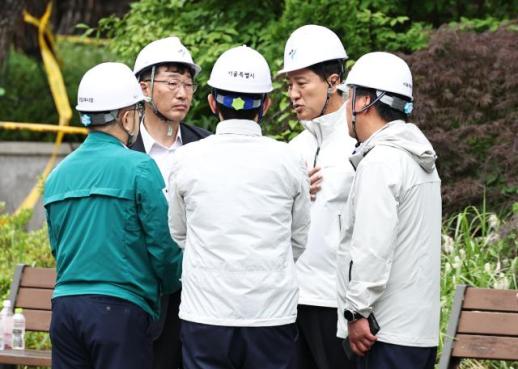 Oh Se-hoon Visits Site of Seosomun Overpass Collapse for Fourth Time Oh Se-hoon, the candidate for Seoul Mayor from the People Power Party, visited the site of the Seosomun overpass collapse on May 28, urging for safety measures. This marks his fourth visit since the incident occurred. Having suspended his official campaign for three days, Oh arrived at the demolition site in Migeun-dong, Seodaemun District, at 9 a.m. on the 28th. During his visit, he met with Acting Mayor Kim Seong-bo and spent 25 minutes assessing the recovery efforts, also urging the Minister of Land, Infrastructure and Transport for active government support. He highlighted the inconvenience caused to citizens due to debris falling onto the railway, stating, "Please ensure a swift reopening while managing the demolition site safely." This was Oh's fourth visit to the site. Following the collapse on the afternoon of May 26, he halted his scheduled campaign activities and visited the site twice. He also made an unannounced visit on the morning of May 27. Additionally, Oh is expected to appear at a televised debate for mayoral candidates later that night, marking his return to the public eye after three days.* This article has been translated by AI. 2026-05-28 10:31:20
 -
Oh Se-hoon Visits Site of Seosomun Overpass Collapse for Fourth Time Oh Se-hoon, the People Power Party candidate for Seoul Mayor, visited the site of the Seosomun overpass collapse on May 28, 2026, urging for safety measures. This marks his fourth visit since the incident occurred. Having paused his official campaign for three days, Oh arrived at the demolition site in Migeun-dong, Seodaemun District, at 9 a.m. He met with Acting Mayor Kim Sung-bo and spent 25 minutes assessing the recovery efforts, while also calling for active government support from the Minister of Land, Infrastructure and Transport. He highlighted the inconvenience caused to citizens due to debris falling onto the railway, stating, "We need to reopen quickly, but please ensure the demolition site is managed safely." Oh's visits began on May 26, the day of the accident, when he suspended his scheduled campaign events to visit the site twice. He returned again on May 27 without media presence. Later that evening, Oh is expected to participate in a televised debate for Seoul mayoral candidates, marking his return to the public eye after three days.* This article has been translated by AI. 2026-05-28 10:31:04
-
Oh Se-hoon Visits Site of Seosomun Overpass Collapse for Fourth Time Oh Se-hoon, the People Power Party candidate for Seoul Mayor, visited the site of the Seosomun overpass collapse on May 28, 2026, for the fourth time, urging for safety measures. This visit comes three days after he suspended his official campaign activities. On the morning of May 28, at 9 a.m., Oh visited the site of the overpass demolition accident in Migeun-dong, Seodaemun District. He met with Acting Mayor Kim Seong-bo and assessed the recovery efforts for 25 minutes, calling for active government support from the Minister of Land, Infrastructure and Transport. He also addressed the inconvenience caused to citizens due to debris falling onto the railway, stating, "Please ensure a swift reopening while managing the demolition site safely." This marks Oh's fourth visit to the accident site. Following the incident on May 26, he halted his campaign schedule and visited the site twice. He also made an unannounced visit on the morning of May 27. Meanwhile, Oh is expected to appear at a televised debate for mayoral candidates later that evening, marking his return to the public eye after three days.* This article has been translated by AI. 2026-05-28 10:30:51