

Journalist

Lester Munson
-
 National Theater Company, LG Arts Center to Stage Rival Takes on Chekhov’s 'Uncle Vanya' in May Two big-stage productions will put different faces on Anton Chekhov’s “Uncle Vanya” this May, as the National Theater Company of Korea and LG Arts Center mount new versions with overlapping runs. According to the theater community on April 10, the National Theater Company of Korea will stage “Vanya Ajjae,” while LG Arts Center will present “Uncle Vanya.” The source text is the same, but the titles signal different points of view. Both productions will play in theaters with more than 1,000 seats, a rare head-to-head matchup for large-scale plays. “Vanya Ajjae” runs May 22-31, and “Uncle Vanya” runs May 7-31. In “Vanya Ajjae,” Cho Seong-ha plays Vanya and Shim Eun-kyung plays Sonya. In “Uncle Vanya,” Lee Seo-jin plays Vanya and Go Ah-sung plays Sonya. The split is not only in casting but also in how the central figure is addressed: “ajjae,” a colloquial Korean term roughly akin to “middle-aged guy,” versus “uncle.” A National Theater Company of Korea official said that while the term may have appeared in small venues or student productions, using “ajjae” in the title of a major-stage production is effectively a first. The directors say they see Vanya through personal lenses. “Vanya Ajjae” is directed by Jo Gwang-hwa, born in 1965, who said he came to recognize himself — and the men around him — in the character. “Uncle Vanya” is directed by Son Sang-gyu, born in 1977, who said Vanya reminded him of his father. Jo said he once preferred works driven by solemn, lofty ideas and disliked Chekhov’s focus on ordinary, sometimes bumbling people. With age, he said, Chekhov’s everyday life began to feel like his own story, bringing to mind the “uncles” who are part of daily life. He said even the seemingly shabby neighborhood “ajjae” once had a time of intense passion. From that perspective, Jo said, “ajjae” can mean “me” and “us,” extending to family and the force that has held society together. He said he put the term front and center so audiences can relate without barriers and find comfort, while translating the original’s emotional tone into a Korean context. Son said he saw his father in Vanya — someone who complains yet quietly fulfills responsibilities before finally erupting in anger. That view also shaped the casting, he said, citing Lee’s image from variety shows as someone who grumbles but follows through on what he takes on. At a recent production presentation, Son said, “My father worked late and retired. Because he had to support the family, he used to say, ‘I’ve never even been able to take a trip.’” He added, “Who can casually judge that kind of life?” Son said he wondered whether people, like trees accepted as they are, might at least be more generous about their own lives. Son said he focused on the relationship between Uncle Vanya and his niece Sonya, choosing “uncle” rather than “mister” for the title. An LG Arts Center official said there was no special intent, noting the original is “Uncle Vanya,” but added that because the uncle-niece relationship is central to the plot, Son also concentrated on that dynamic. The official said the production is expected to emphasize universality while presenting a modern, minimalist mise-en-scene. Some in the theater world are also framing the pairing as a contest between experience and novelty. Jo is known as a veteran director who has worked across musicals and plays and has led large productions. Son, by contrast, is a newer director who debuted with the 2024 play “The Lives of Others,” and this “Uncle Vanya” will be his first large-theater production. Observers expect a freer perspective and a fresh reading of the classic. 2026-04-10 12:30:17
 -
 EDITORIAL: Hanwha Solutions' capital raise signals a deeper balance sheet fault line SEOUL, April 11 (AJP) — What derailed Hanwha Solutions’ planned rights offering was not disclosure alone. It was scale — and what that scale revealed. The 2.4 trillion won ($1.8 billion) capital raise, already one of the largest of its kind, carried a more troubling signal beneath the surface: 62.5 percent of the proceeds were earmarked for debt repayment. Markets did not see a growth story. They saw a balance sheet approaching its limits. The Financial Supervisory Service’s decision to halt the filing, citing insufficient and unclear disclosure, has since forced that reality into the open. But investor skepticism had already taken hold well before regulatory intervention. At issue is not how much capital is being raised, but why it became necessary. Hanwha Solutions’ financial position has deteriorated rapidly. Its debt ratio rose from 167 percent in 2023 to 196 percent in 2024 — approaching the 200 percent threshold that often triggers heightened scrutiny from lenders. Corporate bond obligations alone stand at roughly 3 trillion won, adding pressure in an environment where refinancing risks are rising. More telling is the collapse in debt sustainability metrics. Net borrowings reached 12.2 trillion won at the end of last year, while EBITDA stood at just 419.5 billion won, pushing the net debt-to-EBITDA ratio to 29.1 times — a sharp deterioration from 5.9 times in 2023 and near 3 times in the years before that. Even if the entire proceeds of the rights issue were used to repay debt, the ratio would remain above 20 times, according to credit analysts. This is no longer a question of elevated leverage. It is a question of whether the company has already crossed a critical financial threshold. There have been warning signs. The company previously required a waiver after breaching financial covenants tied to a €215 million loan at its German subsidiary. That episode underscored how credit risk, refinancing pressure and covenant constraints are beginning to converge. Against that backdrop, the rights offering looks less like a proactive restructuring and more like a forced response. Hanwha Solutions argues the move is designed to defend its credit profile while sustaining investment, particularly in solar energy. It has outlined plans to generate 13.8 trillion won in operating cash flow through 2030 to stabilize its finances. It has also implemented self-help measures, including asset disposals and workforce reductions totaling 2.3 trillion won. But the market remains unconvinced. The immediate 18 percent plunge in the share price following the announcement reflected concerns not just about dilution, but about the nature of the funding itself. When more than half of new capital is allocated to debt repayment, investors begin to question whether growth is still the primary objective — or whether survival has taken precedence. Internal acknowledgment has been blunt. One company official described the current financial state as “close to being fully leveraged” — a candid admission that reinforces market concerns. Efforts to signal alignment have followed. Vice Chairman Kim Dong-kwan purchased about 3 billion won worth of shares, while other executives joined with smaller buys, bringing total insider purchases to roughly 4.2 billion won. Parent company Hanwha Corp. has also pledged to subscribe to its full allocation and up to 20 percent of additional shares, committing more than 800 billion won based on preliminary pricing. These moves underscore a willingness to share the burden. But they do not resolve the core question: how did the company reach this point, and how should that burden be distributed between controlling shareholders, minority investors and management? The answer lies in a familiar pattern. Hanwha Solutions expanded aggressively in solar and chemicals during a period of favorable liquidity, only to encounter a sharp reversal driven by policy shifts in the United States, oversupply and weakening demand. As conditions deteriorated, financial flexibility narrowed — leaving equity issuance as one of the few remaining options. This model — leverage-fueled expansion followed by recapitalization when cycles turn — has long defined parts of Korea’s corporate playbook. It worked in an era of low interest rates. It is far more fragile today. That is why market participants are no longer treating this as a one-off capital event. Increasingly, it is being read as evidence of a structural weakness in the company’s financial architecture. Even the company acknowledges the need to rebuild trust. A Hanwha official said it plans to expand communication with shareholders to ensure that its fundamentals and growth strategy are “fully understood” and that a foundation of trust can be restored. That trust will not be rebuilt through messaging alone. Capital markets now demand more than growth narratives. They demand balance sheets that can sustain them. When leverage reaches a point where new equity is used primarily to service old debt, the story changes — from expansion to repair. Hanwha Solutions’ case is a warning. Not about whether companies can raise capital, but about the conditions under which markets are still willing to provide it. 2026-04-10 11:53:03
 -
 Asian markets rise on ceasefire talks, shrug off BOK pause SEOUL, April 10 (AJP) -Asian markets opened broadly higher Friday as investors bet on easing tensions as U.S. and Iranian delegates are set to hold face-to-face talks following a ceasefire in Pakistan on Saturday. In Seoul, the benchmark KOSPI rose 1.82 percent to 5,883.03, while the junior KOSDAQ gained 1.36 percent to 1,090.68 as of 11:05 a.m. The market largely brushed off the Bank of Korea’s rate freeze — extended for nearly a year — with policy inertia already priced in amid conflicting pressures from rising import costs and a slowing economy tied to the prolonged Gulf conflict. Among movers, Hanwha Solutions gained 1.25 percent to 40,550 won as investors welcomed the Financial Supervisory Service's refusal to greenlight its planned 2.4 trillion won rights offering, calling for revisions to the financing structure. Tech heavyweights led gains. Samsung Electronics rose 2.57 percent to 209,250 won, while SK hynix climbed 3.71 percent to 1,035,000 won as it is expected to deliver equally stellar first-quarter earnings following Samsung’s upbeat guidance earlier this week. Battery and energy stocks traded mixed, with LG Energy Solution falling 1.07 percent and Samsung SDI edging up 0.52 percent. Automakers showed a muted performance. Hyundai Motor added 0.66 percent, while Kia slipped 0.13 percent. Shipbuilders advanced, with HD Hyundai Heavy Industries rising 1.49 percent, while financials tracked higher as KB Financial Group and Shinhan Financial Group gained 1.95 percent and 1.86 percent, respectively. Japan’s Nikkei 225 rose 1.57 percent, China’s Shanghai Composite added 0.78 percent, and Hong Kong’s Hang Seng Index gained 1.18 percent. The Korean won strengthened modestly to 1,479.10 per dollar, from 1,482.5 won at the previous close. Oil prices moved higher despite the ceasefire optimism, with Brent crude rising 1.23 percent to $95.92 a barrel and West Texas Intermediate jumping 3.66 percent to $97.87, underscoring lingering supply concerns. 2026-04-10 11:35:33
 -
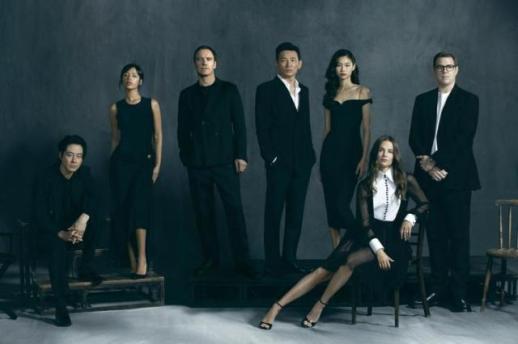 Na Hong-jin's 'Hope' enters Cannes Competition after 4-year silence for Korea SEOUL, April 10 (AJP) - Na Hong-jin breaks a four-year silence for South Korean titles at Cannes with Hope, a big-budget thriller that puts him back in the Palme d’Or race. The South Korean director’s fourth feature was named to the 21-film Competition lineup unveiled Thursday (local time), marking the first time since Decision to Leave in 2022 that a Korean film has entered the festival’s top-tier section. The return carries weight beyond selection. Hope is Na’s most ambitious project to date — both in scale and in reach — positioning him not just as a returning auteur but as a director making a calculated leap into the global mainstream. Set in a fictional port village near the Demilitarized Zone, the film unfolds as a science-fiction thriller centered on a mysterious presence that plunges the community into crisis. It is also his first project partially shot in English, with a hybrid cast that bridges Korean and Hollywood talent. The lineup pairs Hwang Jung-min, Zo In-sung and Jung Ho-yeon with Oscar-winning couple Michael Fassbender and Alicia Vikander, alongside Taylor Russell and Cameron Britton. The scale reflects that ambition. With a production budget exceeding 50 billion won ($37 million), Hope ranks among the most expensive Korean films ever made and marks the first Cannes Competition entry for its distributor, Plus M Entertainment. The selection extends Na’s long-standing relationship with Cannes. His debut The Chaser screened in the Midnight section in 2008, followed by The Yellow Sea in Un Certain Regard and The Wailing in the Out of Competition section in 2016 — the latter cementing his reputation for blending genre with unsettling atmosphere. This year’s Competition lineup features a heavyweight field of international auteurs, including Pedro Almodóvar, Asghar Farhadi, Hirokazu Kore-eda and Ryusuke Hamaguchi, setting up a tightly contested Palme d’Or race. The 79th Cannes Film Festival will run from May 12 to 23 in Cannes, France. 2026-04-10 11:35:20
 -
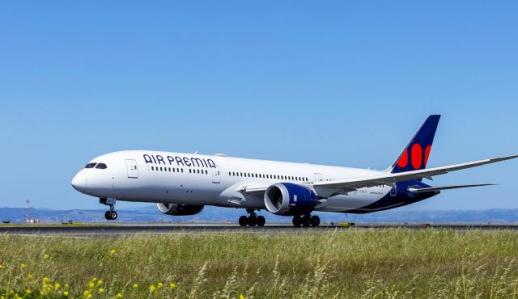 Low-cost carrier Air Premia tops 3 million int'l passengers SEOUL, April 10 (AJP) - Air Premia has surpassed 3 million in the cumulative number of international passengers, the low-cost carrier said on Friday. The milestone comes about three years and nine months after launching its first international routes in July 2022. Of its total of 11,458 international flights, which flew about 62.74 million kilometers, about 45.40 million kilometers or 72.3 percent of the accumulated flight distance, came from routes to North America. The average flight distance per trip was about 5,475 kilometers, which reflects the carrier's strategy of focusing on long-haul routes as it has pursued qualitative growth rather than simply increasing passenger volumes. Air Premia currently operates eight international routes, with four in the U.S., including Honolulu, Los Angeles, New York and San Francisco, and four in Asia including Bangkok, Da Nang, Hong Kong and Narita. It plans to add a route to Washington, D.C. on April 24. Boeing's 787-9 Dreamliner, a long-range jet, is deployed across all routes due to its high fuel efficiency, according to an Air Premia spokesperson. "If current demand continues, we expect to surpass 4 million passengers this year," he said. 2026-04-10 11:28:38
 -
 Child Prodigy Baek Kang-hyeon Says He Left Science High School After Bullying Baek Kang-hyeon, who drew attention after appearing on SBS’ “Gifted Discovery Team” as a toddler who could solve equations at 41 months old, has shared an update on his life in a recent broadcast. On the April 9 episode of SBS’ “Gifted Discovery Team Infinity,” Baek, now 12, appeared and spoke about his recent experiences. He became a national talking point after entering a science high school at age 10, but left after five months. He also recently applied to the University of Oxford in Britain but did not receive a final offer, the program said. The broadcast showed Baek studying more than 15 hours a day while preparing for the Oxford exams. He reached the final interview after earning the top A-level grade, A*, and a high score on the MAT, but ultimately was not admitted. A person in the study-abroad industry said Britain holds schools responsible for student safety, and suggested officials may have proceeded cautiously because Baek is 12. Baek said he left the science high school because of bullying. He said he enjoyed studying there and got along well with older students, but his mother said there were repeated problems with one student, including posting malicious comments online. The alleged perpetrator was found responsible for school violence and received a Level 3 disciplinary measure of 10 hours of in-school service, according to the program. “I remember crying a lot then,” Baek said. “I didn’t actually want to leave.” He added that he still considers the science high school his alma mater. In 2023, Baek’s father also drew attention after saying his son left not because he could not keep up academically but because of bullying. After failing to gain admission to Oxford, Baek has continued pursuing new challenges, including writing lyrics, composing music and developing app-based games. 2026-04-10 11:18:17
 -
 Lee to meet Polish PM in Seoul next week SEOUL, April 10 (AJP) - President Lee Jae Myung will hold a meeting with Poland's Prime Minister Donald Tusk next week, Cheong Wa Dae said on Friday. In a written press briefing, presidential spokesperson Kang Yu-jung said Tusk is scheduled to arrive in Seoul on Sunday for talks with Lee. It will be the first visit by a Polish leader in 27 years and Tusk's first trip to a non-European country since taking office in December 2023. Lee and Tusk will sit down for talks on Monday, followed by an official luncheon. The two leaders are expected to discuss a wide range of issues, while highlighting bilateral cooperation in addressing global challenges including the prolonged conflict in the Middle East. Poland, a key member state of the European Union and the North Atlantic Treaty Organization (NATO) is one of central Europe's major economies and a strategic gateway to the European market. Thanks to its strategic geopolitical location between western and eastern Europe, Poland has emerged as a key production and investment hub, while also expanding its presence in future-oriented industries. South Korea and Poland have strengthened cooperation in the defense sector in recent years. With growing economic and trade relations between the two countries, about 400 South Korean companies operate in Poland, mainly in batteries and auto parts for electric vehicles, while people-to-people exchanges reach about 100,000 per year. Kang said Tusk's visit is expected to help advance bilateral relations, which have steadily developed since the establishment of diplomatic relations in 1989, toward a more future-oriented and strategic partnership. 2026-04-10 10:57:02
 -
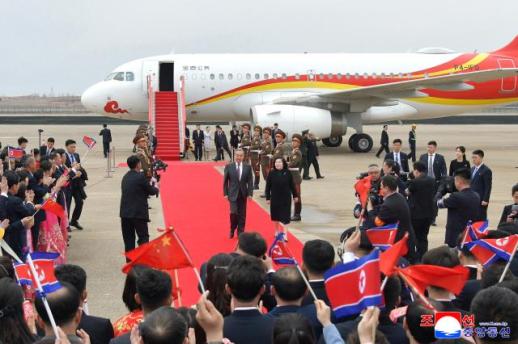 North Korean, Chinese FMs agree to strengthen ties during talks in Pyongyang SEOUL, April 10 (AJP) - The foreign ministers of North Korea and China agreed to strengthen bilateral ties during their meeting in Pyongyang, state media reported on Friday. According to the state-run friendship is a valuable common asset formed in the revolutionary struggle and persistently develops in the course of socialist construction," expressing thanks for the North's "warm hospitality." He also said the "historic meeting" of Chinese President Xi Jinping and North Korean leader Kim Jong-un in September last year "opened a new chapter of the friendly and cooperative relations" between the two countries. Wang's visit came just ahead of U.S. President Donald Trump's planned trip to Beijing next month, though neither side mentioned whether it came up in their talks. 2026-04-10 10:15:30
 -
 FSS puts brake on Hanwha Solutions' rights offering despite owner backing SEOUL, April 10 (AJP) - The rights offering plan by Hanwha Solutions to raise 2.4 trillion won to lessen its debt load drew a correction order from authorities despite the owner family offering to share the burden. The Financial Supervisory Service said it had requested the company to submit a revised securities filing, citing incomplete formal requirements and insufficient or unclear disclosure of key information that could hinder investors' decision-making. The filing has not been accepted and its effectiveness has been suspended, meaning the subscription schedule and overall issuance process could change. If the company fails to submit a corrected filing within three months, the plan will be considered withdrawn. Hanwha Solutions said it would "take the request seriously" and prepare a revised filing that reflects feedback from shareholders and the market, emphasizing that it would prioritize shareholder value. Shares rose nearly 1 percent as investors approved of the regulatory move. The company on March 26 announced the plan to issue 72 million new shares to raise 2.4 trillion won, and more than half - 1.5 trillion won – was earmarked for debt repayment and the remainder for investment. The scale of the issuance - equivalent to roughly 42 percent of existing shares - and the heavy allocation toward debt reduction have triggered strong backlash from investors, who argue that the plan shifts the burden of financial restructuring onto shareholders. Shares of Hanwha Solutions fell more than 20 percent over two sessions following the announcement. The controversy has since widened into governance concerns, including whether the move could constitute a breach of directors' fiduciary duties under the revised Commercial Act. The Korea Corporate Governance Forum criticized the timing of the board decision, noting it came shortly after a shareholders' meeting, raising questions over whether independent directors had sufficient time for proper review. Retail investors have also begun mobilizing. On the Act platform, minority shareholders have requested access to the shareholder registry and are seeking to build a coalition aimed at securing a 10 percent stake, which would enable them to call an extraordinary general meeting or pursue management changes. They have also called on the National Pension Service to take a more active role, arguing that passive management amid falling share prices could undermine its fiduciary duty. Political criticism has added to the pressure. Rep. Ahn Cheol-soo said allocating a majority of the proceeds to debt repayment effectively transfers the consequences of management decisions onto shareholders. The regulator has classified the case as a priority review, typically applied to large-scale offerings or those with a significant portion of proceeds used for debt repayment. While the FSS does not have the authority to block the deal outright, it can demand revisions - as seen in a similar case involving Hanwha Aerospace last year. The latest development comes despite efforts by the group to shore up investor confidence. The parent firm, Hanwha Corp., which holds about 36.7 percent of Hanwha Solutions, has decided to fully subscribe to its allocated shares and take up an additional 20 percent in oversubscription, committing about 843.9 billion won. The move is widely seen as an attempt by the owner family to signal support and share the financial burden, as minority shareholder resistance intensifies. Hanwha Solutions has defended the capital increase as necessary to stabilize its balance sheet amid weakening performance in its solar and chemical businesses. Its net debt stood at about 12.2 trillion won at the end of last year, with its net debt-to-EBITDA ratio rising to 29.1 times, highlighting mounting leverage pressures. The company has also faced covenant-related risks, having received a waiver on overseas borrowings after failing to meet certain financial conditions. It said the capital raise is aimed at preventing a credit rating downgrade, easing refinancing pressure and supporting continued investment, including in solar technologies. Still, market attention remains focused on the broader question - not just how much capital is being raised, but why the company’s financial position deteriorated to the point where such a large-scale rights offering became necessary, and how the burden should be shared among management, controlling shareholders and minority investors. 2026-04-10 10:10:32
 -
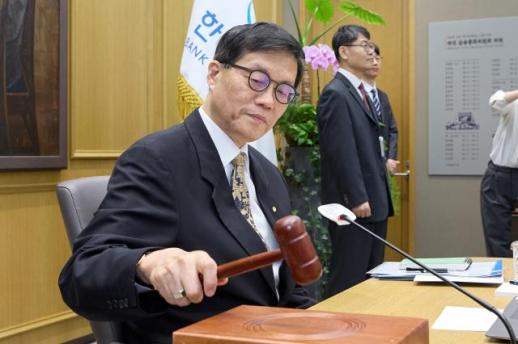 BOK holds rate at 2.5% as inflation risks clash with slowing growth SEOUL, April 10 (AJP) — The Bank of Korea on Friday kept its benchmark interest rate unchanged at 2.5 percent as widely expected, caught between rising import-driven inflation and a slowing economy amid prolonged disruptions from Middle East conflicts. The policy decision reflects a growing dilemma for the central bank, as energy supply constraints tied to the Gulf tensions continue to feed price pressures while weighing on growth. Consumer prices rose 2.2 percent in March from a year earlier, accelerating from 2.0 percent in the previous two months. While still within the central bank’s target range, the composition points to mounting underlying pressure. Energy has re-emerged as the dominant driver, amplified by a structurally weaker Korean won, with the full pass-through yet to be realized. Petroleum prices jumped 9.9 percent, contributing 0.39 percentage point to headline inflation. Diesel surged 17 percent and gasoline rose 8 percent, marking the strongest energy-driven inflation since the early phase of the Ukraine war. Given lag effects, the pass-through from higher fuel costs is expected to intensify in the coming months. Import price pressure has been further exacerbated by the weakening currency. The Korean won, which averaged 1,451.6 per dollar in February, depreciated 2.6 percent to an average of 1,493.83 in March. Since early April, it has spiked above 1,500-per-dollar — a threshold not seen since the global financial crisis. At the same time, higher input costs and prolonged weakness in domestic demand are expected to drag growth below the government’s 2 percent target this year, potentially keeping the economy in the 1 percent range for a second consecutive year. Despite the slowdown, the central bank has little room to adjust policy in either direction due to financial stability concerns. Household debt remains elevated at over 1,900 trillion won ($1.30 trillion), constraining the scope for rate cuts while also limiting the tolerance for further tightening. Market participants largely expect the central bank to remain on hold for the time being, as uncertainty persists over the outlook in the Gulf, including the timeline for a full reopening and normalization of trade through the Strait of Hormuz. Governor Rhee Chang-yong is set to explain the decision later in the day, marking his final policy meetings before his term ends on April 20 and hands over the helm to nominee Shin Hyun-song. On Friday, the won opened at 1,475.1 per dollar in the Seoul foreign exchange market. Korea's capital markets have improved this week after a truce was announced. The three-year government bond yield closed Thursday at 3.338 percent and the 10-year at 3.660 percent, sharply retreating from the level close to 4 percent last month. 2026-04-10 09:50:21