

Journalist

Lester Munson
-
 BTS Live D-3 - Latest from Gwanghwamun SEOUL, March 18 (AJP) - Across the Gwanghwamun district, signs of tightening control are becoming visible in real time. Police barricades are being extended along sidewalks and major intersections, carving out narrow pedestrian corridors and restricting lateral movement between streets. Access points to nearby subway stations are being prepared for selective closure, while public bike docks and lockers around the area have already been suspended or sealed off. Security perimeters are also expanding outward from the square. Metal fencing now lines key roads and building frontages, creating buffer zones designed to absorb crowd pressure before it reaches the main venue. Mobile police units and monitoring vehicles have been positioned at strategic points, indicating a shift toward active, real-time crowd management. Together, these measures are gradually transforming not just the square, but the surrounding urban grid into a controlled environment, where movement is increasingly guided, filtered and contained ahead of the event. With three days remaining until BTS’s live comeback performance, Gwanghwamun Square is rapidly transforming into a tightly controlled event zone, as new layers of infrastructure and security measures take shape by the hour. Rows of temporary modular units believed to be portable restrooms and staff facilities have been installed across sections of the square, while extensive metal fencing now carves the area into clearly defined pedestrian corridors. Despite steady rain, pedestrians were seen navigating the newly arranged routes under umbrellas, offering an early preview of how movement will be managed as crowds swell later this week. As night fell, the transformation became even more apparent. The main stage structure lit up against the backdrop of Gwanghwamun Gate, suggesting that preparations are moving beyond construction toward technical testing. Beyond the square itself, nearby businesses are also adjusting to the expected influx of visitors. Cafes in central Seoul have begun introducing themed menus and streamlining operations with kiosks and reusable cup systems to handle increased demand. The changes reflect how preparations for the event are extending beyond the venue into the broader urban environment. On the policy side, authorities have raised the terrorism alert level in central Seoul ahead of the event, citing risks associated with large-scale crowd gatherings amid heightened global security uncertainties. The alert level in parts of Jongno and Jung districts will be elevated from “attention” to “caution” from midnight on Thursday through Saturday, under a four-tier system ranging from attention to serious. Police estimate that up to 260,000 people could converge on the area, prompting heightened surveillance and expanded safety measures. Authorities have also moved to restrict planned demonstrations near the square, warning that overlapping gatherings could pose risks of crowd crush and other safety incidents. Several groups have since relocated or scaled back their events as police tighten control over the area. Authorities have also moved to restrict planned demonstrations near the square, warning that overlapping gatherings could pose risks of crowd crush and other safety incidents. Officials have also requested cooperation from organizers to voluntarily adjust or relocate events during the concert period. Several groups have since relocated or scaled back their events as police tighten control over the area. On the ground, those measures are already materializing not as policy statements, but as barriers, routes and controlled spaces that are steadily reshaping how the public moves through the city center. 2026-03-18 16:13:46
 -
 GULF CRISIS: Iran war gives Kim Jong-un more reason to cling to nuclear arms SEOUL, March 18 (AJP) - The war in Iran — marked by the killing of top leaders and relentless airstrikes since the United States launched Operation Epic Fury on Feb. 28 — will be watched closely by one man in particular: North Korean leader Kim Jong-un. Among the states once grouped by President George W. Bush in the “axis of evil,” only one regime remains intact: Pyongyang. Saddam Hussein, who ruled Iraq for nearly a quarter century, was toppled in the 2003 U.S. invasion and executed in 2006. Iran's Supreme Leader Ali Khamenei is said to be killed during the opening strikes late February. Pundits generally agree that North Korea’s case is fundamentally different. According to Kousuke Saitou of Sophia University, U.S. President Donald Trump has shown a willingness to use force, but not without limits. “In my point of view, President Trump tends to resort to the use of force in disregard of international law, based on U.S. interests or his own assumptions,” Saitou said. The Korean Peninsula presents a very different strategic calculus from the Gulf. “The U.S. has little direct interest in forcibly changing the North Korean regime now,” he argued. Trump himself has repeatedly boasted of his “good relationship” with Kim Jong-un, and any military action against North Korea would carry immediate and potentially devastating consequences, including a severe deterioration in ties with China. That, Saitou said, would be disadvantageous to the Trump administration. If Pyongyang does not face an imminent military threat to regime survival, it has little reason to alter its current posture. “If Kim Jong Un’s ultimate goal is to stabilize his regime,” Saitou said, “he would not take actions that undermine the current stability.” Yet the longer-term implications may prove more consequential. A prolonged U.S. military and diplomatic fixation on the Middle East could create what Saitou described as greater “diplomatic freehand” for countries such as North Korea. “If U.S. diplomatic attention and military resources continue to be concentrated in the Middle East,” he said, “countries of concern in other regions … may gain greater diplomatic freehand because the U.S. does not wish to carry out military operations across multiple theaters.” That shift could ripple across East Asia. If Washington’s focus drifts, allies such as South Korea and Japan may feel compelled to strengthen their own defense capabilities — moves that could in turn provoke North Korea and China, accelerating a regional arms race. More importantly for Pyongyang, the strike on Iran over its nuclear and missile programs is likely to be read not as a warning, but as validation. “The decapitation strikes against Iranian leadership … confirm the rationality of Kim Jong Un’s strategy of ‘nuclear insurance,’” observed Vasilis Trigkas of Tsinghua University. From Iraq to Libya to Iran, the lesson North Korea may draw is blunt: regimes that lack a credible nuclear deterrent remain exposed. That, Trigkas argued, further erodes the logic of the Nuclear Non-Proliferation Treaty. “The U.S. has targeted the leadership of NPT non-nuclear states,” he said, “further undermining the very bargain that once contained the spread of nuclear weapons.” By that reasoning, Pyongyang is more likely to double down on its nuclear doctrine, deepen its strategic alignment with Russia and seek geopolitical or economic advantage from a distracted international order. Beyond North Korea, the Iran war also raises broader questions about U.S. strategic credibility. Trigkas argued that Washington’s approach — military intervention abroad combined with growing pressure on allies — has weakened its standing. “Trump’s behavior has undermined U.S. strategic credibility,” he said, pointing to strains with both European and Asian allies and the administration’s heavy Middle East focus at the expense of the Indo-Pacific. For South Korea, that presents both danger and opportunity. A reduced U.S. strategic bandwidth could weaken deterrence on the peninsula, but it may also create room for a more flexible diplomatic strategy. “South Korea now has a significant opportunity to hedge by reaching out to both Beijing and Moscow,” Trigkas argued, suggesting that pragmatic engagement with China and renewed energy cooperation with Russia could serve Seoul’s interests. At the same time, more difficult questions will come into sharper focus — including the future of missile defense systems such as THAAD and the longer-term structure of the U.S.-South Korea alliance. In the end, the lesson Kim Jong-un is likely to take from Iran is not that nuclear ambition invites danger. It is that nuclear arms remain the only reliable insurance against regime change, and that may be the most damaging strategic aftershock of this war. 2026-03-18 16:06:56
 -
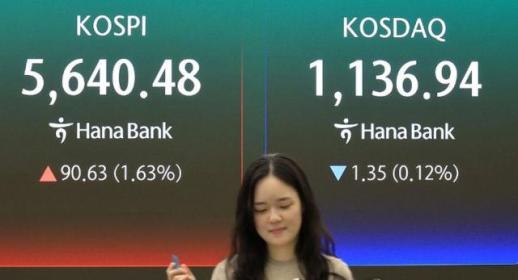 South Korean investors surge amid unprecedented stock-market boom SEOUL, March 18 (AJP) - More South Koreans have begun investing in the stock market amid a recent unprecedented rally, with the number of investors rising by 330,000 over the past year. According to a report released by the Korea Securities Depository on Wednesday, the number of shareholders in about 2,727 listed companies stood at 1.46 million. As the number of listed companies increased 1.5 percent and shareholders grew 2.3 percent from a year earlier, investors held a total of about 117.4 billion shares, averaging 8,066 shares each. Some 812 companies were listed on the country's benchmark KOSPI, 1,802 on the junior KOSDAQ, and 113 on KONEX, a board under KOSDAQ for small and medium-sized enterprises (SMEs) and venture companies. The number of investors on KOSPI rose 1.0 percent to 12.61 million, while those on KOSDAQ increased 5.7 percent to 8.55 million. KONEX remained near 50,000, almost unchanged from a year earlier. Individuals made up 99.1 percent of investors, with corporations at 0.4 percent and foreigners at 0.2 percent. About 25 percent of investors held shares in Samsung Electronics, making it the most widely owned stock with 4.61 million shareholders, followed by Kakao (1.60 million), SK hynix (1.19 million), Naver (1.16 million), and Doosan Enerbility (1.11 million). On KOSDAQ, EcoPro BM ranked first with 508,908 shareholders, followed by EcoPro (488,951), SemiFive (411,562), Alteogen (274,634), and Hurim Robot (250,313). The number of companies in which foreigners owned more than 50 percent of shares rose by six from a year earlier to 38, evenly split between KOSPI and KOSDAQ with 19 each. Foreign investors held the largest stakes in S-Oil (74.3 percent), KB Financial Group (72.2 percent), and Hana Financial Group (67 percent). By age, those in their 50s were the largest group of individual shareholders with 3.33 million, accounting for 23.1 percent, followed by those in their 40s with 3.12 million and those in their 60s with 2.20 million. By gender, male investors accounted for 51.5 percent, while female investors made up 48.5 percent. Among regions, Gyeonggi Province had the highest number of investors, followed by Seoul and Busan. About 4.59 million investors or 31.5 percent owned shares in only one company, 2.43 million or 16.7 percent held shares in two companies, and 1.55 million or 10.7 percent held shares in three or more. 2026-03-18 15:54:57
 -
 FL Auto Korea Launches Lincoln Nautilus Hybrid Midsize SUV in South Korea FL Auto Korea said March 18 it will officially launch Lincoln's midsize SUV, the Lincoln Nautilus Hybrid, in South Korea. The Nautilus Hybrid is a new trim of the second-generation model and is being introduced to the South Korean market for the first time. The company said the launch is aimed at strengthening its push into the premium midsize SUV segment while responding to growing demand for eco-friendly vehicles. The hybrid model is designed to further emphasize Lincoln's core brand concept of "Quiet Flight." The Nautilus name comes from a Latin word meaning "exploration," and the vehicle is positioned around an elegant design, smooth driving performance and a spacious interior. The hybrid system pairs a 2.0-liter turbocharged four-cylinder engine with a 99-kilowatt electric motor for a combined 321 horsepower. Under South Korea's certification standards, it is rated at about 11.9 kilometers per liter in combined fuel economy. Exterior details include Lincoln's signature horizontal design cues and modern white Lincoln lettering across the rear. A blue-accented Lincoln emblem in the center of the grille and nameplate badges on the doors are used to distinguish the hybrid model. Inside, the Nautilus Hybrid features a 48-inch panoramic display and an 11.1-inch center-stack touchscreen. It supports wireless Apple CarPlay and Android Auto. Driver-assistance and convenience features include forward collision-avoidance assist, cruise control, lane-centering assist and lane-keeping assist. Lee Yun-dong, CEO of FL Auto Korea, said the 2026 Lincoln Nautilus "more precisely implements Lincoln's 'ultimate sanctuary' through its hybrid system," adding that he hopes more customers will experience the model's differentiated value. The 2026 Lincoln Nautilus Hybrid is priced at 95 million won, including value-added tax and based on a 3.5% individual consumption tax rate.* This article has been translated by AI. 2026-03-18 15:36:20
 -
 Shinhan Bank Joins Bank of Korea’s ‘Project Hangang’ Phase 2 Digital Currency Pilot Shinhan Bank said Tuesday it will participate in Phase 2 of the Bank of Korea’s digital currency pilot, known as “Project Hangang.” Project Hangang is a digital currency initiative led by the central bank with the Financial Services Commission, the Financial Supervisory Service and commercial banks. Under the model, the Bank of Korea issues a wholesale central bank digital currency, and commercial banks issue deposit tokens based on it. Consumers make payments using the deposit tokens issued by their banks. Phase 2 is designed to test whether a digital-currency-based payments infrastructure can be commercialized, with a focus on building conditions that allow customers to use deposit tokens in everyday life. Shinhan said it will broaden participation and usage settings compared with Phase 1 and further test functions including person-to-person transfers, interest payments and automatic conversion. Customers will be able to convert deposits into deposit tokens in the Shinhan SOL Bank app and use them for everyday purchases, including the delivery app Ttaenggyeoyo, convenience stores and Shinhan EZ Insurance travel insurance. The bank also plans to introduce a merchant payment method linked to Shinhan Card. The project will also examine whether the system can be expanded to public finance disbursements, such as paying local government subsidies, vouchers and policy funds in deposit tokens that can be used only at designated outlets. In real-transaction tests that began in April last year, Shinhan accounted for 25% of all e-wallet openings among participating banks, 58% of usage and 73% of transaction value, it said. In Phase 2, the bank plans to strengthen links with group platforms and accelerate efforts to build a digital payments ecosystem spanning private and public sectors. “Deposit tokens are evolving beyond a technology test into a digital means of payment that can be used for real transactions and public finance disbursements,” a Shinhan official said. “We will expand payment experiences customers can feel in daily life and lead the buildout of a digital-currency-based payments infrastructure.”* This article has been translated by AI. 2026-03-18 15:27:21
 -
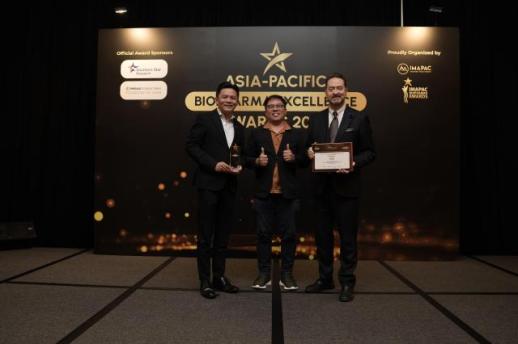 FedEx Wins 2026 Asia-Pacific Biopharma Excellence Award for Last-Mile Logistics Federal Express Corp., known as FedEx, said Tuesday it won the “Best Logistics and Supply Chain Management” award in the “Last-Mile Implementation” category at the Asia-Pacific Biopharma Excellence Awards 2026. The awards are hosted by IMAPAC, an international organization in the pharmaceutical and biotech sector. They recognize companies that have contributed to industry development in Asia across areas including bioprocessing, logistics, supply chain management and clinical research. The Asia healthcare market is expected to expand to about $5 trillion by 2030, accounting for roughly 40% of the global healthcare market. The healthcare cold-chain logistics market is also projected to grow from about $31.9 billion last year to about $42.5 billion by 2031. With temperature control critical in healthcare, the role of logistics partners with integrated capabilities is growing, the company said. “This award is a meaningful achievement that shows healthcare customers trust FedEx,” said Salil Chari, FedEx regional president for Asia Pacific. “As therapies become more specialized and temperature control becomes more important, logistics requirements are also increasing. FedEx will support safe transport based on systematic operational capabilities.” FedEx said it supports stable transport across multiple temperature ranges, including ultra-low freezing below minus 70 degrees Celsius, freezing below minus 20 degrees, refrigerated shipments at 2 to 8 degrees, and controlled room temperature at 15 to 20 degrees. It has built a network of FedEx Life Science Center locations in Gimpo, South Korea; Memphis, Tennessee; Mumbai, India; Singapore; Tokyo; and Veldhoven, Netherlands. The company said it operates more than 130 cold-chain facilities worldwide to maintain temperature control in cross-border, multimodal logistics. It also said 22 FedEx facilities worldwide are part of a network with CEIV Pharma certification for international air transport of pharmaceuticals, positioning FedEx as a key logistics partner for high-value healthcare shipments including biopharmaceuticals, vaccines, and cell and gene therapies. * This article has been translated by AI. 2026-03-18 15:24:29
 -
 Crown Haitai chairman Yoon Young-dal elected third president of pro billiards association PBA Yoon Young-dal, chairman of Crown Haitai Confectionery, has been elected to lead the Professional Billiards Association (PBA). The PBA said March 18 that its board, at the association’s seventh-term fourth meeting, selected Yoon as the third PBA president. His term will run for three years, through March 2029. The PBA said Yoon is known for his strong interest in professional billiards and that he founded and operated the Crown Haitai Laon team in the early days of the pro circuit. Citing his activities in the arts and culture sector, the association said it considers him well suited to guide stable growth and a new leap for the sport. Yoon plans to pursue strategies aimed at sustained growth, expanding the fan base and strengthening global competitiveness. The PBA said he also intends to broaden international exchanges and boost league competitiveness so pro billiards can grow beyond South Korea. Kim Young-soo, who served as the first and second PBA president over the past seven years, is stepping down after helping launch the pro league and build its foundation, the PBA said. Yoon’s inauguration ceremony will be held next month on the 10th at the Goyang KINTEX PBA Stadium in Goyang, Gyeonggi Province.* This article has been translated by AI. 2026-03-18 15:21:00
 -
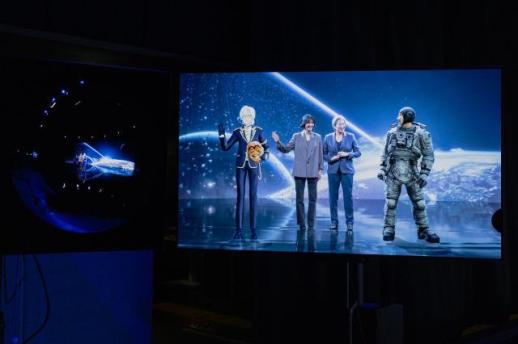 Naver, AMD sign MOU to strengthen AI GPU infrastructure cooperation SEOUL, March 18 (AJP) - South Korea's Naver and U.S. chipmaker Advanced Micro Devices (AMD) signed a memorandum of understanding to jointly develop next-generation GPU infrastructure aimed at expanding their artificial intelligence ecosystems. Under the agreement signed at Naver's 1784 headquarters Wednesday, the two companies will collaborate on building high-performance GPU computing environments optimized for Naver's proprietary large language model, HyperCLOVA X, and work to advance infrastructure technologies for stable AI model operations. The partnership also covers providing AI computing resources to academic researchers and launching joint research projects to broaden AI research outcomes across diverse infrastructure platforms. "The collaboration with AMD will serve as a meaningful opportunity to secure technological diversity and strengthen our AI infrastructure competitiveness," Naver CEO Choi Soo-yeon said. "We will continue to expand the potential of AMD platforms across Naver Cloud and our broader AI services, and pursue cooperation for next-generation technology stacks and service implementation." AMD CEO Lisa Su called Naver an optimal partner for implementing the chipmaker's next-generation AI GPU technologies, citing the Korean firm's AI capabilities and cloud platform. 2026-03-18 15:19:06
 -
 Venezuela beats U.S. 3-2 to win first World Baseball Classic title Venezuela beat the United States to win its first World Baseball Classic title. Venezuela defeated the U.S. 3-2 in the 2026 WBC final on March 18 (Korean time) at loanDepot park in Miami. Venezuela reached its first final by beating defending champion Japan 8-5 in the quarterfinals and Italy 4-2 in the semifinals. It then edged the U.S. to secure its first championship. The U.S., which lost the 2023 WBC final to Japan, finished runner-up again, falling by the same 3-2 score. The matchup drew attention as the “Maduro Derby.” The article said the U.S. removed Venezuelan President Nicolas Maduro in a military operation in January and transported him to the United States. With political tensions between the two countries, the final attracted heightened interest. Venezuela struck first in the top of the first. With one out and runners on second and third, Maikel Garcia of Kansas City drove in a run with a sacrifice fly to center. It added to the lead in the fifth when Wilyer Abreu of the Boston Red Sox hit a solo homer to make it 2-0. The U.S. tied it in the bottom of the eighth. Venezuela reliever Andres Machado of the Orix Buffaloes gave up a two-run homer to Bryce Harper of the Philadelphia Phillies, evening the score at 2-2. Venezuela answered in the ninth. With no outs and a runner on second, Eugenio Suarez of the Cincinnati Reds hit an RBI double to put Venezuela ahead 3-2. In the bottom of the ninth, Daniel Palencia of the Chicago Cubs closed it out. He struck out Kyle Schwarber of Philadelphia swinging, got Gunnar Henderson of the Baltimore Orioles on an infield pop-up, and struck out Roman Anthony of Boston swinging to seal the win. Garcia was named tournament MVP.* This article has been translated by AI. 2026-03-18 15:04:23
 -
 Book Claims AI and Cell Science Could Enable Healthy Living to Age 200 A new book argues that humanity’s long-held goal of living a long life in good health is moving closer to reality through the convergence of artificial intelligence and cellular science. BookLab recently published “AI 200se Mubyeongjangsu” (“AI: Healthy Longevity to Age 200”). The book challenges the idea that aging is an unavoidable law of nature, redefining it as a condition that can be managed and treated, and it lays out what it calls a scientific roadmap toward a 200-year lifespan. The book is co-authored by four specialists: Park Sang-cheol, described as a world-renowned scholar in aging studies in South Korea; Lee Hee-won, a CEO who has led development of third-generation human digital twin technology; Kang Si-cheol, a doctor who has worked for more than 30 years in advanced-technology humanities and AI medicine; and Lim Gyu-seong, a clinic director who leads AI health care research and distributes practical health solutions. The authors align their approach with Harvard Medical School professor David Sinclair’s aging research, and they argue that, with aging now listed in the World Health Organization’s International Classification of Diseases, reversing aging is no longer fantasy but a medical task. A central theme is Park’s proposed shift in thinking that “aging is an active defense process for survival.” At the core of the book is technology it describes as using AI to decode signals from the human body. It examines how key aging indicators — including telomeres, mitochondria and the epigenome — interact with AI, and it portrays AI as a kind of “human body translator” that precisely analyzes an individual’s metabolic fingerprint to produce optimal, real-time health solutions. The book also highlights personalized precision nutrition, arguing that people can respond differently to the same foods depending on biological traits. It presents the possibility of AI-designed diets and “life design,” and calls for a “life integrated dashboard” that spans finances, relationships and lifelong learning in preparation for a 200-year era, aiming not only to extend lifespan but to improve quality of life. It also introduces the Genobiofit solution devised by Lee based on his own health recovery experience. The book describes it as a practical approach developed as an alternative for people who have difficulty exercising, intended to scientifically activate mitochondrial function. Book information is as follows: The title is “AI 200se Mubyeongjangsu,” co-authored by Lee Hee-won, Park Sang-cheol, Kang Si-cheol and Lim Gyu-seong. The publisher is BookLab Co. The ISBNs are 979-11-7598-171-3 for the print edition and 979-11-7598-172-0 for the e-book.* This article has been translated by AI. 2026-03-18 15:03:39