

Journalist

Lester Munson
-
 ‘Golden’ From ‘K-Pop Demon Hunters’ Wins Oscar for Best Original Song, Lee Jae Says ‘Everyone Sings in Korean’ Netflix’s animated film ‘K-Pop Demon Hunters’ won the Oscar for best original song for its soundtrack track ‘Golden,’ giving the film two Academy Awards on the night. The 98th Academy Awards were held at the Dolby Theatre in Hollywood, Los Angeles, at 7 p.m. local time on March 15. ‘Golden’ beat other nominees including ‘Dream of a Train,’ ‘Viva Verdi!’ and ‘Sinners: Xenus’ to take the prize. Lee Jae, Mark Sonnenblick, Kwak Jung-gyu and Lee Yu-han went onstage together to accept the trophy for ‘Golden.’ Holding the award and tearing up, Lee Jae said, “Growing up, people teased me if I said I liked K-pop, but now everyone is singing lyrics in Korean.” Lee added, “Like this song, this award isn’t just about success — it’s about the strength to endure and recover.” The film had earlier won the Oscar for best animated feature, adding best original song to cap a standout night. ‘K-Pop Demon Hunters’ is an action-fantasy animation about a K-pop idol group that uses music to defeat evil spirits and protect the world. Since its release last June, it has drawn more than 300 million views — a first for Netflix — and ‘Golden’ reached No. 1 on Billboard’s Hot 100, fueling a global craze. * This article has been translated by AI. 2026-03-16 11:21:18
 -
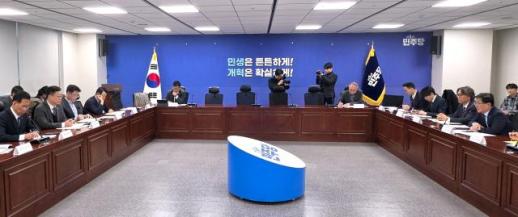 GULF CRISIS: South Korea to release 22.46 million barrels from strategic reserve SEOUL, March 16 (AJP) -South Korea will release 22.46 million barrels of crude oil from its strategic reserves over the next three months as part of coordinated international efforts to stabilize global energy markets following supply disruptions caused by Iran’s blockade of the Strait of Hormuz. The decision was announced Monday after a meeting between the government and the ruling party, which agreed to gradually release the oil stockpile in line with a collective action plan led by the International Energy Agency (IEA). According to the briefing, the release corresponds to the volume allocated to Korea under the IEA’s emergency response framework. The drawdown will be implemented in stages over the next three months to cushion the impact of surging oil prices triggered by escalating conflict in the Middle East. The IEA said member nations have agreed to release a total of 400 million barrels from strategic reserves. Of that amount, 271.7 million barrels will come from government-held stocks, while 116.6 million barrels will be supplied from obligated industry reserves and another 23.6 million barrels from other sources. The agency said about 72 percent of the planned release will consist of crude oil, with the remaining 28 percent made up of refined petroleum products. Supplies held in Asia–Oceania countries will be made available immediately, while reserves from Europe and the Americas are expected to enter the market later this month. The IEA has deployed coordinated reserve releases during previous energy crises. In 2022, member countries released about 182 million barrels after the outbreak of the Russian invasion of Ukraine triggered a surge in global oil prices. The ruling Democratic Party of Korea and government officials said the oil release forms part of a broader package aimed at stabilizing energy supply, controlling fuel prices and supporting businesses affected by the Middle East conflict. The government reported its plan of proposing a supplementary budget bill by the end of March to mitigate the economic impact of the conflict, including energy price support and assistance for affected exporters. South Korea currently holds crude reserves equivalent to about 208 days of imports, while liquefied natural gas stockpiles cover roughly nine days of consumption, according to the briefing. To secure additional crude supplies, the government is also considering bringing home oil produced overseas by the state-run Korea National Oil Corporation, with about 3.35 million barrels expected to be imported by June. Authorities said they will strengthen energy supply management by increasing electricity generation from coal and nuclear plants to offset potential shortages of liquefied natural gas. The government plans to temporarily lift the cap limiting coal-fired power plants to 80 percent of installed capacity and accelerate maintenance work on nuclear reactors currently under repair, with the goal of raising the nuclear power utilization rate from the high-60 percent range to around 80 percent by mid-May. Officials are also reviewing whether to designate the Yeosu petrochemical industrial complex as a special industrial crisis response zone as petrochemical producers face shortages of key raw materials including aluminum, sulfur and naphtha. The relief measures have helped little to alleviate oil prices flirting around $100 per barrel as the market suspects reflecting market concerns that the conflict could lead to prolonged disruption of energy flows through the Strait of Hormuz — one of the world’s most critical oil transit chokepoints. Iran has intensified attacks on commercial vessels in the region and warned it would block oil shipments benefiting the United States and its allies, raising fears that a sustained closure of the waterway could severely disrupt global energy supply. 2026-03-16 11:13:46
 -
 S-Oil Ties for No. 2 in South Korea Gas Station Market Share, Data Show S-Oil has climbed to second place for the first time in nationwide gas station brand share. According to the Korea Petroleum Quality & Distribution Authority on Monday, S-Oil had 2,270 registered gas stations nationwide as of last month, tying for No. 2 with HD Hyundai Oilbank. SK Energy ranked first with 2,645 stations, while GS Caltex was fourth with 1,997. South Korea had 10,646 gas stations in total as of last month. By brand, SK Energy led with a 24.8% share, followed by S-Oil and HD Hyundai Oilbank at 21.3% each, and GS Caltex at 18.8%. S-Oil entered the gas station business in 2000, later than the country’s other major refiners. Industry officials cite support from its largest shareholder, Saudi Arabia’s state oil company Aramco, as a key factor behind its expansion, as it can secure a stable supply of Middle Eastern crude from the world’s largest crude producer. S-Oil’s Middle Eastern crude import share stands at 94%, higher than GS Caltex at 70%, SK Innovation at 65% and HD Hyundai Oilbank at 50%. S-Oil said it plans to broaden its domestic distribution network by expanding support not only for agency-run, company-operated outlets but also for independently operated gas station owners.* This article has been translated by AI. 2026-03-16 11:09:18
 -
 Jin Air Unveils 12 In-Flight Meal Options, Adds 7 New Menu Items Jin Air passengers will soon be able to order new in-flight dishes such as braised beef short ribs over rice and deodeok bibimbap. Jin Air said it will revamp its in-flight meals starting on the 16th, shifting from 15 items to 12 and introducing seven new options. Items previously sold as single dishes will be offered as set meals that include snacks and dessert. The new menu items are braised beef short ribs over rice, deodeok bibimbap, beef porridge, garlic shrimp poke, jambon-butter bagel, shrimp-and-taco chirashi sushi, and chamnamul bulgogi pasta. The airline said it selected items that scored highly in internal reviews. Existing offerings such as bibimbap, spicy pork wraps, kimchi fried rice, sausage omelet rice and a bulgogi sandwich were also upgraded, the airline said. Bibimbap now comes with more toppings, and the spicy pork wrap set adds fresh wrap vegetables and ssamjang to improve the overall dish. Jin Air also redesigned its tableware packaging. For items such as bibimbap and poke, it introduced pulp-based bowl containers for easier use, and added Jin Air illustrations to the packaging to reinforce its brand image. The airline moved up the cutoff for purchasing in-flight meals to 48 hours before departure, from 72 hours, giving passengers more flexibility in choosing menus. To mark the revamp, Jin Air will run an online members-only promotion from the 18th through April 17, offering a 2,000-won discount coupon for pre-ordered in-flight meals. * This article has been translated by AI. 2026-03-16 10:30:15
 -
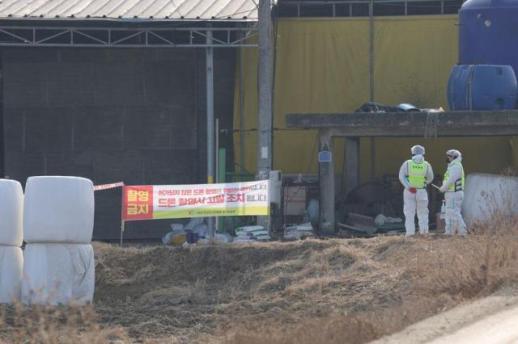 Egg, meat prices keep rising as avian flu and livestock diseases persist SEOUL, March 16 (AJP) - Prices of livestock products are surging in South Korea as highly pathogenic avian influenza and African swine fever spread. According to the Korea Institute for Animal Products Quality Evaluation, the average retail price for 10 extra-large eggs stood at 3,893 won as of the second week of this month, up more than 20 percent from a year earlier, putting the price of a single egg at nearly 400 won. About 56 avian influenza cases have been reported so far this year during the winter season, far higher than the 49 cases reported a year earlier. More than 9.8 million laying hens have been culled over the past six months due to highly contagious avian influenza, double the 4.83 million culled a year earlier and roughly four times the figure from two to three years ago, sending egg prices surging as production falls. The Korea Rural Economic Institute said the massive culls have drastically reduced the number of laying hens, bringing the average daily production of eggs this month by 5.8 percent from a year ago to 47.54 million. The government has introduced measures to stabilize egg prices, including importing additional fresh eggs from the U.S., but these efforts have so far failed to curb the rising prices. Prices of chicken meat are also climbing. Last week, the retail price for broilers averaged 6,235 won per kilogram, up 7.6 percent from a year earlier. Pork prices have also continued to rise as African swine fever spreads, with 22 cases reported so far this year, a record high. The institute forecast average wholesale pork prices in the first half of this year to range between 5,500 and 5,700 won per kilogram, up 3.3 percent from a year ago. Beef prices have also risen sharply. In the second week of this month, tenderloin and sirloin averaged 15,616 won and 12,296 won per 100 grams, up 14.0 and 17.4 percent respectively from a year ago, while brisket rose 20.5 percent to 7,118 won. The institute said higher prices are likely to persist for the time being, as fewer cattle are being raised. 2026-03-16 10:25:04
 -
 POSCO Future M Wins $1 Billion Artificial Graphite Anode Deal, Its Largest Ever POSCO Future M said on the 16th it has signed a large, long-term supply contract with a global automaker to provide artificial graphite anode materials. The deal is worth about 1.0149 trillion won and covers five years from 2027 through 2032, with an option to extend by mutual agreement. The customer will remain undisclosed until the contract ends, the company said, citing business confidentiality. POSCO Future M said it is the company’s largest anode-materials order since it entered the business in 2011. The company supplies anode materials to South Korean battery makers and to GM, and it previously signed natural graphite anode-materials supply deals worth about 670 billion won with a major Japanese battery maker in July 2025 and with a global automaker in October 2025. The company said the latest contract follows its October natural-graphite agreement as part of a package arrangement, and it plans to seek broader cooperation with the customer in cathode materials and lithium-related businesses. To meet the new order, POSCO Future M has begun a phased expansion of anode-materials capacity. On March 5, it decided to invest about 357 billion won to build an artificial graphite anode-materials plant in Vietnam. The company said the new supply contract secures a customer for the first phase, and it will proceed with a second phase if additional orders are won. POSCO Future M said the Vietnam investment is expected to expand mass-production capacity and enable supplies with improved cost and quality competitiveness.* This article has been translated by AI. 2026-03-16 10:22:29
 -
 L&F Speeds Shift From China With Korea-Made LFP Cathode Materials L&F said Monday it wrapped up a successful showing at InterBattery 2026, South Korea’s largest battery exhibition, held for three days starting March 11, where it presented next-generation cathode material technologies. Under the theme “Leading the Future,” the company unveiled its plan to mass-produce LFP cathode materials — a first in South Korea — along with a strategic product portfolio. L&F organized the exhibit into three zones, highlighting its lineup from high-voltage mid-nickel cathodes to next-generation materials including LMR (lithium manganese-rich), ASSB (for all-solid-state batteries) and SIB (for sodium-ion batteries). It also introduced a circular supply chain strategy focused on sourcing non-Chinese raw materials. The company put the spotlight on what it called the world’s first mass production of ultra-high-nickel cathodes with 95% nickel content and on its capability to mass-produce LFP cathodes domestically, positioning the LFP products as part of a non-China supply strategy. L&F said it plans in 2026 to begin mass production of third-generation LFP cathode materials with a packing density of at least PD 2.50g/cc, and it disclosed development progress on an ultra-high-density LFP product in the PD 2.70g/cc class. L&F said it is accelerating efforts to reduce reliance on China by internalizing precursor technology, an area long dominated by Chinese supply, and by building a Korea-based circular economy supply chain spanning recycling, precursors and cathode production. Through its subsidiary JH Chemical Industry (JHC), it is pursuing a waste-battery recycling business to strengthen its raw-material procurement base. The company said it plans to secure precursor technology through LS L&F Battery Solution (LLBS), a joint venture established with LS Group. L&F said the goal is to build a domestic battery materials value chain from nickel sulfate to precursors and cathodes, and to move ahead in earnest with a non-China supply chain strategy. “InterBattery was a meaningful opportunity to show our accumulated innovation capabilities and our technological competitiveness as a pioneer of Korea-made LFP,” CEO Heo Je-hong said. “Based on LFP cathode materials nearing the country’s first mass production and our world-class high-nickel technology, we will continue to expand our battery materials portfolio.”* This article has been translated by AI. 2026-03-16 10:21:44
 -
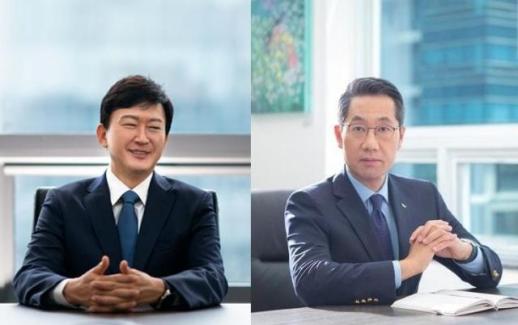 Bio CEOs Likely to Win Renewed Terms as Record Results Head Into Shareholder Meetings Top executives at major South Korean biotech companies including Samsung Biologics, Celltrion and SK Biopharmaceuticals are expected to extend a run of CEO reappointments this year, buoyed by record results posted last year. Analysts say the companies still face major growth tasks, including expanding contract development and manufacturing (CDMO) capacity, building antibody-drug conjugate (ADC) businesses and broadening global new-drug portfolios. Industry officials said March 16 that regular shareholder meetings at Samsung Biologics, Celltrion and SK Biopharmaceuticals are expected to put CEO reappointment items on the agenda. With each company delivering all-time-high performance, the market is largely betting on approvals. Samsung Biologics reported 4.557 trillion won in revenue last year and 2.0692 trillion won in operating profit, putting it within reach of surpassing 5 trillion won in revenue this year. The company roughly doubled operating profit in just two years after first topping 1 trillion won in 2023, results seen as validating its strategy to widen its lead in CDMO. That performance has strengthened the outlook for another term for CEO John Rim. Rim became CEO in December 2020 and won one reappointment at the 2023 shareholders meeting. If the agenda item passes as proposed at the meeting scheduled for March 20, he would begin a third term. Key tasks ahead include rebalancing global capacity around its fifth plant and its Rockville, Maryland, production base; turning its ADC business into visible revenue; and winning orders for a sixth plant. The company has been pursuing new contracts by promoting integrated ADC drug substance and drug product manufacturing since last year, and securing commercial production deals that translate into sales is viewed as a priority. Industry watchers say the effort ties into a longer-term order strategy after the sixth plant begins full operations next year, calling it a potential inflection point for another step up in scale. With labor-management wage talks repeatedly faltering, Rim’s role as a key figure in resolving the dispute has also drawn attention. Celltrion posted record results last year on a consolidated basis, exceeding 4 trillion won in revenue and 1 trillion won in operating profit. Its operating margin reached 36%, easing profitability concerns raised at the time of its merger with Celltrion Healthcare in just one year. The company has set a goal of reaching 5.3 trillion won in revenue in 2026 by reducing reliance on biosimilars and expanding CDMO and new-drug businesses starting this year. Investors are also focused on whether CEO Ki Woo-sung will be reappointed. Industry officials say his chances look strong given his role in driving merger synergies and earnings growth under the integrated Celltrion structure. Still, the shift toward a “post-biosimilar” business model is seen as a work in progress. Celltrion has signaled plans to spin off CDMO into a separate subsidiary and to secure global customers through U.S. facility acquisitions, raising concerns that risks could emerge if order volume and profitability do not follow. SK Biopharmaceuticals has been scaling up quickly on the strength of its epilepsy drug cenobamate, sold in the United States as Xcopri. Revenue rose from 246.2 billion won in 2022 to 354.9 billion won in 2023 and 547.6 billion won in 2024, marking 40% to 50% growth for two consecutive years. With Xcopri’s U.S. sales climbing, the company is seen as having achieved both a return to profitability and a stronger business structure. Last year, it reported 706.7 billion won in revenue and 203.9 billion won in operating profit. The outlook for reappointing CEO Lee Dong-hoon has also improved. The company is pursuing both expanded indications for Xcopri and expansion into Europe and Asia, while accelerating development of central nervous system (CNS) candidates and next-generation platform-based drugs including RPT, TPD and CGT. However, heavy reliance on a single product leaves commercialization of follow-on pipelines and diversification of global partnerships as Lee’s biggest challenges. “Record results may have delivered reappointments, but the next few years will determine whether those renewals were truly earned,” an industry official said. “Each company will have to prove its chosen growth engines by turning them into concrete orders, revenue and profit.” * This article has been translated by AI. 2026-03-16 10:21:00
 -
 MINI Korea Launches Limited-Run MINI 1965 Victory Edition MINI Korea said on the 16th it is releasing the MINI 1965 Victory Edition, a special model marking the classic Mini Cooper’s victory at the 1965 Monte Carlo Rally. The edition reinterprets the heritage of the Mini Cooper that competed in the Monte Carlo Rally, applying exterior cues that evoke the winning car. A prominent “52” graphic on the side references the 1965 rally car’s entry number. The 18-inch JCW Lap Spoke two-tone alloy wheels feature edition-only wheel caps in red and white, along with valve caps numbered “52.” The interior also uses a sporty look and color scheme unique to the edition. The MINI 1965 Victory Edition will be sold in two versions: a battery-electric model and an internal-combustion model. The electric version uses a motor rated at 258 horsepower and 35.7 kg·m of maximum torque. It accelerates from 0 to 100 kph in 5.9 seconds and has a single-charge range of 291 km under the Environment Ministry standard. The gasoline version pairs a MINI TwinPower Turbo inline four-cylinder engine producing 231 horsepower and 38.8 kg·m of maximum torque with a seven-speed Steptronic Sport dual-clutch automatic transmission. It goes from 0 to 100 kph in 6.1 seconds. Both versions include safety and convenience features such as Active Cruise Control with stop-and-go, Driving Assistant Plus with lane-keeping assist, Parking Assistant Plus with Surround View, Remote 3D View and a drive recorder, and a Korea-specific MINI navigation system based on T map. MINI Korea said sales will be limited to 25 units of the all-electric MINI JCW Victory Edition and 50 units of the MINI JCW Victory Edition, offered through the MINI Shop Online. Prices in South Korea are 61.5 million won and 56.1 million won, respectively. * This article has been translated by AI. 2026-03-16 10:03:05
 -
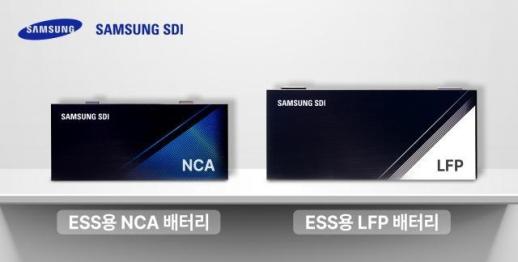 Samsung SDI wins $1 bln U.S. ESS battery deal to offset EV setbacks SEOUL, March 16 (AJP) - Samsung SDI said Monday it has secured another large battery supply contract in the United States, underscoring the South Korean battery maker’s accelerating push into the rapidly expanding global energy storage system (ESS) market to offset the slowing demand for EV batteries in North America. The company said its Michigan-based subsidiary, Samsung SDI America, has signed a deal worth about 1.5 trillion won ($1 billion) to supply ESS batteries to a major U.S. energy company. Deliveries will be made in phases through 2029. The batteries will be produced at StarPlus Energy, Samsung SDI’s joint venture with automaker Stellantis, located in the U.S. state of Indiana. Under the agreement, Samsung SDI will initially supply nickel–cobalt–aluminum (NCA) batteries before expanding deliveries to lithium iron phosphate (LFP) batteries, highlighting the company’s ability to compete across both premium ternary batteries and the fast-growing LFP segment. The deal marks another step in Samsung SDI’s effort to strengthen its presence in the U.S. ESS market, where demand is surging as renewable energy deployment expands and electricity consumption rises sharply with the growth of artificial intelligence and data centers. The contract follows another major agreement signed late last year, when Samsung SDI secured more than 2 trillion won worth of LFP ESS battery supply with a U.S. energy infrastructure developer. Industry observers say the string of large contracts signals growing recognition of Samsung SDI’s prismatic battery technology, branded PrismStack, which is widely regarded for its durability, fire safety and reliability compared with pouch-type batteries. Samsung SDI is currently the only non-Chinese supplier of prismatic ESS batteries in North America, giving it a strategic advantage as U.S. utilities increasingly seek diversified battery supply chains. The company said it is also in discussions with multiple global customers for additional battery supply contracts, with several deals expected to materialize in the near future. “The latest series of orders confirms Samsung SDI’s technological competitiveness and credibility in the global ESS market,” a company official said. “We will continue to meet the diverse performance needs of global customers.” Samsung SDI and other Korean battery makers have been accelerating their pivot toward energy storage systems (ESS) by repurposing EV operations in North America for grid-scale storage. The shift comes as the EV market — once the industry’s main growth engine — has entered a period of slower expansion amid high borrowing costs, softer consumer demand and evolving subsidy policies in major markets such as the United States and Europe. Samsung SDI swung to an operating loss in 2025, reflecting the prolonged slowdown in EV demand and changing policy conditions in Western markets. The company reported an operating loss of 1.72 trillion won for the year, reversing an operating profit of 363.3 billion won in 2024, according to its earnings report released last month. Revenue fell 20 percent to 13.27 trillion won from 16.6 trillion won a year earlier. 2026-03-16 09:53:06