

Journalist

Lester Munson
-
 Korea's crackers edges toward shutdown as Hormuz blockade chokes naphtha supply SEOUL, March 13 (AJP) - South Korea's petrochemical plants are rapidly running out of naphtha as the closure of the Strait of Hormuz cuts off a major supply route, forcing producers to declare force majeure and slash operating rates to bare-minimum levels to avoid a full shutdown that could ripple through the country's manufacturing economy. Yeocheon NCC, LG Chem, Lotte Chemical and Hanwha Solutions have all warned customers of potential force majeure on product deliveries. GS Caltex, which shares the Yeosu industrial complex with several affected petrochemical producers, has postponed a scheduled maintenance turnaround at its Yeosu refinery from March to May in order to keep supplying naphtha to neighboring plants, industry officials said. The move underscores the urgency gripping the sector: halting refining operations now would almost certainly trigger a cascade of shutdowns downstream. About 54 percent of South Korea's naphtha imports and roughly 70 percent of its crude oil normally transit the Strait of Hormuz. Since Iran closed the waterway on Feb. 28 following joint U.S.–Israeli strikes, tanker traffic through the chokepoint has largely halted. "NCC operating rates across the region continue to decline as the Strait of Hormuz remains impassable, while prices of basic feedstocks such as butadiene and styrene monomer are surging on tighter supply and rising naphtha costs," said Kang Dong-jin, an analyst at Hyundai Motor Securities. "A recovery in NCC utilization hinges on the reopening of the strait." Naphtha prices have surged since the conflict escalated, hitting $883.40 per metric ton on Monday, up from $568.55 on Feb. 23, before easing slightly to $812.29 on Thursday, according to the S&P Global Platts Fujairah cargo assessment. Asia's steam cracker industry is overwhelmingly naphtha-based and structurally dependent on imports. Major petrochemical producers across the region — including India, Thailand, Indonesia, Malaysia, China, Japan, Singapore and South Korea — collectively imported 86.6 million tons of naphtha in 2025, according to Independent Commodity Intelligence Services (ICIS). As the supply shock spreads, petrochemical plants across Asia have begun cutting operating rates. Singapore's Petrochemical Corporation of Singapore has declared force majeure, citing disrupted naphtha deliveries, while Indonesia's PT Chandra Asri Pacific has followed with its own declaration. Korea's Yeocheon NCC has taken the same step. In China, the CNOOC and Shell Petrochemicals Company Limited has halted operations after crude supply to its integrated refinery was disrupted. Nearly 9 million tons per year of South Korean ethylene capacity is non-integrated and heavily reliant on imported naphtha, according to ICIS data. The price spike compounds an already dire situation for Korean producers, who are struggling to pass higher feedstock costs on to customers. Persistent oversupply from China has depressed ethylene and downstream product prices, compressing the ethylene spread — the margin between naphtha costs and ethylene selling prices — to about $100 per ton, far below the roughly $300 needed to break even. Korean petrochemical firms typically source about half of their naphtha from domestic refiners and import the rest. With the strait sealed off, those seaborne cargoes have stopped arriving and inventories are rapidly dwindling, leaving producers little choice but to conserve feedstock. Operating rates have been cut to what the industry calls "zombie mode." Yeocheon NCC, a 50-50 venture between Hanwha Solutions and DL Chemical, has reduced utilization to 60 percent and is reportedly considering a further cut to 50 percent, its turndown limit. Lotte Chemical has lowered utilization to 70 percent, while LG Chem has trimmed operations at its Daesan complex to about 54 percent. Once a plant falls below its turndown ratio — the minimum operating rate at which equipment can safely function — it must shut down entirely. Restarting a steam cracker typically takes up to two weeks. Domestic producers currently hold only about two weeks of naphtha inventories, according to the Ministry of Trade, Industry and Energy. A full shutdown would send shockwaves far beyond the chemical sector. Ethylene and propylene are core feedstocks for a wide range of industries, from automotive plastics and consumer electronics components to construction materials such as PVC piping and insulation, as well as synthetic fibers used in textiles. Logistics networks are already beginning to buckle. HMM, South Korea's largest shipping line, suspended new bookings on Middle East routes on Wednesday, while Korean Air has extended the suspension of its Incheon–Dubai flights through March 28. Rising freight and fuel costs are adding pressure to industries already weakened by a prolonged downturn, including steel, batteries and cement. The crisis has also complicated a government-led restructuring effort aimed at addressing structural overcapacity in the petrochemical sector. The Ministry of Trade, Industry and Energy and creditor institutions led by the Korea Development Bank had set an end-of-March deadline for companies in the Yeosu complex to submit voluntary ethylene capacity reduction plans. The war, however, has injected deep uncertainty into those negotiations. Analysts say the situation echoes the early stages of the 2022 Russia-Ukraine conflict, though the impact on Asia could prove more severe given the region's far heavier reliance on Middle Eastern feedstock. If the Hormuz blockade drags on, utilization rates at South Korea's three major petrochemical hubs — Yeosu, Daesan and Ulsan — could fall below 60 percent across the board, with ripple effects spreading through electronics, automotive, construction and consumer goods industries nationwide. 2026-03-13 14:30:45
 -
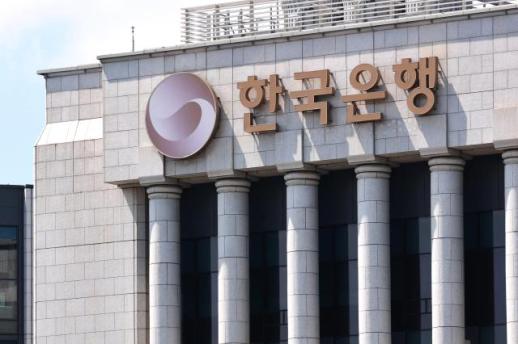 Korea's M2 rise picks up in Jan as stock invest and dollar savings pile up SEOUL, Mar 13 (AJP) —South Korea’s M2 money supply grew at a faster pace in January than previous months on strong stock market and U.S.-dollar-denominated savings on expectations of continued greenback strength. According to a Bank of Korea (BOK) release on Friday, the M2 money supply grew 0.7 percent month-on-month in January to reach 4,108.9 trillion won ($2.83 trillion). Under the previous M2 standard (used prior to November statistics), the figure rose 1.2 percent to 4,521.1 trillion won, indicating an even sharper upward trend. The M2 money supply grew by 4.5 percent throughout 2025 (under the new standard) and 7.4 percent (under the previous standard), a marked acceleration from the 3.3 percent and 5.6 percent growth rates recorded in 2024. Compared to January of last year, M2 increased by 4.6 percent (new) and 8.4 percent (previous). While the growth rate under the new standard—which excludes ETFs and long-term deposits—narrowed by 0.1 percentage points, the previous standard showed an expansion of 0.4 percentage points. The expansion was largely fueled by a stellar performance in the South Korean stock market in January. The benchmark KOSPI surged more than 21 percent in a single month, rising from 4,309.63 on Jan. 2 to close at 5,224.36 on Jan. 30. The tech-heavy KOSDAQ followed suit, jumping over 20 percent to finish the month at 1,149.21. KOSPI was trading down 1.3 percent at 5,510 Friday. After hitting an all-time high of 6,307.27 on Feb. 26, the index suffered a 20 percent plunge in early March, triggered by the Middle East crisis and the blockade of the Strait of Hormuz. Liquidity in other financial institutions, including asset management firms, increased by 15.2 trillion won, reflecting the January market boom. Demand deposits, which typically serve as a cash pool for equity investment, grew by 15.5 trillion won, more than doubling the 7 trillion won increase seen the previous month. The period was also marked by a significant buildup in foreign currency liquidity. Other monetary products, primarily foreign currency deposits with maturities of less than two years, surged by 21 trillion won—double the 10 trillion won increase in the prior month. The won, which stood at 1,445 per dollar on Jan. 2, weakened to 1,453 by Jan. 30, a depreciation of approximately 0.6 percent. Amid the ongoing Hormuz crisis, the currency has since plummeted to the 1,490 level as of 11:15 a.m. Friday. Bond prices also retreated. The yield on the 10-year government bond rose from 3.386 percent on Jan. 2 to close at 3.607 percent on Jan. 30, an increase of 22.1 basis points. While yields briefly dipped in February on safe-haven demand, the Hormuz shock pushed them back up, with the 10-year yield closing at 3.649 percent on Thursday, up 4.1 basis points. 2026-03-13 14:26:52
 -
 North Korea-China passenger train resumes service ahead of Trump's visit to Beijing SEOUL, March 13 (AJP) - A passenger train linking North Korea and China arrived in Beijing on Friday, resuming service for the first time in six years shortly after Pyongyang closed its border due to the outbreak of the coronavirus pandemic. The train, which departed Pyongyang at around 10:30 a.m. the previous day, arrived at a railway station in Beijing the next morning after its lengthy journey of about 25 hours. Another passenger train from Beijing to Pyongyang also departed at around 5:30 p.m. the same day. According to state-run China Railway, passenger trains linking the two countries' capitals operate four times a week in both directions, on Mondays, Wednesdays, Thursdays and Saturdays. Another passenger train service linking Pyongyang and the Chinese border city of Dandong also operates twice daily. With the resumption of these railway services, Pyongyang is expected to increase exchanges to restore relations with its traditional ally, which had been strained amid its deepening military ties with Russia. Despite the North's full reopening of its borders in 2023, passenger railway services remained suspended, although cargo trains connecting the two countries' border towns of Dandong and Sinuiju were partially resumed in 2022. The resumption follows North Korean leader Kim Jong-un's attendance at a military parade in Beijing last September and comes just weeks ahead of U.S. President Donald Trump's planned visit to the city later this month. 2026-03-13 14:26:09
 -
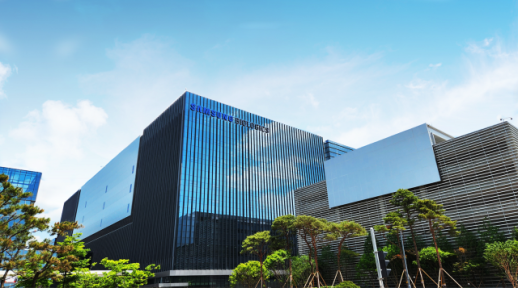 Samsung Biologics Labor Talks Break Down; Union to Seek Mediation Samsung Biologics and its union failed to narrow differences in this year’s wage and collective bargaining talks. Industry officials said the Samsung Biologics Mutual Growth Labor Union announced Friday that negotiations with management had ended in a final breakdown. The two sides held 13 bargaining sessions from an initial meeting on Dec. 23 through Friday but did not reach agreement. The union said it has applied to the Incheon Regional Labor Relations Commission for mediation of the labor dispute. If mediation fails, the union is expected to move toward collective action, though no specific schedule has been set, officials said. The union also said it plans to submit complaints and criminal filings to the Labor Ministry next week over alleged violations of the collective agreement, violations of the Labor Standards Act and unpaid wages. A leak last year of personnel-related documents was raised as a key issue in the talks. The union is seeking action against those responsible and revisions to the collective agreement related to personal data protection. Wages and benefits were also cited as major points of contention.* This article has been translated by AI. 2026-03-13 13:52:36
 -
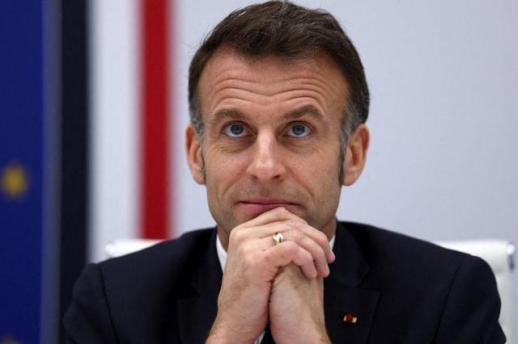 French president to visit Seoul for summit next month SEOUL, March 13 (AJP) - French President Emmanuel Macron will visit Seoul next month, Cheong Wa Dae said on Friday. In a written press briefing, presidential spokesperson Kang Yoo-jung said Macron will arrive in Seoul on April 2 for a summit with President Lee Jae Myung. The visit will mark his first trip to South Korea since his inauguration in 2017 as the youngest president in French history and also the first by a French president in about 11 years. After a formal welcoming ceremony at Cheong Wa Dae, the two leaders are scheduled to hold a summit the next day, followed by a state luncheon and other events. Their talks are expected to cover a broad range of areas including cooperation in trade and investment, as well as in advanced industries such as artificial intelligence (AI), quantum technology, space, and nuclear energy. Global issues including the ongoing conflict in the Middle East that began with U.S.-led airstrikes on Iran, are also expected to be on the agenda. As South Korea's third-largest trading partner in Europe, France also draws more than 800,000 South Korean tourists each year. Kang said Macron's visit, which coincides with the 140th anniversary of diplomatic relations between the two countries, would serve as an "important milestone" in building bilateral trust, and expressed hope that it would strengthen joint efforts toward sustainable global growth. Meanwhile, Indonesian President Prabowo Subianto will also make a state visit to South Korea later this month. Subianto is scheduled to arrive in Seoul on March 31 and hold a summit with Lee the following day. It will be their second meeting since last November, when the two met on the sidelines of the Asia-Pacific Economic Cooperation (APEC) summit in the southeastern city of Gyeongju. 2026-03-13 11:21:43
 -
 Asian stocks fall as oil tops $100 on Hormuz tensions SEOUL, March 13 (AJP) — Asian stock markets opened lower Friday after oil prices surged above $100 a barrel amid escalating tensions around the Strait of Hormuz, raising concerns about prolonged disruptions to global energy supplies. Investor anxiety intensified after Iran’s Supreme Leader Mojtaba Khamenei vowed to maintain pressure on shipping through the strategic waterway and warned Tehran could open another front in the conflict, stoking fears that the war could drag on and threaten one of the world’s most critical energy routes. The comments sent oil prices sharply higher. U.S. benchmark West Texas Intermediate crude jumped 9.72 percent to $95.73 a barrel, while global benchmark Brent crude settled at $101.26, its highest close since July 2022. U.S. equities fell sharply overnight as energy-driven inflation fears rattled markets. The Dow Jones Industrial Average dropped 1.56 percent to its lowest level of the year, while the S&P 500 fell 1.52 percent and the Nasdaq Composite declined 1.68 percent. Technology shares led the selloff. The Philadelphia Semiconductor Index plunged 3.43 percent as investors priced in potential supply-chain risks linked to Gulf tensions. Major chipmakers also retreated, with Nvidia down 1.53 percent, while Intel and Taiwan Semiconductor Manufacturing Co. fell more than 5 percent and Micron Technology slid over 3 percent. The weakness spilled into Asian trading, including Seoul, where semiconductor heavyweights led early losses. Samsung Electronics fell 2.55 percent to 183,100 won and SK hynix declined 2.58 percent to 906,000 won. Most South Korean shares opened lower as the oil shock rattled investor sentiment. The benchmark KOSPI initially dropped about 3 percent before trimming losses. As of 10:56 a.m., the index was down 1.24 percent at 5,513.87, while the tech-heavy KOSDAQ recovered from early losses to rise 0.62 percent to 1,155.51. Foreign and institutional investors were net sellers, offloading 644.4 billion won ($483 million) and 331.3 billion won worth of shares respectively, while retail investors bought a net 971.1 billion won. Among major stocks, LG Energy Solution slid 4.17 percent to 368,000 won, Hyundai Motor declined 1.73 percent to 512,000 won and Kia lost 2.93 percent to 162,100 won. Samsung Biologics fell 1.85 percent to 1,595,000 won, SK Square dropped 3.79 percent to 533,000 won and HD Hyundai Heavy Industries slipped 1.99 percent to 592,000 won. Naver edged up 0.45 percent to 223,000 won. Doosan Enerbility was the lone major gainer, rising 2.13 percent to 105,700 won. The Korean won weakened toward crisis-era levels, trading at 1,489.40 per dollar. The Bank of Korea warned that prolonged tensions in the Middle East could push up inflation and said it would maintain a cautious, neutral policy stance for now. While some investors speculate the central bank may eventually tighten policy to contain inflationary pressure, others say heightened geopolitical uncertainty makes a near-term rate hike unlikely. Elsewhere in Asia, Japan’s Nikkei 225 slipped 0.81 percent to 54,010.97. Hong Kong’s Hang Seng Index fell 0.48 percent to 25,592.49, while China’s Shanghai Composite Index declined 0.33 percent to 4,115.48. Taiwan’s TAIEX also dropped 0.58 percent to 33,386.04. 2026-03-13 11:15:05
 -
 Woori Bank to Launch Prepaid Card for Foreign Visitors in April Woori Bank said Friday it signed a business partnership agreement, or MOU, with NOL Universe and Kona I to provide financial services built around a prepaid card designed for foreign customers. The partnership aims to improve payment convenience and access to financial services for overseas tourists visiting South Korea. The three companies plan to jointly roll out the prepaid card service, targeting an April launch, and will work on system integration and building the partnership infrastructure. The service will be offered through NOL Universe’s travel, ticket and experience platform, NOL World, in two formats: products bundled with high-demand items such as K-performance tickets and tourism packages, and a standard option that allows customers to purchase the card on its own. Through Kona I Co., which operates domestic card payment infrastructure, the card will support transit payments as well as purchases at online and offline merchants. The companies also plan to offer special benefits at major merchants frequently used by foreign tourists. Woori Bank said it will distribute the prepaid cards at currency exchange counters at Incheon International Airport so visitors can use them immediately upon arrival. It also plans to provide what it called industry-leading exchange-rate discounts for domestic use and to support exchange and top-up services through the bank’s unmanned exchange machines and ATMs. “As demand from foreign tourists continues to rise, we have prepared a differentiated ‘Tourist Finance’ service that can be used conveniently anytime and anywhere,” said Kim Go-woon, deputy head of Woori Bank’s foreign exchange business division. “We will continue to expand financial services for global customers based on this partnership.”* This article has been translated by AI. 2026-03-13 11:04:46
 -
 Film ‘The Man Who Lives With the King’ Drives Renewed Sales of 1928 Novel on King Danjong The popularity of the film ‘The Man Who Lives With the King’ is spilling beyond theaters into publishing and other off-screen consumption. The 1928 novel has been reissued and entered bestseller rankings, while sales of children’s history books tied to King Danjong have surged, showing how the box-office hit is driving demand for related historical content. According to Kyobo Book Centre’s bestseller list for the first week of March released Friday, Saeum’s reissued edition of , published last month, ranked No. 17 in the Korean fiction category. is a work by Yi Gwang-su (1892-1950) with Danjong as its central figure. It was serialized in the Dong-A Ilbo in 1928-1929. The novel depicts political confrontation between forces backing Danjong, portrayed as embodying dynastic legitimacy, and a faction seeking to enthrone Prince Suyang, including Han Myeong-hoe and Jeong In-ji, framed through the opposing figures of Danjong and Suyang. With copyright expiring 70 years after the author’s death, multiple publishers, including Saeum, have been freely releasing editions following the film’s success. Publishers have also rolled out varied formats to attract readers, including an “original edition” that restores the cover design of the first edition published by Bakmun Publishing in 1954. Library borrowing has also climbed. Statistics from the National Library of Korea’s “Library Information Naru” big-data platform show the book was borrowed about 10 to 20 times a month last year, but recorded a total of 148 loans last month. The film’s success has broadened interest beyond a single historical figure to the era Danjong lived in and its historical backdrop, the report said, lifting attention to history more broadly. YES24 said that in the month after the film opened Feb. 4, sales of books tagged with the keyword “Danjong” jumped 2,565% from the same period a year earlier. Sales of rose about 800%, while , which examines Danjong’s tragic fate alongside royal politics after the Sejong era, climbed about 2,700%. The children’s history book surged 4,614% from a year earlier. “Cultural content such as films and dramas is sparking interest in specific historical figures or events,” said Jo Seon-young, head of YES24’s book business division. “A steady reading trend is emerging in which people then seek out and read related books.” With the film drawing more than 12 million cumulative viewers and becoming a nationwide hit, related spending is expected to spread in more ways, the report said. Yeongwol, where Danjong was exiled, has seen a sharp rise in tourism demand, with what the report described as a “Danjong fandom” phenomenon. At Cheongnyeongpo Ferry, a major filming backdrop, about 11,000 people visited during last month’s Lunar New Year holiday period, and about 14,800 visited during the March 1 holiday period, emerging as a popular destination. The film’s impact has also played out online. On map apps, the review section for Yeongwol’s Jangneung has drawn more than 600 comments mourning and commemorating Danjong. Meanwhile, malicious comments appeared on listings for Han Myeong-hoe’s grave in Cheonan and for Gwangneung, the royal tomb of King Sejo, prompting Kakao Map to close the review sections for those sites, the report said. * This article has been translated by AI. 2026-03-13 10:55:03
 -
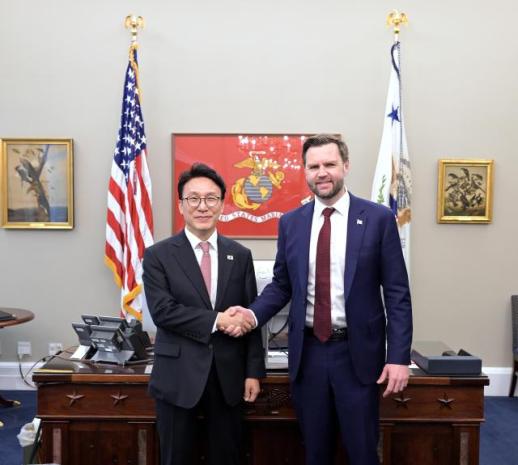 South Korea PM meets US vice amid war and tariff tensions SEOUL, March 13 (AJP) - South Korean Prime Minister Kim Min-seok met U.S. Vice President JD Vance at the White House on Wednesday, using the talks to underscore Seoul’s passage of a new law to support Korean investment in the United States and to press for faster implementation of broader bilateral security and industrial agreements. The meeting came as the alliance faces renewed strain from a U.S. tariff offensive and deepening energy insecurity caused by the Iran war and disruptions around the Strait of Hormuz. According to the prime minister’s office, Kim told Vance that South Korea’s National Assembly had passed special legislation designed to provide the legal framework for Seoul’s investment commitments in the United States, calling it proof of Korea’s determination to follow through on bilateral agreements. Reuters and AP reported that the new law is tied to Seoul’s pledged $350 billion investment package in strategic U.S. industries and shipbuilding, part of a broader deal reached with Washington last year. Kim said he hoped the legislation would help Korean companies contribute to the revival of U.S. manufacturing and job creation while opening the way for broader advances in bilateral ties. He also said the law would add momentum to implementing the joint fact sheet released after the recent summit between the two countries’ leaders. In the security sector, Kim called for swift execution of pending agreements involving nuclear-powered submarines, nuclear energy and shipbuilding cooperation. Korean media reports said the package also touches on Seoul’s long-running push to expand its nuclear and maritime strategic options as the allies deepen industrial-security coordination. Vance welcomed the establishment of the legal framework needed to carry out the investment deal and said the two sides should stay in close contact on implementation, according to the prime minister’s office. Kim also highlighted cooperation in critical minerals and briefed Vance on Seoul’s recent decision regarding a U.S. request linked to the export of mapping data by American companies. Vance expressed appreciation and said the allies should continue discussions on other non-tariff barriers as well, the office said. Kim additionally noted that issues Vance had raised in January — including matters involving Coupang and religious concerns — were now being managed in a stable way. Vance, in turn, thanked the Korean government for its efforts to remain in close communication while respecting South Korea’s legal framework. The meeting was the first between Kim and Vance in about six weeks since their previous talks on Jan. 23, and the prime minister’s office said it helped deepen personal trust and improve communication on pending alliance issues. The talks came at a delicate moment for Seoul. Just two days earlier, the Office of the U.S. Trade Representative launched a new Section 301 investigation into “structural excess capacity and production in manufacturing sectors,” targeting South Korea and 15 other economies as the Trump administration seeks to rebuild its tariff arsenal after a court setback. At the same time, the war involving Iran has amplified South Korea’s vulnerability to external energy shocks. The conflict has sharply disrupted flows through the Strait of Hormuz, helping send oil prices surging and adding pressure on Asian import-dependent economies such as South Korea, which relies heavily on Middle Eastern crude and petrochemical feedstocks. 2026-03-13 10:47:59
 -
 Krafton, Hanwha Aerospace forge physical AI alliance with joint venture plans SEOUL, March 13 (AJP) - South Korean gaming giant Krafton and defense heavyweight Hanwha Aerospace signed a memorandum of understanding to jointly develop physical AI technologies and pursue the establishment of a joint venture spanning defense and other industrial applications. The partnership announced Friday marries Krafton's AI research capabilities and simulation expertise — honed through operating large-scale virtual worlds such as PUBG: Battlegrounds — with Hanwha Group's sprawling defense and manufacturing infrastructure. The two companies said they would collaborate on core physical AI research and development, field testing and application scenarios, and the buildout of shared technical and operational frameworks. The companies said they plan to set up a joint venture to fast-track the commercialization of co-developed technologies and deepen their long-term cooperation. Krafton will also invest in a fund managed by Hanwha Asset Management that targets AI, robotics and defense sectors, with a fundraising goal of about $1 billion. The fund aims to identify high-potential partners across the physical AI value chain and funnel investments toward joint development and commercialization. "We will establish a joint venture with Hanwha and grow it into a global defense technology firm on par with Anduril," said Kim Chang-han, CEO of Krafton. Hanwha Aerospace CEO Son Jae-il said AI technology is rapidly evolving beyond conventional industry applications into physical AI for the defense domain. He added that the partnership with Krafton would set a new technological benchmark in the field. 2026-03-13 10:28:38