

Journalist

Lester Munson
-
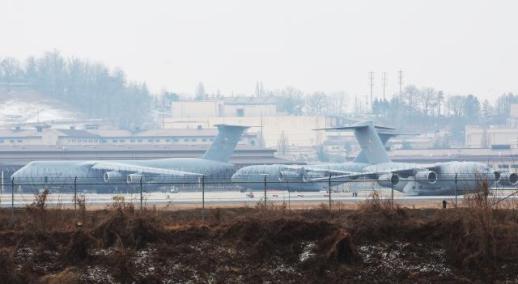 Osan airlift fuels U.S. redeployment speculation amid Iran war SEOUL, March 08 (AJP) - A series of departures by large U.S. military transport aircraft from a key American air base in South Korea has fueled speculation that some U.S. Forces Korea (USFK) air defense assets could be redeployed to the Middle East amid the escalating conflict involving Iran. According to the real-time flight tracking service Flightradar24, multiple U.S. Air Force C-5 and C-17 transport aircraft that arrived at Osan Air Base in Pyeongtaek, south of Seoul, in late February departed the base in early March. Most of the aircraft were tracked heading toward Anchorage, Alaska, a major U.S. military logistics hub. Particular attention has been drawn to the movements of the C-5 Galaxy, a strategic transport aircraft significantly larger than the more commonly seen C-17 Globemaster. At least two C-5 aircraft arrived at Osan in late February and departed on Feb. 28 and March 2, respectively. The aircraft’s final destinations were not publicly listed, though flight data showed journeys lasting more than 14 hours, raising the possibility they were bound either for the U.S. mainland or the Middle East. While C-17 aircraft regularly operate through Osan to transport personnel and equipment, visits by the larger C-5 are considered relatively uncommon. The activity has prompted speculation that the aircraft may have transported Patriot air defense components. U.S. Forces Korea is known to have recently moved several Patriot missile batteries from other bases in South Korea to Osan. If confirmed, the movement could suggest that some of those air defense assets have already been loaded onto transport aircraft and relocated outside the peninsula. Flight tracking data shows that C-17 aircraft departed Osan intensively between March 3 and March 7, with at least six confirmed flights heading to Anchorage. Some security watchers speculate the increased air traffic could also be linked to preparations for the annual South Korea–U.S. joint military exercise Freedom Shield, which begins March 9. Others note that if the conflict with Iran becomes prolonged, the temporary redeployment of certain U.S. assets stationed in South Korea could become increasingly likely. A similar precedent occurred last year, when two Patriot missile batteries stationed with USFK were temporarily deployed to the Middle East in June last year during a major U.S. military operation targeting Iranian nuclear facilities. The systems returned to South Korea in October. Any redeployment of air defense systems from the peninsula has raised concerns about potential impacts on deterrence against North Korea, though experts say any such move would likely be carefully calibrated. U.S. Forces Korea declined to comment on the aircraft movements. “For operational security reasons, we do not comment on the movement, relocation or potential repositioning of specific military capabilities or assets,” USFK said in a statement. “USFK remains focused on maintaining a strong and ready force posture on the Korean Peninsula, and the United States remains firmly committed to the defense of the Republic of Korea.” South Korea’s defense ministry also declined to comment on USFK operations. “It is not appropriate for the government to comment on the operational activities of U.S. Forces Korea,” a ministry official said, adding that Seoul and Washington continue close consultations to maintain a firm combined defense posture and ensure stability on the Korean Peninsula and in the region. Foreign Minister Cho Hyun said during a parliamentary session on Friday that the United States and South Korea are in close consultation regarding the operation of USFK assets, though he declined to provide details. 2026-03-08 12:50:33
 -
 BTS’ ‘ARIRANG’ tops 4 million Spotify pre-saves ahead of March 20 release Global interest in BTS’ upcoming release is showing up in the numbers. BigHit Music, a HYBE Music Group label, said BTS’ fifth full-length album, ‘ARIRANG,’ surpassed 4 million pre-saves on Spotify on March 7. The album topped 1 million pre-saves within two days of the pre-save launch and continued to climb. With about two weeks left until release, attention is on how high the figure will go. On Spotify’s March 4 ‘Countdown Charts Global,’ ‘ARIRANG’ ranked No. 1 again, holding the top spot for seven straight weeks. The chart tracks pre-save totals for albums and singles ahead of release and is widely used as a gauge of fan anticipation. BTS will release ‘ARIRANG’ at 1 p.m. on March 20 and hold ‘BTS THE COMEBACK LIVE|ARIRANG’ at 8 p.m. the next day in the area around Gwanghwamun Square in Seoul. The event will be livestreamed on Netflix for audiences worldwide. A previously released trailer featured cheers from ARMY, the group’s fandom, heard at past concerts and visuals of the seven members set against Gyeongbokgung Palace. The album includes 14 tracks meant to capture ‘today’s BTS.’ The title track, ‘SWIM,’ centers on pressing forward through life’s waves, expressing a resolve to ride incoming currents at one’s own pace as a form of ‘love for life.’ RM handled most of the lyrics, the label said, adding sincerity to the message. * This article has been translated by AI. 2026-03-08 11:48:17
 -
 Hana Bank, Korea Southern Power to Co-Develop Offshore Wind Projects Hana Bank said Sunday it signed a memorandum of understanding with Korea Southern Power on March 6 to jointly develop offshore wind power projects. The agreement is aimed at building a full-cycle cooperation framework between a private financial institution and a power producer across development, construction and operations in the broader renewable energy sector. Offshore wind projects typically require large upfront investment and long timelines, making the combination of financing and development capabilities a key factor, the bank said. Hana Bank said it plans to pursue what it called a “productive finance” model by taking part in the entire process, including feasibility reviews, deal structuring and arranging financing, drawing on its infrastructure-focused investment banking capabilities. The bank said the effort is intended to help expand renewable energy infrastructure and support carbon neutrality goals. Among Korea Southern Power’s offshore wind projects, Hana Bank is serving as the financial arranger for the Yawol Offshore Wind Power Complex in Yeonggwang County, South Jeolla Province, and the Dadaepo Offshore Wind Power Complex in Saha District, Busan. The company said the projects are expected to be used as power infrastructure for the Honam and Yeongnam regions, respectively, and to support regional balance and local economic activity. The two sides said they will gradually detail their cooperation through efforts including financial and development collaboration on offshore wind and other renewable projects; jointly identifying and reviewing new power generation projects; sharing infrastructure finance market trends and preparing response strategies; and supporting stronger financial capabilities among project stakeholders. “Going forward, we will continue to accelerate productive finance and take the lead in expanding Korea’s eco-friendly and renewable energy infrastructure,” said Lee Byeong-sik, executive vice president of Hana Bank’s IB Group.* This article has been translated by AI. 2026-03-08 11:12:00
 -
 Shinhan Financial says stable home prices could narrow wealth gap and lift spending, births Rising real estate prices are entrenching wealth inequality, but stabilizing home prices could help revive household spending and improve conditions for marriage and childbirth, according to a new analysis. Shinhan Financial Group's Shinhan Future Strategy Research Institute on 8 released a report, "What Would Change if Home Prices Stabilize," analyzing how housing price stability affects household finances and the financial market. The report said that in South Korea's asset structure — where about 70% of household assets are concentrated in real estate — higher home prices can widen wealth gaps and raise housing costs, weighing on the broader economy through weaker consumption. As of 2025, the top 20% by net assets held 65% of total net assets, while the bottom 40% held 4.8%, the report said. It added that younger generations' share of the contribution to asset inequality reached 44%, indicating deepening inequality in which parents' real estate holdings shape their children's starting point. The net-asset Gini coefficient — an inequality measure in which values closer to 0 indicate more equal distribution — hit 0.625 last year, the highest since records began, the report said. South Korea's PIR, a price-to-income ratio, stood at 24.1, far higher than in major advanced economies. That implies a median-income household would need more than 24 years to buy a home even if it saved all of its income. Housing costs are also directly affecting consumption, the report said. With 76% of household assets tied up in real estate, about 20% of households were classified as "wealthy but liquidity-constrained," meaning that even if home prices rise, their ability to spend remains limited. If home prices stabilize and housing-cost burdens ease, the biggest rebound in consumption is expected among young and middle-aged groups, the report said. It pointed to ages 25 to 39 as showing the sharpest consumption pullback linked to rising home prices, suggesting the strongest potential for a rebound. It also said more stable housing costs could lower barriers for young people to marry and have children and increase spending on education, self-development and investments for job changes. The report also projected changes in financial-market demand. If the burden of buying a home eases, demand could rise among young people and newlyweds for early asset-building products such as savings plans to build seed money, youth individual savings accounts (ISA) and installment funds. Shinhan Future Strategy Research Institute said, "Easing the housing-cost burden can bring positive changes across household life, including a recovery in consumption and improved conditions for marriage and childbirth." 2026-03-08 10:54:00
 -
 KB Financial Chairman Yang Jong-hee Urges New Women Managers to Prioritize Communication in AI Era Yang Jong-hee, chairman of KB Financial Group, told newly appointed women branch managers that communication and empathy matter even more in the age of artificial intelligence, calling for inclusive leadership. KB Financial said Sunday that Yang attended a group conference on March 6 for newly appointed women branch managers. He said women leaders should take pride in being recognized for ability and performance, not gender, and stressed that finance is shifting beyond product sales to a role that supports a customer’s entire life. About 100 people, including Yang and the new managers, attended. The program included a “Talk with Seniors” session in which senior women executives answered questions and shared advice, followed by a “Talk with the Group CEO” session where Yang spoke directly with the new managers and heard feedback from the field. The event was held ahead of International Women’s Day. KB Financial said it is working to build a culture where women can develop their potential under its diversity strategy, “KB Diversity 2027.” A KB Financial official said the group is expanding its pipeline of women leaders and practicing diversity and inclusion across the organization, adding it will continue to support women’s growth and promote gender equality so employees from varied backgrounds can develop together. 2026-03-08 10:18:00
 -
 Doosan Chairman Park Jeongwon touts AI to lead future of construction equipment Doosan said Sunday that Chairman Park Jeongwon visited CONEXPO 2026, North America’s largest construction equipment exhibition, held in Las Vegas through Friday, continuing his on-site management push. CONEXPO 2026, held March 3-7 (local time) under the theme “Breaking New Ground,” highlighted AI-based automation and autonomy, electrified equipment and connected data solutions as key technologies for smarter job sites. Doosan Bobcat set up an exhibit in the West Hall of the Las Vegas Convention Center, showcasing about 30 advanced products including compact loaders and excavators featuring AI, electrification and autonomous technologies. It also unveiled a branding strategy that splits its core compact loader lineup into an entry-level “Classic” and a premium “Pro.” Park visited the Doosan Bobcat and Doosan Motrol booths and toured displays by global competitors, focusing on the commercialization of AI-driven productivity gains and unmanned technologies. The newly introduced “Pro” models offer higher power and speed than the “Classic” line. AI features include “Jobsite Companion,” which uses voice recognition to control more than 50 functions, and “Jobsite Awareness,” which detects nearby obstacles and people and automatically slows or stops. Doosan said its compact equipment is used for varied tasks on job sites where conditions change frequently, unlike heavy machinery used for repetitive work on large sites. Tailored to that environment, Jobsite Companion is designed to help less-experienced operators improve productivity by providing AI guidance comparable to that of skilled workers. The company said it plans to launch the technology this summer, and noted it was named a finalist for CONEXPO’s Next Level Awards. Park Jeongwon said, “As AI technology applied to construction equipment and job sites advances faster, the landscape of the construction equipment market — which used to place greater weight on hardware capabilities — is changing.” He added, “Based on Doosan Bobcat’s unrivaled data accumulated over many years, let’s deliver differentiated AI technology, present the future of construction equipment and lead the market.”* This article has been translated by AI. 2026-03-08 10:12:18
 -
 KB Kookmin Bank Cuts Saehuimang Holssi II Loan Rates by 1 Percentage Point KB Kookmin Bank said Sunday it cut the interest rate on new loans under its flagship low-income product, the “KB Saehuimang Holssi II,” by 1 percentage point on March 6 to ease interest burdens for financially vulnerable borrowers. The loan rate for the product fell to an annual 4.47% to 5.47% from 5.47% to 6.47%, based on the bank’s internal credit grade 3 and a loan term of at least five years. Customers who repay the “KB Saehuimang Holssi II” loan on schedule can also receive up to an additional 2.0 percentage points in rate reductions during the loan term. The rate is automatically reduced by 0.2 percentage point every six months if payments are made without delinquency. A bank official said the cut is intended to help reduce the burden on financially vulnerable people facing economic hardship, adding that the bank will continue to expand inclusive finance support so it can grow with the public and help build a better future. 2026-03-08 10:09:00
 -
 HD Hyundai Electric to Expand Alabama Transformer Plant With $200 Million Investment HD Hyundai Electric is moving ahead with an expansion of its North American manufacturing base. The company said Sunday it held a groundbreaking ceremony March 6 (local time) for a second factory at its North American unit, HD Hyundai Power Transformers USA, in Montgomery, Alabama. The new plant will be built on the existing site and cover 29,000 square meters (about 8,800 pyeong). It is scheduled for completion in April next year. HD Hyundai Electric plans to invest about $200 million to increase extra-high-voltage transformer production capacity by 50% and to install testing and production facilities for 765-kV transformers, as demand rises for U.S. extra-high-voltage transmission grid projects. The North American unit was established in 2011 as the first U.S.-based transformer manufacturing plant set up by a South Korean power equipment company, and it is the largest power transformer production facility in the United States, the company said. A company official said the North American operation has played a key role in strengthening HD Hyundai Electric’s position in the U.S. market. “By successfully completing this second factory and creating synergy with the expansion of our Ulsan plant, which is scheduled to be completed in September this year, we will further strengthen our leadership in the North American extra-high-voltage transformer market,” the official said. Attendees at the event included HD Hyundai Electric President Kim Young-gi; Lee Jun-ho, consul general of the Republic of Korea in Atlanta; Ellen McNair, Alabama secretary of commerce; Cornelius “CC” Calhoun, chairman of the Montgomery City Council; and representatives of key customers and partner companies.* This article has been translated by AI. 2026-03-08 09:51:17
 -
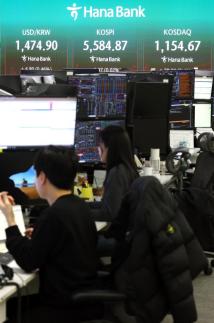 Korean markets hardest hit among key markets in first week of Gulf SEOUL, March 08 (AJP) -South Korea’s financial markets absorbed one of the sharpest shocks among major economies during the first week of the Middle East war, with equities, the currency and bond yields swinging more violently than those of global peers as investors rushed to price in the country’s heavy dependence on Gulf energy supplies. Market data compiled by the Financial Supervisory Service show that Korean assets underperformed most major markets across multiple indicators — stocks, foreign capital flows, exchange rates and sovereign yields — highlighting how exposed the export-driven economy remains to disruptions in the Strait of Hormuz, the narrow waterway through which roughly one-fifth of the world’s oil shipments pass. The benchmark KOSPI fell 10.56 percent from the end of February to early March, the steepest decline among major global indices tracked by regulators. The secondary KOSDAQ lost 3.20 percent. Over the same period, Japan’s Nikkei 225 dropped about 5.49 percent, Taiwan’s TAIEX roughly 5.12 percent, while the Euro Stoxx 600 slipped around 4.48 percent. U.S. equities showed far milder reactions, with the S&P 500 down less than 1 percent over the same window. The scale of the decline reflects the structure of the Korean market, which is dominated by cyclical exporters such as semiconductor manufacturers, automakers and shipbuilders — sectors highly sensitive to global trade conditions and energy prices. Foreign investors accelerated their withdrawal from Korean equities as geopolitical risks mounted. Data show that overseas investors have sold a net 8.1 trillion won ($6 billion) in Korean stocks in March. On March 6 alone, foreigners dumped more than 2.4 trillion won of KOSPI shares, highlighting the speed with which global funds exit Korean assets during periods of uncertainty. The Korean won also emerged as one of the weakest and most volatile major currencies in the early phase of the crisis. According to Bank of Korea data, the average daily fluctuation in the won–dollar exchange rate reached 13.2 won in early March, the highest level of volatility since the panic of March 2020 during the COVID-19 pandemic. The currency weakened 2.6 percent against the dollar over the week, compared with a 1.04 percent decline in the Japanese yen, while the dollar index gained 1.75 percent over the same period. At one point in overnight trading, the exchange rate surged to 1,505.8 won per dollar, briefly breaching the psychologically important 1,500 level for the first time since the global financial crisis in 2009. Currency swings were particularly pronounced during overnight trading hours when market liquidity is thinner and official intervention is more limited, allowing relatively small orders to move prices sharply. The divergence with Japan has been notable. While the Japanese yen historically strengthened during global crises as a safe-haven asset, the current war shock has instead pushed the yen weaker to around ¥158 per dollar, its softest level in about six weeks. Analysts attribute the move to Japan’s own heavy dependence on imported oil and expectations of rising dollar demand for energy payments. Still, the won has weakened more sharply than the yen, reinforcing its reputation among global investors as a high-beta currency that tends to amplify swings in global risk sentiment. Bond markets also reflected rising stress. The yield on three-year Korean Treasury bonds climbed to 3.227 percent, while the 10-year yield rose to 3.616 percent, increases of nearly 20 basis points from late February, roughly in line with the rise in U.S. Treasury yields but far exceeding the 5.4 basis-point increase in Japan’s 10-year government bond. Corporate borrowing costs rose even faster, with yields on three-year AA-rated corporate bonds breaching 3.8 percent, indicating a widening risk premium in domestic credit markets. Underlying the turbulence is South Korea’s structural dependence on Middle Eastern energy. The country imports the vast majority of its crude oil from the region, much of it transported through the Strait of Hormuz. Any prolonged disruption to tanker traffic there could quickly feed through to domestic fuel prices, manufacturing costs, inflation and the trade balance. Japan faces a similar reliance on imported energy, but its markets proved more resilient during the initial shock. Analysts attribute the difference partly to the relatively larger role of domestic institutional investors in Japan and the yen’s residual reputation as a defensive asset. Oil prices have surged in tandem with the conflict. WTI crude jumped 20.87 percent from late February and 41 percent from the end of 2025, while Dubai crude gained 7.67 percent over the week and 26.6 percent from late December. Brent crude rose 17.84 percent in a week and 40.3 percent from the end of last year. The instability underscores how deeply South Korea is integrated into global capital flows and commodity markets. Korean assets are often treated as a liquid proxy for investor sentiment toward global growth and emerging markets — making them particularly vulnerable when geopolitical risks spike. For investors and policymakers alike, analysts say the trajectory of markets will ultimately hinge on a single variable: the duration of the conflict and whether oil shipments through the Strait of Hormuz return to normal. If disruptions persist and crude prices push toward $100 per barrel, the financial turbulence seen in the first week of the war could deepen into a broader economic shock — one that would be felt most acutely in energy-importing economies like Korea. 2026-03-08 08:12:15
 -
 Seoul fiddles with price controls as gasoline price near sensitive threshold SEOUL, March 08 (AJP) -South Korea is approaching a politically sensitive threshold as gasoline prices surge toward 2,000 won ($1.35) per liter, prompting the government to consider emergency price controls for the first time in decades amid a global oil shock triggered by the war involving Iran. President Lee Jae Myung has ordered an aggressive multi-agency response as international crude prices jump to multi-year highs and domestic fuel prices climb rapidly. According to the Korea National Oil Corporation’s Opinet system, the nationwide average gasoline price reached 1,890.87 won per liter late Friday, while prices in Seoul — traditionally the most expensive market — have already climbed to around 1,942 won, placing the psychologically important 2,000-won level within reach. The surge follows a sharp spike in global crude markets after the U.S.–Israeli strikes on Iran and the subsequent disruption to tanker traffic in the Strait of Hormuz, a shipping chokepoint that carries roughly one-fifth of global oil supply. Brent crude and U.S. benchmark West Texas Intermediate (WTI) have surged to around $90 a barrel, with some analysts warning that $100 oil is increasingly possible if the conflict persists. The rapid domestic price response has pushed the government to review a rarely used emergency measure — the designation of a maximum retail price for petroleum products under the Petroleum and Alternative Fuel Business Act. The policy would allow the industry ministry to set a ceiling on gasoline prices if extreme market volatility threatens economic stability. President Lee raised the possibility during an emergency Cabinet meeting on March 5. “There has been no serious disruption to fuel supply, yet prices at gas stations suddenly surged,” Lee said, instructing officials to examine price control measures. He later warned against what he described as “anti-social profiteering” exploiting the crisis. The government has since launched a broad enforcement campaign targeting price collusion, hoarding, illegal fuel distribution and adulterated petroleum products, while the Fair Trade Commission is reviewing possible anti-competitive behavior among gas stations. Facing growing political pressure, industry groups representing refiners, fuel distributors and gas station operators said they would cooperate with the government to slow the pace of price increases. But market forces have so far overwhelmed those efforts. Refining margins and international benchmark prices have climbed sharply as tanker movements out of the Persian Gulf slow and war-risk insurance costs surge. Energy analysts say the speed of domestic price transmission has been unusually fast during the current crisis, amplifying consumer anxiety. Implementing a price ceiling however may not be easy. The measure has not been used in practice since South Korea liberalized petroleum pricing in 1997, and economists warn that artificial price suppression could create unintended consequences. If prices are capped below market levels, refiners and retailers could cut supply or delay shipments, potentially triggering fuel shortages. The law also requires the government to compensate businesses for losses caused by price controls — a clause that could impose a substantial fiscal burden if high oil prices persist. For that reason, policymakers are also reviewing alternative options, including expanding fuel tax cuts and releasing strategic oil reserves, before deciding whether to activate the emergency mechanism. The fuel price surge in South Korea reflects a broader global shock. In the United States, the average gasoline price climbed to $3.41 per gallon, up 14 percent in a week, according to AAA data. The gains hinge on the duration of the conflict and the security of shipping routes through the Strait of Hormuz. For South Korea — which imports nearly all of its crude oil and relies heavily on Middle Eastern supply — the crisis represents one of the most direct economic spillovers from the war. 2026-03-08 07:36:34