

Journalist

Lester Munson
-
 BTS Ticket Scalping Persists as Free Gwanghwamun Seats and Goyang Show Listings Soar BTS concert ticket scalping is surging, with seats for a free Gwanghwamun performance being resold for hundreds of thousands of won and scalped tickets for an Arirang show in Goyang approaching 1 million won. The resale market has effectively turned BTS tickets into a money-making venue, industry officials said, raising doubts about whether the government’s response is working. They argue safeguards remain weak, including what they describe as a hands-off approach to online resale platforms. On the 6th, social media was filled with posts offering BTS tickets for resale, including seats that were originally distributed for free. On X, resale activity was taking place openly. As of that day, posts claiming to transfer tickets for the Gwanghwamun comeback performance appeared in rapid succession, and simple keyword searches were enough to find sales channels. Sellers said they could hand over access through methods they called “account transfer” and “wristband transfer,” and sought buyers accordingly. Despite the visibility of these transactions on social media, enforcement appeared ineffective. Industry sources criticized what they said was a market operating in plain sight despite government crackdowns. Scalped tickets are also widespread for “BTS World Tour Arirang in Goyang,” scheduled for April 9-12. Face-value prices range from 198,000 won to 264,000 won, but resale prices have jumped severalfold. Listings were easy to find not only on social media but also on Ticketbay, described as the country’s largest ticket-transfer platform. Prices posted there ranged from 390,000 won to 999,000 won per seat — about two to three times the original price. Sellers have also exploited Ticketbay’s “price cap” introduced in January that limits the per-ticket listing price to under 1 million won, posting tickets at 999,000 won — just 1,000 won below the ceiling. Critics said a formal cap alone is unlikely to curb scalping. Industry officials said weak platform regulation and enforcement have left the scalping market effectively operating in the open, even as the government has recently declared a war on scalping. Choi has described scalping as a long-standing problem in the cultural industry and has pledged a tougher response. The government has pushed revisions to the Performance Act and the National Sports Promotion Act to sharply increase penalties, including fines of up to 50 times the amount of scalped sales and provisions allowing authorities to confiscate and recover illicit profits. But critics say the bills were prepared quickly and that detailed enforcement rules remain insufficient. On the ground, many say current measures fall short of rooting out scalping. They argue that strengthening punishment alone, while leaving online scalping platforms untouched, is unlikely to be effective. An industry official who requested anonymity said it was welcome that recent legal revisions allow scalping to be sanctioned, but called it contradictory to say authorities will crack down while tickets are traded openly on platforms such as Ticketbay. The official said the broader ticket distribution system needs an overhaul, including tougher action against resale platforms and stronger identity verification comparable to airline ticketing. 2026-03-06 11:54:23
 -
 BYD Unveils Second-Generation Blade Battery, Targets Near-Full Charge in 10 Minutes BYD says it has developed an electric-vehicle battery that can charge to about 90% in 10 minutes. On the 6th, BYD unveiled its “second-generation Blade Battery” and “FLASH charging technology,” aiming to address two major EV challenges: limits on charging speed and weaker performance in cold weather. BYD said the second-generation Blade Battery can reach near full charge within 10 minutes. It can charge from 10% to 70% state of charge in five minutes, and reach 97% in nine minutes, the company said. In extreme cold of minus 30 degrees Celsius, BYD said charging from 20% to 97% takes only three minutes longer than at room temperature. Developed after six years of research and development, the company said the battery is designed to offer a charging experience comparable to refueling a gasoline vehicle. BYD Chairman Wang Chuanfu said the industry “must” solve persistent problems of slow charging and cold-weather performance, underscoring the significance of the new technology. BYD also highlighted safety measures, saying it introduced a “lithium-ion high-speed channel” and an “all-around intelligent thermal management system” to reduce internal heat and improve heat dissipation. Energy density is up 5% from the first generation, it said. The Denza Z9GT, equipped with the second-generation Blade Battery, achieved a driving range of 1,036 kilometers when combined with BYD’s lightweight body technology, the company said. BYD said it is expanding FLASH charging stations with 1,500 kilowatts of output per single connector. It plans to build 20,000 FLASH charging stations across China and to roll them out in global markets in earnest by the end of this year.* This article has been translated by AI. 2026-03-06 11:45:15
 -
 Asian markets ending the first war week muddled SEOUL, March 06 (AJP) - Asian markets finishing the first week of a new war became muddled Friday amid mixed messages from Washington and the battlefields in the Middle East about how long the conflict could continue and how large the impact on the global economy. Overnight, U.S. equities returned to declines as geopolitical risks surrounding the Iran conflict weighed on investor confidence. The Dow Jones Industrial Average fell 1.61 percent to 47,954.74, while the S&P 500 slipped 0.56 percent to 6,830.71. The tech-heavy Nasdaq Composite declined 0.26 percent to 22,748.99. Security concerns around one of the world’s most critical energy shipping routes also weighed on sentiment. Reports of tanker attacks near the Strait of Hormuz heightened fears about the safety of oil shipments through the Gulf, where hundreds of vessels carrying crude oil and liquefied natural gas are reportedly waiting for safe passage. Political uncertainty in Iran added to investor caution. Reports indicated that clerics responsible for selecting the country’s next supreme leader are considering Mojtaba Khamenei, the son of the late Ayatollah Ali Khamenei, as a potential successor, raising questions about the direction of Iran’s leadership following the conflict. Across Asia, markets showed diverging performances. Japan’s Nikkei 225 slipped 0.8 percent to around 54,860, while China’s Shanghai Composite Index edged up 0.6 percent to 4,108.6 as investors selectively bought recently weakened technology shares. In Seoul, the benchmark KOSPI briefly rebounded around 9:23 a.m. before turning lower again from about 9:30 a.m. As of 10:30 a.m., the index was down 2.6 percent at 5,437.1. The tech-heavy KOSDAQ also reversed early gains, falling 0.8 percent to 1,107.3 after touching an intraday high of 1,118.01 at around 10:16 a.m. Trading activity remained brisk, with turnover reaching about 14.3 trillion won ($9.7 billion) on the KOSPI and 7.1 trillion won on the KOSDAQ. Investor flows showed strong retail buying against persistent foreign selling pressure. On the main board, individual investors purchased 1.96 trillion won worth of shares, while institutions and foreigners sold 639.5 billion won and 1.34 trillion won, respectively. On the KOSDAQ, individuals and institutions were net buyers of 82.7 billion won and 93.3 billion won, while foreigners sold 176.7 billion won. Major blue chips traded lower. Samsung Electronics fell 4.9 percent to 182,200 won, while SK Hynix dropped 5.3 percent to 892,000 won. Automakers also declined, with Hyundai Motor down 2.6 percent at 534,000 won and Kia falling 2.5 percent to 162,300 won. Battery maker LG Energy Solution slipped 1.5 percent to 366,000 won, while biotech heavyweight Samsung Biologics declined 2.9 percent to 1.6 million won. Defense-related shares bucked the broader market trend on expectations of sustained global demand amid geopolitical tensions. LIG Nex1 surged 10 percent to 834,000 won, while Hanwha Systems gained 7.2 percent to 161,300 won and Hanwha Aerospace advanced 3.3 percent to 1,428,000 won. The dollar weakened globally, trading at 1,473.30 won. 2026-03-06 11:43:35
 -
 South Korea to face Japan this weekend after huge win in WBC opener SEOUL, March 6 (AJP) - South Korea will face Japan in its second game of the World Baseball Classic (WBC) this weekend, as the quadrennial tournament's regional rounds kicked off on Thursday. South Korea, led by manager Ryu Ji-hyun, defeated the Czech Republic 11‑4 in its WBC opener in Tokyo, hitting four home runs. The dominant win boosted the team's morale ahead of a game against archrival and defending champion Japan slated for Saturday evening at the Tokyo Dome. The 20-team tournament, divided into four groups, will run until March 17 with games played at four different locations of Houston, Miami, Puerto Rico, and Tokyo. The top two teams from each group will advance to the quarterfinals in Houston and Miami, with the semifinals and finals to be held in Miami. South Korea, grouped with Australia, Chinese Taipei, the Czech Republic, and Japan, was initially expected to have dim prospects due to the absence of key players from its roster due to injuries, but got off to a strong start, raising expectations. 2026-03-06 10:27:32
 -
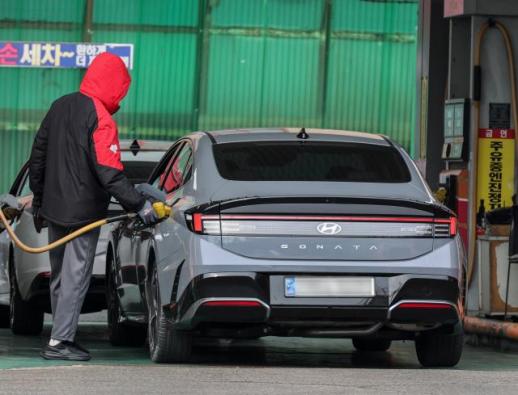 Korea's inflation steady in Feb, but at risk as it is mostly fed by soft energy prices SEOUL, March 06 (AJP) -South Korea’s inflation held steady in February despite the Lunar New Year factor - keeping consumer prices within the central bank’s 2 percent target range for a sixth straight month - but may come under pressure as the recent easing mostly came from cheaper energy prices that have reversed following the outbreak of war in the Middle East. The consumer price index rose 2.0 percent from a year earlier in February to 118.40 (2020=100), unchanged from January, according to data released Thursday by Statistics Korea. On a monthly basis, prices increased 0.3 percent, driven by gains in services, agricultural products and utilities even as industrial goods declined. Service prices rose 2.6 percent from a year earlier, with personal services climbing 3.5 percent, the fastest pace since January 2024. The increase was largely attributed to higher travel and accommodation costs during the Lunar New Year holiday. Prices for overseas package tours jumped 10.1 percent, domestic group tours 9.5 percent, and hotel accommodation 12.8 percent from a year earlier. Car rental charges surged 37.1 percent, marking the sharpest increase since related data began in 1995. Food and agricultural prices showed mixed movements. Agricultural, livestock and fishery products rose 1.7 percent from a year earlier, slowing from 2.6 percent in January. Vegetable prices dropped 5.9 percent, reflecting improved supply and a base effect from the previous year. Livestock prices rose 6.0 percent, the fastest increase in six months, with pork up 7.3 percent, domestic beef 5.6 percent, and eggs 6.7 percent. Industrial goods prices increased 1.2 percent, while processed food prices rose 2.1 percent, easing from 2.8 percent the previous month. Officials partly attributed the slowdown to seasonal Lunar New Year promotions and a base effect from last year. Petroleum prices fell 2.4 percent from a year earlier, pulling down the overall inflation rate by 0.09 percentage point as global oil prices eased. However, the recent spike in fuel prices following the outbreak of conflict in the Middle East has not yet been reflected in the February data. Gasoline prices climbed about 8 percent over the past week following U.S.-Israeli strikes on Iran that escalated into a broader regional crisis. Core inflation indicators remained slightly above the headline figure. The core CPI excluding food and energy rose 2.3 percent, while another core measure excluding agricultural products and petroleum climbed 2.5 percent. The living cost index, which tracks frequently purchased items, rose 1.8 percent, sharply lower than the near 3-percent levels seen in late 2025. The fresh food index — often referred to as “table inflation” — fell 2.7 percent from a year earlier, the sharpest decline since May last year. Officials said the stability could be disrupted by Middle East tensions that brought the Strait of Hormuz — the choke point responsible for about 80 percent of South Korea’s crude oil shipments — into focus, along with rising shipping fees from disruptions to maritime traffic. 2026-03-06 10:06:16
 -
 SB Electric Deploys SolarDoctorPatch Monitoring on Vietnam Rooftop Solar Sites SB Electric, a solar power plant specialist, has deployed its panel-level monitoring solution, SolarDoctorPatch, at rooftop solar facilities on buildings in Vietnam’s Long An province and Ho Chi Minh City. The company said the project was carried out to apply panel-level monitoring and fire-safety technology at rooftop systems at an industrial facility and a newspaper company in Vietnam. At Songwol Towel’s factory in Long An, the rooftop solar plant, with a capacity of about 148.59 kilowatts, was upgraded from inverter-level monitoring to a panel-level control system. The site also added a rapid shutdown (RSD) function designed to cut voltage in an emergency. In central Ho Chi Minh City, the technology was piloted on one of four inverter sections at the rooftop solar plant at Tuổi Trẻ newspaper, a 17.70-kilowatt system. The building is in an environment where nearby structures create shading that reduces output. SB Electric said panel-level monitoring and booster equipment confirmed improved generation efficiency in shaded areas. “For rooftop solar plants and solar installations on urban buildings, panel-level monitoring and output-optimization technology are key factors that determine operating efficiency,” an SB Electric official said. The official added that the company plans to manage an expansion of the technology’s application to commercial and office buildings in urban areas based on the latest deployment.* This article has been translated by AI. 2026-03-06 10:03:19
 -
 Chef Lee Hye-jeong Says Her Father Was First Chairman of Yuhan-Kimberly Cooking researcher and YouTuber Lee Hye-jeong, known as "Big Mama," said her father was the first chairman of Yuhan-Kimberly. A video titled "Director Jang Hang-jun! And the woman who lives with a king" was posted Tuesday on her YouTube channel, "Big Mama Lee Hye-jeong." In the video, Jang said he is from Daegu and lived there until first grade. He said he attended a private elementary school and had gone to a kindergarten that was difficult for many children to attend at the time. He added that his father ran a nylon factory in Daegu then. Lee responded that her father was from Gimcheon, North Gyeongsang Province, and built his factory in Daegwang-myeon on the site of his birthplace home. When Jang asked what kind of factory her father ran, Lee replied, "He did Yuhan-Kimberly." Jang then joked, "I shouldn’t have brought up the nylon factory," drawing laughter.* This article has been translated by AI. 2026-03-06 09:58:42
 -
 Kia EV5 GT Named Korea Auto Journalists Association’s Car of the Month for March 2026 The Korea Automobile Journalists Association said Thursday it selected the Kia EV5 GT as its car of the month for March 2026. The association’s Car of the Year selection committee evaluated the EV5 GT and JLR Korea’s updated New Defender model last month, listed in Korean alphabetical order by brand. Judging covered five areas: interior and exterior design and perceived quality; safety and convenience features; power performance; energy efficiency and greenhouse gas emissions; and overall product value and purchase intent. The EV5 GT scored 35.3 out of 50 to take the top spot. It earned 8 out of 10 in energy efficiency and greenhouse gas emissions, 7.3 in safety and convenience features, and 7 in power performance. Jeong Chi-yeon, chair of the committee, said the EV5 GT “delivers a dynamic driving feel even in an electric SUV” through strong dual-motor performance and a range of driving-focused technologies. The association has named and announced a car of the month since 2019. Last month’s winner was the Renault Korea Filante. Monthly winners advance directly to the first round of final judging for the annual Car of the Year awards, without going through the first-half and second-half preliminary reviews.* This article has been translated by AI. 2026-03-06 09:57:54
 -
 Parata Air’s Signature In-Flight Ramen and Chicken Rank Among Top Sellers Parata Air said its signature international in-flight menu items, ramen and chicken, have remained among its best-selling paid offerings. The airline said it analyzed international-route onboard sales from Nov. 17, 2025, to Feb. 25, 2026. Signature ramen accounted for 10.3% of total sales, ranking second, while chicken took fourth place with 7.4%. Beer led all items at 23%, and the top five products during the period included easy-to-eat options such as ramen and chicken, the airline said. Parata Air’s signature ramen has been a flagship onboard item since the airline began operations. On social media and online communities, it is often described as a must-try menu item for Parata Air passengers, the company said. Spicy chicken also ranked near the top, and the airline said Korean-style snack items such as ramen and chicken are drawing steady choices from passengers. A Parata Air official said customers showed a strong preference for menu items that are easy to enjoy onboard while adding to the travel experience. The official said the airline plans to expand differentiated services available only on Parata Air. 2026-03-06 09:49:52
 -
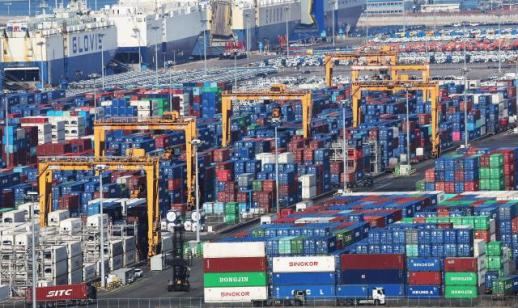 Exports feed black in Korea's C/A surplus for 33rd month in Jan, U.S. stock invest narrows SEOUL, March 06 (AJP) - South Korea extended its current-account surplus streak to a 33rd consecutive month in January, though the black figure narrowed from the record level seen the previous month as investment in overseas securities cooled from the frenetic pace of late last year. The current account surplus reached $13.26 billion in January, narrowing from $18.7 billion in the previous month, according to the Bank of Korea (BOK) on Friday. The robust surplus was fed by exports that surged 30 percent on year to $65.51 billion, more than doubling the pace of the 13-percent annual gain in the previous month. Imports also rose 7 percent from a year earlier to $50.34 billion, faster than the 1.7-percent increase recorded a month earlier. The services account remained in the red with a $3.8 billion deficit, largely weighed down by outbound travel. The travel account logged a deficit of $1.74 billion. The primary income account posted a $2.72 billion surplus. Investment income totaled $2.86 billion, down from $4.9 billion in the previous month as dividend income narrowed to $2.3 billion from $3.7 billion. The secondary income account recorded a $830 million deficit as outbound remittances from South Korea outpaced inflows from abroad. Overseas investment by South Korean residents rose $13.46 billion, easing slightly from $14.37 billion in December. Their investment still dwarfed foreign investment in Korean securities, which increased $4.69 billion — mostly in bonds — slowing from $5.68 billion the previous month. Reserve assets — assets held by state authorities to support the currency and meet foreign obligations — decreased by $4.83 billion, widening from a $4.44 billion decline a month earlier. The trade balance also revealed a heavy reliance on a few key sectors. Semiconductor exports skyrocketed 102.5 percent year on year to $20.69 billion, more than doubling in value. Shipments of information and communication devices, including smartphones, surged 66 percent to $4.48 billion. Automobile exports rose 19 percent from a year earlier to $5.74 billion, underpinned by record January sales in the United States by Hyundai Motor and Kia, driven by high-margin models such as hybrids. Ship exports fell 1.5 percent to $2.36 billion, the third consecutive monthly drop since the sector posted a 135-percent jump in October. Exports to the United States jumped 29.4 percent to $12.0 billion, sharply accelerating from 3.7 percent growth in December and a contraction in November. Shipments to China also surged 46.8 percent to $13.51 billion, up from 10-percent growth in December. Imports also reflected skewed activity in Korea's industrial sector. Purchases of precision machinery jumped 31.6 percent on year to $6.81 billion, with semiconductor manufacturing equipment accounting for nearly half of that total at $2.94 billion, a 61.7-percent surge. Imports of raw materials broadly declined. Crude oil imports fell 12.8 percent from a year earlier to $6.19 billion, while gas imports dropped 12.5 percent to $2.7 billion. 2026-03-06 09:45:47