

BTS concert ticket scalping is surging, with seats for a free Gwanghwamun performance being resold for hundreds of thousands of won and scalped tickets for an Arirang show in Goyang approaching 1 million won. The resale market has effectively turned BTS tickets into a money-making venue, industry officials said, raising doubts about whether the government’s response is working. They argue safeguards remain weak, including what they describe as a hands-off approach to online resale platforms.
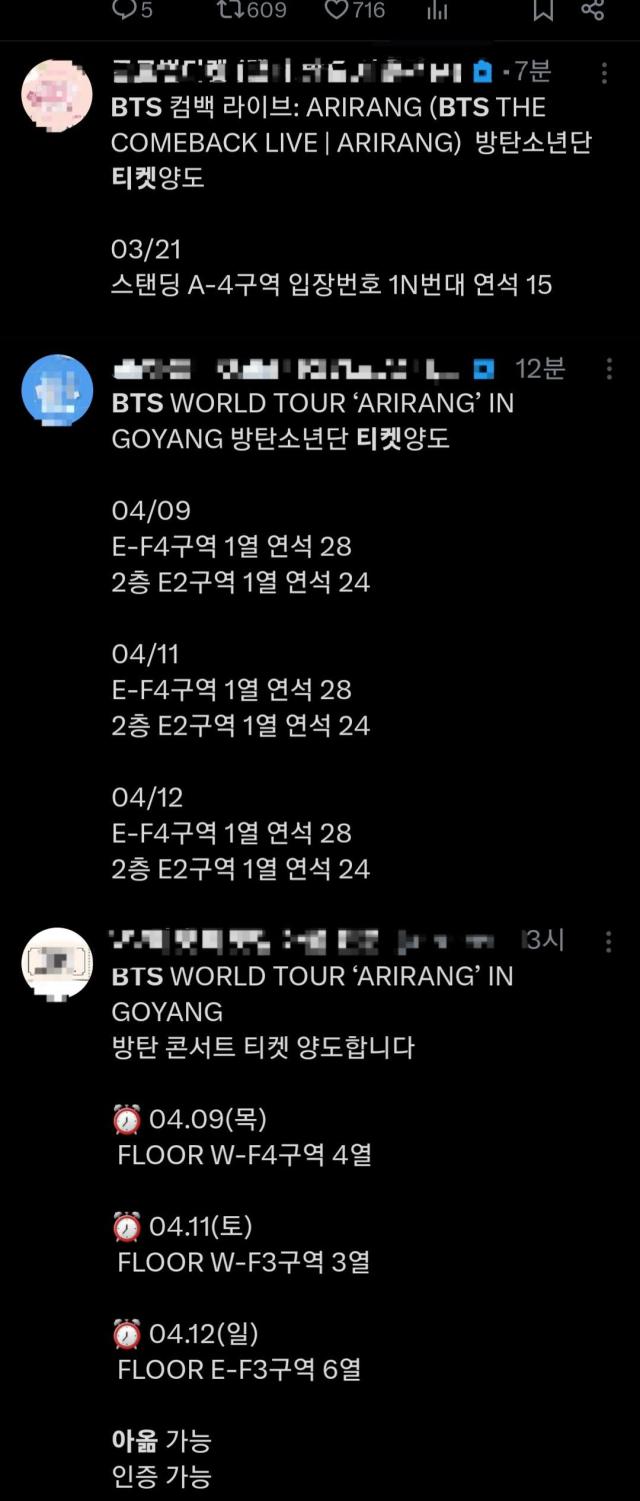
On the 6th, social media was filled with posts offering BTS tickets for resale, including seats that were originally distributed for free.
On X, resale activity was taking place openly. As of that day, posts claiming to transfer tickets for the Gwanghwamun comeback performance appeared in rapid succession, and simple keyword searches were enough to find sales channels. Sellers said they could hand over access through methods they called “account transfer” and “wristband transfer,” and sought buyers accordingly.
Despite the visibility of these transactions on social media, enforcement appeared ineffective. Industry sources criticized what they said was a market operating in plain sight despite government crackdowns.
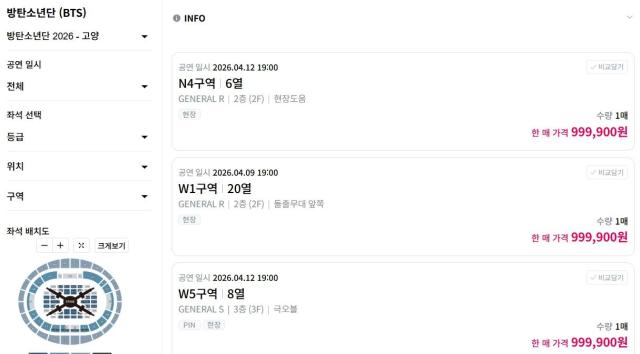
Scalped tickets are also widespread for “BTS World Tour Arirang in Goyang,” scheduled for April 9-12. Face-value prices range from 198,000 won to 264,000 won, but resale prices have jumped severalfold.
Listings were easy to find not only on social media but also on Ticketbay, described as the country’s largest ticket-transfer platform. Prices posted there ranged from 390,000 won to 999,000 won per seat — about two to three times the original price.
Sellers have also exploited Ticketbay’s “price cap” introduced in January that limits the per-ticket listing price to under 1 million won, posting tickets at 999,000 won — just 1,000 won below the ceiling. Critics said a formal cap alone is unlikely to curb scalping.
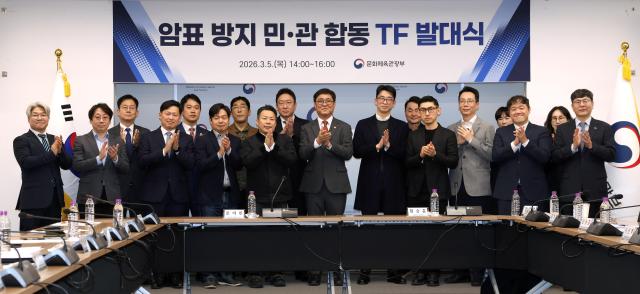
Industry officials said weak platform regulation and enforcement have left the scalping market effectively operating in the open, even as the government has recently declared a war on scalping.
Choi has described scalping as a long-standing problem in the cultural industry and has pledged a tougher response. The government has pushed revisions to the Performance Act and the National Sports Promotion Act to sharply increase penalties, including fines of up to 50 times the amount of scalped sales and provisions allowing authorities to confiscate and recover illicit profits.
But critics say the bills were prepared quickly and that detailed enforcement rules remain insufficient. On the ground, many say current measures fall short of rooting out scalping. They argue that strengthening punishment alone, while leaving online scalping platforms untouched, is unlikely to be effective.
An industry official who requested anonymity said it was welcome that recent legal revisions allow scalping to be sanctioned, but called it contradictory to say authorities will crack down while tickets are traded openly on platforms such as Ticketbay. The official said the broader ticket distribution system needs an overhaul, including tougher action against resale platforms and stronger identity verification comparable to airline ticketing.
* This article has been translated by AI.
Copyright ⓒ Aju Press All rights reserved.