
Journalist

Lim, Kwu Jin
-
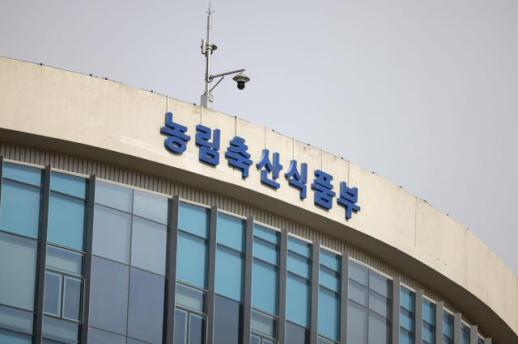 South Korea Moves to Stabilize Agricultural Film Supplies Amid Mideast War Risks As the prolonged war in the Middle East raises concerns about shortages of agricultural film, the South Korean government is launching a pilot program with private-sector partners to stabilize supplies. Under the plan, the government will work with petrochemical companies to provide raw materials to manufacturers, which will produce agricultural film and deliver it to local agricultural cooperatives. The Ministry of Agriculture, Food and Rural Affairs said Tuesday it will carry out the pilot with Jinju Horticultural Nonghyup, which operates its own film plant. The Ministry of Trade, Industry and Energy will work with Hanwha Solutions to supply raw materials for agricultural film within this week, and Jinju Horticultural Nonghyup will use them to produce film and supply it to six materials sales outlets run by local Nonghyup cooperatives. Agricultural film is used during the farming season to manage moisture, suppress weeds and block pests. In summer, farmers also use specialized film to reduce sun-scorch damage. The agriculture ministry said supplies needed for spring farming have been secured nationwide, but it sees regional imbalances. To address that, it has been working with Nonghyup to support local cooperatives in areas with low inventories. “This is the first case of producing and supplying film through cooperation with the trade ministry and Nonghyup to ensure stable supplies of agricultural film,” said Kim Jeong-uk, director general for agro-industry innovation policy at the ministry. He said the ministry will continue to monitor supply and demand and “do its best” to ensure stable supplies. * This article has been translated by AI. 2026-05-06 11:06:25
 -
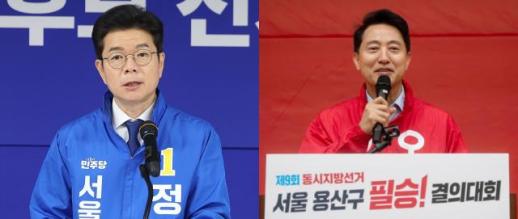 Ruling, Opposition Parties Trade Attacks in Key Races Ahead of June 3 Local Elections The ruling and opposition parties are intensifying their fight over key battlegrounds ahead of the June 3 local elections. The Democratic Party has nominated Jung Won-oh, a former Seongdong District chief, for Seoul mayor and Jeon Jae-soo, a former oceans and fisheries minister, for Busan mayor, highlighting an image of candidates who “get things done.” The People Power Party, meanwhile, is leaning on incumbency advantages and the issue of a special counsel tied to canceling indictments to rally conservative voters. Democratic Party lawmaker Park Sung-joon, People Power Party lawmaker Kim Jae-seop, Rebuilding Korea Party lawmaker Shin Jang-sik and New Reform Party lawmaker Cheon Ha-ram appeared Tuesday on CBS Radio’s “Park Seong-tae’s News Show,” trading barbs over the June 3 local elections and by-elections in contested districts. Criticism focused first on Jung, the Democratic Party’s Seoul mayoral candidate. Kim said the narrowing gap in polls reflects Jung’s slipping support rather than a consolidation of conservative voters, calling Jung’s view of Seoul “inexperienced” and “amateurish.” He said Jung’s “competent” image is deflating under scrutiny and argued that, with the indictment-cancellation issue added, “the Democratic Party will have a very hard time in Seoul.” Cheon also said Jung’s numbers in Seoul have stalled despite high presidential approval ratings, adding that questions remain about Jung, including controversy over overseas trips. Park pushed back, saying the election should test who can do the job. He said Oh “has done nothing,” asking what Oh accomplished during four terms. The Busan mayoral race also drew sharp exchanges. Park said Jeon has competitiveness as a “new product,” describing the contest as a clash between Jeon as a symbolic figure and People Power Party candidate Park Hyung-joon as an “old-era” figure. Kim countered that Jeon’s “Cartier” legal risk and a special counsel on allegedly fabricated indictments have given conservative voters a reason to turn out, saying the Busan race has “shifted a lot” thanks to the indictment-cancellation issue. Cheon added that Jeon could face growing difficulty, citing a case in which Jeon’s aide became a defendant on allegations of destroying evidence. In Pyeongtaek-eul, Gyeonggi Province, where multiple candidates are competing, the lawmakers differed on whether consolidation would occur. Kim said conflict in Pyeongtaek-eul between candidate Kim Yong-nam of the “new Lee Jae-myung” camp and Cho Kuk’s camp aligned with Roh Moo-hyun and Moon Jae-in would erupt, predicting People Power Party candidate Yoo Eui-dong would win. Shin said Yoo, despite serving three terms, failed to secure what he promised with the government and has no achievements beyond being “a Pyeongtaek person,” predicting a two-way race between Kim and Cho. Cheon said support for the president would not transfer directly to Cho and predicted that, over time, votes would move to Kim. 2026-05-06 11:02:51
 -
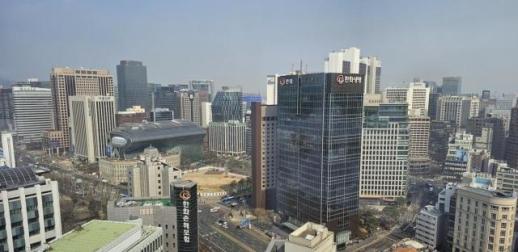 AI boom reshapes South Korea's top 500 companies by sales SEOUL, May 6 (AJP) - South Korea's top 500 companies by sales saw a major reshuffle, with 35 firms newly joining or dropping off the list amid the growing influence of artificial intelligence-related sectors including semiconductors, defense, and batteries. According to a report released Tuesday by corporate tracker CEO Score, electronics giant Samsung Electronics remained No. 1 with 333.61 trillion won (US$230 billion) in sales as of the end of last year, up 10.9 percent from a year earlier and the highest on record. Hyundai Motor ranked second with 186.25 trillion won, followed by its affiliate Kia with 114.14 trillion won. Together, the two surpassed 300 trillion won in combined sales for the first time. Korea Electric Power Corporation was fourth with 97.43 trillion won, leaving the top four unchanged from the previous year. SK hynix moved up two spots to No. 5 after posting 97.15 trillion won in sales, boosted by surging demand for high-bandwidth memory (HBM). CEO Score cited the jump as a clear example of how growth in the AI chip market is reshaping corporate rankings. Defense company Hanwha rose three spots to No. 7 on increased orders, while SK On jumped to No. 9 from No. 60 following mergers among its affiliates. SK Innovation made the biggest leap, climbing 190 places on a sharp increase in dividend income. Sales levels required to make the top 500 also rose, with the minimum threshold climbing by 733 billion won or 5.5 percent, to 1.40 trillion won, while total sales of all 500 companies grew 4.7 percent to 4,305 trillion won. Thirty-five companies newly joined the list, up two from a year earlier. They included firms that grew through mergers and acquisitions, such as Hanwha Hotels & Resorts and Sono International, as well as fast-growing players like Musinsa, a streetwear brand that has become one of South Korea's hottest fashion platforms. Meanwhile, companies in construction, shipping, and aviation sectors dropped off the list. By industry, auto and auto-parts companies made up the largest group with 49 firms, followed by IT and electronics with 39, retailers with 39, services with 38, and petrochemicals and refiners with 37. 2026-05-06 10:55:34
 -
 Trump Revives Tariff Push Using Trade Act Section 301 After Supreme Court Ruling President Donald Trump has revived his tariff drive by turning to Section 301 of U.S. trade law after the Supreme Court blocked his earlier approach. With broad tariffs facing legal limits, the administration is shifting its legal basis to keep up pressure. Inside the United States, industries are split over additional duties, while abroad the European Union has mounted open opposition. The Office of the U.S. Trade Representative said on May 5 (local time) it is holding Section 301 hearings through May 8 on what it calls structural overcapacity. The review covers 16 economies, including China, the EU, South Korea, Japan, Mexico and Vietnam. The process is meant to determine whether their policies and practices burden U.S. industry and could serve as grounds for future tariffs. In February, the U.S. Supreme Court ruled illegal global tariffs Trump imposed under the International Emergency Economic Powers Act. After that, the Trump administration imposed a temporary 10% tariff on imports worldwide and moved to rely on other trade laws, including Section 301. The current hearings are widely seen as a follow-up step. U.S. industry groups have taken opposing positions. The steel industry argued that excess capacity not only in China but also in the EU and South Korea is worsening global oversupply and that additional tariffs are needed. The American Soybean Association warned new tariffs could again disrupt U.S.-China negotiations. The footwear retail industry also opposed the move, saying it could raise consumer-goods prices. The EU responded most forcefully, urging the United States to honor existing trade agreements. After the United States warned it could raise tariffs on EU-made cars and trucks back to 25%, the EU said both sides should return to the 15% level they had agreed on. French President Emmanuel Macron said the bloc should consider, if necessary, its Anti-Coercion Instrument. South Korea, rather than escalating publicly as the EU has, emphasized market principles and restructuring efforts. In the hearing, the South Korean government said “Korea’s industrial structure is based on market-economy principles” and that “voluntary restructuring and institutional support are being carried out even for items with overproduction.” On its trade surplus with the United States, it also cited the complementarity of the two countries’ industries and cooperation on strategic investment.* This article has been translated by AI. 2026-05-06 10:55:14
 -
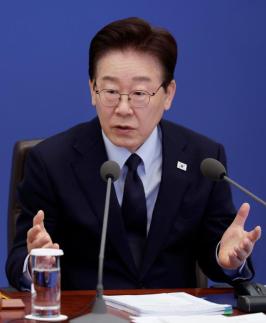 President Lee Calls for Step-by-Step Constitutional Amendments Ahead of Assembly Vote President Lee Jae-myung said Tuesday that pursuing constitutional change in stages, as agreement is reached, is the most realistic approach. Speaking at a Cabinet meeting and emergency economic review session at Cheong Wa Dae, Lee said a National Assembly vote on a constitutional amendment bill is expected to take place Wednesday. Lee said South Korea has undergone major political, economic and social changes since the current Constitution was adopted in 1987, but the Constitution has “stood still” for 40 years. He compared it to clothing that no longer fits a country that has changed and grown, arguing it needs to be altered. He added that under the current Constitution, it is difficult to fully safeguard the country’s present level, people’s living conditions and the nation’s future. At the same time, Lee said a full-scale revision would be burdensome and hard to achieve because of political interests. He urged a practical approach: do what is possible now rather than postponing everything. Lee said it should be self-evident to prevent any attempt to declare martial law illegally — when the country is not under martial law — to maintain power or pursue private interests, and to use the military to impose dictatorship. He questioned who could oppose writing “reasonable controls” on emergency martial law into the Constitution, adding that those who do oppose it are effectively defending illegal martial law. With the anniversary of the May 18 Democratic Uprising approaching, Lee said a tragedy like the Gwangju May 18 incident — in which weapons entrusted to protect the nation were used to kill citizens and destroy constitutional order — must never happen again. He said both ruling and opposition parties have publicly agreed to include the spirit of May 18 and the spirit of the Bu-Ma Democratic Protests in the Constitution’s preamble. He criticized opposition to doing so now, saying it makes no sense when there is a real opportunity to add it to the preamble. Lee also said strengthening local autonomy is something all citizens agree on, and urged political leaders to act on what they have long said in unison by putting it into practice in Wednesday’s vote. * This article has been translated by AI. 2026-05-06 10:54:21
 -
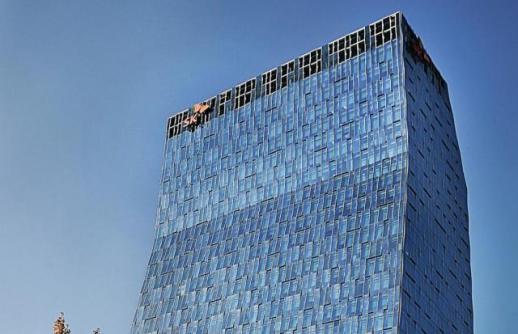 SK Telecom Added to Dow Jones Sustainability World Index, Only Korean Telecom Included SK Telecom (SKT) has been added to the 2026 Dow Jones Best-in-Class (DJ BIC) World Index, the company said Tuesday. The index is used by investors as a benchmark after assessing companies’ economic, environmental and social performance. The DJ BIC is a revamped version of the Dow Jones Sustainability Index (DJSI) following a September 2025 overhaul, and is published annually by S&P Global. SKT has been included consistently since its first entry in 2008, except in 2020. The World Index is the top tier, selecting only the top 10% by industry from about 2,500 companies worldwide by market capitalization. SKT was the only South Korean telecom included this year. SKT said the latest inclusion reflects companywide efforts including board-led accountability, supply-chain ESG management, climate response and stronger industrial safety and health measures. An SKT official called it “the result of continuously advancing our sustainability management system.” The company said it strengthened governance, including recording a 100% board attendance rate in 2024, and expanded ESG inspections, training and consulting for partner companies. It also said it is pursuing a “2050 net zero” strategy through its ESG committee, building a carbon management system that includes improving power efficiency and shifting to renewable energy. In safety and health, it said it was named an excellent company for three consecutive years in a shared-growth cooperation program. Eom Jong-hwan, head of SKT’s sustainability management office, said the company will continue to advance ESG management “to fulfill the responsibilities that come with being included in the DJ BIC World Index,” and “continue sustainable growth together with customers.” 2026-05-06 10:48:26
 -
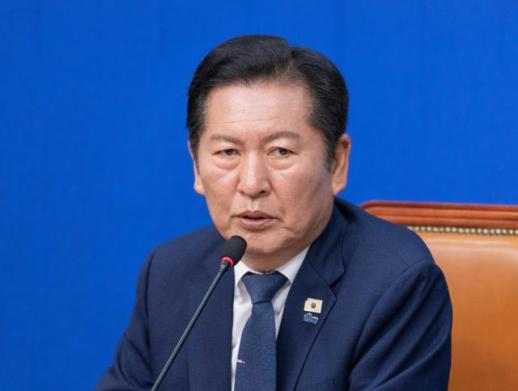 Jung Cheong-rae Says KOSPI 7,300 Reflects Lee Government’s Market, Housing Stability Jung Cheong-rae, leader of the Democratic Party, said Tuesday that the KOSPI’s first-ever move above 7,300 was an “astonishing figure,” attributing the rise to restored confidence in South Korea’s capital markets. Speaking at a party leadership meeting at the National Assembly, Jung said the price-to-book ratio, or PBR, was 0.8 under the Yoon Suk Yeol government but has now climbed above 2.0. He said the market’s rise could be read as a sign that state affairs are stable and “Korea risk” has faded, adding that trust in President Lee Jae-myung’s governance is driving the rally. Jung also pointed to Lee’s repeated Facebook posts expressing a strong commitment to stabilizing home prices, arguing that expectations of a steadier real estate market are lifting stocks. He criticized the People Power Party for what he called ideological attacks on the Lee government, saying it should “change its mind quickly” and join what he described as a period of rising national fortunes. On constitutional revision, Jung urged the party to cooperate with passage of a proposal ahead of a planned vote at the National Assembly plenary session on May 7. The People Power Party has labeled the effort a rushed revision aimed at elections. Jung said constitutional change should ultimately be decided by voters in a national referendum. With the party opposing the measure as an official position, the Democratic Party and National Assembly Speaker Woo Won-shik have called for a free vote. Jung also attacked the People Power Party’s nominations for the June 3 local elections and parliamentary by-elections, calling them “Yoon-again” nominations. He said the party nominated Choo Kyung-ho and Lee Jin-sook, and claimed it would nominate Chung Jin-suk, whom he described as the last chief of staff to Yoon Suk Yeol. “If so, then nominate Yoon Suk Yeol from prison, too,” Jung said. He added, “On Dec. 3, they staged an insurrection with guns and swords. On June 3, are they going to stage an insurrection through nominations?”* This article has been translated by AI. 2026-05-06 10:40:40
 -
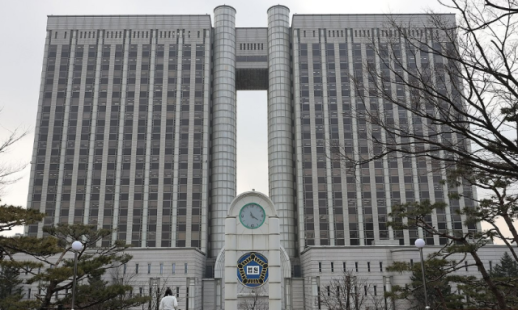 Judge in Kim Keon Hee Appeal Case Found Dead Near Seoul High Court Shin Jong-oh, a presiding judge at the Seoul High Court who oversaw the appeal trial in first lady Kim Keon Hee’s case involving alleged Deutsch Motors stock manipulation and other charges, was found dead early Tuesday. He was 55. According to legal circles, police were dispatched around midnight after Shin’s family reported they could not reach him. Officers found him about 1 a.m. near the court complex in Seocho-dong, Seocho District, Seoul. He was taken to a hospital, where he was pronounced dead. Police said they believe Shin jumped and are investigating the exact circumstances of his death. They said no signs of criminal activity have been found so far. A note was also found at the scene, according to reports. It was said to include an apology and a statement to the effect that he was leaving on his own. It reportedly did not mention Kim’s case or the trial. Shin’s panel, the Seoul High Court’s Criminal Division 15-2, on April 28 sentenced Kim to four years in prison and fined her 50 million won on appeal on charges including violations of the Capital Markets Act. The sentence was sharply increased from the first trial’s prison term of one year and eight months. The appeals court reversed part of the lower court’s not-guilty finding and convicted her on some allegations of involvement in the Deutsch Motors stock manipulation. It also found her guilty of receiving money and valuables from the Unification Church side in connection with alleged solicitation. Shin, who was from Seoul, graduated from Sangmoon High School and Seoul National University’s law department. He passed the 37th bar exam in 1995 and served at courts including the Uijeongbu branch of the Seoul District Court, the Ulsan District Court, the Seoul High Court and the Daegu High Court. ※ If you are struggling with depression or have concerns that are difficult to talk about, or if you know a family member or friend who is having a hard time, you can reach the suicide prevention hotline at 109 for 24-hour counseling by professionals.* This article has been translated by AI. 2026-05-06 10:35:52
 -
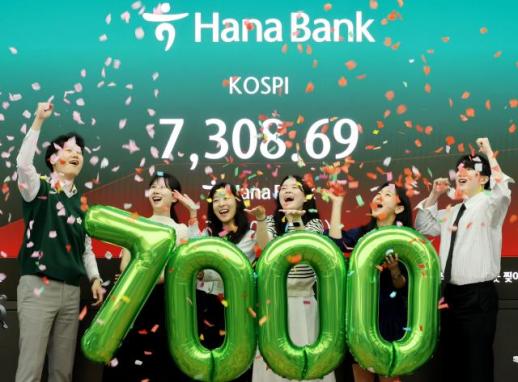 KOSPI rockets above 7,300 in record-breaking chip rally *Updated with performance of other Asian markets. SEOUL, May 06 (AJP) - What once seemed improbable has rapidly become reality as South Korea’s benchmark KOSPI vaulted above the 7,300 mark on Wednesday, just three weeks after reclaiming the 6,000 level as feverish foreign buying turbocharged semiconductor and AI infrastructure stocks despite lingering uncertainty surrounding the Strait of Hormuz crisis. As of 10:09 a.m., the KOSPI stood at 7,325.31, up 5.60 percent from Monday’s close, after surging to an intraday high of 7,338.61 earlier in the session. Foreign buying total 1.25 trillion won, overwhelming local selling. The celebration however was heavily skewed with losers outnumbering gainers by 674 to 204. The move marked the index’s first break above the 7,300 threshold and underscored the extraordinary pace of the rally after the KOSPI first crossed the 6,000 mark on Feb. 25. The Korean won also recovered to near pre-war levels in the 1,450 range against the U.S. dollar. The dollar-won exchange rate fell to 1,457.70 won from 1,462.8 won in the previous session. The KOSPI has remained remarkably resilient despite the Middle East war and South Korea’s heavy dependence on Gulf energy imports for manufacturing and exports. The benchmark first broke above 4,000 in October last year, topped 5,000 in January and crossed 6,000 a month later, before storming into the 7,000 era within barely half a year. The latest leg higher followed another record-setting session on Wall Street overnight, where both the S&P 500 and the Nasdaq Composite closed at all-time highs as easing oil prices and optimism surrounding AI-driven semiconductor demand outweighed lingering geopolitical concerns in the Middle East. Investor sentiment improved after reports indicated that the fragile ceasefire between the United States and Iran was largely holding despite intermittent clashes, easing fears of supply disruptions and pushing oil prices lower. West Texas Intermediate crude futures fell 3.90 percent to settle at $102.27 a barrel. Technology shares led gains in the United States. Intel jumped nearly 13 percent on news of fresh semiconductor supply negotiations with Apple, while the Philadelphia Semiconductor Index soared 4.23 percent. Advanced Micro Devices surged another 15 percent in after-hours trading after posting strong first-quarter earnings. The global semiconductor rally spilled into Seoul, fueling aggressive buying in chip-related shares. Samsung Electronics surged 12.26 percent to 261,000 won, while SK hynix jumped 9.68 percent to 1,587,000 won, with both hitting fresh intraday record highs. SK Square, the largest shareholder of SK hynix, soared 10.80 percent to break above the 1 million won mark. Brokerage firms also rallied sharply on expectations that surging trading activity would boost commissions and earnings. Mirae Asset Securities jumped 15.22 percent to a fresh 52-week high, while Kiwoom Securities advanced 10.06 percent. Automakers and battery-related shares also traded higher, with Hyundai Motor gaining 3.34 percent, Kia rising 1.69 percent and LG Energy Solution adding 0.11 percent. Defense and shipbuilding-related shares, however, lagged behind the broader market rally. Hanwha Aerospace fell 1.30 percent, while HD Hyundai Heavy Industries slipped 4.26 percent. HMM also declined 1.65 percent after a fire broke out aboard one of its cargo vessels anchored near the Strait of Hormuz on Monday, adding another layer of uncertainty to already fragile global shipping routes. Meanwhile, the tech-heavy KOSDAQ bucked the broader rally, slipping 0.90 percent to 1,202.83. Elsewhere in Asia, Japanese markets remained closed for the Golden Week holiday. Hong Kong’s Hang Seng Index traded higher, rising 0.54 percent to 26,037.53 and China’s Shanghai Composite Index also advanced, gaining 1.05 percent to 4,155.44. 2026-05-06 10:34:14
 -
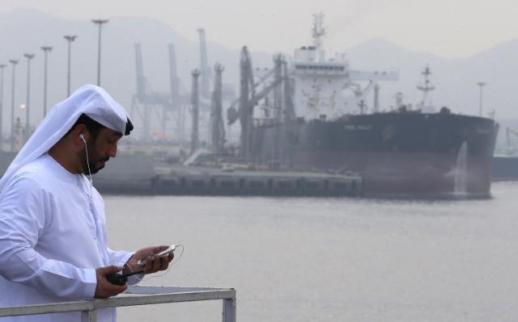 UAE: Strategic Neighbor or Hostile Adversary to Iran? When analyzing the Middle East, one of the most dangerous attitudes is to simply label a country as being on one side or another. Iran is a Shia revolutionary state, while Saudi Arabia and the UAE are Sunni Gulf monarchies. Israel is Iran's primary security adversary, and the United States traditionally serves as the security guardian for the Gulf monarchies. On the surface, the dynamics appear clear: Iran versus anti-Iran, Shia versus Sunni, Persia versus Arab, revolutionary republic versus monarchy.However, the reality of the Middle East is far more complex. The actions of the UAE exemplify how multifaceted and calculated today's Middle Eastern order is.Recently, while denying UAE claims that Iranian forces attacked, Iran warned of "devastating retaliation" if military actions targeting Iranian ports and coasts were initiated from UAE territory. The UAE claimed to have intercepted missiles and drones from Iran and reported a fire at an oil facility in Fujairah, which Iran denied. The key point here is not just the dispute over facts. Iran, while asserting "we did not do it," simultaneously pressures the UAE by stating, "We will not tolerate you becoming a military base for the U.S. and Israel." This reflects Iran's strategic language: denial serves diplomatic purposes, while warnings are meant for deterrence.The UAE's situation is even more complicated. While claiming to have been attacked, it refrains from direct military retaliation. This is not solely due to fear. The UAE is a small but wealthy nation. Dubai's finance, Abu Dhabi's energy, Fujairah's ports, advanced logistics, tourism, and international capital trust are crucial for national survival. A full-scale conflict with Iran could destabilize the UAE's core. Although Iran faces economic difficulties and international sanctions, it possesses missiles, drones, the Revolutionary Guard, and asymmetric naval capabilities. If the UAE retaliates once, Iran could respond with an even greater retaliation, which would simultaneously disrupt international insurance rates, shipping costs, port traffic, oil transport, and foreign investment sentiment. Therefore, the UAE's choice is to "express anger but avoid escalation." This is not submission but calculation.At the center of this calculation are the Strait of Hormuz and Fujairah. The Strait of Hormuz is a critical artery for global energy flows. Iran controls the northern coastline, while the UAE operates ports and energy transport networks on the southern side. Fujairah serves as a strategic port that circumvents risks associated with the Strait of Hormuz, yet it remains within the range of Iranian missiles and drones. Geography dictates fate in the Middle East. From a South Korean perspective, the UAE appears as a gateway to the region, a hub of advanced cities and investment, but its territory faces the vast Persian state of Iran. The reason the UAE strongly opposes Iran yet does not cross the threshold into war lies here. Small powers in the Middle East do not survive solely through courage; they endure through a sense of balance.At the root of the Iran-UAE relationship lies sectarian issues. Iran is a Shia revolutionary state. Since the Islamic Revolution in 1979, Iran has defined itself not merely as a nation-state but as a country with a revolutionary ideology. In contrast, the UAE and other Gulf monarchies are based on Sunni monarchical order. Iran positions itself as the center of a resistance axis against the West and Zionism, while the Gulf monarchies regard Iran as a "exporter of revolution that could destabilize their regimes." However, religion is merely a facade; the underlying issues are power and security. When Iran warns the UAE not to become a "nest for the U.S. and Zionists," it may sound like a religious condemnation, but the core message is a military warning. Iran fears that the UAE could become a hub for U.S. and Israeli intelligence, air defense, and naval operations.Additionally, historical tensions between Persia and the Arabs complicate matters. Iran is a nation with memories of the ancient Persian Empire. Throughout its long history—from the Achaemenid, Sassanid, Safavid, Qajar, and Pahlavi dynasties to the Islamic Republic—Iran has viewed itself not as a peripheral nation in the Middle East but as the center of civilization. The UAE, a modern state that gained independence in 1971, has rapidly become a global hub through its strategies in finance, ports, energy, aviation, investment, and advanced cities. The deep civilizational state of Persia and the emerging commercial state of the Arabs face each other across the Persian Gulf. They cannot ignore each other, nor can they fully trust one another.Another deep-seated issue is the dispute over the islands of Abu Musa, Greater Tunb, and Lesser Tunb. Iran seized these islands during the process of Britain's withdrawal from the Gulf in 1971, and the UAE still views this as an occupation of its territory. These islands are not merely subjects of territorial disputes; they are strategic points that can monitor the entrance to the Strait of Hormuz. For Iran, they represent a defensive line for the Persian Gulf, while for the UAE, they are an old thorn in its national security. Thus, the relationship between the UAE and Iran is not simply diplomatic; it intertwines cooperation and hostility, trade and security, religion and territory, history and reality.This complexity is also evident in the relationship between the UAE and Saudi Arabia. Both countries are Sunni Gulf monarchies that are wary of Iran. However, it is a misconception to view the UAE as a subordinate partner to Saudi Arabia. The recent UAE withdrawal from OPEC and OPEC+ dramatically illustrates this point. The UAE announced its departure from OPEC and OPEC+ on April 28, 2026, with the withdrawal taking effect on May 1. This marked a significant decision ending nearly 60 years of membership in OPEC. The UAE cited its long-term economic strategy, energy production capacity, and independent production policies as reasons for its exit.This decision is not merely a shift in oil policy; it is a declaration of independence from the Saudi-centric Gulf energy order. Saudi Arabia has long been the de facto leader of OPEC, and its oil policies have set the standard for Gulf order. However, the UAE has grown its production capacity and has been dissatisfied with being constrained by OPEC's production quotas, despite its ability and willingness to sell more oil. From the UAE's perspective, to invest in future cities, artificial intelligence, defense, finance, space, and renewable energy, it needs to maximize current earnings. This has led to a clash between Saudi Arabia's long-term price management strategy and the UAE's market share expansion strategy.Moreover, this withdrawal comes amid the backdrop of the Iran war and Gulf security instability. According to Reuters, the UAE has stated that it is reviewing its multilateral relationships following its OPEC exit but has drawn the line at planning further withdrawals. This indicates that the UAE is not merely leaving OPEC; it is recalculating existing frameworks that do not align with its national security and economic interests. If the UAE believes that traditional multilateral frameworks like the Gulf Cooperation Council, Arab League, and OPEC are insufficient shields against Iranian military pressure, it will no longer entrust its national fate to formal alliances.Thus, the UAE's OPEC exit carries three significant implications: first, a strategic differentiation from Saudi Arabia; second, a weakening of the OPEC-centered oil order; and third, an enhancement of the UAE's strategic autonomy. The UAE no longer wishes to remain a "wealthy small state in the Gulf." It aims to control its energy production, weave a multilayered network with the U.S., Israel, South Korea, India, China, and Europe, and establish itself as a logistics, finance, defense, and technology hub in the Middle East. It seeks to confront Iran while avoiding full-scale war, cooperate with Saudi Arabia without becoming dependent, and partner with the U.S. without complete reliance. This is the UAE's survival strategy.In this context, the UAE is neither an ally of Iran nor an absolute enemy. It is not a younger sibling of Saudi Arabia, nor is it a rival that has split from Saudi Arabia. The UAE is a security partner of the U.S., but it is not a satellite state that follows only American orders. The UAE has normalized relations with Israel but has not abandoned its identity in the Arab and Islamic world. The UAE is one of the most pragmatic countries in today's Middle East, balancing principles, securing interests, diversifying risks, and seizing opportunities. It warns Iran not to "cross the line," asserts to Saudi Arabia that "we will determine our share," and proclaims to the world that "the gateway to the Middle East is us."This is where the significance of the relationship between South Korea and the UAE grows. South Korea and the UAE are not merely trade partners. They share a strategic partnership that encompasses nuclear power, energy cooperation, defense industry collaboration, construction, infrastructure, finance, digital technology, content, artificial intelligence, and the space industry. The Comprehensive Economic Partnership Agreement (CEPA) between South Korea and the UAE is a mechanism to institutionalize this relationship. The CEPA was signed on May 29, 2024, making the UAE the first Arab country to enter into a comprehensive economic agreement with South Korea. It encompasses not only tariff reductions but also a framework covering goods, services, investment, energy, supply chains, and digital cooperation. The South Korean Customs Service has also described the UAE CEPA as a means to expand market entry into the Middle East and enhance cooperation with resource-rich countries.The UAE holds special significance for South Korea. First, it is a partner in energy security. South Korea relies heavily on energy imports, and instability in the Middle East can simultaneously pressure prices, industrial production, trade balances, and exchange rates. Cooperation with the UAE can extend beyond stable procurement of crude oil and gas to include hydrogen, renewable energy, nuclear power, and carbon reduction. Second, the UAE serves as a hub for South Korea's defense industry in the Middle East. Middle Eastern countries are keenly interested in modernizing their defense capabilities due to threats from Iranian missiles and drones, maritime security concerns, and urban air defense needs. South Korea can expand defense cooperation based on cost-effectiveness, delivery timelines, and technological reliability. Third, the UAE acts as a platform for South Korean companies to enter the Middle East, Africa, and South Asia. From bases in Dubai and Abu Dhabi, South Korean firms can connect to Saudi Arabia, Qatar, Oman, Kuwait, Egypt, India, and East Africa.However, South Korea must not view the UAE merely as a "good market." The UAE is a land of opportunity but also a point of risk. Should Iran directly pressure the UAE, South Korean companies' construction sites, logistics networks, oil transport, financial transactions, and insurance costs could all be affected. As South Korea strengthens defense and energy cooperation with the UAE, Iran may perceive South Korea as part of the U.S., Israel, and Gulf camp. Therefore, South Korea's Middle East strategy should not become a simplistic diplomacy that leans toward one side. While deepening strategic cooperation with the UAE, it must also maintain diplomatic channels with Iran. It should leverage the competition between Saudi Arabia and the UAE without getting entangled in the emotions of either side. While technological cooperation with Israel is necessary, the sentiments of the Arab and Islamic world must not be overlooked.South Korea's direction with the UAE is clear. First, energy security cooperation should expand from a focus on crude oil imports to a joint strategy for future energy. Building on the successful experience of the Barakah nuclear power plant, the scope of cooperation should widen to include nuclear operation, maintenance, workforce training, small modular reactors, hydrogen production, carbon capture, and power grid stabilization. The UAE is an energy-producing country, while South Korea possesses energy technology and industrial manufacturing capabilities. Together, they could form a powerful combination in the Middle East's energy transition market.Second, defense cooperation should evolve from mere arms sales to a collaborative security ecosystem. The threats faced by the UAE are not traditional tank warfare but include drones, missiles, maritime unmanned systems, cyberattacks, and terrorism targeting ports and refineries. South Korea has significant opportunities for cooperation in areas such as Cheongung, radar, air defense, naval vessels, unmanned systems, cybersecurity, and integrated command systems. However, South Korea should be cautious about expressions that may appear as an aggressive military alliance. It is essential to assist in strengthening the UAE's defensive capabilities without appearing as a war coalition directly targeting Iran.Third, industrial cooperation utilizing the CEPA should be meticulously designed. Simply looking at the effects of tariff reductions is too narrow. The UAE serves as a logistics, finance, exhibition, certification, and investment platform in the Middle East. The South Korean government and private sector should create a joint support system to help small and medium-sized enterprises enter halal markets, Arabic-speaking markets, and African markets through the UAE. K-content, online gaming, healthcare, education, smart cities, security, food, beauty, construction materials, and green technologies should all be transformed into practical export platforms through the CEPA.Fourth, preparations should be made for energy market volatility following the UAE's OPEC exit. If the UAE gains the freedom to expand production outside OPEC, there may be short-term expectations for increased supply. However, competition with Saudi Arabia, risks from the Iran war, instability in the Strait of Hormuz, and competition with U.S. shale could lead to significant fluctuations in oil prices. South Korea should strengthen long-term supply contracts, strategic reserves, joint storage facilities, crude oil and gas swaps, and emergency logistics route discussions with the UAE. Energy is about security, not just price. While it is important to buy when prices are low, ensuring uninterrupted supply during crises is even more crucial.Fifth, South Korean diplomacy should read the new order in the Middle East through the UAE. The old Middle East structure centered around Saudi Arabia, with Iran as the opposing axis and the U.S. managing the situation, has become much more complex. The UAE is strengthening its independent course, Saudi Arabia is pursuing industrial transformation through Vision 2030, Qatar is leveraging mediation diplomacy and gas hegemony, Iran maintains asymmetric military power despite sanctions, and Israel has deeply integrated into the regional order through technology, intelligence, and military strength. In addition, China, India, Russia, Europe, and the U.S. are all involved with their respective interests. South Korea must focus on structures rather than emotions in this complex landscape.Ultimately, the UAE's present reflects the future of the Middle East. It confronts Iran but does not sever ties. It cooperates with Saudi Arabia but does not become dependent. It leaves OPEC but does not disappear from the energy market. It partners with the U.S. while enhancing its autonomy. It collaborates with Israel but maintains its Arab identity. It broadens economic cooperation with South Korea while carrying the shadow of war risks. This is the UAE's intricate calculation.South Korea must read this calculation with a clear mind. It is right to regard the UAE as a strategic partner. However, a strategic partnership is not merely about applause; it involves understanding the risks of the partner and protecting our national interests within those risks. The reasons the UAE does not retaliate directly despite being attacked by Iran, why it has withdrawn from the Saudi-centric OPEC order, and why it seeks to partner with Asian industrial nations through the CEPA all converge into one: a national strategy that pursues both survival and prosperity.The Middle East may always appear as a sea of injustice, but beneath it flows a cold calculation. Iran seeks to expand its space through threats, Saudi Arabia maintains order through oil and religious authority, and the UAE aims to seize the future through capital, technology, and ports. South Korea must establish a practical strategy rather than sentimental diplomacy on this complex chessboard. It should deepen cooperation with the UAE while managing the Iran risk, maintain balance with Saudi Arabia, and leverage both the U.S. security network and the Asian economic network.The UAE is not an ally of Iran, but it cannot completely make Iran an enemy. The UAE is a brother nation to Saudi Arabia, yet it does not wish to remain a subordinate partner. The UAE is a strategic partner of South Korea, but it is not a safe zone that South Korea can enter thoughtlessly. This contradiction and balance hold the truth of the Middle East. Truth lies in seeing complex structures rather than simple divisions, justice in understanding the survival calculations of small nations, and freedom in designing one's own path without being dragged into others' games.What the UAE is doing now is precisely that. South Korea should do the same. 2026-05-06 10:33:31