
Journalist

Lim, Kwu Jin
-
 Trump Says Iran Talks Advancing, Pauses Hormuz ‘Project Freedom’ Operation U.S. President Donald Trump said he would temporarily suspend a military operation tied to the Strait of Hormuz, citing progress in negotiations with Iran. In a post Monday on his social media platform Truth Social, Trump said “Project Freedom,” which he described as referring to ship movements through the Strait of Hormuz, would be paused for a short period “to determine whether a final agreement can be concluded and signed.” He said the decision took into account requests from Pakistan and other countries, what he called “tremendous success” in U.S. military operations against Iran, and “substantial progress” toward a “complete and final” agreement with Iranian representatives. The move suggested Trump is putting greater emphasis on ceasefire talks after launching the escort operation for commercial vessels transiting the strait a day earlier. Trump added that maritime blockade measures against Iran would remain in place, indicating the United States would keep its core pressure point — control over shipping through the Strait of Hormuz — while deciding next steps based on whether talks continue to advance. In an interview with Fox News the previous day, Trump issued a stark warning about the “Project Freedom” operation to help commercial ships he said were trapped in the Strait of Hormuz, saying that if Iran tried to target U.S. vessels, Iran’s military would “disappear from the face of the Earth.” 2026-05-06 08:12:13
 -
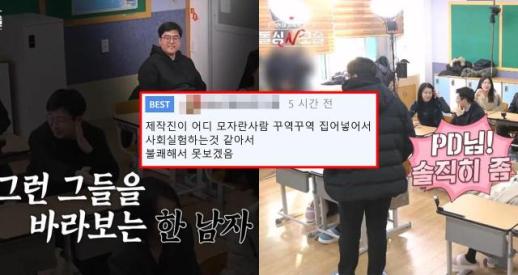 ‘Dolsing N Mosol’ Contestant George Sparks Backlash After Zero Votes, On-Air Outburst A surprise on-air moment involving George, a contestant who received zero votes on MBC every1 and E Channel’s dating show “Dolsing N Mosol,” drew sharp reactions on online communities. On the 6th, posts about “George, who got zero votes in the couple selection,” spread across multiple online forums. In the episode, as other participants discussed their date plans, George stood up saying he was going to the restroom, then suddenly stopped. Turning to the group, he asked, “Why didn’t you choose me?” When Camellia responded, “If you want to ask someone, ask just one person,” he said he wanted to ask everyone. As the cast appeared taken aback, George brushed it off, saying, “Ah, never mind, whatever,” then abruptly called for the producer in charge and held a one-on-one meeting. He told the producer, “There’s a part of me that feels a bit upset. To be honest, I’m already thinking, ‘Should I use an exit strategy and go home?’” He added, “My family is a professional family, and I come from a family where my hands are precious, so I think, ‘Why didn’t the woman I want show up?’ That makes me not want to do this.” He continued, “Of course, I’m arrogant and I’m not 100% objective about myself, but even though I tell myself not to be that way, I’m human and those feelings come up,” adding, “I’m saying my morale dropped a bit. I know you did your best for me.” After the scene aired, commenters called him “a type of contestant never seen before on a dating program.” Some wrote, “I’m going to believe he’s an actor planted by the production team,” and, “It feels like they’re running a social experiment by forcing in someone who’s lacking, and I can’t watch because it’s unpleasant.” Another said the show should be used “as an educational program to teach people with low social intelligence or poor awareness that others don’t like this kind of behavior.” Others added, “He doesn’t even realize he’s the problem, so there’s nothing to do,” “It doesn’t seem like he has even 10% self-awareness,” and, “Being inexperienced in dating is the least of it — he seems to have various personality issues.” 2026-05-06 08:09:04
 -
 Foreign Investors Chase Surging Korean Stocks, Led by Samsung Electronics ◆Aju Economy top stories ▷Foreign investors jump on momentum, concentrating net buying in soaring shares -According to the Korea Exchange on May 5, the top 10 stocks most heavily net-bought by foreign investors on the main KOSPI market at the end of last month all posted positive returns compared with the end of March. -The biggest foreign net buy on the KOSPI last month was Samsung Electronics, totaling 1.3231 trillion won. Over the same period, the stock jumped 32%, to 220,500 won from 167,200 won. -SK hynix, the No. 2 net-buy, rose 59%. With Samsung Electronics and SK hynix reporting record first-quarter results, expectations that semiconductor earnings will keep improving appear to have lifted share prices. -On the KOSDAQ, foreign money flowed into growth stocks. Many of the top net-bought names were tied to semiconductor equipment, AI semiconductors and biotech, and posted sharp gains. -In particular, many of the KOSDAQ’s top net-buy picks have shifted toward semiconductor equipment, materials and AI infrastructure, underscoring a trend of capital concentrating in “core supply chains” even within growth industries. Securities firms said foreign inflows are moving around two main themes: AI and semiconductors, and power infrastructure. ◆Key report ▷Why the KOSPI is surging: Semiconductors are beating high oil prices -The AI-driven semiconductor rally is continuing. The Philadelphia Semiconductor Index has surged 55% since the start of the year, far outpacing gains in the “M7” and the Nasdaq index. -The rally is also providing strong momentum for the economies and stock markets of major chip-producing countries such as South Korea and Taiwan. Another key point is that the semiconductor rally is offsetting the shock from high oil prices. -In past periods of high oil prices, global markets — especially South Korea’s — typically showed vulnerability. This time, an exception is emerging. iM Securities said the main reason the KOSPI can rally strongly, unlike in previous high-oil periods, is a sharp increase in the semiconductor trade surplus that more than offsets the oil trade deficit. -The report said oil prices are expected to remain elevated, fluctuating around $100, but given the semiconductor cycle, the gap between the semiconductor trade balance and the oil trade balance is likely to stay positive, with room for the surplus to widen further. -It added that a proxy for South Korea’s terms of trade — the difference between the semiconductor price increase rate and the oil price increase rate — is also likely to remain positive for a considerable period, supporting expectations for strong momentum in the domestic economy and stock market in the second half even amid high oil prices. ◆Major disclosures after the close (May 4) ▷Stage One Entertainment: 1 billion won third-party allotment rights offering ▷GS E&C: Won 680 billion contract for Seocho Jinheung Apartments reconstruction project ▷Lotte Chilsung: Q1 operating profit 47.8 billion won, up 91.2% from a year earlier ▷Pan Ocean: Q1 operating profit 140.9 billion won, up 24.4% from a year earlier ◆Fund flows (as of April 29, excluding ETFs) ▷Domestic equity funds: +28.1 billion won ▷Overseas equity funds: -86.5 billion won ◆Key events today (May 6) ▷South Korea: Consumer Price Index (April) ▷China: Caixin services PMI (April) ▷United States: ADP private employment report (April) ▷Eurozone: Producer Price Index (March)* This article has been translated by AI. 2026-05-06 07:45:19
 -
 Coupang Posts 2nd Straight Quarterly Revenue Dip; Q1 Operating Loss Tops 350 Billion Won Coupang Inc., the parent of South Korean e-commerce company Coupang, posted an operating loss of about 350 billion won in the first quarter, its largest in about four years and three months since 2021. Revenue rose from a year earlier, but growth slowed to its weakest pace since the company’s New York listing, and profitability swung back into the red. In a first-quarter consolidated filing submitted to the U.S. Securities and Exchange Commission on Tuesday (Korea time), Coupang reported revenue of $8.504 billion, up 8% from $7.908 billion a year earlier. Using the average won-dollar exchange rate of 1,465.16 won in the quarter, revenue was 12.4597 trillion won, up 8% from 11.4876 trillion won. However, quarterly revenue fell from the previous quarter for a second straight period, following 12.8103 trillion won in the fourth quarter of last year. The company’s first-quarter revenue growth rate was 8% on a constant-currency basis, the lowest since Coupang listed on the New York Stock Exchange in 2021. It was also the first time the quarterly growth rate fell to a single digit; the previous low was 14% in the fourth quarter of last year. Coupang reported an operating loss of $242 million (354.5 billion won), reversing a year-earlier operating profit of $154 million (233.7 billion won). The operating loss was about 52% of the company’s full-year operating profit last year of 679.0 billion won. Net loss was $266 million (389.7 billion won), compared with net profit of $114 million (165.6 billion won) a year earlier. The results also missed market expectations. Bloomberg’s consensus forecast called for revenue of $8.511 billion, an operating loss of $39.27 million and a net loss of about $100 million. Some foreign media had projected revenue of about $8.6 billion and an operating loss of roughly $44.94 million. With the operating loss coming in about five to six times larger than forecasts, Coupang shares weakened in after-hours trading in New York immediately after the earnings release. As of 5:10 a.m., the stock was down about 3% to 4% in after-hours trading from the regular-session close.* This article has been translated by AI. 2026-05-06 06:36:19
 -
 Trump says Korean cargo ship attacked in Strait of Hormuz after sailing alone U.S. President Donald Trump said a Korean cargo ship was attacked by Iran in the Strait of Hormuz after operating on its own, apart from a protected group of vessels. According to Yonhap News Agency, Trump said at a White House event on May 5 local time that South Korea gets 43% of its oil through the Strait of Hormuz, adding that a Korean ship was attacked because it was not in a convoy. “They weren’t in the line of ships and they decided to go alone,” he said. “And their ship got smashed yesterday.” Trump also claimed that ships protected by the United States were not attacked. South Korea’s government has said the cause of the explosion and fire on the vessel Namuho has not yet been determined. Trump, however, has described the incident since the previous day as an Iranian attack and has urged South Korea to contribute to easing tensions in the Strait of Hormuz. In a phone interview the same day with an ABC reporter, Trump repeated that it was a Korean ship “sailing alone,” and said multiple shots were fired at it, adding that South Korea should take action in response. The United States on May 4 launched what it called a “Liberation Project” to help commercial ships trapped in the Strait of Hormuz escape. That day, the U.S. military said Iran used missiles and fast boats to attack commercial vessels and that U.S. forces repelled the attacks, heightening fears the ceasefire could collapse. Iran resumed attacks against targets including the United Arab Emirates, the report said. Asked what would constitute an Iranian violation of the ceasefire, Trump said, “We’ll know soon,” adding, “They know what they have to do, and more importantly, what they must not do.” Trump urged Iran to “make a smart choice,” saying, “Because we don’t want to go in and kill people,” and insisted Iran should “wave the white flag of surrender.” He also said Iran had no chance of winning the war, referring to the conflict as a “little skirmish.” * This article has been translated by AI. 2026-05-06 06:27:16
 -
 What I Learned Reporting in the Field on Investigations Investigative teams across the media industry are steadily shrinking. Newsrooms squeezed by breaking-news competition and daily workloads are finding it harder to justify reporting that requires time, staffing and money. Major newspapers once known for investigations have shut related departments, and large broadcasters in recent years have cut investigative units to about half their previous size. With daily assignments piling up, long-form investigations are increasingly pushed aside, and it is difficult to sustain deep reporting amid a constant stream of briefs and spot news. Even so, some outlets are trying new approaches. The Dong-A Ilbo’s “Hero Squad” and the Hankook Ilbo’s “Excellence Lab” share pitching authority with beat reporters and, once an idea is approved, assign the reporter to a dedicated team for months to work with digital staff. The model is designed to give dormant ideas a path to publication. In an environment where straight news can look similar across outlets, these efforts reflect a belief that differentiation comes from deeper planning — and that reader response and newsroom support follow. Aju Business Daily formed its investigative team, “Balpum,” in the same spirit. Its first project, in March, examined false rental listings for monthly leases and jeonse-style deposits. A reporter went into the field posing as a young job seeker looking for a room with a 1 million won deposit. After visiting 30 real estate offices in Seoul, the reality did not match what appeared on property apps. The listings shown online were not the rooms presented in person, and terms shifted on site. The gap between the app screen and the field was larger than expected — and young renters were caught in that gap. Some details simply could not be captured through documents or statistics. Inside a car with the windows closed, amid the sharp smell of e-cigarette smoke, the words of an assistant broker — and the order and attitude in which rooms were shown — carried context that paperwork does not reveal. When the assistant said, “It’s the same anywhere you go,” it conveyed a pressure familiar to anyone who has searched for housing. The push to rush a contract, the tone that shut down questions, and the weight of resignation felt in the moment were not the kind of things that can be expressed in a data table. Under the pressure of daily pitching, it would have been difficult to stay long enough to see what only the field makes visible. The time when a reporter can realistically stand in the place of a young person searching for a monthly rental with a 1 million won deposit is shorter than it seems, and it does not come back once it passes. This reporting underscored that when investigative work meets a particular moment, what can be gathered on the ground changes. Some things are visible only from where you stand now, and some words can be heard only in this period. That realization reinforced the case for continuing investigative reporting. The space for investigations continues to narrow under cost and efficiency pressures. A carefully planned project can still come up empty, and high readership is not guaranteed for the time invested. But some truths do not surface in a single story; they emerge after sustained reporting, when scattered facts connect into a structure. Even if it appears to be fading with the times, there are still stories that can bring buried realities to light. Investigative reporting keeps making one point clearer: some things can be seen only by going in person, and some vantage points exist only in a particular time. Even as the world changes quickly, the language of the field is heard only by those who show up. Recording what is hidden from view, from where it can be seen now, is work worth continuing.* This article has been translated by AI. 2026-05-06 06:09:00
 -
 CMMC Certification Emerges as Key Gate for South Korean Defense Exports to U.S. The U.S. Defense Department’s final rule on the Cybersecurity Maturity Model Certification, or CMMC, was issued in October last year and took effect on Nov. 10, 2025. Without CMMC certification, not only prime contractors that supply the Pentagon directly but also subcontractors providing parts and raw materials can be shut out of the U.S. defense market. As South Korea’s defense industry pushes to expand exports to the United States, CMMC has become a practical gatekeeper rather than a routine security requirement. CMMC has three levels, from 1 to 3, based on the sensitivity of Federal Contract Information, or FCI, and Controlled Unclassified Information, or CUI. Level 2, which most defense companies effectively must prepare for, requires meeting all 110 security requirements set out in NIST SP 800-171. Companies handling critical CUI must undergo an assessment by a third-party assessor organization, or C3PAO, every three years. Preparation typically takes 12 to 18 months, and combined costs for infrastructure, consulting and certification can run about 260 million won to 400 million won per company. The burden falls heavily on smaller suppliers. In a recent survey by the Korea Defense Industry Association, nearly 90% of the 29 respondents were mid-sized or small companies, and many lacked dedicated security staff. The most frequently cited difficulties were cost and a lack of information and training, at 52%. The 31% who said they had no intention to invest for CMMC certification underscored a gap between interest in entering the U.S. market and the ability to comply on their own. Technical hurdles are also significant. Level 2 requires cryptographic modules validated under FIPS 140-2/140-3, but products verified under South Korea’s K-CMVP are not automatically accepted because there is no mutual recognition agreement with the U.S. CMVP. Requirements such as multi-factor authentication, zero-trust-based network segmentation and preparing CUI data flow diagrams can force a full redesign for firms accustomed to perimeter-based security. In addition, 61 of the 110 requirements do not allow even a Plan of Action and Milestones, or POA&M, meaning they must be fully implemented before a contract is signed. South Korea also has no accredited C3PAO, requiring companies to bring in overseas assessors, adding cost and raising concerns about technology leakage and language barriers. In this environment, government action is essential. First, the legal basis for support should be clarified. Beyond assistance for system-building and consulting costs under Article 14 of the Defense Industry Technology Protection Act, revisions are needed to the Defense Industry Development Act and its enforcement decree to explicitly list “certifications and qualifications required for exports of defense materials” as grounds for subsidies. Second, the government should revamp existing integrated compliance inspections by mapping them to CMMC requirements so companies can respond to both systems without duplicative work. It should also consider exempting firms that complete CMMC self-assessments or certification from overlapping portions of the integrated inspection. Third, building a domestic CMMC ecosystem is critical. The government should strongly back the Defense Agency for Technology and Quality’s Defense Industry Technology Protection Center as it seeks C3PAO accreditation. The Defense Acquisition Program Administration should directly consult with the U.S. Defense Department and Cyber AB on obstacles cited in the process, including Foreign Ownership, Control or Influence, or FOCI, requirements and Tier 3 background checks. Pursuing a mutual recognition agreement on identity assurance between South Korea and the United States is also an urgent task. Fourth, funding must increase. Current programs — 800 million won for supporting defense technology protection systems and 750 million won for consulting support for small defense firms — fall short of demand. Policymakers should consider both expanding individual programs and creating a dedicated “CMMC support fund” to manage resources consistently. With a recently passed amendment to the Defense Industry Technology Protection Act establishing a legal basis to support hiring security professionals at small and mid-sized firms, budgets should follow. Fifth, rules should be adjusted so security investment can be reflected more predictably in defense costs. Today, security spending is treated as indirect cost and must be justified case by case to be recognized, discouraging proactive investment. Clearer cost categories in DAPA directives could improve predictability. At the local-government level, separate support efforts can be inefficient; a division of labor in which the Korea Defense Industry Association standardizes training and consulting through memorandums of understanding, while local governments focus on administrative support such as budgets and space, would be more effective. CMMC is not a requirement companies can adopt quickly, but it is difficult to avoid if they intend to stay in the U.S. market. Competing defense exporters are already treating CMMC readiness as a national task and supporting their companies systematically. If South Korea leaves smaller defense suppliers to struggle alone, positions in the U.S. defense supply chain may be taken by competitors. The government, the association, local governments and industry should build integrated governance and move quickly to launch a cross-ministerial consultative body centered on DAPA. The next decade for South Korea’s defense industry will depend on how it clears this gate.* This article has been translated by AI. 2026-05-06 06:05:07
 -
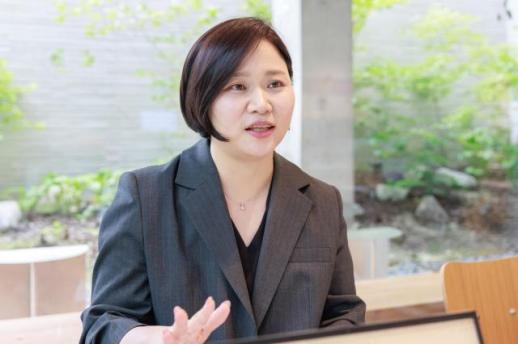 Tea Brand T’ference Says Average Monthly Sales Quadrupled After OliveBetter Debut "We hope a cup of T’ference tea becomes an experience that lifts everyday life up a notch," said Choi Tae-sook, head of Naturian, in an interview May 4 at the brand’s Gangnam store in Seoul. Choi said she wants T’ference to establish itself as a wellness item that improves modern consumers’ quality of life. Naturian operates the natural cosmetics brand ISOI. After entering the natural cosmetics market in 2009, the company launched the tea-focused brand T’ference in 2021. The name combines “tea” and “difference,” reflecting its aim to offer something distinctive even in a single cup. Choi pointed to “purple tea” as T’ference’s key ingredient. She said it is rich in anthocyanins, an antioxidant, and could be used not only in topical cosmetics but also as a drink. She said the company launched T’ference after seeing growth potential in the wellness market, including products that support balance in body, mind and daily life. T’ference’s signature purple tea has a violet hue. Choi said the leaves are grown at an altitude of 1,800 meters in Kenya, adding that the plant changes from green to purple as it withstands intense sunlight, giving the tea its name. At launch, T’ference positioned itself as a premium tea brand targeting “style-conscious women in their 30s.” It sought department store placements, but the process was difficult because Korean department stores favored imported tea brands. The company used pop-up stores to gauge consumer response and expand opportunities, and has opened in locations including Hyundai Department Store’s Trade Center branch and JW Marriott Seoul. Choi said growth accelerated after the brand entered CJ Olive Young. She said T’ference developed a powdered kombucha aimed at customers in their 20s who prefer powdered tea, adding British-made vitamins and 19 types of probiotics. The product helped the brand enter Olive Young in August last year, and it became popular enough to win an Olive Young Awards honor that year, she said. Choi said sales gained further momentum in January after Olive Young opened OliveBetter, a specialized store in Seoul’s Gwanghwamun area that brings together health supplements, inner beauty and wellness products. She said she had high expectations because OliveBetter could pull together a wellness market that had been fragmented. Since T’ference entered OliveBetter in January, its average monthly sales have risen more than fourfold compared with the previous five months, she said. Choi also said a rise in foreign customers visiting Olive Young has helped expand T’ference’s global visibility. In February, T’ference began selling hyaluronic kombucha on the Japanese e-commerce platform Qoo10 Japan, and last month it began selling purple tea there as well. The company plans to widen consumer engagement through OliveBetter. Choi said T’ference will operate a tea bar at the OliveBetter Gwanghwamun store from June to August, and will dispatch staff so visitors can sample products and hear explanations. T’ference is also continuing support for its sourcing region as it expands its business. The company said it supports a water purification project to improve drinking-water conditions in Kenya, where purple tea is produced, with each purple tea product sold funding purified water for one Kenyan child to drink and wash for a day. 2026-05-06 06:03:27
 -
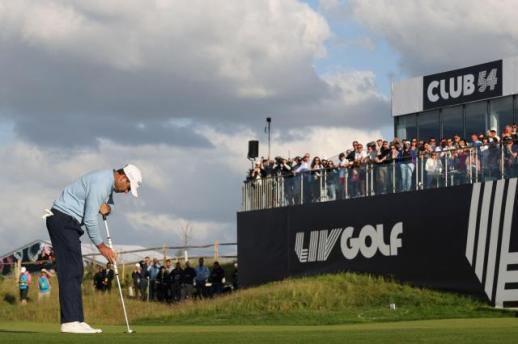 Saudi Arabia Scales Back Sports Spending as Oil Revenue and Cash Tighten In recent years, one of the biggest storylines in global sports has been Saudi Arabia’s aggressive push, backed by vast oil wealth. Under Crown Prince Mohammed bin Salman, the kingdom has promoted its “Vision 2030” plan to transform the economy beyond oil, using sports as a pillar for diversification and image-building. The spending has drawn sustained criticism abroad as “sportswashing,” a term used for efforts to burnish a country’s reputation through high-profile events while obscuring allegations of human rights abuses, corruption or political repression. The concept gained wider attention after Azerbaijan hosted the first European Games in 2015 and has since been applied to Russia, Qatar and Saudi Arabia. Now, Saudi Arabia’s investment posture appears to be shifting. After moves such as buying England’s Newcastle United and launching LIV Golf, the oil-fueled expansion across sports is giving way to broad cost-cutting. With large projects increasingly weighing on public finances, the focus is turning from scale to efficiency and returns. ◆PIF moves to cut LIV funding; major events also shelved The clearest example is LIV Golf. Launched in 2022 to challenge the PGA Tour’s dominance, LIV became a symbol of Saudi sports investment, offering huge signing bonuses and prize money to recruit top players. Over four years, it spent more than $5 billion on player deals and operating costs, but struggled to generate revenue, including from media rights, amid weak U.S. TV ratings. Its cumulative losses are reported to have exceeded $1 billion. Against that backdrop, the Public Investment Fund has decided to pull back. Major foreign outlets including The Wall Street Journal reported April 30 that PIF plans to stop funding LIV Golf after this season. Governance has also been shaken. Sports Business Journal, citing an internal source, reported that PIF Gov. Yasir Al-Rumayyan, a central figure in LIV’s launch and its key backer, stepped down as chairman of LIV’s board. The retrenchment extends beyond golf. The Saudi Pro League, which drew attention by signing stars such as Cristiano Ronaldo, Neymar and Karim Benzema, has moved to control spending. PIF sold a 70% stake in Al Hilal — one of four leading SPL clubs it held — to the private firm Kingdom Holding Co. The league also introduced stricter financial rules this season, capping spending at 80% of a club’s total revenue to improve financial health. Cuts are also spreading to state-led mega-events. Plans for the 2029 Winter Asian Games — to be staged with an artificial-snow resort as Saudi Arabia sought to overcome its lack of winter-sports infrastructure — were postponed indefinitely after running into limits including the cost of desalination facilities. The Saudi Snooker Masters, initially signed under a 10-year deal, was canceled after two years. Plans to extend hosting of the WTA Finals and a bid for the 2035 Rugby World Cup also fell through. The International Olympic Committee and Saudi Arabia also mutually terminated a 12-year agreement to launch the Olympic Esports Games next year. ◆Cash tightens and deficits grow; sports targeted first The pullback reflects mounting financial pressure. According to major foreign outlets including WSJ and Bloomberg, PIF manages about $940 billion in assets, but its readily available cash has shrunk to $15 billion, the lowest in four years. The reports cited a roughly one-third drop in dividends from Aramco and an $8 billion decline in asset values tied to large development projects such as the futuristic city of Neom. At the same time, deficits have widened. After the economy grew 8.7% in 2022 on the back of higher oil prices, Saudi Arabia pushed ahead with big sports projects. But Saudi fiscal authorities said that last year, falling oil prices combined with heavy spending produced a budget deficit of about $73 billion. With cash tighter, loss-making ventures such as LIV Golf and events requiring major infrastructure, including the Winter Asian Games, became prime targets for cuts. External uncertainty is also weighing on the outlook. Rising Middle East tensions, including conflict involving the United States and Israel and Iran, have hit the broader economy. A prolonged closure of the Strait of Hormuz, a key route for oil exports, has also prevented Saudi Arabia from fully benefiting from higher oil prices. Analysts also say Saudi-led efforts to manage oil prices could be weakened after the United Arab Emirates declared it would leave OPEC. ◆Debate over the limits of sportswashing Some critics say Saudi Arabia’s sportswashing strategy is reaching its limits. Justin Nolan, director of the Australian Human Rights Institute, told Nine on May 2 that the kingdom invested billions to improve its image but instead drew more global scrutiny, including controversy around LIV Golf. “As a reputation management strategy, it hasn’t been successful,” he said. Economists, however, describe the shift as a profit-driven recalibration. Johan Rewilak, a sports management professor at Loughborough University, told the BBC on May 1 that with the 2034 FIFA World Cup approaching, Saudi Arabia faces enormous infrastructure and operating costs. He said it is reasonable for the government to redistribute capital and reassess its sports portfolio, adding that geopolitical tensions and rising construction costs are pushing spending priorities toward security and essential infrastructure rather than showcase sports assets. Neil Quilliam, an associate fellow at Chatham House, wrote in a May 1 report that a review of mega-projects was already underway internally and that the current geopolitical crisis is being used to justify a shift in spending priorities. PIF has also signaled a strategic change. In a new five-year operating plan, it said it would move from rapid growth to “sustainable value creation,” strengthening investment efficiency, transparency and governance. That direction is reflected in PIF’s “2026-2030 new strategy report,” which reorganizes its portfolio into three pillars — a domestic “Vision Portfolio,” a “Strategic Portfolio” of national core assets, and a global “Financial Portfolio” — and removes sports as a standalone priority area. As a result, Saudi Arabia is expected to reduce investment in newer, higher-uncertainty sports events and focus more on areas with clearer returns, such as artificial intelligence data centers, and on national projects with broad impact, including the 2030 World Expo and hosting the 2034 World Cup.* This article has been translated by AI. 2026-05-06 02:03:24
 -
 Cravity’s Seongmin Makes Strawberry Mousse Bungeoppang as Fan Gift, Inspired by Anime Cravity member Seongmin put his affection for fans into dessert, preparing a handmade “fan gift in return” that included strawberry mousse bungeoppang and sweets cards modeled on an anime. A roundtable interview marking the release of Cravity’s eighth mini album, “ReDeFINE,” was held on the 23rd at Starship Entertainment’s headquarters in Cheongdam-dong, Seoul. Seongmin drew attention by handing reporters strawberry mousse bungeoppang he made himself. He said it was also an item he prepared for fans during the group’s current promotions. “Since the last promotions, I’ve been giving fans things I made myself, like cookies,” Seongmin said. “I’ve been choosing items I can make by hand. For this time, I was thinking about what would be good, and I wanted to try making a special dessert inspired by an anime I like. A friend connected me with the owner of a bakery.” He said he often bakes bread and cookies, and that the concept came from the anime “Yumeiro Patissiere.” “I wanted to recreate the strawberry mousse cake that appears in the show,” he said. “The owner and I worked together from planning to production, and after several steps we ended up making it in the shape of bungeoppang.” The gift also included a detail meant for fans to enjoy together: Seongmin produced sweets cards that appear in “Yumeiro Patissiere.” In the series, the cards serve as a kind of report compiling recipes made by humans and fairies and presented to a queen. Seongmin said he wanted to bring those settings into his fan gift to add a different kind of fun. “Fans often come to the site at dawn, especially for pre-recordings, and sometimes they arrive without having eaten,” he said. “So I wanted to give them something they could snack on. It’s fine to prepare things through a company, but I wanted to give something that went through my hands, so I’ve kept doing it. I enjoy it a lot, too.” Seongmin said this was not his first time preparing handmade gifts. “During ‘Lemonade Fever’ promotions, I prepared lemon cookies,” he said. “At first I planned to bake about 200, but more fans came, so I hurriedly made 400. Since the pop-up keyword was the five senses, I tried to prepare it so fans could feel all five. I remember it because they liked it so much,” he said, laughing. Cravity has held various events, including free pop-ups, to build memories with fans. Seongmin has also expanded his own way of connecting with fans through handmade gifts. Cravity released its eighth mini album, “ReDeFINE,” on the 29th and is promoting it. The album portrays the group’s process of redefining itself after moving through fear, longing and growth. The title track, “AWAKE,” says what feels like an ending can become another beginning.* This article has been translated by AI. 2026-05-06 00:03:22