
Journalist

Lim, Kwu Jin
-
 POSCO Holdings posts Q1 operating profit of 707 billion won; POSCO Future M turns profitable POSCO Holdings said in a regulatory filing on Wednesday that it posted first-quarter consolidated revenue of 17.876 trillion won, operating profit of 707 billion won and net profit of 543 billion won. The company said revenue and profit rose from a year earlier despite heightened uncertainty in energy supply chains and financial markets stemming from the war between the United States and Iran. It said losses in its lithium business narrowed sharply as POSCO Argentina began full-scale commercial production. In steel, POSCO said profit fell even as sales volume increased, citing higher raw material costs driven by a weaker currency. It said overall steel-segment profit increased on stronger sales at overseas steel units and cost cuts. In battery materials, POSCO Future M returned to profit on expanded sales of cathode materials in new markets and higher sales of value-added products. POSCO Argentina and POSCO Pilbara Lithium Solution also reduced losses on higher output and rising lithium prices, the company said. POSCO Argentina recorded its first monthly profit in March as output and selling prices continued to rise, and the company said it expects its first quarterly profit in the second quarter. POSCO HY Clean Metal posted its first quarterly operating profit on sustained high utilization and cost reductions, it said. In infrastructure, POSCO International maintained solid profit on broadly strong sales across its businesses including gas and energy, the company said. POSCO E&C returned to profit as one-off costs were resolved. POSCO Holdings also announced a midterm shareholder return policy for 2026 through 2028. It said it previously paid dividends based on free cash flow after investments, but will adopt a performance-linked policy based on adjusted controlling net income starting this year, reflecting plans for intensive investment in future growth areas such as steel and energy materials. The company set a shareholder return ratio of 35% to 40% and said it will adjust valuation gains and losses that are unrelated to operating performance or are one-time items to support dividend stability. It said it plans to balance investment for future growth with stable dividends and new share buybacks and cancellations. POSCO Holdings also outlined progress on its “complete localization” strategy for steel and investment tied to its decarbonization transition, which Chairman Chang In-hwa highlighted in a New Year’s address. The company said it signed a joint venture agreement on the 20th with India’s top steelmaker, JSW Steel, and plans to build an integrated production system in India with crude steel capacity of 6 million tons to secure a stable profit base in a growth market. In South Korea, it said a March approval by the Ministry of Land, Infrastructure and Transport to change plans for the Pohang National Industrial Complex made it possible to prepare a site for hydrogen-based steelmaking, known as HyREX. It also said it will start operating a new electric arc furnace in Gwangyang with annual capacity of 2.5 million tons in June, and will use profits generated in global markets to fund domestic decarbonization investments while strengthening mid- to long-term competitiveness.* This article has been translated by AI. 2026-04-30 15:15:21
 -
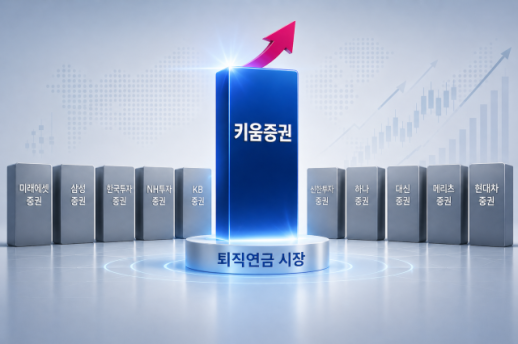 Kiwoom Securities Nears Launch of Retirement Pension Business Kiwoom Securities is preparing to enter South Korea’s retirement pension business, with market watchers saying its large base of individual investors could help it build a stronger presence in the pension market. Attention is also focused on whether a new player could accelerate a so-called “money move” — a shift of retirement pension assets toward securities firms — in a market that has grown to about 500 trillion won. According to the financial investment industry on Wednesday, Kiwoom completed registration with the Financial Services Commission earlier this month as a retirement pension provider and is preparing to launch services in June. The firm is building systems and refining its product lineup ahead of a full market entry. Kiwoom has also reorganized internally, forming a pension business team of about 30 people within its wealth management division. The team is led by Managing Director Pyo Young-dae, a retirement pension specialist who worked more than 15 years at Mirae Asset Securities and has led preparations since a task force was created in 2024. Kiwoom’s goal is to break into the top five by market share. As of the end of the first quarter, retirement pension assets at securities firms were led by Mirae Asset Securities with 42.4411 trillion won, followed by Samsung Securities (23.2681 trillion won), Korea Investment & Securities (22.5945 trillion won), Hyundai Motor Securities (18.8552 trillion won), NH Investment & Securities (10.7541 trillion won) and KB Securities (8.8981 trillion won). Reaching the top five would require securing at least 10 trillion won in assets. The market widely cites Kiwoom’s retail strength as its biggest advantage. The firm has held the No. 1 retail market share for 21 consecutive years and is seen as competitive in digital platforms centered on its mobile trading system. Analysts also say cost efficiency and pricing competitiveness through non-face-to-face channels could help it attract customers early. But the firm also faces clear constraints. The retirement pension market still relies heavily on corporate contracts and in-person sales. With a limited offline sales network, Kiwoom could be at a disadvantage versus larger rivals in defined benefit (DB) and defined contribution (DC) plans. Taking that structure into account, Kiwoom plans to focus first on individual retirement pensions, or IRPs. The strategy is to quickly expand contact with individual customers through IRPs, then gradually broaden into DC and DB offerings while building an integrated pension solution. Its product approach also emphasizes online distribution. Kiwoom plans to offer online-only products at low cost to reduce fee burdens and strengthen a structure that allows customers to select and manage products on its platform. It also aims to build an integrated wealth management platform linking retirement pensions with pension savings and individual savings accounts, or ISAs, providing services across the life cycle from contributions and management to withdrawals. Some in the market expect Kiwoom’s entry to speed up the shift of assets from banks to securities firms. According to the Financial Supervisory Service’s Integrated Pension Portal, total retirement pension assets stood at 501.4 trillion won at the end of last year, up 16.1% from 431.7 trillion won a year earlier. Over the same period, the securities industry’s share rose to 26.5% from 24.3%, while banks’ share edged down to 52.4% from 52.9%. * This article has been translated by AI. 2026-04-30 15:13:28
 -
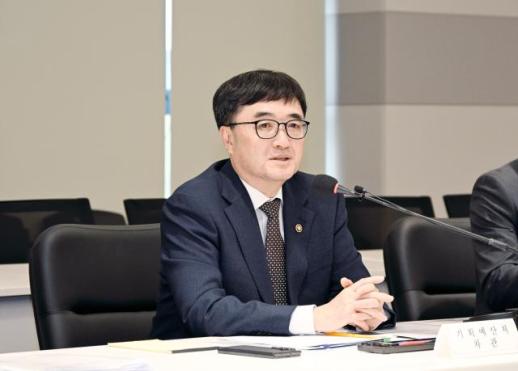 South Korea says 5 trillion won in extra budget executed, seeks faster local subsidies South Korea has executed 5 trillion won of a supplementary budget drawn up to respond to the war in the Middle East, as spending moved into full swing by the end of April, officials said. The Office of Planning and Budget said it held its eighth fiscal execution review meeting on April 30 at the Government Complex Seoul, chaired by Vice Minister Lim Ki-geun, to check the status of the extra budget and next steps. Of the 26.2 trillion won supplementary budget, the government designated 10.5 trillion won for fast-track execution management and set a target of spending 85% by the first half of the year. After moving quickly on preliminary steps such as project notices, selecting recipients, and allocating and disbursing funds, 5 trillion won, or 47%, had been executed as of April 30, it said. With execution accelerating, the meeting focused on ways to speed up actual spending, particularly for local subsidy projects. Local governments have been advancing disbursements by swiftly drafting their own supplementary budgets and using available mechanisms, including spending before formal budget approval, the office said. For high-priority relief payments tied to high oil prices, 3.8 trillion won, or 80%, of the 4.8 trillion won budget has been transferred to local governments, and applications have been accepted since April 27, it said. A public transportation fare refund program has also transferred 67.7 billion won, or 35.6%, of its 190.4 billion won budget, with refunds applied starting with April usage. A zero-emission vehicle rollout program has transferred 82.5 billion won, or 55%, of its 150 billion won budget, as major projects are being executed in sequence, it said. Other programs, including movie ticket discounts and export vouchers, are also being implemented as planned, the office said. Separately, execution of the main budget also continued, with fast-track public-sector spending totaling 266.1 trillion won by the end of April, for an execution rate of 40.5%, it said. “Timely execution is the core of the supplementary budget,” Lim said. “Local subsidy projects in particular require close cooperation with local governments, so we will keep checking execution on the ground through the end and deliver results the public can feel.” * This article has been translated by AI. 2026-04-30 15:12:27
 -
 Scent of soil and legacy at the 40th Icheon ceramic festival SEOUL, April 30 (AJP) - The air at the festival entrance is thick with the scent of wet soil and fresh grass. Families, elderly couples, and travelers with cameras walk together along a 900-meter stretch of workshops. The most significant change to the Icheon ceramic festival this year is the expansion of space. The three villages of Ye’s Park are now connected into a single route. Visitors wander through the entire village as part of a stay-and-experience cultural model. Approximately 300 workshops occupy 120,000 pyeong of land. Artists are present at each site to explain their work. The village has transformed from a marketplace into a living platform for ceramic art. While the Sagimakgol pottery village represents tradition, Ye’s Park showcases modern expansion. In the masters' exhibition hall, renowned artisans stay at their posts to engage with visitors. Guests can watch the entire production process, from spinning the wheel to carving intricate patterns. The space highlights the educational value of the craft. One wall features student works from Korea Ceramic High School alongside pieces by masters with decades of experience. National master Choi In-kyu and Icheon master Yu Yong-cheol previously served as civilian diplomats. They spent years traveling to Canada, France, and the United States to demonstrate Korean pottery. They often used their own funds to promote the craft. The pandemic halted this momentum as travel stopped and international events were canceled. Both masters now highlight the limitations of individual effort. They believe the state must lead systematic promotion to sustain the global reputation of Korean culture. Despite these difficulties, the masters continue to teach. They refuse to charge fees for children who come to handle the clay. They share their knowledge on spinning wheels and reading kiln temperatures without hesitation. "I hope they will think of ceramics just one more time in the future," the masters said. This commitment to the next generation explains why the festival has continued for 40 years. 2026-04-30 15:12:22
 -
 Kakao Games Bets on New Releases to Rebound, Expanding Globally to PC and Consoles Kakao Games said it is preparing to shift back to growth by rolling out multiple new titles, with a strategy centered on expanding beyond mobile into PC and console games and a broader global push. The company said on the 30th it will sequentially launch major new games through next year to diversify its business structure and expand overall scale. It plans to strengthen mid- to long-term competitiveness by adding large global-targeted projects and expanding into new genres. In the third quarter, Lionheart Studio is set to release the MMORPG “Odin Q,” a follow-up that expands the “Odin: Valhalla Rising” universe. The game features Unreal Engine 5 graphics and a seamless open world, and is expected to become a next-generation flagship title on the back of the original “Odin’s” steady performance. Around the same time, Supercat is also targeting a release for “Project OQ,” which uses 2.5D pixel art and a distinct setting to offer a different experience from traditional MMORPGs. The company said testing has shown a high level of polish. Kakao Games is also strengthening its PC and console lineup for overseas markets. XLGAMES’ “ArcheAge Chronicle” is scheduled for a global test in June, highlighting console-grade combat presentation and an IP-based world. “Chrono Odyssey,” an AAA action RPG, is targeting release in the first quarter of next year, combining an open world with a time-manipulation system. The company is expanding into additional genres as well. “Dungeon Arise,” an action RPG that blends strategy and progression elements, is scheduled for release in the second quarter and will support both mobile and PC. “God Save Birmingham,” an open-world survival game set in the medieval era, is in development with a fourth-quarter release target. “Project C,” a subculture-based collectible RPG, is also planned to target global fans. Kakao Games said it will continue stable operations for existing live-service titles. Major MMORPGs including “Odin,” “Ares” and “ArcheAge War” have maintained user metrics through regular updates, it said. “Uma Musume Pretty Derby” has also built a loyal fan base through stable service. “Path of Exile 2” is expected to rebound with a major expansion update in May. A Kakao Games official said the company will release a range of new titles with a high level of quality while keeping existing services stable. The official said Kakao Games will strengthen its growth foundation by expanding globally and diversifying genres.* This article has been translated by AI. 2026-04-30 15:04:01
 -
 Public Agencies Hired 27,000 in 2025 as Debt Ratio Fell 6.4 Points Public agencies hired about 27,000 new employees last year, a sharp increase, while their debt ratio fell, indicating improved financial health. The Finance and Economy Ministry said Wednesday it disclosed management data for 342 public agencies through the public-sector information system ALIO. New hiring totaled about 27,000, up about 7,000 people, or 34.5%, from a year earlier. The rebound followed two straight years of declines, driven in part by expanded staffing in public health care and a wider rail shift system. Hiring aimed at social equity also improved. Youth hiring reached 6.2% of authorized staffing, hiring of people with disabilities was 4.2% of regular employees, and hiring of talent from relocated regions was 40.8% of the mandatory target, all above legal standards. Financial indicators also improved. Public agencies’ debt rose 27.1 trillion won from a year earlier to 768.6 trillion won, but the debt ratio fell 6.4 percentage points to 174.1% as assets grew faster than liabilities. Assets increased 58.1 trillion won to 1,210.3 trillion won, and net profit rose 5.2 trillion won to 13.3 trillion won. Total authorized staffing stood at 429,000, up about 5,000. Welfare and benefits spending rose 5.6% to 864.8 billion won. Work-family balance indicators improved as well. The number of employees taking parental leave rose 15.6% to 29,379, and male parental leave increased 38.7%. Average pay for heads of public agencies rose 4.5% to 199 million won, while average employee pay increased 3.0% to 74 million won.* This article has been translated by AI. 2026-04-30 15:03:07
 -
 At War 60 Days: Trump again crying wolf? Seoul dismisses US troop pullout worries SEOUL, April 30 (AJP) - Washington has hardly been shy about prioritizing a home-first defense strategy over the Indo-Pacific, with repeated signals of potential rollbacks in U.S. force deployments in both Europe and South Korea — a direction embedded in its National Defense Strategy. Those warnings have only grown louder as allies have shown limited appetite to back Washington in its confrontation with Iran. Seoul, however, is drawing a firm line against speculation. South Korea’s Ministry of National Defense said Thursday that “no discussions whatsoever” have taken place with Washington regarding any reduction of U.S. Forces Korea (USFK), underscoring that the alliance’s core mission — maintaining a robust combined defense posture against North Korea — remains unchanged. The reassurance came after U.S. President Donald Trump said via social media that Washington is reviewing a possible troop reduction in Germany, adding that a decision would be made “soon.” While the comment was directed at Europe, its implications reverberated across alliance networks. Concerns that troop deployments could be wielded as political leverage are not new. Trump has repeatedly pressed allies on burden-sharing, at one point overstating U.S. troop levels in South Korea while arguing Seoul had fallen short of supporting broader U.S. strategic priorities. Yet the likelihood of an abrupt shift on the Korean Peninsula remains structurally constrained. The National Defense Authorization Act for Fiscal Year 2026 includes provisions barring any reduction of USFK personnel below 28,500 without congressional approval — a legislative safeguard designed to prevent precisely such politically driven recalibration. A parallel requirement to maintain at least 76,000 U.S. troops in Europe reinforces that, despite rhetorical pressure, alliance commitments retain institutional depth. Still, the more consequential shift is unfolding beneath the surface. U.S. Forces Korea is increasingly being repositioned not as a peninsula-bound deterrent, but as part of a broader Indo-Pacific operational framework emphasizing “strategic flexibility.” “The U.S. is seeking to ensure that USFK is no longer tied exclusively to peninsular defense, but can be mobilized across the Taiwan Strait and the South China Sea,” said Jeong Kyung-woon of the Korean Military Studies Association. This evolution is captured in the emerging concept of the “kill web,” highlighted by General Xavier Brunson, commander of the ROK-U.S. Combined Forces Command and USFK. The framework envisions a fully networked battlespace linking sensors — from satellites and drones to ground-based radar — with strike capabilities across allied forces, enabling faster, more flexible responses across theaters. In such a system, geography becomes secondary to connectivity. A threat detected in one domain could be processed and neutralized through assets deployed from another, effectively turning East Asia into an integrated operational space rather than a collection of discrete fronts. Brunson underscored that U.S. allies in the region cannot operate in isolation. “When you connect them, adversaries no longer have a single axis to focus on, which strengthens overall military effectiveness,” he said. This doctrinal shift coincides with ongoing negotiations over the transfer of wartime operational control (OPCON), with Washington signaling a possible timeline before early 2029 under the administrations of Lee Jae Myung and Trump. As the Iran conflict stretches U.S. resources and sharpens alliance expectations, the central question is no longer simply whether troops will be reduced, but how they will be used. For Seoul, the immediate risk of a drawdown may be limited. But the longer-term shift toward a more mobile, integrated and regionally oriented USFK presents a more complex strategic adjustment — one that extends well beyond the Korean Peninsula. 2026-04-30 15:02:42
 -
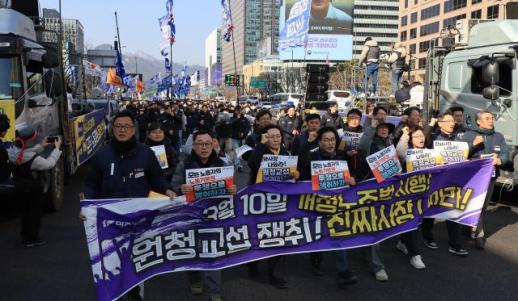 Labor Ministry: 177 Public-Sector Employers Got Bargaining Demands After Yellow Envelope Law After the so-called Yellow Envelope law — revisions to the Trade Union and Labor Relations Adjustment Act — took effect, 177 public-sector workplaces received bargaining demands, with local governments accounting for the largest share at 112, according to the Labor Ministry. The Ministry of Employment and Labor reported the findings Thursday at an emergency economic headquarters meeting held jointly with a meeting of economy and external economy ministers, as part of its “response direction for major labor issues.” As of April 27, 400 prime contractors had received bargaining demands: 223 in the private sector (56%) and 177 in the public sector (44%). Within the public sector, 11 central government bodies, 112 local governments, 46 public institutions and eight local public enterprises, including local government-owned firms, received demands. In the public sector, 13 organizations posted public notices acknowledging the bargaining demands, including Busan Transportation Corp., Korea Asset Management Corp. and Hwaseong City; 11 of those issued final notices. In the care sector, a government-labor consultative body is operating to discuss substantive improvements in working conditions for care workers. Six public institutions participating in a “win-win bargaining” consulting program are working on selecting agenda items and reviewing key disputes. Officials also discussed recently announced talks on improving treatment for subcontracted and nonregular workers in the public sector. The core measures include ensuring appropriate wages, narrowing pay gaps and strengthening job security. The plan also includes strengthening the prior review system and ensuring the sustainability of treatment improvements. The ministry asked relevant agencies to swiftly take necessary follow-up steps. The first-term Economic, Social and Labor Council under the Lee Jae-myung government, launched April 19, will sequentially establish its individual panels. Eleven panels are to be formed, including those focused on responding to overlapping crises during the transition period such as artificial intelligence, and on structural improvements to the labor market. The ministry also released its “foreign workforce integrated support roadmap 추진방향.” It calls for an integrated approach covering appropriate supply-and-demand management for all working foreign nationals, protection of labor conditions, industrial safety, and support for stay and return. The ministry said it will announce the roadmap by June after consultations with relevant agencies and will also pursue revisions to the Foreign Employment Act.* This article has been translated by AI. 2026-04-30 14:58:25
 -
 Iran Says It Can Share Military Experience With China-Russia-Led SCO Iran said it is ready to share its military experience and defensive capabilities with members of the Shanghai Cooperation Organization, a regional security bloc that includes China, Russia and Central Asian countries. The remarks signaled Tehran’s interest in expanding security cooperation with the SCO after its recent clashes with the United States and Israel. According to Times of Central Asia and Reuters on April 30, Iranian Deputy Defense Minister Reza Talaei-Nik told an SCO defense ministers meeting in Bishkek, Kyrgyzstan, that Iran was “ready to share defensive weapons capabilities and experience with independent countries, especially SCO member states.” He added that Iran could also share “the experience of America’s defeat” with other members of the organization. Times of Central Asia reported the comments were made at the Kyrgyz-hosted meeting and that Iran, by offering its recent war experience to other members, underscored the gathering’s geopolitical context. The reference to “America’s defeat” reflects Iran’s framing. Tasnim described it as sharing “war experience against the United States,” while Reuters reported that Iran delivered the message after its recent clashes with the United States and Israel. A ceasefire was announced earlier this month, but follow-up diplomatic talks have shown little progress.* This article has been translated by AI. 2026-04-30 14:53:41
 -
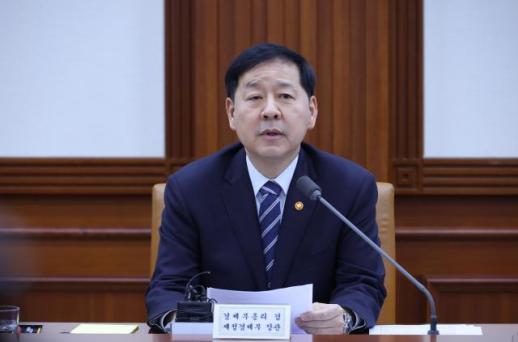 Finance Minister Koo to Extend Fuel-Linked Subsidies 2 Months, Unveil Foreign Worker Roadmap in June Deputy Prime Minister and Finance Minister Koo Yun-cheol said the government will extend fuel price-linked subsidies to ease the burden of high oil prices and will draw up a roadmap by June to overhaul overall foreign labor policy. Chairing an emergency economic meeting and a joint meeting of economy and external economic relations ministers at the Government Complex Seoul on April 30, Koo said, “Following this week’s payment of high oil price damage support funds, we will also extend by two more months through June the fuel price-linked subsidies that are being paid at a temporarily increased rate (50→70%).” The program supports bus, taxi, freight truck and coastal cargo ship operators when diesel and compressed natural gas prices exceed benchmark levels. It covers 70% of the amount above 1,700 won per liter for diesel and 50% of the amount above 1,330 won per cubic meter for CNG. The cap is 183.21 won per liter or cubic meter. Koo said the government will prepare an “integrated support roadmap” for foreign workers by June to revamp policy in line with demographic changes. “We will manage the entire process of employing foreign workers in an integrated way, from recruitment to protection of working conditions and job changes,” he said. On the economy, Koo said March all-industry output rose 0.3%, “once again confirming the solid recovery trend,” but warned that as negotiations over the Middle East war drag on, economic strains are becoming more visible, including weaker consumer sentiment and supply chain effects. The government said it will push ahead with measures to promote “eco-friendly green consumption and tourism” and a “youth New Deal” plan, while also pursuing contingency responses and structural reform tasks. The meeting also reviewed the government’s response to the Middle East war and major labor issues. The government said it will encourage the public sector to serve as a model employer under the revised union law and will continue discussions, centered on the Economic, Social and Labor Council, on structural changes such as AI transition and youth jobs. To boost consumption and tourism during the holiday period, the government said it will expand operations of mass transit such as rail, air and buses, and pursue domestic demand measures including free admission to national cultural facilities and vacation support for workers. * This article has been translated by AI. 2026-04-30 14:52:46