
Journalist

Lim, Kwu Jin
-
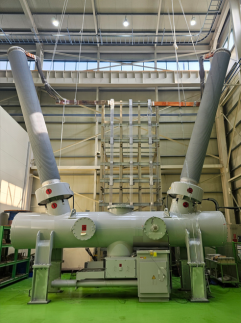 Hyosung Heavy Industries to Showcase AI Data Center Grid Solutions at IEEE PES T&D 2026 Hyosung Heavy Industries will present what it calls a “total solution” for power grids serving artificial intelligence data centers at the largest U.S. transmission and distribution exhibition. The company said Wednesday it will take part in IEEE PES T&D 2026, to be held May 4-7 (local time) in Chicago. The event will be held under the theme “Powering Reliability, Engineering Resilience.” Hyosung Heavy said it will showcase solutions linking today’s grid needs with future demand. Products highlighted include the world’s largest-capacity 800kV 7,000A GCB (gas-insulated circuit breaker); an SST (solid-state transformer) positioned as a core power solution for next-generation data centers; a voltage-source HVDC (high-voltage direct current transmission system) developed with what it said is the first domestically owned technology of its kind; and a STATCOM (static synchronous compensator) aimed at strengthening power stability for data centers and renewable energy. The 800kV 7,000A GCB to be displayed is a U.S. export-focused model developed in March. Hyosung Heavy said design optimization kept it the same size as its existing 5,000A product while enabling stable handling of 7,000A current. The company will also exhibit a submodule of its 22.9kV SST, which it said it developed first in the world and which is designed to significantly improve data center power efficiency. Hyosung Heavy said it plans to maximize competitiveness in established equipment such as extra-high-voltage transformers and circuit breakers as local power demand is expected to surge, while also promoting next-generation technologies including SST and HVDC to reinforce its position as a total-solution provider. “Through this exhibition, we will demonstrate to power-industry stakeholders that Hyosung Heavy Industries is the most reliable partner for building AI power grids,” a company official said. “We will combine the power-infrastructure technology we have accumulated with future-oriented solutions to lead a paradigm shift in the U.S. market.” Meanwhile, IEEE PES T&D is a global exhibition and conference hosted by the Institute of Electrical and Electronics Engineers and held every two years. More than 800 companies from around the world participate to share power-industry trends and solutions. * This article has been translated by AI. 2026-04-30 09:24:19
 -
 GM Korea bets on small SUVs while dismissing withdrawal rumors SEOUL, April 30 (AJP) - GM Korea has pledged to reinforce its Changwon plant as a global export hub, dismissing persistent rumors of a possible withdrawal from the South Korean market. The automaker has invested heavily in the plant, which has an annual capacity of up to 280,000 vehicles, betting on small SUVs as a core business to cement its position within GM and sustain its Korean operations over the long term. Vice president Asif Khatri, who oversees manufacturing across GM's global operations, said at a press briefing at the plant earlier this week that the automaker will continue improving its facilities to "keep up with strong demand," adding that combined cumulative production of its Trax and Trailblazer small SUVs has recently surpassed 2 million units. Both models were fully developed and produced in South Korea from initial design through manufacturing. The Trax has been built at the Changwon plant since 2023, while the Trailblazer has been produced at its Bupyeong plant in Incheon since 2020. When asked about speculation that GM could leave the South Korean market amid weak domestic sales, Khatri said he would respond with actions rather than words, saying that the plant is running "at full capacity to maximize output." GM Korea currently operates three production plants along with several facilities for engines, transmissions, and other components. Vice President Lee Dong-woo, who is in charge of the South Korean manufacturing operation, said, "Small SUVs could be among the last internal-combustion segments to remain in demand," keeping its plants busy to "keep up with demand." 2026-04-30 09:24:18
 -
 UPDATE: Samsung Electronics retains memory leadership amid AI boom in bumper Q1 * Updated with additional information SEOUL, April 30 (AJP) - Samsung Electronics retained its memory leadership in a bumper first quarter, generating its strongest three-month performance to beat expectations and local rival SK hynix, as the AI-driven gold rush fueled demand for both premium DRAM and flash memory, its final earnings report showed Thursday. The Device Solutions (DS) division set quarterly records for both top and bottom lines, earning 53.7 trillion won ($39.2 billion) in operating profit on revenue of 81.7 trillion won, translating into a stunning operating margin of 65.7 percent, albeit still short of SK hynix’s 71.5 percent. “The Memory Business surpassed its quarterly sales record by addressing high-value-added AI demand despite limited supply availability, with industry-wide memory price increases also a contributing factor,” the company said in a statement. The memory giant maintained an upbeat outlook for the second quarter and the rest of the year, citing continued enterprise adoption of AI, the expansion of agentic AI and its AI-centric sales strategy. The company, whose business spans chipmaking to smartphones and appliances, confirmed consolidated revenue of 133.9 trillion won, an all-time quarterly high, marking a 43 percent increase from the previous quarter. Operating profit also reached a record 57.2 trillion won, in line with its earlier guidance. To solidify its market dominance, Samsung stated it has begun the industry's first simultaneous mass production of HBM4 and next-generation low-power memory modules, dubbed SOCAMM2. It also plans to supply its first samples of HBM4E in the second quarter. The foundry business successfully secured orders from a major optical communication module provider, building a foundation for its silicon photonics operations. While semiconductors drove the bulk of the profits, the Device eXperience (DX) division, which oversees smartphones and home appliances, reported an operating profit of 3 trillion won on sales of 52.7 trillion won. The mobile business saw steady growth driven by robust sales of its flagship Galaxy S26 Ultra. Elsewhere, the display panel business posted an operating profit of 400 billion won, while Harman, Samsung's automotive electronics subsidiary, reported 200 billion won in profit amid an off-season for the audio market. The company invested a record 11.3 trillion won in research and development during the first quarter. A strong U.S. dollar against the Korean won also resulted in a positive impact of approximately 1.8 trillion won on the company's overall operating profit compared to the previous quarter. Looking ahead to the second quarter and the second half of the year, Samsung expects further earnings momentum in its semiconductor business. This will be driven by sustained AI infrastructure investments and an ongoing upward trend in memory prices. The company stated it will actively address the robust demand for server DRAM and enterprise SSDs while expanding its proportion of high-value AI memory products. Meanwhile, the DX division will focus on improving profitability by expanding sales of premium smartphones and AI-enabled home appliances, navigating potential headwinds from rising component costs and ongoing macroeconomic uncertainties. Shares of Samsung Electronics were trading flat at 226,000 won as of 9:50 a.m. in Seoul. The stock briefly touched an intraday high of 230,000 won in early morning trade following the record earnings report, but gave up its earlier gains as investors locked in profits ahead of the conference call. 2026-04-30 09:22:53
 -
 Samsung Electronics Posts Record Q1 Operating Profit as Chip Boom Outpaces Devices Samsung Electronics said it posted its best-ever quarterly results in the first quarter of 2026, driven overwhelmingly by semiconductors, underscoring a widening gap between its chip business and its device operations. The company said Thursday that on a consolidated basis it recorded revenue of 133.9 trillion won and operating profit of 57.2 trillion won. Revenue rose 43% from the previous quarter and operating profit jumped 185%, setting a record for a single quarter. The Device Solutions (DS) semiconductor division led the surge, posting revenue of 81.7 trillion won and operating profit of 53.7 trillion won, accounting for most of the company’s earnings. Samsung cited expanding AI adoption, which boosted demand for high-value memory and lifted prices. It said it strengthened technology leadership through mass production of HBM4 and next-generation low-power memory modules, and development of PCIe Gen6 SSDs. Within chips, System LSI improved somewhat on higher flagship chip sales, while foundry results declined due to seasonal weakness. Samsung said it maintained its longer-term footing with orders centered on high-performance computing and progress in securing silicon photonics-based capabilities. The Device eXperience (DX) set business saw higher sales but limited profit improvement. DX posted revenue of 52.7 trillion won and operating profit of 3.0 trillion won. The Mobile eXperience (MX) unit grew on stronger flagship sales, including the Galaxy S26 Ultra, but gains were constrained by rising costs and tariff burdens, the company said. The network business weakened as telecom operators cut investment, and home appliances saw only limited improvement despite new product launches because of cost pressures. TV (VD) profitability improved somewhat on premium products, but not enough to drive overall results. Other businesses were mixed. Harman posted revenue of 3.8 trillion won and operating profit of 200 billion won, with results falling on memory supply constraints and an off-season in the audio market. Display recorded revenue of 6.7 trillion won and operating profit of 400 billion won; small and mid-sized panels were weak on softer demand, while large OLED remained relatively steady. Samsung said a weaker won helped results, estimating about 1.8 trillion won in profit improvement from the stronger dollar. Looking to the second quarter, Samsung said the chip-led improvement is expected to continue. “With expanded investment in AI infrastructure, the upward trend in memory prices is expected to continue,” the company said, adding it expects profitability to improve. It said the set business is likely to remain volatile as the impact of new model launches fades and cost burdens persist. For the second half, Samsung forecast a “conflicting environment” in which tariff and geopolitical risks and rising costs persist even as semiconductor demand increases and IT demand slows. The company said it will focus on higher value-added products and cost efficiency to protect profitability. 2026-04-30 09:19:28
 -
 Kiwoom Securities Q1 Net Profit Jumps 103% to 477.4 Billion Won on Trading Surge Kiwoom Securities said its first-quarter net profit more than doubled from a year earlier, helped by a sharp rise in stock market trading value. The company said Thursday that consolidated net profit for the first quarter of 2026 totaled 477.4 billion won, up 102.6% from 235.6 billion won a year earlier. Consolidated operating profit rose 90.9% to 621.2 billion won. On a separate basis, net profit came to 443.2 billion won and operating profit to 534.8 billion won, up 92.4% and 81.0%, respectively. Total equity stood at 6.2994 trillion won, a 25.6% increase from a year earlier. The brokerage business led the gains. Stock commission revenue in the quarter rose 120.8% to 311.5 billion won, as average daily trading value in the domestic market climbed to 27.8 trillion won from 8.8 trillion won a year earlier, more than tripling amid a stronger market. The asset management business also grew. Management profit and dividend and distribution income increased 58.9% to 155.7 billion won, and client assets under management rose 43.4% to 21.8 trillion won. In investment banking, Kiwoom built results mainly in the debt capital markets. It ranked fourth in domestic bond lead management in the first quarter and took part in major deals involving POSCO Future M, LS Cable, SK, Shinsegae and LG Energy Solution. It also worked on equity capital markets transactions, including rights offerings for Amicogen and Raonpeople, and arranged acquisition financing. For the previous quarter, the company posted consolidated net profit of 246.9 billion won and operating profit of 345.6 billion won in the fourth quarter of 2025. For the full year last year, it reported net profit of 1.115 trillion won and operating profit of 1.4882 trillion won. Kiwoom said it plans to announce a midterm corporate value enhancement plan in the first half of this year. It also aims to expand its outstanding balance of short-term notes from 1.2 trillion won to 3 trillion won by year-end and plans to launch retirement pension services (DB, DC and IRP) in June. As part of shareholder returns, the company has continued to buy back and retire its own shares, and said it held no treasury shares as of the end of March this year. * This article has been translated by AI. 2026-04-30 09:18:32
 -
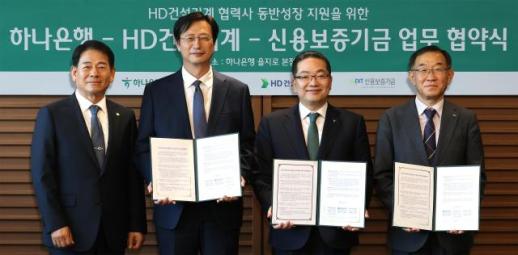 HD Construction Equipment to Back Suppliers With 85 Billion Won in Loan Guarantees HD Construction Equipment is launching a financial guarantee program totaling 85 billion won to help suppliers maintain stable operations. According to industry officials on Wednesday, the company signed a memorandum of understanding the previous day at Hana Bank’s headquarters in central Seoul with Hana Bank and the Korea Credit Guarantee Fund to support shared growth in the construction equipment industry. Attendees included Hana Bank CEO Lee Ho-seong, Korea Credit Guarantee Fund standing director Chae Byeong-ho, HD Construction Equipment President Moon Jae-young and supplier council head Kim Do-wan. The agreement is intended to provide practical support to suppliers facing funding difficulties amid recent economic uncertainty. The partners said they expanded the program after strong demand quickly depleted an existing shared-growth fund. Under the deal, HD Construction Equipment and Hana Bank will jointly create a fund of up to 5 billion won. Using that as a source of funding, the Korea Credit Guarantee Fund will provide guarantees of up to 85 billion won when suppliers seek loans from financial institutions. The program will operate in two tracks: a 40 billion won “joint project guarantee” for suppliers participating in future innovation projects such as new model development and mass production, and a 45 billion won “shared-growth financial support agreement guarantee” open to all suppliers. The program includes discounted guarantee fees and preferential interest rates. “Helping our suppliers prepare for the future without wavering, even in an uncertain external environment, is the true value of shared growth,” Moon said. He added that he hopes the support will strengthen competitiveness across the construction equipment industry through cooperation with suppliers.* This article has been translated by AI. 2026-04-30 09:15:19
 -
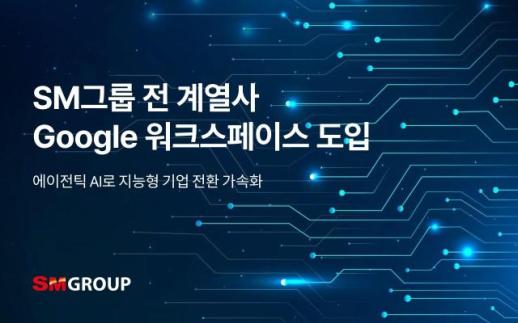 SM Group Rolls Out Google Workspace Across Company to Speed AI Shift SM Group said Wednesday it will introduce the cloud-based collaboration platform Google Workspace (GWS) across the company as it pushes an artificial intelligence transformation aimed at strengthening future competitiveness. In the first phase, the group has applied GWS to 38 of its 54 affiliates, building an environment needed for work innovation and integrated operations. The company said the move goes beyond swapping collaboration tools and is intended to support a shift toward a “smart enterprise” that makes decisions and executes work based on data. As part of that effort, it set up an “AI Research Task Force Team” last month under the group’s management support division. The AI research task force will pursue a two-track roadmap tied to the GWS rollout: modernizing infrastructure by moving legacy systems to the cloud and standardizing fragmented work data, while also seeking new business value to deliver measurable gains in efficiency and profitability, the company said. SM Group said it expects visible changes including unified communications and turning information into managed assets. It consolidated communications that had been centered on individual affiliates into an official platform based on a groupwide domain (@smgroup.co.kr). The company said the change will reduce barriers between the group and affiliates and strengthen security so intellectual assets can be protected more systematically. The group also said it will step up adoption of “agentic AI.” Using Gemini Enterprise, it plans to integrate and analyze data in real time from headquarters, worksites and branches, and to reduce routine reporting and compilation work so employees can focus on higher-value tasks. For the AI transformation, SM Group named SM Hi-Plus as the control tower. SM Hi-Plus completed a cloud migration based on Amazon Web Services in December, the company said, improving system stability and security. Building on that, the group plans to run a “Leadership AI Conference,” where executives directly use AI tools to develop business solutions, and to train department-level talent as innovation champions to spread practical AI use across the organization. “GWS is not just a collection of tools, but the starting point of a work ecosystem where AI is connected in real time and organically,” said Ahn Byeong-hyeon, CEO of SM Hi-Plus. He said the group will pursue a strategy that combines broad infrastructure upgrades with agentic AI to improve effectiveness and efficiency and maximize value across SM Group’s businesses, including manufacturing and services, shipping and construction.* This article has been translated by AI. 2026-04-30 09:11:36
 -
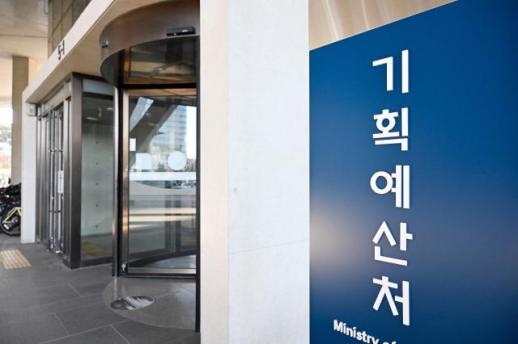 Budget Office to Roll Out AI Budget Assistant for Government Work in May 2027 The Ministry of Planning and Budget will introduce artificial intelligence across budget work, including budget formulation and spending restructuring. The ministry said it held an “AI Budget Assistant introduction review meeting” chaired by Park Chang-hwan, director general for budget review and coordination, on April 29 to discuss progress and next steps. The AI Budget Assistant is designed to provide tailored information based on extensive fiscal and program data when budget staff enter questions. The ministry plans to begin procurement in early May and start using the system in day-to-day budget work from May next year. To support the rollout, the ministry will adopt a large language model dedicated to budget operations and train it on accumulated materials, including past budget requests, fiscal statistics, program briefing documents and internal review files. Officials expect it to reduce repetitive work such as searching and compiling past records, allowing staff to focus on policy judgments. To secure higher-quality data, the ministry will build an integrated data platform and move to collect documents scattered across personal computers and messaging services. It also plans to convert existing Hangul Word Processor (HWP) files into an AI-trainable format (HWPX) to improve data usability. The government, aiming to become one of the world’s top three AI powers, tripled this year’s AI budget from 3.3 trillion won to 9.9 trillion won. It plans to use the new system to improve both the accuracy of fiscal management and work efficiency. The ministry said it will start procurement in early May and try to move up the introduction schedule as much as possible. “By introducing the AI Budget Assistant as early as possible compared with the original plan, we will maximize both the accuracy of national fiscal management and work efficiency,” Park said. * This article has been translated by AI. 2026-04-30 09:10:33
 -
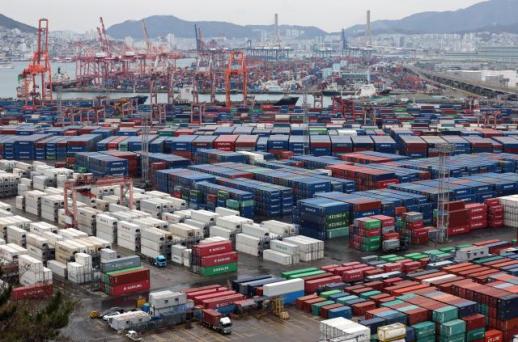 (UPDATE) March factory output sharply eases in Korea as Hormuz shock ripples *Updated with additional information and market response. SEOUL, April 30 (AJP) — South Korea’s manufacturing and investment activity slowed sharply in March as supply disruptions from the Middle East’s key energy waterway began to weigh on the import-dependent economy in the first month of the war, data showed Thursday. According to March industrial activity data from the Ministry of Data and Statistics, mining and manufacturing output eked out a 0.3 percent gain from the previous month, sharply slowing from a 5.3 percent increase in February. Overall industrial output also slowed to 0.3 percent in March from 2.1 percent in February, although service-sector output accelerated to 1.4 percent, partially offsetting the slowdown. Retail sales, a barometer of consumption, rose 1.8 percent, reversing a 0.3 percent drop a month earlier, as higher energy and chip prices spurred preemptive fuel purchases and lifted demand for finished IT products. Investment momentum weakened markedly. Facility investment rose 1.5 percent, compared with a 14.6 percent jump in February, while construction investment plunged 7.3 percent after surging 13 percent the previous month. Supply disruption began to take toll on factory activities. Chipmaking fell 8.1 percent and refining 6.3 percent as producers adjusted output as imports of Middle East raw materials remained uncertain from the blockade of the Strait of Hormuz. Against a year-ago period, industrial output remained resilient on an annual basis, rising 3.5 percent year-on-year on strong chip demand. Consumer spending rebound was largely driven by 9.8-percent spike in computer and IT products on chip-flation worries. The coincident index added 0.5 point and the leading index climbed 0.7 point, suggesting underlying economic conditions have yet to fully reflect the external shock. Amid growing uncertainties, the KOSPI fell a tad, 0.43 percent, to 6,663.94 after testing new intraday high while the Korean won slipped to 1,485.9 against the U.S. dollar amid spike in oil prices. 2026-04-30 09:09:47
 -
 Hyundai Motor to Hire Experienced Staff in Manufacturing Software and AI Hyundai Motor said Wednesday it will recruit experienced hires in manufacturing software and artificial intelligence from May 1 to 17. The openings cover four areas: software-defined factories, manufacturing AI, manufacturing robotics and intelligent manufacturing logistics. Successful applicants in the document screening will be announced in June, with final hires to be selected through first- and second-round interviews, the company said. Hyundai Motor said the recruitment is aimed at accelerating future businesses such as robotics and physical AI, while improving manufacturing performance and strengthening quality competitiveness. A company official said Hyundai Motor will "make every effort to identify top talent in manufacturing software and AI" to respond to a rapidly changing global market and sustain momentum in its future industries.* This article has been translated by AI. 2026-04-30 09:06:39