
Journalist

Lim, Kwu Jin
-
 Vietnam Restarts Ninh Thuan Nuclear Project, Intensifying Competition for Early Deals President Lee Jae-myung’s recent state visit to Vietnam has sharpened attention among South Korean builders on Vietnam’s large infrastructure pipeline, as expectations grow that the country and the broader Southeast Asian market could open more fully for nuclear power plants and data centers, both still at an early stage. Industry officials expect competition to intensify as companies seek an early foothold. According to foreign media reports cited on April 28, the Vietnamese government recently completed site surveys and approval procedures for Unit 2 of the Ninh Thuan nuclear power project. The Ninh Thuan project, ordered by Vietnam Electricity (EVN), calls for building Units 1 and 2 in Ninh Thuan province with a combined capacity of 4 to 6.4 gigawatts. Unit 1 is targeted to begin operating in 2030 and Unit 2 in 2035. Russia has secured preferred bidder status for Unit 1. The competitive landscape for Unit 2 has shifted after Japan withdrew, citing construction schedule burdens. Korea Electric Power Corp. has moved to enter the bidding, signing a memorandum of understanding with EVN on cooperation in power infrastructure and pushing a “one-team” approach. Unit 2 is planned at 2 to 3.2 gigawatts, with an estimated cost of about $22 billion, or roughly 32 trillion won. South Korean companies are seeking an edge by pointing to experience from the UAE’s Barakah nuclear plant and the Dukovany nuclear project in the Czech Republic. Construction firms are also repositioning. Daewoo Engineering & Construction created a new Global Infrastructure Division by integrating its overseas business and nuclear units to support expansion in nuclear projects. Hyundai Engineering & Construction and POSCO E&C are also preparing to enter the Southeast Asian nuclear market. Companies view the contest as more than a single contract, describing it as a bridgehead into Southeast Asia’s nuclear market. Vietnam’s power generation mix is about 10% gas, 47% coal and 0% nuclear, leaving room for a shift. Under its eighth national power development plan, known as PDP8, the Vietnamese government has set diversification of energy sources, including nuclear, and modernization of power infrastructure as key tasks. Malaysia and Thailand have also formally stated plans to introduce nuclear power, raising expectations that the regional market could expand. With energy security drawing more attention after geopolitical risks in the Middle East, demand for nuclear power is also rising, the article said. “Because Southeast Asia’s nuclear market is still in its early stages, this bidding round will be a turning point that determines who secures an early lead,” an official at the International Contractors Association of Korea said. South Korean builders also cite accumulated experience in Vietnam as a competitive advantage, built through housing and commercial projects as well as plants, bridges and roads. Daewoo E&C pointed to its Hanoi Starlake City mixed-use development, where it handled development, investment and construction, as a flagship success. GS Engineering & Construction has expanded its presence through the Ho Chi Minh City Nha Be new town development and the NSRP refining and petrochemical plant project. Data centers are emerging as another growth area. In line with Vietnam’s digital transformation strategy, builders are pursuing projects that combine data centers with urban infrastructure. Daewoo E&C and GS E&C, working with SaigonTel and FPT Corp., respectively, plan to start with data centers of several dozen megawatts and expand in phases, while also pursuing smart city development. A Daewoo E&C official said Starlake City is a large mixed-use project expected to host relocated central government ministries and major companies, adding that follow-on development is being pursued not only in Hanoi but also in key areas including Ho Chi Minh City. 2026-04-28 15:48:26
 -
 Naver Launches Beta ‘AI Tab’ to Shift Search Toward Chat-Style Answers Typing into Naver’s search bar, “Recommend a cafe near Seoul Station that’s good to visit with my parents,” produced a conversational list of suggestions a few seconds later. Instead of simply listing links, the service interpreted the request’s context and returned an answer. Naver said Monday it has launched its AI Tab for Naver Plus Membership users. The feature provides customized responses based on a user’s intent and context, and the company plans to expand it to all users and to the mobile main screen in the first half of the year. Unlike traditional keyword search that displays a results list, AI Tab is built as a chat-style exchange. In testing, it showed an on-screen workflow — “answer planning → information search → answer generation → summary” — and took about five seconds to analyze and produce a response. The recommendations differed from simple popularity rankings. For the “good with parents” condition, it suggested places based on factors such as spacing between seats, store atmosphere and accessibility, and attached a summarized digest of visitor reviews to each listing. The review summaries focused mainly on recent posts written from February through April, the company said. AI Tab generates answers using Naver’s own services, including Place, blogs and cafes, and draws heavily on detailed visitor reviews to produce results. The report also compared the feature with “Gemini in Chrome.” For the same query, Google drew on a wide range of outside sources such as blogs, social media and travel platforms, but some results cited 2024 posts, raising limits on timeliness. Naver’s internal tests reportedly reached a similar conclusion: It may be difficult to claim a clear edge over global AI for general questions, but the company sees stronger competitiveness in local services such as finding places and making reservations, supported by links to its existing platforms. Naver is positioning AI Tab as more than an added feature, calling it a “shift in the search paradigm.” The company aims to move beyond keyword-based search by combining AI with separate services — including shopping, maps and finance — into a single integrated experience. It plans to expand use by connecting domain-specific AI agents, including for shopping and finance, to AI Tab. The service is currently a beta limited to membership users, with constraints on features and access. Naver said it will incorporate user feedback to improve response speed and deliver more precise answers to complex, multi-step follow-up questions. * This article has been translated by AI. 2026-04-28 15:42:47
 -
 Sumitomo Mitsui Banking Corp. Signs MOU With Philippines’ BOI and RCBC to Promote Investment Sumitomo Mitsui Banking Corp. signed a memorandum of understanding on the 27th with the Philippines’ Board of Investments (BOI), an agency under the Department of Trade and Industry, and local lender Rizal Commercial Banking Corp. (RCBC) to cooperate on promoting business ties, including encouraging foreign direct investment in the Philippines. Under the MOU, the three parties will jointly hold investment and economic seminars and share information with companies considering entering the Philippine market or expanding operations there. The information will cover the latest investment climate, tax and investment incentives, and trends in priority industries. They also plan to use the BOI’s nationwide reach to continue supporting companies in addressing operational issues after investing. Sumitomo Mitsui previously signed an MOU in January 2024 with the Philippine Economic Zone Authority (PEZA) and RCBC. A representative at the bank’s Manila branch said interest is rising among foreign companies looking to tap Philippine domestic demand, adding, “By working with the BOI in addition to PEZA, which mainly handles attracting export-oriented investment, we will be able to provide more advanced support to meet a wider range of customer needs.” Sumitomo Mitsui acquired 4.99% of RCBC shares in June 2021 and raised its stake to 20% in July 2023. It bought additional shares in December 2025, bringing its current ownership to 24.46%.* This article has been translated by AI. 2026-04-28 15:42:15
 -
 Seoul’s Next Redevelopment Hot Spots Shift to Yongsan, Gwangjin, Nowon and Dongjak As major Seoul reconstruction projects in Apgujeong, Yeouido, Mok-dong and Seongsu near the end of contractor selection, attention is shifting to the next cycle. The focus is moving away from ultra-high-priced riverside rebuilds toward areas where large mixed-use development overlaps with renewal of older neighborhoods. Industry officials said April 28 that Yongsan, Gwangjin, Nowon and Dongjak are emerging as leading candidates to reshape Seoul’s next housing map. While each has different advantages and development profiles, all have broad swaths of aging housing and are tied to major projects or changes in wider transport and business corridors. Unlike the earlier wave centered on luxury Han River reconstruction, the new group is driven by a mix of office-district expansion, station-area mixed-use projects, large-scale housing-district renewal and completion of New Town plans. Yongsan is already a core axis of Seoul’s property market, but its western neighborhoods — including Cheongpa, Seogye, Huam and Yongsan-dong 2-ga — are still viewed as later-stage redevelopment areas. If the Yongsan International Business District moves fully into implementation, expectations for upgrading nearby older housing are likely to rise. The Yongsan International Business District is planned on about 495,000 square meters. Seoul has outlined a plan that includes a landmark tower of around 100 stories and about 500,000 square meters of green space. The concept goes beyond office buildings to a mixed-use city combining residential, business, commercial and cultural functions. If the Yongsan rail yard area is reorganized into a central corridor linking downtown Seoul, Yeouido and Gangnam, pressure to redevelop surrounding low-rise neighborhoods is expected to increase. In Gwangjin district, the Guui, Jayang and Gwangjang areas are also drawing attention. Located across the Han River from Seongsu, the area is cited as a “post-Seongsu” candidate because it offers access to Gangnam and the potential for Seongsu’s living sphere to expand. A key variable is the modernization project for the Dong Seoul Terminal, which could reshape local urban functions. Seoul plans to modernize the Dong Seoul Terminal into a mixed-use complex combining transportation, office, retail and cultural functions. After traffic-impact assessments and architectural reviews, the project is being pursued with a target of starting construction as early as late 2026 and completing in 2031. If the aging terminal is converted into a regional transportation hub, it is expected to affect commercial activity and housing demand in the Guui-Jayang area. Nowon district’s Sanggye, Junggye and Hagye neighborhoods are considered the largest reconstruction belt in northeast Seoul by scale. Built through large housing-district development in the 1980s, the area has dense apartment complexes that are more than 30 years old. Interest had been limited, but sentiment is changing after a large-scale renewal plan was finalized. Seoul issued a final notice on Dec. 18, 2025, for the renewal plan covering the Sanggye, Junggye and Junggye 2 housing-district development areas. Under the plan, a site currently sized for about 76,000 households is expected to be reorganized into a core northeast residential mixed-use city of about 103,000 households. Higher-density development around transit stations and zoning upgrades could improve project feasibility. Still, the pace of work, resident consent rates and construction-cost burdens remain key variables. Dongjak district’s strength is its location between Yeouido and Yongsan. In particular, Noryangjin New Town could be re-evaluated as a leading new-housing area in southwest Seoul after the project is completed. Demand is expected from people seeking shorter commutes, supported by access to Yeouido’s business district and potential spillover benefits from Yongsan’s development. At the same time, some expectations in Dongjak have already been reflected in prices, creating a burden. As work accelerates in major Noryangjin New Town zones, the pressure from higher presale prices is also growing. Market direction is likely to depend on how much location premiums can absorb those higher prices. A real estate industry official said it remains to be seen whether the four areas will lead Seoul home prices in the short term the way Apgujeong, Yeouido, Mok-dong and Seongsu did. “There are many variables, including differences in project speed by site, construction costs, interest rates and presale price regulations,” the official said. Still, the official added that “their mid- to long-term potential is sufficient” because major development corridors and renewal of aging housing are moving forward at the same time.* This article has been translated by AI. 2026-04-28 15:40:42
 -
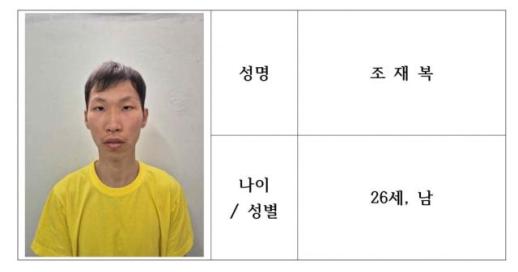 Man, 26, Indicted in Daegu for Beating Mother-in-Law to Death and Dumping Body in Suitcase The Daegu District Prosecutors Office said it has indicted Jo Jae-bok, 26, in custody on allegations that he beat his mother-in-law to death and later dumped her body. A dedicated prosecution team said April 28 that Jo was charged with killing an ascendant relative and related offenses after allegedly placing the body in a travel suitcase and abandoning it along the Sincheon stream in Daegu. Prosecutors said they declined to indict his wife, identified only as A, and released her. According to prosecutors, Jo assaulted his mother-in-law, identified only as B, 54, for about 12 hours on March 18 at a one-room apartment in Daegu’s Jung District where they lived together, citing reasons such as that she did not keep things organized. After B died, prosecutors said Jo and A put her body in a suitcase and dumped it near the Sincheon. A told investigators she took part because her husband forced her to, and authorities found that after B’s death Jo controlled A, including confining her so she could not report the case, prosecutors said. At the time the case was sent to prosecutors, A was injured, including broken ribs, and prosecutors concluded she acted under coercion while unable to resist due to ongoing confinement and violence. Under Article 12 of the Criminal Act, an act compelled by irresistible violence, or by threats that leave no way to protect one’s own life or body or that of relatives, is exempt from punishment. A prosecution official said authorities will support A’s medical treatment as a victim of domestic violence and work with related organizations, including the Korea Legal Aid Center for Family Relations and local governments, to help her return to daily life after recovery. 2026-04-28 15:39:35
 -
 Si Woo Kim Rises to Career-High No. 25 in World Golf Ranking Si Woo Kim climbed to No. 25 in the world rankings, the best position of his career. In the men’s world golf rankings released April 28 (Korea time), Kim rose one place from last week’s No. 26. Kim’s move followed his third-place finish at the RBC Heritage, which ended April 20. He posted a 16-under 268, behind winner Matt Fitzpatrick of England and runner-up Scottie Scheffler of the United States, who both finished at 18-under 266. It was Kim’s third top-five result and fifth top-10 finish of the season. He had matched his previous career-best ranking by reaching No. 26, then improved again a week later. Kim is the only South Korean player inside the top 50. Im Sung-jae is No. 76, Kim Seong-hyeon No. 138, Kim Joo-hyung No. 144 and An Byeong-hun No. 147. There was no change at the top of the rankings from last week, with Scheffler No. 1, Rory McIlroy of Northern Ireland No. 2 and Fitzpatrick No. 3.* This article has been translated by AI. 2026-04-28 15:36:05
 -
 CrossHub Signs MOU With Vietnam National Universities on Blockchain Digital ID, Payments CrossHub said it has signed agreements with major Vietnamese national universities to link blockchain-based digital identity verification with payment services, stepping up its push into Southeast Asia’s education and public-sector markets. The company said it signed memorandums of understanding at the Hanoi IT Support Center of the National IT Industry Promotion Agency with the University of Danang’s College of Education, Vietnam National University, Hanoi, and Vietnam National University, Ho Chi Minh City, to introduce digital student IDs. CrossHub said the project goes beyond replacing physical student cards, aiming to build an “integrated campus platform” that combines decentralized identity (DID) technology with payment functions. It said students would be able to use a single digital ID for access control, administrative services and payments, with functions rolled out in stages. The planned rollout would cover more than 210,000 students, faculty and staff, the company said: about 70,000 at the University of Danang’s College of Education and about 140,000 across the two national universities in Hanoi and Ho Chi Minh City. CrossHub described it as a large-scale digital transition for Vietnam’s higher-education sector, with potential to spread as a standard model. CrossHub said it will work with South Korean systems company Daeyang CIS. CrossHub will build the blockchain software and authentication infrastructure, while Daeyang CIS will supply on-site hardware such as IoT-based terminals, access devices and an integrated control system. The company said the combined approach is intended to improve stability and scalability. CrossHub also pointed to policy support from local government. It said Da Nang is known to be discussing measures to provide operating infrastructure, including office space, free of charge for up to seven years if CrossHub sets up a local subsidiary, along with a plan for about nine years of corporate tax exemptions. The company said the system could later expand beyond campuses into public and urban infrastructure if it operates reliably, citing possible applications in transportation, public services and local retail payments. It noted the Vietnamese government is pursuing digital transformation and smart-city development as key policy tasks, and education institutions often serve as a starting point. CrossHub said it is currently based at the National Innovation Center in Hanoi and plans to finalize the headquarters location for a joint venture in June. It also said it is pursuing an artificial intelligence research open lab at Vietnam National University, Ho Chi Minh City. The company said it is also pursuing global expansion, with plans to establish a local corporation in China’s Shandong province in May, adding an Asian hub to its existing presence in North America, Europe, Japan and Singapore. CrossHub said it aims to complete the establishment of six overseas corporations within this year to build its global business base. 업계에서는 이번 프로젝트를 한국 블록체인 기반 인증 기술이 ‘실사용 인프라’로 해외 시장에 적용되는 사례로 보고 있다. 특히 교육기관이라는 대규모 사용자 기반에서 검증될 경우, 향후 공공·금융·헬스케어 등 다양한 분야로 확산될 수 있는 레퍼런스를 확보하게 된다는 점에서 전략적 의미가 크다는 분석이다. 2026-04-28 15:35:07
 -
 Fed Meeting Focuses on Powell’s Final Message: Inflation and Independence in Spotlight The Federal Reserve’s upcoming Federal Open Market Committee meeting is drawing attention less for the expected rate decision than for what Chair Jerome Powell says about inflation and the central bank’s independence. The Fed will meet April 28-29 (local time) and is set to announce its benchmark rate at 2 p.m. April 29 (3 a.m. April 30 in South Korea). Markets largely expect the rate to remain at 3.50% to 3.75%, unchanged since last December. The meeting coincides with the end of Powell’s term as Fed chair on May 15, with Kevin Warsh’s Senate confirmation as the next chair appearing within reach. With a criminal probe tied to renovations of the Fed’s headquarters shifting from the Justice Department to the Fed inspector general, a political factor that could have delayed Warsh’s confirmation has eased. That has fueled expectations that this could be Powell’s final FOMC news conference. Investors are focused on Powell’s guidance on where rates go next. Attention had been on when rate cuts might resume, but expectations have cooled after oil prices jumped following the Iran war. Reuters reported Brent crude has risen about 50% since the war began, and that higher gasoline and energy prices contributed to a sharp increase in last month’s U.S. consumer price index. Reuters also said the bond market is reflecting the possibility that the Fed’s policy rate could stay near current levels at least through mid-2027. That shift could show up in the Fed’s statement. While holding rates steady, the Fed has previously left the impression its next move would be a cut. If the statement highlights both inflation risks and slowing-growth risks — and leaves open the possibility of hikes as well as cuts — markets could read it as a signal the Fed is keeping the door open to tighter policy. Bank of America said Powell’s news conference “could sound more hawkish than the market expects.” As sensitive as monetary policy is the question of Fed independence. Axios said that while Warsh’s confirmation prospects have improved, a key unknown is whether Powell will remain on the Fed’s Board of Governors after stepping down as chair. Powell’s term as a governor runs through January 2028. Traditionally, Fed chairs have also resigned their board seats when their chair terms end, but Powell has left open the possibility of staying amid pressure on the Fed from the Trump administration. Questions also remain about Warsh. In a CNBC Fed survey of 26 economists, strategists and analysts, 50% said they expect Warsh to conduct monetary policy independently, while 46% said his independence could be constrained. In the same survey, 58% said Warsh would likely be favorable to rate cuts, and 65% expected him to be active in shrinking the Fed’s balance sheet, meaning reducing its asset holdings.* This article has been translated by AI. 2026-04-28 15:33:50
 -
 South Korea drops cup price-labeling plan from anti-plastic package, favors voluntary cuts The government on the 28th left out a proposed “cup price labeling system” — a plan to charge separately for cups — from its comprehensive anti-plastic package, saying it will prioritize voluntary reductions to reflect conditions in the field. Instead, it plans to curb single-use cups by expanding discounts for reusable tumblers and increasing the number of stores participating in the carbon-neutral points program. Kim Go-eung, director general for resource circulation at the Ministry of Climate, Energy and Environment, said at a briefing at the government complex in Sejong after a Cabinet meeting that officials had reviewed renaming the separate cup charge as a “cup price labeling system,” but did not include specific measures in the package. He said the ministry will first expand personal-cup discount programs through agreements with related industries. “We are continuing to communicate with the industry” on the cup price labeling plan, Kim said, adding that discussions are underway to design a system that both reflects on-the-ground acceptance and delivers real plastic-reduction effects. The ministry is reviewing ways to expand tumbler discounts now offered by some franchises to independent cafes and to increase the number of participating carbon-neutral points stores. The points awarded for using a personal cup are currently about 300 won. The ministry reported to the Cabinet on the 28th its plan to shift to a “plastic-free circular economy,” targeting a total reduction of 3 million metric tons of plastic by 2030. Minister Kim Seong-hwan told the Cabinet that household and business waste plastic totals about 8 million tons a year and, if the trend continues, could reach about 10 million tons by 2030. He said 1 million tons would be cut by avoiding plastic use at the source, while 2 million tons would be circulated through the use of recycled materials. Officials also raised the possibility of government support to ease the cost burden of recycled plastic. Kim Go-eung said the ministry is considering ways to cover the price gap when recycled feedstock costs more than virgin resin, including direct fiscal support and using reserve funds from the extended producer responsibility, or EPR, system. He said the scale and method of support have not been finalized. The government also plans to introduce a new certification system for recycled-material quality, reflecting concerns raised by makers of pay-as-you-throw trash bags. Officials said they will set quality standards, build a certification framework and boost market confidence. In addition, the government plans structural changes to reduce plastic use, including encouraging switches to alternatives such as paper for products where plastic is unnecessary. It is also reviewing changes to the waste charge, now uniformly set at 150 won per kilogram, to apply different rates based on product lifespan and characteristics. Kim said the current system imposes a uniform charge regardless of product lifespan and needs to be subdivided by product type, adding that the ministry will design the system in detail while considering impacts on industry. * This article has been translated by AI. 2026-04-28 15:31:25
 -
 U.S.-Iran Talks Stall as Back-Channel Contacts Continue and Washington Tightens Pressure U.S.-Iran ceasefire talks remain stalled, but back-channel contacts are continuing, according to reports. At the same time, the United States is stepping up economic pressure on Iran as it seeks leverage in the negotiations. CNN reported Sunday, citing multiple sources familiar with the mediation, that the two sides have not held a second face-to-face meeting in Pakistan, but quiet talks have continued. The discussions are focused on a phased approach. In an initial stage, key items include returning to prewar conditions and reopening the Strait of Hormuz without restrictions or transit fees. Iran’s nuclear program would be taken up in later stages, the report said. Uncertainty over the outlook remains. The Wall Street Journal reported that President Donald Trump and his national security team are skeptical of an Iranian proposal that would reopen the strait while putting nuclear talks on hold. Trump views the nuclear issue as a central condition of any agreement. White House press secretary Karoline Leavitt told a briefing that “the president’s red line on Iran is very clear,” and said Trump would state his position soon. Secretary of State Marco Rubio, in an interview with Fox News, said that if Iran’s idea of “opening the strait” means “yes, it’s open, but you have to consult Iran and get our permission, and if not we’ll attack you, and pay a toll,” then “that’s not opening the strait.” He said the Strait of Hormuz is an international waterway and stressed the United States cannot accept Iran normalizing a system in which it decides who can use it and how much they must pay. Rubio also said Iran is trying to threaten the world with nuclear weapons, adding that it wants to hold the world hostage to get what it wants, as it does now with oil. “That is unacceptable,” he said. With no visible breakthrough, Washington is increasing pressure. Treasury Secretary Scott Bessent warned that doing business with sanctioned Iranian airlines carries the risk of U.S. sanctions. He urged governments to take steps to ensure their companies do not provide services to those airlines “in any form,” including supplying jet fuel, catering, paying landing fees or providing maintenance. Bessent said the Treasury Department will maintain “maximum pressure” on Iran and will act against third parties that help or carry out Iran-related transactions. Pressure through a maritime blockade is also continuing. U.S. Central Command said the United States has diverted 37 vessels to other routes since the blockade began. Analysts said Iran’s crude storage capacity has fallen to an estimated 12 to 22 days. Commodities analytics firm Kpler forecast Iran could make additional output cuts of up to 1.5 million barrels a day by mid-May. Debate inside Iran over whether to negotiate is also continuing. Foreign Minister Abbas Araghchi told Russia’s Vesti broadcaster that Iran is “clearly fighting the world’s greatest power,” and said the other side has “clearly achieved no goals.” “That is why he is calling for negotiations, and we are now reviewing that option,” Araghchi said. Iranian officials have also moved to counter doubts about the negotiating team. State-run IRNA reported that 261 of the Majlis’ 290 lawmakers adopted a statement backing the negotiating team. The statement appeared to respond to Western media analyses suggesting the team had lost decision-making authority under pressure from hard-line military forces. The lawmakers said that as the war enters a new phase, the enemy is trying to stir conflict between authorities and the public across the battlefield, the streets and diplomacy. They said parliament, as the people’s representative, trusts and fully supports the negotiating team, especially Majlis Speaker Mohammad Bagher Ghalibaf, describing him as the head of the team who has stepped into a new arena of battle against the enemy.* This article has been translated by AI. 2026-04-28 15:30:11