
Journalist

Lim, Kwu Jin
-
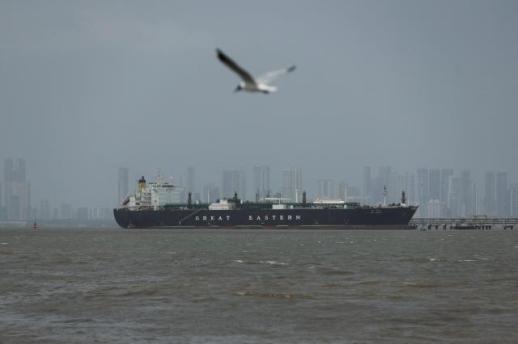
 Iran Central Bank Opens Rial, Yuan, Dollar and Euro Accounts to Collect Strait of Hormuz Tolls Iran’s central bank has opened four dedicated currency accounts to collect tolls from ships transiting the Strait of Hormuz. Arab Times and other outlets reported on the 27th (local time) that Alaeeddin Boroujerdi, a member of Iran’s parliament on the National Security and Foreign Policy Committee, said the central bank set up accounts in the rial, Chinese yuan, U.S. dollar and euro to manage toll revenue. The funds are expected to be managed in cooperation with the Islamic Revolutionary Guard Corps (IRGC) Navy, in line with parliamentary discussions, the reports said. Arsenio Dominguez, secretary-general of the International Maritime Organization (IMO), said international law does not allow tolls, taxes or customs duties to be imposed in straits used as international sea lanes. The Strait of Hormuz is a strategic chokepoint through which about 20% of the world’s seaborne crude oil shipments pass, and the move is expected to ripple through the global shipping industry and regional security. Iran moved to control the strait after war broke out following U.S. and Israeli attacks on Feb. 28, and the United States responded by imposing a maritime blockade targeting Iranian ports and other sites. Boroujerdi said parliament is pursuing a “Strait of Hormuz Security Plan” to put a toll system into law and secure a stable revenue source. He added that payment could later shift to digital currency and mentioned the possible adoption of a blockchain-based payment system to strengthen financial influence in international transactions. The policy has also moved into actual collection. Iran’s PressTV previously reported that on the 23rd, Iran’s military collected a Strait of Hormuz toll for the first time in cash. The toll was deposited into a single central bank account and was paid in cash, not cryptocurrency, the report said.* This article has been translated by AI. 2026-04-28 11:38:40
 -
 South Korea Stock Market Jumps to No. 8 Globally by Value, Passing U.K., on AI Chip Rally South Korea’s stock market has risen to the world’s eighth-largest by market capitalization, overtaking the United Kingdom as a surge in artificial intelligence and semiconductor shares pushed the benchmark KOSPI sharply higher, Bloomberg News reported on the 28th. Bloomberg data showed South Korea’s market capitalization has climbed 45% so far this year to about $4.04 trillion, edging past the U.K. at $3.99 trillion. As recently as the end of 2024, the U.K. market was about twice the size of South Korea’s, but South Korea’s value expanded rapidly over the past year or so to move ahead, Bloomberg said. The rally has been driven largely by the AI boom. Samsung Electronics and SK hynix, seen as major beneficiaries of the AI-led semiconductor “supercycle,” have been rising in earnest since last year and helped lift the broader market. The KOSPI, after first clearing 6,600 on the previous day, also broke above 6,700 on the 28th, extending its record run. Taiwan’s stock market, led by Taiwan Semiconductor Manufacturing Co., the world’s largest contract chipmaker, also surpassed the U.K. to rank seventh globally, Bloomberg said. Taiwan’s market capitalization was put at $4.48 trillion. The United States ranked No. 1 at $75.04 trillion, followed by mainland China at $14.84 trillion, Japan at $8.19 trillion, Hong Kong at $7.41 trillion, India at $4.97 trillion and Canada at $4.49 trillion, according to Bloomberg’s figures. Francesco Chan, an emerging markets and Asia-Pacific investment specialist at JPMorgan Asset Management in Hong Kong, said the rapid rise of South Korea and Taiwan reflects a structural reshaping of global equity markets rather than a tactical asset-allocation shift. “Structural capital inflows are continuing into these countries, which play a central role in the AI supply chain, backed by the advantages of the ‘supercycle’ in advanced foundry and memory,” he said. By contrast, the U.K. market has appeared more removed from the AI cycle, with its benchmark FTSE up just 4% so far this year. Analysts cited Europe’s heavier weighting toward traditional sectors such as financials, consumer staples and energy, compared with South Korea’s larger share of AI and semiconductor-related stocks. Patrick Kellenberger, an emerging-market equity strategist at Swiss asset manager Lombard Odier, said factors including AI, rising global defense spending and corporate governance reforms have provided strong momentum for South Korean and Taiwanese equities. “Europe is still struggling to commercialize innovation and scale it up,” he said, adding that creating conditions for innovative companies to emerge and grow is important but takes time. Bloomberg noted that despite strong chip-company earnings, South Korea and Taiwan still have gross domestic products of about $1.9 trillion and $1 trillion, respectively, below the scale of major European economies such as the U.K., Germany and France, each with GDP above $3 trillion. 2026-04-28 11:32:43
 -
 KOSPI Rally Raises Minsky-Style Warnings as Leverage and Debt Build The KOSPI has been setting fresh record highs and pushing toward the uncharted 7,000 level. As investors cheer rising screens and pile into leverage, the late economist Hyman Minsky’s warning echoes: “Stability ultimately breeds instability.” The question is whether the market is at a peak celebration or nearing a cliff edge. The so-called Buffett indicator — stock market capitalization divided by nominal GDP — has topped 200% for the first time. That suggests the equity market has expanded beyond the size of the broader economy. It has already surpassed Japan (186%) and China (71%), and is narrowing the gap with the United States (227%), the world’s largest market. The market’s support looks increasingly fragile. Outstanding margin loans in South Korea hit a record 35.46 trillion won. Individual investors, drawn into a rally that has continued even amid wartime turmoil, are maximizing leverage and increasing their vulnerability to a sudden reversal. This “shadow debt” is building alongside rising delinquency rates in the financial sector. The combined delinquency rate at the five major commercial banks rose to 0.40% in the first quarter. Delinquencies among small business owners and households are at their highest levels in eight to 10 years. A sharp rise in delinquencies in real estate and leasing points to a disconnect between asset-market gains and the everyday economy. A deeper concern is the slide in the economy’s underlying potential growth rate. First-quarter GDP growth came in at 1.7%, a surprise rebound, but it also indicates the economy is running into a ceiling near its estimated potential growth rate of 1.71%. The OECD projects South Korea’s potential growth rate will fall to 1.57% next year, down from 3.6% 14 years ago. Business sentiment is also weakening. April’s Composite Business Sentiment Index appeared to rebound, but excluding a one-off factor — lower inventories due to supply disruptions linked to the Middle East war — perceived conditions have declined for a second straight month. Behind strong exports, domestic demand and manufacturing sentiment are eroding. External risks may be only beginning. Oil-price volatility and supply-chain disruptions tied to the Middle East war, along with the won’s real value falling to a 17-year low (real effective exchange rate 85.44), suggest a “Gulf shock” could intensify. If high interest rates persist longer than expected, accumulated bad loans could swell and trigger margin calls across asset markets. The current stock-market boom is being built on debt. The government and financial sector should not miss the window for sound risk management by mistaking headline indicators for lasting strength. Past “Minsky moments” have ended painfully, underscoring the need for early cleanup of weak assets and structural reforms. 2026-04-28 11:31:45
 -
 Korea business sentiment rises on illusion of recovery as inventories shrink SEOUL, April 28 (AJP) — Pessimism among South Korean businesses eased to a 21-month low in April, but the improvement largely reflected inventory drawdowns driven by Middle East supply disruptions rather than a genuine recovery in demand, data showed Tuesday. The Composite Business Sentiment Index (CBSI) for all industries rose 0.8 point from a month earlier to 94.9, the highest since July 2024, according to the Bank of Korea. Despite the gain, the index remained below the 100 mark, indicating that negative sentiment still outweighs optimism. Strip out the inventory effect, and the picture weakens. The central bank estimated that overall sentiment would have slipped by 0.1 point across industries and by 0.4 point in manufacturing. “While manufacturing conditions improved on sustained exports and higher sales prices, the drop in inventories partly reflects firms running down existing stock to cope with disruptions in raw material supplies,” said Lee Heung-hoo, head of the BOK’s economic sentiment survey team. Manufacturing sentiment rose 2.0 points to 99.1, its highest level this year and just shy of the neutral threshold. The outlook for next month also improved, climbing 2.1 points to 98.0. By firm size, large corporations reached the 100 benchmark, while small and medium-sized enterprises (SMEs) lagged at 96.8. Export-oriented firms continued to outperform, posting a CBSI of 103.4 for a fourth consecutive month, compared with 96.4 for domestically focused companies. The improvement in manufacturing was overwhelmingly driven by inventories. Falling stock levels contributed 2.3 points to the CBSI, compared with a 0.7-point gain from better business conditions. As a countercyclical component, lower inventories mechanically lift the index even when underlying demand remains weak. Outside manufacturing, momentum was far weaker. The non-manufacturing CBSI edged up just 0.1 point to 92.1, while the outlook for next month remained unchanged at 91.2. In services, sentiment deteriorated, slipping to 92.9 from 93.4, as rising oil prices tied to the Middle East conflict pushed up sea and air freight costs, particularly weighing on wholesale and retail sectors. Cost pressures have emerged as the dominant concern across industries. In manufacturing, the share of firms citing rising raw material prices as a key difficulty surged 13.2 percentage points to 34.2 percent. In non-manufacturing, the figure rose to 19.4 percent, also the top concern, reflecting elevated energy prices, logistics disruptions around the Strait of Hormuz, and a weakening Korean won, which has depreciated by more than 2 percent from 1,458 per dollar in January to around 1,488 this month. Detailed indicators point to a widening margin squeeze. The manufacturing business conditions index rose 3 points to 74, with gains in sales and new orders, but profitability fell 5 points to 68 and financial conditions worsened by 3 points to 76. The raw material purchase price index jumped 12 points to 149, the highest since October, far outpacing the rise in product sales prices, which climbed to 110 — insufficient to offset rising input costs. The broader Economic Sentiment Index (ESI), which combines business and consumer confidence, fell 2.3 points to 91.7, marking a second straight monthly decline and the lowest level in six months. Its cyclical component also edged down 0.3 point to 94.4, signaling a slowdown in underlying economic momentum. The survey was conducted from April 9 to 16, covering 3,205 companies, including 1,781 manufacturers and 1,424 non-manufacturers. 2026-04-28 11:31:11
 -
 KOSPI extends record-setting rally as chip halo trickles down SEOUL, April 28 (AJP) — The KOSPI extended record-setting rally Tuesday with eyes on the 7,000 milestone, shrugging off the stalemate in U.S.-Iran talks even as the conflict nears the 60-day mark this week. As of 11:00 a.m., the benchmark index rose 0.65 percent to 6,658.25, as foreign and institutional investors continued buying despite retail profit-taking. Market breadth remained tight, with gainers narrowly outpacing losers 424 to 409. Investor sentiment was buoyed by expectations that strong earnings from U.S. technology heavyweights would reinforce momentum in Korea’s semiconductor- and IT-led market. With a substantial share of S&P 500 firms already reporting solid first-quarter results, attention has shifted to earnings from five “Magnificent Seven” companies. Microsoft, Alphabet, Amazon and Meta are due Wednesday, followed by Apple a day later. In U.S. trading, Nvidia surged 4 percent to a fresh intraday high on earnings optimism, while Alphabet gained 1.72 percent. Microsoft added 0.05 percent and Meta rose 0.53 percent, with Tesla up 0.63 percent. Apple slipped 1.27 percent. The strength spilled over into Korean chipmakers. SK hynix climbed 2.55 percent to 1,325,000 won, hitting a 52-week high, while Samsung Electronics edged up 0.22 percent to 225,000 won. South Korea’s broader rally has also lifted its global standing. Total market capitalization has surged more than 45 percent this year to about $4.04 trillion, overtaking the U.K. to rank as the world’s eighth-largest equity market, supported by global inflows into AI and semiconductor stocks. Cyclicals joined the advance. Hyundai Motor jumped 7.06 percent to 561,000 won, while Kia rose 3.41 percent to 157,800 won. Battery makers were also firm, with Samsung SDI gaining 4.72 percent and LG Energy Solution up 0.97 percent. Power equipment shares also remained firm, with Hyosung Heavy Industries up 0.96 percent at 3,979,000 won, extending gains since April 22 and continuing a run of successive record highs on expectations tied to AI infrastructure expansion and North American grid replacement demand. Financial and industrial shares edged higher, with KB Financial Group and Samsung C&T both up 0.64 percent. Losses were limited, though defense and shipbuilding stocks came under pressure. Hanwha Aerospace fell 1.10 percent, while HD Hyundai Heavy Industries slipped 0.74 percent. On the KOSDAQ, the index dropped 0.84 percent to 1,215.87 as foreigners and institutions sold a combined 458.6 billion won, offsetting net buying of 461.3 billion won by retail investors. Biotech stocks led declines, with AblBio plunging 19.86 percent, while Samchundang Pharm and LigaChem Biosciences also fell. Battery-related shares bucked the trend, with EcoPro rising 3.07 percent and EcoPro BM gaining 2.17 percent. In currency markets, the Korean won weakened slightly to 1,474.50 per dollar from 1,472.50 previously. Elsewhere, Japan’s Nikkei 225 fell 0.54 percent to 60,211.50, retreating from a record high as investors positioned ahead of the Bank of Japan’s policy decision. Chip-related stocks led declines, with Advantest down 4.51 percent and SoftBank Group tumbling 7.14 percent. Hong Kong’s Hang Seng Index slipped 0.52 percent, while China’s Shanghai Composite edged down 0.22 percent. Regional markets face a shortened trading week, with Japan closed Wednesday and South Korea, China, Hong Kong and Taiwan shut Friday for Labor Day. 2026-04-28 11:30:59
 -
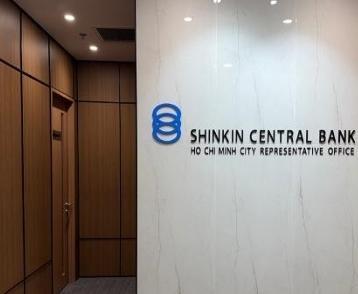 Shinkin Central Bank to Open Ho Chi Minh City Representative Office on May 1 Shinkin Central Bank will open a representative office in Ho Chi Minh City in southern Vietnam on May 1. It will be the bank’s first new overseas representative office in 13 years, since it established a base in Bangkok in 2012. The Ho Chi Minh City office will be located in Tower 1 of Saigon Centre, a mixed-use complex in the city center. It is near the Opera House Station on Metro Line 1, offering convenient access. The surrounding area has many office buildings and commercial facilities, making it suitable for market research by client companies considering expansion into Vietnam. Soichi Ogasawara will head the office. Operations will start with four staff: one Japanese representative and two local staff members, in addition to Ogasawara. The office will support Shinkin credit union client companies with entry into Vietnam and local assistance, fundraising, sales channel expansion, use of foreign talent, and training programs for credit union employees. Shinkin Central Bank said the number of credit union client companies operating in Vietnam had surpassed 500 as of October 2025. The bank has also seconded an employee to the Japan Desk at the Bank for Investment and Development of Vietnam, or BIDV, in the capital, Hanoi, and will support clients through its two bases in Ho Chi Minh City and Hanoi.* This article has been translated by AI. 2026-04-28 11:30:59
 -
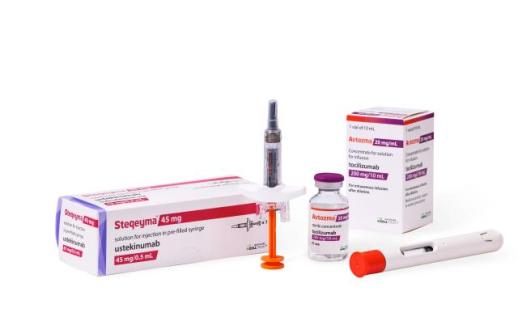 Celltrion Launches Autoimmune Drug Aptozma in Japan as First Mover Celltrion said April 28 that it has launched Aptozma (tocilizumab), an autoimmune disease treatment, in Japan as a first mover. The launch comes about seven months after the drug won marketing approval from Japan’s Ministry of Health, Labour and Welfare in September. Celltrion said it has secured approvals for key indications including rheumatoid arthritis, juvenile idiopathic arthritis, Castleman disease and cytokine release syndrome. Celltrion’s Japan unit plans to supply the product through a direct sales system. The company said it aims to speed market adoption by drawing on sales capabilities and supply experience built through its existing autoimmune treatments. Ahead of the launch, the company provided scientific information to clinicians and shared clinical data at the 70th Annual Meeting of the Japan College of Rheumatology to raise awareness of the product. Celltrion said it has established a stable foothold in Japan’s autoimmune disease market. Remsima and Yuflyma hold 44% and 19% market share, respectively, and remain among the top prescribed biosimilars, while Stekima continues to grow. With Aptozma, the company’s local portfolio has expanded to four products. Celltrion said it plans to maximize synergies across its products and step up marketing to medical institutions. It said portfolio expansion is expected to continue, with Omliclo targeted for launch in the second half of the year and Remsima SC also being prepared for entry into the Japanese market.* This article has been translated by AI. 2026-04-28 11:30:13
 -
 Hyundai Rotem signs deal for local production of K2 tanks in Poland SEOUL, April 28 (AJP) - Hyundai Rotem has signed a contract with a Polish defense firm for the production and maintenance of South Korea's K2 battle tank, it said on Tuesday. The signing ceremony, which follows a preliminary deal signed in August last year, was held in Warsaw the previous day and was attended by Hyundai Rotem CEO Lee Yong-bae and Bumar-Łabędy CEO Monika Kruczek. Under the contract with Bumar-Łabędy, a subsidiary of Poland's state-run defense group Polska Grupa Zbrojeniowa (PGZ), the South Korean manufacturer will collaborate on local production of the Polish version of the tank, dubbed the K2PL. It is a customized version developed to meet Polish requirements and expected to be produced locally, along with other Poland-specific variants based on the K2 platform. A key part of the deal involves cooperation on assembly, with some equipment to be sourced from Poland. Hyundai Rotem said items such as front- and rear-view cameras, which allow crews to monitor surroundings from inside the tank, and an inertial navigation system that helps enable precise movement and firing will be Polish-made. The contract also includes on-site training for Polish personnel in Hyundai Rotem's maintenance work on the tanks, aimed at helping Poland build its maintenance capabilities before local production begins. Hyundai Rotem said it plans to strengthen mid- to long-term cooperation with Bumar-Łabędy and other local defense companies, using the partnership as a foothold for its expansion in Europe, as it believes it would offer growth opportunities for South Korea's defense industry. Expressing confidence in its competitiveness, the company said it has a track record of delivering shipments several months ahead of schedule or on time. "The latest deal will lay the groundwork to expand K2-related projects in Poland," a Hyundai Rotem spokesman said. 2026-04-28 11:29:11
 -
 Cha Biotech Partners With Miltenyi Biotec to Develop Allogeneic CAR-NK Cancer Therapy Cha Biotech said on the 28th it will work with Miltenyi Biotec, a global cell and gene therapy company, to develop an allogeneic chimeric antigen receptor-expressing natural killer cell (CAR-NK) therapy. Under the collaboration, Miltenyi Biotec will produce lentiviral vectors and supply them to Cha Biotech. The company said Miltenyi brings expertise including its BaEV platform, designed to improve gene-delivery efficiency while lowering manufacturing costs. The BaEV platform targets ASCT1 and ASCT2 receptors expressed on NK cells to boost gene transfer efficiency. Cha Biotech plans to use the vectors to develop a CAR-NK-based anticancer cell therapy, CHACAR-NK-201. Based on its in-house NK cell culture technology, the company said it is expanding research in solid tumors including liver cancer, glioblastoma and triple-negative breast cancer. A Cha Biotech official said CAR-NK therapies are viewed as next-generation immune cell treatments because they can be mass-produced using NK cells from healthy donors, offering advantages in accessibility and cost compared with CAR-T therapies that require patient-specific manufacturing. Separately, Cha Biotech said it is also working with Miltenyi Biotec Korea to develop an automated process for mass production of allogeneic CAR-NK therapies and to strengthen manufacturing capabilities that meet global standards. * This article has been translated by AI. 2026-04-28 11:27:16
 -
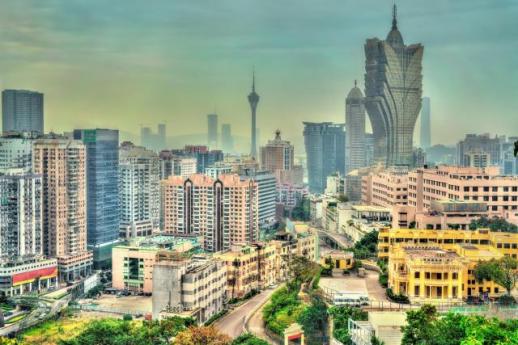 Macau Visitor Arrivals Rise 13.7% in First Quarter of 2026 Macau welcomed 11,213,904 visitor arrivals in the first quarter of 2026 (January-March), up 13.7% from a year earlier, according to the Macau government’s Statistics and Census Service. Same-day visitors rose 20.3% to 7,007,320, while overnight visitors increased 4.1% to 4,206,584. Average length of stay slipped to 1.0 day from 1.1 days a year earlier. Overnight visitors averaged 2.2 days, unchanged. By origin, visitors from mainland China climbed 16.4% to 8,388,921, accounting for 74.8% of the total. Of those, independent travelers rose 18.4% to 4,750,197. Arrivals from Hong Kong edged up 1.8% to 1,783,763. Taiwan posted a sharper gain, up 29.1% to 285,464. Outside greater China, South Koreans were the largest group, up 7.4% to 184,938. The Philippines followed, up 4.1% to 131,749. Those were the only two markets with more than 100,000 visitors. Japan fell 14.5% to 38,209. Russia recorded the fastest growth, up 84.5% to 17,654, followed by Thailand, up 70.5% to 59,811.* This article has been translated by AI. 2026-04-28 11:25:16