
Journalist

Lim, Kwu Jin
-
 Automakers Warn U.S. Low-Cost Models Could Exit Without USMCA Deal as Tariffs Bite Foreign automakers including Hyundai have warned the Trump administration that they may pull low-priced models from the U.S. market if the U.S.-Mexico-Canada Agreement is not maintained or if a new deal does not sufficiently reduce tariff burdens on North American vehicles and parts. The Wall Street Journal reported April 27, citing people familiar with the matter, that Nissan, Hyundai and Toyota conveyed those concerns to the administration’s economic advisers. The companies are among the few that still supply small, lower-priced new vehicles to U.S. buyers, as U.S. automakers in recent years have shifted production toward SUVs and pickup trucks, shrinking choices in the budget passenger-car segment. The dispute centers on USMCA renegotiation and auto tariffs. President Donald Trump signed the USMCA in 2020, granting duty-free treatment to vehicles that primarily use parts from the United States, Mexico and Canada. But in the second-term administration, a 25% tariff was imposed even on vehicles previously eligible for duty-free treatment, applied to the portion that reflects non-U.S. parts content. During this year’s USMCA review, officials also raised the possibility of scrapping the pact or shifting to separate agreements with Canada and Mexico. Automakers say the tariff burden is hitting the profitability of low-priced cars first. Jennifer Safavian, CEO of Autos Drive America, said, “Without the certainty and scale that a three-country USMCA provides, automakers cannot continue to produce affordable options for American consumers.” A pullback in budget models would clash with the Trump administration’s push to ease cost-of-living pressures. The average price of a new vehicle in the United States has risen to around $50,000, a level already out of reach for many consumers. Current lower-priced options include the Mexico-built Nissan Sentra at about $22,600 and the Hyundai Venue imported from South Korea at about $20,550. According to auto information firm Edmunds, eight of the 10 cheapest new vehicles sold in the United States are models from foreign automakers; the other two are small SUVs that General Motors produces in South Korea. Companies say losses on low-priced models are already growing. Nissan Americas Chairman Christian Meunier said in a recent interview, “Tariffs are killing our affordable cars.” Toyota has also been accumulating losses in its North American business since the tariffs took effect last year. Toyota plans to invest up to $10 billion in U.S. plants over the next decade, but it is taking a cautious approach to major expansion under the current trade environment. The Trump administration says bringing manufacturing back to the United States is the priority. The White House said automakers that want to sell vehicles to U.S. consumers need to accept the need to return production to the United States. Industry officials, however, say that if tariffs persist, cuts to low-priced models could come before any meaningful expansion of U.S. production. USMCA renegotiation remains uncertain. U.S. trade authorities have indicated that some level of tariffs could remain even under a revised USMCA, while Canada and Mexico are making tariff relief a key negotiating goal. The outcome could determine how many low-priced new vehicles remain available to U.S. consumers. 2026-04-28 11:24:23
 -
 LG Electronics Shares Jump 7% on Expectations of Nvidia Physical AI Partnership LG Electronics shares rose more than 7% on expectations of cooperation with Nvidia on physical AI. According to the Korea Exchange, as of 11:04 a.m. on the 28th, LG Electronics was trading at 139,600 won, up 9,600 won (7.38%) from the previous session. A Seoul Economic Daily report published the previous day said Ryu Jae-cheol, LG Electronics’ CEO, and Madison Huang, Nvidia’s senior director of Omniverse and robotics product marketing and the eldest daughter of Nvidia CEO Jensen Huang, were set to meet at LG’s headquarters in Seoul’s Yeouido district to discuss cooperation between the companies. The report said the talks are expected to include a review of ways to integrate LG’s home robot, “LG Cloiide,” unveiled at “CES 2026,” with Nvidia’s robotics platform, “Isaac.” Isaac is a platform that trains robots in a physics-based simulation environment. The simulation approach allows companies to test a range of scenarios in advance, reducing trial and error in real-world settings. LG Electronics is pursuing a strategy of first training Cloiide in a simulated environment and then applying it in the field to improve both development speed and overall performance. * This article has been translated by AI. 2026-04-28 11:19:05
 -
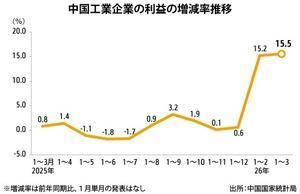 China’s Industrial Firms’ Profits Rise 15.5% in Q1 on AI, Chip-Related Gains China’s National Bureau of Statistics said on the 27th that profits at industrial firms above a designated size rose 15.5% in the first quarter of 2026 (January-March) from a year earlier to 1.69604 trillion yuan (about 39.5 trillion yen). The growth rate was 0.3 percentage points higher than in January-February, as rapid expansion in artificial intelligence and semiconductors boosted profits at related parts makers. In March alone, profits increased 15.8% from a year earlier, with the growth rate 0.6 percentage points higher than in January-February. By major sector in January-March, manufacturing, which accounts for 70% of the total, rose 19.1% to 1.23843 trillion yuan, accelerating from 18.9% growth in January-February. Mining increased 16.2% to 256.33 billion yuan. Profits at electricity, heat, gas and water production and supply fell 3.2% to 201.28 billion yuan, turning negative. High-tech manufacturing profits jumped 47.4%, lifting the overall growth rate by 7.9 percentage points. Driven by AI and semiconductor-related industries, optical fiber manufacturing rose 4.4 times, optoelectronic device manufacturing increased 43.0%, and display device manufacturing gained 36.3%. With demand rising for smart products, smart unmanned aerial vehicle (drone) manufacturing climbed 53.8%, and other smart consumer equipment manufacturing rose 67.3%. Equipment manufacturing profits increased 21.0%. Computer, communications and other electronic equipment manufacturing rose 2.2 times, while railway, ship, aerospace and other transport equipment manufacturing increased 16.7%, widening its growth by 5.3 percentage points. Raw materials manufacturing profits rose 77.9%. As strategic emerging industries such as aerospace, new energy and next-generation IT expanded rapidly, nonferrous metal smelting and rolling processing more than doubled profits. Petroleum, coal and other fuel processing swung from a loss a year earlier to a profit of 22.94 billion yuan. Chemical raw materials and chemical products manufacturing increased 54.5%. By contrast, automobile manufacturing profits fell 17.7%, extending the decline. The bureau cited continued double-digit drops in domestic sales amid a review of measures to promote adoption of new energy vehicles, as well as rising operating costs. By ownership type in January-March, state-owned enterprises posted a 10.1% increase to 619.61 billion yuan. Private firms rose 20.9% to 1.30546 trillion yuan. Foreign-invested firms increased 1.2%, turning positive after a 3.8% decline in January-February. Individually owned businesses rose 25.4%. Industrial firms’ revenue increased 5.0% to 33.19129 trillion yuan. Operating costs rose 4.5% to 28.18859 trillion yuan.* This article has been translated by AI. 2026-04-28 11:18:21
 -
 Kim Seong-beom resigns as Oceans vice minister, seen running in Seogwipo by-election Kim Seong-beom, vice minister of oceans and fisheries, submitted his resignation on the 28th and left public office. He held a farewell ceremony that day at the ministry’s building in Busan and formally stepped down. His resignation, however, had not yet been accepted. Political circles said Kim is expected to run in the June 3 by-election for a National Assembly seat in Seogwipo City. With the farewell ceremony held before his resignation was accepted, the ruling camp appeared to be moving quickly to recruit him. The current Seogwipo lawmaker, Wi Seong-gon, has been confirmed as a candidate for Jeju governor and is expected to resign on the 29th. Kim is widely seen as the pick to fill the candidate field in what is considered a Democratic Party stronghold. Kim, a Jeju native, spent his school years in Namwon-eup, Seogwipo, and has held a range of senior posts in the oceans and fisheries sector. Analysts have also credited him with handling key issues — including the ministry’s relocation to Busan — during a roughly four-month vacancy in the minister post. At the farewell ceremony, Kim exchanged final greetings with staff and expressed both apology and gratitude to employees who endured the move to Busan. * This article has been translated by AI. 2026-04-28 11:12:17
 -
 Korea Institute Urges Long-Term Solar Contracts, Permitting Fixes for Wind Power As resource security concerns grow amid war in the Middle East, a state-run research institute said South Korea needs a stable supply of materials, parts and technology to ensure reliable renewable power generation. It called for a shift to long-term contracts for solar power and for removing institutional barriers that slow wind projects. The Korea Institute for Industrial Economics and Trade released the recommendations on 28 in a report titled, "Measures to Strengthen the Competitiveness of Korea’s Renewable Energy Industry From a Resource Security Perspective." The institute said recent instability around the Strait of Hormuz has exposed structural vulnerabilities in an energy system centered on fossil fuels. It added that persistent geopolitical tensions, the spread of artificial intelligence data centers and an accelerating green transition are broadening the resource security debate to the entire energy and power-generation system. It said renewables are durable facilities used for long periods after installation, making them harder to protect through stockpiling or diversifying import sources alone, as with fossil fuels. With rapid technological change and varied standards, strengthening the domestic industrial base can be a more practical response, it said. The institute pointed to limits in Korea’s industrial base despite pressure to expand deployment, citing wind power as a key example. As of the end of 2024, domestically made wind turbines accounted for 47.5%, and the share could fall further as offshore wind expands, it said. For wind, the institute urged action to ease nonprice bottlenecks such as permitting and military operational assessments. It said resolving difficulties tied to those assessments, securing dedicated ports, expanding installation and maintenance vessel capacity, and reinforcing grid infrastructure would improve predictability for project execution. It also called for institutional changes for solar power, saying a structure centered on the spot market for renewable energy certificates, or RECs, increases price volatility and strengthens incentives to adopt low-priced imports, weakening investment and production conditions for domestic manufacturers. It said the government’s push to shift to a supply system centered on bidding and long-term contracts is also justified from a resource security standpoint, and recommended considering supplementary measures such as a public track during the transition. Lee Seul-gi, a research fellow at the institute’s New Industry Strategy Research Division, said in the report, "While the domestic industrial base is important in strengthening renewable energy resource security, selective and strategic policy intervention that respects market functions is more desirable."* This article has been translated by AI. 2026-04-28 11:09:21
 -
 GS E&C to Run Xi Brand Pop-Up in Seoul’s Seongsu-dong GS Engineering & Construction said it will launch a customer campaign to showcase the updated direction of its Xi apartment brand following a rebranding. The company said April 28 it will run the “Find Your Inspiration” campaign from May 1-15 at a Xi brand pop-up venue in Seoul’s Seongsu-dong, tied to the Seoul International Garden Show. The pop-up space will feature a residential area using Xi’s specialized design, a wellness community video hall and hands-on experience zones. Visitors will be able to experience the future housing concept Xi is promoting. GS E&C also said it will create “Elysian Forest,” a companion garden at the Seoul International Garden Show reflecting Xi’s landscaping philosophy. The company said it plans to link the garden visit naturally to the Xi pop-up venue to introduce the brand’s direction to more customers. Through the campaign, GS E&C said it aims to strengthen brand experience and expand Xi’s positioning as a brand that connects living spaces and lifestyle. “As customer expectations for living spaces become more diverse, it is important to go beyond simple supply and propose new residential experiences,” a GS E&C official said. The official added the company will continue activities to broaden customer touchpoints and communicate brand value. * This article has been translated by AI. 2026-04-28 11:08:22
 -
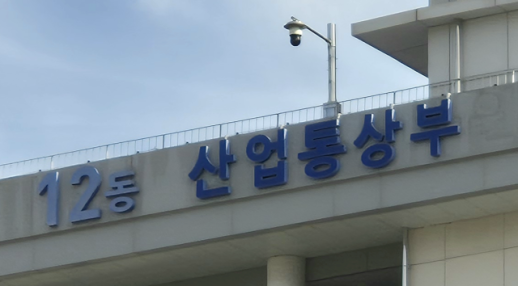 South Korea Launches Government-Industry Talks to Counter Tighter Global Export Controls The South Korean government has launched a formal communication channel with leading companies in semiconductors, artificial intelligence and quantum technology to respond to rapidly shifting global trade security conditions. The Ministry of Trade, Industry and Energy said it held the first public-private “Trade Security Dialogue” on the afternoon of April 28 at the Korea Institute for Trade Security Management in Seoul’s Gangnam district, with 10 major companies and related industry associations from the semiconductor, AI and quantum sectors. The meeting was organized to strengthen the response capabilities of domestic exporters as the United States, China and the European Union continue to tighten economic security measures amid competition for leadership in advanced technologies. With the potential military use of private-sector technologies expanding, export controls and sanctions rules are becoming more complex, the ministry said. Exporters in key industries such as semiconductors, machinery and aerospace are finding it increasingly difficult to accurately understand and comply with the export control and sanctions rules of different countries, it said. Violations can lead to export restrictions, administrative fines and other penalties, including being placed on sanctions lists. At the session, the government briefed participating companies on trade security issues, including U.S. legislative trends on semiconductor export controls and China’s announcement of supply chain security rules. Officials also discussed export control items related to semiconductors, AI and quantum technologies that are emerging as key topics in international export control regimes, and reviewed response directions. The ministry said the new channel is expected to deepen government-industry communication beyond raising difficulties, expanding it into a forum for international negotiations on export controls and discussions on institutional improvements. The ministry said it plans to set up a “trade security hotline” with relevant associations in the first half of the year to address urgent issues, and to continue the dialogue with major manufacturing sectors such as machinery, robotics and automobiles. Yang Gi-uk, director general for industrial and resource security, said “in-depth communication between the government and companies is key” to establishing and implementing effective trade security policy. He said the government will work with companies to track changes in the global trade security environment and respond with national interests as the top priority, supporting export industries such as semiconductors in maintaining a “super-gap” competitive edge.* This article has been translated by AI. 2026-04-28 11:05:42
 -
 South Korea to Require Separate Labels for Pre-Law E-Cigarette Stock Under New Safety Rules The government said it will begin enforcing safety management standards for stockpiled liquid e-cigarette products starting on the 28th. The measure is intended to protect consumers during distribution of products manufactured or imported before the revised Tobacco Business Act took effect on the 24th. Under the “Safety Management Standards for Stockpiled Liquid E-Cigarette Products,” businesses must clearly label and notify consumers that a product is pre-law inventory and provide key information, including nicotine content, on the packaging. Businesses must also request testing for harmful substances before selling inventory products. The government may recommend halting sales of long-held inventory that remains in circulation for more than 12 months after the law’s effective date, as well as products sold by mail or through e-commerce. In addition, businesses must provide accurate information to consumers under the Framework Act on Consumers and take steps to prevent harm caused by their products.* This article has been translated by AI. 2026-04-28 11:05:25
 -
 South Korea Sets 2027 Lottery Sales Target at 8.4 Trillion Won, Keeps Current Rules The Lottery Commission under the Planning and Budget Office has approved an issuance plan that would expand lottery sales in 2027 to about 8.4 trillion won. On the 28th, the commission held its 188th meeting at the Korea Trade Insurance Corp. in Seoul, chaired by Vice Chair Im Ki-geun, and deliberated and approved the “2027 Lottery Issuance Plan” and the “2025 Lottery Fund Project Performance Evaluation Results.” The commission decided to keep current face values, issuance conditions and prize-payment methods for all 12 existing lottery products, including Lotto. Reflecting sales growth over the past three years, it set projected 2027 lottery sales at 8.4175 trillion won, up 321.7 billion won, or 4.0%, from this year’s plan. If sales meet the plan, lottery proceeds used to finance lottery fund projects in 2027 are expected to total 3.4278 trillion won, up 138.6 billion won, or 4.2%, from this year’s planned 3.2892 trillion won. In a performance evaluation of 2025 lottery fund projects, the overall average score came to 82.9 points, slightly higher than the previous year’s 82.4. A total of 79 statutory projects, including transportation support for people with mobility challenges and nighttime protection programs for low-income children and teenagers, received strong ratings, along with 17 public-interest projects such as support to expand inclusive finance and welfare assistance for veterans of war. The commission said it will actively reflect the evaluation results in future budget allocations. When drawing up the 2027 lottery fund management plan, it will apply a principle of increasing funding for highly rated projects and reducing funding for underperforming ones. For statutory projects, it plans to adjust allocations by agency rankings within the limits set by the Lottery Act.* This article has been translated by AI. 2026-04-28 11:04:58
 -
 South Korea to Invest 90 Billion Won in 39 New Smart Green Industrial Park Projects The South Korean government will invest 90 billion won this year to accelerate industrial parks’ shift to AI-based manufacturing, known as M.AX, and a carbon-free transition, known as GX. The Ministry of Trade, Industry and Energy said April 28 it will accept applications for its “2026 Smart Green Industrial Complex Support Program” through June 8. The ministry is running support programs for M.AX and GX across 24 industrial parks designated as smart green complexes, including projects to build AI transformation testbeds and energy self-sufficiency infrastructure. Under the integrated call, the ministry will select 39 new projects across nine programs — five in M.AX and four in GX. The ministry said this year’s support totals 90 billion won, and that selected projects will receive about 300 billion won in central government funding over their project periods. Asan Bugok, the Masan Free Trade Zone and Chungju’s First General Industrial Complex — newly designated as smart green complexes last year — will receive core projects common to smart green complexes, including a smart logistics platform, a manufacturing AX industry-academia innovation park and construction of a smart energy platform, known as FEMS. Nationwide competitive programs for smart green complexes will include building 5G specialized network infrastructure for industrial parks, edge AIDC demonstrations and energy self-sufficiency infrastructure. The ministry said it will also support construction of FEMS+ — a smart energy platform — for 14 tenant companies. In Yeosu and the Pohang National Industrial Complex, the government will push a digital-based pilot complex for resource circulation. The government said the projects will strengthen the foundation for M.AX and GX in industrial parks, support manufacturing innovation and carbon reductions among tenant companies, and contribute to more balanced regional development. It also said it will improve evaluation indicators to reflect policy aimed at strengthening balanced regional development. Details such as application periods and support conditions for each program are available on the ministry’s website and the Korea Industrial Complex Corp. website. The ministry said it will “continue to support AI-based manufacturing innovation and the carbon-free transition in industrial parks” to help boost tenant companies’ competitiveness and revitalize regional economies.* This article has been translated by AI. 2026-04-28 11:04:29