
Journalist

Lim, Kwu Jin
-
 Government Plans to Adjust Tax Benefits for Rental Property Owners The government has assessed that the real estate market is transitioning to a focus on actual residents, prompting a review of tax benefits for rental property owners. Deputy Prime Minister and Minister of Economy and Finance Koo Yun-cheol stated on May 8 during a meeting at the Government Complex in Seoul that, "The recent real estate market is moving away from overheating and is being restructured around actual residents." He noted that loan regulations and land transaction permits are effectively curbing speculative purchases, while expectations for rising housing prices are diminishing. The government aims to enhance housing supply in Seoul and the surrounding metropolitan area while blocking speculative demand and fostering a trading environment centered on actual residents. With the recent passage of the 'Land Compensation Act' in the National Assembly, the government plans to focus on generating tangible supply outcomes that citizens can feel. Additionally, in response to concerns about a potential inventory freeze following the expiration of the capital gains tax exemption for multiple homeowners on May 9, various measures are under consideration. This includes reviewing the appropriateness of tax benefits for rental property owners in designated adjustment areas. On the same day, Koo emphasized the resilience of the economy, referencing the Bank of Korea's report on the current account balance for March, which recorded a historic surplus of $37.3 billion. He noted that exports exceeded $800 billion for two consecutive months, indicating strong fundamentals. However, he acknowledged that the prolonged conflict in the Middle East is exacerbating economic pressures, including high oil prices and supply chain disruptions. He assured that the government would maintain a firm response until uncertainties are fully resolved. The government also reported that the supply of key items like NAFTA, syringes, and trash bags is stabilizing, and consumer prices remain lower than in major countries. Nonetheless, it remains vigilant about supply chain uncertainties and is committed to alleviating the burden on citizens. Furthermore, the government plans to continue implementing price stabilization measures, including the fifth round of the oil price cap and addressing supply chain issues for essential items like syringes.* This article has been translated by AI. 2026-05-08 08:54:28
 -
 Samsung Securities Raises Target Price for HD Hyundai Heavy Industries Samsung Securities announced on May 8 that it has raised its target price for HD Hyundai Heavy Industries from 890,000 won to 1,030,000 won, citing improvements in profitability across all business divisions and the anticipated impact of high-value contracts. The investment rating remains at 'Buy.' Analyst Han Young-soo noted, "First-quarter operating profit exceeded market expectations by 14%. Even without one-time gains, the results are impressive considering conservative performance bonuses and a high proportion of currency hedging." He added that despite the merger with HD Hyundai Mipo, the shipbuilding sector has seen improved profitability, while the marine division has experienced significant revenue and profit growth due to the advancement of major projects. The engine division also continues to show improved operating margins. Han emphasized that further profitability improvements are possible with the recognition of revenue from high-value contracts. As of the end of the first quarter, net cash approached 3.7 trillion won, and additional cash inflow is expected from the successful sale of the Gunsan yard. He also highlighted the positive effects of increased orders for power engines for North American data centers and price hikes due to tight supply for ship engines, stating, "Considering premium factors, the current valuation is conservative, with ample room for further increases."* This article has been translated by AI. 2026-05-08 08:51:21
 -
 Bitcoin Falls Below $80,000 Amid Uncertainty in Middle East Negotiations Bitcoin's price has dropped below $80,000, reflecting a bearish trend as uncertainty looms over peace negotiations in the Middle East. As of 8 a.m. on May 8, Bitcoin was trading at $79,899, down 1.73% from the previous day, according to CoinMarketCap. The cryptocurrency briefly surpassed $82,000 on May 6 amid optimism for a U.S.-Iran agreement but has since declined. Major altcoins also experienced losses, with Solana (SOL) down 1.09% at $88.08, Ripple (XRP) falling 2.62% to $1.38, and Ethereum dropping 2.54% to $2,286. Market analysts attribute the decline to a slowdown in U.S.-Iran peace talks, dampening investor sentiment towards risk assets. According to Yonhap News, on May 7, U.S. forces struck Iranian military facilities in the Strait of Hormuz in self-defense against Iranian attacks. The resumption of hostilities between U.S. and Iranian forces has heightened military tensions just a day after negotiations were mentioned. Meanwhile, on the domestic exchange Bithumb, Bitcoin was trading at approximately 117.91 million won ($80,871), a decrease of 0.11%. The so-called 'Kimchi premium' stood at 1.28%, indicating that domestic prices are higher than international rates.* This article has been translated by AI. 2026-05-08 08:24:19
 -
 U.S. Stocks Decline as Semiconductor Gains Fade; Dow Drops 0.63% U.S. stock indices fell across the board as profit-taking in semiconductor stocks followed recent gains, compounded by volatile oil prices and uncertainty in the Middle East. However, strength in major artificial intelligence (AI) stocks and some software companies helped limit the declines. On May 7, the Dow Jones Industrial Average closed down 313.62 points (0.63%) at 49,596.97. The S&P 500 dropped 28.01 points (0.38%) to 7,337.11, while the Nasdaq Composite fell 32.75 points (0.13%) to 25,806.20. The Russell 2000 index declined by 1.6%. After setting records the previous day, the market showed signs of consolidation, particularly in semiconductor stocks. Intel and AMD each fell about 3%, and the Philadelphia Semiconductor Index dropped 2.7%. Arm's significant decline also weighed on investor sentiment in the sector. Sector performance was notably weak in materials and energy, with nine of the 11 S&P 500 sectors declining. Materials fell 1.83%, and energy dropped 1.78%, as oil price volatility affected related industries. Conversely, some AI and software stocks mitigated losses. Nvidia and Microsoft rose around 2%, while Datadog surged 31% after raising its annual forecast. CrowdStrike and Palo Alto Networks increased by 8% and 7%, respectively. Oil prices experienced sharp fluctuations during the day, reflecting market expectations for negotiations between the U.S. and Iran, while investors awaited confirmation of any agreements. Economic indicators were mixed. Weekly initial jobless claims in the U.S. rose less than expected, suggesting a resilient labor market. However, Cleveland Federal Reserve President Loretta Mester indicated that interest rates could remain unchanged for an extended period, dampening hopes for early rate cuts. On a weekly basis, the upward trend persisted, with the S&P 500 gaining 1.5%, the Nasdaq rising 2.8%, and the Dow increasing by 0.2%. Year-to-date, the Russell 2000 is up 14.4%, the Nasdaq 11.0%, the S&P 500 7.2%, and the Dow 3.2%. The market continues to navigate oil price fluctuations, Middle Eastern uncertainties, and interest rate trajectories, showing a differentiated performance among tech stocks and those with improving earnings.* This article has been translated by AI. 2026-05-08 08:18:47
 -
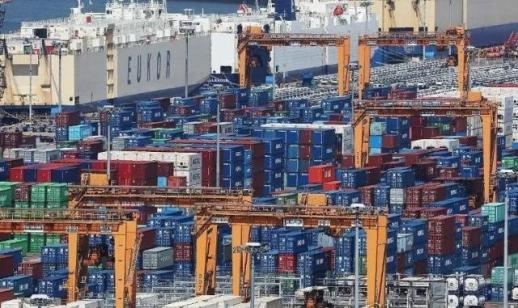 South Korea's Current Account Surplus Reaches Record $37.3 Billion in March South Korea's current account surplus reached a record $37.33 billion in March, driven by strong semiconductor exports. The increase in oil products and chemicals also contributed to this historic surplus. According to preliminary statistics released by the Bank of Korea on May 8, the current account surplus for March was approximately 54.43 trillion won. This marks the 35th consecutive month of surplus, the second-longest streak since the 2000s. Following a record surplus of $23.19 billion in February, March's figure exceeded $30 billion, indicating significant growth. The trade balance recorded a surplus of $35.07 billion, the highest ever. After reaching $23.36 billion in February, the trade surplus surpassed $30 billion in March. Exports surged 56.9% year-on-year to $94.32 billion, also a record high. IT products, particularly semiconductors and computer peripherals, showed strong performance, while non-IT items benefited from increased working days and rising oil prices. Notable increases were seen in exports of computer peripherals (167.5%), semiconductors (149.8%), wireless communication devices (13.1%), and chemicals (9.1%). After a 23% decline last year, automobile exports rebounded with a 1.1% increase. Oil product exports surged from a 0.7% decline to a 69.2% increase. Regionally, exports to Southeast Asia (68.0%), China (64.9%), the United States (47.3%), and Japan (28.5%) performed well, while exports to the Middle East fell by 49.1%. Imports also rose by 17.4% to $59.24 billion, driven by capital goods, particularly information and communication equipment (51.6%), transportation equipment (34.8%), and semiconductors (34.5%). Raw material imports increased by 8.5%, led by chemicals (20.5%), marking the first rise in six months, while consumer goods imports grew by 2.1%. The services account recorded a deficit of $1.29 billion, significantly reduced from a $2.51 billion deficit in March last year and down from $1.86 billion the previous month. The travel balance showed a surplus of $140 million, marking the first surplus since November 2014, coinciding with the spring travel season. The primary income balance surplus increased from $2.48 billion in February to $3.58 billion in March, driven by higher dividend income from direct and portfolio investments. The financial account showed a net asset increase of $36.99 billion. Domestic investment abroad rose by $8.89 billion, while foreign investment in South Korea increased by $3.77 billion. In securities investment, domestic investment abroad increased by $4 billion, but foreign investment in South Korea decreased by $34.04 billion, the largest drop on record, amid concerns over regional risks and declining memory demand.* This article has been translated by AI. 2026-05-08 08:15:28
 -
 Samsung ETFs Surge 93%, LG and Hyundai Stumble Amid Market Rally ◆Ajou Economic Key News ▷Samsung Group ETFs Lead with Over 93% Returns, Others Lag - The KOSPI index continues its rally, with Samsung Group ETFs achieving returns exceeding 93% since the start of the year, dominating the ETF market. - ETFs like 'TIGER Samsung Group' (93.64%) and 'KODEX Samsung Group' (86.15%) significantly outperformed the KOSPI's 77.73% rise, largely due to Samsung Electronics' surge. - In contrast, ETFs for major groups like LG, Hyundai, POSCO, and Hanwha reported returns between 43% and 62%, falling short of the KOSPI's gains. - Fund flows varied, with 'TIGER Hyundai Group Plus' attracting 574.1 billion won, while 'KODEX Samsung Group' saw 72.1 billion won exit due to profit-taking. - Analysts warn that the expansion of the ETF market could increase volatility in the stock market, advising caution amid the ongoing high performance and potential for technical corrections. ◆Key Reports ▷Caution Advised on Middle East Situation, Oil Price Rebound Pauses Market - U.S. markets reached record highs early but reversed course due to a spike in oil prices linked to Iran, with the Dow down 0.63%, S&P 500 down 0.38%, and Nasdaq down 0.13%. - Semiconductor stocks weakened due to profit-taking and ARM's earnings impact, leading the Philadelphia Semiconductor Index to drop 2.7%, with Intel, Micron, and Broadcom falling around 3%. - International oil prices briefly dipped amid U.S.-Iran peace hopes but surged again after concerns about potential Iranian blockades in the Strait of Hormuz, with WTI rising to $97.8 and Brent to $103.6. - U.S. job data showed initial unemployment claims below expectations, indicating a solid labor market, while unit labor cost growth slowed, easing wage inflation concerns. - Rising oil prices and strong economic indicators pushed U.S. Treasury yields higher, while geopolitical risks in the Middle East and tech sector layoffs dampened investor sentiment. ◆Major Announcements After Market Close (May 7) ▷Inbody Reports Q1 Operating Profit of 13 Billion Won, Up 86% Year-on-Year ▷DA Technology Changes Major Shareholder to Jeong Chan-soo ▷XQUR Exercises 500 Million Won Convertible Bond Rights ▷Apten Lifts Trading Suspension on May 8 ▷Barunson Lifts Trading Suspension on May 12 ▷Cafe24 Reports Q1 Operating Profit of 6.2 Billion Won, Up 4.6% Year-on-Year ▷Harim Reports Q1 Operating Profit of 111.66 Billion Won, Up 67.82% Year-on-Year ◆Fund Trends (As of May 6, Excluding ETFs) ▷Domestic Equity: -167 Billion Won ▷Foreign Equity: -23.5 Billion Won ◆Key Schedule for Today (May 8) ▷South Korea: Current Account (March) ▷Germany: Trade Trends (March), Industrial Production (March) ▷UK: House Price Index (April) ▷U.S.: Employment Report (April), Consumer Sentiment Index (May)* This article has been translated by AI. 2026-05-08 08:06:28
 -
 US court strikes down Trump tariffs again as Korea watches next trade front SEOUL, May 08 (AJP) -President Donald Trump’s global tariff regime has been struck down by U.S. courts yet again, marking the fifth consecutive major legal defeat for his second-term inward trade strategy and intensifying uncertainty for export-dependent allies such as South Korea. On Thursday, the U.S. Court of International Trade ruled that Trump illegally imposed a 10 percent blanket tariff on most imports using Section 122 of the Trade Act of 1974, concluding the administration exceeded powers granted by Congress. The ruling represents the latest collapse in a rapidly evolving tariff strategy that has repeatedly shifted legal foundations as earlier measures were invalidated by courts. The newly invalidated tariffs had themselves been introduced only hours after the U.S. Supreme Court struck down Trump’s earlier sweeping “reciprocal tariffs” in February. Those previous tariffs were imposed under emergency executive powers through the International Emergency Economic Powers Act (IEEPA), with Trump arguing that chronic trade deficits and supply-chain vulnerabilities constituted a national emergency. The administration used that authority to impose broad double-digit tariffs affecting nearly every major U.S. trading partner, including South Korea, the European Union, Japan and Canada. But courts increasingly rejected the legal rationale. The tariff regime was first challenged at the U.S. Court of International Trade, then blocked by a federal district court and later rejected again at the Federal Circuit Court of Appeals. The Supreme Court ultimately delivered the decisive blow earlier this year, ruling that Trump had exceeded presidential authority by using emergency powers to impose sweeping trade tariffs without congressional approval. Rather than retreat, the White House moved immediately to preserve the tariffs through a new legal pathway. Within hours of the Supreme Court ruling, Trump unveiled a replacement system using Section 122 of the Trade Act of 1974 — a little-used Cold War-era provision allowing temporary tariffs of up to 15 percent for a maximum of 150 days in response to “large and serious” balance-of-payments deficits or “fundamental international payments problems.” The law was originally written during the Bretton Woods monetary era, when the U.S. dollar remained tied to gold and policymakers feared destabilizing international payment imbalances. The move was largely met with scorns. A coalition of states and small businesses sued, arguing the United States does not face the type of balance-of-payments crisis envisioned by Congress in the 1970s. Economists also noted that modern U.S. trade deficits differ fundamentally from the monetary instability Section 122 was designed to address. The trade court agreed. In a split ruling Thursday, judges found the administration failed to demonstrate the specific economic conditions required under Section 122 and declared the tariffs “invalid” and “unauthorized by law.” The administration is expected to appeal again, potentially setting up another Supreme Court confrontation. But the latest defeat further exposes the increasingly unstable legal architecture behind Trump’s tariff offensive. The repeated setbacks, analysts agree, won't likely humble Trump’s trade agenda. The administration has been migrating toward a more legally durable mechanism: Section 301 of the Trade Act of 1974. Section 301 — the same authority Trump used during the original U.S.-China trade war — allows the U.S. Trade Representative to investigate unfair foreign trade practices and impose retaliatory tariffs following formal reviews and hearings. Unlike emergency powers or Section 122, Section 301 requires a lengthier procedural process. But once tariffs are implemented, they become substantially harder to overturn in court because they rest on clearer statutory authority delegated by Congress. The White House has already signaled that future Section 301 investigations will increasingly target strategic industries tied to economic security and industrial competition, including semiconductors, electric vehicles, batteries, pharmaceuticals and advanced manufacturing supply chains. The U.S. Trade Representative (USTR) in March announced it was launching investigations into Korea and 15 other major manufacturing economies under Section 301, accusing them of "structural excess capacity." The Korean trade minister has been in Washington for an USTR hearing to defend the industry anchored on "market economy principles" and explain how the two countries are in a complementary relationship that is expected to expand based on the Korea-U.S. strategic investment memorandum of understanding where Korea has pledged a combined investment of $350 billion. 2026-05-08 07:58:48
 -
 HMM Namoo Arrives in Dubai After Fire Incident Investigation Begins The HMM Namoo, which caught fire due to an explosion while anchored in the Strait of Hormuz, has arrived in Dubai, UAE, approximately 12 hours after being towed from the incident site. According to HMM, the vessel reached the vicinity of Dubai port at 5:20 a.m. Korean time, towed by a tugboat from near Umm al-Quwain. The Namoo is now docked at Drydocks World Dubai, the largest repair yard in the Middle East, where it will undergo repairs and an investigation into the cause of the fire. This process is expected to take an additional three hours. An HMM official stated, "Since the ship is without power, docking may take considerable time. External personnel, including investigators, are expected to board the vessel later this morning." The investigation will be conducted by a government team comprising three investigators from the Central Maritime Safety Tribunal and four fire department experts. The focus will be to determine whether the fire was caused by external factors, such as an attack from Iran, or internal issues related to the vessel itself. On May 4, at approximately 8:40 p.m. Korean time, the HMM Namoo experienced a fire in the engine room while anchored north of Sharjah in the UAE. The vessel, registered in Panama and operated by South Korea's largest shipping company HMM, had 24 crew members on board, including six South Koreans and 18 foreign nationals. Fortunately, there were no reported injuries from the incident. Currently, five HMM vessels are stranded in the Persian Gulf, including two oil tankers, two bulk carriers, and one container ship. The HMM Namoo is classified as a bulk carrier.* This article has been translated by AI. 2026-05-08 07:48:21
 -
 SK Telecom Recovers 500 Billion Won Operating Profit; LG Uplus Continues Growth Amid Hacking Concerns The three major telecom companies in South Korea—SK Telecom, KT, and LG Uplus—released their Q1 2026 results, with SK Telecom recovering to an operating profit of 500 billion won, moving past the fallout from last year's USIM hacking incident. LG Uplus was the only company to report increases in both revenue and operating profit, demonstrating stable growth. According to SK Telecom, its consolidated revenue for Q1 reached 4.39 trillion won, with an operating profit of 537.6 billion won. Although revenue decreased by 1.4% and operating profit by 5.3% compared to the previous year, the recovery of operating profit above 500 billion won raised expectations for improved performance in the second half of the year. The wireless segment reported a 3% decline in revenue to 2.58 trillion won. However, the proportion of 5G subscribers grew to 81% of total handset subscribers, maintaining a market share of 45.7%. In the wired segment, revenue increased by 2.2% year-over-year to 295.4 billion won, driven by a rise in high-speed internet subscribers and an increase in gigabit internet users. Conversely, revenue from paid broadcasting fell by 1.3% to 471.9 billion won, and enterprise revenue decreased by 1.7% to 274.7 billion won. LG Uplus reported growth in both revenue and operating profit for Q1, with consolidated revenue of 3.80 trillion won, up 1.5%, and operating profit of 272.3 billion won, up 6.6% year-over-year. The mobile segment's total revenue reached 1.65 trillion won, a 3.2% increase from the previous year, attributed to an increase in subscriber lines and enhanced competitiveness in core telecom operations. The total mobile subscriber lines grew by 6.4% year-over-year to approximately 39.03 million. Mobile network operator (MNO) lines increased by 7.1% to about 21.97 million, while mobile virtual network operator (MVNO) lines rose by 4.7% to about 8.96 million. Revenue from the smart form segment, which includes IPTV and internet services, rose by 4.1% year-over-year to 656.3 billion won. IPTV revenue increased by 1.5% to 335.1 billion won, while internet revenue grew by 7.9% to 320 billion won. Both companies' performance was bolstered by their AI businesses. SK Telecom's AI revenue nearly doubled compared to its sluggish telecom segment, with AIDC revenue soaring by 89.3% year-over-year to 131.4 billion won, driven by increased data center utilization and GPU as a Service (GPUaaS) sales. LG Uplus also experienced growth in its AIDC business, with revenue increasing by 31% year-over-year to 114.4 billion won. An Hyung-kyun, head of the Enterprise AI Business Group, stated during the Q1 earnings call that the revenue from contracts secured last year is now being reflected, and he expects continued high growth. He added that the company plans to strategically expand its business in line with market conditions while reliably executing existing projects. KT is set to announce its Q1 results on the 12th. Analysts predict KT's consolidated revenue for the quarter will be around 6.8 trillion to 6.9 trillion won, with operating profit expected between 480 billion and 520 billion won. The market anticipates that the impact of last year's femtocell hacking incident, increased security investments, customer compensation policies, and one-time gains from real estate sales will affect its performance.* This article has been translated by AI. 2026-05-08 07:21:26
 -
 Korea and Japan Stock Markets Surge Amid AI Semiconductor Rally In just a few days, the stock markets in South Korea and Japan have set historic records. The KOSPI index in South Korea surpassed 7,000, while Japan's Nikkei average soared by 3,320 yen to reach an all-time high. The surge is largely driven by the demand for AI semiconductors. Interestingly, the market dynamics in the two countries differ. The South Korean market is primarily influenced by Samsung Electronics and SK Hynix, fueled by expectations of explosive demand for memory semiconductors due to the expansion of AI servers and data centers. Samsung's market capitalization has now exceeded $1 trillion, positioning South Korea as a key player in the 'AI memory supply chain.' Conversely, the Japanese market is also experiencing an AI rally, with Advantest, Tokyo Electron, and SoftBank Group seeing significant gains, and Kioxia hitting its upper limit. The strong performance of U.S. companies like AMD and Micron, along with the Philadelphia Semiconductor Index reaching new heights, has also boosted Japanese stocks. However, there are concerns in Japan regarding the concentration of gains in certain AI and semiconductor stocks. The NT ratio, which quickly gauges market trends, has reached historic highs, prompting experts to caution that the sustainability of this tech-focused rally may be limited. Currently, the market is not merely searching for 'good companies' but is instead seeking supply chains that can thrive in the AI era. In this context, South Korea and Japan find themselves in different positions. South Korea holds the critical component of memory semiconductors, benefiting directly from the increase in AI servers. In contrast, Japan excels in semiconductor equipment, materials, and testing tools. In simple terms, South Korea produces the 'heart,' while Japan manufactures the 'surgical tools.' Both are essential, but the market reacts more strongly to core components. This shift also reflects a reversal in the industrial histories of South Korea and Japan. In the 1980s, Japan was the dominant force in the global semiconductor and electronics industry, while South Korea was learning from Japanese technology. However, the AI era has changed the order. Japan has remained focused on finished products and precision manufacturing, while South Korea has bet on a memory-centric strategy. The greatest anxiety for the Japanese economy lies here. In the past, Japan viewed South Korea as a country within its industrial ecosystem. Now, however, the Japanese market is increasingly following the trends set by Samsung and SK Hynix. The surge in Japanese semiconductor stocks is ultimately underpinned by expectations of an AI boom among South Korean and American memory firms. While the current rally may not last indefinitely, there is a risk of overheating in AI investments, and the semiconductor cycle can be volatile. Japan's market has already begun to signal risks associated with a 'semiconductor concentration.' South Korea faces similar risks due to the overwhelming influence of Samsung and SK Hynix. Nonetheless, it is clear that the global market is shifting from an era dominated by automobiles, steel, and home appliances to one focused on AI infrastructure. In this transformation, the positions of South Korea and Japan are also changing. Japan's recent sensitivity to Samsung and the KOSPI reflects this reality: for the first time in the AI era, South Korea is beginning to take the lead over Japan in industrial order.* This article has been translated by AI. 2026-05-08 07:03:28