
Journalist

Lim, Kwu Jin
-
 Iranian Media Claims Physical Action Against South Korean Vessel Iranian state media reported that Iran has taken "physical action" against a South Korean vessel. According to Yonhap News Agency, Iran's Press TV stated on May 6 that targeting a South Korean ship for violating newly defined maritime rules signals Iran's commitment to defending its sovereignty. While the specific name of the vessel was not mentioned, it is believed to refer to the HMM Namoo. The column also claimed that the U.S. halted its "Project Freedom" not out of goodwill, but due to Iran's asymmetric military deterrence and calculated responses. This contradicts the Iranian government's assertion that it was not involved in the explosion and fire on the HMM Namoo in the Gulf region. In a statement on May 6, the Iranian embassy in South Korea firmly denied any military involvement in the incident involving the South Korean vessel in the Strait of Hormuz. While the column did not specify the military as the actor behind the alleged physical action, it contrasts with the embassy's claims of non-involvement. The embassy warned that ignoring operational realities in a tense military environment could lead to unintended incidents, placing responsibility on those who disregard such considerations while navigating the area. Although the Iranian military did not initiate an attack on the "innocent" HMM Namoo, it suggested that the vessel may have disregarded Iran's navigation rules, implying a potential justification for a physical response. Press TV operates as a state-run English-language outlet aimed at conveying the Iranian government's perspective to the West. The column also justified Iran's recent attacks on the United Arab Emirates (UAE), stating that a serious ultimatum delivered to the UAE shattered any illusions that war would be confined to international waters. It noted that redefining the Strait of Hormuz to include UAE territorial waters, particularly the Port of Fujairah, was a strategic move. The column warned that this shift would come as an unexpected shock to the U.S. and its allies, as Fujairah, located outside the Strait, had long been considered a safe rear base, a role that has now fundamentally changed.* This article has been translated by AI. 2026-05-07 23:47:53
 -
 Rising Burden of Loss Compensation Amid Uncertain Oil Reserve Release Timing The South Korean government's policy of releasing strategic oil reserves to stabilize prices is set to conclude in a month, but the future direction remains unclear. As international oil prices remain high, concerns are growing over the increasing burden of loss compensation for the refining industry, raising questions about the sustainability of the policy.The government has relied on short-term measures like the oil price cap and reserve releases, leading to heightened market uncertainty due to a lack of an exit strategy.Strong earnings amid growing domestic losses raise concerns over budget limitsIndustry analysts estimate that the combined operating profit of the four major refiners (SK Innovation, S-Oil, GS Caltex, and HD Hyundai Oilbank) for the first quarter of this year could approach 5 trillion won, a significant improvement from the previous year.The surge in oil prices due to the Middle East conflict has driven up the prices of petroleum products like gasoline and diesel. Refineries benefit from selling crude oil acquired at lower prices before the conflict, resulting in improved refining margins.However, the domestic market situation is different. The industry reports losses ranging from 1 trillion to 3 trillion won since the implementation of the price cap. While much of the revenue comes from exports and industrial sales not subject to the cap, the burden of domestic losses is nearing its limits.The government's burden of loss compensation is also increasing. If the current trend continues, the losses in the refining sector could exceed the 4.2 trillion won set aside by the government for compensation over six months.Concerns about additional financial burdens are growing within and outside the government. Nonetheless, officials maintain that they will uphold the principle of compensating legitimate losses.Moon Shin-hak, Deputy Minister of Trade, Industry and Energy, stated in a briefing, "The government has announced that it will fully compensate for legitimate losses, and it is the government's responsibility to secure the funds."However, if international oil prices continue to rise, discussions about securing additional funds will likely become unavoidable. Recently, international oil prices fell below $100 per barrel amid hopes for a reopening of the Strait of Hormuz, but concerns about declining global oil inventories due to the Middle East conflict persist. As the summer peak season approaches, fears of supply disruptions could lead to another spike in prices.Disputes over loss calculations signal uncertainty in oil reserve exit strategyThere are clear differences between the government and the industry regarding loss compensation criteria. The government aims to maintain a cost verification-based settlement approach for transparency in tax expenditures. Deputy Minister Moon stated, "Loss amounts will be calculated based on cost criteria."In contrast, the industry argues that the complexities of crude oil acquisition and refining make it difficult to determine costs for individual products. They advocate for incorporating the Singapore oil product price (MOPS) as a benchmark, indicating potential challenges in the settlement process ahead.Despite the impending end of the strategic oil reserve releases, the government has not disclosed specific plans or follow-up measures. According to the International Energy Agency (IEA) resolution, the government must complete the reserve releases by June 9, but no detailed schedule has been provided.Deputy Minister Moon explained, "The government is taking a cautious approach to the release of strategic oil reserves, as there is still volatility with the ceasefire negotiations showing progress and then uncertainty returning."The government prioritizes price stability over absolute price levels. Moon noted, "Even if a ceasefire occurs, prices may not decrease significantly for some time, as many experts point out. Stability in price fluctuations is more important than falling a few dollars."He added, "If prices move within a certain band and show stability, the market and consumers can adapt. However, we cannot rule out the possibility of increased price volatility even after a ceasefire."* This article has been translated by AI. 2026-05-07 23:45:40
 -
 South Korea Freezes Oil Price Cap for Third Time Amid Economic Concerns The South Korean government has decided to freeze the fifth oil price cap, marking the third freeze since the second increase. Despite rising international oil prices and accumulated factors for further increases, the government is prioritizing inflation concerns. However, the ongoing freeze amid rising price pressures suggests that future fiscal burdens may increase. Concerns about the prolonged situation are also growing as the government lacks a clear exit strategy. The Ministry of Trade, Industry and Energy announced on May 7 that the fifth oil price cap, effective from midnight on May 8, will maintain regular gasoline at 1,934 won per liter, diesel at 1,923 won, and kerosene at 1,530 won. The price cap system was implemented on March 13 due to rising international oil prices exceeding $100 per barrel, which has increased inflationary pressures. The initial price cap set regular gasoline at 1,724 won, diesel at 1,713 won, and kerosene at 1,320 won. The second price cap, effective March 27, set the same prices as the current freeze. Subsequent price caps were also frozen every two weeks, continuing this trend. Moon Sin-hak, Deputy Minister of Industry, noted that while international oil prices fluctuate around $100 per barrel, recent peace talks between the U.S. and Iran have led to a decline. He emphasized that uncertainty remains, and the cumulative factors for price increases have not been fully addressed. He added that consumer price inflation, which had stabilized earlier this year, has risen since the outbreak of conflict in the Middle East, with oil product prices increasing by 22% compared to the previous year. Given the overall inflationary environment, the government decided to freeze the price cap to prioritize public welfare. Without the price cap, gasoline prices would be around 2,200 won, and diesel would be about 2,500 won. Yang Gi-wook, head of the Ministry's Resource Security Office, indicated that gasoline prices have remained stable compared to April, with cumulative price increase factors estimated at 200 won for gasoline and 400 won for diesel. However, diesel drivers may face a greater burden due to higher remaining price increase factors. Deputy Minister Moon explained that diesel is linked to public welfare, while gasoline is tied to inflation concerns. Although there were discussions about adjusting cumulative increase factors, the decision was made to maintain the freeze after extensive deliberation. The government acknowledges the growing fiscal burden but lacks a clear exit strategy for the price cap. An additional budget of 4.2 trillion won has been allocated for the price cap, but increasing fiscal pressures may necessitate further budget adjustments. The government stated that both physical and price factors must stabilize. Deputy Minister Moon remarked that the free passage through the Strait of Hormuz and price volatility must be monitored, emphasizing the need to consider both factors alongside public welfare and inflation. Meanwhile, the government anticipates oil supply exceeding 210 million barrels from May to July, with May's supply expected to be 7.5 million barrels, June's at 6 million barrels, and July's at 7 million barrels, representing over 80% of normal import levels. The naphtha secured in May is expected to stabilize at around 90% of normal levels, with Deputy Minister Moon confirming that May's oil quantities are mostly finalized, while June and July figures are considered minimum estimates.* This article has been translated by AI. 2026-05-07 23:43:15
 -
 Deputy Minister Moon Warns of Concerns Over Samsung Strikes Amid AI Transition Deputy Minister of Trade, Industry and Energy Moon Shin-hak stated on May 7 that the transition to artificial intelligence (AI) in manufacturing, known as M.AX, is being pursued out of a sense of urgency to remain competitive globally. He emphasized the need for both labor and management to share a common understanding during negotiations. Speaking to reporters at the government complex in Sejong, Moon addressed the ongoing strikes by the Samsung Biologics union and the impending strike by the Samsung Electronics union. He noted, "While it is not appropriate to comment on specific companies, there are significant concerns for the domestic industry. It is necessary to observe the negotiation process as discussions unfold." The Samsung Biologics union conducted a full strike from May 1 to 5 before resuming operations on May 6. Their demands include a 30 million won bonus per member, a 14% wage increase, a 20% profit-sharing bonus, and the establishment of fair personnel standards. They particularly insist on obtaining union consent for the introduction of dark factories. Meanwhile, the Samsung Electronics union is demanding the elimination of the performance bonus cap, currently set at 50% of annual salary, and a distribution of 15% of total operating profit as bonuses. They have threatened a total strike from June 21 to July 7 if no agreement is reached. Moon asserted that M.AX is not merely an option but a necessary industrial policy to maintain the competitiveness of the sector and the potential growth rate of the economy. Regarding a recent audit by the Board of Audit and Inspection on Korea Electric Power Corporation and Korea Hydro & Nuclear Power's nuclear export, he explained that responsibilities are divided between the Ministry of Trade and the Ministry of Climate, Energy and Environment. He acknowledged the concerns raised by the audit and stated that the ministry is considering the issues pointed out. He added, "Our intended direction aligns with the audit's findings, and we are preparing to make an announcement soon." On the topic of the U.S. investment project, he remarked, "It is too early to make any predictions or statements." He also mentioned that the audit concerning the Korea National Oil Corporation's export of 900,000 barrels from a total of 2 million barrels of strategic oil reserves is in its final stages, promising to provide explanations once the audit is complete.* This article has been translated by AI. 2026-05-07 23:41:18
 -
 National Assembly Passes 115 Bills Including AI Data Center and Defense Semiconductor Laws The legal framework to support the activation of artificial intelligence (AI) data centers has been established. Additionally, a law to support the development of defense semiconductors has been enacted. On May 7, the National Assembly passed 115 bills, including the 'Special Act on the Promotion of the AI Data Center Industry' and the 'Law on the Development and Support of Defense Semiconductors.' A proposed constitutional amendment was not voted on due to a lack of quorum. The AI Data Center Promotion Act focuses on easing facility regulations and introducing special zones to enhance the construction and operation of AI data centers. It also includes provisions for related infrastructure and financial support. Some lawmakers expressed concerns that the bill might prioritize industrial growth at the expense of environmental and social costs for future generations, but it passed with 176 votes in favor out of 201. The bill regarding defense semiconductors, which mandates the Minister of National Defense to establish a basic plan for their development, also passed with 201 votes from 203 present. This law establishes a Defense Semiconductor Promotion Committee to review key policies and plans related to defense semiconductors and allows the Defense Acquisition Program Administration to pursue research and development (R&D) for military semiconductors. The 'Basic Law on Life Safety,' which guarantees public safety rights and outlines the responsibilities of the government and local authorities, also cleared the Assembly. This law will establish a National Life Safety Commission under the President, requiring the government to develop a comprehensive life safety plan every five years. A National Safety Accident Investigation Committee will also be created under the Prime Minister to investigate major safety incidents. Additionally, the 'Comprehensive Amendment to the Basic Law on Low Birth Rates and an Aging Society' was processed, changing its name to the 'Basic Law on Population Strategy' and expanding the committee's scope. Bills to support the development of Arctic shipping routes and solar power generation projects were also approved. A bill amending the Foreign Exchange Transaction Act, which requires registration with the Ministry of Economy and Finance for businesses dealing in virtual asset transfers, also passed. Meanwhile, the National Assembly attempted to present a constitutional amendment, but the ruling party did not participate in the vote, preventing it from proceeding. National Assembly Speaker Woo Won-sik announced that the amendment will be reintroduced in a session on May 8.* This article has been translated by AI. 2026-05-07 23:39:12
 -
 Hoshino Resort Redefines Travel Standards in Guam with 'Regeneration Philosophy' Hoshino Resort is setting new travel standards in Guam, focusing on 'experience' over 'relaxation' and 'value' over 'price.' With over a century of history, the Hoshino Resort Group is applying its unique 'regeneration philosophy' to the global stage, starting with the transformation of 'Rizonare Guam.' On May 7, Hoshino Resort held a press conference in Seoul to unveil its brand vision and the Guam resort regeneration project. Founded in 1914, Hoshino Resort operates 74 facilities worldwide under six brands: luxury 'Hoshinoya,' onsen ryokan 'Kai,' resort 'Rizonare,' city hotel 'OMO,' lifestyle hotel 'BEB,' and lodge-style hotel 'Rusy.' The core identity of these brands is 'locality and regeneration.' Instead of constructing new buildings, the company acquires aging or poorly managed facilities to restore their original value. Kato explained, "Rooms cannot be the sole purpose of travel; we first plan the benefits for guests before investing in hardware." The first overseas project under this regeneration initiative is 'Rizonare Guam.' Hoshino Resort noted that Guam, a familiar destination for Koreans, has seen a lack of new investments and is focusing on significant innovations that highlight the island's natural beauty and culture. A major change includes the addition of new facilities. In the first phase of investment, the existing pool and banquet hall were replaced with Guam's first beach club and an all-day dining venue called 'CHO CHO.' Opening this summer, CHO CHO will offer traditional Chamorro dishes and local cuisine influenced by Spain, while the beach club, set to open this fall, will provide a private beach experience with music and activities all day. This marks the beginning of a long-term regeneration roadmap. Kato outlined a blueprint that includes a second phase focused on a water park and a final phase for room investments. He added, "By revitalizing old facilities through operational software, we aim to enhance their value and contribute to the local economy, which is the true meaning of regeneration for Hoshino Resort." Innovations in service are also noteworthy. The previous all-inclusive package, which required guests to use accommodations and dining throughout their stay, has been revamped. The new 'Beach Club Package' allows guests to flexibly separate lunch and dinner according to their schedules, enabling them to explore Guam freely. Yoshiharu Hoshino, CEO of Hoshino Resort Group, emphasized in a video message, "The Guam market is very important to us. Korean customers, who make up half of Guam's visitors, are our most valued partners. We are seriously considering how to ensure their satisfaction during their stay and will continue to invest in new facilities that reflect the needs of the Korean market." Thanks to these bold innovations, the number of Korean travelers visiting Hoshino Resort is increasing across various locations. According to the resort's own data, the number of Korean guests across all facilities rose by approximately 19% from 2024 to 2025. Notably, bookings for 2026, as of late April, have already reached 81% of total reservations for 2025, indicating strong growth.* This article has been translated by AI. 2026-05-07 23:36:57
 -
 Winning Attitude Leads to Lottery Success: 314th Pension Lottery Results "I always think positively, and when I buy a lottery ticket, I believe, 'This time, something good will happen!'" On May 7, attention is focused on the results of the 314th Pension Lottery 720+, while stories of winners from the 291st round are trending. Recently, a winner shared their experience on the Donghaeng Lottery winners' board, stating, "I buy lottery tickets weekly as a hobby. I always think positively, and when I buy a ticket, I believe, 'This time, something good will happen!'" The winner recalled, "A few weeks ago, I checked the ticket with my spouse. I was overjoyed when I realized I had won the first prize. My first thought was, 'Now my retirement planning is complete!' I appreciate that the winnings are paid out monthly, unlike the lotto." Reflecting on their luck, the winner said, "I think my positive mindset attracted this fortune." They purchased the ticket at a lottery retailer in Gangnam, Seoul, and when asked about their usual lottery choices, they replied, "I mainly buy Lotto and Pension Lottery tickets." Regarding their plans for the winnings, the winner stated, "Since the prize is paid out over 20 years, I plan to use it for retirement and loan repayment." Meanwhile, the winning numbers for the 314th Pension Lottery 720+ will be available after 7:05 PM today.* This article has been translated by AI. 2026-05-07 23:35:05
 -
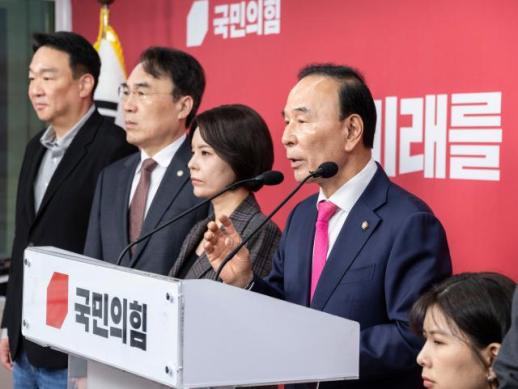 People Power Party Nominates Cho Yang-deok for Jeonju Mayor The People Power Party's nomination committee announced on May 7 that it has recommended Cho Yang-deok as the sole candidate for the mayor of Jeonju. Park Deok-heum, the head of the committee, stated that Cho possesses extensive experience across academia, media, and the arts, making him a well-suited candidate for the position. In Gyeongnam, the planned primary for the Uiryeong, Ham-an, and Geochang county mayoral races has been canceled due to disagreements among candidates. The committee will decide on the final candidates through a re-evaluation process. Regarding the by-elections, one individual has registered in the Jeonbuk Gunsan, Gimje, and Buan regions following an additional application process. The application period for the Siheung mayoral candidate has also been extended, with details on the selection process to be announced later. The committee plans to revisit the candidacy of Jeong Jin-seok, who had previously announced his intention to run for the Chungnam Gongju, Buyeo, and Cheongyang districts but later withdrew. Park noted, "We will reconsider whether to conduct another application process or finalize the existing candidates, aiming to find a competitive nominee."* This article has been translated by AI. 2026-05-07 23:33:38
 -
 South Korea and Japan Hold First Deputy-Level Security Talks South Korea and Japan's senior officials discussed security cooperation on May 7 in Seoul. The meeting, the 14th Korea-Japan Security Policy Council, was attended by South Korea's First Deputy Foreign Minister Park Yoon-joo and Deputy Minister of National Defense Lee Doo-hee, along with Japan's Deputy Foreign Minister Takehiro Funakoshi and Defense Policy Director Koji Kano. This meeting marked a shift from previous director-level discussions to deputy-level talks.According to the Foreign Ministry, the officials assessed the active shuttle diplomacy between the two nations, driven by trust and ties between their leaders. They agreed to continue fostering exchanges and cooperation at all levels of their foreign and defense ministries.The deputy ministers also exchanged views on the global security environment, including the situation in the Middle East and developments on the Korean Peninsula. They acknowledged the increasing importance of cooperation among South Korea, Japan, and the United States amid escalating international tensions and committed to maintaining ongoing communication to advance their collaboration.The Korea-Japan Security Policy Council was established following an agreement at the 1997 Korea-Japan Foreign Ministers' Meeting, with the first session held in Seoul the following year. The council has experienced interruptions and resumptions in line with the fluctuating relations between the two countries, with the last meeting taking place in Tokyo in November 2024.* This article has been translated by AI. 2026-05-07 23:32:24
 -
 New Agricultural Land Law Mandates Leasing for Non-Operating Owners Owners of inherited or abandoned farmland must now lease their land to the Korea Rural Community Corporation under a new agricultural land law that has passed the National Assembly. Additionally, local governments are required to issue disposal orders for any violations of the Agricultural Land Law. According to the Ministry of Agriculture, Food and Rural Affairs, the revised law aims to support comprehensive land surveys and promote efficient land use. The amendment eliminates the maximum size limit (10,000 square meters) for farmland owned by non-farmers, preventing further fragmentation of agricultural land. It mandates that such land be leased to the Korea Rural Community Corporation. The law also expands the permissible uses of agricultural land to include 'agricultural and rural experience facilities' and 'agricultural solar power installations.' Furthermore, the use of amenities like bathhouses and cold shelters in agricultural promotion areas is now allowed for both farmers and rural residents. Enforcement of the law will be stricter, with local governments now required to issue disposal orders for violations, a shift from previous discretionary authority. The law also prevents landowners from evading regulations by selling to close relatives or corporations they represent. If local governments fail to manage compliance, the Minister of Agriculture, Food and Rural Affairs will have the authority to issue disposal orders directly. The revised law will be implemented gradually following approval from the Cabinet. Yoon Won-seop, the agricultural policy director at the ministry, stated, "With the passage of this law, we are prepared for thorough land surveys to ensure that farmland is preserved as a means of production for farmers, not as a target for speculation."* This article has been translated by AI. 2026-05-07 23:30:53