

Journalist

Lim Byung-sik
-
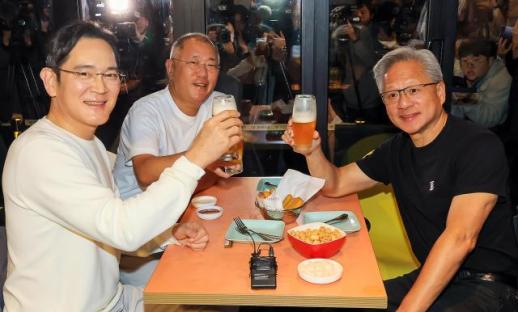 Jensen Huang and Chung Eui-sun Prepare for Second Meeting on Autonomous Vehicles and Robotics Jensen Huang, CEO of NVIDIA, is visiting South Korea, and Hyundai Motor Group is closely monitoring the situation as they anticipate a second meeting with Huang. Most of Hyundai's future business ventures, including autonomous vehicles, humanoid robots, and artificial intelligence (AI), are closely linked to NVIDIA's technology, which could have significant implications if a meeting occurs. According to industry sources, Chung Eui-sun, Chairman of Hyundai Motor Group, is not expected to attend the upcoming meeting with Huang, which will include SK Group Chairman Chey Tae-won, LG Group Chairman Koo Kwang-mo, and Naver Chairman Lee Hae-jin at a barbecue restaurant near Hongdae in Seoul on June 5. However, industry insiders predict that Huang will likely meet with Chung at Hyundai's headquarters in Yangjae after visiting the AI research center and robotics lab at Seoul National University on June 8. If this meeting takes place, it would mark the second encounter since their initial meeting last year. The relationship between Chung and Huang dates back to the APEC summit last year when Huang visited South Korea. During that visit, he solidified their partnership over a meal of chicken and beer at Kkanbu Chicken in Samsung-dong, Seoul, alongside Lee Jae-yong. Since the so-called "Kkanbu meeting," industry experts have noted that collaboration between Hyundai Motor Group and NVIDIA has accelerated. This partnership led to Hyundai receiving 50,000 Blackwell GPUs, which are AI accelerators. Hyundai is leveraging Blackwell to drive innovations in autonomous vehicles, AI data centers, and robotics. Among Hyundai's future projects, autonomous driving technology is the most closely tied to NVIDIA. The company is developing a universal platform capable of supporting autonomous driving from Level 2+ to Level 4, based on NVIDIA's Drive Hyperion platform. To facilitate this, Hyundai appointed Park Min-woo, a former NVIDIA executive, as the head of its AVP division. Last month, the company also hired Lee Hee-seok, another former NVIDIA employee, to expedite the commercialization of autonomous driving technology. Hyundai's robotics initiatives are also expected to benefit directly from this collaboration. Its subsidiary, Boston Dynamics, is equipping its humanoid robot, Atlas, with NVIDIA's Jetson Thor, a dedicated AI computing platform for robots. The two companies are also developing a robotics foundation model that enables robots to understand and mimic human language and actions without programming. A Hyundai representative stated, "We are closely watching the news of Jensen Huang's visit to South Korea," but added, "It has not yet been decided whether a meeting between the two chairmen will take place."* This article has been translated by AI. 2026-06-05 14:33:00
 -
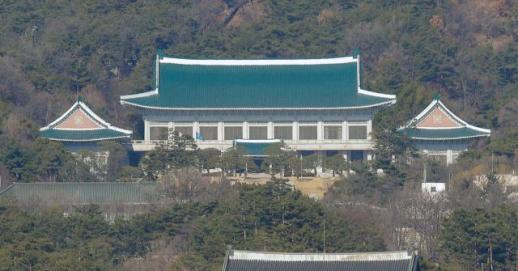 South Korea Expects Constructive Role from China Ahead of Xi Jinping's Visit to North Korea The South Korean government expressed hope on June 5 that Chinese President Xi Jinping's upcoming state visit to North Korea will play a constructive role in regional stability. A Blue House official stated in response to inquiries, "The government is closely monitoring related developments and expects China to take a constructive role regarding issues on the Korean Peninsula." The official added, "We hope that exchanges between North Korea and China will contribute to peace and stability on the Korean Peninsula, and we are maintaining close communication with China through diplomatic channels regarding these matters." A Unification Ministry official remarked, "Our policy for peace and coexistence on the Korean Peninsula supports dialogue and seeks to avoid confrontation. We hope President Xi's visit will advance peace and coexistence on the Korean Peninsula and, by extension, in Northeast Asia." Earlier, a spokesperson for the Central Foreign Affairs Commission of the Communist Party of China announced that Xi would visit North Korea from June 8 to 9 at the invitation of Kim Jong Un, General Secretary of the Workers' Party of Korea and Chairman of the State Affairs Commission. This visit marks Xi's second trip to North Korea since Kim's rise to power and the first since June 2019. It comes approximately nine months after Kim's visit to Beijing in September of last year to attend the 80th anniversary of China's victory in the War of Resistance Against Japanese Aggression.* This article has been translated by AI. 2026-06-05 14:33:00
 -
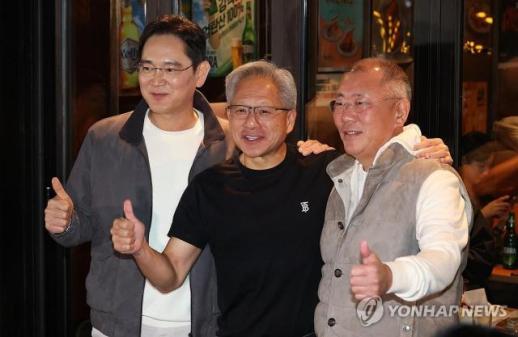 Hyundai's Euisun Chung to Meet Nvidia's Jensen Huang Separately on June 8 Euisun Chung, chairman of Hyundai Motor Group, will not attend a dinner with Nvidia CEO Jensen Huang, known as the "Samso (pork belly and soju) meeting," but is expected to meet Huang separately at Hyundai's headquarters on June 8. According to Yonhap News, Huang is scheduled to visit Hyundai's office in Yangjae-dong, Seoul, where Chung will personally welcome him to discuss collaboration opportunities. Hyundai Motor Group and Nvidia have been expanding their partnership in the fields of physical AI and robotics. The two companies signed a memorandum of understanding (MOU) last year to enhance domestic physical AI capabilities, committing to invest $30 billion to establish an Nvidia AI technology center and a Hyundai physical AI application center. Collaboration is also ongoing in Hyundai's development of humanoid robots. The company is working with Nvidia to advance the capabilities of its humanoid robot, Atlas, developed by its subsidiary Boston Dynamics. However, Chung will not attend the dinner with Huang and other South Korean business leaders at a pork belly restaurant near Hongdae, reportedly due to a scheduling conflict. The dinner was expected to include prominent business figures such as Chey Tae-won, chairman of SK Group, Koo Kwang-mo, chairman of LG Group, and Lee Hae-jin, chairman of Naver. Although Chung's attendance was initially considered, he ultimately decided not to participate. Chung had previously met with Huang in October 2022, along with Samsung Electronics Chairman Lee Jae-Yong, at a chicken restaurant in Gangnam, Seoul. That meeting garnered significant attention and was referred to as the "Kkanbu meeting." Meanwhile, Lee Jae-Yong is also reported to be unable to attend the upcoming dinner due to overseas commitments.* This article has been translated by AI. 2026-06-05 14:33:00
 -
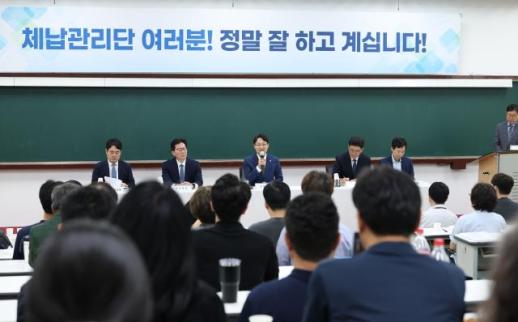 National Tax Service Chief Im Kwang-hyun Calls Delinquency Management Team a Key Project Im Kwang-hyun, the head of the National Tax Service, visited the Central Regional Tax Office on June 4 to assess preparations for the nationwide expansion of the delinquency management team, set to launch in July. He described the team as a "key project that achieves multiple goals, including tax justice, securing finances, and identifying welfare recipients." The National Tax Service reported that during his visit, Im checked the operational status of the delinquency management team and encouraged field staff. This visit aimed to gather feedback and confirm readiness ahead of the team's expansion. Im praised the Central Regional Tax Office for leading the nation in the number of delinquency confirmations and high levels of tax payment despite its vast jurisdiction. He shared pizza with the staff, listening to their concerns and suggestions. Field staff presented various examples of the team's activities. One staff member shared an experience of counseling a delinquent taxpayer who was a former business partner, while another recounted cleaning a delinquent's home filled with trash and connecting the individual with welfare services. Additionally, a case was highlighted where a delinquent taxpayer was suspected of hiding assets under relatives' names while using luxury furniture and massage chairs. Im emphasized the importance of the delinquency management team's role, stating, "This is a core project that has a five-fold impact, including achieving tax justice, securing finances, creating productive jobs, and identifying welfare recipients. Let's demonstrate clear results in the field so that citizens can feel the ongoing necessity of this initiative." Following this, Im visited the Dong-an Yang Tax Office to check on preparations for the delinquency management team, which will begin operations in all tax offices nationwide in July. He inspected the offices and facilities for newly hired temporary workers, urging them to ensure a comfortable and safe working environment across the country.* This article has been translated by AI. 2026-06-05 14:27:00
 -
 Japanese Court Convicts Man for AI-Generated Child Exploitation Images Japan's Nagoya District Court has convicted a former elementary school teacher for creating sexual images of children using generative artificial intelligence (AI). The court ruled that even AI-generated composites can be classified as child exploitation material if they appear to be based on real children. According to the Nihon Keizai Shimbun, on June 4, the court sentenced Shota Mizuto to three and a half years in prison. Mizuto was charged with sharing illegal images of girls in a group chat with other teachers and possessing AI-altered sexual images of children. The key issue was whether the AI-generated images constituted child exploitation material. Some of the images Mizuto stored were altered photographs of actual girls, transformed into sexualized images by AI. The court determined that these images could be perceived by the average person as being based on real children, thus qualifying as child exploitation material. This ruling does not imply that all AI-generated sexual images of children will be prosecuted. The court emphasized that the composites were based on actual photographs of children. If an image is linked to a real child, it can be seen as a violation of the rights of the victim, even if it is not a direct photograph. In Japan, there has been ongoing debate about whether sexual images created by generative AI fall under existing child pornography regulations. The current legal framework is predicated on the protection of real children, making the connection of AI images to specific children a central issue. This ruling is expected to intensify discussions on regulating AI-generated sexual deepfakes in Japan. As generative AI becomes more prevalent, the increase in composite images that are not direct photographs raises questions about the legal responsibilities associated with AI-altered content based on real individuals.* This article has been translated by AI. 2026-06-05 14:27:00
 -
 NVIDIA CEO Jensen Huang Visits South Korea, Highlights Robotics Investment Opportunities Jensen Huang, CEO of NVIDIA, returned to South Korea after seven months, stating that the country has many important clients and that he is planning significant collaborations with local partners.Huang arrived at Gimpo Airport around 1:30 PM on June 5 and spoke with reporters outside the airport, emphasizing the importance of the South Korean market. He noted, "Our partners in Korea are doing very well, and last year's performance was excellent. We are currently engaged in many projects, and next year is expected to be a major market, which is why I am here to strengthen our partnerships."He added, "We are building critical AI infrastructure, including DRAM and HBM (high-bandwidth memory) chips, and we are very busy launching our Vera Rubin products."Regarding his schedule in South Korea, Huang mentioned, "I have a very packed agenda, and I expect to meet with various companies, including Hyundai, LG, SK, Samsung, and Naver." He also hinted, "I have brought some exciting news with me."Huang expressed his enthusiasm for a planned dinner featuring Korean barbecue, saying, "I really enjoy Korean barbecue. Fried chicken and samgyetang (ginseng chicken soup) are also delicious."On the topic of recent developments in PC chip production, he remarked, "PCs have evolved significantly over the past 40 years, and now AI agent systems are going to be integrated into PCs. I find this very interesting."Huang praised South Korea's manufacturing and robotics capabilities, stating, "NVIDIA has an R&D center in Korea, which is an excellent place with skilled professionals in AI and robotics. There are various opportunities here, including manufacturing capabilities and semiconductor technology." He added, "We are already employing many people in Korea."He concluded by stating, "There are many areas to invest in Korea, with robotics being the next major field. The combination of Korea's excellent manufacturing capabilities, along with semiconductors and AI, presents many opportunities in the robotics sector." 2026-06-05 14:27:00
 -
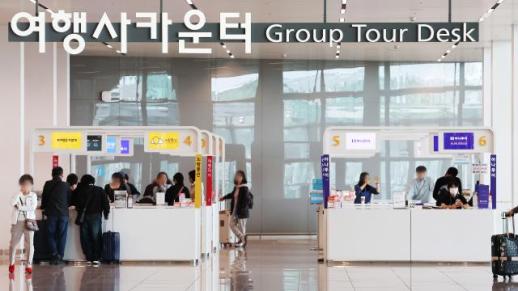 South Koreans travel more abroad in Q1 while online shopping spending drops SEOUL, June 5 (AJP) - South Koreans' overseas card spending topped US$6 billion in the first months of this year, the Bank of Korea (BOK) said on Friday. Their total overseas card spending stood at US$6.1 billion in the first quarter, almost the same as $6.11 billion in the previous quarter but up 14.2 percent from a year earlier. Although the number of South Koreans traveling abroad increased over the period, spending remained almost unchanged, according to the BOK. Purchases through overseas online shopping malls fell to $1.35 billion from $1.55 billion, while the number of South Korean departures rose to 8.33 million from 7.89 million. Card spending by foreigners in South Korea totaled $3.57 billion in the first quarter, down 5.4 percent from the previous quarter but up 30.2 percent from a year earlier. Foreign tourist arrivals to South Korea hit a first-quarter record of 4.76 million, but spending fell from the previous quarter. 2026-06-05 14:26:36
 -
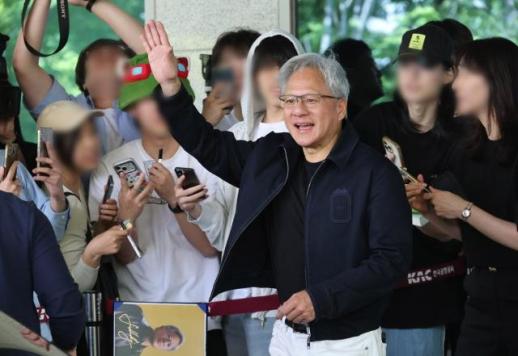 NVIDIA CEO Jensen Huang Visits Korea, Promises Surprise Gift Jensen Huang, CEO of NVIDIA, visited South Korea on June 5, stating, "I have brought a lot of business for Korea" and hinted at a surprise gift. According to Yonhap News, Huang arrived at Gimpo International Airport in the afternoon and told reporters, "There is a surprise gift prepared for Korea," but he declined to specify when it would be revealed, joking, "If I tell you, it wouldn’t be a surprise." This marks Huang's first visit to Korea in about seven months, following his last trip in October. He expressed his desire to thank all partners and clients in Korea, saying, "We are doing very important work, and the AI development is accelerating." Huang noted, "We achieved significant results last year, and the Korean market is doing very well. The second half of this year will be much larger than the first half, and next year will be a very big year." During his stay, Huang is expected to meet with leaders of major domestic companies to discuss collaboration on AI semiconductors, high-bandwidth memory (HBM), physical AI, robotics, and AI infrastructure. As NVIDIA expands its business beyond AI semiconductors into data centers, robotics, and autonomous driving, the scope of collaboration with South Korean companies is anticipated to broaden. When asked if he planned to enjoy Korean barbecue that evening, Huang replied, "I really love Korean barbecue. I also really like chicken, and samgyetang is the best. Everything is delicious." 2026-06-05 14:18:00
 -
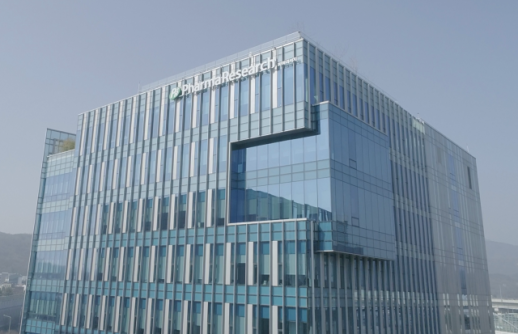 PharmaResearch Strengthens Medical Aesthetic Market with Rejuran PharmaResearch is solidifying its position in the medical aesthetic market with its skin booster, Rejuran. This injectable product utilizes polynucleotide (PN) derived from salmon reproductive cells. As demand for skin regeneration procedures remains steady, the company is combining its clinic-based repeat treatment structure with its cosmetics business to sustain growth. According to industry reports, PharmaResearch recorded a consolidated revenue of 146.1 billion won and an operating profit of 57.3 billion won in the first quarter of this year. These figures represent increases of 25% and 28%, respectively, compared to the same period last year. Analysts attribute this growth to rising domestic demand for medical devices, expansion in the cosmetics sector, and increased global exports. Notably, export revenue in the first quarter reached 58.8 billion won, a 30% increase year-on-year. Rejuran's competitive edge lies in its revenue structure based on repeat treatments. While the treatment cycles for some products, such as Sculptra and Juvederm, typically occur once a year, Rejuran sees demand for treatments more than twice a year. This consistency allows clinics to maintain a steady influx of returning patients, making it a staple in their treatment portfolios. As the medical aesthetic market continues to grow, competition in South Korea is intensifying. With sustained demand and increasing interest in Korean beauty medical services, the market is expanding. Kim Hyun-seok, a researcher at Hyundai Motor Securities, noted that concerns are rising regarding PharmaResearch's market dominance due to the launch of extracellular matrix (ECM) skin booster products by domestic competitors and aggressive capacity expansions. PharmaResearch is also broadening its reach in the global market. The company has seen a continued increase in medical device exports, particularly in Europe, with first-quarter exports totaling 21.1 billion won. It is strengthening its presence through global conferences and networking with medical professionals, focusing on key European countries. Additionally, PharmaResearch is extending its medical device-based brand into consumer goods, creating a structure where treatment experiences lead to cosmetic purchases. In the first quarter, cosmetics sales reached 42.2 billion won, marking a 51% increase year-on-year, the highest growth rate among all business divisions. This strategy reduces marketing cost burdens while maintaining profitability through a repeat revenue structure linked to medical device treatments. An industry insider remarked, "Korean medical aesthetic products are gaining recognition in overseas markets for their high price competitiveness relative to quality. Products like Rejuran, which secure both a clinic network and brand awareness, are likely to maintain their competitiveness in the global market."* This article has been translated by AI. 2026-06-05 14:12:00
 -
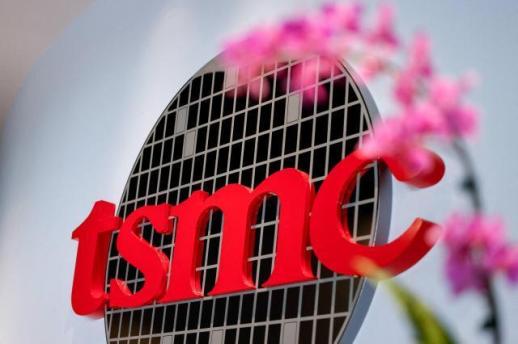 TSMC Secures Additional Land in Arizona to Meet AI Chip Demand TSMC has secured additional land at its Arizona facility to respond to the growing demand for artificial intelligence (AI) semiconductors. While this move aims to expand its production base in the U.S., the company acknowledged that it may not be able to meet all U.S. customer demands in the short term. On June 4, TSMC Chairman and CEO C.C. Wei spoke with reporters following the company's annual shareholder meeting in Hsinchu, Taiwan. He stated, "The two sites we have already secured in Arizona are sufficient for our expansion plans in the U.S. over the next decade." In January, TSMC completed the acquisition of its second site in Arizona. This allows the company to gradually increase its production facilities using both the existing and newly acquired land. TSMC explained that this move is intended to address strong AI-related demand and to create room for expanding its production base in Arizona. The company is investing a total of $165 billion (approximately 255 trillion won) in Arizona. The first factory began mass production of 4-nanometer chips in the fourth quarter of last year, while the second factory aims to start production of 3-nanometer chips in the second half of 2027. A third factory is planned to handle advanced processes below 2 nanometers. However, securing land does not immediately translate to increased supply. Wei noted, "Customer demand is very high, and TSMC is working hard to avoid becoming a bottleneck in the supply chain, but there are limits to the quantities we can support." He added, "It will take a long time to fully meet U.S. customer demand with domestic production alone." There are also constraints on expansion. Wei mentioned that achieving the existing goal of deploying 30% of U.S. production capacity for chips below 2 nanometers is becoming increasingly difficult due to delays in environmental permits and a shortage of construction workers. Wei clarified that the expansion in the U.S. does not replace Taiwan's core competitiveness. He stated, "Taiwan will maintain a significant advantage in the AI industry, as research and development for advanced processes and initial mass production will still begin in Taiwan." In response to Samsung Electronics' claim that it would catch up to TSMC in the foundry sector within ten years, Wei countered, "There is no way they will catch up in a few years." He emphasized that an ecosystem encompassing backend processes, testing, assembly, and electronics manufacturing has been established around TSMC in Taiwan.* This article has been translated by AI. 2026-06-05 14:12:00