

Journalist

Lim Byung-sik
-
 Audience Cheers as U.S. Congress Moves to Regulate Chinese Robot A Chinese humanoid robot captivated audiences on a popular U.S. talent show, receiving a standing ovation, while U.S. lawmakers simultaneously pushed for legislation labeling it a national security threat. According to China's state-run Xinhua News Agency and Hong Kong's SCMP, the humanoid robot G1 from the Chinese company Unitary made its debut on NBC's 'America's Got Talent' on June 2. The performance featured eight G1 robots alongside renowned Chinese dancer Wu Yifei, showcasing tumbling and synchronized dance routines. The robots executed intricate movements, changing formations and seamlessly coordinating with the lead dancer. Following the performance, both the audience and judges erupted in applause. Judges praised the act, with comments like, "It's unbelievable, but fantastic," and "Perfect," unanimously advancing the robots to the next round. The video posted on the official YouTube channel garnered over a million views within a day, sparking significant online interest. However, the following day, U.S. Congress introduced a regulatory bill targeting Chinese-made robots. According to Yonhap News Agency, the 'GUARD Act,' co-sponsored by Rep. John Molinaro, chair of the House China Special Committee, asserts that Chinese robots could pose threats to U.S. critical infrastructure and labor markets. Molinaro specifically warned that Unitary receives substantial subsidies from the Chinese government, which could represent an "existential threat" to the U.S. robotics industry. Experts suggest this incident highlights the contrasting perceptions of Chinese technology within American society. Kyle Chan, a researcher at the Brookings Institution, told SCMP, "The reactions surrounding Unitary illustrate the differing views between the general public and lawmakers regarding Chinese technology." Chan also noted that despite Chinese drone manufacturer DJI's dominance in the U.S. market, it has faced national security scrutiny, similar to the regulatory pressures on the video platform TikTok. Meanwhile, Unitary is actively pursuing global market expansion, recently announcing plans for a new humanoid robot in collaboration with NVIDIA.* This article has been translated by AI. 2026-06-05 11:24:00
 -
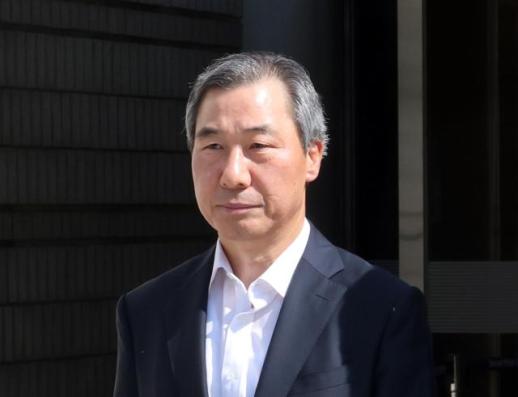 Special Prosecutors Investigate Former Presidential Secretary Yoon Jae-soon for Abuse of Power The special prosecutor team, led by Kwon Chang-young, is intensifying its investigation into allegations surrounding the relocation of the presidential residence by summoning former presidential chief secretary Yoon Jae-soon for questioning. On June 5, the special prosecutor's office announced in a media statement that it is investigating Yoon as a suspect for abuse of power, having summoned him for questioning starting at 10 a.m. today. Yoon, who oversaw the practical aspects of the presidential residence's relocation in 2022, is accused of illegally reallocating 2.8 billion won from the Ministry of the Interior and Safety's budget to pay an unqualified contractor, 21 Gram. The special prosecutor's team believes that despite objections from relevant departments, Yoon and other officials from the Yoon Suk-yeol administration, including former chief of staff Kim Dae-ki, directed the illegal reallocation of the budget from the Ministry of the Interior and Safety's Government Building Management Headquarters. They are currently under investigation and detention. Additionally, the special prosecutor's team has determined that former Interior Minister Lee Sang-min was also involved in the process, questioning him as a suspect for abuse of power the day before. They have gathered testimonies indicating that Lee retaliated against employees who opposed the budget reallocation by excluding them from promotions and applying pressure. Furthermore, the special prosecutor's team is continuing its investigation into potential involvement from higher-ups, including former President Yoon Suk-yeol, during the relocation process. The detention period for Yoon and Kim is set to expire on June 10. The special prosecutor's team plans to conclude its investigation and decide on charges before this deadline. Given the urgency of the matter, a direct investigation into former President Yoon is expected to take place soon.* This article has been translated by AI. 2026-06-05 11:18:00
 -
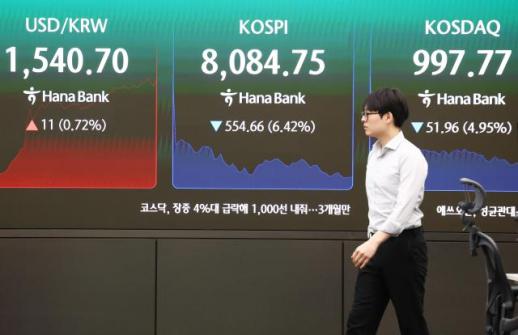 KOSPI slides on semiconductor-led broad sell-off SEOUL, June 5 (AJP) - South Korean stocks fell sharply on Friday as investors took profits from a recent rally, with heavyweight semiconductor shares leading declines after an overnight sell-off in U.S. chipmakers. The benchmark KOSPI fell 6.26 percent to 8,098.52 in early trade, while the junior KOSDAQ dropped 4.65 percent to 1,000.9. The won also weakened further, trading at 1,531.70 against the dollar, compared with a previous close of 1,529.70. Semiconductor-related shares remained under heavy selling pressure despite expectations surrounding Nvidia CEO Jensen Huang's visit to Seoul later in the day and potential cooperation with local tech firms. Samsung Electronics fell 7.18 percent to 326,250 won and SK Hynix dropped 8.83 percent to 209,500 won, with Samsung's preferred shares losing 5.45 percent to 208,000 won and SK Square sliding 9.40 percent to 123,300 won. Samsung Electro-Mechanics slipped 4.37 percent to 1,641,000 won, LG Energy Solution fell 2.96 percent to 409,500 won, Samsung Life Insurance lost 9.02 percent to 398,500 won, Samsung C&T tumbled 16.73 percent to 445,500 won and Doosan Enerbility declined 6.15 percent to 93,100 won. Samsung Biologics was relatively resilient, edging down 0.74 percent to 1,340,000 won. Automakers also came under pressure. Hyundai Motor fell 6.00 percent to 658,000 won, Kia declined 4.93 percent to 156,200 won and Hyundai Mobis dropped 9.22 percent to 679,000 won. Among the gainers, HD Hyundai Heavy Industries rose 0.61 percent to 655,000 won, and KB Financial Group gained 3.59 percent to 170,100 won, bucking the broader market downturn. The retreat came despite another record-setting session for major U.S. equity benchmarks. The Dow Jones Industrial Average rose 1.73 percent to close at an all-time high of 51,561.93, and the S&P 500 gained 0.41 percent. The tech-heavy Nasdaq Composite, however, slipped 0.09 percent as investors rotated out of high-flying semiconductor names and into sectors that had lagged the broader rally. The biggest losses were seen in semiconductor stocks. Broadcom plunged 12.59 percent after its quarterly results failed to meet investors' high expectations. Memory-chip maker Micron Technology dropped 7.74 percent, and SanDisk lost 3.92 percent. The Philadelphia Semiconductor Index fell 2.15 percent. But easing geopolitical concerns over the prolonged Middle East conflict helped cushion broader market losses, as lower oil prices would ease inflationary pressures and support equities outside the technology sector. U.S. West Texas Intermediate crude futures fell 3.1 percent to $93.04 a barrel, and Brent crude declined 2.8 percent to $95.03. U.S. Treasury yields edged lower, with the benchmark 10-year yield slipping to 4.47 percent as weaker economic data and falling oil prices eased inflation concerns. Meanwhile, Asian markets were mostly lower. Japan's Nikkei 225 dropped 1.43 percent to 66,505.61, Hong Kong's Hang Seng Index lost 0.41 percent to 25,148.76, while China's Shanghai Composite bucked the trend, rising 0.17 percent to 4,064.85. 2026-06-05 11:12:07
 -
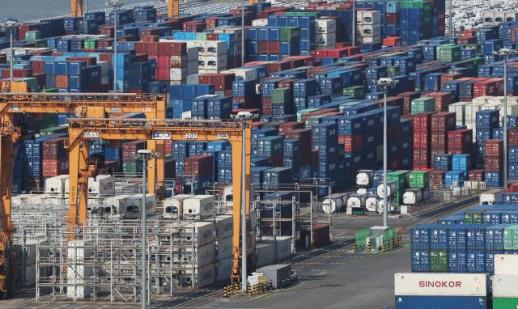 April Current Account Surplus Reaches $28.29 Billion, Yearly Total Exceeds $100 Billion Strong semiconductor exports have propelled South Korea to record a current account surplus of over $28.29 billion in April. The cumulative surplus for the year has now surpassed $100 billion through April. According to preliminary statistics released by the Bank of Korea on June 5, the current account for April was recorded at a surplus of $28.29 billion (approximately 43.37 trillion won). This marks the second-largest surplus on record, following March's surplus of $37.93 billion. The country has maintained a current account surplus for 36 consecutive months, the second-longest streak since the 2000s. Notably, the cumulative current account surplus for the first four months of this year reached $102.67 billion, which is 4.3 times higher than the $24 billion recorded during the same period last year. Additionally, the annual surplus for 2024 has already been surpassed within just four months. Yoo Sung-wook, head of the Bank of Korea's Financial Statistics Department, stated, "The current account surplus for April is the largest ever recorded for that month, exceeding $20 billion for three consecutive months for the first time in history." He added, "In comparison with major countries, our surplus of $74.4 billion in the first quarter was the second highest after China. Last year, we ranked fifth behind China, Germany, Japan, and Taiwan, but in the first quarter of this year, we surpassed Japan, Taiwan, and Germany." On an annual basis, Taiwan has had a larger surplus than South Korea since 2019. Last year, Taiwan's surplus exceeded South Korea's by about $57 billion, but in the first quarter of this year, South Korea's surplus was approximately $12 billion higher. In April, the surplus in goods was recorded at $33.88 billion, marking the second highest ever, following March's $35.68 billion. Exports totaled $90.59 billion, a 54.5% increase from a year earlier, also ranking as the second highest after March's $94.9 billion. The information technology (IT) sector, particularly semiconductors and computer peripherals, continued to perform well, while non-IT items were influenced by rising oil product prices. Notable increases were seen in computer peripherals (411.3%), semiconductors (171.4%), oil products (39.4%), and chemical products (10.7%). Imports also rose by 16.1% to $56.7 billion. Capital goods imports increased by 27.7%, driven by semiconductor manufacturing equipment (55.5%), semiconductors (52.8%), and information and communication devices (23.8%). Raw material imports rose by 12.3%, led by coal (26.7%), chemical products (21.3%), and crude oil (13.1%), while consumer goods imports increased by 4.9%. The services account recorded a deficit of $2.42 billion. Although this was an improvement from a deficit of $2.7 billion in April of last year, it was larger than the previous month's deficit of $1.31 billion. Within the services account, the travel balance showed a deficit of $30 million, reverting to a deficit after a surplus of $14 million in March, the first in 11 months. However, the number of inbound travelers exceeded 2 million in both March and April, reducing the deficit compared to April of last year, which was $530 million. The primary income account shifted from a surplus of $3.59 billion in March to a deficit of $2.53 billion in April. This change was attributed to seasonal dividend payments and an increase in the dividend payout ratio among major companies, resulting in a shift from a surplus of $2.71 billion in dividend income to a deficit of $3.02 billion. The financial account recorded a net increase of $25.46 billion in assets (assets minus liabilities), a decrease from the previous month's increase of $36.99 billion. Direct investment saw an increase of $6.24 billion in domestic investments abroad, while foreign investments in South Korea decreased by $1.36 billion. In securities investment, domestic investments abroad increased by $8.22 billion, primarily in stocks, while foreign investments in South Korea rose by $3.51 billion, mainly in bonds. Foreign investments in domestic stocks, which saw a record decline of $29.33 billion in March, decreased by $1.24 billion in April, indicating a reduction in the rate of decline. Improved investor sentiment, due to easing tensions in the Middle East and positive earnings reports from domestic semiconductor companies, contributed to the weakening of the sell-off. Foreign investments in debt securities turned around from a decrease of $4.72 billion in March to an increase of $4.75 billion in April, aided by the inclusion in the World Government Bond Index (WGBI).* This article has been translated by AI. 2026-06-05 11:12:00
 -
 South Korea and Serbia Finalize First Free Trade Agreement in the Balkans South Korea has reached an agreement with Serbia on a Comprehensive Economic Partnership Agreement (CEPA), marking the first free trade agreement (FTA) in the Balkans. This deal is expected to enhance opportunities for South Korean companies in the Western Balkans and European markets, while expanding the foundation for cooperation in supply chains and future industries such as minerals. The Ministry of Trade, Industry and Energy announced that Yeo Han-goo, head of the Trade Negotiation Headquarters, officially declared the conclusion of the CEPA negotiations with Serbia's Minister of Internal and Foreign Trade, Jagoda Lazarević, in Belgrade on June 5 (local time). The CEPA negotiations were initiated during the 2023 Korea-Serbia summit. Following the start of negotiations in September 2024, the first official talks were held in December of the same year, culminating in the completion of discussions across 12 chapters. Serbia, emerging as a manufacturing hub in Europe, boasts an extensive network of FTAs and is gaining attention as a new partner amid rising costs in major Eastern European production centers. The agreement is expected to foster collaboration in various sectors, including automotive, information technology, renewable energy, and nuclear power. South Korean mobility companies, including domestic auto parts manufacturers, have already been actively entering the Serbian market. Additionally, there are expectations for expanded cooperation in advanced industry supply chains utilizing lithium and other materials. Serbia is home to the Zadar project, one of Europe's largest lithium deposits. As China weaponizes key minerals like rare earth elements, the need for supply chain diversification through collaboration with Serbia is becoming increasingly important. The Korea-Serbia CEPA is based on a high level of market openness. Both parties agreed to eliminate tariffs on over 90.2% of items by number and over 96% by import value. Furthermore, Serbia, which is not a member of the World Trade Organization's Information Technology Agreement (ITA), has committed to abolishing tariffs of up to 25% on semiconductor and electronic products. The agreement opens the market for eco-friendly vehicles, including electric and hybrid cars, and eliminates tariffs on all automotive parts immediately. With expectations for growth in exports of consumer goods like K-food and K-beauty to Europe, tariffs on these items will also be removed. Moreover, tariffs on Serbian lithium, cobalt, nickel, graphite, and rare earth elements will be eliminated immediately or within five years. This is anticipated to stabilize the supply chain for key raw materials in South Korea's advanced industries, such as batteries and semiconductors. Tariffs on feed and processed corn, which account for over 40% of Serbia's exports to Korea, will be eliminated immediately and over ten years, respectively. However, market access for sensitive agricultural products like rice, natural honey, strawberries, and other fruits, meat, and dairy products will be minimized to achieve a balance of mutual benefits. Additionally, agreements were reached on origin rules, expedited customs and trade facilitation, intellectual property protection, technical regulations (TBT), and sanitary and phytosanitary measures (SPS), as well as economic cooperation. The government plans to swiftly proceed with follow-up procedures for formal signing, including legal reviews and translations of the agreement, and to ensure a smooth process for economic impact assessments and parliamentary ratification. Yeo Han-goo stated, "The conclusion of the Korea-Serbia CEPA will serve as a stepping stone to elevate economic cooperation with Serbia, a key partner in the Western Balkans. In the rapidly changing trade environment marked by the spread of protectionism and the restructuring of global supply chains, this agreement is significant not only for market openness but also for building a cooperative platform in future industries such as supply chains, energy and minerals, AI, and biotechnology."* This article has been translated by AI. 2026-06-05 11:03:00
 -
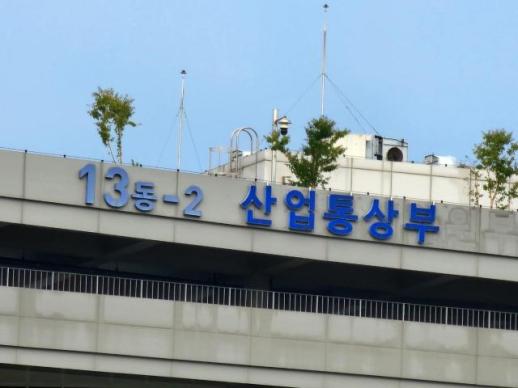
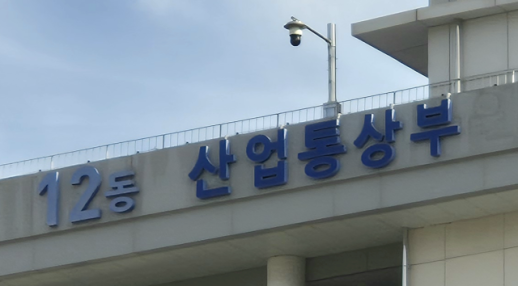 Government to Create 'Vault' for Manufacturing Data Management for M.AX The government is establishing a secure infrastructure for storing and managing manufacturing data to facilitate the transition to manufacturing artificial intelligence (M.AX). A key component of this initiative is the creation of a 'manufacturing data library' and the establishment of a 'clean room' to prevent external data leaks. On June 5, the Ministry of Trade, Industry and Energy held the '3rd M.AX Expert Conference' with industry, academia, and research experts to announce these plans. Amid the global AI competition, the government is promoting the advancement of the manufacturing sector, where South Korea has a competitive edge. High-quality manufacturing data held by companies is seen as a strategic asset essential for the country’s goal of becoming a leader in M.AX. The government believes that creating an environment and infrastructure where both manufacturing and AI companies can thrive is crucial for the success of M.AX. To this end, the Ministry is working with over 1,500 manufacturing and AI companies, as well as academic and research institutions, to build an ecosystem for securing and utilizing manufacturing data through the M.AX Alliance, which consists of 11 sectors. However, companies are understandably concerned about the potential leakage of their manufacturing data, which includes intellectual property such as core technologies and production know-how. For companies to provide data for subsequent research and development projects, a secure data storage and management infrastructure must be established first. The government plans to create a 'manufacturing data library' to systematically manage the data provided by companies. This library will house high-quality manufacturing data and will implement specific devices and procedures to prevent data leaks and ensure security. Data will only be accessible within the clean room, which is isolated from external access, and external transfers will be prohibited. Access to the data will also require a separate review process. This approach stems from the understanding that the key to AI competitiveness lies not in simple algorithms, but in high-quality training data. Recent analyses in the generative AI market indicate that differences in model performance are largely determined by the quality and scale of data, intensifying the competition for industrial data acquisition. As the establishment of the library will take time, the Ministry has been using the 'Manufacturing AI Solution Development Support Center' operated by the Korea Electronics Technology Institute since May as a temporary base to store data acquired from AI factory projects. By the end of the year, the Ministry plans to develop a prototype of a manufacturing AI foundation model using this data and will conduct field applications and performance validations with participating companies in the M.AX Alliance. Kim Sung-yeol, Director of the Ministry's Industrial Growth Office, stated, "The core of our industrial competitiveness in the AI era lies in manufacturing data and AI models tailored to specific industries. To collect and utilize high-quality manufacturing data, we must create an environment where both data-holding companies and AI firms can benefit mutually."* This article has been translated by AI. 2026-06-05 11:03:00
 -
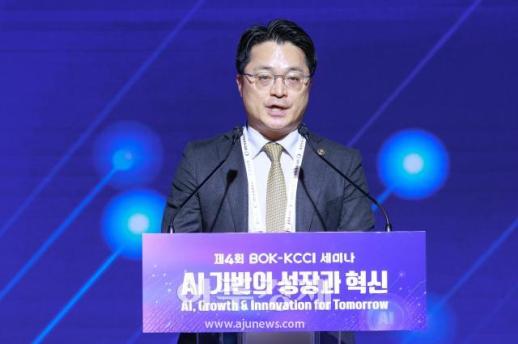 South Korea Discusses Resource Security Cooperation with Aramco Amid ongoing uncertainties from the Middle East conflict, the South Korean government has engaged in discussions with Saudi Arabia's state-owned oil company, Aramco, regarding resource security cooperation. The Ministry of Trade, Industry and Energy announced that Deputy Minister Moon Shin-hak met with Mohammed Y. Al-Qahtani, President of Aramco's Downstream sector, in Seoul on June 5. This meeting was held during Al-Qahtani's visit to South Korea, where both sides focused on long-term resource security cooperation, including stable supply of crude oil and naphtha, as well as expanding collaboration in plant construction. Since the onset of the Middle East conflict, the South Korean government has been working diligently to address supply challenges caused by the blockade of the Strait of Hormuz. It has strengthened cooperation with major oil-producing countries, including Oman and Saudi Arabia, to secure crude oil and naphtha. Ensuring a stable supply of naphtha, a key raw material for the petrochemical industry, is crucial for maintaining the competitiveness of South Korea's petrochemical sector. Deputy Minister Moon expressed gratitude for Aramco's active cooperation in securing stable supplies of key resources such as crude oil and naphtha since his visit to Saudi Arabia as a special envoy for strategic economic cooperation in April. He also requested Aramco's continued interest and proactive collaboration to ensure access to necessary energy resources for South Korea in the event of supply chain disruptions. Both parties discussed the potential for collaboration through the utilization of strategic petroleum reserves and oil storage infrastructure to enhance their resource security capabilities. They agreed to continue exploring areas of cooperation, particularly to facilitate collaboration between Aramco, which plays a key role in major energy projects, and South Korean companies with the necessary execution capabilities. The Ministry stated, "We will maintain close communication channels with Aramco to solidify cooperation on resource security, including oil supply, and actively support our companies' efforts to secure plant contracts in the Middle East."* This article has been translated by AI. 2026-06-05 11:03:00
 -
 ZEEKER Launches 7X Mid-Size Electric SUV in South Korea ZEEKER, a premium electric vehicle brand from China, has officially entered the South Korean market with the launch of its mid-size electric sports utility vehicle (SUV) 7X. On June 5, ZEEKER Korea announced that the 7X is now on display and available for pre-order at nine showrooms across the country, including in Seoul. The 7X is a facelift model making its debut outside of China. Designed as a pure five-seater electric SUV, it is built on Geely Automobile Group's dedicated electric vehicle platform (SEA). Initially unveiled in 2024, the model has gained popularity, surpassing 400,000 global sales within just 37 days of its release. Despite its mid-size SUV dimensions, the 7X offers ample interior space, measuring 4,800 mm in length, 1,920 mm in width, 1,650 mm in height, and a wheelbase of 2,900 mm. The trunk capacity reaches 539 liters. The domestic lineup includes three trims: Pro, Max, and Ultra. The Pro trim features a 75 kWh lithium iron phosphate (LFP) battery, while the Max and Ultra trims are equipped with a 100 kWh nickel-cobalt-manganese (NCM) battery. Both the Pro and Max trims utilize a rear-wheel drive (RWD) single motor, delivering a maximum output of 421 horsepower. According to the Ministry of Environment's certification, the driving range on a single charge is 375 km for the Pro trim and 483 km for the Max trim. The Ultra trim features an all-wheel drive (AWD) system with two electric motors, producing a peak output of 645 horsepower and maximum torque of 72.4 kg·m. It can accelerate from 0 to 100 km/h in just 3.9 seconds, with a driving range of 440 km on a single charge. The 7X incorporates an 800V high-voltage system, supporting ultra-fast charging of up to 360 kW globally. Charging from 10% to 80% takes approximately 13 minutes for the Pro trim and about 16 minutes for the Max and Ultra trims. ZEEKER Korea plans to expand its showrooms to 14 by the end of the year and will operate 11 service centers nationwide, including one in Jeju. A ZEEKER Korea representative stated, "The ZEEKER 7X is set to redefine the standard for luxury family SUVs, enhancing the quality of life for family members beyond just a means of transportation." ZEEKER is the second Chinese electric vehicle brand to enter South Korea, following BYD. Earlier this month, it officially launched its first brand gallery in Daechi-dong, Gangnam-gu, Seoul, marking its entry into the South Korean market. ZEEKER Korea is expected to expand its lineup with various models following the launch of the 7X.* This article has been translated by AI. 2026-06-05 11:00:00
 -
 LG Group Strengthens Alliance with NVIDIA in Physical AI Development LG Group is emerging as a key partner in NVIDIA's physical artificial intelligence (AI) ecosystem. Koo Kwang-mo, Chairman of LG Group, has positioned AI and robotics as core growth pillars for the company, leading to an expansion of collaboration with NVIDIA.According to industry sources, NVIDIA introduced LG Electronics as a major partner for its physical AI foundation model, Cosmos 3, during the GTC 2026 event held recently in Taiwan. LG Electronics is utilizing the Cosmos platform to advance its robotics development. Cosmos 3 is designed to help robots and autonomous vehicles understand and reason about the physical world. Jensen Huang, CEO of NVIDIA, highlighted the partnership with LG Group by featuring LG's AI home robot, 'LG Cloi,' in his keynote address.Chairman Koo has been promoting robotics and AI-centric initiatives for several years. LG is nurturing physical AI as a future growth driver, focusing not only on AI software development but also on implementing robots and autonomous systems that operate in the real world.The AI home robot 'LG Cloi' exemplifies this effort. LG Electronics unveiled Cloi at CES 2026 earlier this year, presenting its vision for a 'zero-labor home.' The humanoid robot, equipped with arms and fingers, is designed to perform household tasks. It is being developed with the aim of commercialization by 2028, leveraging NVIDIA's robotics platform and simulation technology.LG is also strengthening its core robotics components business. The company is expanding its actuator brand, 'Axiom,' which serves as the driving components that act like muscles for robots. Actuators are considered essential components for implementing physical AI. LG is broadening its business scope into the robotics components market, building on its hardware expertise accumulated in the home appliance and mobility sectors.Koo's recent activities further demonstrate his commitment to physical AI. In April, he visited Silicon Valley, where he met with executives from data analytics firm Palantir and robotics AI startup SkilledAI to discuss collaboration opportunities in the AI and robotics industries. He reportedly assessed the potential for AI applications in manufacturing and robotics, exploring future business directions.The collaboration with NVIDIA is particularly promising. Koo is expected to meet with Jensen Huang, who will visit South Korea, for a dinner featuring samgyeopsal (grilled pork belly) and will discuss business cooperation at LG Twin Towers in Yeouido on June 8. Key executives from LG Electronics and other major group companies are anticipated to participate.Expanding collaboration with NVIDIA is expected to have a positive impact across LG Group. LG Electronics could secure new business opportunities in commercial robotics and smart factory sectors, while LG Innotek may find prospects in AI server semiconductor substrates and robotic sensing components. With NVIDIA's recent launch of new AI PC chips, collaboration in the PC sector with LG Electronics is also anticipated. The ultra-large AI model 'EXAONE,' developed by LG AI Research, is considered a key pillar supporting the group's AI competitiveness. 2026-06-05 11:00:00
 -
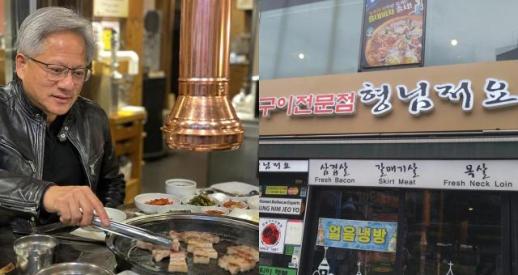 Jensen Huang's Meeting Location Changed from Seongsu-dong to Hongdae Ahead of NVIDIA CEO Jensen Huang's visit to South Korea, the location for the highly anticipated "pork belly and soju meeting" has reportedly been changed. Initially, an online media outlet confirmed that the gathering would take place at Seongsu-dong's Seokam Saeng Salt Grilled Meat restaurant. However, on the day of the visit, reports emerged that the meeting location had shifted to a meat restaurant near Hongdae, sparking increased interest. The reason for the change has not been officially confirmed, but it is believed that the heightened attention surrounding the event may have played a role. Following the announcement of the original venue, the restaurant's name quickly spread across online communities and social media, with some investors and fans even sharing plans to visit the site. An industry insider noted, "Given that this event involves the CEOs of global companies and major domestic firms, security and logistical management are paramount considerations." There are also suggestions that factors such as traffic conditions in downtown Seoul, scheduling efficiency, and adjustments to attendees' routes may have influenced the decision. However, this remains unverified. Online reactions included comments like, "Did they move it because of the overwhelming interest?" and "The restaurant owner must have experienced a rollercoaster of emotions in just one day," as well as expressions of disappointment from those who had been speculating about the original venue. Meanwhile, Jensen Huang is expected to discuss collaboration opportunities in artificial intelligence (AI), semiconductors, data centers, and next-generation computing with key business leaders during his visit. 2026-06-05 10:57:00