

Journalist

Lim Byung-sik
-
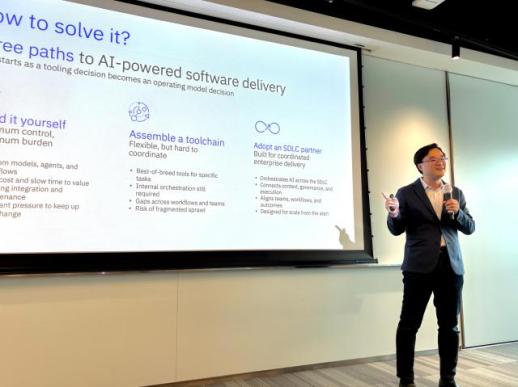 IBM Launches AI-Based Development Solution 'Bob' to Target South Korean Market IBM Korea is launching its AI-based development partner solution, 'IBM Bob,' to target the artificial intelligence transformation (AX) market for South Korean companies. The company aims to leverage the Bob Solution to actively engage industries with high regulatory requirements, such as finance and public sectors. On June 4, IBM Korea held a press conference at its Yeouido office in Seoul to introduce the 'IBM Bob' solution. The Bob Solution is an enterprise solution that integrates support for the entire software development lifecycle (SDLC), going beyond simple coding tools. IBM positions the Bob Solution as an AI-based development partner optimized for enterprise environments. It is designed to support not only development productivity but also security, governance, and cost optimization across the corporate development landscape. Michael Cook, Vice President of IBM Bob Solutions and Head of the Canadian Research Lab, stated at the conference, "The software development environment is rapidly changing with the introduction of AI." He explained that while previous AI applications focused on simple code writing or partial code generation, there is now a growing interest in organically integrating AI into the entire development process, including testing, debugging, security, governance, and modernization. IBM identified key factors that slow down software development, such as testing, legacy systems, complex operational environments, and security and compliance requirements. This highlights the increasing need for an SDLC partner that can connect multiple teams and workflows while maintaining governance, rather than simply adopting individual AI coding tools. According to IBM, the Bob Solution operates within the actual working environment of developers. It supports developers within integrated development environments (IDEs) and workflows, designed to accurately understand the overall code structure and context. Based on this, it comprehensively supports code writing, testing, documentation, application modernization, and security vulnerability assessments. Cook emphasized that a key differentiator for Bob is its level of security and governance that can be immediately utilized in corporate environments. Unlike simple code generation tools, it operates in accordance with corporate security policies and management systems, and it has already been used in the development of over 400 products within IBM. IBM first applied the Bob Solution internally to validate its effectiveness. Cook noted, "Currently, about 40% of the code used internally at IBM is generated directly by Bob," adding that over 100,000 IBM employees use Bob daily, with users reporting an average productivity increase of 45%. IBM also highlighted the Bob Solution's exceptional effectiveness in modernizing legacy applications and onboarding developers. In a case of application modernization, the Bob Solution reduced the time required for Java modernization tasks from over 30 days to just three days, cutting the duration by more than 90%. In terms of security, it applies a 'shift left' approach that incorporates security verification from the early stages of development. Cost optimization is another major strength of the Bob Solution. Lee Ji-eun, Executive Director of IBM Korea, stated, "Cost is a concern for customers across all industries," emphasizing that IBM focused on the cost optimization capabilities of Bob from the perspective of enhancing efficiency across the entire SDLC. IBM Korea plans to accelerate its market penetration with the Bob Solution. With growing interest in artificial intelligence transformation (AX) across various industries, the company aims to expand the supply of the Bob Solution to a diverse range of enterprises. It is particularly exploring its potential in the public and financial sectors, where security and regulatory requirements are stringent. Lee stated, "The productivity of IBM Bob has been sufficiently validated through internal and customer evaluations, and we believe it will be applicable across all industry sectors. Currently, various domestic companies are showing significant interest in the Bob Solution, and we plan to offer it to all industries and customers in South Korea in the future." 2026-06-04 15:51:00
 -
 Song Eon-seok Calls for National Investigation into Election Paper Shortage The People Power Party held an emergency meeting on June 4, the day after the local elections, to demand a national investigation into the ballot paper shortage that occurred during the June 3 elections. During the meeting, floor leader Song Eon-seok stated, "There was a significant issue that prevented us from concluding the evaluation and organization of the final results of the June 3 local elections." He explained the need for the urgent gathering. Before the meeting, lawmakers held placards reading, "Thorough investigation into the ballot paper shortage" and "Severe punishment for those responsible for the election mishap," chanting slogans demanding accountability. Song highlighted the issues surrounding the ballot paper shortage, asserting, "The Election Commission hastily printed and delivered new ballots yesterday, which appears to be a violation of the Public Official Election Act. Additionally, bringing in printed ballots also constitutes a legal violation." He added that there are still substantial questions about whether the delivery process was managed properly. He particularly noted, "Voting hours were extended until 10 p.m., yet exit poll results were released at 6 p.m., and counting began in some areas. If voters cast their ballots after 10 p.m. knowing the exit poll and early counting results, it directly violates Article 108 of the Public Official Election Act, which mandates a blackout period for polls five days prior to the election." In response, the People Power Party made five official demands. Song urged the Election Commission to conduct its own investigation into the three major offenses and called for the immediate resignation of the Commission's Secretary General and the Chair of the Seoul Election Commission. He also demanded legislative action to strengthen institutional controls over election management procedures and regulations, targeting the Democratic Party. Regarding the election results, he remarked, "The public has provided a clear answer and direction on how politics can be properly aligned, ensuring at least a minimal system of checks and balances." Finally, he criticized President Lee Jae-myung, stating, "This election process has confirmed that the president is one who divides the nation rather than unites it, serving only half of the population instead of all citizens. I do not understand why he remains silent on such a serious issue while intervening in every aspect of governance." After the meeting, Park Chung-kwon, the spokesperson for the Central Election Campaign Committee, told reporters, "We will request the Election Commission to provide at least the minimum materials necessary to explain how this situation occurred to the public. The People Power Party will hold accountable and work towards reforming the election system to ensure its integrity." Meanwhile, regarding the absence of Representative Jang Dong-hyuk from the meeting, it was reported that he was unable to attend due to health reasons.* This article has been translated by AI. 2026-06-04 15:48:00
 -
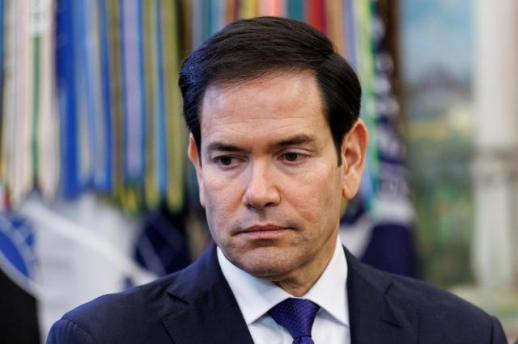 U.S. Secretary of State Rubio Pressures South Korea on Business Regulations, Sets Conditions for Iran U.S. Secretary of State Marco Rubio clarified America's demands regarding South Korea and Iran during a congressional hearing. He stated that issues surrounding the treatment of U.S. companies in South Korea have impacted trade discussions. For Iran, he set the condition of abandoning its nuclear program for any sanctions relief. During a House Foreign Affairs Committee hearing on June 3, Rubio addressed concerns about discrimination against U.S. companies in South Korea, calling it "one of the factors we deal with in our relationship with Korea." Republican Representative Darrell Issa claimed that South Korea is pressuring U.S. companies like Meta and Coupang. Rubio acknowledged that this issue has affected the completion of trade agreements with South Korea, attributing it to "certain attitudes toward U.S. companies." He noted that regulatory challenges for U.S. tech firms are not unique to South Korea, adding that American companies face difficulties in Europe as well, making it a broader trade issue. Rubio distanced himself from South Korea's political situation. When Issa suggested that South Korean democracy is shifting left and opening more avenues for China, Rubio responded that he respects the sovereign choices of the people, as long as their leaders are elected through legitimate elections. He emphasized that the U.S. does not seek to overthrow or remove governments that take positions contrary to American interests. Regarding security on the Korean Peninsula, Rubio confirmed that there would be no changes to the U.S. defense posture. When asked by Democratic Representative Ami Bera about the U.S. response to North Korean nuclear threats, Rubio stated, "The U.S. posture remains unchanged." He clarified that the U.S. is not looking to provoke a crisis or engage in war, maintaining a strong working relationship with South Korea. On the issue of Iran, Rubio addressed conditions for sanctions relief related to its nuclear program. According to reports from Reuters and others, he denied claims that the U.S. proposed easing sanctions in exchange for reopening the Strait of Hormuz. He stated, "For sanctions relief to be considered, Iran must abandon its enrichment of uranium and nuclear activities." Rubio explained that Iran is under sanctions due to its nuclear activities and that if it complies and fulfills agreements, sanctions relief could follow. While reopening the Strait of Hormuz could be a topic for negotiation, he emphasized that the direct condition for sanctions relief is the nuclear issue. He also indicated that any nuclear-related agreements would undergo congressional review, stating, "I will submit any relevant agreements to Congress in accordance with the Iran Nuclear Agreement Review Act (INARA) established in 2015." Rubio provided a critical assessment of Iran's military and economic conditions, claiming that Iran's naval, air, air defense, and missile capabilities have been significantly impacted following military operations by the U.S. and Israel. He noted that Iran is also facing hyperinflation, currency devaluation, and fiscal pressures.* This article has been translated by AI. 2026-06-04 15:45:00
 -
 KB Kookmin Bank Launches New Ad Featuring Director Jang Hang-jun and Writer Kim Eun-hee KB Kookmin Bank announced on June 4 that it has released a new advertisement for its senior integrated brand, 'KB Golden Life.' The ad features director Jang Hang-jun and writer Kim Eun-hee, who have been selected as the new models. It tells the warm story of the couple's journey together through difficult times, conveying the message, "With KB Golden Life, everyone can experience their golden years." The tagline, "Let’s make this life even more brilliant with KB Golden Life," reflects the brand's commitment to empathizing with customers' life journeys and supporting their future. The advertisement showcases the 'KB Golden Life Total Care Solution,' which includes: △ Specialized senior consulting and total care services at branches nationwide △ Customized pension products for stable retirement asset management, including retirement pensions △ Tailored asset succession consulting through trust products and gift planning services that include will and inheritance functions △ Information on senior living, caregiving, and nursing services, covering all aspects of asset management, retirement planning, inheritance, gifting, caregiving, and nursing throughout the customer’s life cycle. The campaign consists of several segments, including a couple's version, a segment featuring director Jang Hang-jun, a segment featuring writer Kim Eun-hee, and shorts, with the couple's version set to be released sequentially every Wednesday. A representative from KB Kookmin Bank stated, “We hope KB Golden Life becomes a reliable partner in creating our customers' golden years, just like the story of director Jang Hang-jun and writer Kim Eun-hee. We will continue to expand various services for a richer life for our senior customers.” KB Kookmin Bank has previously established a trustworthy brand image by selecting models such as the K-pop group Aespa (2021), Hearts to Hearts (August 2025), actress Park Eun-bin (since March 2023 as a model), and Choo Young-woo (March 2025). * This article has been translated by AI. 2026-06-04 15:42:00
 -
 Han Dong-hoon Claims Local Election Results Signal Call for Conservative Revival Han Dong-hoon, the independent candidate who won the Busan Buk-gap by-election, stated that the results of the June 3 local elections reflect a public mandate to rebuild conservatism.At a press conference on June 4 at his election office in Busan, Han expressed his belief that the public is "very wise and great," noting that significant victories in areas that did not completely abandon conservative parties suggest a shared understanding of the need for conservative revival.He also remarked, "The public has issued a meaningful warning to the Lee Jae-myung Democratic Party government," pointing out that a candidate backed by President Lee ultimately lost to him, an independent. He emphasized that citizens should consider how they judge actions like the cancellation of charges against candidates, which he discussed throughout the campaign.Han indicated his intention to rejoin the People Power Party, stating, "I promised to return on the day I was unjustly expelled, and this election victory is part of fulfilling that promise." He added that many lawmakers he has spoken with agree on the necessity of rebuilding conservatism based on the sentiments expressed in this election.Furthermore, he criticized the current leadership of the People Power Party, saying their actions do not reflect the dignity or capability expected of a conservative party. He urged them to reflect on their conduct and realign their direction.* This article has been translated by AI. 2026-06-04 15:39:00
 -
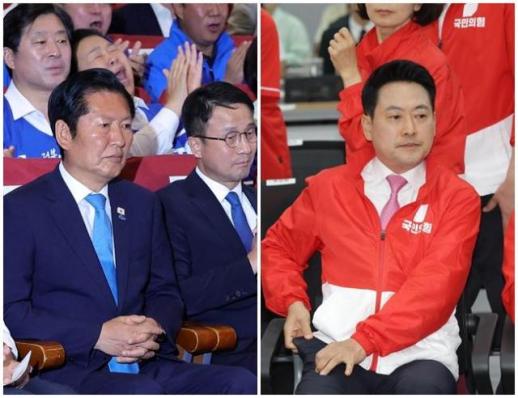 Democratic Party Wins 12 Local Governments, Seoul Mayor Race Goes to People Power Party In the June 3 local elections, the Democratic Party achieved a significant victory by retaining 12 out of 16 regional government positions. However, the party's loss of Seoul to the People Power Party left some disappointment. The People Power Party managed to secure victories in Daegu and other areas in the Yeongnam region, avoiding a complete defeat by holding onto Seoul. According to political sources on June 4, the Seoul mayoral race, initially seen as the most competitive, began with Jung Won-o leading by more than 10 percentage points. However, as the counting progressed, conservative support consolidated in the Gangnam area. By 7:16 a.m., 13 hours after the counting began, Oh Se-hoon of the People Power Party overtook Jung by a narrow margin of 0.04%, eventually widening the gap to secure victory. The results of the Seoul mayoral election brought mixed reactions from party leaders. Jung Cheong-rae, the Democratic Party leader, expressed gratitude for the voters' wise choice but lamented the loss of Seoul, stating, "It hurts not to have reclaimed Seoul." Jang Dong-hyuk, leader of the People Power Party, described the outcome as "disappointing" but emphasized that they had preserved a spark of hope, calling it a mandate from the people to protect the country against the arrogance of Lee Jae-myung and the Democratic Party. Analysts noted that while the Democratic Party's overall victory in the local elections was significant, losing Seoul was a setback. Political commentator Park Sang-byeong remarked, "Although we lost the Seoul mayoralty, the Democratic Party won significantly, and the People Power Party essentially suffered a defeat. Winning Seoul would have made it a perfect victory. The Democratic Party may view this as an unsatisfactory win." Another commentator, Choi Yo-han, stated, "The score indicates a significant win for the Democratic Party, but it feels like an uneasy victory. For the People Power Party, it’s neither a win nor a loss." In addition to the local elections, by-elections for 14 parliamentary seats were held concurrently, with the Democratic Party winning 9 seats, compared to 4 for the People Power Party and 1 for independents, indicating continued momentum for the Democratic Party. Commentators were firm in their assessment that the People Power Party did not perform well in the by-elections. They expressed pessimism about the future political prospects of Cho Kuk, the candidate from the Justice Party who lost in Pyeongtaek, while opinions on a potential merger with the Democratic Party after the local elections were mixed. Park noted, "It cannot be said that the People Power Party performed well. In Pyeongtaek, the fragmented opposition allowed Yoo Yi-dong to win by chance," adding that while Cho's political life is not over, his wings have been clipped. He predicted that the Justice Party would inevitably be absorbed by the Democratic Party. Choi also remarked, "Many people do not see the by-elections as a victory for the People Power Party," and noted that Cho's standing has significantly diminished due to emotional conflicts with the Democratic Party during the election process, making a merger seem unlikely. 2026-06-04 15:36:00
 -
 Korea's FAST Ecosystem Development to Enhance Global Competitiveness The Broadcasting and Media Commission (BMC) is taking steps to establish a Korean-style FAST (Free Ad-supported Streaming Television) ecosystem aimed at enhancing the global competitiveness of the FAST service market. On June 4, the BMC held an industry meeting at the Samsung Innovation Museum in Suwon, Gyeonggi Province, to discuss strategies for strengthening the global competitiveness of FAST services. FAST allows viewers to enjoy real-time channels and content for free in exchange for watching advertisements, and it has been rapidly growing, particularly in North America. According to market research firm Mordor Intelligence, the global market size for FAST is estimated to reach $14.33 billion this year and is projected to grow to $31.29 billion by 2031, with an average annual growth rate of 16.91%. The meeting was attended by 25 participants, including BMC Chairman Kim Jong-cheol, representatives from Samsung Electronics and LG Electronics, channel operators such as NewID and Smart Media Lab, broadcasters like KBS, MBC, and SBS, content producers, and AI technology companies like HudsonAI and Eastsoft. Before the meeting, attendees observed a service demonstration by Samsung Electronics and heard from President Lee Won-jin about future business strategies. During the meeting, Samsung Electronics and NewID presented their current status and future strategies for global platform and channel operations. HudsonAI shared examples of localizing broadcast content using AI technology. Participants agreed that the growth of the FAST market could provide new revenue opportunities for domestic broadcasters and content producers. They shared challenges and tasks necessary for securing competitiveness in the global market, discussing reasons why Korean content has not met viewership expectations in the global FAST market. They noted that current FAST channels primarily repackage and broadcast previously produced content, failing to adequately reflect local viewer demand. To enhance the competitiveness of Korean content, they suggested a strategic approach that analyzes North American viewer preferences and demands to plan and schedule content accordingly. Discussions also included the K-FAST initiative, which aims to develop customized content planning linked to advertising based on viewer data. Chairman Kim emphasized, "For the domestic broadcasting and media industry to find new avenues, it is essential to actively utilize global distribution platforms like FAST. The BMC will closely collaborate with relevant departments to foster the K-FAST ecosystem and enhance the distribution competitiveness of domestic broadcasting and media companies."* This article has been translated by AI. 2026-06-04 15:33:00
 -
 LG Innotek Expands Semiconductor Substrate Plant in Vietnam, Aiming for 3 Trillion Won Revenue by 2030 LG Innotek plans to expand its semiconductor substrate plant in Vietnam, targeting over 3 trillion won in revenue from its package solution business by 2030. On June 4, LG Innotek signed a memorandum of understanding (MOU) with Hai Phong City at its LG Science Park in Magok, Seoul, regarding the investment for the plant expansion. The new semiconductor substrate plant will cover approximately 33,000 square meters, equivalent to 45 soccer fields, in the Hai Phong area. The plant, which will be directly invested in by LG Innotek's Vietnamese subsidiary, is set to begin construction in July and is expected to be completed by May 2027. It will produce key semiconductor substrates, including RF-SiP, FC-CSP, and FC-BGA. This investment is a response to the increasing demand for semiconductor substrates driven by the expansion of on-device artificial intelligence (AI) and the growing investments in AI by global tech giants. Currently, the semiconductor substrate production line at the Gumi facility is operating near full capacity. LG Innotek stated, "We plan to develop the Gumi facility into a 'mother factory' dedicated to the development of new semiconductor substrate technologies and high-value product production, while utilizing the expanded plant in Vietnam as a base for general-purpose products, implementing a dual production site strategy." Hai Phong offers advantages such as strong customer responsiveness due to its established infrastructure and proximity to major semiconductor backend processing companies, as well as excellent cost competitiveness. Moon Hyuk-soo, CEO of LG Innotek, said, "Through our dual production site strategy, we aim to grow our package solution business revenue to over 3 trillion won by 2030 and increase its profit contribution to the level of our optical solution business."* This article has been translated by AI. 2026-06-04 15:33:00
 -
 AI-Driven Insurance Fraud on the Rise, Regulators to Establish Unified Detection System As new forms of insurance fraud utilizing generative artificial intelligence (AI) for forgery of medical certificates and receipts proliferate, financial authorities are moving to establish a unified detection system that links data from the insurance sector and public institutions. Unlike traditional forgery methods using Photoshop and manual alterations, AI-generated forgeries leave fewer traces, making them harder to detect. This initiative marks the beginning of a comprehensive government response aimed at preventing insurance losses and the deterioration of health insurance finances. On June 4, the Financial Services Commission held a kickoff meeting for the "AI-Based Insurance Fraud Prevention Task Force (TF)" alongside an insurance investigation council. The financial authorities plan to operate the TF for three months, with the goal of preparing a plan for an "AI-Based Insurance Fraud Prevention System" by September. Following this, they intend to implement legislative amendments and enhance platforms starting in October. Last year, the amount of detected insurance fraud was reported at 1.1571 trillion won. Considering undetected fraud, the total is estimated to reach approximately 9 trillion won. By category, long-term damage insurance, including health insurance, accounted for 44.7%, followed by auto insurance at 22.4% and life insurance at 21.8%. Recently, there have been cases where generative AI and deepfake technology have been misused to forge identification documents, medical certificates, and photos of vehicle damage throughout the entire insurance process, from enrollment to claims. A 20-year-old individual in Busan was sentenced to two years in prison for forging a hospitalization confirmation letter using generative AI, defrauding a total of 150 million won from 11 insurance companies. Concerns are high regarding AI forgery, as it is difficult to detect with existing methods. In the past, when receipts or medical records were cut and pasted or manipulated using Photoshop, there were often clues left, such as changes in font or spacing. In contrast, generative AI can create new image pixels, eliminating traces of manipulation. The TF will discuss establishing legal grounds for the centralized sharing of information related to insurance fraud, real-time information sharing among relevant agencies, and the analysis of AI-based fraud patterns and risk indices. Plans are also in place to enhance the "AI-Based InsurTech Platform" of the Korea Credit Information Corporation as a unified infrastructure for preventing insurance fraud across all insurance sectors and to activate a system for original data verification with public institutions.* This article has been translated by AI. 2026-06-04 15:30:00
 -
 Post-Election Push for Prosecutorial Reform in South Korea Following the local elections on June 3, the South Korean government and ruling party are expected to intensify discussions on prosecutorial reform legislation that had been postponed. The Prosecutorial Reform Promotion Team under the Prime Minister's Office plans to unveil a draft amendment to the criminal procedure law this month, with the future of supplementary investigation rights emerging as the primary issue in the second phase of prosecutorial reform. According to legal sources on June 4, the Prosecutorial Reform Promotion Team intends to announce the draft amendment within this month. With the local elections concluded and the upcoming Democratic Party convention scheduled for August, discussions on prosecutorial reform are anticipated to gain momentum. The most significant point of contention is the supplementary investigation rights of prosecutors. Concerns have been raised that if these rights are abolished, prosecutors would only be able to decide on indictments based on cases handed over by primary investigative agencies like the police, potentially leading to delays in case processing and gaps in investigations. The Supreme Prosecutors' Office reported that 45.6% of cases handled by prosecutors in March and April of this year underwent supplementary investigations, underscoring the need to maintain the system. Conversely, hardliners within the ruling party argue that supplementary investigation rights are an extension of prosecutorial powers and should be abolished to uphold the principle of separating investigation and prosecution. They contend that allowing supplementary investigations could lead to an expansion of prosecutorial authority in the future. While supplementary inquiry rights have been proposed as an alternative, there is considerable debate surrounding this issue. Critics argue that supplementary inquiry rights resemble administrative investigations rather than criminal investigations, making it difficult to recognize evidence in court and limiting the protection of defendants' rights, such as the right to refuse testimony and the right to legal counsel. The law firm Hwawoo identified the fate of supplementary investigation rights as a crucial variable in prosecutorial reform in a report released on the same day, titled "Outlook on Corporate Regulatory Environment Following the June 3 Local Elections." Hwawoo stated, "The issue of granting supplementary investigation rights to public prosecutors will emerge as the key point determining the practical success of prosecutorial reform." Discussions regarding the transition to a public prosecution and serious crimes investigation agency system, another key aspect of the second phase of prosecutorial reform, are also expected to become more active. The Serious Crimes Investigation Agency, which is being prepared for launch in October, will be responsible for investigating six major crimes: corruption, economic offenses, defense industry crimes, drug offenses, national security crimes, and cybercrimes. Consequently, a significant number of investigations currently handled by prosecutors in areas such as securities, finance, fair trade, and corporate crimes are likely to be transferred to the Serious Crimes Investigation Agency. Hwawoo advised that businesses should focus on the diversification of investigative agencies rather than merely the reduction of prosecutorial powers. The report predicts that with the establishment of the public prosecution and serious crimes investigation agency system, companies will face a landscape where they must respond to multiple investigative bodies, including the police and special judicial police. Discussions on the so-called "special prosecution law for fabricated charges," promoted by the ruling party, may also resume following the local elections. In April, the Democratic Party proposed a special prosecutor bill aimed at uncovering allegations of fabricated investigations and charges by the prosecution, the National Intelligence Service, and the Board of Audit and Inspection during the Yoon Suk Yeol administration. The provision allowing the special prosecutor to decide on the maintenance of charges for cases they inherit has sparked controversy among opposition parties, who have labeled it a "self-pardon" issue. In addition to prosecutorial reform, corporate regulatory legislation is expected to be a major agenda item in the upcoming regular session of the National Assembly in the second half of the year. Hwawoo highlighted the establishment of a platform law and the abolition of exclusive reporting rights as key variables in the fair trade sector. According to the report, the platform law will regulate practices such as preferential treatment for a company's own products, tying sales, and demands for the best treatment, and discussions may also include the introduction of a cap on delivery app commissions. The abolition of exclusive reporting rights is also a concern for businesses. Hwawoo predicts that the criminalization of fair trade cases could accelerate, with the possibility of direct indictments without going through the Fair Trade Commission and an expansion of reporting rights for local governments. In the labor sector, extending the retirement age to 65 and mandating retirement pensions are identified as key legislative tasks. Hwawoo anticipates that the government and ruling party are likely to push for the extension of the retirement age, the expansion of labor law applicability, and the mandatory retirement pension system. Particularly, following the implementation of the Yellow Envelope Law, disputes surrounding the responsibilities of primary contractors and the scope of collective bargaining are expected to increase. The legal community views the upcoming regular session of the National Assembly as a critical juncture for prosecutorial reform and regulatory legislation. Starting with the debate over supplementary investigation rights related to the amendment of the criminal procedure law, discussions on the transition to a public prosecution and serious crimes investigation agency, platform law, abolition of exclusive reporting rights, and labor legislation are expected to follow, making it increasingly important for businesses to address judicial and regulatory risks.* This article has been translated by AI. 2026-06-04 15:30:00