

Journalist

Lim Byung-sik
-
 NVIDIA CEO Jensen Huang to Dine at Popular Korean BBQ Ahead of Visit NVIDIA CEO Jensen Huang is set to visit South Korea on June 5, sparking significant interest in the location of his anticipated "pork belly and soju" gathering. On June 4, the online media outlet "Namda-reun Detail" reported that the venue for the dinner has been confirmed as the Seongsu-dong restaurant "Seokam Saengsogeumgui." According to sources in the industry, "NVIDIA has made a reservation at Seokam Saengsogeumgui in Seongsu-dong. Other popular options like 'Ggubdang' and 'Nam Young' were likely unavailable due to high demand from regular customers for reservations, making them unsuitable for a large event." Prior to this confirmation, various social media platforms had circulated a list of potential restaurants where Huang might host the gathering with business leaders. The list included strong contenders such as the stone grill restaurant "Seokam Saengsogeumgui," the well-equipped "Gojibok" known for its aged pork, the Michelin Bib Gourmand recipient "Ggubdang," and the charcoal-grilled pork neck specialty restaurant "Nam Young." In response to the news, one netizen speculated, "The app allows reservations, but if you factor in that Friday evenings are fully booked, the only options left are Ggubdang, Nam Young, and Seokam. I think it will be a place where the staff grills the meat, so Seokam is out. It's between Ggubdang and Nam Young, but Ggubdang is famous for its pork neck... I’d say there’s a 60% chance for Nam Young and 40% for Ggubdang." After the confirmation of Huang's visit to "Seokam Saengsogeumgui," netizens commented, "I don't know if it's a good restaurant, but it will definitely become one," "The owner seems to have hit the lottery," "The wait at the Yongsan location is incredibly long," "Who will grill the meat? Maybe the youngest staff member?" and "Are there related stocks? Salt-grilled meat -> salt -> Sinan -> Sinan Group -> Husteel, I'm going all in on Husteel." 2026-06-04 15:00:00
 -
 Korean Trade Minister Confirms No Increase in U.S. Tariffs Beyond Last Year's Agreement Korean Trade Minister Kim Jeong-kwan stated on June 4 that tariffs imposed on South Korea under the U.S. Trade Law Section 301 will not exceed the levels agreed upon last year. In a post on social media, Kim revealed that he held a video conference with U.S. Secretary of Commerce Gina Raimondo the previous evening. He noted that the meeting focused on reviewing the implementation of the Korea-U.S. tariff agreement and reaffirming both sides' commitment to compliance. Kim emphasized, "We will do our utmost to maintain the balance of benefits achieved through the Korea-U.S. tariff agreement in the future." Last year, South Korea and the U.S. negotiated to lower mutual tariffs to 15% and secured most-favored-nation treatment for semiconductors. Additionally, South Korea committed to a $350 billion investment in the U.S. However, the U.S. government has temporarily applied a 10% global tariff on South Korea following a Supreme Court ruling earlier this year that deemed mutual tariffs illegal. The U.S. Trade Representative (USTR) is conducting a Section 301 investigation to address this situation. Following an announcement of a 12.5% tariff related to forced labor, an investigation into overproduction remains ongoing. Concerns have arisen that the tariff rates could exceed last year's agreement of 15%. Kim's video conference with Raimondo appears to have been aimed at clarifying the U.S. stance on this issue. Earlier, Yeohang-gu, head of the Trade Negotiation Bureau, met with USTR representative Jamieson Greer to stress the importance of maintaining the balance of benefits under the existing Korea-U.S. tariff agreement. According to the Ministry of Trade, Yeohang-gu discussed current issues with Greer during the OECD Ministerial Council Meeting held in Paris on June 3. During this meeting, Yeohang-gu gained insights into the background of the Section 301 investigation results related to the import ban on products made with forced labor and the ongoing investigation into overproduction. He underscored the necessity of maintaining the balance of benefits established by the Korea-U.S. tariff agreement. The U.S. side reportedly reaffirmed its intention to comply with the Korea-U.S. tariff agreement. Both parties also reviewed the status of the commitments made in the joint statement issued by the leaders of both countries last November and agreed to maintain close communication to ensure the smooth implementation of related follow-up measures. Yeohang-gu stated, "It is essential that not only the results of the Section 301 investigation but also future trade issues are discussed within the framework of the Korea-U.S. tariff agreement," adding that they will respond calmly to the remaining Section 301 procedures.* This article has been translated by AI. 2026-06-04 14:51:00
 -
 Progressive Candidates Lead in Nationwide Education Superintendent Elections In the nationwide elections for education superintendents held alongside the 9th local elections, progressive candidates made significant gains in the Seoul, Gyeonggi, and Incheon education offices, leading the overall results. Meanwhile, conservative candidates solidified their support in the Yeongnam and Chungcheong regions. The election outcomes are expected to further diversify educational policies across regions, balancing the expansion of educational welfare in the metropolitan area with market-driven academic improvement strategies in certain locales. According to the National Election Commission on June 4, progressive candidates won in the key metropolitan districts. In Seoul, incumbent Jeong Geun-sik secured re-election with 30.34% of the vote, reinforcing a five-term streak for progressive superintendents. In Gyeonggi Province, Ahn Min-seok achieved a decisive victory with 52.81%, significantly outpacing incumbent Lim Tae-hee. In Incheon, Do Seong-hoon also emerged victorious with 36.35% of the votes. Progressives continued to show strength in the Honam and parts of the Yeongnam regions, with candidates such as Kim Dae-jung in Jeollanam-do (42.52%), Kim Seok-jun in Busan (50.63%), Cheon Ho-seong in Jeollabuk-do (56.63%), Jo Yong-sik in Ulsan (39.22%), Kang Sam-young in Gangwon (41.54%), Lee Byeong-do in Chungcheongnam-do (30.59%), and Go Ui-sook in Jeju (48.08%) all winning their respective races. Conversely, conservatives fortified their positions in traditional strongholds and key battlegrounds in the Chungcheong region. In Daegu, Kang Eun-hee was re-elected with 52.40% of the vote. In Gyeongsangbuk-do and Gyeongsangnam-do, Lim Jong-sik and Kwon Soon-ki won with 43.49% and 38.53%, respectively. In the Chungcheong region, Oh Seok-jin in Daejeon secured 27.48%, while Yoon Geon-young in Chungcheongbuk-do (48.21%) and Kang Mi-ae in Sejong (36.25%) also represented conservative and moderate-conservative views. Education experts analyzed that the election results were significantly influenced by the political landscape and the incumbency advantage. Lee Deok-nan, head of the Education and Culture Team at the National Assembly's Legislative Research Service, noted, "A key feature of this election was the strong correlation between the gubernatorial elections and the education superintendent races. The incumbency premium for current superintendents was clearly evident." Lee added, "In regions like Gyeonggi and Gangwon, where voters disillusioned with the conservative party shifted their support to progressives, the landscape for education superintendents changed significantly." Notably, despite initial media predictions of a landslide victory for progressives, the final results reflected a closer outcome, resembling the previous 11 to 6 structure from the era of 17 education offices, concluding at 10 to 6. Lee remarked, "Contrary to expectations, progressive candidates did not make significant gains in the Yeongnam and Chungcheong regions, and the dynamics in Chungcheong have shifted dramatically. Progressive candidates failed to present compelling educational pledges or visions that resonated with residents, leading to a lack of differentiation among candidates, which was reflected in the voting results."* This article has been translated by AI. 2026-06-04 14:45:00
 -
 Shinsegae Shares Surge 18% Amid Optimism for Department Store Recovery Shinsegae's shares have surged by 18% during trading, driven by expectations of consumer recovery linked to rising asset prices. The recent upward trend in the stock market has improved investor sentiment across the department store sector. As of 2:37 PM on June 4, Shinsegae's stock was trading at 675,000 won, up 18.63% (106,000 won) from the previous trading day, according to the Korea Exchange. Other department store stocks are also experiencing gains. Hyundai Department Store rose 15.02% to 140,100 won, while Lotte Shopping increased by 11.29% to 171,500 won. Analysts attribute the recent stock market rally to a wealth effect that is positively impacting the performance of department stores. There is growing optimism regarding increased sales, particularly in the luxury goods sector. Kim Myung-joo, a researcher at Korea Investment & Securities, stated, "The explosive rise in the stock market has led to favorable results for department store companies. The sales trends for the three major department stores in April and May are better than those in the first quarter." He added, "Luxury sales are particularly strong, driven by the wealth effect from rising asset prices, including stocks, and the fear of missing out (FOMO) due to price increases in luxury jewelry. The continued strength of the yuan against the won is also expected to positively impact foreign sales."* This article has been translated by AI. 2026-06-04 14:45:00
 -
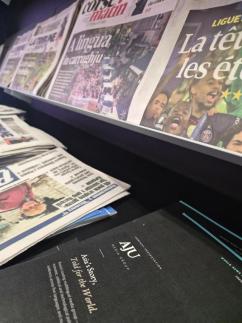 WNMC 26: Journalism's AI debate has moved on MARSEILLE, June 4 (AJP) — One theme emerged repeatedly during the 77th World News Media Congress in Marseille: the global news industry has largely moved beyond debating whether artificial intelligence should be used in journalism. The discussion has shifted to a more fundamental question. What role will journalism play when AI increasingly mediates how information is discovered, consumed and distributed? That shift was visible across presentations from publishers, news agencies and technology executives throughout the three-day congress. Two years ago, much of the industry's attention focused on newsroom automation, content generation and workflow efficiencies. Those topics remain important. But in Marseille, the most consequential discussions centered on user experience, personalization, knowledge architecture, audience loyalty and the relationship between journalism and AI agents. The focus was no longer on how AI could help create content. It was on how audiences would experience journalism in an AI environment. The Hindu Group in India provided one example of this transition. The company has been experimenting with presenting the same journalism in multiple formats, including AI-generated summaries, question-and-answer formats, audio explainers and alternative article lengths. The objective is not simply greater efficiency but greater accessibility and discoverability. Sweden's Bonnier News is pursuing a similar goal through conversational archives. Rather than relying on traditional search, readers can query decades of reporting through natural-language interfaces. The shift is from retrieval to conversation. At Scroll.in, the focus is on contextual understanding. The publisher is developing AI-powered workspaces that combine timelines, event clusters, knowledge graphs and dynamic FAQs, particularly for researchers and specialist audiences seeking comprehensive understanding of complex topics. Different organizations are pursuing different approaches, but they share a common assumption: the article is no longer the only product. User experience is becoming a strategic differentiator. The most forward-looking example presented in Marseille may have come from Germany's dpa. Astrid Maier, chief deputy editor and head of strategy, introduced dpa IQ, a system designed to make journalistic information directly accessible to AI agents and workflows. "The news artifact is not the end. It's only the beginning," she said. The premise behind dpa IQ is that journalism can be structured as machine-readable knowledge rather than distributed solely as articles. AI systems can retrieve facts, timelines, contextual information and archived reporting through APIs and agent frameworks. The significance of the project extends beyond technology. It represents a different understanding of what a news agency might become in an AI ecosystem: not merely a distributor of articles, but a provider of trusted information infrastructure. Austria's Kleine Zeitung offered another perspective on the changing media environment. Sebastian Krause, the publisher's head of digital, argued that publishers must begin thinking about AI systems as a new category of audience. For years, publishers optimized content for search engines. Increasingly, however, AI assistants are reading, summarizing and retrieving information on behalf of users. This shift has prompted discussions about Answer Engine Optimization (AEO) and Generative Engine Optimization (GEO), reflecting the growing importance of visibility within AI-generated responses. The implication is significant. As AI systems become intermediaries between publishers and audiences, the strategic challenge is no longer simply generating traffic. It is maintaining visibility, attribution and commercial value in environments where users may never visit the original source. Yet for all the discussion surrounding AI, one of the strongest messages of the congress concerned journalism itself. The most widely discussed speech of the week came from New York Times publisher A.G. Sulzberger. Sulzberger argued that while AI companies can organize, summarize and distribute information, they remain dependent on journalism's most fundamental contribution: original reporting. Facts do not appear spontaneously in AI systems. They originate from reporting in the field, interviews, documents, investigations and verification. As AI-generated content becomes increasingly abundant, speakers throughout the congress repeatedly returned to the same conclusion: trust, verification and firsthand reporting become more valuable, not less. This may prove to be one of the central paradoxes of the AI era. The more powerful AI becomes, the more important journalism's uniquely human functions appear. For South Korea, where AI adoption is among the fastest in the world, the discussions in Marseille offered an important reminder. Automation, translation and workflow efficiencies are necessary developments. But they are not, by themselves, a strategy. The organizations shaping the industry's future are increasingly focused on audience relationships, user experience, information architecture and trust. The debate is moving beyond how AI can improve newsroom operations. It is moving toward how journalism itself must evolve. As WAN-IFRA AI lead Ezra Eeman observed during the congress, "There is no map." That remains true. But the direction of travel is becoming clearer. The conversation is moving from content to experience, from search to interaction, from distribution to loyalty, and from information abundance to trusted verification. In that sense, the most important discussions in Marseille were not ultimately about artificial intelligence. They were about the future value of journalism. 2026-06-04 14:39:04
 -
 Samsung C&T Hits Record High of 565,000 Won Amid Rising Investor Sentiment Samsung C&T reached an intraday high of 565,000 won, setting a new record. This surge is attributed to rising equity values of major affiliates and expectations for increased shareholder returns. According to the Korea Exchange, as of 2:25 PM on June 4, Samsung C&T was trading at 537,000 won, up 10.61% (51,500 won) from the previous trading day. The stock peaked at 565,000 won during the session. The recent upward trend has been steep. Samsung C&T rose 8.26% on May 29, followed by increases of 5.20% on June 1, 6.70% on June 2, and 10.61% on June 4, totaling over a 34% increase in the last five trading days. Based on intraday highs, the stock has surged more than 40% during this period. Samsung C&T is recognized as a significantly undervalued holding company, owning stakes in key affiliates such as Samsung Electronics, Samsung Biologics, and Samsung Life Insurance. Analysts have been raising their target prices for the stock. SK Securities increased its target price from 480,000 won to 590,000 won while maintaining a 'buy' rating. Choi Kwan-soon, an analyst at SK Securities, noted, "The net asset value (NAV) of Samsung C&T has increased by 75.4 trillion won compared to the end of last year. The stock prices of Samsung Electronics and Samsung Life Insurance have risen by 196.9% and 204.6%, respectively, and the net debt on a standalone basis decreased by 972.7 billion won in the first quarter of this year." Currently, Samsung C&T's equity value is estimated at approximately 165 trillion won, with Samsung Electronics accounting for 64.5% of this value, followed by Samsung Biologics at 16.5% and Samsung Life Insurance at 11.3%. Choi added, "Considering the growth in the high-tech sector and the long-term potential of energy projects and small modular reactors (SMRs), there is a high possibility of improving cash flow. Attention should be paid not only to the increase in equity value but also to the improvement in the company's operational performance." Expectations for increased shareholder returns are also supporting the stock price. SK Securities forecasts that Samsung C&T's dividend per share (DPS) will rise by 25% year-on-year to around 3,500 won this year. Earlier, Samsung C&T announced a shareholder return policy in February, raising the minimum dividend per share to 2,500 won for the next two years and committing to redistribute 60-70% of the dividend income received from its affiliates. The dividend income primarily comes from Samsung Electronics, Samsung Life Insurance, Samsung SDS, and Samsung E&A, with an estimated 90% originating from Samsung Electronics and Samsung Life Insurance.* This article has been translated by AI. 2026-06-04 14:39:00
 -
 Dongyang Express and Chunil Express Surge Amid Expectations for Seoul Bus Terminal Redevelopment Dongyang Express and Chunil Express are experiencing significant gains as expectations rise for the redevelopment of the Seoul Bus Terminal. According to the Korea Exchange, as of 2:16 PM on June 4, Dongyang Express shares rose by 4,700 won (12.08%) to 43,600 won. Chunil Express saw an increase of 12,500 won (5.75%), trading at 230,000 won. Both stocks reached their daily ceiling prices early in the trading session, with Dongyang Express hitting the limit at 9:04 AM and Chunil Express at 9:06 AM, although they later retraced some of their gains. Market analysts attribute the surge to heightened expectations surrounding the redevelopment project, coinciding with the ongoing vote counting for the Seoul mayoral election. Chunil Express holds a 16.67% stake in the Seoul Bus Terminal, making it the second-largest shareholder, while Dongyang Express owns 0.17%. This has led to optimism that both companies could benefit significantly if the redevelopment project moves forward. Previously, on June 2, both stocks also reached their ceiling prices amid similar redevelopment expectations ahead of the local elections. Shinsegae, which owns a department store at the bus terminal, has also rebounded from a recent decline, showing three consecutive days of gains. Shinsegae shares increased by 90,000 won (15.82%) to 659,000 won compared to the previous session.* This article has been translated by AI. 2026-06-04 14:39:00
 -
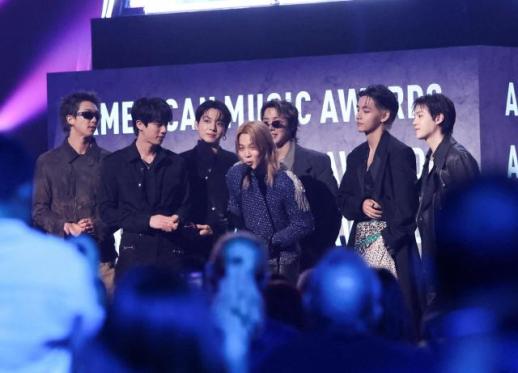 BTS to release limited-edition vinyl in celebration of 13th anniversary of their debut SEOUL, June 4 (AJP) - K-pop juggernaut BTS will release a limited-edition vinyl version of their fifth full-length album "ARIRANG" on June 12, one day before the group marks the 13th anniversary of their debut, BigHit Music said Tuesday. K-pop juggernaut BTS will release a vinyl version of their fifth full-length album "ARIRANG" next week, their agency BigHit Music said on Thursday. The limited-edition album, set for release on June 12, a day before the 13th anniversary of their debut, will include all tracks from "ARIRANG" as well as two bonus tracks, "Voice Message: Love Song" and "NORMAL (Korean version)." The vinyl will feature 16 tracks in total. "Voice Message: Love Song" features the members speaking in the form of voice messages around the question, "What Is Your Love Song?" The track is designed as an extension of the album's message, adding a more personal element to the release. The vinyl will also include the South Korean version of "NORMAL," a track from "ARIRANG" that BigHit described as dealing with emptiness, fear and the desire for ordinary life behind the spectacle of the stage. The release comes as BTS prepares for this year's annual fan celebration event marking their debut anniversary. The group released the timetable for the 2026 edition earlier in the week, with more details scheduled to roll out over about two weeks. BTS will also hold "BTS World Tour 'Arirang' In Busan" at Busan Asiad Main Stadium on June 12 and 13. 2026-06-04 14:38:07
 -
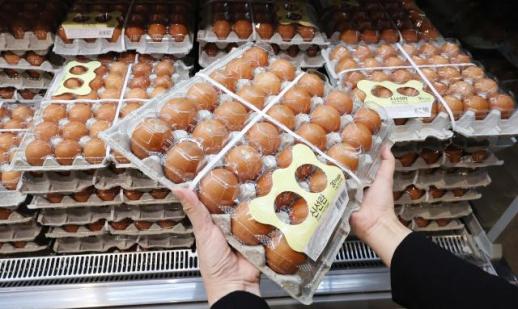 Eggs hit by buying limits as South Korean retailers ration supply SEOUL, June 04 (AJP) - South Korea's leading hypermarket chains have capped egg purchases at one carton per customer as prices climb on the back of an avian influenza outbreak, with retailers now weighing the sale of imported eggs for the first time. Emart and Lotte Mart are limiting shoppers to a single 30-egg carton of discounted product through June 10, the retail industry said on Thursday. Both chains are selling their trays as premium domestic grade for about 6,000 won per tray. The promotions are jointly subsidized by the Ministry of Agriculture, Food and Rural Affairs to ease pressure on household grocery bills. Warehouse chain Traders Wholesale Club normally imposes no cap but has begun restricting customers to two cartons depending on store stock. The price surge has been driven by tightening supply in the wake of a highly pathogenic avian influenza outbreak. The national average retail price for 30 premium domestic eggs reached 7,472 won the previous day, up 4.1 percent from a month earlier, according to the Korea Agro-Fisheries & Food Trade Corporation. Brisk demand for cheaper eggs has left Emart's online stock temporarily sold out. Emart and Lotte Mart are now considering selling fresh eggs imported from Thailand under a government scheme to stabilize prices — a first for both chains, which have sold only domestic eggs until now. Rival Homeplus began offering Thai and US eggs in April, while Lotte Super introduced US eggs last month. The government, meanwhile, plans to import a total of 31.23 million fresh eggs this year and will for the first time bring in Brazilian eggs to diversify its sourcing, with domestic production expected to recover from July as laying-hen flocks rebuild. 2026-06-04 14:37:35
 -
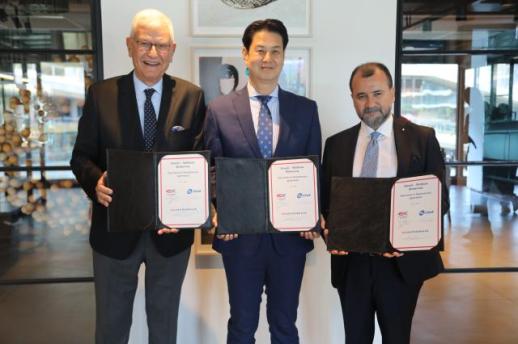 Korea Expressway Corporation Secures $186 Million Road Management Contract in Turkey Korea Expressway Corporation has secured a nearly 200 billion won ($186 million) contract for road operation and maintenance in Turkey. On June 3, local time, the corporation announced that it signed a main contract for the operation and maintenance of the Kınalı-Malkara Highway and major repairs for the Malkara-Çanakkale section in Istanbul. This contract represents the largest amount awarded to Korea Expressway Corporation for road operation and maintenance projects abroad. The Kınalı-Malkara Highway is part of a route connecting Istanbul and Çanakkale. The project, which is a public-private partnership, has a total budget of 2.6 trillion won and will be constructed as a 106-kilometer, six-lane highway. During the construction period, Korea Expressway Corporation will provide pre-operation consulting. After the highway opens in 2029, it will work with local company Limak to manage operations and maintenance for ten years. The contract value for this part is 135 billion won. Additionally, the company will undertake major repairs for the Malkara-Çanakkale section, valued at 51 billion won. This section connects the existing Malkara-Çanakkale Highway with the 1915 Çanakkale Bridge towards Istanbul. Once completed, it is expected to enhance connectivity in Turkey's western transportation network and meet the growing demand for industrial, logistics, and tourism travel. The Kınalı-Malkara Highway project is reported to have commenced construction in March 2025. The contract was also influenced by public financial support from the Korea Export-Import Bank and the Korea Trade Insurance Corporation. The Export-Import Bank led the financing from the project's inception, while the Trade Insurance Corporation's involvement helped expand the contract size. With this contract, Korea Expressway Corporation's cumulative contract amount in Turkey has reached approximately 350 billion won. This marks the second operation and maintenance project secured in Turkey, following the Nakasu-Basaksehir Highway project in 2024. This contract appears to be the largest ever awarded to Korea Expressway Corporation for overseas operation and maintenance projects. Lee Sang-jae, acting president of Korea Expressway Corporation, stated, "This contract is an example of how infrastructure public enterprises and public financial institutions can achieve results in overseas markets. We aim to participate in large projects in Asia and Europe, targeting 1,000 kilometers of overseas road operation and maintenance contracts by 2030."* This article has been translated by AI. 2026-06-04 14:36:00