

Journalist

Lim Kwu-jin
-
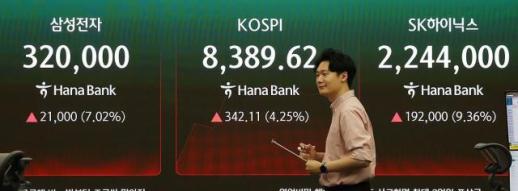
 KOSPI closes at record high as Korea outperforms Asian markets SEOUL, May 27 (AJP) - South Korean KOSPI lead the gain in major Asian markets Wednesday, with the KOSPI closing at a fresh record high above the 8,200 level, driven by a concentrated rally in semiconductor and artificial intelligence-linked large-cap shares. The benchmark KOSPI rose 2.25 percent, or 181.19 points, to close at 8,228.70. The index opened higher and climbed as much as 5.09 percent to 8,457.09, crossing the 8,400 level for the first time, before paring gains. Elsewhere in Asia, Japan’s Nikkei 225 ended nearly flat, rising 0.01 percent to 64,999.4. China’s Shanghai Composite fell 1.3 percent to 4,092.7, while Hong Kong’s Hang Seng Index dropped 1.2 percent to 25,289.3. On the main Seoul bourse, retail investors bought 406.5 billion won ($270.8 million) as institutions purchased 188 billion won. Foreign investors sold 449.8 billion won, extending their selling streak on the KOSPI to 14 consecutive sessions. The rally was led by Samsung Electronics and SK hynix. Samsung Electronics rose 2.68 percent to close at 307,000 won after its tentative wage agreement was approved in a union vote, easing immediate concerns over labor disruption. SK hynix jumped 9.31 percent to 2,243,000 won, pushing its market capitalization above $1 trillion for the first time. SK Square gained 8.04 percent to 1,276,000 won, as investors continued to seek indirect exposure to SK hynix through its parent company. Samsung Electronics’ preferred shares also rose 2.56 percent. IT service and software-linked shares advanced sharply. Samsung SDS soared 29.8 percent to 261,500 won, LG CNS jumped 14.1 percent to 94,600 won and Hyundai AutoEver surged 19.9 percent to 765,000 won. Hyundai AutoEver’s rally came as investors continued to price in expectations tied to Hyundai Motor Group’s robotics, software-defined vehicle and physical AI strategy. Other Samsung affiliates also gained, with Samsung Electro-Mechanics rising 3.69 percent and Samsung Life Insurance adding 1.87 percent. But the broader market remained weak. Hyundai Motor fell 1.16 percent to 681,000 won, Kia lost 1.38 percent and LG Energy Solution dropped 4.01 percent to 383,500 won. Doosan Enerbility declined 3.64 percent, HD Hyundai Heavy Industries slipped 0.13 percent, Samsung C&T edged down 0.12 percent and Hanwha Aerospace fell 0.56 percent. LS Electric dropped 8.3 percent to 261,500 won, while Samwha Capacitor fell 5.1 percent to 125,900 won and Daewoo Engineering & Construction declined 8.2 percent to 26,750 won. Despite the KOSPI’s record close, market breadth was extremely weak. Only 77 stocks advanced on the main bourse, while 826 declined, showing that the rally was concentrated in a narrow group of semiconductor, AI and IT service names. The junior KOSDAQ fell sharply as funds flowed out of smaller growth shares. The index dropped 3.36 percent, or 39.39 points, to close at 1,133.13. It opened at an intraday high of 1,173.80 but reversed course and fell as low as 1,128.75. Retail investors bought 642.5 billion won on the KOSDAQ, but foreign investors sold 85 billion won as institutions dumped 551.8 billion won. Battery, robotics and chip-equipment shares led the decline. EcoPro BM fell 2.95 percent to 313,500 won, while EcoPro lost 2.79 percent to 142,900 won. Rainbow Robotics dropped 5.18 percent, Ju Sung Engineering declined 2.35 percent, Sam Chun Dang Pharm fell 3.03 percent, HLB lost 2.67 percent and Leeno Industrial slid 7.49 percent. Jeju Semiconductor tumbled 11.6 percent to 105,100 won. Some biotech names bucked the downtrend. Alteogen rose 5.75 percent to 386,500 won, while D&D Pharmatech hit its daily upper limit. Peptreon climbed 6.28 percent and Nature Cell jumped 9.4 percent to 32,000 won after announcing three-year follow-up results for its degenerative arthritis stem-cell treatment. The Korean won strengthened slightly against the dollar. The dollar-won exchange rate was quoted around 1,500.9 won, down 0.4 percent from the previous session. Oil prices also moved lower. West Texas Intermediate crude fell 2.7 percent to $91.3 per barrel, while Brent crude declined 2.2 percent to $97.4. The session showed that Korea was the clear outperformer in Asia, but the KOSPI’s record close masked a deeply narrow rally driven mainly by semiconductor and AI-linked heavyweights. 2026-05-27 17:29:51
 -
 KOSPI rally cuts Korea's net external assets as foreign-held stocks surge SEOUL, May 27 (AJP) - South Korea’s external financial liabilities posted their fourth-largest quarterly increase on record in the first quarter, driven mainly by a sharp rise in the value of domestic stocks held by foreign investors. External financial liabilities refer to Korean assets owned by foreign investors, including local stocks and bonds. When the domestic stock market rises, the value of those foreign-held assets also increases, mechanically expanding Korea’s external liabilities on paper. The increase reflected valuation gains from the KOSPI’s rally rather than a large inflow of new foreign investment into local stocks and bonds. According to preliminary data released Wednesday by the Bank of Korea, external liabilities stood at $2.129 trillion at the end of March, up $147.1 billion from the previous quarter. External financial assets rose by only $15 billion to $2.8826 trillion over the same period. As liabilities increased much faster than assets, net external financial assets fell by $132.1 billion to $753.6 billion, marking the second-largest quarterly decline on record. In other words, Korea’s net external position weakened largely because the value of domestic assets owned by foreigners rose faster than the value of overseas assets held by Koreans. Net external financial assets had surpassed $1 trillion for the first time at the end of 2024, reaching $1.102 trillion. They later fell to $904.2 billion at the end of last year before dropping further into the $700 billion range in the first quarter. The latest decline was driven largely by non-transaction factors, including asset price movements and exchange rate changes. Transaction factors reduced external financial liabilities by $14.3 billion in the first quarter. But non-transaction factors increased them by $161.4 billion, showing that the liability increase was mainly an accounting effect rather than fresh capital inflow. In practical terms, existing foreign investors simply saw the value of their Korean stock holdings rise sharply as the market rallied. The biggest factor was the domestic stock market rally. The KOSPI rose 19.9 percent in the first quarter, climbing from 4,214.2 to 5,052.5. As a result, foreign investors’ holdings of Korean equity securities increased by $122.1 billion from the previous quarter to $1.0325 trillion. By contrast, Korea’s overseas asset growth was limited by weaker global stock markets and higher bond yields. Outbound direct investment by Korean residents increased by $15.4 billion, but outbound securities investment fell by $15.1 billion. Overseas equity securities declined by $9.3 billion, while overseas debt securities fell by $5.8 billion. As overseas stock and bond prices fell, the market value of foreign assets held by Korean investors also declined. The decline in overseas equity assets reflected weak global stock markets. In the first quarter, the Dow Jones Industrial Average fell 3.6 percent, the Nasdaq dropped 7.1 percent and Japan’s Nikkei 225 lost 6.1 percent. Higher long-term interest rates in the United States and Japan also weighed on the valuation of overseas bonds. The U.S. 30-year Treasury yield recently rose above 5 percent, its highest level in about 19 years, while Japan’s 10-year government bond yield climbed to the 2.7 percent range, the highest since 1996. A different trend appeared in Korea’s domestic bond market. Foreign investors’ holdings of Korean debt securities fell by $13.8 billion from the previous quarter to $440.4 billion, hit by a weaker won and falling bond prices. The three-year Korean Treasury yield rose to 3.55 percent at the end of March from 2.95 percent at the end of last year. The 10-year yield climbed to 3.88 percent from 3.39 percent over the same period. The won also weakened 4.7 percent against the dollar, moving from 1,447.70 won at the end of last year to 1,515.00 won at the end of March. The weaker currency reduced the dollar value of won-denominated bonds held by foreign investors. External debt indicators also weakened slightly. Net external credit stood at $365.5 billion at the end of March, down $7.6 billion from the previous quarter. External credit fell by $3.3 billion to $1.1399 trillion, while external debt rose by $4.2 billion to $774.4 billion. Short-term external debt increased by $4.2 billion to $183.6 billion. Foreign exchange reserves fell by $4.4 billion to $423.7 billion. The ratio of short-term external debt to reserve assets rose by 1.4 percentage points to 43.3 percent. The share of short-term debt in total external debt also increased by 0.4 percentage point to 23.7 percent. However, both figures remain well below crisis levels. The short-term external debt-to-reserve ratio reached 78.4 percent in the third quarter of 2008 during the global financial crisis. 2026-05-27 17:28:50
 -
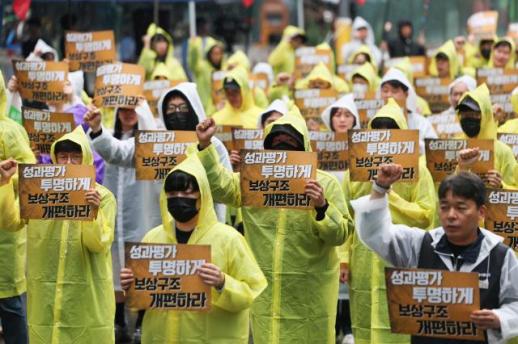 Kakao enters second mediation as labor unrest spreads SEOUL, May 27 (AJP) - Labor and management at Kakao entered a second round of mediation at the Gyeonggi National Labor Relations Commission, with the talks widely seen as a make-or-break moment that could push South Korea's dominant messaging platform into its first-ever headquarters strike. The two sides failed to bridge their differences during a first session on May 18, extending the deadline for a resolution, entering the next round Wednesday. Four Kakao affiliates — Kakao Pay, Kakao Enterprise, DKTechin and XLGames — have already secured the legal right to strike after separate mediation efforts collapsed, and strike ballots held at five affiliates were all approved with votes in favor. The central dispute pits the union's demand for a transparent bonus formula against management's insistence on counting 5 million-won annual grants of restricted stock units (RSUs) as part of performance pay — a classification the union flatly rejects. The union is demanding a formula that ties bonuses to a fixed share of annual operating profit, modeled on a landmark agreement at SK hynix. Kakao headquarters has never gone on strike since the company's founding. The prospect of a walkout has already rattled investors: Kakao shares have fallen about 35 percent from levels around 64,000 won at the start of the year, closing at 40,450 won on Wednesday. The standoff at Kakao is unfolding as labor tensions spread across South Korea's corporate landscape. Samsung Electronics' union has been seeking 15 percent of chip-division operating profit, while Hyundai Motor's union opened 2026 wage talks demanding 30 percent of net profit — a wave of collective action signaling growing worker assertiveness at the country's most prominent conglomerates. 2026-05-27 17:25:40
 -
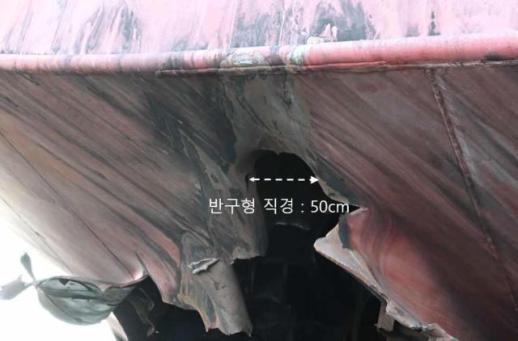 South Korea links Iranian missile to cargo ship attack SEOUL, May 27 (AJP) - The South Korean Ministry of Foreign Affairs announced Wednesday that an older Iranian anti-ship missile is highly likely to have struck the cargo ship HMM Namu earlier this month, signaling a sharp escalation in diplomatic tensions. The conclusion marks a decisive shift from the stance of strategic caution maintained by South Korea since the May 4 attack in the Strait of Hormuz. According to earlier government briefings and maritime records, the HMM Namu, a 38,000-ton multipurpose heavy-lift cargo ship delivered to the South Korean shipping firm HMM in early 2026, was anchored near the United Arab Emirates when two unidentified flying objects struck its stern, triggering an engine room explosion and fire that disabled the ship without causing a catastrophic hull breach. Foreign ministry investigators determined that the weapon used in the incident was likely an Iranian Noor anti-ship missile. Officials noted that an engine component recovered from the explosion site is highly similar to Iranian-made turbojet engines. Government officials stated that multiple pieces of physical evidence are now pointing toward Iran as the entity behind the attack. In response to the forensic findings, South Korea plans to summon the Iranian ambassador to lodge a strong protest and demand formal guarantees against any recurrence. The ministry did not disclose the specific timing for the official diplomatic summons. Officials also noted that the intentionality of the attack remains difficult to confirm unless the governing authority or group responsible explicitly admits to the action, while Iran has vehemently denied any involvement in the maritime incident. 2026-05-27 17:22:58
 -
 Annual beauty trade fair opens in Seoul with over 800 booths SEOUL, May 27 (AJP) - A trade fair for cosmetics and beauty products kicked off at COEX in southern Seoul on Wednesday. Organized by Korea International Exhibition, the three-day expo, dubbed "CosmoBeauty Seoul" and now in its 40th year, brought together hundreds of companies and industry professionals as well as buyers around the world, with around 800 booths showcasing a diverse range of cosmetics from haircare and nail products to spa services, inner beauty products, and smart beauty devices. Foreign buyers and international visitors crowded the booths as soon as the fair opened, while companies demonstrated innovative products and beauty technologies. Among the highlights is a pavilion featuring products from small and medium-sized companies seeking to expand into overseas markets, supported by the Ministry of SMEs and Startups. According to organizers, about 180 overseas buyers were invited to the fair, where export consultations and business matching programs will be available, along with various events including seminars and lectures on industry trends and marketing strategies. 2026-05-27 17:21:55
 -
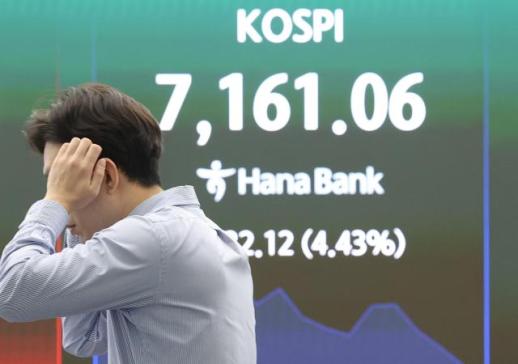 AJP Watch: Liquidation frequency flags deep retail loss in Korea's stock craze SEOUL, May 27 (AJP) - KOSPI is on fire, surging more than 93 percent so far this year. But the bonanza has hardly been evenly shared. On Wednesday, decliners overwhelmed gainers 826 to 75 even as the benchmark index closed near a record 8,330, underscoring how narrowly concentrated the world's best-performing rally has become. The imbalance also helps explain why South Korean retail investors were forced to dump borrowed stocks on one out of every six trading days over the past six months, signaling that many retailers were losing in the leveraged bets on the red-hot market. According to data released Wednesday by a think tank affiliated with the Korea Financial Investment Association (KOFIA), the forced liquidation ratio exceeded 2 percent on 20 of the 122 trading days between Nov. 22 and May 22. The forced liquidation ratio measures how much outstanding margin debt ends up in forced selling after investors fail to meet collateral requirements on borrowed stock purchases. A higher ratio indicates that a larger share of leveraged bets is turning into actual losses. Although the 2 percent threshold is not an official regulatory benchmark, market participants widely view it as a warning signal because the ratio typically hovers around 1 percent under stable market conditions. Analysts say the trend has moved beyond temporary volatility in individual speculative stocks and now points to mounting stress from excessive leverage and deteriorating investor sentiment. The spike in liquidation ratios since November was concentrated mainly in March and May. Days exceeding the 2 percent threshold totaled one in November, two in February, nine in March, one in April and seven in May. The highest single-day ratio was recorded on May 20, when 7.6 percent of margin credit accounts were forcibly liquidated. Outstanding margin credit stood at 1.64 trillion won ($1.1 billion), while actual forced liquidations reached 145.8 billion won. The previous peak came on March 5, when the ratio hit 6.5 percent, with outstanding credit at 2.14 trillion won and liquidations totaling 77.7 billion won. The liquidation ratio also breached the severe 4 percent level on five occasions: May 20 (7.6 percent), March 5 (6.5 percent), May 18 (6.0 percent), May 11 (5.4 percent) and May 19 (4.6 percent). The recent figures mark a stark deterioration from earlier periods. Between May 22 and Nov. 22, 2024, the ratio exceeded 2 percent only three times, peaking at 4.6 percent on Aug. 6. During the preceding six-month period from Nov. 21, 2023, to May 21, 2024, it never crossed 2 percent, reaching a high of just 1.8 percent. Average liquidation ratios have also climbed sharply. While average ratios during previous six-month periods ranged between 0.6 percent and 0.8 percent, the average over the latest six months jumped to 1.45 percent. At the same time, both outstanding margin credit and liquidation volumes expanded significantly. Average daily outstanding margin credit over the past six months reached 1.1 trillion won, exceeding the roughly 940 billion won averages recorded in the prior three periods. Average daily forced liquidations surged to 17.33 billion won, compared with 5 billion won to 8 billion won previously. The data excludes other major leverage channels such as margin loans, stock loans and contracts for difference (CFDs), suggesting overall exposure to forced selling may be substantially larger. Other leverage indicators have also risen rapidly. Brokerage margin loan balances nearly doubled from around 18.5 trillion won in late May 2024 to about 36 trillion won this month. Stock loan balances increased from 1.2 trillion won in late May last year to 1.6 trillion won at the end of January. Outstanding stock-collateralized loans, in which investors borrow against existing equity holdings, also climbed sharply from roughly 18.5 trillion won in late May 2024 to 25.7 trillion won this month. Analysts warn that elevated leverage across multiple channels could amplify broader market sell-offs during periods of volatility, as forced liquidations trigger additional downward pressure on stock prices. Concerns are also growing over the recent launch of single-stock exchange-traded funds (ETFs) and exchange-traded notes (ETNs) tied to companies such as Samsung Electronics and SK hynix, whose combined weighting in the local stock market exceeded 50 percent during Wednesday's intraday trading. Critics argue that introducing such leveraged products under current market conditions could expose retail investors to even greater risks, including “volatility drag,” in which repeated market swings gradually erode returns over time even if the underlying stocks continue to rise. "If leverage transactions accumulate excessively, massive volumes of forced liquidations can hit the market with a time lag," said Yom Dong-chan, an analyst at Korea Investment & Securities. "As the scale of liquidations expands, market volatility is highly likely to amplify in tandem, making this a period that demands extreme caution from investors." 2026-05-27 16:48:29
 -
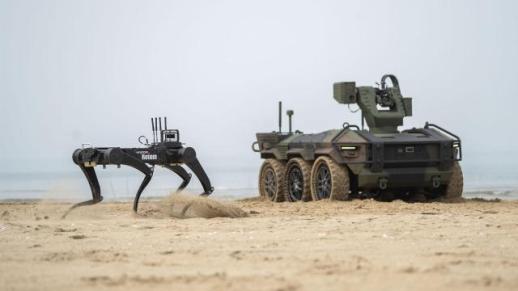 Hyundai Rotem wins state projects for AI-based unmanned military robots SEOUL, May 27 (AJP) - Hyundai Rotem said Tuesday it has been selected for two state-funded research and development projects aimed at advancing unmanned robot technologies based on physical artificial intelligence. The company said it was chosen as the final contractor for two projects commissioned by the Ministry of Trade, Industry and Energy and the Agency for Defense Development (ADD). The industry ministry project focuses on developing control software that can manage multiple types of unmanned robots through natural language commands and text. Until now, operators had to control each unmanned robot separately by entering fixed commands through dedicated remote-control devices. Once the integrated control system is developed, a small number of operators will be able to control multiple unmanned platforms at the same time using spoken or written commands. Hyundai Rotem plans to apply the technology to its key unmanned platforms, including the HR-Sherpa multipurpose unmanned ground vehicle and quadruped robots. The project is part of a government program designed to support the rapid commercialization of AI-based products. The ADD project involves developing a digital twin simulator and a modular unmanned robot platform. The simulator is designed to test the performance of unmanned robots in virtual environments that closely resemble real-world conditions. The modular unmanned robot platform will have detachable wheels on four legs and will be able to carry various mission equipment, including robotic arms and explosive detection devices. The ADD project is part of a future challenge defense technology R&D program designed to develop innovative defense technologies before formal military requirements are set. Hyundai Rotem also signed a memorandum of understanding with U.S. defense technology firm Anduril earlier this month, as part of efforts to expand technology cooperation across the public and private sectors. “We are devoting all our capabilities to advancing physical AI technologies that put national security and public safety first,” a Hyundai Rotem official said. “We will continue working to develop manned-unmanned weapon systems that the Republic of Korea Army can trust and use.” 2026-05-27 16:17:21
 -
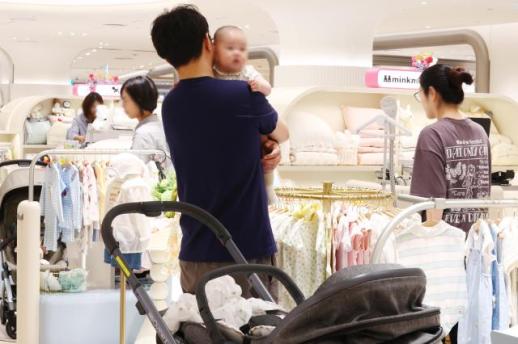 Number of newborns in S. Korea reaches highest in seven years SEOUL, May 27 (AJP) - The number of newborns in South Korea in March rose above 25,000, marking the highest level for the month in seven years, government data showed Wednesday. The rebound in births has now extended into a second straight year, supported by a rising number of marriages and more births among women in their early and late 30s. According to South Korea’s monthly population data for March released by the Ministry of Data and Statistics, 25,200 babies were born in March, up 19.4 percent from a year earlier. It marked the sharpest year-on-year increase for the month since the agency began compiling related data in 1981. The number of births had fallen below 20,000 a month at several points in 2024, fueling concerns over the country’s shrinking population and long-term labor shortages. However, South Korea saw its total number of newborns at 75,013 in the first quarter of 2026, up 14.8 percent from a year earlier. It was the highest first-quarter increase on record and the largest number of births for the January-March period since 2019. The improvement was also reflected in the country’s fertility rate. South Korea’s total fertility rate, the average number of children a woman is expected to have in her lifetime, stood at 0.93 in March, up from 0.78 a year earlier, remaining above 0.9 for a third consecutive month. If the trend continues, the annual figure could climb toward 0.9 this year after hitting a record low of 0.80 in 2025. The rise in marriages also continued, though the pace of growth slowed from the previous year. The number of marriages during the first quarter rose 6.1 percent from a year earlier to 62,309, compared with an 8.4 percent increase a year earlier. 2026-05-27 16:10:55
 -
 AJP Focus: War-driven metal rally lifts South Korea's battery makers, squeezes carmakers SEOUL, May 27 (AJP) - A war-driven oil shock is reshaping the economics of South Korea's electric vehicle supply chain, lifting prices of lithium, nickel and cobalt to multi-year highs and handing the country's top battery makers a long-awaited tailwind even as carmakers Hyundai Motor and Kia confront fresh cost pressure. Battery-grade lithium traded at US$25.15 per kilogram on May 13, more than triple the $8.10 average of June last year and the highest level since September 2023, according to data from Fastmarkets. Nickel changed hands at $19,017.50 a ton on the London Metal Exchange the same day, up 27.8 percent from December, while cobalt hit $57.83 a pound, the strongest reading since July 2022. The rally reverses a brutal two-year slump in battery metals brought on by an electric-vehicle demand lull and a glut of Chinese supply. It now coincides with two converging forces: surging EV sales in Europe and Asia as drivers flee record-high petrol prices triggered by the Iran war, and a parallel boom in energy-storage demand tied to artificial intelligence data centers. Battery-electric cars accounted for 19.4 percent of the EU market in the first quarter, up from 15.2 percent a year earlier, the European Automobile Manufacturers' Association said. March registrations alone jumped 51 percent on the year to more than 224,000 vehicles across 15 key European markets. Fastmarkets said in its January 2026 battery raw materials update that lithium prices had nearly doubled over the prior two months, driving battery cell costs up by 15 to 20 percent to around $46 to $48 per kilowatt-hour at the start of 2026. Supply has struggled to catch up, with Chinese giant CATL's Jianxiawo lepidolite mine in Jiangxi province idled since last August and Western refiners reluctant to invest. Indonesia and the Democratic Republic of Congo, which together dominate global nickel and cobalt output, have also tightened mining and export quotas. For LG Energy Solution, Samsung SDI and SK On — collectively the only serious non-Chinese force in the global battery market — the timing is fortunate. The three are linked to automakers through pricing contracts that pass raw-material costs through to customers with a lag of about three months, a mechanism that punished earnings during the 2024 to 25 price slide but should now flip into a tailwind. LG Energy Solution said in an April 30 statement that despite increase in shipments of both cylindrical EV and ESS batteries and ongoing cost-reduction efforts, the company posted a quarterly loss, driven by initial ramp-up costs associated with the expansion of ESS production sites. The company added that its ESS business now represents the mid-20 percent range of total revenue, underscoring the pivot from electric-vehicle cells to stationary storage that all three Korean firms are pursuing. "Western governments have little incentive to invest in lithium refining," said Choi Tae-yong, an analyst at DS Investment & Securities. The flip side is darkening for South Korea's carmakers. Batteries account for about 40 percent of the cost of an electric vehicle, and Hyundai Motor Group — which includes Kia — is already navigating fierce Chinese price competition at home and abroad. Hyundai sources roughly 95 percent of parts for its domestically built combustion-engine cars from Korean suppliers, but management is reviewing a broader shift to Chinese components. The group's global parts bill jumped to 84 trillion won last year, up 45 percent from 2021. Chinese batteries already power several South Korean-built models. Hyundai uses CATL cells in the Kona, while Kia equips the Ray, Niro, EV5 and PV5 with batteries from the Chinese supplier. CATL's batteries are about 10 to 20 percent cheaper than those produced here. Domestic market data tell a similar story. About 220,177 EVs were newly registered in Korea last year, with Kia ranking first at 60,609 units, or 27.5 percent of the market, followed by Tesla at 59,893 units and Hyundai at 55,461 units, the Korea Automobile & Mobility Association said. Chinese-made EVs surged 112.4 percent to 74,728 units, capturing a 33.9 percent market share. Whether higher cell prices will be absorbed by automakers or passed on to consumers remains an open question. Battery raw-material costs filtering into retail EV pricing would undercut the industry's long-stated goal of price parity with combustion-engine cars — and could deepen the cost advantage of Chinese rivals built around cheaper lithium iron phosphate, or LFP, chemistries. For now, the war-led surge has handed South Korean battery makers a near-term reprieve after their first simultaneous quarterly loss. For Hyundai and Kia, the road ahead looks rockier. 2026-05-27 15:58:07
 -
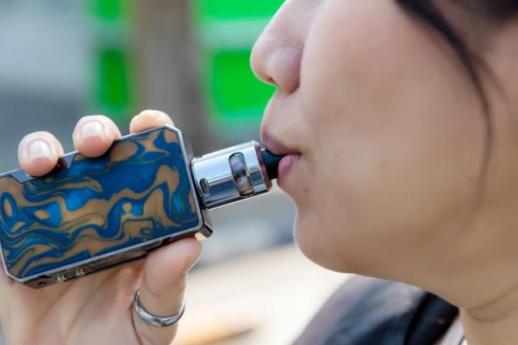 Survey shows South Korean smokers harbor misconceptions about electronic cigarettes SEOUL, May 27 (AJP) - Nearly half of South Korean smokers trying to quit believe electronic cigarettes help them stop smoking, despite strong warnings from medical experts that the devices hinder cessation efforts. The findings were released Wednesday at a forum in Seoul organized by the Korean Society for Research on Nicotine and Tobacco and the Korea Medical Broadcast Journalists Association. Researchers polled 500 smokers aged 25 to 59 who had attempted to quit in the past year or plan to do so within the next six months. The survey showed 43 percent of respondents view electronic cigarettes as a useful tool for quitting, while 23.5 percent intend to use them for this purpose in the future. Another 20 percent have already tried using them to quit, primarily hoping to reduce withdrawal symptoms and manage their daily cravings. Medical experts at the forum dismissed these beliefs as widespread misunderstandings. Cho Hong-jun, a professor emeritus at the University of Ulsan College of Medicine, noted that about 70 percent of smokers who use electronic cigarettes to quit fail to do so, continuing to use the devices for over six months. He added that people who use both conventional and electronic cigarettes have only a 5 percent chance of transitioning entirely to electronic versions after two years. Instead, up to 80 percent of these dual users simply revert to smoking regular cigarettes. "Long-term studies show electronic cigarette users are highly likely to become dual users, and the quitting effects remain uncertain," Cho said. "Because the evidence that electronic cigarettes are less harmful than conventional ones is unclear, it is desirable to regulate all tobacco products equally." The survey also highlighted that many smokers switch to electronic devices because they smell less and seem less harmful to the body. However, Lee Sung-kyu, head of the Korea Center for Tobacco Control Research and Education, warned that using heated tobacco products indoors can spike nicotine concentrations up to 86 times the acceptable health limit. Lee noted that public perception is significantly detached from scientific reality. "Just because it lacks a smell or has a sweet scent does not mean it is safe," Lee said. The forum also addressed public confusion surrounding nicotine replacement therapies, which are legally classified as over-the-counter drugs rather than tobacco products in South Korea. The survey found 48 percent of respondents who knew about the therapies did not understand how they helped, while 46 percent mistakenly believed the nicotine in these medical treatments is identical to the nicotine in cigarettes. Choi Su-jeong, a family medicine professor at Gachon University Gil Medical Center, stressed that equating the two products is a clear error. "Following the correct usage of different formulations like patches, gum, and candy, and utilizing combination therapy as needed, can further increase the success rate of quitting smoking," Choi said. 2026-05-27 15:43:51