

Journalist

Lim Kwu-jin
-
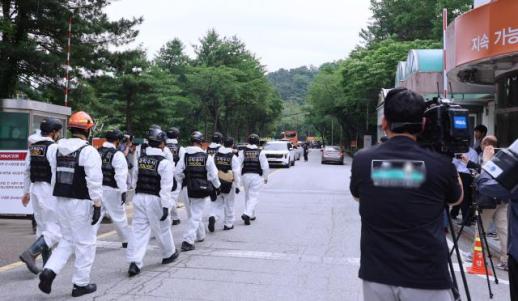 Hanwha Aerospace Explosion Investigation Concludes; Police Begin Safety Probe A joint investigation into the explosion at Hanwha Aerospace's Daejeon facility has concluded, with police now focusing on determining the cause of the incident that resulted in seven casualties, including five fatalities. According to Yonhap News, the Daejeon Police Agency conducted a joint investigation with fire officials, the National Forensic Service, the Ministry of Employment and Labor, and the Korea Occupational Safety and Health Agency starting at around 10 a.m. on June 2. The investigation lasted approximately six hours and 40 minutes, concluding at 4:40 p.m. The explosion occurred at 10:59 a.m. on June 1 in the cleaning room of Building 56 at the facility. At the time, workers were reportedly cleaning tools used for manufacturing projectiles, which were contaminated with gunpowder. Five workers died, and two others sustained serious injuries. Police focused their investigation on the suspected ignition point, examining the site for evidence while removing collapsed walls and steel structures with heavy machinery. However, most evidence was destroyed, limiting visual confirmation of the cause. The police plan to send debris collected from the site to the National Forensic Service for detailed analysis. It was also noted that there were no closed-circuit television (CCTV) cameras inside the building, prompting investigators to analyze footage from external cameras. To confirm the identities of the deceased, police have requested DNA analysis from the families of the victims. An autopsy was also conducted on the same day. Yoo Seung-sik, head of the scientific investigation unit at the Daejeon Police Agency, stated, "We will only be able to determine the presence of flammable materials after the detailed examination of the collected evidence is completed. We will announce the identities of the deceased as soon as we receive confirmation from the forensic agency, and we may conduct additional joint investigations if necessary." The dedicated investigation team has already interviewed two individuals: an employee who returned to work after receiving treatment for injuries and another who was off duty on the day of the incident. The cleaning team initially consisted of eight members, with one member responsible for safety management and another being a new hire who had joined with the two deceased contract workers. Police have confirmed that they are investigating the circumstances leading up to the explosion, including the cleaning procedures, the composition of cleaning agents, and whether safety guidelines were established and followed. Additionally, police have obtained some documents from Hanwha Aerospace related to the cause of the accident and safety management practices through voluntary submission. A police official told Yonhap News, "We will continue to conduct witness interviews and gather materials, keeping all possibilities open as we investigate the cause of the accident."* This article has been translated by AI. 2026-06-02 19:24:00
 -
 Chairman Jin Young-seung Inspects Military Readiness Ahead of Local Elections Chairman Jin Young-seung conducted a readiness inspection of key military units in the capital region one day before the local elections. According to a report by Yonhap News on June 2, Jin visited the Army Capital Corps and the Marine Corps’ 2nd Division to assess their operational readiness for coastal and river defense operations and to encourage the troops. He first visited the Army Capital Corps headquarters in Anyang, Gyeonggi Province, where he reviewed their operational readiness. Jin received briefings on coastal defense operations, procedures to counter threats from enemy drones, and the status of responses to illegal fishing in the neutral zone of the Han River estuary, emphasizing the need for maintaining a robust operational posture. "In the event of enemy provocations, respond decisively based on principles and standards, and become a military that earns the trust of the people," he urged. During his visit to the Capital Corps, discussions were also held regarding the transfer of operational control of the Marine Corps’ 2nd Division to the Marines, which is part of the government's plan to restructure the Marine Corps into a 'quasi-fourth military force' by returning operational control of the Army-held Marine Divisions 1 and 2 to the Marines. Earlier, Jin visited the Marine Corps’ 2nd Division coastal defense unit in Gimpo, Gyeonggi Province. He instructed them to maintain enhanced surveillance and defense readiness to prevent surprise attacks as they serve as the gateway to Seoul. He also urged field commanders to pay special attention to the safety management of soldiers during the hot summer months.* This article has been translated by AI. 2026-06-02 19:24:00
 -
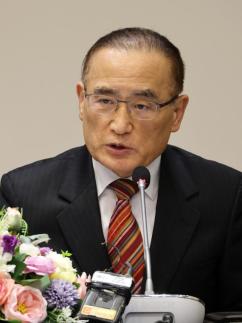 Wi Sung-lak Meets U.S. Deputy Secretary of State, Emphasizes Importance of U.S.-South Korea Alliance Wi Sung-lak, Director of the National Security Office, met with U.S. Deputy Secretary of State Alison Hooker on June 2 during her visit to South Korea.The Blue House issued a press release stating, "Both sides welcomed the upcoming discussions on the security sector of the U.S.-South Korea Joint Fact Sheet and expressed hope for productive consultations over the next two days to accelerate related discussions."Additionally, the two reaffirmed that the U.S.-South Korea alliance is a cornerstone for peace and prosperity on the Korean Peninsula and in the Indo-Pacific region. They agreed to maintain close communication and cooperation regarding the situation on the Korean Peninsula as well as international developments, including the situation in the Middle East.* This article has been translated by AI. 2026-06-02 18:27:00
 -
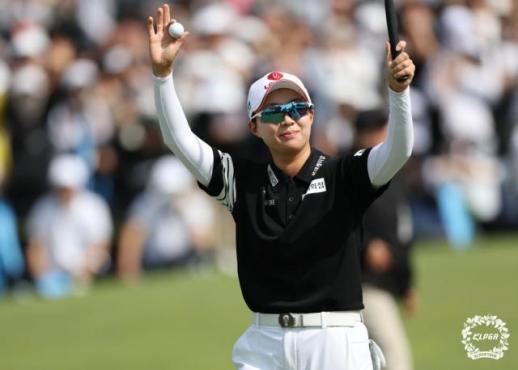 Korean Golfers Aim for US Women's Open Title After Six-Year Hiatus Korean golfers are set to reclaim the US Women's Open title, the most prestigious major in women's golf, after a six-year gap. The 81st US Women's Open will take place from June 5 to 8 at the Riviera Country Club in Pacific Palisades, California. Known for its long history, the tournament boasts a total prize purse of $12 million, with the winner receiving $2.4 million, making it one of the highest-paying events in women's golf. The Riviera Country Club, which is celebrating its 100th anniversary this year, will host the US Women's Open for the first time since 1964. The event also serves as a precursor to the 2028 Los Angeles Summer Olympics, as the venue will be used for the Olympic golf competition. Out of 156 participants, 23 are from South Korea, making it the second-largest contingent after the host country, the United States, which has 40 players. The US Women's Open has been a successful tournament for Korean players. Since Se-ri Pak won the title in 1998 with her famous barefoot performance, Korean golfers have consistently excelled. Notable champions include Inbee Park, who has won twice, as well as Kim Ji-yoon, Lee Jeong-eun, Choi Na-yeon, Jeon In-ji, Park Sung-hyun, Kim A-rim (2020), and others, totaling 11 victories by 10 different players. However, the last victory came in 2020, when Kim A-rim won. In the 2024 tournament, all Korean participants failed to finish in the top 10 for the first time in 27 years, marking a disappointing moment for the nation. This season, the atmosphere is different. Korean players have combined for three wins and 33 top-10 finishes across 13 tournaments, showcasing their strong performance. The player to watch is world No. 3 Kim Hyo-joo, who is experiencing a 'second prime' in her career. She secured back-to-back victories at the Fortinet Founders Cup and the Ford Championship. Although she withdrew from the LA Championship in April due to neck pain, she regained her form with a sixth-place finish at the Chevron Championship, the first major of the season. On May 10, Kim Hyo-joo won the NH Investment & Securities Ladies Championship, marking her first domestic victory in four years and seven months, bringing her total KLPGA wins to 15. She has since taken a month off to prepare for the upcoming tournament. If Kim Hyo-joo wins this tournament, it will be her second major title, following her victory at the Evian Championship in 2014 as a non-member. Additionally, she would become the sixth Korean player to achieve double-digit LPGA Tour wins, joining the ranks of Se-ri Pak (25 wins), Inbee Park (21 wins), Ko Jin-young (15 wins), Kim Sei-young (13 wins), and Shin Ji-ae (11 wins). Consistent performer Yang Hee-young will make her 20th consecutive appearance at the US Women's Open. Shin Ji-ae, who is currently competing on the Japan LPGA Tour, aims for her 13th LPGA win, her first since February 2013. Other past champions, including Jeon In-ji, Park Sung-hyun, Kim A-rim, and Lee Jeong-eun, will also compete, alongside top players like Ko Jin-young, Kim Sei-young, Yoo Hae-ran, Choi Hye-jin, Hwang Yu-min, and Yoon In-na. Players from the KLPGA Tour and promising amateurs are eager to create their own 'Cinderella stories.' In the past, players like Yoo So-yeon (2011), Jeon In-ji (2015), and Kim A-rim (2020) have won as non-members, earning direct entry to the LPGA. This year, five players, including KLPGA Tour money leader Kim Min-sol, as well as Hong Jeong-min, Yoo Hyun-jo, Lee Da-yeon, and Ko Ji-won, have secured spots by ranking within the top 75 in the world. National team member Oh Soo-min and amateur Lee Seung-hyun, who qualified through Canadian regional qualifiers, will also participate in the US Women's Open. Top-ranked players are also in strong form. World No. 1 Nelly Korda is aiming for her second consecutive major title after winning the Chevron Championship. World No. 2 Atthaya Thitikul and Karis Davidson, who secured her spot by winning the ShopRite Classic, are also among the competitors. Defending champion Maya Stark from Sweden is looking to repeat her victory. * This article has been translated by AI. 2026-06-02 18:21:00
 -
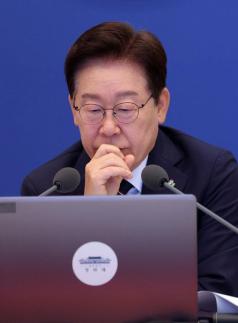 President Lee Orders Police to Investigate Fake News Comments President Lee Jae-myung emphasized the need for a stronger response to false information during a government meeting on June 2, commending the police for their efforts in investigating fake news. Chief Presidential Secretary Kang Yu-jeong stated in a written briefing that President Lee directed the police to consider rewarding personnel involved in the investigation of comments related to the dissemination of false information during a closed session of the government meeting. Kang urged law enforcement to pay special attention to fake news that disrupts government policies, noting its significant harm. President Lee reportedly praised the police's investigation results concerning the false claims about the government's forced sale of dollars. He also highlighted that among those accused of spreading fake news is a military personnel, instructing authorities to coordinate with the Ministry of National Defense, as penalties and disciplinary actions may vary based on their status. Earlier, President Lee shared an article about the incident on X (formerly Twitter), warning that spreading false information that harms the public is neither a matter of free expression nor something to be tolerated. During the government meeting, discussions also included reviewing broadcasting regulations and the judicial system. President Lee mentioned the need for accountability in broadcasting, stating that while certain channels are protected from competition, they must also bear responsibility for their content. He questioned how to impose sanctions when broadcasts lack objectivity and repeatedly present falsehoods, distortions, or manipulations, emphasizing the need for effective penalties. The Ministry of Legislation was instructed to expand the public disclosure of lower court rulings, with President Lee noting that while the courts would review this positively, progress has been slow. He urged the swift establishment of a legal advisory system utilizing artificial intelligence (AI). Regarding the Overseas Koreans Agency, he addressed the voting rights of overseas citizens, stating that if consensus cannot be reached, decisions should be made by majority vote, in line with democratic principles. The meeting also addressed economic responses to the ongoing conflict in the Middle East, with President Lee stressing the need to prevent situations where individuals feel they might die due to debt, directing a review of personal bankruptcy and rehabilitation systems. He specifically mentioned the issue of individuals being incarcerated for failing to pay fines, suggesting the exploration of financial support or private fundraising options, referred to as 'Les Misérables Bank.' President Lee commented on a fire at Hanwha Aerospace in Daejeon that occurred the previous day, instructing a thorough investigation into the cause and the establishment of measures to prevent recurrence. He also ordered the Ministry of Employment and Labor to report on workplaces where similar incidents have repeatedly occurred. Regarding a fatal incident during reserve training in Pocheon, he expressed deep condolences as the Commander-in-Chief and called for a thorough investigation and transparent disclosure of the findings. Additionally, the government meeting approved a total of 65 items, including 40 legal proclamations, one bill, 20 presidential decrees, and four general items, which included legislation related to the promotion of AI data centers and support for defense semiconductors.* This article has been translated by AI. 2026-06-02 18:18:00
 -
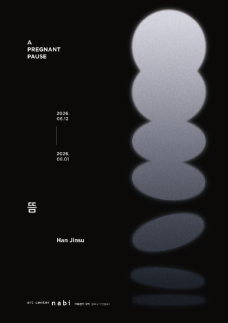 Art Center Nabi Relocates to Sagandong with New Exhibition Art Center Nabi, led by director Noh So-young following her divorce from SK Group Chairman Chey Tae-won, is set to reopen in a new location in Sagandong, leaving its previous site in the SK Group headquarters in Seoul's Jongno district. The center announced on June 2 that it will kick off its reopening with Han Jin-soo's solo exhibition, 'A Pregnant Pause,' starting on June 11. This exhibition marks the conclusion of 26 years of Art Center Nabi's journey and serves as the first project in a new chapter in Sagandong. In a press release, Noh stated, "This moment, which ties together 26 years, is a time for the next chapter to grow from within, still yet to be fully revealed. The 'embryonic vitality' found in Han Jin-soo's works, which explore the slow fermentation of time between machines and nature, resonates deeply with this moment of reopening." 'A Pregnant Pause' challenges the current trend of immediate creation and results. Han proposes a time of 'pause,' where something is growing internally yet remains undecided. The museum noted, "This 'time of embryonic vitality' coincides with the moment Art Center Nabi is starting anew in the new space. 'A Pregnant Pause' is not merely an exhibition announcing the reopening; it is also a space where the artist's language expresses the texture of time that is being cultivated just before Art Center Nabi embarks on its next chapter." The new venue operates as an independent environment, utilizing the entire building as an art space. With Art Center Nabi leading the color and operation of the space, it lays the groundwork for rethinking digital media not just as a technical medium but as a medium that breathes with space, time, and the body. This will serve as a cultural platform where technology, nature, art, and urban environments intersect in the future. Founded in 2000, Art Center Nabi is Korea's first media art institution, exploring the intersection of art and technology for the past 26 years. Since its opening project in collaboration with pioneers of Korean media art like Nam June Paik and Park Hyun-ki, it has provided a venue for domestic and international media artists and experts from various fields, including engineering, design, and architecture. The center has also solidified its international standing by hosting the International Symposium on Electronic Art (ISEA) in Seoul in 2019 and 2025. 2026-06-02 18:15:00
 -
 Balancing Dualities in Finance In our society, finance plays a role akin to blood in the human body. Just as a lack of proper blood circulation can lead to health issues, inadequate financial supply to necessary sectors can hinder the creation of a healthy society. Recently, there has been controversy surrounding the harshness of the financial system. The criticism of the current system likely stems from its practice of imposing high interest rates on low-credit vulnerable groups while offering lower rates to wealthier individuals with high credit scores. Some have argued that the credit rating system acts as an invisible class structure designed by finance, suggesting that we should broaden the outdated credit evaluation framework. This aims to alleviate the rigidity in financial provision based on credit ratings. Following this debate, the JoongAng Ilbo reported on May 14 that major banks offer a negative balance interest rate of 4.9% for high-credit customers and 3.7% for low-credit customers. This situation is difficult to comprehend from a financial perspective. Simply put, banks face a higher risk of default when lending to low-credit individuals, yet they charge them lower interest rates. This creates a perplexing scenario where borrowers who are less likely to repay their loans receive more favorable terms. Modern finance theory is primarily based on two concepts: portfolio theory and the Capital Asset Pricing Model (CAPM). Portfolio theory posits that diversifying investments across various assets can reduce investment risk, while CAPM suggests that seeking higher returns also increases risk. Finance theory highlights that risk is a factor in pricing. From the perspective of commercial banks seeking profit, it is theoretically sound to charge higher costs (interest rates) to customers deemed high-risk. The key issue is whether excessively high interest rates are imposed relative to the risk. If banks collude to set high rates, government agencies such as the Fair Trade Commission or the Financial Services Commission should intervene to assess their appropriateness. If individual banks determine interest rates based on management decisions, consumers will seek out cheaper options, leading to competition among banks that can establish fair rates. Banks typically charge high interest rates to high-risk customers, who are more likely to default on loans. Conversely, low-risk customers benefit from lower rates. Currently, existing financial theories worldwide do not incorporate the social value of supporting vulnerable groups. How can we provide financial support to low-credit individuals who struggle to access financial services? While there is a recognized need for financial assistance due to social value, how can we support sectors that are difficult to fund through the existing commercial financial system? Financial systems can be broadly categorized into bank-centric systems, where funds are supplied primarily through banks, and market-centric systems, where capital markets play a dominant role. In South Korea, the government initially enforced savings due to a lack of domestic resources during the early stages of economic development, strategically allocating those funds to necessary industries through banks, thus establishing a government-led banking system. As the economy grew and the need for smooth capital flow to businesses increased, the capital market expanded, leading to the emergence of securities firms that rival banks. The financial system is now transitioning from a bank-centric to a market-centric model. Banks fundamentally offer products that guarantee principal and primarily operate by pooling deposits for lending, making it challenging to reflect individual depositors' opinions. Additionally, to ensure the safety of depositors' principal, banks must rigorously manage risk based on credit ratings when lending. The capital market operates differently. Investors can make decisions under their own responsibility, allowing for investments that reflect their preferences and opinions. Financial products such as Social Responsibility Investment (SRI) funds and Social Impact Bonds are being developed for investors interested in socially responsible investments. Moreover, some countries have established social exchanges for trading companies that generate social value. Social investment funds act as institutional investors that finance projects producing social value. It is preferable to facilitate funding in areas that have historically struggled to access finance through capital markets rather than banks. Financial institutions pursue commercial interests but also have a dual role in serving the public good. It is essential to gather wisdom to find a balance in this duality.* This article has been translated by AI. 2026-06-02 18:03:00
 -
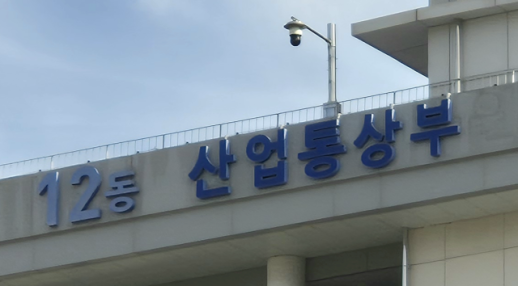 South Korea Invests $4 Billion in Next-Gen AI Semiconductor Project The South Korean government is launching a major project worth 800 billion won (approximately $4 billion) to secure a leading position in the next-generation artificial intelligence (AI) semiconductor market. The Ministry of Trade, Industry and Energy announced on June 2 that the "K-On-Device AI Semiconductor Technology Development" initiative has been finalized with a total project budget of 800.23 billion won. The government will contribute 511.11 billion won, with the project set to run until 2030. This initiative aims to support the full-cycle development of advanced AI products across four key industries: automotive, Internet of Things (IoT) and home appliances, machinery and robotics, and defense. It will focus on developing customized AI semiconductors, modules that incorporate these semiconductors, and the AI software that drives them. On-device AI semiconductors perform calculations and inferences in real-time with low power consumption, without the need for data transmission to servers. The global market for these semiconductors, which was valued at $17.3 billion in 2024, is projected to grow to $103.3 billion by 2030. Unlike server-oriented AI semiconductors like GPUs, there is currently no dominant player in the on-device market, making compatibility with products from demand companies crucial. The government views this sector as a strategic opportunity for South Korea, which has promising fabless companies and major global demand firms in key industries. Currently, the AI semiconductor market is dominated by NVIDIA's data center GPUs, but the focus is expected to shift toward the "Edge AI" market, which includes smartphones, automobiles, robotics, and home appliances. As AI becomes increasingly integrated into everyday devices, the demand for on-device AI is expected to surge. Notably, South Korea is home to global manufacturers such as Samsung Electronics, LG Electronics, Hyundai Motor Company, HD Hyundai, and Hanwha Aerospace, as well as growing fabless AI semiconductor companies like Rebellion, DeepX, and FuriosaAI. To develop the full cycle of AI semiconductors, the Ministry will focus on AI chips and software for next-generation autonomous vehicle control systems in the automotive sector. In the IoT and home appliance sector, the initiative will create on-device AI chips and software for smart appliances and intelligent spaces. In the machinery and robotics sector, the project will develop AI chips and software for next-generation collaborative robots used in manufacturing and food services, humanoid robots to assist with household tasks, and AI chips for robots that autonomously perform agricultural tasks such as pest control, harvesting, and transportation. In the defense sector, the focus will be on developing AI chips and software for aerial unmanned platforms that can autonomously recognize and respond to situations. The Ministry plans to announce the project this month and begin implementation in July to capitalize on the golden opportunity to lead the on-device AI market. Minister of Trade, Industry and Energy Kim Jeong-kwan stated, "On-device AI semiconductors are a key strategic asset that will determine supremacy in the AI era. We will spare no effort in providing comprehensive support, including R&D, validation, mass production, financial assistance, and regulatory improvements, to ensure that the developed chips are actually integrated into finished products in key industries like automotive."* This article has been translated by AI. 2026-06-02 18:03:00
 -
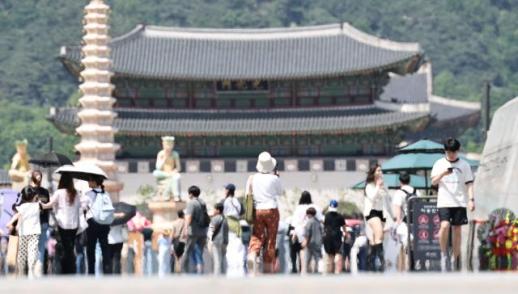 Weather Forecast: Hot Day with Highs of 33 Degrees Celsius on Election Day On Wednesday, June 3, most regions across South Korea are expected to experience daytime temperatures exceeding 30 degrees Celsius. According to the Korea Meteorological Administration, morning lows will range from 15 to 21 degrees Celsius, while daytime highs are forecasted to reach between 23 and 33 degrees Celsius. The weather will be generally cloudy nationwide, with afternoon showers likely in the eastern inland areas of Jeolla and western inland regions of Gyeongnam. Expected rainfall amounts are 5 to 20 mm in eastern North Jeolla and 5 to 10 mm in eastern South Jeolla and western Gyeongnam. Daytime temperatures will rise to around 30 degrees Celsius in most areas. Notably, Seoul and Chuncheon are expected to reach 32 degrees, while Daegu could see highs of 33 degrees, indicating early summer heat. Along the southern coast and Jeju Island, high waves may crash onto the beaches and could surpass coastal rocks or breakwaters, posing safety risks. Wave heights are expected to be between 0.5 and 2.5 meters in the East Sea, 0.5 meters in the West Sea, and 0.5 to 2.0 meters in the South Sea. In the offshore waters, about 200 kilometers from the coast, wave heights are anticipated to be 0.5 to 3.5 meters in the East and South Seas and 0.5 to 1.5 meters in the West Sea. Looking at the forecasted temperatures for major regions, morning lows are expected to be: △Seoul 21 degrees △Incheon 20 degrees △Suwon 19 degrees △Chuncheon 18 degrees △Gangneung 20 degrees △Cheongju 20 degrees △Daejeon 18 degrees △Sejong 18 degrees △Jeonju 18 degrees △Gwangju 19 degrees △Daegu 18 degrees △Busan 20 degrees △Ulsan 18 degrees △Changwon 19 degrees △Jeju 20 degrees. Daytime highs are forecasted to be: △Seoul 32 degrees △Incheon 29 degrees △Suwon 30 degrees △Chuncheon 32 degrees △Gangneung 27 degrees △Cheongju 31 degrees △Daejeon 31 degrees △Sejong 31 degrees △Jeonju 29 degrees △Gwangju 30 degrees △Daegu 33 degrees △Busan 27 degrees △Ulsan 28 degrees △Changwon 29 degrees △Jeju 25 degrees.* This article has been translated by AI. 2026-06-02 17:57:00
 -
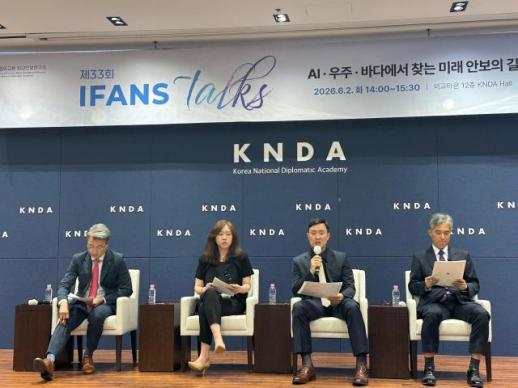 Future warfare makes diplomacy harder, but more vital, experts say SEOUL, June 02 (AJP) - As artificial intelligence, space assets, and maritime competition reshape the nature of warfare, diplomacy is not becoming obsolete but is becoming more important in preventing conflicts from escalating and setting rules for emerging military technologies, security experts said Tuesday. The remarks came during the 33rd Institute of Foreign Affairs and National Security (IFANS) Talks, a public lecture hosted by IFANS under the Korea National Diplomatic Academy, at the Korea National Diplomatic Academy, at the (KNDA) Hall in southern Seoul. Held under the theme “Finding the path to future security through AI, space and the sea,” the event brought together Sohn Han-byeol, a professor at Korea National Defense University, Um Jung-sik, a professor at the Korea Air Force Academy, and Ban Kil-joo, a professor at IFANS. During a Q&A session, the speakers addressed whether the rapid development of military technologies could weaken the role of diplomacy. Sohn said diplomacy will become more difficult, and more important, as advanced technologies lower the threshold for the use of force. “The role of diplomacy is not shrinking. It is becoming more difficult, and because it is becoming more difficult, it is becoming more important,” Sohn said. He said military technologies may allow states to strike faster and more precisely, but they cannot resolve the political causes of conflict. “Military victory and political termination are different,” he said. “Diplomacy is what fills that gap.” Sohn also said diplomacy in the AI era should focus on creating norms for new technologies, including autonomous weapons, AI-assisted targeting and drone attacks. “The empty space of norms is not the realm of the military or technology, but of diplomacy,” he said. He said South Korea could contribute to space cooperation with the United States by strengthening space domain awareness in Northeast Asia, where ground-based monitoring assets remain limited. “The United States is a global space power, but compared with other regions, ground-based space systems in Northeast Asia are relatively insufficient,” Um said. “South Korea can play a sufficient role in the alliance in ground-based space domain awareness.” Um also stressed that South Korea needs to recognize space as an independent operational domain. “Public satellites and commercial satellites floating in space are assets that our military must protect,” he said. “Who protects our commercial satellites?” Ban said maritime security is increasingly linked to energy security, food security, gray-zone competition and the rules-based order. He said South Korea must distinguish between China’s gray-zone activities and North Korea’s military threats when shaping maritime security responses. “China’s and North Korea’s threats are not on the same line,” Ban said. “Their nature and categories must be separated.” Ban said gray-zone threats at sea are not only a bilateral security issue but also a challenge to the rules-based maritime order. “Gray-zone threats weaken the rules-based order and the maritime rules-based order,” he said. “They need to be expanded to and handled by the international community.” Turning to the broader question of diplomacy, Ban said modern warfare does not signal the end of diplomacy. “I see this not as an era of the end of diplomacy, but as an era in which diplomacy must work harder,” Ban said, adding that defense capabilities and diplomacy should reinforce each other. “Diplomacy and deterrence have mutual synergy,” he said. “A virtuous cycle is possible.” Ban stressed that diplomacy is needed both during war and in peacetime. “Diplomacy is conducted even during war,” he said. “In the end, the end of a fight is diplomacy.” The discussion underscored a shared view among the speakers: as war expands into AI, space and the sea, diplomacy is not losing relevance. Instead, it is moving into more complex domains where rules remain unsettled, escalation risks are higher and national security depends on norms, partnerships and public awareness as much as on military power. 2026-06-02 17:56:45