

Journalist

Lim Kwu-jin
-
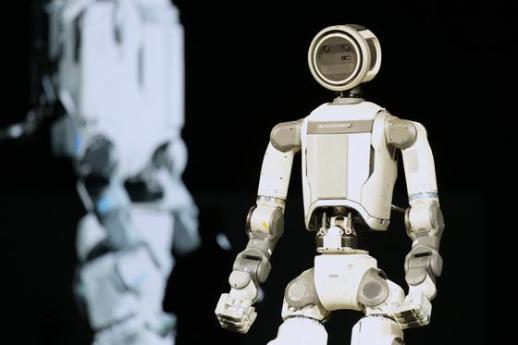 Is a Second Declaration of Independence Needed Now? The 100-Year Strategy of South Korea from AI Semiconductors to Physical AI As discussed in Part 1, the starting point of the AI revolution is semiconductors. However, transformative technologies have never been limited to specific components or devices. The steam engine of the 18th century was not just a simple power device; it created railroads and factories, sparking the Industrial Revolution. In the 19th century, electricity was not merely an energy source; it illuminated cities and gave birth to mass production systems. Similarly, the internet in the 20th century was not just a communication technology; it enabled e-commerce and platform economies, connecting the world into a single network. AI is no different. While the world today focuses on generative AI and semiconductors, historians are likely to record the late 2020s as the "starting point of the Physical AI revolution." Until now, AI has primarily existed within screens. People have interacted with AI, created documents, and generated images. But this is just the beginning. In the future, AI will step into the real world, becoming robots, cars, factories, and cities. AI is evolving from a technology that answers questions to one that moves, judges, and acts. This is what Physical AI means. The moment AI begins to dominate physical spaces beyond digital realms, humanity will enter another industrial revolution. Recent movements by global tech companies symbolize this shift. Major AI firms in the U.S. are pouring astronomical investments into robotics, autonomous driving, and industrial automation, moving beyond the competition of large language models. AI semiconductor companies are developing operating systems for robots and simulation platforms, while automotive companies are transforming vehicles into massive AI platforms. Tesla is nurturing its humanoid robot Optimus as a future growth driver, and leading U.S. tech firms are accelerating the development of industrial robots and logistics automation systems. Just two decades ago, smartphones were the key devices of the internet age; in the future, robots and autonomous vehicles are likely to become the central devices of the AI era. South Korea occupies a unique position in this landscape. The U.S. excels in software and platforms, while China boasts a vast domestic market and state-led investment capabilities. However, few countries possess both a manufacturing base and advanced technological capabilities. South Korea has world-class shipbuilding, automotive, battery, semiconductor, and electronics industries. It is rare for a country to simultaneously hold top-tier shipbuilding technology, leading memory semiconductors, significant automotive production capacity, and world-class battery companies. This represents a tremendous strategic asset in the era of Physical AI. Take the shipbuilding industry as an example. South Korean shipyards possess world-class technology but still rely heavily on skilled labor for many processes. However, the combination of AI and robotics can change this entirely. During the design phase, AI can analyze hundreds of thousands of design proposals to suggest the optimal one, while robots can perform welding, painting, and inspection during production. Utilizing digital twin technology allows for the verification of safety and performance in a virtual space before constructing actual vessels. Even after a ship begins operations, AI can analyze engine status and fuel efficiency in real-time to support optimal navigation. The shipbuilding industry is evolving from simple manufacturing to a data-driven, ultra-precision industry. The automotive industry is undergoing a similar transformation. In the past, a car's competitiveness was determined by engine performance and fuel efficiency. However, in the future, software and AI are likely to dictate a vehicle's competitiveness. An electric vehicle contains thousands of semiconductors, with AI controlling its operation. As autonomous driving technology advances, the automotive industry is shifting from a mechanical industry to a software industry. In the future, the ability of a vehicle to make intelligent decisions and operate autonomously may become more critical than how well it is manufactured. If South Korea's automotive industry successfully transitions to AI, it could leap from being a mere exporter of finished vehicles to becoming a future mobility platform nation. The battery industry is also a key sector in the era of Physical AI. AI can optimize battery production processes, predict lifespans, and maximize energy efficiency. The integration of AI and batteries can create new industrial ecosystems, not only for electric vehicles but also for energy storage systems (ESS), smart grids, and next-generation power networks. The global battery market has already grown to hundreds of billions of dollars, and demand is expected to increase further with the expansion of electric vehicles and data centers. South Korea, home to some of the world's leading battery companies, stands to benefit significantly from this integration. Logistics and ports are similarly positioned. Busan Port is a global transshipment hub, while Incheon Port serves as a logistics hub for Northeast Asia. With the introduction of AI-based logistics systems, container movement, storage, customs procedures, and transportation route optimization can all be automated. The combination of autonomous vessels and AI logistics platforms could drastically reduce logistics costs and maximize efficiency. Positioned at the center of global trade, South Korea is one of the countries best suited to experiment with these changes. Agriculture is no exception. AI can analyze soil conditions and climate changes to suggest optimal cultivation methods, while drones and unmanned agricultural machinery can address labor shortages. Given the aging population and declining numbers in rural South Korea, AI in agriculture is likely to become a necessity rather than an option. Agriculture is also transitioning from a labor-intensive industry to a data-intensive one. The core concept driving these changes is AX (AI Transformation). While digital transformation focused on collecting and utilizing data, AI transformation represents a stage where data can make autonomous judgments and execute actions. Factories will operate independently, equipment will self-diagnose, and logistics will optimize themselves. This marks a shift from an era where humans made all decisions to one where AI collaborates in decision-making. It can be viewed as a process where much of the management and control functions traditionally performed by humans over the past few centuries are transferred to AI. The world has already entered the AX competition. Germany is promoting smart manufacturing innovation through Industry 4.0, while the U.S. is accelerating industrial transformation using AI and cloud technologies. China is also investing heavily in AI-based factory innovations as part of its Manufacturing 2025 strategy. Global consulting firms predict that AI-driven manufacturing innovations will lead to productivity increases worth tens of trillions of dollars in the coming decades. This is not merely a technological change but a reconfiguration of national competitiveness. South Korea's path is clear: it must not remain a semiconductor powerhouse but strive to become the world's leading AI manufacturing nation. Semiconductors are the starting point, while manufacturing AX represents the expansion. South Korea must evolve from a country that produces AI semiconductors to one that innovates its entire industry through AI. Achieving this requires a national strategy. Relying solely on the success of a few companies is insufficient. Education, research, industrial policy, power infrastructure, and regulatory innovation must all move in tandem. A power grid is needed to build AI data centers, universities and research institutes are required to cultivate AI talent, and an investment ecosystem must be established to support innovative companies. Semiconductors, batteries, robotics, software, data centers, and power grids must be integrated into a cohesive national strategy. In particular, the issue of power is a critical challenge in the era of Physical AI. AI data centers consume vast amounts of electricity. A data center with thousands of the latest AI servers can use as much power as an entire small city. The International Energy Agency (IEA) predicts that the spread of AI and data centers will lead to a surge in global electricity demand. Therefore, an AI powerhouse must also be an energy powerhouse. Without a comprehensive infrastructure that includes nuclear and renewable energy, next-generation transmission and distribution systems, and energy storage devices, maintaining AI competitiveness will be difficult. Ultimately, competition in the era of Physical AI transcends technological rivalry; it is a competition of national systems. Semiconductors, data centers, power grids, manufacturing, education, research, finance, and investment ecosystems must be interconnected as a single platform. South Korea is already at the starting line. The question is how quickly it can move forward. If AI semiconductors represented the first opportunity, Physical AI and manufacturing AX represent the second. The country that seizes this second opportunity is likely to stand at the center of the global industrial order by the mid-21st century. Just as South Korea achieved the Miracle on the Han River through industrialization in the 20th century, it can create another miracle through Physical AI and manufacturing AX in the 21st century. This is not merely a matter of economic growth; it is about determining what kind of nation South Korea will become over the next 100 years. And the answer is already beginning to emerge. If AI semiconductors opened the door to a new industrialization for South Korea, Physical AI will become the tool for designing the nation's future civilization. The next step is not just about technology; it is about the nation's vision. That vision will be addressed in Part 3, focusing on the 'Great Korea' and the second declaration of independence in the AI era. 2026-06-01 07:18:00
 -
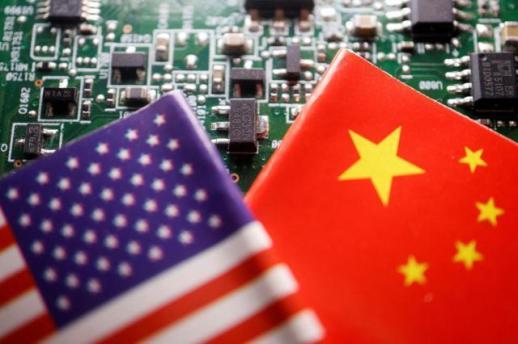 U.S. Blocks Chinese Firms from Purchasing AI Chips via Foreign Subsidiaries The U.S. Department of Commerce has moved to block Chinese companies from acquiring advanced artificial intelligence (AI) chips through their foreign subsidiaries. This action aims to prevent circumvention of restrictions via third-country entities, such as those in Malaysia. The focus of U.S. semiconductor regulations is expanding from mainland China to include overseas bypass routes. On May 31, Reuters reported that the U.S. Department of Commerce posted guidelines on its website stating that export licensing requirements for advanced AI chips will now apply to foreign subsidiaries of companies based in China. This includes cutting-edge products like NVIDIA's Rubin-Blackwell processors and AMD's MI350x. The new measure is designed to close loopholes that allow Chinese AI firms to import high-performance semiconductors from the U.S. through third-country subsidiaries. According to Reuters, these companies may have sourced U.S. products from regions like Malaysia. An industry insider familiar with supply chains estimated that hundreds of thousands of units could have been exported in this manner over the past year. Under the new guidelines, companies headquartered in China must obtain U.S. government approval when importing advanced semiconductors through their foreign subsidiaries. However, the regulations do not require immediate cessation of use or maintenance for existing data center equipment. Instead, the focus is on preventing additional exports and new acquisitions.* This article has been translated by AI. 2026-06-01 07:09:00
 -
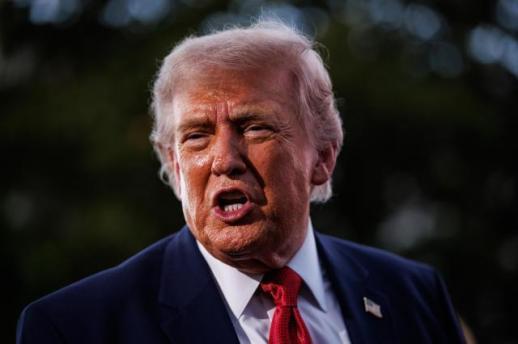 Trump Calls Departure of Government Lawyers a 'Good Thing' Amid Staffing Concerns President Donald Trump has described the departure of government lawyers as a "good thing." His comments came in response to a New York Times report raising concerns about staffing shortages among legal professionals in the federal government. In a post on Truth Social on May 31, Trump referenced the Times' article titled "Trump Administration Sees Notable Exodus of Legal Talent." According to the report, more than 10,000 federal lawyers have left the government since Trump took office, with some agencies reportedly facing shortages of attorneys to handle lawsuits and administrative tasks. Trump criticized the departed individuals, labeling them as "radical left deep state lunatics" and claimed, "They have weaponized the government and destroyed America." He also stated that many of those who left were not voluntary departures but were fired. He asserted, "The people who came in during the Obama-Biden era should never have represented America in the first place," emphasizing the need for someone who can "Make America Great Again." These remarks highlight differing perspectives on the issue of lawyer departures. While the Times views the reduction of legal professionals as a threat to administrative and litigation capabilities, Trump interprets it as a success in streamlining the bureaucratic structure. This clash reflects the ongoing debate between concerns over staffing shortages and Trump's approach to personnel changes.* This article has been translated by AI. 2026-06-01 06:57:00
 -
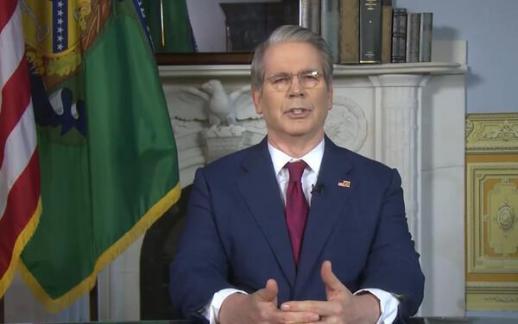 U.S. Treasury Secretary Vows Continued Pressure on Iran Amid Negotiations Scott Besant, the U.S. Treasury Secretary, has reaffirmed a tough stance in negotiations with Iran. While discussions about a ceasefire and peace continue, the U.S. maintains that key conditions revolve around Iran's nuclear program and the navigation of the Strait of Hormuz. On June 1, Besant appeared on Fox News' "Sunday Morning Futures" to explain President Donald Trump's policy toward Iran. According to Fox News, he referenced the economic pressure operation known as "Economic Fury" and the unstable ceasefire situation. Besant stated that even if an agreement is reached, President Trump will use military and economic means to ensure Iran's compliance. This suggests a focus on enforcing compliance after any potential agreement rather than merely achieving a deal. The U.S. demands are centered on issues related to nuclear capabilities and the Strait of Hormuz. Reports indicate that discussions include normalizing navigation through the Strait, removing mines, and managing stockpiles of highly enriched uranium. President Trump has repeatedly stated that he will not allow Iran to possess nuclear weapons. Economic sanctions are also being utilized as leverage in the negotiations. Besant previously disclosed in an interview with Fox Business that the U.S. has seized approximately $1 billion in virtual assets linked to Iran. He also pointed to local military payroll issues, high inflation, and internet blackouts as signs that the regime is facing financial pressure. However, discussions are still ongoing. Reports suggest that President Trump has requested additional modifications to the existing negotiation framework. While the U.S. and Iran are discussing extending the ceasefire and addressing nuclear issues and navigation through the Strait, the final approval and acceptance by Iran remain uncertain.* This article has been translated by AI. 2026-06-01 06:42:00
 -
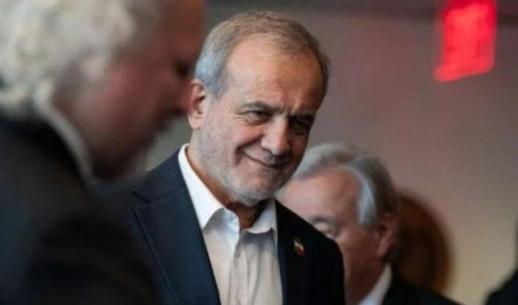 Iran President Reportedly Submits Resignation Amid Hardline Takeover Masoud Pezeshkian, the President of Iran, has reportedly submitted his resignation to the Supreme Leader's office. On May 31, Iran International cited sources claiming that Pezeshkian officially filed his resignation. Fox News also referenced this report, although there has been no official confirmation from the Iranian government or the Supreme Leader's office. According to the reports, Pezeshkian stated in his resignation letter that he and his government have been excluded from key decision-making processes in Iran. He indicated that this power vacuum has been filled by hardliners within the Islamic Revolutionary Guard Corps (IRGC), who have taken control of critical national policy issues. Pezeshkian reportedly argued that under these circumstances, it is impossible to operate the government normally and fulfill the legal responsibilities assigned to the presidency. He is said to have requested an immediate resignation for these reasons. Iran International noted that it remains unclear whether the Supreme Leader will accept Pezeshkian's resignation. If accepted, it could impact Iran's foreign negotiations and decision-making structure during wartime. This report coincides with the ongoing negotiations between the U.S. and Iran. President Donald Trump described the Iranian side as "very tough negotiators" during an appearance on Fox News with Lara Trump, stating that the U.S. is approaching the situation carefully for a broader agreement. Earlier in April, Trump had also mentioned that the Iranian regime is "seriously divided."* This article has been translated by AI. 2026-06-01 06:27:00
 -
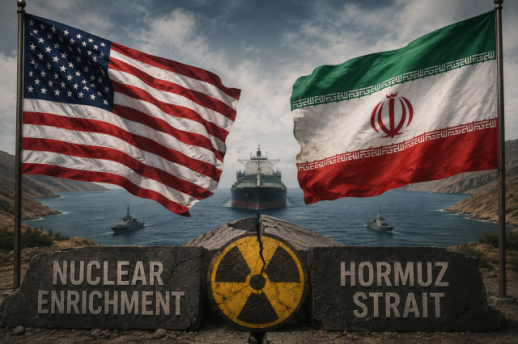 Trump Demands Additional Concessions from Iran Ahead of MOU on Ending Conflict Donald Trump, President of the United States, has reportedly demanded additional concessions from Iran before approving a draft memorandum of understanding (MOU) aimed at ending the conflict with Iran, according to Axios. In response, Iran is expected to propose revisions to the agreement, as reported by the Iranian news agency Tasnim on May 31. Both sides are currently engaged in final negotiations over the terms for ending the war. Axios reported that during a Situation Room meeting on May 30, President Trump requested several amendments to the agreement prepared by U.S. and Iranian negotiating teams. These amendments reportedly focus on the handling of Iranian nuclear materials, commitments related to Iran's nuclear program, and language regarding the reopening of the Strait of Hormuz. Tasnim cited an Iranian source stating, "The exchange of drafts is ongoing, and Iran will certainly reflect its comments in the document." The source added, "Just because Trump has proposed amendments does not mean Iran will accept them. Iran's standard is a document we can accept." The Iranian government is also maintaining a cautious stance. Abbas Araghchi, Iran's Foreign Minister, stated, "Dialogue and message exchanges between the U.S. and Iran are ongoing, and we cannot make judgments until clear results emerge." The source from Tasnim noted, "Iran is fully prepared even if an agreement is not reached."* This article has been translated by AI. 2026-06-01 06:12:00
 -
 Weather: Highs Reach 32 Degrees Amid Early Summer Heat; Heavy Rain Expected in Jeju and Southern Coast On June 1, the first day of June and a Monday, daytime temperatures are expected to reach a high of 32 degrees Celsius, indicating early summer weather. However, heavy rain is anticipated in Jeju Island and along the southern coast. According to Yonhap News, rainfall in Jeju is expected to begin at 9 a.m., while the southern coast of Jeollanam-do and Gyeongsangnam-do will see rain starting at 6 p.m. The forecast predicts rainfall amounts of 30 to 80 millimeters in Jeju (with some mountainous areas receiving over 120 millimeters and up to 150 millimeters in the highest regions) and 20 to 60 millimeters along the southern coast of Jeollanam-do and Gyeongsangnam-do (with some areas exceeding 80 millimeters). Morning low temperatures are expected to range from 16 to 22 degrees Celsius, while daytime highs will be between 28 and 32 degrees, which is above the seasonal average. The expected morning lows for various regions are as follows: Seoul 18 degrees, Incheon 17 degrees, Suwon 17 degrees, Chuncheon 16 degrees, Gangneung 22 degrees, Cheongju 18 degrees, Daejeon 17 degrees, Sejong 17 degrees, Jeonju 17 degrees, Gwangju 17 degrees, Daegu 17 degrees, Busan 19 degrees, Ulsan 17 degrees, Changwon 18 degrees, and Jeju 19 degrees. Daytime highs are forecasted as follows: Seoul 29 degrees, Incheon 28 degrees, Suwon 28 degrees, Chuncheon 29 degrees, Gangneung 32 degrees, Cheongju 30 degrees, Daejeon 30 degrees, Sejong 30 degrees, Jeonju 30 degrees, Gwangju 30 degrees, Daegu 32 degrees, Busan 28 degrees, Ulsan 29 degrees, Changwon 29 degrees, and Jeju 27 degrees. UV index levels are expected to be 'very high' nationwide from around 9 a.m. to 3 p.m. Fine dust levels are predicted to be 'good' to 'moderate' across all regions due to favorable atmospheric dispersion. Wave heights in the seas will be between 0.5 to 1.5 meters in the East and South Seas, while the West Sea will see wave heights around 0.5 meters. In the offshore waters (about 200 kilometers from the coastline), wave heights are expected to be 0.5 to 2.0 meters in the East Sea, 0.5 to 1.5 meters in the West Sea, and 0.5 to 3.0 meters in the South Sea.* This article has been translated by AI. 2026-06-01 06:09:00
 -
 Review: 'Wild Thing' Revives the Stage with Today's Support "It's romantic. The lighting, temperature, humidity..." This was a remark made by a participant on a variety show. It signifies that elements like location, weather, and physical condition come together to create an 'atmosphere.' The same applies to film. The mood of the day and personal experiences can serve as 'evaluation criteria' for a movie. In this way, 'Choi's Review' introduces films to audiences by blending the author's experiences and perspectives. The aim is to present it in a more relaxed and everyday manner. <Editor’s Note>Everyone has likely experienced a time when they were a 'fan' of someone. Perhaps they had a photo pinned to their desk, and a single lyric from that person made their heart flutter. They believed that the stage where that person stood would never crumble. However, time eventually brings even the most dazzling names back to everyday life. The performer who once danced under bright lights becomes a struggling broadcaster worried about living expenses, while the rapper who once spit fire finds himself in an ill-fitting suit as an insurance agent. The film 'Wild Thing' is a story that calls these individuals back to the stage after they have moved on to different lives.The three-member mixed dance group 'Triangle,' which once dominated the music scene, unexpectedly disbanded overnight due to unforeseen events. Twenty years later, a performance proposal arrives for leader Hyun-woo (played by Kang Dong-won), who has become a struggling broadcaster. He seeks out Do-mi (Park Ji-hyun), who is now the daughter-in-law of a chaebol family, and Sang-goo (Eom Tae-goo), who is buried in debt after a failed solo album. The three, having lived different lives, struggle to reunite for one last performance, but their past rival, ballad prince Seong-gon (Oh Jung-se), and the former head of their agency, CEO Park (Shin Ha-kyun), complicate matters further.Director Son Jae-gon, known for creating his own comedic world with films like 'Sweet, Savage Love,' 'The Villainess,' and 'I Won't Hurt You,' showcases his unique comedic sense once again. The theme of 'former stars' could easily veer into caricature or pity, but 'Wild Thing' does not rely solely on those emotions. Instead, it holds onto the present of characters who endure their current lives after once shining brightly. The film goes beyond merely evoking laughter from past glories; it also follows the earnestness of those trying to return to the stage. Audiences find themselves laughing at their 'bittersweet' situations while secretly hoping for their successful return to the stage.The nostalgic music and visuals of the idols from that era are one of the film's enjoyable points. From Triangle's debut song 'Love Is' to the title track of their second album 'Shout It Out,' and Choi Seong-gon's solo song 'I Like You,' the songs in the film faithfully capture the essence of the music scene from that time, drawing audiences into nostalgia and immersion. Composers Shim Eun-ji and Lee Jin-hee, who are currently making waves in the K-pop scene, do not merely mimic the styles of the first and second generations of K-pop. Their work revives familiar melodies and moods in a sophisticated manner that resonates even today. By seriously capturing and implementing the identity of the music and stage from that time, the film's songs achieve a musical authenticity that transcends simple parody or imitation. The intuitive melodies and sound that intricately capture the emotions of that era add momentum to the film, naturally drawing audiences into its rhythm. The magic of humming the tunes long after leaving the theater is a clear achievement of the film's music.Nevertheless, 'Wild Thing' does not linger solely on past glories. The film focuses on the present struggles of 'Triangle' as they attempt to return to the stage, rather than their bygone peak. The Y2K sentiment and the unique atmosphere transitioning from the 1990s to the 2000s, along with the details of the music and styling, are nostalgic, but the film does not settle into the comfort of nostalgia. Instead, the process of awakening their stiff bodies to stand as their true selves again becomes the driving force of 'Wild Thing.' It is also interesting that this journey is depicted as a road movie. Their path is rough and rugged but filled with unyielding vitality. The distinct personalities of the characters racing toward the common goal of the 'stage' imbue the film with a lively rhythm, inviting the audience along for the ride.Their earnestness creates humor even in tangled situations, ultimately leading to support. As past rival ballad prince Seong-gon (Oh Jung-se) and the former agency head CEO Park (Shin Ha-kyun) complicate matters, the road becomes increasingly treacherous, but the film transforms that chaos into momentum for their journey. The race in 'Wild Thing' is both lively and exhilarating. The simple yet fervent wish for them to stand on stage drives the latter part of the film.The actors' comedic performances and chemistry are also impressive. Kang Dong-won, Eom Tae-goo, and Park Ji-hyun convincingly portray the rhythm of a group that once swept the stage as 'Triangle.' Their dedication to singing, rapping, and dancing is evident. The chemistry of the three moving as a team again encourages the audience to support their performance. Oh Jung-se serves as the 'kick' of 'Wild Thing.' His unique comedic sense brings Choi Seong-gon to life, pinpointing moments of humor in every scene. Thanks to the ensemble of the actors, the film maintains a delightful rhythm until the end.Ultimately, 'Wild Thing' is a film that rekindles the passion of once being a devoted fan. Life continues even after the stage lights go out. Watching those who rise again to stand under the lights is more touching than one might expect. This film transforms the nostalgia of once being a fan into a present-day support system.'Wild Thing' will be released in theaters on June 3. The running time is 107 minutes, and it is rated for ages 12 and up. Audiences are encouraged to stay for the ending credits and post-credits scene, featuring Triangle's 'Love Is' and 'Shout It Out' to keep the excitement alive.* This article has been translated by AI. 2026-06-01 06:03:00
 -
 Cluster Munitions: Between 'Angel's Judgment' and 'Devil's Curse' Recently, I spoke with an employee of a defense company who expressed feelings of frustration and injustice. The employee works for a firm that produces cluster munitions, which have been labeled as "devil's weapons" by the media and the public, leading to a sense of dismay. The employee lamented that they feel categorized as part of a group associated with evil, which has tarnished their pride in working in the defense sector. The term "cluster bomb" evokes fear due to its destructive capability. It is generally understood that a single bomb can indiscriminately devastate an area equivalent to three soccer fields, as it contains dozens or even hundreds of submunitions. Particularly concerning are the unexploded submunitions that remain like landmines, posing risks to civilians, especially children. Globally referred to as "steel rain," why has South Korea adopted the term "devil's weapon" for cluster munitions? If we consider destructive power and mass casualty potential, nuclear weapons would undoubtedly rank as the top "devil's weapon." I searched for instances of the term "devil's weapon" in past media articles. The earliest reference I found dates back to around 2005, when a domestic news agency cited North Korean broadcasts claiming that U.S. forces were storing neutron bombs and depleted uranium munitions, labeling them as "20th-century devil's weapons." However, cluster munitions were not included in that context. After a period of silence, the term resurfaced in March 2022, following Russia's invasion of Ukraine, with numerous domestic reports stating that "Russia has deployed devil's weapon cluster munitions." It is reported that the failure rate of Russian cluster munitions is as high as 40%. In June of last year and again in April, articles emerged stating that Iran attacked Israel with "devil's weapon cluster munitions." Since around March 2022, South Korean media has classified cluster munitions as "devil's weapons," likely to emphasize the unjust nature of Russia's unilateral and inhumane invasion of Ukraine. Currently, the international community prohibits the development, production, and use of cluster munitions. The Convention on Cluster Munitions (CCM), adopted by over 120 countries including the UK, France, and Germany in 2008, officially came into force in 2010. However, countries like the United States, Russia, China, Iran, Israel, and Poland have not joined, and both North and South Korea have refrained from participating due to their divided and militarized circumstances. The international standard for cluster munitions currently stands at a failure rate of about 1%. The cluster munitions produced in South Korea maintain a significantly lower failure rate, and the unexploded submunitions are designed to activate self-destruction mechanisms after a certain period. While recognized internationally as some of the most reliable cluster munitions, their export is currently prohibited under government policy. The production of cluster munitions by some domestic defense companies is driven by North Korea's ongoing development of cluster munitions using missiles and artillery. In April, North Korea announced that it successfully tested a short-range ballistic missile, the Hwasong-11 (KN-23), equipped with cluster warheads, claiming that a single cluster munition could devastate an area equivalent to ten soccer fields, suggesting a power level nearly three times that of South Korean cluster munitions. In response to North Korea's cluster munitions, it is unavoidable that South Korea must develop more advanced cluster munitions. These are currently developed and produced under strict government control, positioned as a reliable weapon system to protect South Korea in the event of an attack from the North. This aligns with current discussions on cost-effectiveness. If employees of defense companies producing cluster munitions feel discomfort due to such terminology, it raises concerns that military personnel operating these weapon systems may also struggle to escape this psychological burden. Given the direct involvement of the South Korean military and defense industry employees, a different expression may be necessary. The use of weapon systems can oscillate between "angel's judgment" and "devil's curse" depending on who creates and how they are used.* This article has been translated by AI. 2026-06-01 06:03:00
 -
 New York Mayor Jorlan Mamdani Skips 62nd Annual Israel Day Parade New York Mayor Jorlan Mamdani, the city's first Muslim mayor, did not attend the 62nd annual Israel Day Parade in Manhattan, citing his support for Palestinian rights. His absence is notable, as it marks the first time a New York mayor has skipped this event. According to the Associated Press, thousands of supporters of Israel, including American Jews, marched along Fifth Avenue from 62nd to 74th Streets from 11:30 a.m. to 4 p.m. on May 31, waving Israeli flags and American flags as they walked. The event originated in 1964 when thousands gathered in Manhattan to support the then-newly established state of Israel. The Times of Israel reported that the parade was initially called the 'Youth Salute to Israel Parade.' The following year, David Ben-Gurion, revered as Israel's founding father, attended the event, boosting support for Israel. Since then, the parade has been held annually along Fifth Avenue in Manhattan. The AP noted that this parade has traditionally been a must-attend event for politicians, including mayors and governors, seeking to capture the Jewish vote. However, Mamdani indicated early on that he would not participate. Two weeks prior, his office released a video commemorating Nakba, which means 'catastrophe' in Arabic and refers to the forced displacement of approximately 700,000 Palestinians during the Arab-Israeli War following Israel's founding in 1948. Mamdani also stated at a recent press conference, "I made it clear during my campaign that I would not participate in the (Israel Day) parade, and my views on the Israeli government are well known." Mamdani's absence has drawn criticism from Jewish leaders in the U.S. Mark Schneider, chairman of the Foundation for Interracial Understanding and rabbi at the Hampton Synagogue, expressed discomfort, stating, "(Mamdani's absence) is an insult to Jewish citizens of New York. We also don’t need you, so don’t come." However, New York Governor Kathy Hochul and New York City Police Commissioner Jessica Tish attended the event, as reported by The New York Times. Hochul emphasized that the groups participating in the Israel Day Parade were marching "in the spirit of resistance," asserting, "No one should have to endure harassment or hatred when attending worship, and we will stand together to ensure your protection." The event also saw participation from 13 Israeli lawmakers, including Amir Ohana, the Speaker of the Knesset. Ohana criticized Mamdani, stating that he is "shamefully fueling hatred against Israel and Jewish residents in New York," according to the Times of Israel. 2026-06-01 05:24:00