

As discussed in Part 1, the starting point of the AI revolution is semiconductors. However, transformative technologies have never been limited to specific components or devices. The steam engine of the 18th century was not just a simple power device; it created railroads and factories, sparking the Industrial Revolution. In the 19th century, electricity was not merely an energy source; it illuminated cities and gave birth to mass production systems. Similarly, the internet in the 20th century was not just a communication technology; it enabled e-commerce and platform economies, connecting the world into a single network. AI is no different. While the world today focuses on generative AI and semiconductors, historians are likely to record the late 2020s as the "starting point of the Physical AI revolution."
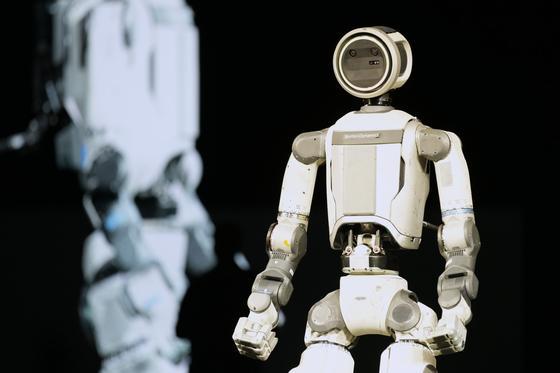
Until now, AI has primarily existed within screens. People have interacted with AI, created documents, and generated images. But this is just the beginning. In the future, AI will step into the real world, becoming robots, cars, factories, and cities. AI is evolving from a technology that answers questions to one that moves, judges, and acts. This is what Physical AI means. The moment AI begins to dominate physical spaces beyond digital realms, humanity will enter another industrial revolution.
Recent movements by global tech companies symbolize this shift. Major AI firms in the U.S. are pouring astronomical investments into robotics, autonomous driving, and industrial automation, moving beyond the competition of large language models. AI semiconductor companies are developing operating systems for robots and simulation platforms, while automotive companies are transforming vehicles into massive AI platforms. Tesla is nurturing its humanoid robot Optimus as a future growth driver, and leading U.S. tech firms are accelerating the development of industrial robots and logistics automation systems. Just two decades ago, smartphones were the key devices of the internet age; in the future, robots and autonomous vehicles are likely to become the central devices of the AI era.
South Korea occupies a unique position in this landscape. The U.S. excels in software and platforms, while China boasts a vast domestic market and state-led investment capabilities. However, few countries possess both a manufacturing base and advanced technological capabilities. South Korea has world-class shipbuilding, automotive, battery, semiconductor, and electronics industries. It is rare for a country to simultaneously hold top-tier shipbuilding technology, leading memory semiconductors, significant automotive production capacity, and world-class battery companies. This represents a tremendous strategic asset in the era of Physical AI.
Take the shipbuilding industry as an example. South Korean shipyards possess world-class technology but still rely heavily on skilled labor for many processes. However, the combination of AI and robotics can change this entirely. During the design phase, AI can analyze hundreds of thousands of design proposals to suggest the optimal one, while robots can perform welding, painting, and inspection during production. Utilizing digital twin technology allows for the verification of safety and performance in a virtual space before constructing actual vessels. Even after a ship begins operations, AI can analyze engine status and fuel efficiency in real-time to support optimal navigation. The shipbuilding industry is evolving from simple manufacturing to a data-driven, ultra-precision industry.
The automotive industry is undergoing a similar transformation. In the past, a car's competitiveness was determined by engine performance and fuel efficiency. However, in the future, software and AI are likely to dictate a vehicle's competitiveness. An electric vehicle contains thousands of semiconductors, with AI controlling its operation. As autonomous driving technology advances, the automotive industry is shifting from a mechanical industry to a software industry. In the future, the ability of a vehicle to make intelligent decisions and operate autonomously may become more critical than how well it is manufactured. If South Korea's automotive industry successfully transitions to AI, it could leap from being a mere exporter of finished vehicles to becoming a future mobility platform nation.
The battery industry is also a key sector in the era of Physical AI. AI can optimize battery production processes, predict lifespans, and maximize energy efficiency. The integration of AI and batteries can create new industrial ecosystems, not only for electric vehicles but also for energy storage systems (ESS), smart grids, and next-generation power networks. The global battery market has already grown to hundreds of billions of dollars, and demand is expected to increase further with the expansion of electric vehicles and data centers. South Korea, home to some of the world's leading battery companies, stands to benefit significantly from this integration.
Logistics and ports are similarly positioned. Busan Port is a global transshipment hub, while Incheon Port serves as a logistics hub for Northeast Asia. With the introduction of AI-based logistics systems, container movement, storage, customs procedures, and transportation route optimization can all be automated. The combination of autonomous vessels and AI logistics platforms could drastically reduce logistics costs and maximize efficiency. Positioned at the center of global trade, South Korea is one of the countries best suited to experiment with these changes.
Agriculture is no exception. AI can analyze soil conditions and climate changes to suggest optimal cultivation methods, while drones and unmanned agricultural machinery can address labor shortages. Given the aging population and declining numbers in rural South Korea, AI in agriculture is likely to become a necessity rather than an option. Agriculture is also transitioning from a labor-intensive industry to a data-intensive one.
The core concept driving these changes is AX (AI Transformation). While digital transformation focused on collecting and utilizing data, AI transformation represents a stage where data can make autonomous judgments and execute actions. Factories will operate independently, equipment will self-diagnose, and logistics will optimize themselves. This marks a shift from an era where humans made all decisions to one where AI collaborates in decision-making. It can be viewed as a process where much of the management and control functions traditionally performed by humans over the past few centuries are transferred to AI.
The world has already entered the AX competition. Germany is promoting smart manufacturing innovation through Industry 4.0, while the U.S. is accelerating industrial transformation using AI and cloud technologies. China is also investing heavily in AI-based factory innovations as part of its Manufacturing 2025 strategy. Global consulting firms predict that AI-driven manufacturing innovations will lead to productivity increases worth tens of trillions of dollars in the coming decades. This is not merely a technological change but a reconfiguration of national competitiveness.
South Korea's path is clear: it must not remain a semiconductor powerhouse but strive to become the world's leading AI manufacturing nation. Semiconductors are the starting point, while manufacturing AX represents the expansion. South Korea must evolve from a country that produces AI semiconductors to one that innovates its entire industry through AI.
Achieving this requires a national strategy. Relying solely on the success of a few companies is insufficient. Education, research, industrial policy, power infrastructure, and regulatory innovation must all move in tandem. A power grid is needed to build AI data centers, universities and research institutes are required to cultivate AI talent, and an investment ecosystem must be established to support innovative companies. Semiconductors, batteries, robotics, software, data centers, and power grids must be integrated into a cohesive national strategy.
In particular, the issue of power is a critical challenge in the era of Physical AI. AI data centers consume vast amounts of electricity. A data center with thousands of the latest AI servers can use as much power as an entire small city. The International Energy Agency (IEA) predicts that the spread of AI and data centers will lead to a surge in global electricity demand. Therefore, an AI powerhouse must also be an energy powerhouse. Without a comprehensive infrastructure that includes nuclear and renewable energy, next-generation transmission and distribution systems, and energy storage devices, maintaining AI competitiveness will be difficult.
Ultimately, competition in the era of Physical AI transcends technological rivalry; it is a competition of national systems. Semiconductors, data centers, power grids, manufacturing, education, research, finance, and investment ecosystems must be interconnected as a single platform. South Korea is already at the starting line. The question is how quickly it can move forward.
If AI semiconductors represented the first opportunity, Physical AI and manufacturing AX represent the second. The country that seizes this second opportunity is likely to stand at the center of the global industrial order by the mid-21st century. Just as South Korea achieved the Miracle on the Han River through industrialization in the 20th century, it can create another miracle through Physical AI and manufacturing AX in the 21st century. This is not merely a matter of economic growth; it is about determining what kind of nation South Korea will become over the next 100 years.
And the answer is already beginning to emerge. If AI semiconductors opened the door to a new industrialization for South Korea, Physical AI will become the tool for designing the nation's future civilization. The next step is not just about technology; it is about the nation's vision. That vision will be addressed in Part 3, focusing on the 'Great Korea' and the second declaration of independence in the AI era.
Until now, AI has primarily existed within screens. People have interacted with AI, created documents, and generated images. But this is just the beginning. In the future, AI will step into the real world, becoming robots, cars, factories, and cities. AI is evolving from a technology that answers questions to one that moves, judges, and acts. This is what Physical AI means. The moment AI begins to dominate physical spaces beyond digital realms, humanity will enter another industrial revolution.
Recent movements by global tech companies symbolize this shift. Major AI firms in the U.S. are pouring astronomical investments into robotics, autonomous driving, and industrial automation, moving beyond the competition of large language models. AI semiconductor companies are developing operating systems for robots and simulation platforms, while automotive companies are transforming vehicles into massive AI platforms. Tesla is nurturing its humanoid robot Optimus as a future growth driver, and leading U.S. tech firms are accelerating the development of industrial robots and logistics automation systems. Just two decades ago, smartphones were the key devices of the internet age; in the future, robots and autonomous vehicles are likely to become the central devices of the AI era.
South Korea occupies a unique position in this landscape. The U.S. excels in software and platforms, while China boasts a vast domestic market and state-led investment capabilities. However, few countries possess both a manufacturing base and advanced technological capabilities. South Korea has world-class shipbuilding, automotive, battery, semiconductor, and electronics industries. It is rare for a country to simultaneously hold top-tier shipbuilding technology, leading memory semiconductors, significant automotive production capacity, and world-class battery companies. This represents a tremendous strategic asset in the era of Physical AI.
Take the shipbuilding industry as an example. South Korean shipyards possess world-class technology but still rely heavily on skilled labor for many processes. However, the combination of AI and robotics can change this entirely. During the design phase, AI can analyze hundreds of thousands of design proposals to suggest the optimal one, while robots can perform welding, painting, and inspection during production. Utilizing digital twin technology allows for the verification of safety and performance in a virtual space before constructing actual vessels. Even after a ship begins operations, AI can analyze engine status and fuel efficiency in real-time to support optimal navigation. The shipbuilding industry is evolving from simple manufacturing to a data-driven, ultra-precision industry.
The automotive industry is undergoing a similar transformation. In the past, a car's competitiveness was determined by engine performance and fuel efficiency. However, in the future, software and AI are likely to dictate a vehicle's competitiveness. An electric vehicle contains thousands of semiconductors, with AI controlling its operation. As autonomous driving technology advances, the automotive industry is shifting from a mechanical industry to a software industry. In the future, the ability of a vehicle to make intelligent decisions and operate autonomously may become more critical than how well it is manufactured. If South Korea's automotive industry successfully transitions to AI, it could leap from being a mere exporter of finished vehicles to becoming a future mobility platform nation.
The battery industry is also a key sector in the era of Physical AI. AI can optimize battery production processes, predict lifespans, and maximize energy efficiency. The integration of AI and batteries can create new industrial ecosystems, not only for electric vehicles but also for energy storage systems (ESS), smart grids, and next-generation power networks. The global battery market has already grown to hundreds of billions of dollars, and demand is expected to increase further with the expansion of electric vehicles and data centers. South Korea, home to some of the world's leading battery companies, stands to benefit significantly from this integration.
Logistics and ports are similarly positioned. Busan Port is a global transshipment hub, while Incheon Port serves as a logistics hub for Northeast Asia. With the introduction of AI-based logistics systems, container movement, storage, customs procedures, and transportation route optimization can all be automated. The combination of autonomous vessels and AI logistics platforms could drastically reduce logistics costs and maximize efficiency. Positioned at the center of global trade, South Korea is one of the countries best suited to experiment with these changes.
Agriculture is no exception. AI can analyze soil conditions and climate changes to suggest optimal cultivation methods, while drones and unmanned agricultural machinery can address labor shortages. Given the aging population and declining numbers in rural South Korea, AI in agriculture is likely to become a necessity rather than an option. Agriculture is also transitioning from a labor-intensive industry to a data-intensive one.
The core concept driving these changes is AX (AI Transformation). While digital transformation focused on collecting and utilizing data, AI transformation represents a stage where data can make autonomous judgments and execute actions. Factories will operate independently, equipment will self-diagnose, and logistics will optimize themselves. This marks a shift from an era where humans made all decisions to one where AI collaborates in decision-making. It can be viewed as a process where much of the management and control functions traditionally performed by humans over the past few centuries are transferred to AI.
The world has already entered the AX competition. Germany is promoting smart manufacturing innovation through Industry 4.0, while the U.S. is accelerating industrial transformation using AI and cloud technologies. China is also investing heavily in AI-based factory innovations as part of its Manufacturing 2025 strategy. Global consulting firms predict that AI-driven manufacturing innovations will lead to productivity increases worth tens of trillions of dollars in the coming decades. This is not merely a technological change but a reconfiguration of national competitiveness.
South Korea's path is clear: it must not remain a semiconductor powerhouse but strive to become the world's leading AI manufacturing nation. Semiconductors are the starting point, while manufacturing AX represents the expansion. South Korea must evolve from a country that produces AI semiconductors to one that innovates its entire industry through AI.
Achieving this requires a national strategy. Relying solely on the success of a few companies is insufficient. Education, research, industrial policy, power infrastructure, and regulatory innovation must all move in tandem. A power grid is needed to build AI data centers, universities and research institutes are required to cultivate AI talent, and an investment ecosystem must be established to support innovative companies. Semiconductors, batteries, robotics, software, data centers, and power grids must be integrated into a cohesive national strategy.
In particular, the issue of power is a critical challenge in the era of Physical AI. AI data centers consume vast amounts of electricity. A data center with thousands of the latest AI servers can use as much power as an entire small city. The International Energy Agency (IEA) predicts that the spread of AI and data centers will lead to a surge in global electricity demand. Therefore, an AI powerhouse must also be an energy powerhouse. Without a comprehensive infrastructure that includes nuclear and renewable energy, next-generation transmission and distribution systems, and energy storage devices, maintaining AI competitiveness will be difficult.
Ultimately, competition in the era of Physical AI transcends technological rivalry; it is a competition of national systems. Semiconductors, data centers, power grids, manufacturing, education, research, finance, and investment ecosystems must be interconnected as a single platform. South Korea is already at the starting line. The question is how quickly it can move forward.
If AI semiconductors represented the first opportunity, Physical AI and manufacturing AX represent the second. The country that seizes this second opportunity is likely to stand at the center of the global industrial order by the mid-21st century. Just as South Korea achieved the Miracle on the Han River through industrialization in the 20th century, it can create another miracle through Physical AI and manufacturing AX in the 21st century. This is not merely a matter of economic growth; it is about determining what kind of nation South Korea will become over the next 100 years.
And the answer is already beginning to emerge. If AI semiconductors opened the door to a new industrialization for South Korea, Physical AI will become the tool for designing the nation's future civilization. The next step is not just about technology; it is about the nation's vision. That vision will be addressed in Part 3, focusing on the 'Great Korea' and the second declaration of independence in the AI era.
* This article has been translated by AI.

Copyright ⓒ Aju Press All rights reserved.