
Journalist

MIN JAE YONG
-
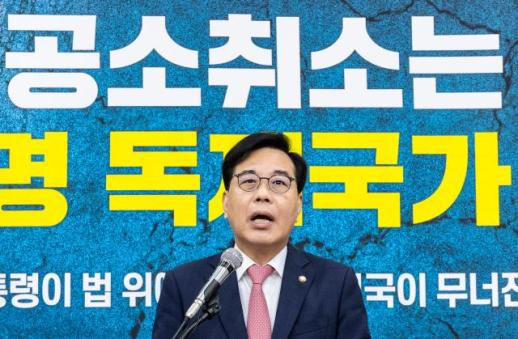 Song Eon-seok Calls for Public Support in Local Elections Song Eon-seok, the floor leader of the People Power Party, launched a strong critique against the government and ruling party on the first day of the official campaign for the June 3 local elections. During a press conference at the National Assembly on May 21, Song stated, "This local election will determine whether we will check the arrogance and self-righteousness of the Lee administration and the Democratic Party or allow it to continue unchecked." He continued his criticism regarding the proposed special investigation law aimed at dismissing charges. "If the Democratic Party wins, they will argue that the public supports the dismissal of charges and will push forward with a special investigation to eliminate the president's alleged crimes. We must prevent this at all costs," he urged. Song escalated his rhetoric by addressing the potential for a "tax bomb" following the local elections. He warned, "The Democratic Party is already laying the groundwork for increased capital gains tax, the elimination of long-term holding exemptions, property tax hikes, and the introduction of a financial transaction tax. If they win, they will claim public support for these tax bomb policies and implement them fully." He added, "While our People Power Party has made mistakes, I urge you to consider whether the Democratic Party is truly doing well and what will happen if they win. A vote for the Democratic Party is a vote to give up your home and property. To stabilize real estate, prevent tax bombs, and ensure a functioning economy, please vote for the People Power Party." Following the press conference, Song is scheduled to travel to Busan for a joint launch ceremony for the 'People Power Party Busan Victory' campaign and to support Park Min-sik, the candidate for Busan's Buk-gu district. In response to a question about whether the visit was aimed at influencing the local election dynamics in Buk-gu, Choi Soo-jin, the spokesperson for the central election committee, stated, "Buk-gu is a crucial battleground, so we are going there." Choi also emphasized, "Today marks the start of our campaign, and we will provide active support from the central party. We are focusing not only on local government positions but also on by-elections, as increasing the number of National Assembly members is a key goal for us in this election."* This article has been translated by AI. 2026-05-21 13:25:13
 -
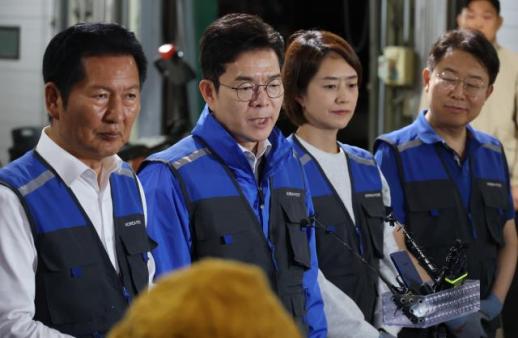 Seoul Mayoral Candidates Clash Over GTX Construction Plans Jung Won-o, the Democratic Party's candidate for Seoul mayor, announced on May 21 that he would halt construction of the GTX-A express railway if elected. His opponent, Oh Se-hoon of the People Power Party, criticized this stance, claiming it disregards the desires of citizens who want the project completed and would hinder the city's development. During an appearance on MBC Radio's "Kim Jong-bae's Focus," Jung expressed concerns about the missing rebar in the GTX-A line at Samsung Station, stating, "If I become mayor, I will stop the construction for now. If it’s not safe, isn’t it just a house of cards?" He emphasized the importance of a solid foundation, noting that the underground level five, where cracks have appeared, is crucial. "If that part is flawed, no matter how well the upper structure is built, it will lead to significant problems, and fixing it would require tearing everything down and starting over," he reiterated his commitment to halting the project. In response to Jung's comments, Oh accused him of acting against the city's progress. On Facebook, Oh remarked, "He is just like former Mayor Park Won-soon, predicting a stagnant Seoul and a dark decade of lost opportunities." Oh further criticized Jung for ignoring the urgent wishes of citizens in Seoul and the surrounding metropolitan area who are enduring inconveniences due to ongoing construction. He pointed out that the Ministry of Land, Infrastructure and Transport, under the Lee Jae-myung administration, conducted a trial operation of the GTX-A line for 17 days despite being aware of the rebar issue, asserting that there are no safety concerns. "We cannot entrust Seoul to Mr. Halt King," he concluded.* This article has been translated by AI. 2026-05-21 13:22:27
 -
 April Auto Insurance Loss Ratio Improves Slightly to 85.4% 4월 자동차보험 손해율이 지난해보다 소폭 개선된 것으로 나타났다. 올 초 인상된 자동차보험료가 일부 반영된 데다 사고 건수도 줄어든 영향으로 분석된다. According to the insurance industry on May 21, the average loss ratio for auto insurance among the four major companies—Samsung Fire & Marine, Hyundai Marine & Fire, DB Insurance, and KB Insurance—was 85.4% in April, a decrease of 0.3 percentage points from 85.7% in the same month last year. The rise in auto insurance premiums earlier this year appears to have had some effect, along with a reduction in the number of accidents compared to the same month last year. However, due to a deterioration in loss ratios throughout the first quarter, the cumulative loss ratio for April stands at 85.8%, an increase of 2.5 percentage points compared to the same period last year. An industry official stated, "Considering the expected increase in accidents due to rising traffic volume in May, along with issues such as excessive medical treatments for minor injuries and rising costs for parts and repairs, the outlook for future loss ratios is somewhat negative."* This article has been translated by AI. 2026-05-21 13:21:00
 -
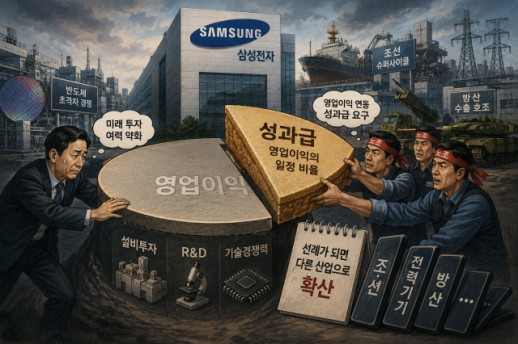 Samsung Electronics and Labor Union Reach Tentative Agreement Ahead of Strike Samsung Electronics and its labor union reached a tentative agreement just before a planned strike. The key points include utilizing 10.5% of the semiconductor division's operating profit for special management performance bonuses and abolishing the cap on these bonuses. This effectively institutionalizes a performance bonus system linked to operating profit. The union initially demanded a 15% payout of operating profit and the removal of the cap, which the company largely accepted after negotiations.While the immediate crisis of a strike has been averted, this agreement could have significant repercussions for corporate management. In capital-intensive industries like semiconductors, fixing a portion of operating profit as bonuses could undermine future competitiveness. There is concern that this could lead to a 'poisoned chalice' scenario, where short-term conflict resolution creates long-term issues.The semiconductor industry operates on a different level compared to traditional manufacturing. The cyclical nature of the market is extreme, and most profits during boom periods must be reinvested in facilities and research and development to survive. Samsung Electronics is heavily investing tens of trillions of won in advanced processes and securing competitiveness in HBM and foundry services. Companies in the U.S., Taiwan, and China are also competing for semiconductor dominance with national support. In this context, tying a portion of operating profit to a fixed distribution structure could reduce investment capacity.There are worries that this could set a 'bad precedent.' Industries such as shipbuilding, power equipment, and defense are already experiencing a supercycle. HD Hyundai Heavy Industries and Hanwha Ocean have secured several years' worth of orders, while companies like Hyosung Heavy Industries and LS Electric are achieving record performances due to increased demand for power infrastructure from AI data centers. The defense sector is also thriving with strong exports to the Middle East and Europe.If unions in these sectors demand similar arrangements based on Samsung Electronics' agreement, companies could face substantial performance bonus burdens during boom periods, leading to recurring labor disputes during downturns. Performance bonuses should be determined flexibly, taking into account management performance, future investments, and market conditions. Fixing them as a percentage of operating profit would significantly undermine corporate autonomy.It is essential to acknowledge the contributions of workers. The global competitiveness of Samsung Electronics' semiconductor business stems from the dedication of on-site engineers and research personnel. The principle that appropriate rewards should follow achievements is valid. However, the method of distribution is crucial. If the structure undermines corporate sustainability and investment competitiveness, the burden will ultimately fall back on the workers.The South Korean semiconductor industry is in a survival competition with TSMC, Intel, and Chinese companies. Labor disputes over performance bonus distribution will only benefit competing nations. While profit generation is a primary goal for companies, they must also invest for the future. Especially in capital-intensive industries, profits during boom periods should be accumulated as investment resources for future downturns.There are concerns that Samsung Electronics' agreement could trigger a dangerous domino effect across the industry. While performance bonuses are necessary, they should not stifle future investment. What is needed now is not a short-term distribution logic but a balanced approach that ensures the long-term survival of companies and the competitiveness of the industry.* This article has been translated by AI. 2026-05-21 13:18:22
 -
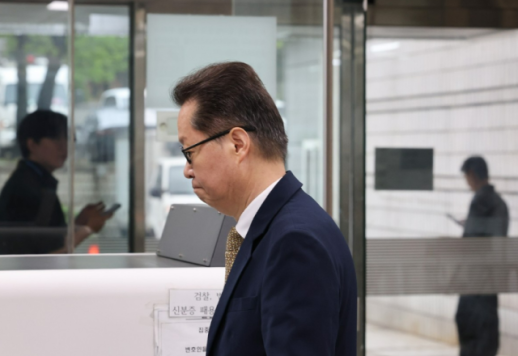 First Arrest Warrant Issued by Special Prosecutors for Former KTV Head Lee Eun-woo Lee Eun-woo, the former head of the Korea Policy Broadcasting System (KTV), faces a critical moment as he is accused of insurrection propaganda related to the December 3 martial law. This marks the first attempt by the second comprehensive special investigation team, led by Special Prosecutor Kwon Chang-young, to secure an arrest warrant, focusing on a charge that lacks legal precedent. The Seoul Central District Court, presided over by Chief Judge Lee Jong-rok, began the warrant hearing at 10 a.m. on May 21 to assess the necessity of Lee's arrest. Lee arrived at the court at 9:16 a.m. dressed in a black suit, heading straight to the courtroom without responding to questions from reporters. Special Prosecutors Kwon Young-bin and Kim Jung-min attended the hearing. Kwon stated to reporters outside the court, "The citizens who rushed to the National Assembly were the key figures in stopping the insurrection on December 3. The act of continuing to propagate insurrection against such citizens must be severely punished." He added, "We have confirmed the charges by supplementing aspects that were not investigated in the first insurrection special investigation, and given the seriousness of the matter, we filed for the warrant. It was particularly necessary to verify the fairness and objectivity of the media among government agencies." Lee is accused of repeatedly broadcasting news that justified the martial law and related proclamations from December 3 to 13, 2024, while selectively blocking or deleting news that criticized or attempted to halt the martial law, thereby propagating insurrection. The comprehensive special investigation team claims that Lee continued to support and protect insurrection forces, including former President Yoon Suk Yeol, even after the martial law was lifted, leading to the warrant request on May 18. This is the first arrest warrant request in the 82 days since the special investigation team was established. The key issue in this case is whether the charge of insurrection propaganda can be substantiated. There is no precedent for this charge being recognized as a valid reason for arrest, making the court's decision highly anticipated. Kwon emphasized, "There is currently no precedent for insurrection propaganda charges, and this is the first attempt by the comprehensive special investigation team. We will explain to the court that insurrection propaganda is a significantly serious criminal act." The special investigation team argues that the essence of the case lies not merely in the direction of reporting but in the fact that a state-run broadcaster justified an unconstitutional martial law and continued to support it. In contrast, Lee's defense team asserts that KTV's role is to promote policies and denies the allegations, questioning whether the broadcasts can be interpreted as promoting insurrection and legitimizing it. Lee's defense reportedly submitted a 100-page opinion document in preparation for the hearing, stating, "KTV's identity is that of a policy promotion broadcaster," and questioning the interpretation of its broadcasts as promoting insurrection. The relationship with previous trials is also a major point of contention. Previously, the insurrection special investigation team (led by Special Prosecutor Jo Eun-seok) charged Lee with abuse of authority for ordering the deletion of KTV subtitles containing statements from politicians criticizing the constitutionality and legality of the martial law shortly after it was declared. Lee was indicted without detention in December of last year, and the case is currently awaiting a first-instance verdict on June 26, following a sentencing hearing on May 15. At that time, the insurrection special investigation team decided not to prosecute on the charge of insurrection propaganda, citing the timing of the offense and the potential chilling effect on press freedom. However, the comprehensive special investigation team decided to reopen the investigation after reviewing the case records and confirming evidence that Lee supported insurrection forces even after the martial law was lifted. This has led to concerns in the legal community about potential "double prosecution," as some argue that the same actions are being investigated again while a trial is ongoing. The special investigation team strongly refuted this claim. Kwon stated, "The term double prosecution is something said by those who do not understand the law. Given the protected legal interests, the nature of the acts, and the social facts, this is a separate case and does not constitute double prosecution." The court is expected to consider the degree of evidence supporting the charges, the similarity to existing cases, and the extent to which journalistic actions can be subject to criminal penalties during the warrant hearing. This hearing is anticipated to be a turning point for the comprehensive special investigation. If the warrant is issued, the investigation can accelerate into the involvement of state agencies and public media before and after the martial law. Conversely, if denied, it could raise questions about the validity of applying a charge of insurrection propaganda without precedent and significantly hinder the investigation's momentum. A decision on Lee's arrest could be made as early as that evening.* This article has been translated by AI. 2026-05-21 13:13:38
 -
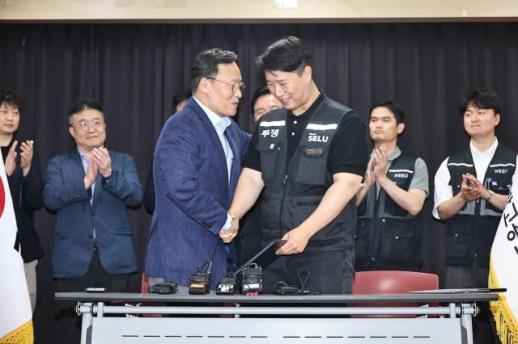 Samsung Electronics Strike: Implications for South Korea's Semiconductor Industry In 2026, South Korea's industrial sector faces a significant challenge. The strike by the Samsung Electronics labor union and the debate over performance bonuses have expanded beyond mere labor disputes, raising critical questions about the structure of South Korean industrial capitalism, future competitiveness, and the new distribution order in the age of artificial intelligence (AI). Recently, Samsung Electronics reached a final agreement in labor negotiations, which included wage increases, adjustments to performance bonuses, expanded welfare benefits, and improvements in certain working conditions, temporarily averting a major conflict. However, this issue is not confined to a single company. The labor issues at Samsung Electronics and SK Hynix, two of the world's largest memory semiconductor manufacturers, are directly linked to global supply chains, international capital markets, national industrial strategies, and the overall trust in the South Korean economy. The world is currently in the midst of a fierce competition for dominance in AI semiconductors. Companies like Nvidia and AMD from the United States, TSMC from Taiwan, state-led semiconductor initiatives from China, and Japan's semiconductor revival strategy are all in a full-scale battle. Semiconductors are no longer just electronic components; they are now a strategic industry connected to military, security, AI, data centers, automotive, aerospace, and quantum computing. In this context, news of the Samsung strike has sent shockwaves through global financial markets and among supply chain investors. Foreign capital is particularly sensitive to questions such as, “Is South Korea's advanced industrial supply chain stable?” and “Can key companies in the AI era maintain long-term predictability?” Indeed, global capital markets prioritize stability and predictability. The semiconductor industry requires long-term investments amounting to tens of trillions of won. Samsung's Pyeongtaek campus, the Taylor factory in Texas, and the expansion of next-generation HBM and AI memory lines involve astronomical capital investments, with recovery periods spanning several years to over a decade. This industry cannot be swayed by political slogans or short-term sentiments. At the same time, the role of labor has changed dramatically. The semiconductor industry in the AI era is not merely about assembly work. Processes like extreme ultraviolet (EUV) lithography, HBM design, AI packaging, and ultra-fine process operations cannot be accomplished without a highly skilled workforce of top engineers and technicians. Today, labor is not just a cost item; it is a core strategic asset. Therefore, the labor dispute at Samsung Electronics should not be approached as a matter of winning or losing for either side. Labor must be respected for its contribution to corporate sustainability, and companies must acknowledge the dignity and contributions of labor. Both sides must operate within global rules. Samsung Electronics and SK Hynix are not only South Korean companies but also global enterprises. Labor relations must now be managed according to international standards and investor confidence. During this debate, the concept of 'residual claimant' gained particular attention. This raises the question, “Why do only shareholders have residual claims?” This issue touches on the fundamental structure of modern corporate governance. Corporations are fundamentally built on a symmetrical structure of risk and reward. Creditors receive agreed-upon interest in exchange for relinquishing excess profits. Workers gain agreed-upon wages and job security in exchange for limiting their exposure to risk. The state recoups the cost of providing social infrastructure through taxation. Ultimately, it is the shareholders who bear the residual profits and losses. This is why shareholders are referred to as 'residual claimants.' When a company generates substantial profits, they receive the last remaining share, but conversely, when a company collapses or its stock price plummets, they are the first to absorb the losses. In 2023, during the semiconductor downturn, Samsung Electronics' operating profit plummeted. However, employee wages were not significantly cut, and payments to partner companies were largely maintained. Yet, the market capitalization dropped sharply, leading to losses for numerous individual investors and the national pension fund. In capitalism, the entity that ultimately absorbs risk is revealed in such moments. Nevertheless, the contributions of labor cannot be overlooked. In fact, in the AI era, human creativity and collective knowledge are becoming central to corporate value. Today, the value of semiconductor companies does not stem merely from factory buildings but from research and development capabilities, design skills, production experience, and long-accumulated organizational culture. Thus, the issue is not “who will take it all?” but rather “how can we share it sustainably?” This is why global companies are strengthening stock options, long-term performance bonuses, employee stock ownership plans, and performance-linked compensation systems. Workers are not just costs; they are partners in corporate growth. However, labor must also confront the harsh realities of the global capital market. Samsung Electronics and SK Hynix do not compete against domestic companies; they are up against national strategic industries from the United States, Taiwan, China, and Japan. Notably, China is mobilizing state capital to achieve semiconductor self-sufficiency, while the U.S. is pouring substantial subsidies into its semiconductor industry. Taiwan's entire economy revolves around the TSMC ecosystem. If South Korean industries continue to engage in internal conflicts, the damage will ultimately affect both labor and companies. A decline in industrial competitiveness will lead to fewer jobs and undermine the foundation of the national economy in the long run. Here, it is essential to understand the concepts of CAPEX (Capital Expenditure) and OPEX (Operational Expenditure). CAPEX refers to capital expenditures for the future, including factory expansions, semiconductor equipment investments, next-generation technology development, and AI infrastructure building. In contrast, OPEX includes operational costs such as labor, maintenance, utilities, and management expenses. The semiconductor industry is CAPEX-centric. Samsung Electronics and SK Hynix invest tens of trillions of won each year in future facilities. The price of a single state-of-the-art EUV machine can reach hundreds of billions of won. Building advanced packaging and AI memory lines requires astronomical capital. The problem arises here. If demands for short-term performance distribution excessively increase the burden of OPEX, companies will reduce future CAPEX. This will ultimately lead to a decline in long-term competitiveness. The semiconductor industry is not about sharing today's profits; it is about reinvesting in the present to secure technological dominance for the next decade. In fact, one of the significant reasons for the decline of the Japanese semiconductor industry was the collapse of its long-term investment structure. Conversely, Taiwan's TSMC has maintained a near-religious commitment to CAPEX, growing into the world's leading foundry company. Nvidia has also sustained decades of reinvestment in research and development and the AI ecosystem to achieve its current massive market capitalization. Therefore, the labor issues at Samsung Electronics should not be approached merely as a short-term wage conflict. Labor must understand the future investment structure of companies, and companies must design performance sharing more intricately. The key is to create a structure where all members share in the fruits of growth while maintaining future competitiveness. Recent remarks by President Lee Jae-myung during a cabinet meeting offer significant insights. The president did not deny the rights of labor. Instead, he clearly stated that labor rights are constitutional protections for the socially vulnerable. However, he also emphasized that exercising these rights must come with solidarity and responsibility. The attention surrounding President Lee's remarks stems not only from his policy message but also from his background as a former child laborer. He experienced the realities of labor firsthand in factories during his youth and has embodied the hardships and imbalances of the labor landscape in industrialized South Korea. This makes him a politician who understands both the urgency of laborers and the realities of corporate environments. Brazilian President Luiz Inácio Lula da Silva, who recently visited South Korea, is also a globally recognized labor movement leader. Lula grew up in a poor labor class and factory environment. Despite standing on different continents, both leaders share a common understanding of the labor experiences during the industrial era. Interestingly, both have not confined themselves to mere ideological labor movements. Since taking office, President Lula has pursued industrial development, investment attraction, and export expansion in Brazil. He has sought to balance labor protection with industrial competitiveness. President Lee Jae-myung, too, emphasized “solidarity and responsibility without crossing the line” during the current labor dispute at Samsung Electronics. This is a very pragmatic approach. Ultimately, the president's core message can be summarized in three points: First, labor rights are constitutional rights and must be respected.Second, the sustainability of companies and national industrial competitiveness must also be protected.Third, exercising rights must come with responsibility and restraint toward the community. This could serve as an important guideline for the future of labor relations in South Korea. While past labor relations in South Korea have been centered on conflict and confrontation, labor relations in the AI era must evolve toward mutual growth and shared responsibility. In the future, AI will dramatically enhance productivity while fundamentally changing the structure of human labor. Some jobs will disappear, while others will be restructured into high-value-added areas. In such an era, simple wage struggles will not yield sustainable solutions. Instead, new forms of social consensus will be necessary. Workers must consider structures that allow them to participate in the long-term performance of corporate growth rather than just wages. Companies must create human-centered innovation systems rather than merely focusing on cost reduction. The state must mitigate the shocks of industrial transition through taxation, welfare, education, and retraining systems. Ultimately, the key to the AI era is a 'harmonious productivity revolution.' When labor and capital view each other as adversaries, industries decline. Conversely, when they recognize each other as partners in growth, innovation continues. South Korea stands at a critical crossroads. Samsung Electronics and SK Hynix are not just companies; they are strategic assets at the forefront of South Korea's industrial civilization. What collapses here is not merely the profit of a single company but the future industrial order and national competitiveness of South Korea itself. Thus, what is needed now is neither incitement nor emotion. What is required is a sober recognition of reality and mature social wisdom. Both labor and companies must take responsibility, as must the state. Freedom without responsibility cannot endure, just as an industry without hope will lose its future. The philosophy of 'solidarity and responsibility' emphasized by President Lee Jae-myung is likely to become a key keyword in the future model of labor relations in South Korea. The most important task for labor relations in the AI era is to create an order of innovation and coexistence rather than one of conflict and destruction. Industries do not grow solely through struggle. They do not grow through capital alone. Civilization advances only when technology and labor, investment and innovation, responsibility and trust move together. What South Korea needs now is not a winner-takes-all logic but a mature philosophy of an industrial community that can grow together while competing with the world.* This article has been translated by AI. 2026-05-21 12:51:56
 -
 NCSoft Decides Not to Pursue Legal Action Against YouTuber for False Claims About Aion 2 NCSoft has decided to refrain from pursuing legal action against the operator of the YouTube channel "Gamchanghyeon," who has been accused of spreading false information and excessive defamation related to the new game "Aion 2." On May 21, the company announced that it had withdrawn its ongoing civil and criminal legal actions. Reports indicate that NCSoft submitted a withdrawal notice to the Seoul Central District Court on May 11. Previously, NCSoft had filed a criminal complaint against Gamchanghyeon in December 2025, citing the spread of false information and malicious defamation regarding "Aion 2." NCSoft stated, "After our legal response, the YouTuber acknowledged his mistakes and has continuously expressed his willingness to apologize. Considering the seriousness of the matter, his deep reflection, and his promise to prevent recurrence, we decided to show leniency." However, the company reiterated its commitment to addressing false information and malicious defamation. NCSoft emphasized, "To protect our users, intellectual property, shareholders, and employees, we will continue to actively respond to acts of spreading false information and malicious defamation. We will also listen to and communicate about criticisms of our corporate activities and services to strive for better games." In a video apology, Gamchanghyeon acknowledged his wrongdoing, stating, "During the 2025 broadcasts of Aion 2, I made statements that were not factual and engaged in excessive defamation, causing harm to NCSoft employees and users. I deeply regret and apologize for this." He added, "I have continuously conveyed my apologies to NCSoft, and they have decided to show leniency by withdrawing the ongoing legal actions. Moving forward, I will act responsibly as a YouTuber who influences the public." Gamchanghyeon also mentioned that he plans to make donations to fulfill his responsibilities and ensure that similar incidents do not occur in the future.* This article has been translated by AI. 2026-05-21 12:48:24
 -
 King Charles III's Death Reported in Major False Alarm by UK Radio A UK radio station has issued an official apology after mistakenly reporting the death of King Charles III. According to Yonhap News, Radio Caroline, a broadcaster once known for its pirate radio roots, apologized via social media on May 20 for the false report regarding the king's death, which was also covered by AFP and The Guardian. The error occurred due to a computer malfunction at the station's studio in Essex, England, the day before. UK broadcasters maintain a 'king's death protocol' system in preparation for national emergencies, which malfunctioned and mistakenly aired the announcement of King Charles III's death. Radio Caroline stated on its social media, "We apologize for the confusion and distress caused by this incident." Peter Moore, the station's manager, explained, "As the emergency procedure was activated, the announcement of His Majesty's passing was broadcast, leading to an immediate suspension of regular programming for a moment of silence in remembrance. Our staff recognized the issue and issued an official apology on air." At the time of the false report, King Charles III and Queen Camilla were attending a folk music event in Northern Ireland. While the station did not disclose the exact duration of the error, some UK media outlets reported that approximately three hours of the day's programming were unavailable for replay. Founded in 1964, Radio Caroline emerged in response to the BBC's broadcasting monopoly and operated illegally from ships near the UK coast. Despite the implementation of the Pirate Broadcasting Act in 1967, the station has continued to operate, now with official licensing.* This article has been translated by AI. 2026-05-21 12:45:50
 -
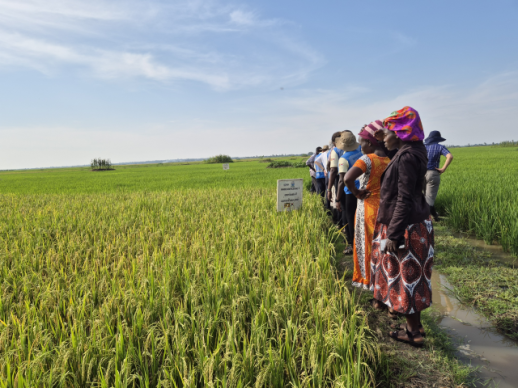 K-Rice Belt Initiative Exceeds Seed Production Goals in Africa, Sierra Leone Joins Efforts The K-Rice Belt initiative, aimed at producing and distributing rice seeds in African countries with weak rice production bases, is progressing well, exceeding its initial production targets. On May 21, the Ministry of Agriculture, Food and Rural Affairs announced that through the K-Rice Belt initiative, a total of 6,365 tons of high-quality, high-yield rice seeds were produced last year across seven African countries. The production figures for the seven countries are as follows: Uganda 3,670 tons, Ghana 739 tons, Guinea 723 tons, Senegal 587 tons, Gambia 431 tons, Kenya 155 tons, and Cameroon 60 tons. The total rice seed production of 6,365 tons surpassed the target of 4,752 tons by 34%. Over the past three years, the cumulative production has reached 12,248 tons, exceeding 10,000 tons. The average yield per hectare is also promising, with an average of 4.6 tons per hectare, more than double the local traditional cultivation yield of 2.2 tons. This represents an improvement of over 15% compared to last year's average of 4 tons. Of the 6,365 tons of rice seeds produced, 1,633 tons from the first crop will be prioritized for distribution to farmers and vulnerable populations in collaboration with local governments. The remaining 4,732 tons from the second crop will also be distributed following consultations with the target countries. Additionally, the government is working on establishing seed production infrastructure as part of the K-Rice Belt initiative. Through the Korea Rural Community Corporation, a total of 520 hectares of rice seed production complexes are being developed in the seven African countries, with essential agricultural infrastructure such as land leveling, irrigation and drainage systems, and reservoirs being constructed according to local conditions. Receiving strong support from local governments and farmers, the government plans to expand the initiative by adding Sierra Leone as a new participating country, increasing the total from seven to eight countries. Jung Yong-ho, the International Agricultural Cooperation Officer at the Ministry of Agriculture, Food and Rural Affairs, stated, "The K-Rice Belt initiative has achieved stable seed production results for three consecutive years, gradually establishing a foundation for the project in each country. We aim to develop it into a representative agricultural official development assistance (ODA) model that contributes to overcoming food crises and enhancing food security in Africa."* This article has been translated by AI. 2026-05-21 12:43:22
 -
 HP Partners with Upstage to Target Enterprise AI Assistant Market HP Korea is teaming up with the domestic artificial intelligence company Upstage to drive innovation through AI agents. On May 21, HP Korea announced that it signed a strategic memorandum of understanding with Upstage on May 20 in Seoul to collaborate in the AI agent sector. The two companies plan to integrate Upstage's generative AI technology with HP's high-performance workstations and device ecosystem to support enterprise customers in adopting AI. The signing ceremony was attended by Kang Yong-nam, CEO of HP Korea; Kim Sung-hoon, CEO of Upstage; David McQuarrie, HP Business Chief; and Michael Boyle, Senior Vice President and Managing Director of HP Greater Asia. The companies discussed expanding integrated solutions for AI agents based on HP workstations. This initiative aims to help businesses across various industries, including finance, public sector, and manufacturing, build AI agents tailored to their specific work environments more reliably. They will also jointly promote AI agent packages to reduce initial investment costs and operational burdens. This will allow enterprise customers to directly experience and validate Upstage's generative AI solutions within HP's high-performance AI workstation environment. As demand grows for businesses to leverage AI while reducing reliance on external cloud services and maintaining data security, this collaboration is significant in targeting the on-premises and hybrid AI markets. Kang Yong-nam, CEO of HP Korea, stated, "AI is redefining not just functions but the very way we work. Through our collaboration with Upstage, we will respond to the demand for on-premises and hybrid AI, enabling enterprise customers to implement AI innovations in their actual work environments." Kim Sung-hoon, CEO of Upstage, remarked, "Upstage has focused on enhancing AI technologies applicable in corporate environments based on our large language model, Solar, and document-specialized AI technology. Through our strategic partnership with HP and its global network, we aim to help more companies easily adopt generative AI and AI agent solutions." HP has positioned 'The Future of Work Transformed by AI' as a key theme for this year. This collaboration is expected to strengthen its efforts in the enterprise generative AI infrastructure market, focusing on AI workstations and agent-based AI.* This article has been translated by AI. 2026-05-21 12:40:29