
Journalist

Michael Breen
-
 Coupang to Donate Up to 180,000 New Fashion Items to Vulnerable Children, Families Coupang is launching a large-scale giving campaign to support vulnerable groups, including underserved children, by donating new fashion items in proportion to what customers buy. According to the industry on the 5th, Coupang will run a promotion through the end of this month titled “One Piece of My Clothing That Becomes a Donation,” and plans to donate up to 180,000 fashion items to Good Neighbors, a global NGO specializing in children’s rights. The campaign is the company’s second relay-style giving effort this year, following a book-donation drive for children in underserved households held in March. It is designed as a “matching donation” program, linking everyday shopping directly to giving. Under the program, when customers purchase items in Coupang’s fashion category — including men’s and women’s apparel such as T-shirts, pants and dresses, as well as children’s clothing, underwear, shoes and bags — donation items are accumulated in the same quantity. To bolster transparency, real-time progress will be posted on the promotion page. Coupang said all donated items, up to 180,000, will be new products currently sold on its platform. More than 50,000 pieces are set aside for infants’ and children’s clothing, which the company said could provide practical help to low-income families where children quickly outgrow clothes. All accumulated items will be delivered through Good Neighbors to underserved children and local residents in South Korea and abroad immediately after the campaign ends. A Coupang official said the campaign was planned so customers can “naturally take part in giving through everyday shopping,” adding that the company will continue expanding social-contribution efforts that provide “practical help” to marginalized neighbors. Coupang has also been running other initiatives for vulnerable communities. On April 7, marking Health Day, it began operating “Coupang Ondongne Care,” a health screening project that visits residents in depopulating areas with limited medical infrastructure. The program was launched with the aim of building a health safety net by minimizing underserved areas in medical services, similar to Coupang’s logistics network, the company said. Coupang plans to visit township-level areas nationwide at least once a month, including regions in Jeolla, Gyeongsang, Gangwon and Chungcheong, focusing on communities with poor access to hospitals. The company said it will continue expanding Ondongne Care by touring medically underserved areas nationwide, starting with Jangsu County and holding the next program this month in Danyang, North Chungcheong Province.* This article has been translated by AI. 2026-05-05 11:13:15
 -
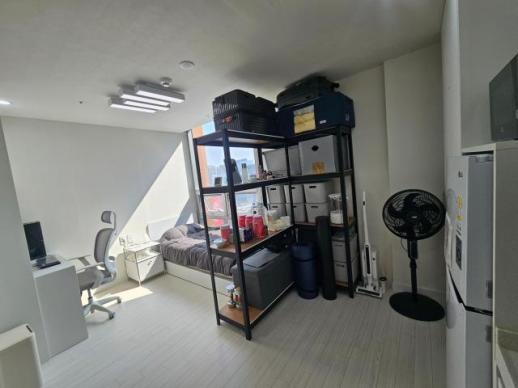 Inside a Seoul Hotel Remade as Youth Housing With AI Training and Coworking “Many residents work in AI, and after joining the community my portfolio really got stronger,” said Lim Ji-yoon, a resident at Eskis Gasan. “They recruited residents and even ran speech training. There were many chances to do productive things.” Lim, who moved into the complex through a special allocation for digital-industry workers, spoke during a visit on April 30 to Eskis Gasan in Seoul’s Geumcheon District. South Korea’s Ministry of Land, Infrastructure and Transport has begun expanding public rentals by remodeling nonresidential buildings. The program is part of a purchase-lease public rental housing initiative that buys vacant office and commercial properties and converts them into homes. The goal is to supply 2,000 units for young people and newly married couples near subway stations and university areas. Eskis Gasan is a converted former hotel, once called Haedamchae Hotel. A second-floor hotel office was turned into a study room, and the rooftop was remade into community space including a lounge. The building is about a six-minute walk from Gasan Digital Complex Station on Seoul Subway Lines 1 and 7. Designed as a “specialized” purchase-lease rental, it includes studios and meeting areas for digital-industry workers. A fitness room is on the second basement level, while the second floor has a coworking area set up like a shared office and a filming studio. “It’s not just a place to live,” Lee said. “We tried to preserve the hotel structure as much as possible while reworking the layout for what young residents need.” The complex also operates education programs alongside housing. It offers AI and startup-to-employment training for residents, with a curriculum designed using big-data analysis. Training can run up to 17 sessions, and some participants can be linked to startups or jobs. The layout is intended to encourage resident study groups and networking. Lim said her monthly rent and maintenance costs are lower than when she lived in a one-room studio apartment, making her finances “much more stable.” She called access to study rooms and shared spaces the biggest advantage for continuing self-development. Another resident said information-sharing is active because people with similar interests live in the same building. Rents were set to reduce housing costs. For a 16-square-meter unit, the deposit is 7.4 million won with monthly rent of 190,000 to 230,000 won. For units of 20 square meters or more, the deposit can be as high as 12.28 million won, with monthly rent around 330,000 won. The Korea Land and Housing Corp., or LH, expanded eligible purchases to buildings up to 30 years old across Seoul and key parts of the greater capital area, widening participation from the previous 10- to 15-year range. Eligible properties include neighborhood commercial facilities, office buildings and lodging facilities. LH plans to speed the program by using both direct implementation and private purchase-agreement methods. Officials said a one-size-fits-all approach is difficult because whether a building can be converted depends on its structure and ownership. In buildings with divided ownership, securing consent can be challenging. The principle is to buy entire buildings when possible, while seeking owner consent in other cases. Purchase prices will be set by weighing the applicant’s proposed price, appraised value and remodeling costs. A down payment is made when the sales contract is signed, and the balance is paid after rights issues are cleared and safety inspections are confirmed. The direct-implementation method was introduced in April, and a notice for the private purchase-agreement method is planned for next month, with purchases expected to begin in earnest in the second half of the year. 2026-05-05 11:07:16
 -
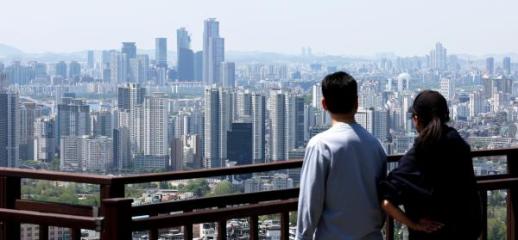 KB Financial Sees Housing Market Stabilizing; Tax Policy a Key Variable Tighter household lending, expanded supply plans, designation of regulated zones and heavier tax burdens are beginning to show effects, and could cool this year’s rise in home prices, KB Financial Group’s research arm said. It cited tax issues — including heavier capital gains taxes on multi-homeowners and higher property holding taxes — as the biggest variable for the housing market this year. The KB Financial Group Management Research Institute released its “2026 KB Real Estate Report” on May 5. The report reflects survey results and field feedback from about 700 people, including real estate experts, licensed brokers and private bankers, based on two rounds of polling conducted in January and April. The report said last year’s sharp price gains centered on Seoul and parts of the greater capital area have begun to ease this year. As government measures are more fully reflected in the market, listings are increasing and the number of areas seeing price declines could expand, it said. As of April 10, apartment listings in Seoul were up 33% from the end of last year, more than triple the national average increase of 9%, the report said. In Seoul’s Gangnam District, apartment sale prices have fallen for six straight weeks since March. Apartment prices in Gwacheon, Gyeonggi Province — which posted large gains last year — have also turned down. In Seoul’s Songpa, Seongdong and Gwangjin districts, price changes from January through April slowed sharply to 4%, 6% and 4.1%, respectively. Market views are also shifting quickly. In the January survey, 81% of experts and 76% of brokers expected home prices to rise. In April, experts still leaned toward gains at 56%, but brokers were more likely to forecast declines, at 54%, showing a widening gap that the institute said reflects stronger regulatory effects in the field. The report pointed to government policy as the key driver this year, saying buyer sentiment and price trends could swing depending on supply measures in the capital region, financial regulations and tax changes. Asked which policy would most affect the housing market in the second half, 27% of experts and 33% of brokers ranked the implementation of heavier capital gains taxes on multi-homeowners as the top factor, the institute said. For would-be buyers, the report said interest rates are likely to be the critical variable, noting that mortgage rates have continued to rise even as the benchmark rate has been held steady. As of last month, five-year fixed mortgage rates at the five major banks — KB Kookmin, Shinhan, Hana, Woori and NH Nonghyup — ranged from 4.2% to 6.8% annually, with the upper end nearing the 7% range. Kang Min-seok, a researcher at the KB Management Research Institute, said regional polarization remains while risks such as supply shortages and rising construction costs still linger. “Government policy will be the major variable that determines the market’s direction going forward,” he said. 2026-05-05 11:06:15
 -
 Trump Warns Iran After Clash in Strait of Hormuz: Target U.S. Ships and Your Military Will Vanish The United States and Iran resumed armed clashes about a month after a ceasefire, and U.S. President Donald Trump issued another sharp warning to Tehran. Trump said in a Fox News interview on May 4, according to The Guardian and other outlets, that if Iran tries to target U.S. ships during the “Project Freedom” operation to help commercial vessels trapped in the Strait of Hormuz escape, “Iran’s military will disappear from the face of the Earth.” Earlier that day, U.S. Central Command said Iran attacked U.S. ships in the Strait of Hormuz using cruise missiles, drones and small boats. The U.S. military said it intercepted the attacks using helicopters and other assets and that there was no damage to U.S. vessels. Trump also wrote on Truth Social that U.S. forces sank seven small boats and that, so far, there had been no damage to ships transiting the strait “except for a South Korean vessel.” He urged South Korea to join the Project Freedom operation. Iran denied that its boats were sunk and appeared to reaffirm moves to maintain a blockade of the Strait of Hormuz, a key route for global trade. More than 800 ships and about 20,000 crew members are currently stuck in the area. The renewed clashes come after the U.S. and Iran tried to negotiate through mediators during the ceasefire but failed to reach common ground. Since the ceasefire, Trump has sought leverage by tightening economic pressure through a maritime blockade. In the interview, Trump called the U.S. Navy’s operation to block Iranian ports “one of the greatest military operations ever carried out,” and said Iran had become far more flexible in negotiations. He said the next steps were either reaching an agreement through “good-faith negotiations” or resuming military operations. Addressing concerns about U.S. weapons stockpiles, Trump said the United States has “much higher” levels of weapons and ammunition than before, with top-tier equipment and sufficient supplies stored at bases worldwide, adding that the U.S. would use them if needed. Trump’s remark about Iran’s military “disappearing from the face of the Earth” echoed his warning on April 7, ahead of the end of a negotiation deadline he set, that “an entire civilization” could vanish and never return. That earlier comment drew strong backlash in and outside the United States. The Guardian said Trump’s latest statement also raises questions about the durability of the ceasefire reached last month with Pakistani mediation. The truce paused fighting but failed to lift the blockade of the Strait of Hormuz, through which about 20% of the world’s crude oil supply passes.* This article has been translated by AI. 2026-05-05 11:00:15
 -
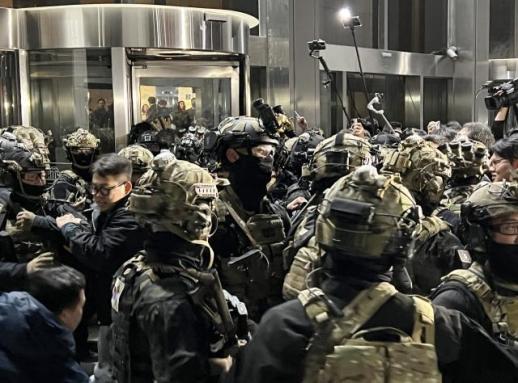 South Korea Defense Ministry Dismisses 3 Officers, Removes 1 Over Troop Deployment to Parliament The Ministry of National Defense said Tuesday it has imposed severe disciplinary measures on four senior and field-grade officers indicted for alleged involvement in the “12·3 emergency martial law,” citing violations of the duty to comply with laws and the duty of faithful service. Three officers were dismissed from service, according to reports: Kim Jeong-geun, then commander of the Army Special Warfare Command’s 3rd Airborne Brigade (brigadier general); Ahn Mu-seong, then commander of the 9th Airborne Brigade (a brigadier general select); and Kim Se-un, then commander of the Special Operations Aviation Group (colonel), who allegedly transported troops to the National Assembly. Kim Sang-yong, then deputy head of the Defense Ministry Investigation Headquarters (colonel), was removed from service, reports said, for alleged involvement in forming arrest teams targeting key figures including politicians. Kim Jeong-geun is accused of dispatching troops to the National Election Commission during the emergency martial law, acting on orders from then Special Warfare Commander Kwak Jong-geun. The ministry said it convened a disciplinary committee for the four on April 15. Dismissal is the most severe punishment in the military, stripping a service member of status and cutting pension benefits in half. Removal is one level lower. Earlier, the Defense Ministry’s special investigation unit indicted eight people, including the four, on charges including performing key duties in an insurrection and abuse of authority to obstruct the exercise of rights. In earlier disciplinary proceedings, Koo Sam-hoe, then commander of the Army’s 2nd Armored Brigade; Jeong Seong-woo, then head of the 1st Directorate at the Defense Security Command; and Kim Chang-hak, then head of the military police unit at the Capital Defense Command, were dismissed. Bang Jeong-hwan, then director general for defense innovation planning, was removed. * This article has been translated by AI. 2026-05-05 10:51:15
 -
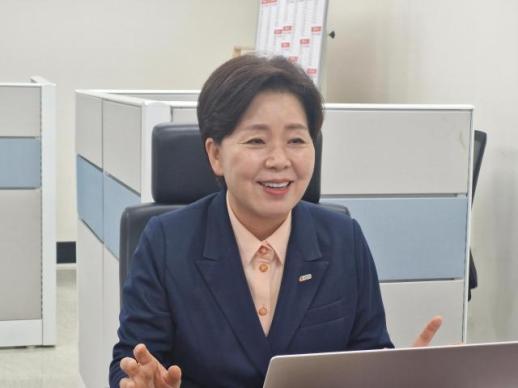 INTERVIEW: Chip czar rides AI chip boom to challenge political Goliath for Gyeonggi governorship SEOUL, May 05 (AJP) - Bidding for the gubernatorial post that birthed the current president — whose approval rating is nearing 60 percent — while facing a ruling-party heavyweight known for colliding head-on with disgraced former president Yoon Suk Yeol would not be an easy race for most politicians. But for Yang Hyang-ja, the determination appears rooted in something deeper than party politics: an almost singular devotion to semiconductors, the industry responsible for roughly a quarter of South Korea’s exports and much of the country’s AI-driven market boom. That commitment to chips also shaped her political realignment. Yang was effectively disowned by the Democratic Party of Korea following a sexual harassment scandal involving her aide, a political rupture that deepened her frustration over what she viewed as the party’s reluctance to aggressively back the semiconductor industry through measures similar to the U.S. CHIPS Act. She later joined the conservative bloc and spearheaded the so-called “K-Chips Act,” aimed at expanding tax credits for facility investments in semiconductors and other national strategic industries. The bill passed the National Assembly in March 2023. “People in semiconductors prepare a future that arrives first,” Yang said in an interview with AJP. “We make things that do not exist in the world. We make possible what others say is impossible.” That obsession has become both her greatest political strength and a potential limitation. Yang, the People Power Party candidate for Gyeonggi governor, built her reputation not through elite legal or activist circles but inside the clean rooms and research culture of Samsung Electronics. Rising from a teenage research assistant who cleaned desks and copied technical papers to become Samsung’s first female executive from a commercial high school background, her life story carries an unusual degree of industrial credibility in South Korean politics. “Gyeonggi Province is the heart of South Korea’s semiconductor industry,” Yang said. “The person who understands semiconductors should be the one to lead Gyeonggi.” Her rise inside Samsung has long bordered on corporate legend. After repeatedly being rejected from Samsung’s internal semiconductor engineering college because there was “no precedent” for a female commercial high school graduate entering the program, Yang reportedly challenged the company’s own rules and insisted she would become the precedent herself. “I have created roads where none existed,” Yang said. “There is no such thing as no road. There is only no will.” The phrase captures the core of Yang’s political identity: relentless self-construction through technical mastery and persistence. Her early years inside Samsung reflected the rigid hierarchies of industrial Korea at the time. She recalled being treated as a replaceable assistant whose role was limited to copying documents and running errands. “At that time, I was like a stone mixed into rice,” Yang said. “I could not even dream of a future. I felt a sense of inferiority.” The turning point came while copying Japanese semiconductor papers. Having studied Japanese at Gwangju Girls’ Commercial High School, Yang began annotating technical documents for engineers who could not read them. The researchers who had once called her “Miss Yang” began addressing her respectfully as “Yang Hyang-ja ssi.” “That was the moment I found my name,” she said. “I learned what it means to be recognized.” Yang later graduated with honors from Samsung’s semiconductor engineering program, accumulated dozens of semiconductor-related patents and climbed through SRAM, DRAM and flash memory divisions over three decades. When Samsung promoted her to executive director in 2013, Yang said the announcement coincided with the anniversary of her father’s death. “It felt as if every condensed part of my life burst open like popcorn,” she said. “I felt that the world’s standard for looking at me had changed.” That persistence — combined with firsthand experience in one of the world’s most strategically important industries — gives Yang a profile rare among South Korean politicians. She speaks less like a conventional campaigner than like a semiconductor executive explaining long-cycle investment logic. That industrial mindset is central to her pitch for Gyeonggi Province, home to the country’s largest semiconductor clusters including Samsung Electronics and SK hynix. Yang argues that the province should be governed not merely as an administrative region but as the command center of South Korea’s next industrial leap. Her strengths are obvious. Few politicians possess comparable understanding of semiconductors, AI infrastructure and manufacturing ecosystems at a time when technological supremacy increasingly overlaps with national security. Her life story also resonates in a country where younger generations often feel trapped by rigid educational and class hierarchies. Yet the same qualities that make Yang distinctive also raise questions about the breadth of her political vision. Nearly every major policy proposal in her campaign eventually returns to semiconductors. Her blueprint for economic growth, AI competitiveness, foreign investment and geopolitical leverage places chips at the center. “Taiwan can stand freely amid U.S.-China rivalry because TSMC influences the whole world,” Yang said. “South Korea has become a hegemonic power in memory semiconductors through Samsung Electronics and SK hynix.” That focus reflects economic reality. But critics may question whether Gyeonggi — a province of more than 14 million residents grappling with housing shortages, transportation congestion, welfare demands and regional inequality — can be governed primarily through the prism of semiconductor expansion. There is also the issue of Samsung’s overwhelming presence in her political identity. Although Yang references broader industrial ecosystems and repeatedly mentions SK hynix, Samsung remains the emotional and symbolic anchor of her worldview. Her personal narrative, political language and conception of national competitiveness are deeply intertwined with the company that shaped her life. Supporters see proof of execution and industrial realism. Critics may see over-identification with chaebol-centered growth at a moment when South Korea is debating economic concentration and overdependence on a handful of conglomerates. Yang rejects the idea that ideology or party affiliation should define provincial governance. “The central value of moderates is the courage to set aside faction, party and ideology for the country and the people,” Yang said. “Gyeonggi has collective intelligence. I trust that collective intelligence.” Her political path itself has been unusually fluid. Recruited into politics by former president Moon Jae-in, later estranged from the Democratic Party, founder of a third party and now standard-bearer for conservatives, Yang has repeatedly crossed ideological boundaries while insisting she belongs above factional politics. Still, Yang’s candidacy reflects a broader shift underway in Korean politics itself. As AI, semiconductors and supply-chain rivalry increasingly define economic survival and geopolitical power, industrial technocrats are beginning to acquire political weight once reserved for prosecutors, activists and career lawmakers. Few embody that transformation more sharply than Yang Hyang-ja. 2026-05-05 10:47:54
 -
 South Korea Says Fire on HMM Cargo Ship in Strait of Hormuz Is Out South Korea’s Foreign Ministry said Tuesday that a fire on a South Korean-flagged vessel after an explosion in the Strait of Hormuz has been extinguished, and that the exact cause is expected to be determined after the ship is towed. In a notice to reporters, the ministry said all 24 crew members, including six South Korean nationals, were confirmed unharmed. It added that the fire had been put out and no additional damage was reported. The explosion and fire broke out at about 8:40 p.m. Monday (Korea time) on a cargo ship operated by South Korean shipping company HMM, the HMM NAMU, in waters near the United Arab Emirates within the Strait of Hormuz, the ministry said. The ministry said it remains unclear whether the ship can resume normal operations. It said the vessel is to be towed to a nearby port to assess damage and carry out repairs. A tugboat is being arranged, but a specific towing schedule has not been set, it said. The United States on Monday launched an operation dubbed “Project Freedom” to escort civilian ships out of the Gulf region (Persian Gulf) through the Strait of Hormuz using military aircraft and warships. U.S. President Donald Trump wrote on social media platform Truth Social that Iran had fired several times at unrelated countries, including a South Korean cargo ship, over ship movements linked to the operation, adding that it seemed time for South Korea to join. The Foreign Ministry reiterated that the cause of the incident is expected to be identified during the post-towing inspection. Earlier Tuesday at midnight, the ministry convened a meeting of its overseas nationals protection task force, chaired by Second Vice Foreign Minister Kim Jina. Seven diplomatic missions in the Middle East and the Ministry of Oceans and Fisheries attended, it said. South Korea’s embassy in the UAE and its consulate general in Dubai said they contacted the shipping company and relevant agencies immediately after the incident to confirm the safety of the South Korean crew and request needed assistance. The participating missions said they have maintained regular communication with host-country authorities and taken steps to protect and support South Korean ships and sailors. They said they will further strengthen coordination with local authorities to ensure rapid rescue and other safety measures if needed. * This article has been translated by AI. 2026-05-05 10:33:15
 -
 Seoul Mayor Candidate Oh Se-hoon Pledges to Double City Kids Cafes, Build Job-Experience Theme Parks Oh Se-hoon, the People Power Party’s Seoul mayoral candidate, said Tuesday he would double the number of Seoul-style kids cafes and build a new public job-experience theme park called “Seoul Children’s Imagination Land.” Oh announced the plan, billed as “Happy Kids City Seoul,” at the Green Green Kids Cafe inside the Seoul International Garden Show at Seoul Forest in Seongdong-gu on Children’s Day. Oh’s campaign said the pledge aims to redesign the city from children’s perspective while easing parents’ caregiving burden. It also seeks to expand hands-on play facilities across Seoul so children can access them regardless of where they live. The Seoul-style kids cafes — promoted as a budget-friendly option — would expand to 404 locations by 2030, about double the current number. The cafes charge up to 5,000 won per child for two hours, with accompanying parents admitted free. Since the first location opened in May 2022, cumulative users topped 1 million in three years, the campaign said. Oh also pledged to set up at least one infant-only kids cafe in each district and introduce “Green Green Kids Cafes” in all districts, linking them with forests and the Han River. On weekends, the city would operate 30 mobile playground sites under the “Here and There Kids Cafe” program, he said. Oh said the city would also create “Seoul Children’s Imagination Land” at eight hubs across Seoul, including Gangbuk, Seongbuk and Gangseo, offering career exploration and creative activities at fees far lower than private facilities. To reduce families’ private tutoring costs for arts education, he pledged to launch the “Children’s Arts Seed” program, providing eight months of practical training — including vocal music, instrumental music, theater and dance — for students in grades 3 through 6. “Investing in children’s happiness is the surest way to design Seoul’s future,” Oh said. “Building on the changes already underway in Seoul, I will decisively complete an environment where parents can feel secure and children can run and play to their hearts’ content.”* This article has been translated by AI. 2026-05-05 10:30:14
 -
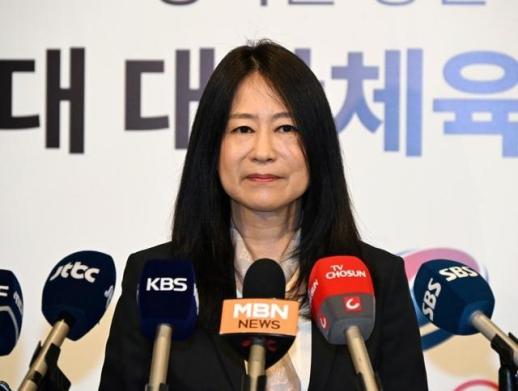 Korea Sports Council Secretary General Kim Nami Resigns After Remarks to Family of Comatose Athlete Kim Nami, secretary general of the Korea Sports Council, has resigned after sparking controversy over remarks she made to the family of a student athlete who collapsed during a match and remains unconscious. The council said May 4 that Kim had offered to step down and take responsibility for the matter raised recently. Her resignation came three days after she was suspended from her duties on May 1. In a statement released through the council, Kim said, “I deeply apologize for causing concern to the public and to members of the sports community,” adding, “As a public official, I feel a heavy sense of responsibility and will step down from my position.” Kim had faced public backlash over comments made to the family of a middle school boxer identified only as A. The student collapsed during a bout at the President’s Cup National City and Provincial Boxing Tournament in Seogwipo, Jeju, in September last year and has not regained consciousness for eight months. According to Mokpo MBC, Kim told the family about the boy’s condition, saying, “The child had no chance from the beginning. He is already brain-dead,” and added, “I really don’t want to compare, but in a marathon accident one person died and the family donated organs,” prompting criticism. She was also reported to have said she felt “very offended” when the parents tried to record their conversation in case of an emergency, adding that it made her think they were trying to “make money” from what happened to their son. The council said it recognized the seriousness of the case and would recheck its systems so athlete protection functions operate without gaps. It also pledged to strengthen public-service ethics and tighten internal discipline to restore public trust. Kim, a former national alpine ski team member, has held posts including vice president of the International Biathlon Union and secretary general of the Sports Talent Development Foundation. She was appointed in March last year as the first woman to serve as secretary general in the council’s 105-year history, but is leaving after about 14 months amid the controversy.* This article has been translated by AI. 2026-05-05 10:21:14
 -
 South Korea Urged to Shift From Punishment to Prevention in Semiconductor Tech Leaks Prosecutors visited Samsung Electronics’ Pyeongtaek campus to inspect semiconductor processes and on-site security systems. Senior officials handling technology-leak investigations checked production lines and heard directly from workers, a notable shift. Technology crimes cannot be addressed with legal knowledge alone. Without understanding manufacturing steps and how data moves, investigators can struggle to identify evidence and measure damage. Even if overdue, the on-site approach is a necessary step. But one point should be clear: preventing technology leaks cannot be solved by tougher investigations alone. Investigations are, by nature, after-the-fact responses that punish offenders once a case occurs. A technology leak, however, is often irreversible. The center of any response must be prevention, not only punishment. Investigations can deter; prevention can stop leaks. They are complementary roles, not substitutes, and policy should be redesigned with that division in mind. The first pillar is stronger internal controls. In practice, many leaks come not from outside hacking but from insiders and partner networks. Information can slip out through job changes after retirement, joint research and contact points with subcontractors. Companies should tighten access controls, track data transfers and manage key personnel more precisely. That is a condition for survival, not a choice. Still, the cost and responsibility should not fall on companies alone. Because protecting technology is tied to national competitiveness, government institutional and financial support should accompany corporate efforts. The second pillar is clearer rules for workforce mobility. In advanced industries, talent movement drives innovation, but it is also a major leak channel. Freedom to choose a job and protection of trade secrets can collide. This cannot be left to vague calls for “balance.” What is needed are concrete standards: noncompete periods should be limited and paired with fair compensation, and the scope of protected technology should be clearly defined. Without a legal line between lawful job changes and illegal leaks, neither companies nor investigators can make consistent judgments. The third pillar is defining the state’s role. Technology leaks are no longer only a corporate problem. In core industries such as semiconductors, they are linked to national security. The government should set rules, provide intelligence and diplomatic capacity, and lead international cooperation. Companies should carry out responsibilities within those rules, and investigative agencies should punish violations. This triangular structure must function. The state cannot control everything, and companies cannot be left to shoulder all responsibility. The fourth pillar is integrating the response system. Today, responses are spread across multiple ministries and agencies, with the industry ministry, prosecutors, police and intelligence services moving separately. That fragmentation can cut off information and slow action. A “control tower” should not mean an all-powerful command body. Its role should be limited to integrating domestic information, sharing it quickly and coordinating cooperation among agencies. It cannot directly block overseas crimes, but it can be decisive in improving the speed and efficiency of domestic responses. The fifth pillar is international cooperation. The final destination of leaked technology is often overseas. Because the semiconductor industry operates in global supply chains, any single country’s response has limits. Countries that hold key technologies should strengthen investigative cooperation, information exchanges and legal response frameworks. Diplomacy is no longer separate from technology security; it is part of it. Across these debates, the key principle is not a simple “balance,” but building a workable structure. Stronger protection can restrain innovation, while broader freedom can raise leak risks. That is why the system must set conditions and standards: what to protect, when to restrict, and who is responsible. Semiconductors are not just another industry. They are a core national asset built on decades of accumulated technology and experience. Once leaked, they cannot be recovered, and the damage can last across generations. What is needed is not a cycle of reacting after each incident, but a system that makes leaks structurally difficult. The prosecutors’ site visit is a starting point. The next step is to turn that start into institutions and a coherent framework. When investigations, companies, government and diplomacy each define their roles and connect them into one system, technology leaks can become a manageable threat. National competitiveness is built through design, not declarations.* This article has been translated by AI. 2026-05-05 10:16:28