

Journalist

Michael Head
-
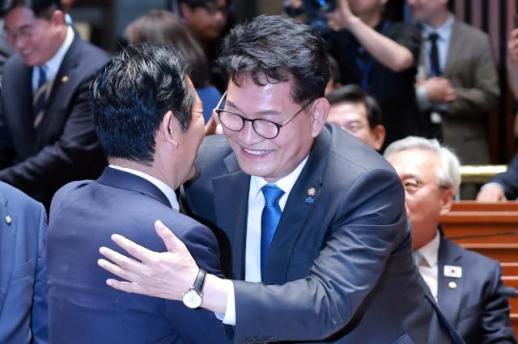 Democratic Party Prepares for Leadership Contest Ahead of August Convention The Democratic Party of Korea has officially begun preparations for its convention scheduled for August 17, immediately following the June 3 local elections. With the next leadership set to wield significant influence over candidate nominations for the upcoming general elections, the competition for party leadership is heating up. According to political sources, Jeong Cheong-rae, the party leader, Prime Minister Kim Min-seok, and lawmaker Song Young-gil are all contemplating their candidacies for the upcoming convention. Jeong is expected to highlight his leadership over the past year, emphasizing the party's victory in the recent local elections and the successful implementation of key reform bills under the Lee Jae-myung administration, including judicial and prosecutorial reforms. He is likely to position himself as a candidate for re-election, pledging to continue addressing the government's remaining tasks. Kim, who served as the first Prime Minister under the Lee Jae-myung administration and is considered a close ally of the president, announced his resignation from the Prime Minister's office on June 7, stating, "My next mission is to build a capable Democratic Party." This has led to speculation that he is eyeing a run for party leadership. Song, a six-term lawmaker with previous experience as party leader, has also been vocal about issues surrounding candidate nominations during the local elections. He visited the May 18 National Cemetery in Gwangju the day before, seeking to connect with voters in the Honam region. However, there are growing concerns within the party regarding both Jeong and Song. Some lawmakers have pointed out Jeong's failure to secure the Seoul mayoral position from the People Power Party in the recent elections, while others have criticized Song for raising issues during the Jeonbuk gubernatorial nomination process, demanding formal apologies from both. Notably, lawmaker Lee An-joo resigned from her position on the Supreme Council, citing accountability for the local election results, and criticized Jeong, saying, "This election relied solely on presidential approval ratings. We must take the change in public sentiment seriously." Criticism has also been directed at Song. Yoon Jun-byeong, the head of the Jeonbuk provincial party, accused him of engaging in disloyal actions by publicly supporting an independent candidate during a critical election period, stating, "This is a serious misconduct. I am uncomfortable with him being mentioned as a potential candidate for party leader." Additionally, Lee Sung-yoon, a prominent member of the pro-Jeong faction, remarked, "It is unclear whether he is trying to protect the Democratic Party or undermine its leadership. Such statements are irresponsible and constitute serious misconduct. If he prioritizes the party over personal interests, he should apologize to the members." 2026-06-08 15:27:00
 -
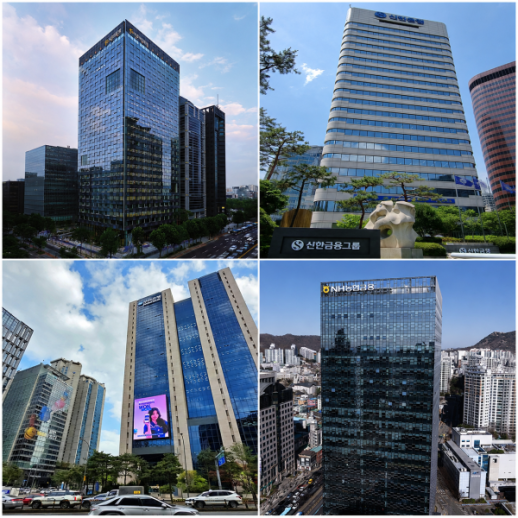 Financial Groups Shift Focus from Banking to Securities As regulatory pressures on banks increase and the stock market thrives, financial groups are shifting their growth strategies from banking to capital markets. KB, NH, and Woori Financial are investing billions of won into their securities subsidiaries, positioning the securities sector as a new growth pillar. On June 8, financial industry sources reported that NH Nonghyup Financial Group held an extraordinary board meeting on May 29, where it approved a third-party allocation capital increase of approximately 400 billion won for NH Investment & Securities. This capital increase comes about ten months after a previous 650 billion won boost last August, with the funds intended to enhance the comprehensive investment account (IMA) business and strengthen corporate finance competitiveness. An NH Nonghyup Financial official stated, "This is a strategic decision to expand productive finance and secure competitiveness in future growth businesses." Other financial groups are also actively bolstering their securities firms. Earlier this year, KB Financial Group decided to raise 700 billion won for KB Securities, marking its first significant capital increase for its securities subsidiary since the merger of Hyundai Securities and KB Investment Securities in 2016. Woori Financial Group also injected 1 trillion won into Woori Investment Securities in April and is considering additional support next year. Although Shinhan Financial Group has not directly pursued a capital increase, it is focusing on enhancing the competitiveness of its related subsidiaries. Shinhan Financial Chairman Jin Ok-dong is set to preside over a group management meeting on June 10 at the TP Tower in Yeouido, where Shinhan Investment & Securities and Shinhan Asset Management are headquartered. This will be the first time Chairman Jin leads a group management meeting in Yeouido, and the agenda is expected to include strategies for enhancing the group's capital market competitiveness. The trend of financial groups supplying capital to their securities subsidiaries reflects the growing importance of securities firms to overall group performance. While banks have traditionally driven profits, their growth potential is now limited due to government regulations on household loans. The government's emphasis on productive and inclusive finance has increased demands for public roles, making it difficult to sustain a profitability-focused growth strategy. In contrast, the securities sector is gaining prominence amid a booming stock market. The KOSPI index has surpassed 8,000, and investor deposits are increasing, contributing to a phenomenon known as 'money move' as funds shift into the stock market. With financial authorities selecting IMA operators and intensifying competition in issuance and corporate finance (IB), financial groups are focusing on nurturing their securities firms as future growth drivers. According to the Financial Supervisory Service, the share of net profits from financial investments, including securities firms, accounted for 17% of the total net profits of the ten domestic financial holding companies last year, marking a 5 percentage point increase from the previous year. In contrast, other sectors, including banking (-2.4 percentage points), insurance (-2.6 percentage points), and specialized credit finance (-1.3 percentage points), saw declines in their shares. A financial industry official noted, "While the banking sector faces growth limitations due to ongoing regulations and interest rate environments, the securities sector is experiencing significant growth potential amid a thriving stock market. We can expect continued active movements from financial groups aiming to secure growth drivers centered on capital markets." 2026-06-08 15:24:00
 -
 BC Card Launches June 'MyTag' Event Offering Discounts on Education and Living Expenses BC Card announced on June 8 that it will run its customer-oriented discount service, "MyTag," throughout the month of June. MyTag allows users to select desired benefits from the financial platform "Paybook" and receive discounts when paying with BC personal credit or debit cards. The event will continue until June 30. Customers must tag the benefits in the Paybook app before payment to apply the discounts, which can be received in addition to existing card benefits without any separate spending requirements. Customers with cards issued by BC Card member companies—including Woori Card, Hana Card, NH Nonghyup Card, IBK Industrial Bank, KB Kookmin Card, iM Bank, BNK Busan Bank, BNK Gyeongnam Bank, Shinhan Card, Sh Suhyup Bank, Gwangju Bank, and BC Baro Card—are eligible to participate. In the education sector, a discount of 5,000 won is available for payments over 300,000 won. Discounts include 5,000 won for payments over 1 million won on Naver Pay, 0.5% (up to 100 won, once per day, total of three times) for payments over 10,000 won on Coupang, and 3% (up to 10,000 won) for payments over 100,000 won on KREAM. Additionally, a discount of 100 won (once per day, up to five times) is available for payments over 10,000 won at Daiso, while CU, 7-Eleven, and Emart24 offer a 1,000 won discount for payments over 10,000 won. At The Venti, Mammoth Coffee, Mega MGC Coffee, and Compose Coffee, customers can receive a discount of 500 won for payments over 5,000 won on Saturdays and Sundays, up to two times (totaling 1,000 won). For KT Wiz home games at Suwon KT Wiz Park, an additional 1,000 won discount will be applied to the existing 2,000 won discount for payments over 10,000 won. Outback Steakhouse and Vips offer a 5,000 won discount for payments over 100,000 won. Kim Ho-jung, Executive Director of BC Card, stated, "We designed this event to provide practical assistance to customers facing burdens from education and living costs. We will continue to expand customized benefits that reflect consumer trends and needs." 2026-06-08 15:24:00
 -
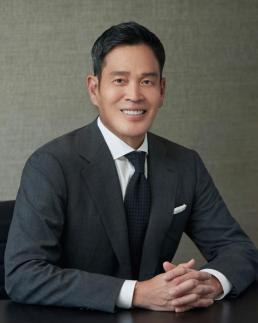 Shinsegae chief to take helm of retail and real estate arms SEOUL, June 8 (AJP) - Shinsegae Group chairman Chung Yong-jin will take the chief executive roles at two core affiliates, retailer E-mart and developer Shinsegae Property, a move the group framed as answering market demands that he be directly accountable for the businesses he leads. The decision places the chairman atop both the group's retail backbone and the unit driving its push into artificial intelligence infrastructure, following a controversy at its Starbucks Korea operation that has forced a wider management overhaul. Shinsegae said Monday that Chung has been designated as co-CEO at both companies, though neither appointment is yet final. E-mart named him a co-CEO nominee at its regular executive reshuffle and will formally confirm the role at next year's shareholder meeting. Shinsegae Property will convene its board to recommend him as a registered director, seek shareholder approval, then reconvene the board to appoint him co-CEO, completing the process. Chung cast the move as accepting responsibility. He said he takes seriously the market's demand for clear accountability in running the companies and pledged to submit himself to the evaluation of the board and shareholders as chief executive. The pledge follows a marketing controversy at Starbucks Korea, in which E-mart, as the chain's largest shareholder, bears responsibility for its board composition and operations. Shinsegae Property carries the strategic weight in the decision. The unit operates landmark developments such as Starfield Cheongna and will manage the groundwork, including site acquisition, for an AI data center the group plans to build under a partnership signed in March with Reflection AI of the U.S. That agreement, a strategic MOU to build what the companies call a South Korean sovereign AI factory, targets a 250-megawatt facility that would rank as the country's largest, with a joint venture to be established within the year and construction proceeding in phases. Chung signed the MOU personally in March, and by taking the Shinsegae Property helm he assumes responsibility for both the current portfolio and its future growth bets. The Reflection AI tie-up gives the plan credibility beyond the announcement. The U.S. startup raised US$2 billion at an $8 billion valuation last October, with Nvidia among its backers, an investment that signals both technical standing and a route to securing the graphics chips such facilities demand. Shinsegae has since halted separate collaboration talks with OpenAI to concentrate on the partnership. Alongside Chung, Shinsegae Property named Lee Hyung-cheon, a former development chief, as professional co-CEO. Lee will handle immediate priorities such as the Starfield Cheongna build and day-to-day operations, while Chung oversees medium- and long-term vision and efforts to lift corporate value. Coffee chain Starbucks Korea, the source of the crisis that helped prompt the shake-up, named Shin Dong-woo, a support division head at Shinsegae Property, as its new chief, tasked with strengthening internal controls and drawing up a turnaround plan to restore trust. With the latest appointments, Chung will sit on the boards of three affiliates, having been named inaugural board chairman last year of AG Global Holdings, the joint venture between Shinsegae and Alibaba International. 2026-06-08 15:21:44
 -
 U.S. AI-Related Job Cuts Reach Record High Amid Employment Concerns in South Korea The introduction of artificial intelligence (AI) agents is accelerating layoffs in the United States at an unprecedented rate. In South Korea, youth employment in the IT sector is plummeting, and there are forecasts of restructuring pressures extending into manufacturing. According to data from the U.S. restructuring firm Challenger, Gray & Christmas, a total of 87,714 layoffs were attributed to AI from January to May 2026. This figure has already surpassed the combined total of 67,578 layoffs from 2024 (12,742) and 2025 (54,836) within just five months. AI-related layoffs account for nearly 65% of all tech sector layoffs, which totaled 134,603 as of June 7. The pace of these layoffs is alarming. In May alone, over 97,000 layoffs were announced, with 40% citing AI as the reason. This marks a significant increase from just 7% in January. On average, 852 people lost their jobs daily due to AI-related reasons. TruUp predicts that tech layoffs could reach 370,000 by the end of the year. While companies previously engaged in what was termed 'AI-washing'—using AI as a justification for restructuring—this year has seen a rise in actual cases where office workers are being directly replaced by AI agents. The situation in South Korea is also concerning. According to employment trends from February, the number of employed individuals in their 20s decreased by 163,000 compared to the same month last year, marking the lowest level since statistics began in 1982. The decline is particularly pronounced in AI-related sectors, with 105,000 jobs lost in professional, scientific, and technical services, and 42,000 in information and communication sectors. The impact on the job market is significant, given that these are high-quality positions for young workers. The Bank of Korea's report on 'AI Expansion and Youth Employment Decline' indicates that sectors with high exposure to AI are experiencing substantial reductions in youth employment. In small and medium-sized IT firms, the hiring rate for experienced workers has risen from 41.9% (2019-2022) to 46.1% (2023-2025), narrowing opportunities for new graduates. The manufacturing sector is also beginning to feel the effects. A report from the Korea Employment Information Service and the Korea Industrial Technology Promotion Agency forecasts a 0.9% decrease (approximately 3,000 jobs) in employment across ten major manufacturing sectors in the first half of this year compared to the same period last year. The semiconductor industry is the only sector expected to see job growth due to the ongoing AI boom. The Korea Employment Information Service predicts that the employment growth rate will stagnate at an average of 0.0% over the next decade. The retail sector is expected to lose 431,000 jobs by 2034, while traditional manufacturing sectors like automotive and metal processing will also see job reductions due to AI-driven automation. Projections suggest that the overall number of employed individuals may begin to decline starting in 2030, particularly as Hyundai Motor Company has announced plans to integrate Boston Dynamics' Atlas humanoid robots into its production processes by 2028, signaling the entry of physical AI into manufacturing.* This article has been translated by AI. 2026-06-08 15:18:00
 -
 Shinsegae Chairman Jung Yong-jin to Lead E-Mart and Shinsegae Property Jung Yong-jin, Chairman of Shinsegae Group, will take on leadership roles at two key subsidiaries: E-Mart and Shinsegae Property. This move is seen as a step to strengthen accountability in management following recent controversies surrounding Starbucks Korea's marketing practices. On June 8, Shinsegae Group announced that Jung has been appointed as the co-CEO of Shinsegae Property. The company stated that this decision represents a commitment to full accountability in management by participating as a legally registered executive in the board of directors that represents the current and future of the group. Shinsegae Property plans to hold a board meeting soon to recommend Jung as a registered director. Following this, the proposal will be presented at a shareholders' meeting, and another board meeting will be held to officially appoint Jung as co-CEO. For E-Mart, Jung is expected to be named co-CEO after the regular executive appointments this year, with final approval at next year's shareholders' meeting. Jung stated, "I take the market's demand for clear accountability in management very seriously. As CEO, I will be evaluated by the board and shareholders moving forward." This decision aligns with Jung's announced plans for group reform following the recent 'Tank Day' marketing controversy at Starbucks Korea. E-Mart is the largest shareholder of Starbucks Korea, and the CEO of E-Mart is responsible for the board composition and operations of Starbucks Korea. With Jung's appointments as CEO of E-Mart and Shinsegae Property, the number of subsidiaries represented on the board will increase to three. Jung was previously appointed as the inaugural chairman of the board for AG Global Holdings, a joint venture established by Shinsegae Group and Alibaba International last year. Shinsegae Property is particularly significant as it is linked to the group's future growth initiatives. In March, the company signed a partnership agreement with the U.S.-based Reflection AI to oversee the establishment of an artificial intelligence (AI) data center, including site acquisition. This indicates that Jung will directly oversee both the core retail business centered around E-Mart and future projects like the AI data center. Alongside Jung, Lee Hyung-cheon, former head of the development division, has been appointed as co-CEO to lead Shinsegae Property. Lee has previously spearheaded projects such as the construction of Starfield Cheongna. A Shinsegae Group official stated, "Lee will focus on current issues and organizational management to improve profitability, while Jung will oversee the establishment of long-term vision and enhancement of corporate value, creating synergy in management." Starbucks Korea will also see a change in leadership. The company has appointed Shin Dong-woo, head of support at Shinsegae Property, as the new CEO of Starbucks Korea. Shin previously served as the head of strategic planning at Starbucks Korea and has recently managed strategy formulation and financial oversight as head of support at Shinsegae Property. A company official noted, "Shin will concentrate on strengthening the operational framework and internal controls at Starbucks Korea, making the development of a reform plan for restoring trust a top priority." Additionally, in March, Jung visited the construction site of Starfield Cheongna, which is being developed by Shinsegae Property, to inspect the progress and layout of key facilities. At that time, he emphasized the need for meticulous oversight during construction, urging, "Please ensure there are no gaps in the work and deliver the highest quality in the world."* This article has been translated by AI. 2026-06-08 15:18:00
 -
 Despite Market Decline, SpaceX Attracts Investment; Mirae Asset's IPO Fully Subscribed Amid a sharp decline in the domestic stock market that has dampened investor sentiment, there is a strong interest in investing in the American aerospace company SpaceX. Mirae Asset Securities reported that its second round of SpaceX IPO subscriptions closed in less than two minutes after opening, with significant funds also flowing into related exchange-traded funds (ETFs).According to the financial investment industry on June 8, Mirae Asset Securities began the second round of SpaceX IPO subscriptions at 8:30 a.m. and sold out the available shares in under two minutes.This final subscription round targeted individual and institutional professional investors, with a planned fundraising amount of $500 million. The minimum investment was set at $100,000, while the maximum was $3 million. The first round of subscriptions held on June 5 also saw $300 million worth of shares sell out in about a minute.The final allocation of shares to investors is expected to be confirmed around June 12, when SpaceX is scheduled to go public on NASDAQ. Refunds for any unallocated amounts will also be processed at that time.SpaceX, led by Elon Musk, is the world's largest private aerospace company and plans to raise approximately $75 billion through this IPO. Market analysts predict that the company's valuation could reach $1.75 trillion after its listing, placing it among the highest echelons of global publicly traded companies.Mirae Asset Group is participating in the underwriting syndicate for the SpaceX IPO alongside over 20 global investment banks, with the final allocation for Mirae Asset expected to be confirmed on June 11.The enthusiasm for investing in SpaceX extends beyond the IPO market. According to Korea Investment Trust Management, individual net purchases of the 'ACE U.S. Space Tech Active ETF' reached 61.2 billion won in the past month as of June 5. This fund is structured around companies involved in new space (private space development). The influx of funds is attributed to the recent announcement by Korea Investment Trust Management regarding its participation in the SpaceX IPO, drawing in investors who find direct subscription challenging.Korea Investment Trust Management plans to incorporate the SpaceX shares allocated through the IPO into the ACE U.S. Space Tech Active ETF and the Korea Investment Global Space Technology & Defense Fund.Despite recent volatility in global markets and significant corrections in the domestic stock market, the securities industry reports that demand for investments in future growth sectors such as AI and the space industry remains robust.Nam Yong-soo, head of the ETF division at Korea Investment Trust Management, stated, "Through the ACE U.S. Space Tech Active ETF, which leverages the strengths of active management, investors can indirectly participate in the SpaceX IPO. There is a clear distinction between participating in the IPO and holding SpaceX shares after the listing."* This article has been translated by AI. 2026-06-08 15:18:00
 -
 Discussions Intensify on Expanding Emergency Auto Insurance Services in Remote Areas Major property and casualty insurers are set to engage in follow-up discussions aimed at expanding emergency auto insurance services for residents in island and mountainous regions. This initiative comes in response to concerns raised during last year's National Assembly audit, where it was highlighted that subscribers in these areas pay the same premiums as urban residents but are excluded from emergency service coverage. According to reports from the National Assembly on June 8, a forum is scheduled for July to discuss the expansion of emergency services in remote areas. Participants will include representatives from insurance companies, the Korea Insurance Association, relevant government agencies, and towing and repair firms to explore specific operational plans. Initial discussions were intended to occur before the local elections, but were delayed due to the election schedule. Previously, five major insurers—Samsung Fire & Marine Insurance, Hyundai Marine & Fire Insurance, Hanwha General Insurance, KB Insurance, and DB Insurance—expressed their intention to revise their policies to include coverage for island and mountainous regions. During the National Assembly audit, it was pointed out that vehicle breakdowns, such as battery failures, flat tires, and emergency refueling, can occur regardless of location, yet some insurers classify remote areas as service exclusion zones, causing inconvenience for subscribers. However, challenges remain before implementation. Emergency services are not provided directly by insurers but are operated through partnerships with local towing and repair companies. The lack of infrastructure in mountainous areas and the need for ferry transport in island regions complicate the application of existing operational models. The National Assembly and the insurance industry have completed preliminary data collection through the Ministry of the Interior and Safety and the Ministry of Oceans and Fisheries, and are currently reviewing potential service areas, operational methods, and cost-sharing structures. Key issues include the transportation of tow trucks by ferry, response systems after passenger ferry operations cease, and additional cost-sharing measures. Ultimately, the focus of these discussions is not merely on whether to introduce the service, but on establishing a sustainable operational framework. Alongside policy revisions, discussions will also cover rate calculations, securing partner companies, and cost-sharing strategies. An industry representative stated, "We agree on the need to address the issue of neglect faced by subscribers in island and mountainous regions," but emphasized that practical reviews considering infrastructure, transportation, and cost issues are necessary. 2026-06-08 15:15:00
 -
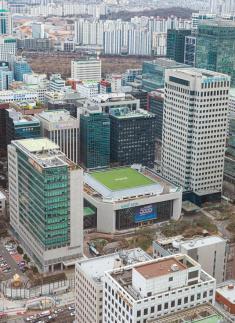 Fear of rate hikes drives corporate lending surge in Q1 SEOUL, June 8 (AJP) - Corporate loans in South Korea grew the most since the third quarter of 2022, as companies increased borrowing in the first three months of this year, according to data released by the Bank of Korea (BOK) on Monday. Outstanding industrial loans by deposit-taking institutions stood at 2,061.8 trillion won (US$1.33 trillion) at the end of March, up 35.6 trillion won from the previous quarter. The increase widened sharply from an 8.5 trillion won gain in the fourth quarter. The central bank cited seasonal factors, productive finance, and renewed credit-line borrowing all contributed to the increase, but the widespread rise suggested stronger demand for funds ahead of a potential interest rate hike by the BOK. By industry, loans to manufacturers rose 11.1 trillion won, compared with a 1.2 trillion won increase in the previous quarter. Loans to service companies increased by 24 trillion won, up from a 9.2 trillion won gain, while construction loans rose by 400 billion won, turning positive for the first time in seven quarters. In particular, working-capital loans showed the sharpest increase as they jumped by 26.2 trillion won in the first quarter, far above the previous quarter's 1.9 trillion won increase. Facility loans also rose by 9.4 trillion won. "The expansion in working-capital loans was driven partly by the re-extension of credit lines that companies had temporarily repaid at the end of last year to manage financial ratios," said Lee Hye-young, an BOK official. "Facility loans in both manufacturing and services also saw faster growth," she added. Lee also said increased corporate lending by financial institutions under the government's productive finance drive contributed to the rise. Since late last year, the government has promoted productive finance as a key policy goal, seeking to redirect capital away from real estate and household lending toward corporate investment and regional development. By lender type, loans by deposit banks increased by 25 trillion won, compared with a 9.6 trillion won gain in the previous quarter. Loans by non-bank deposit-taking institutions rose by 10.6 trillion won, reversing a 1.1 trillion won decline. Among deposit bank loans, lending to large companies increased by 12.7 trillion won, while loans to small and medium-sized enterprises rose by 11.6 trillion won. Within the service sector, loans to financial and insurance companies increased by 9.8 trillion won, while loans to wholesale and retail businesses rose by 4.9 trillion won. Faster loan growth could become a burden if it overlaps with monetary tightening. With companies already increasing debt, higher benchmark and market rates could quickly lift interest expenses. The pressure would be especially direct for working capital, or short-term funds used for wages, interest payments and raw material purchases. Construction and non-bank lending also remain risk points. Higher rates could add refinancing pressure on weaker developers and prompt non-bank lenders to tighten standards if bad-loan risks rise. The BOK said the latest loan increase remains manageable. "There have been much larger increases in the past, so in absolute terms, the current level does not appear excessively large," Lee said, asked whether it could raise credit risks. 2026-06-08 15:14:15
 -
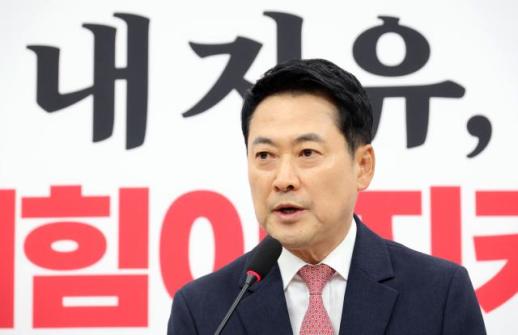 Jang Dong-hyuk Criticizes President Lee's First-Year Press Conference Jang Dong-hyuk, leader of the People Power Party, criticized President Lee Jae-myung on June 8 for lacking concern for citizens during his first-year press conference. Jang stated, "There is no one in Lee Jae-myung's world. It is truly devastating." During a press conference at the National Assembly, Jang remarked, "Watching the president's first anniversary press conference today, I was reminded once again that there is a separate universe of Lee Jae-myung." He expressed disappointment, saying, "There was not a hint of remorse for the citizens suffering in the real estate hell. Instead of acknowledging the skyrocketing prices, he insisted it was normalization and mentioned raising property taxes while claiming to have controlled housing prices in Seoul. This is a sound of despair for the people." Jang also noted, "He did not convey a single word of hope to the youth who are frustrated from not finding jobs. There was not a word of apology to the citizens who are angry about having their voting rights taken away. Lee is clearly living in a different world from the people." He criticized Lee's claims of making South Korea an irreplaceable industrial powerhouse, stating that the core issues of industrial structure reform and labor reform were never addressed. "An irreplaceable South Korea is not a goal that can be achieved through slogans. While growth for all can be a campaign slogan, it cannot be the keyword for South Korea's economic policy," Jang said. He pointed out that most of the country's key industries, except for semiconductors, are becoming replaceable due to neglect of structural reform and regression in labor reform. Jang emphasized, "Holding the Yellow Envelope Act while shouting about being irreplaceable shows the contradictions of the Lee administration. To truly achieve irreplaceability, we must sever ties with the Korean Confederation of Trade Unions, lift regulations, and accelerate reforms to dramatically enhance industrial competitiveness." Regarding the shortage of ballots in local elections, he remarked, "Lee Jae-myung, who used to demand accountability from the president during his time in opposition, has committed this significant national error without offering a proper apology. Is this issue solely the responsibility of the Election Commission? Does the president, as the head of state, bear no responsibility?" He added, "He must provide a proper response to the citizens' calls for a re-election." Additionally, in response to calls within his party for him to clarify his position regarding the local election results, Jang asked, "Given the objective data, how do you evaluate the results of this local election?"* This article has been translated by AI. 2026-06-08 15:09:00