

Journalist

Michael Head
-
 Average Price of Private Apartments in Seoul Exceeds 2.1 Billion Won for First Time As of May, the average selling price of private apartments in Seoul, based on the standard size of 84 square meters, has surpassed 2.1 billion won for the first time. On June 8, Realhouse, a company specializing in sales evaluation, analyzed data from the Korea Real Estate Agency's subscription home service. They found that the average selling price for nationwide private apartments of 84 square meters was 727.02 million won, based on a 12-month moving average. This figure represents an increase of 11.67 million won from the previous record of 715.35 million won set in March. Realhouse noted that this is the highest level since they began tracking this data in 2021. Compared to the previous month, prices rose by 2.23%, and they are up 10.10% from the same period last year. After a slight decrease in February, prices have now risen for three consecutive months. In Seoul, the average selling price for the standard 84 square meter apartment reached 2.13608 billion won, marking an 11.49% increase from the previous month and the first time it has exceeded 2.1 billion won. This is a 32.13% increase compared to the same month last year. This upward trend is attributed to the influence of high-priced developments launched in May, particularly in the Dongjak District. The selling price for the 'Summit The Hill' apartments was set in the 2.9 billion won range, while 'Acro River Sky' was priced in the 2.7 billion won range. Smaller-sized apartments, specifically those of 59 square meters, also showed an upward trend. The national average selling price for this size was 536.15 million won, a 1.66% increase from the previous month. In Seoul, the price reached 1.54911 billion won, rising by 9.58% and marking the first time it has crossed the 1.5 billion won threshold. In May, the total number of new apartment sales nationwide was 7,284 units across 26 complexes, a 70.04% decrease from the previous month. Kim Seon-a, head of the sales analysis team at Realhouse, stated, "The decrease in supply in May was significantly influenced by the June 3 local elections. However, we expect that delayed sales will return to the market starting in June." She added, "With ongoing pressures from material and labor costs, the continued supply of high-priced developments in prime locations may sustain upward pressure on selling prices."* This article has been translated by AI. 2026-06-08 12:27:00
 -
 KOSPI Attempts Recovery After Plummeting Below 7400, Supported by AI Stocks The KOSPI has begun to recover after initially plunging into a "panic selling" phase. Following a drop below 7400, which triggered a circuit breaker, buying interest from institutions and individual investors helped the index bounce back above 7800. Notably, shares of Naver and SK Telecom surged, driven by expectations of collaboration with NVIDIA in artificial intelligence (AI). As of 12:04 PM, the KOSPI was down 389.62 points (4.77%) at 7770.97. Earlier in the day, the index fell more than 8%, prompting the activation of both a circuit breaker and a sell-side circuit. However, it has since reduced its losses. In the securities market, individual and institutional investors recorded net purchases of 652.6 billion won and 476.9 billion won, respectively, while foreign investors sold a net 1.2492 trillion won. Leading semiconductor stocks also showed signs of recovery after early declines. Samsung Electronics dropped to the 290,000 won range before rebounding to 310,000 won, reducing its loss to around 4%. SK Hynix also recovered from the 1.9 million won range to 2.02 million won. Market analysts are highlighting the impact of NVIDIA CEO Jensen Huang's visit to South Korea. Naver's shares surged by over 11% due to optimism surrounding its AI partnership with NVIDIA, while SK Telecom saw an increase of nearly 5%. Investors are increasingly perceiving the early losses as excessive, leading to a wave of bargain hunting in related stocks. The KOSDAQ index, however, continued to struggle. At the same time, the KOSDAQ was down 61.30 points (6.12%) at 941.14. While institutions recorded a net purchase of 115.9 billion won, individual and foreign investors sold a net 41.2 billion won and 44 billion won, respectively. Among the top market capitalization stocks, major declines were observed with Samchundang Pharm (-16%), Alteogen (-10%), EcoPro (-9%), EcoPro BM (-8%), and Kolon TissueGene (-8.8%).* This article has been translated by AI. 2026-06-08 12:18:00
 -
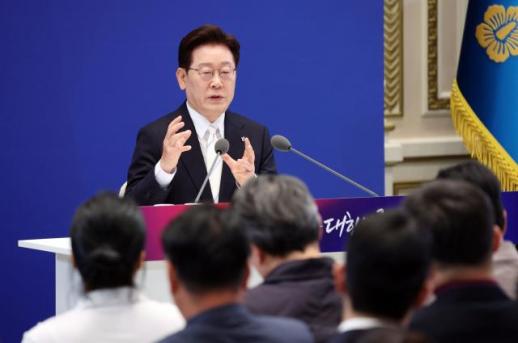 President Lee: Voting Paper Shortage Issue Different from Election Fraud Claims President Lee Jae-myung stated on June 8 that the recent shortage of voting papers during the June 3 local elections is a separate issue from allegations of election fraud. During a press conference at the Blue House to mark his first anniversary in office, President Lee described the voting paper shortage as an "absurd situation" that has tarnished the image of South Korea as a model democratic nation. He acknowledged that while criticisms surrounding the issue may overlap with claims of election fraud, they are fundamentally different. "Using falsehoods for political purposes and inciting public sentiment is one thing, but questioning how voting could be disrupted in our country is another matter entirely," he emphasized. President Lee characterized the government's handling of the voting rights issue as a serious problem, stating, "This is not just about the number of votes or the results; it is a grave issue in itself that the government allowed citizens to exercise their sovereignty in such a careless manner." He expressed respect for the young people who raised concerns about the situation, admitting, "I, too, had not considered the implications. I thought that if a few dozen people could not vote, it wouldn't affect the overall results." Reflecting on the matter, he noted, "People like us may have become somewhat desensitized. I believe this is a lack of sensitivity towards sovereignty. It is not just about a few votes or results; it is a matter of principle. I also reflect on the fundamental issues raised by the youth regarding the exercise of sovereignty in South Korea." Looking ahead, President Lee stated, "We need to determine whether this was a deliberate act or if there were fundamental structural issues at play. Therefore, I have proposed forming a task force to investigate this matter swiftly. I also plan to consult with key government officials to discuss the appropriate approach to take."* This article has been translated by AI. 2026-06-08 12:15:00
 -
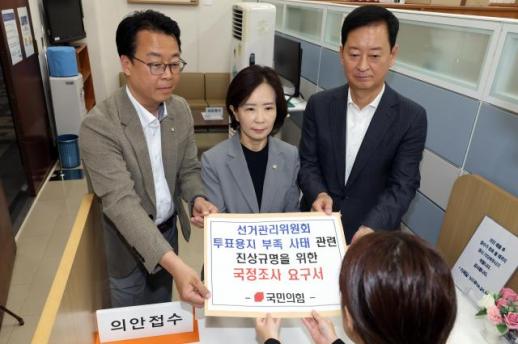 People Power Party Submits Request for National Investigation into Ballot Shortage and Police Violence The People Power Party submitted a request for a national investigation to the National Assembly on June 8 regarding the ballot shortage that arose during the recent local elections. Kwak Kyu-taek, the party's floor spokesperson, spoke to reporters outside the National Assembly's legislative office, stating, "All lawmakers from the People Power Party have submitted a request for a national investigation into the ballot shortage and police violence during the June 3 local elections." The request outlines the investigation's scope, which includes the causes and circumstances of the ballot shortage, the decision to conduct simultaneous voting and counting, the impact of the ballot shortage on voters' rights and election validity, and the legality and appropriateness of the ballot box removal process. The special committee for the investigation will consist of 18 members, with a 60-day investigation period starting from the formation of the committee. Kwak added, "The committee should ideally be composed of an equal number of members from both parties, and I believe it is appropriate for the opposition to chair the committee this time, but discussions with the Democratic Party are necessary." Meanwhile, the Democratic Party also plans to submit its own request for a national investigation to the National Assembly on the same day. While there were discussions about submitting a unified request, it has been decided that both parties will submit their requests separately and then engage in discussions.* This article has been translated by AI. 2026-06-08 12:15:00
 -
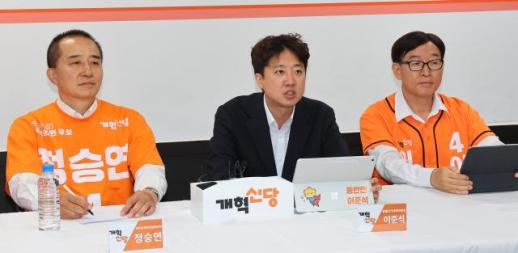 Lee Jun-seok Calls for Special Investigation Amid Ballot Shortage Crisis Lee Jun-seok, leader of the Reform Party, stated that a special investigation is "inevitable" in light of the ballot shortage that occurred during the June 3 local elections, arguing that the opposition should be given the authority to recommend investigators.During a Supreme Council meeting held at the National Assembly on June 8, Lee warned, "If this situation is not addressed promptly, South Korea will once again be dragged into a quagmire of division."He acknowledged President Lee Jae-myung's swift directive to establish a joint investigation unit but criticized the trustworthiness of government-led investigations, noting that the investigation agency had previously cleared lawmaker Jeon Jae-soo of wrongdoing. "Who will trust this?" he asked.Lee emphasized the need for a swift national investigation to uphold the public's right to know, stating, "While it is crucial to uncover the facts, it is equally important to consider 'who' is revealing them. The broadest spectrum of the public must be convinced."He insisted that the authority to recommend a special prosecutor should be granted to the opposition, suggesting that legal professionals who have raised concerns about early voting should also be allowed to participate in the investigation to expose the limitations of their unfounded claims."The most challenging task is not revealing the truth, but ensuring that everyone humbly accepts it," he added. "The Reform Party will maintain its focus on transforming justified anger into institutional reform while firmly rejecting conspiracy theories."* This article has been translated by AI. 2026-06-08 12:09:00
 -
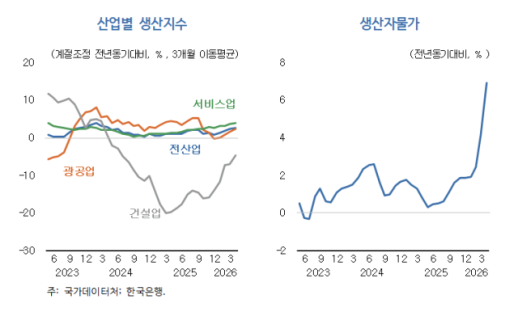 KDI: Semiconductor Boom Boosts South Korean Economy, But Middle East War Poses Risks Recent analysis from the Korea Development Institute (KDI) indicates that while South Korea's economy is experiencing a gradual improvement driven by a semiconductor boom, the ongoing conflict in the Middle East continues to pose downward risks due to disruptions in oil transportation. In its June Economic Trends report released on June 8, KDI noted, "Domestic demand is improving slowly, and exports are showing significant growth, particularly in semiconductors." However, it also highlighted that the negative impacts of the Middle East war are becoming evident, with rising consumer prices and a decline in oil product export volumes. This assessment aligns with KDI's previous report from May, which indicated that the semiconductor sector was driving a surge in export prices and volumes. Nonetheless, it warned that the ongoing conflict in the Middle East continues to create economic uncertainties and that inflationary pressures are increasing. Overall industrial production showed a slight improvement, with a growth rate of 2.4% in April, down from 3.7%. Manufacturing output rose by 1.5%, led by a 13.0% increase in semiconductor production. The service sector also maintained its upward trend, particularly in finance and insurance, which grew by 5.5%. However, the Middle East conflict remains a significant concern. The lack of progress in ceasefire negotiations between the U.S. and Iran has resulted in ongoing disruptions to oil transportation, keeping economic risks elevated. As international oil prices remain volatile, inflation continues to rise. In May, consumer prices increased by 3.1%, up from 2.6% the previous month, driven primarily by a 24.2% rise in oil prices. Core inflation also rose to 2.5%, an increase of 0.3 percentage points from the previous month. According to a survey by the Bank of Korea, inflation expectations have remained stable, fluctuating between 2.7% and 2.9% since March. A KDI official stated, "The rising prices of items heavily reliant on oil, such as airfare, have contributed to the increase in core inflation, and high oil prices are sustaining elevated inflation expectations." Consumer sentiment has shown a gradual improvement, which is expected to continue in the near term. The retail sales index for April rose by 1.6%, although the month-over-month increase was smaller. The consumer sentiment index for May rebounded to 106.1, indicating a positive outlook, partly due to government support for those affected by high oil prices. Investment in facilities remained strong, with an 8.1% increase in April. Notably, investment in semiconductor manufacturing equipment surged by 41.1%, and imports of semiconductor manufacturing equipment, a leading indicator, rose by 54.9%, indicating sustained investment in the semiconductor sector. However, uncertainties stemming from the Middle East conflict may restrict investment in sectors outside of semiconductors. Construction investment continues to struggle, and rising costs due to the Middle East conflict are likely to hinder future recovery. In April, construction output fell by 5.5%, with declines in both the building (-6.4%) and civil engineering (-2.8%) sectors. A KDI official remarked, "The sharp rise in prices for some construction materials is causing the construction cost deflator to increase significantly, leading to delays in project starts and extended construction periods, which could exert downward pressure on future construction investment." In May, exports surged by 53.2%, bolstered by strong performance in information and communication technology (ICT) products. The daily average export value for semiconductors increased by 182.5%, while computer exports rose by 309.8%.* This article has been translated by AI. 2026-06-08 12:06:00
 -
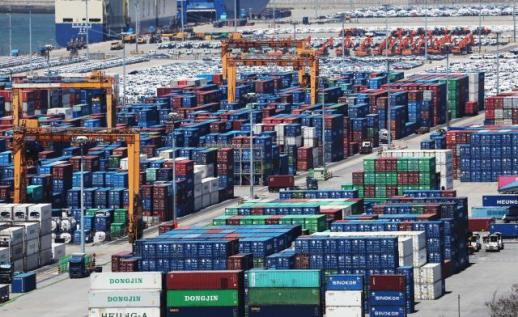 Industrial Loans Surpass 2060 Trillion Won in Q1, Marking Largest Increase in 14 Quarters In the first quarter of 2026, industrial loans exceeded 2060 trillion won, with significant increases in corporate borrowing, particularly in the manufacturing and service sectors. The rise was influenced by the reissuance of previously repaid credit lines for financial ratio management and the execution of policy financing to support semiconductor investments. According to the Bank of Korea, the balance of sectoral loans from depository institutions at the end of the first quarter stood at 2061.8 trillion won, an increase of 35.6 trillion won from the previous quarter. This marks the largest increase since the third quarter of 2022, which saw a rise of 56.7 trillion won, ending a 14-quarter trend. Both the manufacturing and service sectors experienced expanded loan growth. Manufacturing loans increased from 12 trillion won in the previous quarter to 11.1 trillion won, while service sector loans surged from 9.2 trillion won to 24 trillion won. The manufacturing sector saw growth in working capital loans due to a trend towards productive financing and the reissuance of previously repaid credit lines at the end of last year. Construction loans, which increased by 4 trillion won, marked a turnaround after seven quarters of decline, reflecting the impact of rising construction output. In the service sector, loans in the finance and insurance industries rose by 9.8 trillion won, while retail and wholesale sectors saw an increase of 4.9 trillion won due to improved market conditions. The real estate sector also experienced a rise of 2.6 trillion won, influenced by the base effect of bad debt write-offs. Lee Hye-young, head of the Financial Statistics Team at the Bank of Korea, noted, "The retail and wholesale sectors benefited from the reissuance of loans that were temporarily repaid for financial ratio management at the end of the year, along with some companies' demand for corporate bond repayments and improved market conditions. The finance and insurance sectors also reflected increased demand for credit from securities firms and proactive funding needs ahead of rising interest rates." By purpose, working capital loans significantly increased from 1.9 trillion won in the previous quarter to 26.2 trillion won. This growth was driven by the reissuance of previously repaid credit lines in both the manufacturing and service sectors. Investment loans also expanded from 6.6 trillion won to 9.4 trillion won. In manufacturing, growth was centered on electronic components, computers, and communication equipment, while in services, the retail and real estate sectors continued to show an upward trend. By sector, loans from depository banks increased from 9.6 trillion won to 25 trillion won. Non-bank depository institutions also saw a turnaround, shifting from a decrease of 1.1 trillion won to an increase of 10.6 trillion won. Among depository bank loans, the increase in loans to large corporations surged from 900 billion won to 12.7 trillion won. Loans to small and medium-sized enterprises (excluding individual business owners) rose from 6.9 trillion won to 10.1 trillion won, while loans to individual business owners remained stable, increasing by 1.5 trillion won. Lee emphasized, "This growth trend is the result of a combination of the financial sector's focus on productive financing and the reissuance of temporarily repaid loans at the end of last year. While the increase is significant, it is not excessive compared to historical levels."* This article has been translated by AI. 2026-06-08 12:06:00
 -
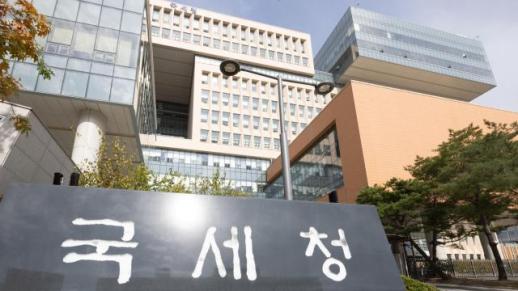 Korean Tax Agency Warns of Gift Tax on Profits from Related Party Transactions The National Tax Service (NTS) has issued a reminder to individuals who benefited from transactions between related companies, such as profit shifting and opportunity allocation, to report their gift tax by June 30. On June 8, the NTS announced that it had sent notifications to major shareholders and related shareholders of beneficiary companies that received work or business opportunities from related parties during the 2025 fiscal year regarding the gift tax obligations related to profit shifting and opportunity allocation. The gift tax on profit shifting applies when a related party provides concentrated work to a specific company, resulting in increased profits for the beneficiary company. The tax is levied on indirect benefits received by major shareholders of that company. Conversely, the gift tax on opportunity allocation is imposed when a beneficiary company gains profits from business opportunities provided by a related party. Using big data analysis, the NTS identified approximately 2,503 potential recipients and sent mobile notifications to them. Additionally, it is mailing notification letters and informational booklets to around 2,000 related beneficiary companies. Companies with a fiscal year ending in December must report and pay by June 30. Those who self-report within the deadline can receive a 3% tax credit on the calculated tax amount. Failure to report or late payments will incur a 20% penalty for non-reporting and additional late payment penalties. To assist taxpayers, the NTS has designated dedicated consultation staff at each tax office and distributed informational booklets. These booklets include criteria for determining tax obligations, methods for calculating gift benefits, and common mistakes. The NTS highlighted seven frequent errors during the reporting process, including misjudgments regarding small business status, calculation errors in stock ownership ratios, and omissions of related shareholders. After the reporting deadline, the NTS plans to conduct a thorough analysis of non-reporters and those suspected of inadequate reporting to ensure compliance. An NTS official stated, "We are providing various taxpayer support services to ensure that those required to report do so diligently within the deadline to avoid additional penalties."* This article has been translated by AI. 2026-06-08 12:06:00
 -
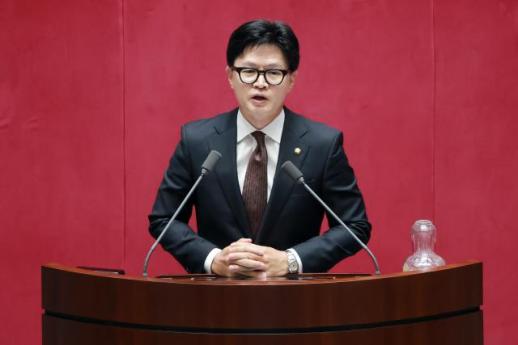 Han Dong-hoon Plans Bill to Make Election Commission Chair a Full-Time Position Independent lawmaker Han Dong-hoon announced plans on June 8 to propose a bill that would convert the position of the Chair of the National Election Commission (NEC) into a full-time role. In a post on his Facebook page, Han stated, "I will introduce a bill to change the NEC Chair from a part-time honorary position held by a Supreme Court Justice to a full-time, responsible role. We need to ensure that the organization and system are continuously monitored, and that accountability is directly taken before the public when issues arise, even during non-election periods." He pointed out that there is often no one held accountable when illegal or inadequate situations occur within the NEC, attributing this to the unclear leadership structure at the top of the commission. He criticized the current system, where an independent constitutional body is managed by a leader in a part-time capacity. Han noted, "The structure has solidified around a Secretary General, typically from within the NEC, who oversees operations without any internal checks on their authority. The fact that a judge holds the leadership position means the NEC has the 'backing' of the judiciary, making it difficult for anyone to challenge the commission." Previously, Han had also indicated plans to propose legislation that would enable the Board of Audit and Inspection to conduct audits of the NEC and to restrict the indiscriminate use of leave and vacation by NEC employees during election periods.* This article has been translated by AI. 2026-06-08 12:06:00
 -
 Vietnam's Youth Return to Agriculture, Transforming Rural Landscapes Urban Vietnamese youth are returning to their rural roots, armed with smartphones and digital technology. This trend includes not only local young people but also those who have studied and worked abroad, leaving behind stable urban and overseas lives to introduce various systems to their family farms. They are transforming agriculture, which traditionally focused on production, into a market-oriented, brand-conscious, and sustainable industry through social media sales and live broadcasts. According to reports from Vietnamese media outlets like Tuoi Tre, a farmer with 40 years of experience recalled how the return of young farmers changed his perspective. "I grew up working in the fields with my parents and continued to live off the land left by my grandparents. Terms like digital transformation, e-commerce, traceability, and sustainable development seemed distant and unfamiliar to me." His mindset shifted not due to catchy slogans but through tangible changes. "The answers we couldn't find in the soil, the youth brought back" Traditionally, Vietnamese farmers focused solely on production. While they were accustomed to planting, nurturing, and harvesting, the sales and consumer engagement aspects were foreign to them. Most agricultural products were sold to middlemen at fluctuating market prices, meaning that even in years of abundant harvests, income remained stagnant if prices fell. The return of young farmers is beginning to change this structure. Through local digital transformation training programs, they taught farmers how to record production logs using smartphones. They also showed them how to create social media accounts to communicate directly with consumers and conduct live sales broadcasts. Farmers learned effective photography techniques for their products and how to document the production process through videos to reach a wider audience. One young farmer noted, "At first, many were hesitant, saying it was difficult to learn technology at their age, but as the youth patiently assisted them, they gradually became more comfortable." As a result, products that were once sold only locally began reaching other provinces, cities, and major export partners, significantly increasing farmers' incomes. The youth have not only expanded market access but also shifted the perspective on agricultural products. They emphasize the 'story' behind the products, advocating for the importance of conveying the organic cultivation process, local culture, and the producer's philosophy. This focus on transparent origin information and traceability enhances trust and becomes a key factor in price competitiveness. Environmental changes have also emerged. Burning rice straw after harvest has long been a common practice in rural Vietnam, seen as a quick way to clear fields. Young farmers have educated their communities about the potential for rice straw to contribute to air pollution and greenhouse gas emissions, teaching them how to create organic fertilizers from agricultural byproducts like rice straw and fallen leaves. What was once waste has now become a resource. As the use of chemical fertilizers decreases and organic fertilizers and eco-friendly products increase, production costs have been reduced, contributing to soil and water resource protection. A farmer with 40 years of experience stated, "What the youth bring back to their hometown is not just technology or large projects, but the belief that farmers can handle technology effectively." He added, "If we invest properly, Vietnamese agricultural products can achieve higher value." He emphasized that true sustainable value is created when the knowledge and skills of the youth combine with the production experience and love for the land held by farmers. There are even cases of young people who studied abroad returning to lead the digital transformation of agriculture. Dang Zuong Minh Hoang, a graduate of the prestigious Grenoble Institute of Technology in France, returned to his hometown in Dong Nai province, leaving behind a stable life overseas. He introduced solar power, IoT-based automatic irrigation, drone pest control, and a QR code traceability system to his family farm. Hoang established electronic farming logs for each crop, allowing consumers to verify the production, management, harvesting, and transportation processes. His organic pepper and avocados meet U.S. and European market standards and have entered international distribution networks. Hoang asserted, "If we learn technology properly and apply it meticulously, Vietnamese farmers can compete effectively in the global market." Seminar in Vinh Long Province: "The era of selling what we produce is over" Recently, a large seminar focused on transforming agricultural mindsets was held in Vinh Long province. The Vinh Long Farmers' Association hosted the seminar on June 3 at the Long Ho Yong An Orchard, gathering over 300 representatives from local businesses and farmers' cooperatives, along with officials from relevant departments. The seminar discussed the development of specialized agricultural personnel linked to cooperatives, the promotion of agricultural tourism, the establishment of agricultural value chains, and the future directions for agricultural development in Vinh Long province. In this context, former Vice Chairman of the National Assembly Le Minh Hoan emphasized that farmers must be the main agents in the agricultural transformation process. He pointed out that agriculture needs to move away from a simple production focus, stating, "We should not just produce what we have, but rather what the market needs." Hoan urged a shift in thinking from producing what farmers possess to producing what the market desires, highlighting quality control, traceability, brand building, and enhancing the added value of agricultural products through cooperative connections as key tasks. He also suggested creating a multi-value agricultural model that combines production with tourism, experience, education, and services to generate additional income and enhance competitiveness. Netizens: "Youth is Hope"... Calls for Support In response, netizens have expressed positive reactions. One user noted, "Sustainable development requires not only the efforts of the youth but also capital, technology, and market support." Another commented, "When the energy of youth combines with science and technology, along with field experience, tremendous value can be created." Others remarked, "It's inspiring to see young people returning to contribute to their hometowns," and "Technology is essential for cost reduction and quality improvement." There are also analyses suggesting that modern agriculture cannot rely solely on traditional experience, emphasizing the necessity of data and automation technology. Meanwhile, Vietnam's rural areas are entering a new phase of agriculture where the skills of youth meet the experience of farmers. In an era where the boundaries between urban and rural are blurring, the future of agriculture depends on intergenerational collaboration and a shift in mindset, a message gaining traction locally.* This article has been translated by AI. 2026-06-08 12:03:00