

Journalist

Michael Head
-
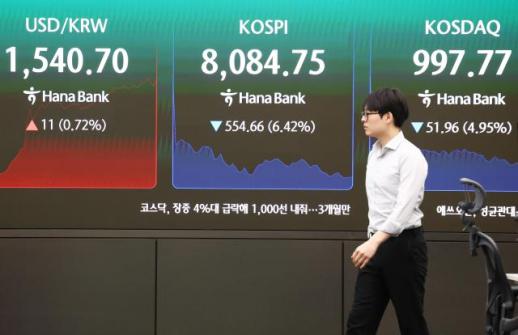 Won recovers after verbal intervention while bond sell-off deepens SEOUL, June 8 (AJP) - The South Korean won slightly recovered on Monday after a series of verbal warnings from financial authorities, which prompted traders to pull back from their dollar bets. There was also speculation that authorities may have directly intervened in the market. In Seoul, the won closed at 1,548.2 per dollar after opening at 1,555.2 and briefly rising to 1,560 before reversing sharply in morning trade. The turnaround was largely attributed to policy intervention. Yun Kyung-soo, director general of the international department at the Bank of Korea (BOK), and Lee Hyung-ryul, director general of the international finance bureau at the Ministry of Economy and Finance, issued a joint statement, warning that authorities will "never tolerate excessive volatility and one-way herd behavior decoupled from economic fundamentals and will respond strongly." The statement followed two emergency meetings held on last Thursday and Sunday by top economic and financial policymakers including Deputy Prime Minister and Minister of Economy and Finance Koo Yun-cheol and BOK governor Shin Hyun-song. The Sunday meeting marked the first weekend market-monitoring meeting in about a year and a half since Dec. 8, 2024, when authorities met in the aftermath of disgraced ex-President Yoon Suk Yeol's botched martial law debacle. The unusually strong warning appeared to gain traction after earlier verbal interventions failed to calm the volatile currency market. Market participants also raised the possibility that authorities may have supplied dollar liquidity through smoothing operations, noting that the exchange rate had already started to retreat from its intraday high about an hour before the official statement was released. "Direct smoothing operations cannot be officially confirmed, but we are seeing tangible moves to cushion the won," an FX trader said on condition of anonymity. Despite the won's recovery, the bond market extended its selloff, as investors grew more convinced that persistent currency pressure could force BOK to keep a hawkish policy stance. The debt market came under heavier pressure as the benchmark three-year government bond yield rose 5.8 basis points to 3.940 percent, while the 10-year yield jumped 9.4 basis points to 4.348 percent, with both reaching their highest levels in about two years and seven months since November 2023. The bond selloff deepened as investors interpreted the authorities' defense of the won as a sign that currency weakness has become a more urgent policy concern. That added to expectations that the BOK will maintain a hawkish stance, or even raise rates, if exchange-rate volatility continues to threaten inflation and financial stability. Analysts said downward pressure on bond prices is likely to persist until the market sees a clearer policy response from the central bank. "Expectations that the BOK will raise the benchmark rate to around 3 percent, or possibly as high as 3.25 percent this year, are now being treated almost as a foregone conclusion," said Park Ju-noo, an analyst at Hana Securities. "Investors need to prepare for a scenario in which the three-year yield breaks above the 4 percent threshold." 2026-06-08 17:34:56
 -
 JTI Korea Aims for 10% Market Share by 2028 with New 'Plume Aura' Release JTI Korea is accelerating its market share ambitions with the launch of a limited edition 'Glacier White' version of its heated tobacco device, 'Plume Aura.' On June 8, JTI Korea announced the online release of the 'Plume Aura Glacier White.' This limited edition features a bright white color with a subtle glossy finish, evoking a clean and fresh image. The product is available not only as a standalone device but also in a package that includes a premium front panel, a white back cover, and various accessories. The Plume Aura, officially launched on April 14, is JTI Korea's next-generation heated tobacco device, equipped with 'Smart Heatflow' technology and four heating modes. According to JTI Korea, the device has been designed to be slimmer and lighter than previous models, enhancing user convenience. The limited quantity package 'Plume Aura First Edition,' introduced just before the launch, sold out quickly. Since its release, Plume Aura has rapidly expanded its sales territory. As of May 12, it has extended its offline sales network across Seoul, Incheon, and Gyeonggi Province. Starting May 1, sales also began at major duty-free shops in Incheon International Airport and Gimpo International Airport, marking a swift expansion from its initial limited distribution in the metropolitan area. Globally, JTI has set a goal to increase its market share in the heated tobacco sector to the mid-10% range by 2028. To achieve this, JTI plans to invest 800 billion yen (approximately $7.63 billion) in reduced-risk products (RRP), including heated tobacco sticks, from 2026 to 2028. A JTI Korea representative stated, "We will continue to introduce a diverse range of device colors and accessory lineups that reflect consumers' individuality and preferences." 2026-06-08 17:33:00
 -
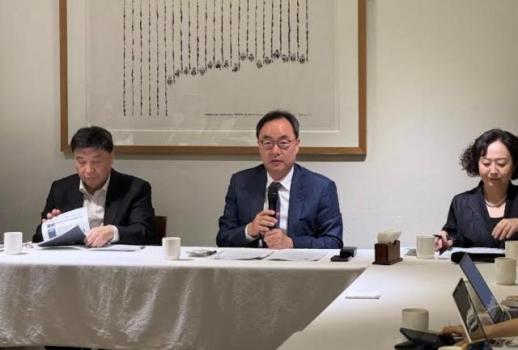 Medical Association Discusses Key Healthcare Issues at 2026 Conference Amid ongoing turmoil in the medical community due to conflicts between physicians and the government over the past two years, a forum is set to discuss the future direction and key policy issues in healthcare. The Korean Medical Association announced on June 8 that it will hold the "2026 Korean Medical Association Conference" on June 12 at the Plenty Convention Center, outlining the main agenda and session structure for the event. The conference, themed "Communication and Empathy: Opening a New 60 Years," will address critical healthcare policy issues, including residency training for medical professionals, physician workforce projections, the sustainability of academic medicine in South Korea, and patient safety related to drug side effects. Lee Jin-woo, President of the Korean Medical Association, stated, "Although the conference is taking place amid difficulties due to the conflicts over the past two years, this year marks the first conference since some resolutions have been reached. We have created a platform to discuss the direction the medical community should take and various unresolved issues, including regional and essential healthcare." The keynote address will be delivered by Song Ho-geun, a distinguished professor at Hallym University, who will discuss "The Calling of Physicians and Healthcare Policy: The Curse of Success?" He will diagnose the institutional contradictions that have accumulated behind the achievements of South Korean healthcare and suggest future directions for the medical field. The conference will feature eight session programs consisting of presentations and panel discussions. The Korean Medical Association will host sessions on "The Future Direction of Residency Training in Korea" and "What Regional Healthcare Policies Can Deliver Immediate Results?" Additionally, the Korean Medical Association's Medical Policy Research Institute will explore "Seeking Desirable Physician Workforce Projections," while the Korean Association of Basic Medical Sciences will discuss "New Horizons in Basic Medicine: Utilizing National Integrated Bio Big Data and AI." The Korean Academy of Medical Sciences will address "How to Sustain Academic Medicine in South Korea?" Other joint sessions will include topics such as "Regional Physician System and Medical Education Accreditation" by the Korean Institute of Medical Education and Evaluation, "Drug Side Effects and Compensation: The Role of Healthcare in Ensuring Patient Safety" by the Ministry of Food and Drug Safety, and "HTA Paradigm Shift: Balancing Innovation and Sustainability in Medical Technology Assessment" by the Korea Health and Medical Research Institute. The Korean Medical Association plans to link the discussions from the conference to forums, public hearings, and white paper publications to facilitate actual policy discussions and institutional improvements.* This article has been translated by AI. 2026-06-08 17:33:00
 -
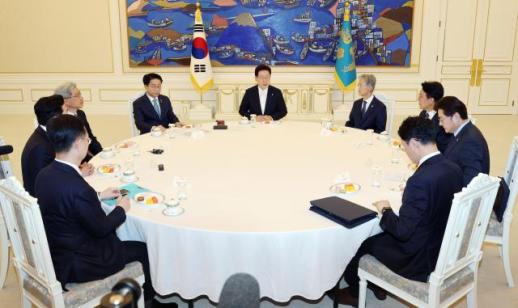 President Lee Addresses Election Paper Shortage at Meeting with Key Officials President Lee Jae-myung addressed the shortage of ballots during the June 3 local elections, stating, "Regardless of the number, the failure to guarantee the exercise of voting rights and adequate realization of citizen sovereignty is a very serious issue that leaves us speechless."The president made these remarks during a meeting with key officials at the Blue House.Attendees included National Assembly Speaker Cho Jung-sik, Prime Minister Kim Min-seok, Constitutional Court Chief Kim Sang-hwan, and Supreme Court Chief Justice Jo Hee-dae, who gathered to discuss comprehensive reforms in election management.President Lee noted, "I understand everyone is busy with their duties, but I felt it was necessary to convene this meeting given the current situation is not something we can overlook."He emphasized that the Election Commission is an independent body as defined by the constitution, stating, "No one can officially comment on its operations, and even if mistakes occur, the current interpretation of the constitution makes it difficult to verify what is happening."However, he stressed, "We cannot ignore this situation," adding that elections are central to the constitutional order and the realization of citizen sovereignty.The president expressed a desire for the independent constitutional leaders present to engage in official discussions on how to address the issue, stating, "While we may not find clear solutions today, it is essential to clarify the facts surrounding this matter."He further noted, "In some form, there must be accountability from the perspective of the citizens, and we should also discuss possible alternatives and measures."Constitutional Court Chief Kim Sang-hwan remarked that the unprecedented ballot shortage during the June 3 elections has damaged public trust and pride in South Korea's democracy and electoral system.He stated, "Despite facing numerous challenges, South Korea's democracy has traditionally advanced step by step through the wisdom of our people and a firm commitment to constitutional values. Although we have encountered unexpected difficulties and setbacks, we have always learned from them to create a more mature and stable democracy."Kim added, "Therefore, we must use this incident as a painful lesson to thoroughly investigate the facts, legally assess the situation, and critically examine and improve our electoral system and its operations, hoping to advance toward a democracy that all citizens can firmly trust."Supreme Court Chief Justice Jo Hee-dae asserted, "There is no room for debate that the voting rights of citizens, as sovereigns, must never be violated," expressing deep regret over the fact that some citizens were unable to exercise their precious voting rights due to the ballot shortage in the recent local elections.He also addressed the judiciary's role in preventing such occurrences in the future, stating, "We must work on institutional improvements to ensure this does not happen again, and the judiciary will do its utmost to uphold the fairness of elections and protect citizens' rights through its constitutionally mandated role."Lee Gyu-yeon, the Blue House spokesperson, stated during a briefing at the press center that the attendees unanimously agreed on the need for a thorough investigation into the matter and the establishment of preventive measures. He added, "Depending on the results of investigations or national inquiries, we will hold those responsible accountable and develop comprehensive reforms in election management to restore public trust."* This article has been translated by AI. 2026-06-08 17:27:00
 -
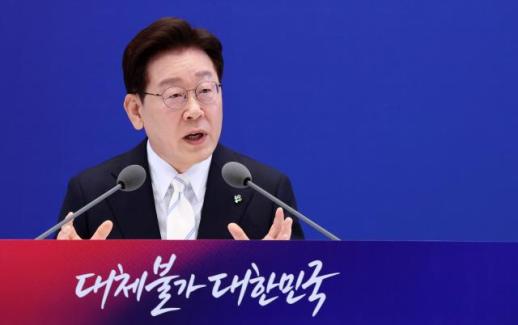 President Lee: Media Must Bear Responsibility for Special Protections President Lee Jae-myung emphasized the importance of the media during a press conference on June 8, stating, "The media is crucial. It is one of the key pillars supporting a democratic republic. Therefore, it must be protected and guaranteed. However, it must also bear corresponding responsibilities." During the event at the Blue House, he remarked, "The media should be protected. In a democratic society, information serves as the basis for the judgment of the sovereign, and the primary role of the media is to convey that information accurately. However, when that information is distorted, manipulated, or false, it misleads the judgment of the sovereign. That is truly dangerous." Lee acknowledged that "mistakes due to misinterpretation of facts are unavoidable," but he stressed that "manipulating facts is an act that undermines the constitutional order. If there is intent behind it, I believe it constitutes a serious crime." He further stated, "If the media, which enjoys special protection and guarantees from the national community, deliberately spreads fake news that disrupts the national system, it must be held accountable for acts that disturb public order. In my view, it seems that accountability is not well enforced in South Korea." Lee also criticized the practice of quoting someone's claims as facts, saying, "It is wrong to report someone’s assertion as if it were a fact by placing it in quotation marks. If it is a falsehood but is reported with quotes, it is still false reporting. That does not absolve one of responsibility." * This article has been translated by AI. 2026-06-08 17:24:00
 -
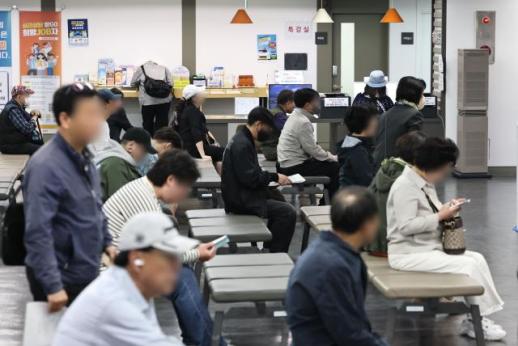 One in Five Wage Workers in South Korea Lacks Retirement Benefits More than one in five wage workers in South Korea are estimated to be in a blind spot regarding retirement benefits. Despite the expansion of retirement pension systems and improvements in regulations, the increase in part-time, short-term, and non-regular workers, particularly among women and youth, has significantly contributed to this issue. According to a report by the Korea Labor Institute titled "Estimation and Characteristics of the Retirement Benefit Blind Spot," approximately 471,400 out of 22,143,000 wage workers, or 21.3%, were estimated to fall into this category as of 2024. The retirement benefit blind spot refers to workers who are excluded from the coverage of the Employee Retirement Benefit Security Act or those who, while legally covered, do not actually receive retirement benefits. This includes workers who work less than 15 hours a week, those with less than one year of continuous employment, and those on repeated short-term contracts. The proportion of workers in this retirement benefit blind spot has decreased from 26.6% in 2015. However, it still means that more than one in five wage workers lacks protection for retirement benefits. Historically, a significant portion of the blind spot was due to "substantial blind spots" where employers failed to properly implement the system despite it being applicable. Recently, however, there has been an increase in "institutional blind spots" where workers do not meet the legal requirements for retirement benefits from the outset. Women make up more than half of those in the blind spot, influenced by a labor market structure characterized by career interruptions, part-time work, and short-term contracts. By age group, those aged 60 and older represent the highest proportion at 37.1%, followed by youth aged 15 to 29 at 23.9%. This trend is attributed to the high prevalence of part-time and short-term jobs among older workers and the instability faced by young workers entering the job market. Industries such as health and social welfare services, accommodation and food services, and wholesale and retail trade show a high proportion of workers in the blind spot. These sectors often have many small businesses with short labor contracts and frequent job changes. Critics argue that addressing the retirement benefit blind spot cannot be viewed solely as an issue of regulatory enforcement. With the changing structure of the labor market leading to an increase in workers outside the legal application criteria, there is a need to reassess the scope of the system. As the labor market rapidly evolves due to aging, the rise of platform work, and an increase in ultra-short-term employment, it is crucial to improve the retirement benefit system to ensure it serves as a fundamental mechanism for securing income in old age. The Korea Labor Institute stated, "It is necessary to enhance the effectiveness of legal rights to retirement benefits while providing institutional support for workers who are not currently protected under existing criteria. We should discuss ways to redesign the boundaries of retirement benefit applicability."* This article has been translated by AI. 2026-06-08 17:21:00
 -
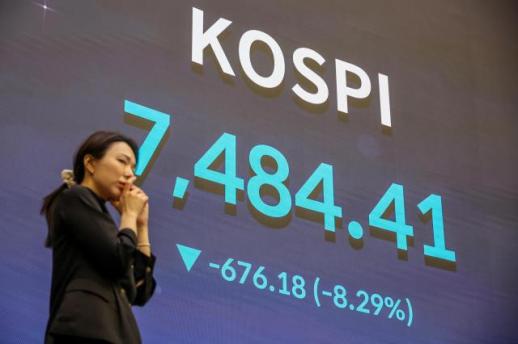 Chip sell-off sends KOSPI below 8,000 SEOUL, June 8 (AJP) - South Korea's benchmark KOSPI closed at 7,484.41, down 676.18 points, or 8.29 percent, from the previous session, falling below the 8,000-point level According to the Korea Exchange, the KOSPI opened at 8,048.09, down 112.50 points, or 1.38 percent, from the previous close, before extending its losses throughout the session. The index fell as low as 7,442.73 during intraday trading. The tech-heavy KOSDAQ also declined sharply, ending the day at 911.39, down 91.05 points, or 9.08 percent. Amid the sharp market sell-off, circuit breakers were triggered on both the KOSPI and KOSDAQ markets. Sell-side sidecars, which temporarily suspend program-driven sell orders, were also activated in both markets. 2026-06-08 17:17:53
 -
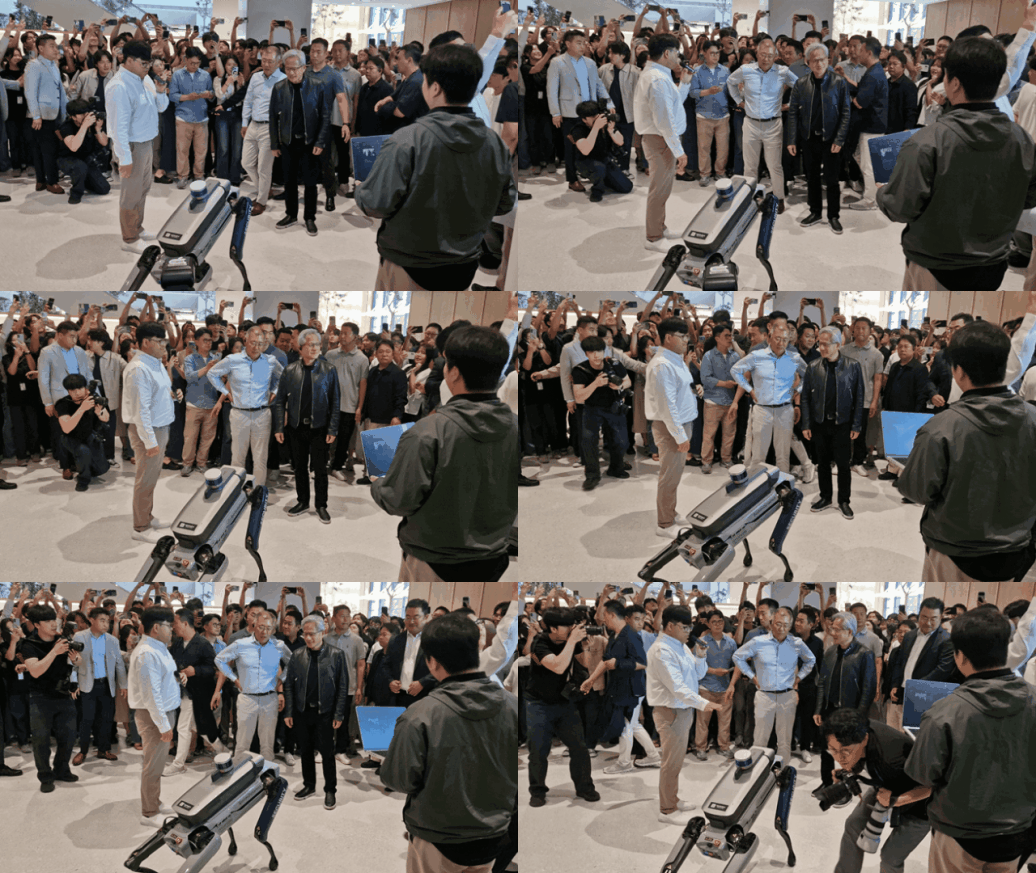 Jensen Huang: Now is Hyundai's Time as He Showcases Physical AI Alliance "The era after artificial intelligence (AI) will be Hyundai Motor Group's time." On June 8, Jensen Huang, CEO of NVIDIA, visited Hyundai Motor Group's Yangjae headquarters, emphasizing the scalability of the company's physical AI. Dressed in a black leather jacket, Huang was welcomed by Chairman Euisun Chung and Vice Chairman Jae-hoon Chang. After passing through the main entrance, he took time to sign autographs and pose for photos with employees gathered on the right side. The atmosphere was electric, reminiscent of a concert. Chairman Chung also joined employees in taking selfies to celebrate the occasion. Huang toured the displayed hydrogen fuel cell vehicle Nexo and an automated hydrogen refueling robot. He praised the Pony, calling it "the first car of the Hyundai brand" while giving a thumbs-up. He showed keen interest by asking about the water tank capacity of a robotic exhibit. He also interacted with Spot, the four-legged robot used for security and patrol at the Yangjae headquarters. When Spot greeted him in English, Huang jokingly replied, "Then I'll give you my credit card," prompting laughter from those nearby. Under Chairman Chung's guidance, Huang explored Kia's purpose-built vehicle (PBV) PV5, even posing in the driver's seat. He examined the vehicle's interior with great interest. While viewing the mobility robot platform Mobed displayed in the plaza, Huang remarked, "It would be great to apply this technology to off-road vehicles," expressing his fascination. Huang stated, "Hyundai Motor Group is a massive company in the mobility sector and a true expert. We aim to combine AI with Hyundai's mobility expertise to change the future. We can also transform the future of robotics." He added, "The next wave of AI will be in mobility and physical AI. A time is coming when AI will understand the world and enter the real world to perform valuable tasks for people. Now is Hyundai's time." In closing, Huang praised Chairman Chung, stating, "He is a remarkable person who has built such an incredible company."* This article has been translated by AI. 2026-06-08 17:12:00
 -
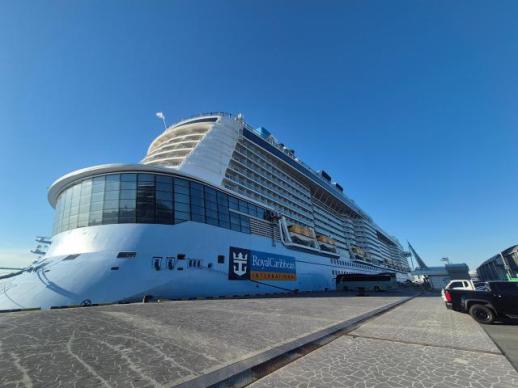 South Korea outlines strategy to attract 2 million cruise visitors SEOUL, June 08 (AJP) - South Korean government and tourism officials met with industry representatives aboard a docked cruise ship in Busan on June 5, 2026, to outline a strategy aimed at expanding international cruise tourism, the Korea Tourism Organization said Monday. The 21st Cruise Development Council meeting took place aboard Royal Caribbean's 169,000-ton Spectrum of the Seas, marking the first time the annual council convened on an active vessel. About 90 officials from regional governments, the cruise industry, and academia attended the event to discuss ways to improve port excursions and encourage local spending. During the meeting, the Korea Tourism Organization (KTO) announced its 2026 revitalization plan funded by a supplementary budget. The initiative includes joint marketing campaigns with Royal Caribbean, familiarization tours for cruise line operators, and participation in international port exhibitions. Officials highlighted recent efforts to tailor services for visitors, citing a pilot program launched in Busan on May 12, 2026. A dedicated shuttle bus connecting the port terminal to the Seomyeon Medical Street area increased the disembarkation rate among ship crew members from 29 percent to 49 percent. Representatives from several South Korean ports shared specific regional strategies. Incheon focused on its fly-and-cruise programs, while Busan presented plans for overnight port calls linked to local festivals. Officials from Jeju, Yeosu, Sokcho, and the Saemangeum Development and Investment Agency also outlined their development goals. Wendy Yamazaki, Royal Caribbean's vice president for the Asia-Pacific region, presented an overview of core tasks for growing the country's cruise sector from a global operator's perspective. "We will do our best to attract cruise tourists through cooperation between the private sector, government, and academia based on the discussions at this council," said Han Yeo-ok, director of the international tourism content division at the KTO. "We will carry out comprehensive marketing to expand our global network and achieve the era of 2 million cruise tourists visiting South Korea early." 2026-06-08 17:09:55
 -
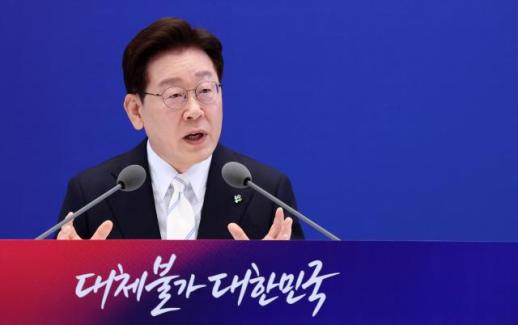 President Yoon Advocates for Future Investments from Surplus Tax Revenue President Yoon Suk Yeol stated on June 8 that surplus tax revenue generated from the booming semiconductor industry should be invested in future growth potential for the nation.He addressed the contentious issue of excess profit distribution among companies like Samsung Electronics, emphasizing the need for a cautious approach due to its potential impact on national industrial competitiveness.During a press conference at the Blue House marking his first year in office, President Yoon acknowledged that there could be significant debate over how to utilize surplus tax revenue. He asserted, "Surplus tax revenue should be invested in ways that enhance the growth potential of South Korea for future generations."He stressed the importance of distinguishing between the use of surplus tax revenue and excess profit distribution, stating, "These are completely different issues."Regarding the use of surplus tax revenue for general fiscal spending, President Yoon expressed a negative view. He remarked, "If we spend more when we have more and less when we have less, we are abandoning the role of fiscal policy. Treating surplus tax revenue like regular tax revenue and depleting it through general spending should be excluded."On the topic of excess profits, he noted, "It is difficult to easily conclude whether this is a matter of labor disputes or management rights. If our country introduces such a system first, companies may relocate their investment and production bases overseas, which could have serious implications for national industrial policy."He added, "The issue of excess profits is very challenging but an unavoidable reality," emphasizing that it requires international discussion rather than being confined to domestic discourse.Earlier, in his commemorative speech, President Yoon pledged to make 2026 the year when the bold dream of an 'Irreplaceable Korea' begins, stating, "We will leverage South Korea's experiences, capabilities, values, and the national energy to overcome crises to usher in a new era of the 'K-Initiative.'"To achieve the vision of an 'Irreplaceable Korea,' he outlined four key national goals: becoming a super-gap industrial powerhouse, a global leader in diplomacy and security, a normal society, and a government that saves lives.President Yoon concluded, "We will advance as a super-gap industrial powerhouse where all citizens and regions equally share in growth opportunities and benefits, continuously discovering and nurturing 'global super-gap growth engines' that will play a pivotal role in South Korea's next-generation industries beyond semiconductors."* This article has been translated by AI. 2026-06-08 17:09:00