
Journalist

Michael Z. Green
-
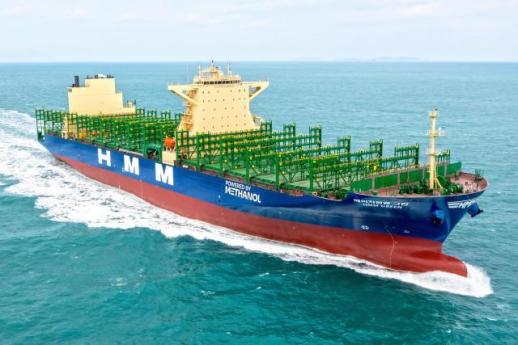 South Korea loses ground in ship orders as China sweeps up new contracts SEOUL, May 8 (AJP) - South Korea's share of global ship orders fell sharply in April despite a rebound in global ship orders, as China swept up a far larger portion of new contracts, according to data released by London-based Clarkson Research Services on Friday. Global ship orders for the month totaled 6.49 million compensated gross tons (CGT) or 204 vessels, up 21 percent from a year earlier. South Korea secured just 16 percent of global orders or 1.05 million CGT across 33 vessels, while China dominated new contracts with 67 percent or 4.37 million CGT across 156 ships, more than four times South Korea's volume. China also maintained its lead in the order backlog. As of the end of April, the global backlog rose 1.12 million CGT from the end of the previous month to 194.18 million CGT. China accounted for 124.25 million CGT or 64 percent, while South Korea held 37.02 million CGT or 19 percent. Vessel prices, however, continued to climb, with Clarksons' index measuring the cost of building new ships rising 1.34 points from the previous month to stand at 183.41. The index tracks prices for newly built ships and serves as a measure of shipbuilders' profitability. The price of a liquefied natural gas (LNG) carrier with a capacity of 174,000 cubic meters or more was US$248.5 million per ship. A very large crude carrier was priced at $130.5 million, while an ultra-large container ship cost $260.5 million. Industry observers said that China has expanded overall volume, while South Korea has focused on high-value vessels such as liquefied natural gas (LNG) carriers and eco-friendly ships. But as China races ahead in volume, the real test for South Korea shipbuilders would be whether they can remain competitive and profitable in the high-value ship market. 2026-05-08 15:12:32
 -
 Chinese robot cleaners sweep Korean homes as data worries linger SEOUL, May 08 (AJP) - "Life is so different that I classify things before and after Roborock came into our lives," said 50-year-old Korean housewife Lee Young-joo. She is far from alone. Chinese robot vacuum maker Roborock has crossed the symbolic 50 percent threshold in South Korea's robot vacuum market, overturning a long-held assumption in one of the world's most brand-conscious appliance markets: that Chinese electronics brands would remain bargain-bin alternatives to Samsung Electronics and LG Electronics. For a growing number of younger Korean consumers, that assumption has already disappeared. "I used Roborock even when I lived with my parents. It was already the best robot cleaner back then," said Heo Je-young, a 29-year-old semiconductor engineer preparing to move into a new home with his wife. "Even friends working at Samsung or LG recommended the Chinese version." Roborock ended 2025 with a market share above 50 percent in South Korea, reaching the majority mark for the first time since entering the country in 2019, according to figures disclosed earlier this year. The milestone marks one of the clearest signs yet of China's rapid ascent in premium consumer electronics — not through low-cost manufacturing, but through technological refinement, software integration and speed in categories where Korean firms once led. Premium robot vacuums have rapidly become staple purchases among newlyweds in apartment-dense South Korea, where long working hours and growing demand for automated home care have fueled explosive market growth. Roborock's Korean revenue has roughly doubled every year since 2020, climbing from 29.1 billion won ($19.8 million) that year to more than 300 billion won by 2024, while the overall Korean robot vacuum market has expanded into a roughly 1 trillion won segment. Globally, the Beijing-based company shipped 5.8 million robot cleaners in 2025 for a 17.7 percent market share, according to IDC, retaining its position as the world's top-selling robot vacuum brand for a third consecutive year. IDC also ranked Roborock first in the United States, Germany and South Korea. "Thanks to active investment in research and development and the expansion of our product portfolio, we have maintained the No. 1 position in the global robot vacuum market," a Roborock spokesperson said. The irony for Korean manufacturers is that robot vacuums were once their category to dominate. LG Electronics led the domestic market between 2017 and 2018, while Samsung maintained a smaller but steady presence. That advantage began to erode between 2022 and 2024 as Chinese manufacturers aggressively rolled out all-in-one docking systems capable of vacuuming, mopping, self-cleaning and self-emptying simultaneously. Korean companies hesitated over integrated mopping systems amid concerns about odor and maintenance problems. The delay proved costly. Roborock seized the premium segment with flagship models such as the S8 MaxV Ultra and this year's Saros 20, featuring upgraded obstacle-recognition software and powerful suction systems. Its share of Korea's premium robot vacuum segment briefly exceeded 60 percent in 2024 before stabilizing in the mid-50 percent range this year. Still, the rapid rise of Chinese appliances inside Korean homes has also triggered unease. "Despite the convenience, I still can't completely shake the feeling of a Chinese big brother looking into our living room," Lee said. Security concerns intensified after a joint probe by the Korea Consumer Agency and the Korea Internet and Security Agency in late 2025 uncovered serious vulnerabilities in several Chinese-made robot vacuums. The investigation found flaws allowing unauthorized access to cameras and stored household images in products from brands including Dreame, Narwal and Ecovacs. Samsung and LG products ranked highest overall in the review. Roborock drew fewer direct warnings in the study but was separately called before a National Assembly committee over concerns that its user data policies could permit transfers of Korean consumer information to China. The company later launched an online "Trust Center" and updated parts of its security policy. Questions have also surfaced over performance marketing by some Chinese appliance makers. A separate Korea Consumer Agency review found that cordless vacuum cleaners advertised with suction power figures ranging from 18,000 to 48,000 pascals delivered significantly lower real-world performance than implied in advertisements. After-sales service remains another weak point. Consumers have complained about lengthy repair delays and limited local service infrastructure relative to Roborock's rapidly growing market share. For some consumers, skepticism toward Chinese products still persists despite their technological edge. Kim Jong-chul, 54, said he purchased a cheaper Ecovacs model rather than a premium Roborock unit because of lingering distrust toward Chinese brands. "The mapping had issues, and it constantly bumped into furniture," Kim said. "Eventually it became more troublesome than simply vacuuming myself." Others were frustrated after smaller Chinese brands withdrew from the Korean market entirely. "We eventually threw ours away," said Lee Jae-hyung, who purchased a non-Roborock Chinese vacuum cleaner. "The product itself worked fine, but once the company pulled out of Korea, the app disappeared from the market too. It didn't last long." Samsung and LG are now scrambling to reclaim lost ground. Samsung Electronics unveiled its 2026 Bespoke AI Steam robot vacuum earlier this year, emphasizing on-device encryption and upgraded obstacle-recognition technology. LG Electronics is also preparing a successor to its RoboKing AI All-in-One lineup. For Heo, however, the next purchase decision remains straightforward. His interest in Roborock's newest model depends on whether its upgraded robotic arm can finally solve the one household obstacle earlier versions failed to overcome: pet waste. "It used to smear everything across the floor," he recalled. "But the new version now has robotic arms attached, so I'm willing to give it another try." 2026-05-08 15:10:04
 -
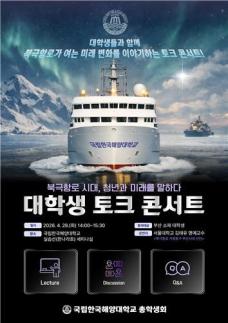 The Arctic Route: A Matter of Time, Not Choice for South Korea's Maritime Strategy The Arctic is opening up. As ice melts, the maritime logistics map is changing rapidly. The administration of Lee Jae-myung has been focusing on the Arctic route as a key project, which is now gaining attention as it secures a legal foundation. The establishment of a new Arctic Route Committee under the Prime Minister, the passage of related special legislation, the training of specialized personnel, and the establishment of a financial support system are all contributing to its emergence as a national strategic project rather than just a policy slogan. The core of the Arctic route is distance. The existing Asia-Europe route, which passes through the Suez Canal, stretches about 20,000 kilometers, while the Arctic Sea route can reduce this distance by up to 30-40%. Shortening transport time leads to cost savings, which is a key element of global logistics competitiveness. Shipping is ultimately a 'time industry.' A reduction of even one day can change competitiveness. This change goes beyond just logistics costs. The Arctic route is a complex strategic space intertwined with energy, resources, military, and environmental issues. Russia has placed the Arctic route at the center of its national strategy, while China is actively participating under the banner of the 'Polar Silk Road.' The United States and Europe are also expanding their influence over Arctic governance. The Arctic is no longer a remote area but is shifting to a new geopolitical axis. In this context, South Korea's options are clear. If it does not participate, it will be excluded. The Arctic route is not a 'market that can be entered when ready,' but rather a market that will be forever late if not prepared now. The significance of the passage of this special law lies here. It secures the legal basis for policy promotion and creates a structure that can integrate functions previously dispersed among various ministries, marking the starting line. The establishment of a committee under the Prime Minister is particularly symbolic. The Arctic route cannot be pursued solely by the Ministry of Oceans and Fisheries. It requires simultaneous action from diplomacy, defense, industry, environment, and science and technology. This is why a cross-ministerial control tower is necessary. Without securing both consistency and speed in policy, South Korea risks falling behind in global competition. However, the Arctic route presents both opportunities and significant risks. The biggest variable is the natural environment. The Arctic Sea still faces unpredictable weather conditions and ice melting situations. An aggressive approach in a situation where the route is not consistently stabilized could lead to increased costs. While the melting speed of ice is accelerating, it also means heightened environmental risks. Political variables cannot be overlooked either. A significant portion of the Arctic route is formed along the Russian coastline. Securing a stable route is challenging amid ongoing international sanctions and geopolitical conflicts. The Arctic route is not merely a logistics issue but is directly linked to diplomatic strategy. Increased dependence on specific countries could introduce new risks. Economic viability must also be carefully evaluated. Shortening distance does not automatically lead to cost savings. Additional cost factors such as insurance premiums, icebreaker costs, and insufficient port infrastructure exist. Currently, economic viability is only assured for specific periods and specific cargo. Therefore, a selective and phased entry strategy is necessary rather than a full-scale expansion. Nevertheless, the direction is clear. The Arctic route is likely to change the global shipping structure in the long term. The question is not 'whether to go' but 'how to go.' South Korea already possesses world-class shipbuilding and shipping capabilities. Redesigning these to fit the Arctic environment is a key task. The inclusion of policies for training specialized personnel is also significant. The Arctic route requires completely different technologies and operational methods from existing shipping. New capabilities such as ice navigation technology, polar weather analysis, and special ship design are needed. If personnel are not prepared, the industry cannot follow. Long-term investment in personnel and technology development must proceed in tandem. Another noteworthy aspect is the related industries. The Arctic route is not just a transportation route but creates a new industrial ecosystem. It connects ports, logistics, shipbuilding, energy, insurance, and finance. The inclusion of financial and fiscal support in this legislation is a measure taken with this expandability in mind. Pioneering the route is just the beginning; the real competition will occur in the surrounding industries. The restructuring of public shipping routes also aligns with this context. A structure where the government compensates for operational losses and public institutions manage operations is an unavoidable choice for initial market formation. The Arctic route, too, will be difficult to approach solely through market logic in the beginning. A public role will be necessary for a certain period. However, in the long run, it must transition to a self-sustaining structure centered on the private sector. Ultimately, the key to the Arctic route strategy is balance. It must consider speed and caution, opportunity and risk, and the roles of public and private sectors simultaneously. If it leans too far in one direction, the policy is likely to fail. An aggressive leading strategy can lead to cost burdens, while excessive caution can result in missed opportunities. We are now at the starting stage. The system has been established, and the direction has been set. What is crucial now is execution. It must translate from slogans to data, from plans to results. The Arctic route is a field where achieving results in the short term is challenging. However, without preparation, the opportunity will be lost forever. The ocean is the backbone of the South Korean economy. In an export-driven country, logistics competitiveness equates to national competitiveness. The Arctic route could become a new pillar of that competitiveness. Change has already begun. What remains is not a choice but the level of preparation.* This article has been translated by AI. 2026-05-08 15:06:44
 -
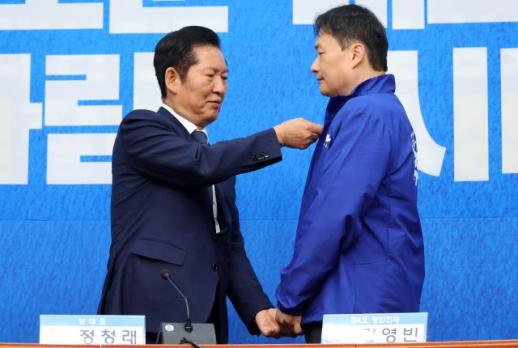 Democratic Party Strategically Nominates Lawyer Kim Young-bin for Local Elections The Democratic Party announced on May 8 that it has strategically nominated lawyer Kim Young-bin for the Gongju, Buyeo, and Cheongyang districts, completing nominations for all 14 by-elections. In a ceremony held at the National Assembly, the party officially welcomed Kim as a new member. Jeong Cheong-rae, the party leader, praised Kim, stating, "He has dedicated nearly a decade to correcting societal injustices and establishing justice. He has made significant contributions to prosecutorial reform while assisting the Minister of Justice. He has shown unwavering support for the underprivileged and has firmly opposed corrupt high-ranking officials. We are grateful for his joining the Democratic Party and hope he will actively contribute to local development." In response, Kim expressed his commitment, saying, "I will dedicate all my abilities to advance the greater future of Gongju, Buyeo, and Cheongyang, the places that nurtured me. I aim to be a capable worker who meets the party's needs and collaborates persistently with the central government to drive substantial support." He specifically mentioned Park Soo-hyun, who resigned from his parliamentary position to run for governor of South Chungcheong Province, stating, "I will push policies forward seamlessly in perfect synergy." Following Kim's recruitment, the Democratic Party convened its Strategic Nomination Management Committee to expedite the nomination process. Chief Spokesperson Kang Jun-hyun told reporters after the committee meeting, "We have decided to strategically nominate Kim, who graduated from all levels of school in Gongju, for the Gongju, Buyeo, and Cheongyang electoral district. He has worked diligently to create a judicial system that meets the public's expectations while assisting the Minister of Justice and has laid the groundwork for the prosecutorial reform bills currently being pursued by the Democratic Party." He added, "With his experience in public office focused on the people's livelihoods and his well-honed expertise, Kim Young-bin is the ideal candidate to overcome the crisis of local extinction and revitalize the economy of Gongju, Buyeo, and Cheongyang. With this, we have completed nominations for the by-elections. The Democratic Party will do its utmost to ensure that candidates with vision and capability receive the people's support."* This article has been translated by AI. 2026-05-08 15:02:46
 -
 White House Considers Restrictions on Anthropic's AI Model Mythos The potential for a shift in the White House's approach to artificial intelligence (AI) has emerged following the introduction of Anthropic's advanced AI model, Mythos. The Trump administration, which has previously prioritized deregulation and industry growth in the face of competition from China, is now considering increased oversight and access restrictions for cutting-edge models. According to the Wall Street Journal, U.S. Vice President JD Vance expressed concerns during a call last month with CEOs of major AI companies, including Sam Altman of OpenAI and Dario Amodei of Anthropic. He warned that models like Mythos could be exploited for cyberattacks targeting small-town banks, hospitals, and water facilities. Following this discussion, the White House began reviewing its response. An executive order outlining formal oversight procedures for advanced AI models is under consideration, and Anthropic has been asked to broaden the scope of Mythos's access to include critical digital infrastructure operators. The response is being coordinated by Sean Cankros, the Director of the National Cybersecurity Agency. Internal divisions within the White House have surfaced during this process. Some administration officials and congressional aides have expressed concerns about overreacting and rolling back policies, while those advocating for enhanced AI safety welcomed the discussions. Kevin Hassett, Chair of the White House National Economic Council, likened the oversight procedures for advanced AI to the FDA's review process for pharmaceuticals, further fueling the debate. Despite these discussions, the White House officially maintains a pro-industry stance. However, the controversy surrounding Mythos indicates a potential shift in policy. The Trump administration, while emphasizing deregulation, is beginning to recognize the need for separate management of high-risk advanced models. The discourse on AI policy is evolving from a focus on growth to also encompass the management of high-risk models.* This article has been translated by AI. 2026-05-08 15:00:08
 -
 Pope Leo XIV to Celebrate Mass at Sagrada Familia for Gaudí's 100th Anniversary The Sagrada Familia in Spain is more than just a cathedral; it represents a century of prayers offered to God and serves as a stone gospel. At the pinnacle of this prayer, the Pope will stand. Pope Leo XIV will officiate a mass for the 'Tower of Jesus Christ' on June 10, commemorating the 100th anniversary of Antoni Gaudí's death at the Sagrada Familia in Barcelona. After 144 years of construction that began in 1882, the church has finally completed its symbolic centerpiece this year. In February, a cross was placed atop the 'Tower of Jesus Christ,' making it the tallest church building in the world at 172.5 meters. Many people associate the year 2026 with the completion of the Sagrada Familia because the church had aimed to finish its main structures by the centenary of Gaudí's death. With the completion of the 'Tower of Jesus Christ' and the central spire this year, the church has reached a significant stage of external completion. This has led to a strong perception among the media, tourism industry, and the public that the church will be completed in 2026. However, work remains on the 'Glory Facade,' which serves as the southern entrance, and four additional spires. This area represents the final judgment of Jesus and the glory of heaven, and the expected final completion date is now projected around 2034. The significance of this mass lies in the completion of the most important vertical axis of the building. The 'Tower of Jesus Christ' is not merely a spire; it symbolizes the connection between the human world and the divine. It is surrounded by towers dedicated to the Virgin Mary and the four Evangelists, with an inscription in Latin on the tower that reads, 'You alone are holy, You alone are Lord, You alone are the Most High.' Gaudí dedicated the last 43 years of his life to this cathedral, even setting up a workshop inside the building where he lived and worked. He remained on the construction site until his last moments. Ironically, after being struck by a tram, he was mistaken for a homeless person and taken to a poor hospital. Despite suggestions to transfer him to a better facility, he reportedly refused, saying, "My place is among the poor." His faith is reflected in his architectural philosophy. Gaudí designed the height of the cathedral to be slightly lower than that of Montjuïc Hill in Barcelona, believing that human creations should not surpass God's nature. As a result, the Sagrada Familia evokes a unique feeling upon first sight. Rather than the cold, imposing nature typical of Gothic cathedrals, it offers a sense of life, akin to entering a living forest. The interior columns branch out like tree trunks, and the ceiling spreads like the branches of a forest. The stained glass windows are arranged with blue hues on the east and red hues on the west, symbolizing the birth and passion of Jesus. In this way, the gospel is expressed through stone, light, and nature. Previous popes have also had a deep connection with this cathedral. Pope John Paul II visited in 1982, and Pope Benedict XVI officiated a mass in 2010, elevating the church to the status of a minor basilica. Last year, Pope Francis declared Gaudí a 'Blessed.' There is speculation within the Spanish Catholic community that Pope Leo XIV may elevate Gaudí to the status of 'Venerable' during this visit. The construction of the Sagrada Familia is not yet complete. However, perhaps what matters most is not whether it is finished. Gaudí once said, "My client (God) is not in a hurry." Amidst the ongoing construction that has lasted 144 years, humanity may be learning just how impatient it truly is.* This article has been translated by AI. 2026-05-08 14:57:01
 -
 Japan-South Korea Security Cooperation Expands Beyond Economic Ties The Japan-South Korea Security Policy Council has been elevated to a vice-ministerial level, with South Korea's First Vice Minister of Foreign Affairs Park Yoon-joo and Vice Minister of National Defense Lee Doo-hee joining Japan's Deputy Foreign Minister Takehiro Funakoshi and Defense Policy Director Koji Kano. This change signifies a shift in direction, clearly indicating that the core of Japan-South Korea relations is expanding from economic cooperation to security collaboration. In recent years, relations between Japan and South Korea have rapidly recovered in the economic sector. With practical interests aligning through semiconductor supply chain cooperation, exchanges in advanced industries, and increased investment, the two countries have laid a foundation for renewed collaboration. The economy often reflects reality first; when interests align, cooperation naturally follows. The current trend of strengthening security cooperation should be understood in this context, as the changing international order is simultaneously pressuring the survival conditions of both nations. The security environment in Northeast Asia is now far more complex than in the past. North Korea's nuclear and missile capabilities have qualitatively advanced, and military tensions in the region are rising. Coupled with instability in the Middle East, risks to energy supply chains are also increasing. Both South Korea and Japan, which heavily rely on energy imports, face economic repercussions from this instability. The structure of security and economy can no longer be separated. In this environment, cooperation is not merely a diplomatic choice; it is a necessary condition for enhancing crisis response capabilities. Ensuring the safety of maritime routes, sharing information during crises, and establishing emergency response systems cannot be solved by either country alone. Particularly, instability in strategic chokepoints like the Strait of Hormuz poses the same risks to both nations. Expanding the scope of cooperation is essential for reducing risks. The North Korean issue is another area where both countries must respond jointly. The threats posed by nuclear and missile capabilities directly affect not only South Korea but also Japan. Cooperation in alert systems, detection capabilities, and response systems enhances practical security capabilities. As cooperation between South Korea and the United States strengthens within the trilateral framework, the overall response system becomes more stable. Moreover, security cooperation is linked to economic collaboration. The stability of supply chains is now recognized as a security issue, not just an industrial one. Cooperation in strategic industries such as semiconductors, batteries, and critical minerals will determine the ability to respond in crisis situations. The realms of economy and security are no longer separate but are intertwined structures that support each other. Of course, the methods and scope of cooperation need to be carefully designed. Pursuing the same level of cooperation across all areas is not realistic. It is advisable to strengthen cooperation in areas where interests align and to approach more burdensome issues gradually. The key is not the speed of cooperation but its direction and sustainability. Additionally, cooperation must be based on clear standards. Focus should be on areas that can yield practical results directly related to national interests, maintaining a structure where mutual benefits are balanced. Unilateral burdens or political controversies can undermine the foundation of cooperation. The elevation of this vice-ministerial council is not just a diplomatic event; it signals that Japan-South Korea relations are entering a new phase. When a relationship that began with economic cooperation expands into security cooperation, both countries can establish a more stable collaborative structure. The international order is rapidly being reshaped. Without broadening the scope of cooperation, the limits of response will become clear. Japan-South Korea relations are also being called upon to assume new roles within this trend. It is crucial to create a virtuous cycle where cooperation that begins in the economy leads to security and then expands into industrial and technological collaboration. Now, it is not a matter of choice but of preparation. By restructuring the framework of cooperation to match the changing environment, Japan-South Korea relations can transcend mere bilateral ties and become a pillar for regional stability and shared prosperity. The expansion of cooperation from the economy to security should serve as the starting point for this transformation.* This article has been translated by AI. 2026-05-08 14:54:00
 -
 Kumho Petrochemical Shares Surge 13% on Q2 Earnings Recovery Expectations Kumho Petrochemical is experiencing a surge of over 13% in its stock price, driven by expectations of improved earnings for the second quarter. As of 2:15 PM on May 8, the company’s shares were trading at 149,200 won, up 17,400 won (13.20%) from the previous trading day, according to the Korea Exchange. Analysts attribute the rise to a positive shift in investor sentiment following forecasts of a turnaround in earnings. Mirae Asset Securities raised its target price for Kumho Petrochemical from 144,000 won to 160,000 won. Previously, the company reported disappointing first-quarter results due to a spike in the price of butadiene, a key raw material, amid ongoing conflicts in the Middle East. The first-quarter operating profit was 59.4 billion won, falling short of the consensus estimate of 67.4 billion won by 12%. The price of butadiene surged from around $1,300 per ton to $2,700, impacting profitability, while the pass-through to product prices was delayed. However, analysts predict that starting in the second quarter, the increase in costs will be reflected in product prices, and raw material prices are stabilizing, leading to a significant improvement in earnings. The operating profit for the second quarter is expected to rise sharply to 112.2 billion won compared to the previous quarter, particularly with a notable recovery in profitability in the synthetic rubber sector. The price of NB latex has surged since April, raising expectations for improved margins, while the synthetic resin and phenol sectors are also showing price rebounds due to supply shortages. These divisions may even turn profitable. Lee Jin-ho, an analyst at Mirae Asset Securities, stated, "Since April, the increase in raw material prices has been fully passed on to product prices, and raw material prices have begun to stabilize. We expect to see a significant improvement in earnings in the second quarter." Lee Jin-myung, an analyst at Shinhan Investment Corp., noted, "Despite the stock's underperformance in the sector, considering the heightened potential for a turnaround as a leading global NB latex producer, a reevaluation of the stock price is likely."* This article has been translated by AI. 2026-05-08 14:50:50
 -
 Trump's Tariffs Face Legal Setback, But South Korea Should Remain Cautious The Trump administration's "global 10% tariff" has once again been ruled illegal by the U.S. Court of International Trade. However, interpreting this ruling as a retreat from protectionism or a return to free trade is far from reality. The court's decision addressed the "method" of the tariffs, not the broader trend of industrial protectionism that has permeated U.S. politics.The core of the ruling lies in this distinction. After the administration's use of the International Emergency Economic Powers Act (IEEPA) to impose reciprocal tariffs was blocked, it quickly resorted to Section 122 of the Trade Act to impose a blanket 10% tariff on all imports. The court determined that Section 122 was designed for exceptional circumstances, such as a balance of payments crisis. Ultimately, this decision reflects a judgment on "abuse of presidential power," rather than a denial of the need to protect U.S. manufacturing.In fact, U.S. trade policy is entering a more critical phase. The Trump administration and the Office of the U.S. Trade Representative (USTR) are already shifting towards a framework centered on Section 301 of the Trade Act. Unlike emergency tariffs, Section 301 involves investigations into the industrial structure, subsidies, supply chain impacts, and price distortions of specific countries, followed by public hearings before tariffs or sanctions are imposed. While the process is lengthy, it offers stronger legal legitimacy. Many of the key tariffs from the U.S.-China trade war have been maintained under this framework.A significant point for South Korea to note is the recent language used by the U.S. It has begun to address "structural oversupply" among major manufacturing countries, including South Korea. This does not merely indicate a high volume of imports of specific items; it suggests that the U.S. is targeting foreign manufacturing competitiveness that it believes undermines its own industrial ecosystem.Particularly concerning is that the industries where South Korea excels—semiconductors, batteries, steel, and shipbuilding—are all under scrutiny. From the U.S. perspective, South Korea is both an ally and a competitive manufacturing powerhouse. While companies like Samsung Electronics, SK Hynix, Hyundai Motor, and battery manufacturers are welcomed as key pillars in rebuilding the U.S. supply chain, there is also increasing pressure domestically for the U.S. to retain leadership in advanced manufacturing.At this juncture, South Korea must be wary of adopting an overly optimistic attitude based on short-term rulings. Current U.S. trade policy is evolving from simple trade balance adjustments to an industrial security strategy. Where efficiency and price competitiveness were once prioritized in the past free trade system, the U.S. now views supply chain control and the maintenance of its manufacturing base as national security issues. Consequently, the question of "how does this affect U.S. industry?" has become more critical than the nature of alliances.South Korea's response cannot be limited to emphasizing the scale of its investments in the U.S. What the U.S. desires is not merely capital inflow but control over technology, production, and employment. South Korea must more convincingly demonstrate that it is not just a simple subcontractor within the U.S. supply chain but a technology and production partner that is difficult for the U.S. to replace.Simultaneously, South Korea can no longer delay efforts to reduce dependency on specific industries and markets. As U.S. pressure narrows to focus on strategic industries, South Korea's economy, which heavily relies on semiconductors, may face greater volatility. The likelihood of trade risks translating into currency fluctuations, stock market impacts, and employment shocks has increased significantly.This recent U.S. court ruling is not a failure of Trump’s tariffs. Rather, it signals that U.S. protectionism is evolving beyond impulsive political slogans into a strategy for industrial restructuring that utilizes laws and regulations. South Korea must prepare not just for specific tariffs but for the broader shift in the direction of the U.S. economic order.* This article has been translated by AI. 2026-05-08 14:48:24
 -
 Hyundai AutoEver Hits Upper Limit on Robot Hopes, Sets All-Time High 현대오토에버가 로봇 사업 본격화 기대감에 힘입어 상한가를 기록하며 역대 최고가를 갈아치웠다. On May 8, Hyundai AutoEver reached its upper limit on the Korea Exchange, trading at 592,000 won, up 136,500 won (29.97%) from the previous day. The stock hit a new all-time high during the session. The surge in stock price is attributed to a video released by Boston Dynamics showcasing its humanoid robot, Atlas. The robotics subsidiary of Hyundai Motor Group unveiled the operational video of the development model on May 5 via YouTube. In the video, Atlas demonstrated its capability to lift heavy objects and perform tasks in unconventional positions, indicating its potential for deployment in manufacturing environments. The robot executed complex movements, such as balancing on its hands and maintaining an 'L' shape with its body. This technology reportedly employs a reinforcement learning-based full-body control method. Hyundai Motor Group plans to test the development model at its Meta Plant America in Georgia, USA, with verification processes for each operation planned. The introduction of the robot in the field is set to begin in 2028, with plans to expand its application to tasks like parts assembly by 2030. Analysts believe that Hyundai AutoEver's role will grow as the robotics business expands. Lee Byung-geun, a researcher at LS Securities, noted, "While there is a short-term valuation burden, it is essential to focus on the medium- to long-term momentum. Hyundai AutoEver will inevitably benefit from its IT systems role in the establishment of new hubs like the Robot Training Center (RMAC) and Robotics America, as well as the AI data center." He added, "Considering the infrastructure setup before Atlas's mass production and the subsequent demand for maintenance, profit margins are expected to increase further." LS Securities estimates that if Atlas's annual production reaches 30,000 units, Hyundai AutoEver's robot-related revenue could reach approximately 1.6 trillion won, with a gross profit of about 194 billion won.* This article has been translated by AI. 2026-05-08 14:46:04