
Journalist

Nodirbek Rasulov
-
 MC Mong Accuses Kim Ho-jung's Former Agency Head of Gambling While Artist Serves Time Singer and producer MC Mong has raised allegations of gambling against the former head of Kim Ho-jung's agency. On May 18, MC Mong conducted a live broadcast on his personal social media account, where he addressed illegal gambling allegations surrounding himself. During the broadcast, he claimed that MBC's 'PD Notebook' had requested his stance on the alleged illegal use of company funds for gambling and the destination of advance payments, which he denied. MC Mong asserted that those accusing him of being a 'gambler' were themselves involved in gambling. He mentioned the existence of a gambling group, naming figures such as Kim Min-jong and the former head of Kim Ho-jung's agency. He specifically claimed, "While his artist is in prison, the former agency head went to Vegas last December and reportedly visits Macau monthly to gamble 5 billion won and plays $500,000 in the U.S." In response, Kim Min-jong's legal representative, the law firm Oh Kim's, stated, "The information circulating online regarding Kim Min-jong is clearly false. He is determined to confront these allegations head-on without any compromises to prove his integrity," indicating potential legal action. The attention surrounding these allegations is heightened due to Kim Ho-jung's current situation. He was arrested and indicted for a DUI hit-and-run incident that occurred in May 2024, where he crashed into a taxi after drinking and fled the scene, instructing his manager to falsely confess. Both the first and second trials found him guilty, sentencing him to 2 years and 6 months in prison. He is expected to be released in November. Following the Kim Ho-jung incident, his agency, Think Entertainment, suffered significant damage. The company announced it would cease its management operations and has since rebranded as Art MNC, diversifying its business activities.* This article has been translated by AI. 2026-05-19 10:39:54
 -
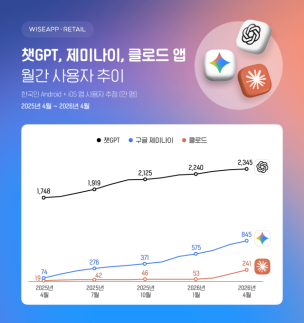 ChatGPT Ranked as Most Used AI App in South Korea in April, with Higher Female User Base Last month, ChatGPT emerged as the most widely used generative AI app among South Koreans, followed by Gemini and Claude. According to data from WiseApp and Retail, a market and competitor analysis solution based on real-time app and payment data, ChatGPT recorded 23.45 million monthly active users (MAU) in April. Gemini had 8.45 million users, while Claude reached 2.41 million. Among these, Claude experienced the most significant growth compared to the same month last year, with a user growth rate of 1148%. Gemini followed with a 1034% increase, and ChatGPT saw a 34% rise. A comparison of the gender distribution among the three apps revealed that ChatGPT had a higher proportion of female users. In contrast, Gemini and Claude had a higher percentage of male users, with Claude having the highest male user ratio at 62.1%. In terms of age demographics, ChatGPT was most popular among users in their 40s, while Gemini and Claude attracted a larger share of users in their 20s. ChatGPT is a generative AI chatbot service developed by OpenAI, launched on November 30, 2022. Claude is a large language model (LLM) developed by Anthropic, and Gemini is Google's LLM, both of which were released in March 2023.* This article has been translated by AI. 2026-05-19 10:37:29
 -
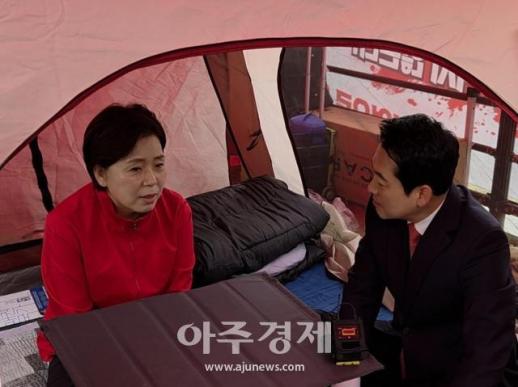 Jang Dong-hyuk Visits Yang Hyang-ja During Hunger Strike, Criticizes Democratic Party Jang Dong-hyuk, the representative of the People Power Party, criticized the Democratic Party on May 19, stating, "It is always the Democratic Party that passes bad laws and creates problems, and when issues arise, the People Power Party is left to resolve them." Jang made these remarks while visiting Yang Hyang-ja, a candidate for Gyeonggi governor, who has been on a hunger strike since the previous evening in front of Samsung Electronics' Pyeongtaek campus, urging for a major agreement between the company and its labor union. After speaking with Yang for about ten minutes, Jang emphasized, "Semiconductors are the future of South Korea. The Democratic Party irresponsibly passed the Yellow Envelope Law and is now doing nothing but standing by with their arms crossed." He also pointed out that "the president is only making general statements without taking any action." Jang urged President Lee Jae-myung and the Democratic Party to quickly address the problems arising from the Yellow Envelope Law they enacted. The Yellow Envelope Law, which refers to Articles 2 and 3 of the amended Trade Union Act, limits companies' ability to claim damages for union activities and guarantees the negotiation rights of subcontracted workers. The People Power Party believes that the law has influenced the Samsung Electronics union's decision to proceed with a strike that could result in economic losses of up to 100 trillion won. In response, Yang began her hunger strike the previous evening, emphasizing the urgency of the situation, as a strike by the Samsung Electronics union could impact not only semiconductor production but also the entire supply chain, including partner companies. Yang told Jang during his visit, "If the production line is disrupted, it could shake global trust and South Korea's semiconductor competitiveness. I am on this hunger strike with a desperate resolve to prevent this situation from occurring." Meanwhile, the Samsung Electronics union has announced plans to strike starting May 21, citing issues with performance bonus criteria, while the company and the union are currently undergoing post-adjustment procedures with the Central Labor Relations Commission. 2026-05-19 10:35:03
 -
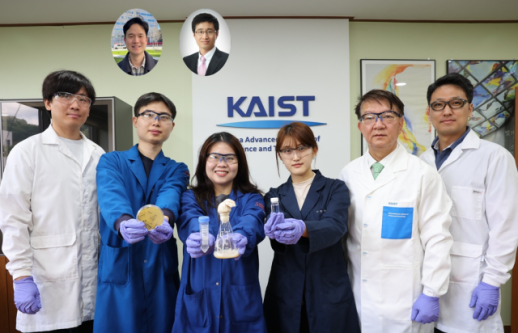 Hanwha Solutions and KAIST Develop Bio-Plastic Technology to Replace Naphtha Hanwha Solutions announced that it has partnered with KAIST to develop bio-technology capable of mass-producing eco-friendly raw materials for plastics and textiles using waste resources. The need for alternative raw materials has increased due to soaring naphtha prices and supply instability in the petrochemical industry. This achievement is being recognized as a next-generation key technology that ensures both resource supply stability and environmental sustainability. The technology developed by the Hanwha Solutions-KAIST Future Technology Research Institute utilizes glycerol, a byproduct of biodiesel production, as a raw material. The research team has developed high-efficiency microorganisms for producing 1,3-propanediol (1,3-PDO), a substance used in plastics and cosmetics, and has advanced the fermentation process to convert waste resources into high-value materials. The research has progressed to the stage of practical industrial application. The team successfully demonstrated high productivity in a 300-liter pilot process, which is a precursor to large-scale production facilities. This success indicates that results achieved in the laboratory can be replicated in real-world processing environments. Additionally, the research team applied a 'non-antibiotic process' that allows for stable raw material production without antibiotics, utilizing computer simulation-based 'digital design technology' to pre-design microbial metabolic processes. This approach has led to reduced production costs, mitigated environmental regulatory risks, and enhanced eco-friendliness. This achievement is the result of collaboration that began in November 2015, exemplifying a successful industry-academia partnership that combines KAIST's research capabilities with Hanwha Solutions' commercialization expertise. The teams have filed six patents and published 13 papers through this eco-friendly bio-platform research. Kim Jeong-dae, head of Hanwha Solutions' research institute, stated, "This research is significant as it confirms the potential to replace existing petrochemical processes using bio-based raw materials. We expect it to serve as an important foundation for sustainable chemical material production and industrial application in the future." Lee Sang-yeop, a distinguished professor in the Department of Bio-Chemical Engineering at KAIST, remarked, "This research demonstrates that microbial-based chemical production can be scaled up from the laboratory to actual industrial levels, contributing to the more eco-friendly production of various chemical materials." Meanwhile, Hanwha Solutions is collaborating with the Korea Energy Technology Institute and KAIST on key catalyst and process development as part of a national project led by the Ministry of Trade, Industry and Energy. Together with its affiliate Hanwha TotalEnergies, the company is also advancing commercialization validation and designing a commercial process with an annual capacity of 30,000 tons. In addition, it is concurrently developing bio-plastics and biodegradable materials to establish a plastic resource recycling ecosystem.* This article has been translated by AI. 2026-05-19 10:30:00
 -
 Samsung's Bespoke AI Refrigerator Impresses Tech Media in the U.S. and Europe Samsung Electronics' 2026 'Bespoke AI Family Hub' refrigerator is receiving praise from tech media in the U.S. and Europe. Analysts suggest that its advanced artificial intelligence (AI)-based ingredient management features are reducing household labor and attracting global consumer interest. According to reports on May 19, U.S. tech outlet Tom's Guide selected the refrigerator as a standout AI product in its 'AI Awards 2026,' which evaluates various products across categories such as PCs, mobile devices, wearables, and home appliances for practicality and completeness. The Samsung 'Bespoke AI Family Hub' was recognized in the smart home, appliance, and security sectors. The publication noted, "By combining Samsung's 'Vision AI' technology with Google's generative AI, Gemini, the refrigerator can recognize ingredients more accurately," adding that it distinguishes between avocados and zucchinis, as well as regular and diet cola. It also suggests personalized meal plans and shopping lists based on the ingredients stored. British tech outlet T3 also highlighted nine kitchen products that help reduce food waste, stating, "This year's Family Hub refrigerator has been upgraded to utilize AI and camera technology to minimize food waste." The internal camera recognizes the entry and exit of ingredients and manages expiration dates, providing timely notifications. U.S. business media outlet Business Insider praised the refrigerator for its ability to serve as a personalized shopping assistant through 'AI Vision' technology, stating, "It automatically manages ingredients and connects to purchasing missing items, creating a smart kitchen experience in daily life." The Family Hub series from Samsung Electronics, first introduced in 2016, has won a total of 10 innovation awards at the Consumer Electronics Show (CES), the world's largest IT and home appliance exhibition, affirming its competitive edge in the global market. This year's model significantly expands the range of ingredient recognition through its internal camera. It can identify fresh and processed foods, as well as packaged items and handwritten labels on containers, automatically registering them in a food list. The 'AI Food Manager' analyzes users' refrigerator usage patterns to inform them of necessary purchases and recommends recipes for questions like 'What should I eat today?' It also offers a 'Food Note' feature that analyzes ingredient usage over the week and provides reports for healthier eating habits.* This article has been translated by AI. 2026-05-19 10:28:06
 -
 Samsung Live: Another last-ditch round of talks underway as strike deadline looms SEOUL, May 19 (AJP) - Samsung Electronics and its largest labor union returned to the negotiating table on Tuesday for a second day of government-mediated talks, with a planned full-scale strike just two days away. Negotiators from both sides are working to reach a deal over disputes involving wages and performance bonuses following massive profits fueled by an unprecedented artificial intelligence (AI)-driven semiconductor supercycle. According to Samsung insiders, the closed-door session is underway at the National Labor Relations Commission (NLRC) in the administrative city of Sejong, in a last-ditch effort to avert the union's planned 18-day walkout scheduled to begin Thursday unless a deal is reached in time. The main focus of Tuesday's talks is whether the NLRC can put forward a final proposal acceptable to both sides. If accepted by management and union leaders, the mediated proposal will carry the same legal binding force as a collective bargaining agreement. Both sides reportedly tried to narrow their differences over profit-sharing for employees as well as caps on salary increases in their talks the previous day. Park Jung-bum, an NLRC official, was cautiously optimistic, saying both sides engaged constructively and are "finding common ground." Although talks are scheduled to end by 7 p.m., industry watchers expect the tug-of-war bargaining to continue late into the night or even into the next day, given the urgency of averting a strike that could have widespread economic repercussions across the country. Government authorities are also on high alert, having previously warned they could step in to halt the walkout if it poses a serious threat to the national economy. 2026-05-19 10:25:15
 -
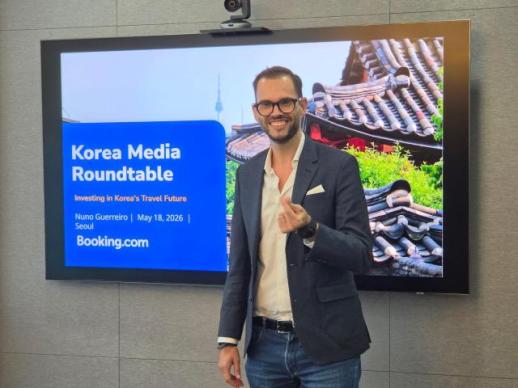 Booking.com Targets 30 Million Tourists with Hyper-Personalization in K-Small Cities "Without generative artificial intelligence (AI), we would never have discovered hidden gems in Korea, allowing seamless payments in local currency. The combination of AI search and local fintech will break down barriers for foreign tourists and drive them to small cities," said Nuno Guerreiro, Booking.com's Director for North Asia-Pacific. As the global travel platform celebrates its 30th anniversary, Booking.com is leveraging its 'Hyper-Personalization' technology to globalize local tourism in Korea. The goal is to disperse foreign tourists, currently concentrated in major cities like Myeongdong in Seoul, to boost local economies. This initiative aligns with the South Korean government's push for balanced regional development, aiming for an early achievement of 30 million inbound tourists. During a press briefing in central Seoul on May 18, Guerreiro highlighted the paradigm shift in the global travel industry and the potential of the Korean market. Having joined Booking.com in 2007 and spent 18 years in various global roles, he has focused on the Asian market for the past seven years. "We aim to expand the appeal of Korean tourism, which is currently concentrated in major cities, to a national level through hyper-personalization technology," he stated. The global travel industry has experienced unprecedented growth following the pandemic. According to Booking Holdings' first-quarter results, the number of nights booked increased by 6% year-over-year to 338 million. The total booking value rose by 15% to $53.8 billion, while quarterly revenue grew by 16% to $5.5 billion, demonstrating strong growth momentum. With support for over 40 languages and nearly 29 million accommodations, Booking.com's infrastructure has been a solid foundation for its growth. ◆ Hyper-Personalization as a Ticket to K-Small Cities: "Avoiding Crowds with AI" The Korean market boasts explosive inbound demand, ranking third in Asia for traveler searches from May to August this year. Booking.com is betting on the activation of 'local small city tourism' to distribute this demand nationwide. The dominance of individual travelers (82.9%) chasing K-culture has shifted the focus of the inbound tourism market. Additionally, 67% of all travelers want to discover new 'alternative destinations' using AI to avoid crowds at popular tourist spots. Hyper-personalization technology is key to overcoming the physical and psychological barriers that travelers face when heading to small cities. Its natural language-based AI search network identifies attractions in these areas, while a seamless payment infrastructure allows global travelers to pay in their local currency using platforms like Naver Pay and Kakao Pay. For instance, travelers from Brazil or the U.S. can book a small hanok accommodation in Gyeongju without facing any inconveniences related to currency exchange or payment refusals. In the first quarter of this year, the growth rate of Booking Holdings' payment platform surged by 24% year-over-year, with 72% of total booking transactions processed on the platform. In fact, customer data revealed that Gyeongju ranked first as the 'most hospitable city in Korea for 2026,' followed by Jeonju, Seogwipo, and Sokcho, showcasing a boom in regional tourism. The recent increase in long-term stays of over seven days, particularly among active seniors and multi-generational travelers, is also a positive sign for the activation of small city tourism. ◆ High Level of Technology Adoption: The Dominance of 'Connected Trip' Guerreiro identified 'high-value tourism' and 'hyper-personalized experiences' as key trends for 2026, driven by the remarkable technology adoption in the Korean market. According to Booking.com, 69% of Korean travelers used AI during their trips, 19 percentage points higher than the global average. In the Asia-Pacific region, 95% of consumers expressed optimism about AI usage, and 93% wanted AI features in future travel. Notably, the success of Booking.com's 'Connected Trip,' a one-stop service established over 20 years ago, is particularly evident in Korea. The usage rate for booking three or more elements, such as flights, accommodations, and activities, is 26% in Korea, significantly higher than the global average of 17%, demonstrating market sophistication. Guerreiro emphasized, "Our mission goes beyond simply attracting foreign tourists; we aim to lay the groundwork for sustainable growth for local communities. We will actively engage with the Korean government and relevant agencies to turn this vision into reality."* This article has been translated by AI. 2026-05-19 10:23:03
 -
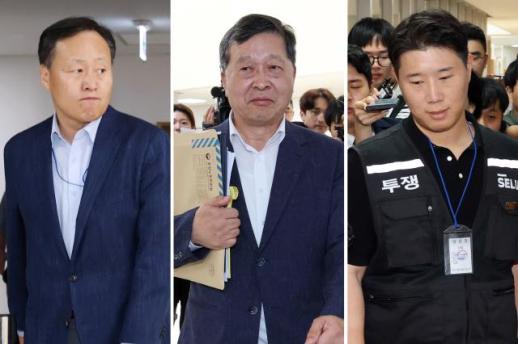 Samsung Electronics Strike Looms as Mediation Talks Continue Samsung Electronics and its labor union are entering the second day of mediation by the Central Labor Relations Commission, with both sides seeking common ground ahead of a potential strike. The commission is holding a closed-door meeting from 10 a.m. to 7 p.m. at the Government Sejong Building on May 19. Prior to the meeting, Choi Seung-ho, head of the joint action committee for the Samsung Electronics union, refrained from making comments. However, Yeom Myung-gu, head of the People Team for the Device Solutions division, stated, "We will do our best until the end" before entering the meeting. The negotiations come as Samsung Electronics prepares for a strike scheduled for May 21, following a request from Minister of Employment and Labor Kim Young-hoon to engage in mediation starting the previous day. During the initial meeting, both sides outlined their positions and discussed key issues, including the criteria and caps for performance bonuses. The commission has indicated that progress is being made. Park Jang-beom, a mediation officer, noted, "Both sides have been proactive. We have heard enough from both parties and are assessing whether there have been any changes to the various proposals discussed so far. The process has been smooth." As the meeting continues, there is keen interest in whether the two sides will find common ground. The commission plans to gather feedback from both parties and develop a mediation proposal. However, if discussions extend, the meeting may continue into the early hours of May 20, similar to the first mediation session held on May 11-12, which concluded in the early hours of May 13. The government has also indicated that it may invoke emergency mediation powers if the strike materializes.* This article has been translated by AI. 2026-05-19 10:20:12
 -
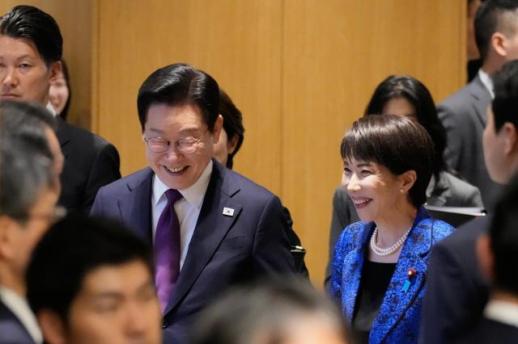 South Korea and Japan Discuss Mutual Oil Supply Cooperation at Summit South Korean President Lee Jae-myung and Japanese Prime Minister Sanae Takaichi are expected to discuss energy security and supply chain cooperation as key agenda items during their summit in Andong, South Korea, on May 19. Amid growing concerns over oil and petroleum product supply disruptions due to escalating tensions in the Middle East, the two leaders are reportedly considering measures for mutual supply of aviation fuel and other petroleum products in emergencies. To facilitate this, both governments and energy sectors are working on establishing a consultative body and coordinating the creation of a new dialogue on industrial and trade policies between the two nations. According to the Yomiuri Shimbun, the two governments are finalizing a joint document to be announced during the summit, which will outline cooperation on energy security. This document is likely to be released in the form of a "joint press release," focusing on strategies to enhance energy security and supply chain resilience. The Yomiuri Shimbun noted that since both countries rely heavily on the Middle East for crude oil imports, they are discussing plans to supply each other with oil and aviation fuel during crises. This initiative aims to establish a preemptive supply cooperation system. The report also highlighted that approximately 10% of South Korea's fuel oil exports go to Japan, leading to discussions on avoiding unnecessary export restrictions during emergencies. A Japanese government official stated, "It is important to avoid unnecessary export regulations even in crisis situations," according to the Yomiuri Shimbun. Cooperation in the liquefied natural gas (LNG) sector is also expected to be included in the joint document. Japan is the world's second-largest LNG importer, while South Korea ranks third. The two countries plan to discuss measures for supply chain stability and volume support during emergencies, addressing concerns over rising prices and transportation route uncertainties due to prolonged tensions in the Middle East. Additionally, the Nikkei reported that the two leaders are likely to agree on establishing a cooperative framework for crude oil procurement and stockpiling. There are also discussions about utilizing Japan's recently proposed $10 billion energy financing initiative, "Power Asia," to support energy security in Southeast Asian countries, aiming to stabilize regional supply chains and enhance the presence of both nations. New government channels will also be established to further specify energy cooperation plans. The Yomiuri Shimbun reported that a new "industrial and trade policy dialogue" involving senior officials from Japan's Ministry of Economy, Trade and Industry and South Korea's Ministry of Trade, Industry and Energy is set to be created. This dialogue is expected to cover a wide range of topics, including petroleum products, LNG, crude oil procurement, transportation, and supply chain enhancement. Security Issues, Including U.S.-China Relations, Also on the Agenda In addition to energy issues, the two leaders are expected to exchange views on U.S.-China relations and the security environment in East Asia. The Nikkei reported that they are likely to share insights from the recent meeting between U.S. President Donald Trump and Chinese President Xi Jinping held on May 14-15 in Beijing. Following the U.S.-China summit, both leaders had phone calls with President Trump to discuss the meeting's outcomes. Concerns have been raised that the deterioration of the situation in the Middle East could weaken U.S. engagement in Asia, and the implications of U.S.-China rapprochement on East Asian security are also seen as a backdrop for South Korea-Japan cooperation. However, there remain differences in defense cooperation. The Asahi Shimbun reported that during the first South Korea-Japan diplomatic and defense vice-ministerial meeting, known as the 2+2 meeting, held on May 7, Japan proposed signing a reciprocal logistics support agreement (ACSA) to facilitate fuel and supplies between the Self-Defense Forces and the South Korean military. However, South Korea expressed reservations, citing historical experiences of colonial rule that have led to significant domestic opposition to expanding cooperation with Japan's Self-Defense Forces. On the other hand, some defense exchanges are being restored. The Asahi reported that the Japan Maritime Self-Defense Force and the South Korean Navy are set to resume joint search and rescue exercises (SAREX) in early June for the first time since 2017. This development is seen in Japan as a sign of recovery in South Korea-Japan defense cooperation, which had cooled due to radar targeting issues in 2018. The upcoming summit appears to focus more on broadening practical cooperation in energy, supply chains, and security rather than resolving major issues in one fell swoop. As tensions in the Middle East and the potential for U.S.-China rapprochement grow, both South Korea and Japan are moving to manage the remaining differences in historical issues and security cooperation while expanding a framework centered on practical collaboration.* This article has been translated by AI. 2026-05-19 10:15:10
 -
 Shinsegae Chairman Jeong Yong-jin Apologizes for Starbucks 'Tank Day' Controversy Jeong Yong-jin, Chairman of Shinsegae Group, publicly apologized for the controversial 'Tank Day' marketing campaign conducted by Starbucks Korea on the anniversary of the May 18 Gwangju Democratization Movement. In a statement released on May 19, Jeong said, "On the day before the 46th anniversary of the May 18 Democratization Movement, Starbucks Korea, a subsidiary of our group, engaged in inappropriate marketing that should not have occurred and is unacceptable. This has caused deep wounds to the spirits of the May 18 victims, their families, and the public. On behalf of the group, I bow my head in apology." He described the incident as an unforgivable mistake that trivializes the pain and sacrifices of those who have dedicated themselves to the country's democracy. Jeong acknowledged, "I fully accept all responsibility for this matter and understand that no explanation will be easily accepted." He emphasized, "Above all, I take seriously the fact that our group lacked historical awareness and sensitivity regarding the historical pain of the South Korean community. I will comprehensively reassess our group's decision-making system to prevent such incidents from happening again." Jeong promised to take all necessary measures related to this incident. He stated, "We will conduct a thorough investigation into the circumstances and approval processes that led to this incident and transparently disclose the results. We will also review the content approval process for marketing materials across all subsidiaries and clarify the standards for review and content." Additionally, he mentioned, "To establish strict historical awareness and ethical standards, we will conduct training for all employees, including myself." In conclusion, Jeong reiterated, "Once again, I sincerely apologize to the spirits of the May 18 victims, their families, the citizens of Gwangju, the family of martyr Park Jong-cheol, and all those who sacrificed for democracy in this country." Starbucks Korea had been running a tumbler promotion event from May 15 to May 26, during which it used phrases like 'Tank Day' and 'Bang on the Desk.' 'Tank' refers to the military tanks that entered Gwangju in 1980, while 'Bang on the Desk' evokes a statement made during the 1987 torture and death of martyr Park Jong-cheol, where authorities attempted to downplay and conceal the cause of death (the phrase suggests that he died suddenly after banging on a desk). This sparked rapid criticism online. In response, Jeong immediately notified Son Jeong-hyun, CEO of Starbucks Korea, of his dismissal. Son expressed, "I deeply apologize to the spirits of the May 18 victims, the May 18 groups, the citizens of Gwangju, and the families of martyr Park Jong-cheol for the hurt caused by our marketing that contained inappropriate expressions regarding the May 18 Democratization Movement," as he stepped down. On the same day, President Lee Jae-myung expressed his outrage on X (formerly Twitter), stating, "An event like 'Tank Day' that mocks the sacrifices and struggles of the victims and citizens on the historic May 18 Democratization Movement is unacceptable. I am furious at the inhumane and disgraceful behavior of those who deny the fundamental values of the South Korean community and human rights." He added, "How many lives were unjustly lost that day, and how severe is the damage to justice and history? What kind of resentment led to such actions? There must be corresponding moral, administrative, legal, and political accountability." * This article has been translated by AI. 2026-05-19 10:03:20