
Journalist

Nodirbek Rasulov
-
 Japan's Arms Export Ambitions: Are There Enough Products to Sell? Japan has long faced peculiar restrictions on the military equipment it can export. Despite possessing advanced capabilities, the country was limited to selling products for non-combat purposes such as structure, transport, surveillance, and mine clearance. This effectively meant that weapons could not be sold. However, the Japanese government recently revised its operational guidelines for the "Three Principles on Transfer of Defense Equipment," easing these restrictions. With case-by-case reviews, Japan can now export finished products with lethal capabilities. As South Korea's defense industry rapidly expands, Japan's long-dormant defense sector is beginning to awaken. The Center for Strategic and International Studies (CSIS), a U.S. think tank, views this move as a significant change for Japan's defense industry to enter the global market. However, it cautions that regulatory relaxation does not automatically lead to international competitiveness. Japanese companies must demonstrate a willingness to compete in overseas markets, supported by government initiatives for sales, joint development, and technology transfer. Additionally, Japan lacks major defense contractors like the U.S. firm Lockheed Martin, and even large manufacturers such as Mitsubishi Heavy Industries have a minimal focus on defense, making large-scale investments or business expansions challenging. While the regulatory barriers have been lifted, securing competitiveness remains a separate issue. The difficulty in transforming Japan's defense industry into an export sector stems from its long-standing market structure. For decades, the Self-Defense Forces were the sole customer for Japanese defense companies. With exports restricted, there was no opportunity to distribute development costs through bulk sales to allied nations like U.S. or European firms. Even when developing new tanks or armored vehicles, annual procurement quantities were limited to just a few dozen. The costs of maintaining production lines and investing in facilities were directly added to the equipment prices, creating a so-called "trap of low-volume, high-variety production." Profitability has also been low. The Ministry of Defense has expanded competitive bidding to enhance transparency and prevent corruption, but the price competition pressure on specialized defense materials has worsened companies' profitability. The average operating profit margin in the defense sector has remained at 2-3%, with many firms experiencing losses. Companies engaged in global business also face reputational risks. The mere fact of producing weapons can exclude them from ESG (Environmental, Social, and Governance) investments and negatively impact consumer perception. As a result, companies have gradually exited the defense sector. Komatsu halted new development of armored vehicles for the Ground Self-Defense Force in 2019, and Daicel withdrew from producing emergency escape device components for aircraft the following year. Sumitomo Heavy Industries and Mitsui E&S Shipbuilding ceased machine gun production in 2021, transferring their naval projects to Mitsubishi Heavy Industries. With low profitability and significant reputational burdens, there is little incentive for private companies to remain in the defense sector. Naval projects have been particularly stifled. Once, IHI operated a large shipyard in Toyosu, Tokyo, but it has since been replaced by high-rise apartments and commercial facilities. IHI last built a vessel, the Akebono frigate, in 2000 and has since exited shipbuilding. According to the Nikkei, the only companies currently capable of constructing new frigates in Japan are Mitsubishi Heavy Industries and Japan Marine United (JMU). As Japan seeks to ramp up arms exports, its shipbuilding capabilities are limited to these two firms. Given this reality, simply lifting export restrictions will not enable Japan to compete effectively in the international defense market. The lack of experience in bulk deliveries to foreign customers and the diminished shipbuilding infrastructure cannot be restored overnight. Awakening Japanese Defense Industry However, it is premature to conclude that Japan's defense industry lacks competitiveness based solely on its current state. Many of the weaknesses revealed thus far stem not from a lack of technological capability but from being constrained from selling, which has prevented the industry from achieving scale. Increased overseas sales could lead to larger production volumes and lower unit costs. The recent lifting of the five-type restriction signals the beginning of a shift away from Japan's classification as a "high-cost domestic equipment" producer. On April 18, Japan and Australia formally signed a contract to supply 11 upgraded Mogami-class frigates for the Royal Australian Navy. Three of these will be built in Japan by Mitsubishi Heavy Industries, while the remainder will be constructed in Australia starting in the early 2030s. Reuters described this as the most significant deal since Japan relaxed its arms export regulations in 2014. However, the Nikkei reported that prioritizing the three ships for Japan could delay the deployment of Self-Defense Forces vessels. The fact that even building just three ships may necessitate postponing domestic defense projects highlights that Japan's shipbuilding capacity is still insufficient. South Korea's defense industry excels in pricing, delivery times, and mass production capabilities. Due to the geopolitical reality of the Korean Peninsula's division, South Korea has maintained a certain level of arms production and maintenance infrastructure even in peacetime, contributing to its competitiveness. While U.S. and European defense firms have shown limitations in pricing and delivery, South Korea has expanded its market by providing quality weapons at reasonable prices and in a timely manner. Japan has largely remained outside this competitive landscape. However, with the lifting of the five-type restriction, this dynamic is beginning to change. While it will not be easy for Japan to catch up to South Korea's defense industry, the emergence of Japan as a variable in the competitive landscape that South Korea has enjoyed is evident. 2026-05-19 04:09:00
 -
![[ASIA BIZ] Pop Marts Revenue Doubles in China Amid Art Toy Market Growth](https://image.ajunews.com//content/image/2026/05/16/20260516224426931000_518_323.jpg) [[ASIA BIZ]] Pop Mart's Revenue Doubles in China Amid Art Toy Market Growth The Chinese art toy market has shown robust growth, with related companies reporting generally positive performance in the first quarter of this year. Pop Mart, a leading Chinese art toy brand, estimated its first-quarter revenue increased by 75% to 80% compared to the same period last year. Notably, sales in the mainland Chinese market more than doubled year-on-year, demonstrating strong consumer demand despite sluggish domestic conditions. However, growth in overseas markets has shown signs of slowing. Sales in the Asia-Pacific region rose by 25% to 30%, while the Americas saw an increase of 55% to 60%, and Europe and other regions grew by 60% to 65%. Compared to last year's explosive overseas growth, these figures indicate a significant decline, raising concerns about the sustainability of future growth. In response, Pop Mart stated, "We will further enhance the commercial value of the Labubu intellectual property (IP) through high-quality products and rich content." The company plans to expand its business beyond product sales to create a comprehensive IP ecosystem that includes Labubu film production and the development of a Labubu theme park. Miniso also continued its solid performance. As the second-largest art toy brand in China, owning Top Toy, Miniso reported first-quarter sales of up to 5.73 billion yuan, marking an increase of approximately 28% to 29% year-on-year, with net profits expected to surge by as much as 200%. The rapid growth of Top Toy appears to be driving this improvement. Consequently, Miniso is pursuing plans to spin off Top Toy and list it separately. The company submitted a listing application to the Hong Kong Stock Exchange last month. Unlike Pop Mart, Top Toy adopts a strategy of sourcing 70% of its products from external IP characters. This approach contrasts with Pop Mart's focus on its own characters, allowing Top Toy to quickly introduce various popular IPs and expand its market share. Sun Yuanwen, the founder of Top Toy, remarked, "If Pop Mart is the iOS of the art toy industry, then Top Toy is Android." Additionally, 52 Toys, which has received investment from the Chinese video platform Bilibili, has been rumored to be preparing for a listing on the Hong Kong stock market since last year.* This article has been translated by AI. 2026-05-19 04:04:28
[[ASIA BIZ]] Pop Mart's Revenue Doubles in China Amid Art Toy Market Growth The Chinese art toy market has shown robust growth, with related companies reporting generally positive performance in the first quarter of this year. Pop Mart, a leading Chinese art toy brand, estimated its first-quarter revenue increased by 75% to 80% compared to the same period last year. Notably, sales in the mainland Chinese market more than doubled year-on-year, demonstrating strong consumer demand despite sluggish domestic conditions. However, growth in overseas markets has shown signs of slowing. Sales in the Asia-Pacific region rose by 25% to 30%, while the Americas saw an increase of 55% to 60%, and Europe and other regions grew by 60% to 65%. Compared to last year's explosive overseas growth, these figures indicate a significant decline, raising concerns about the sustainability of future growth. In response, Pop Mart stated, "We will further enhance the commercial value of the Labubu intellectual property (IP) through high-quality products and rich content." The company plans to expand its business beyond product sales to create a comprehensive IP ecosystem that includes Labubu film production and the development of a Labubu theme park. Miniso also continued its solid performance. As the second-largest art toy brand in China, owning Top Toy, Miniso reported first-quarter sales of up to 5.73 billion yuan, marking an increase of approximately 28% to 29% year-on-year, with net profits expected to surge by as much as 200%. The rapid growth of Top Toy appears to be driving this improvement. Consequently, Miniso is pursuing plans to spin off Top Toy and list it separately. The company submitted a listing application to the Hong Kong Stock Exchange last month. Unlike Pop Mart, Top Toy adopts a strategy of sourcing 70% of its products from external IP characters. This approach contrasts with Pop Mart's focus on its own characters, allowing Top Toy to quickly introduce various popular IPs and expand its market share. Sun Yuanwen, the founder of Top Toy, remarked, "If Pop Mart is the iOS of the art toy industry, then Top Toy is Android." Additionally, 52 Toys, which has received investment from the Chinese video platform Bilibili, has been rumored to be preparing for a listing on the Hong Kong stock market since last year.* This article has been translated by AI. 2026-05-19 04:04:28 -
 China's Art Toy Economy Thrives with Emotional Consumerism A massive 6-meter tall Molly figure with blue eyes and a crown, themed merchandise from the Chinese blockbuster game "Black Myth: Wukong," traditional flower crown refrigerator magnets from the National Museum of China, quirky duck plush toys from the Beijing roast duck restaurant Quanjude, and advanced AI figures capable of conversation were among the diverse cultural goods showcased at the event. Beijing Chaoyang Park Transformed into a 'Goods Paradise' The First National Cultural Goods and Art Toy Festival took place on May 15 at Beijing's Chaoyang Park. Covering an area of approximately 20,000 square meters, equivalent to ten soccer fields, the festival featured trendy toys from major Chinese art toy IP companies like Labubu and Wakuku, as well as themed merchandise from national institutions such as the Beijing Palace Museum and the Dunhuang Three Thousand Retreat Museum. Over 10,000 art toys from various regions, including cultural goods selected by 31 provinces and autonomous regions, were on display. Despite being a Friday afternoon, crowds continuously flocked to the venue to explore the cultural goods and art toys, highlighting the current state of China's expanding art toy and merchandise market. This event, the first national-level exhibition of cultural goods and art toys in China, was organized by the Ministry of Culture and Tourism and the Beijing Municipal Government. Huozijing, deputy director of the Beijing Municipal Bureau of Culture and Tourism, stated at a press conference on May 9 that the event represents an important attempt for Beijing to establish itself as a hub for national cultural creative industries and to lead new consumer trends. China's Art Toy Market Set to Reach 20 Trillion Yuan In recent years, the market for art toys and related merchandise in China has experienced rapid growth. Known as "chaowan" (潮玩) in China, which translates to "trendy toys," the art toy industry is projected to surpass 110.1 billion yuan (approximately $24 billion) in sales by 2026, growing at an annual rate of 20%. This marks a more than 15-fold increase from 6.3 billion yuan in 2015. The art toy industry in China has successfully combined a robust manufacturing supply chain with mobile platform-based fandom culture, enabling rapid commercialization of intellectual property (IP). Notable brands include Pop Mart, which has grown into a global art toy brand with its whimsical monster character Labubu, as well as Top Toy under the Chinese version of Daiso, Miniso, and 52 Toys, which has received investment from the Chinese video platform Bilibili, among others. The growth of the art toy market is driven by the increasing emotional consumption among younger consumers. Art toys and merchandise fulfill the collecting preferences and emotional expression desires of young people, providing them with a sense of psychological comfort. According to the market research firm iMedia Research, China's so-called "emotional economy" is expected to reach approximately 2.3 trillion yuan by 2025 and exceed 4.5 trillion yuan by 2029. Chinese Goods Industry Evolving with 'Emotional Consumption' The Chinese government is also viewing the cultural goods and art toy market as a new growth engine for domestic consumption amid sluggish economic conditions. In a consumer promotion plan announced last November, character and figure art toys were identified as one of ten sectors to be developed into a 100 billion yuan industry. In China, art toys and merchandise consumption is perceived not merely as purchasing products but as engaging in cultural activities that involve emotional, aesthetic, and experiential consumption. The integration of pop-up stores, exhibitions, random draws, and social media culture has transformed art toys into an offline experiential consumption industry. The Chinese government plans to categorize this as an "IP economy" centered on characters and content, fostering it as a type of service consumption linked to culture, tourism, and entertainment. Labubu Leads Chinese IP Expansion Globally Moreover, art toys are rapidly emerging as a new soft power for promoting Chinese culture. Moving away from the image of being a "paradise for counterfeit toys," China is evolving into a powerhouse of intellectual property. Pop Mart, which originated in China, is capturing the attention of young people in Southeast Asia, Europe, and the United States with Labubu, positioning itself as a leader in global toy industry trends. Nearly half of Pop Mart's revenue now comes from overseas. A spokesperson for the Chinese Foreign Ministry noted that "more and more foreigners are understanding China and gaining emotional resonance," referencing Labubu's popularity. The Hong Kong South China Morning Post analyzed that China is at a turning point, similar to the growth phases of American brands like Disney and Marvel, and Japanese brands like Pokémon and Hello Kitty. In particular, art toys are actively targeting the South Korean market, which has been described as an "IP desert." Following Pop Mart's success, Top Toy and 52 Toys have already entered Korea, and recently, Haiyuan opened a flagship store in Seoul's Seongsu-dong, seeking to expand into the Korean market. This indicates that local art toy IPs with global influence are lacking in Korea, allowing Chinese toy companies to gain a foothold in the market.* This article has been translated by AI. 2026-05-19 04:03:00
 -
 Samsung Electronics and Labor Union Begin Second Round of Negotiations Ahead of Strike Shinsegae Group CEO Fires Starbucks Korea Chief Over Controversial Marketing Shinsegae Group Chairman Jeong Yong-jin has dismissed Son Jeong-hyun, the CEO of Starbucks Korea (SCK Company), following a backlash over an inappropriate marketing event held on the anniversary of the Gwangju Uprising. On May 18, Shinsegae Group officially announced that Chairman Jeong had notified Son of his termination. Jeong reportedly expressed outrage upon learning of the marketing controversy on the Starbucks Korea app and website, instructing that the strongest disciplinary actions be taken against those responsible. President Lee Criticizes Starbucks for 'Tank Day' Marketing as 'Mockery of Democracy' President Lee Jae-myung strongly condemned the 'Tank Day' marketing campaign by Starbucks Korea on May 18, stating it disrespected the sacrifices of Gwangju victims and the citizens' struggle. Following the dismissal of Son Jeong-hyun, President Lee publicly criticized the campaign. He posted on his X (formerly Twitter) account, questioning how such an event could be held on a day commemorating the historic Gwangju Uprising. He expressed anger over the lives lost that day and the damage to justice and history, condemning the inhumane actions of those who deny the values of the South Korean community and democracy. Samsung Electronics and Labor Union End First Day of Negotiations Without Progress With a strike looming just three days away, Samsung Electronics and its labor union met for the first day of the second round of negotiations at the Central Labor Relations Commission but concluded without significant progress. On May 18, representatives from Samsung and the joint labor action committee convened at the commission in Sejong City starting at 10 a.m. The meeting wrapped up around 6:20 p.m., about 40 minutes earlier than scheduled. After the negotiations, Choi Seung-ho, chairman of the Samsung Electronics branch of the Samsung Group's labor union, told reporters they would reconvene at 10 a.m. the following day to continue discussions. The negotiations were divided into morning and afternoon sessions, with the morning focused on presenting each side's positions and demands, while the afternoon involved more contentious discussions. The union has stated that if negotiations fail, they will proceed with the planned strike on May 21, despite government threats to invoke emergency mediation to halt the strike. Drunken Marine Corps Soldier Found with Blank Ammunition During Leave, Military Investigation Underway A Marine Corps soldier on leave was reported to police while intoxicated, leading to the discovery of blank ammunition in his possession, prompting a military investigation. The military suspects the soldier may have smuggled the ammunition out during training. According to the Marine Corps, on May 16, police received a report about a man passed out near Yongsan Station in Seoul. Upon arrival, they identified the man as a Marine Corps soldier on leave. During a search of his belongings, police found multiple rounds of blank ammunition. Recognizing the seriousness of the situation, they transferred the soldier's custody to the military police. Special Prosecutors Seek Arrest Warrant for Former KTV Director on Sedition Charges The second special prosecutor team, led by Kwon Chang-young, has sought an arrest warrant for Lee Eun-woo, the former director of KTV (Korean Broadcasting), on charges of sedition for promoting the legitimacy of martial law shortly after its declaration on December 3. On May 18, the special prosecutor's office announced it had filed for the warrant, citing Lee's alleged actions of repeatedly broadcasting news that justified the martial law and selectively blocking or deleting news critical of it from December 3 to December 13, 2024. The special prosecutor's office explained that upon reviewing records from a previous investigation that did not lead to charges, they found evidence that Lee had failed to uphold the media's role in monitoring state power, supporting and protecting seditionists during and after the martial law period. This led to the decision to reopen the investigation under the comprehensive special prosecution law.* This article has been translated by AI. 2026-05-18 23:55:07
 -
 CJ Group Employee Personal Information Leaked via Telegram CJ Group has reported a leak of employee personal information through a Telegram channel. According to industry sources, the channel, established in 2023, contained the mobile phone numbers, job titles, internal phone numbers, and photos of over 330 female employees of CJ Group. Immediately following the leak, CJ Group initiated an investigation, suspecting that the information was accessed by an insider rather than through external hacking. The company is also preparing to report the incident to relevant authorities and request an investigation. A CJ Group representative stated, "We recognize the seriousness of the situation and plan to take necessary measures to prevent further harm."* This article has been translated by AI. 2026-05-18 23:54:00
 -
 Special Prosecutors Seek Arrest Warrant for Former KTV Director Lee Eun-woo on Sedition Charges The second special investigation team led by Kwon Chang-young is pursuing the arrest of Lee Eun-woo, the former director of KTV (Korean Broadcasting System), on charges of promoting sedition following the declaration of martial law on December 3, 2024. On May 18, the special investigation team announced in a press release that it had applied for an arrest warrant for Lee on sedition charges. The team alleges that Lee used his authority over news broadcasts and scrolling news on the public channel to repeatedly and intensively report news justifying the legitimacy of the martial law and proclamations from December 3 to December 13, while selectively blocking and deleting news that criticized or opposed these actions. The special investigation team explained the rationale behind the warrant request. After reviewing records from a previous investigation that did not lead to charges against Lee, they found that he had lost the media's essential role of checking and monitoring state power. This was evident not only during the martial law period but also after its repeal, as he supported and protected the forces involved in the sedition. Consequently, they decided to reopen the investigation under the comprehensive special prosecution law. Currently, Lee is under investigation for allegedly instructing his staff to remove subtitles that stated "martial law is illegal" during the declaration and for directing the news team to focus on the president and proclamations while excluding political news. Earlier, on May 15, during a sentencing hearing, the sedition special investigation team sought a five-year prison sentence for Lee.* This article has been translated by AI. 2026-05-18 23:52:58
 -
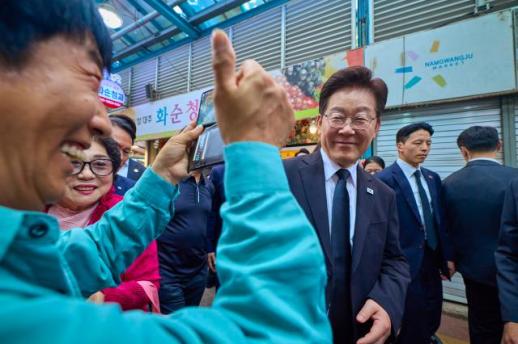
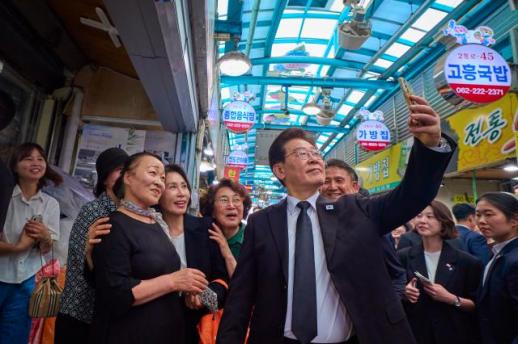 President Lee Visits Andong Market Ahead of Japan-South Korea Summit President Lee Jae-myung visited the Andong Market in North Gyeongsang Province on May 18, engaging with citizens and assessing local economic conditions.According to a written briefing from Deputy Spokesperson Ahn Gwi-ryeong, the visit was organized to connect with residents and demonstrate a commitment to revitalizing the local economy, one day before the summit with Japanese Prime Minister Sanae Takaichi, scheduled to take place in his hometown of Andong on May 19.During his visit, President Lee responded to requests for photos from citizens, greeted children, and sampled local delicacies such as sundae (blood sausage), fish cakes, tangerines, and bananas while conversing with vendors.Citizens welcomed President Lee, expressing sentiments like, "We missed you," and "Welcome back to your hometown."For dinner, President Lee enjoyed Andong's famous spicy chicken dish and also interacted with American tourists dining nearby, inquiring about the market situation from the president of the local merchants' association, as reported by Deputy Spokesperson Ahn.* This article has been translated by AI. 2026-05-18 23:48:48
 -
 President Lee Criticizes Starbucks' 'Tank Day' Marketing as 'Mockery of Democracy' President Lee Jae-myung strongly criticized Starbucks Korea on May 18 for its controversial 'Tank Day' marketing campaign, stating it was a "mockery of the sacrifices made by the victims in Gwangju and the bloody struggle of its citizens."The criticism comes as Starbucks Korea's CEO, Son Jeong-hyun, was abruptly dismissed amid the backlash. President Lee's public condemnation adds to the mounting pressure on the company.On his social media platform X (formerly Twitter), President Lee wrote, "To have an event called 'Tank Day' on the historic anniversary of the Gwangju Uprising is a mockery of the sacrifices made by the victims and the struggle of the citizens of Gwangju."He further questioned, "How many innocent lives were lost that day, and how severe is the damage to justice and history? What kind of malice led to such an act? I am outraged by the inhumane behavior of these unscrupulous merchants who deny the values of the South Korean community, basic human rights, and democracy."President Lee also emphasized that there should be appropriate moral, administrative, legal, and political accountability, asking, "Have they apologized to the victims' families of the May 18 incident?"Earlier in the day, Shinsegae Group announced the dismissal of CEO Son Jeong-hyun in response to the marketing controversy. Reports indicate that Chairman Jeong Yong-jin personally received updates on the situation before informing Son of his termination.The controversy erupted when Starbucks Korea used the term 'tank' in conjunction with a promotional event for online tumbler sales, which included the phrase 'tap on the desk.' Critics argued that this language evoked memories of the Gwangju Uprising and the torture and death of activist Park Jong-cheol.As criticism spread, Starbucks Korea halted the event and removed related posts.* This article has been translated by AI. 2026-05-18 23:48:00
 -
 Shinsegae Group CEO Dismisses Starbucks Korea Head Amid Controversy Shinsegae Group Chairman Jeong Yong-jin has dismissed Sohn Jung-hyun, CEO of Starbucks Korea (SCK Company), following a marketing event that sparked public outrage on the anniversary of the Gwangju Uprising. On May 18, Shinsegae Group announced that Chairman Jeong had officially notified Sohn of his dismissal. Jeong reportedly expressed his anger upon learning of the marketing controversy involving the Starbucks Korea app and website, instructing that the strongest disciplinary measures be taken against those responsible. The controversy began with a tumbler promotion that Starbucks Korea launched on May 15. On the anniversary of the Gwangju Uprising, the company used phrases such as 'Tank Day' and 'Bang on the Desk' in its promotional materials, which evoked memories of suppression and torture during the military dictatorship. These phrases quickly spread across online communities and social media, leading to widespread criticism that the company was intentionally belittling the Gwangju Uprising and the 1987 torture death of activist Park Jong-cheol. Chairman Jeong recognized the seriousness of the situation, noting that it occurred on a national day of remembrance for the painful chapters of modern Korean history. Following his directive, Shinsegae Group conducted a thorough internal investigation, resulting in the decision to dismiss the CEO. In addition to Sohn, the executive responsible for planning and overseeing the event was also dismissed. The company initiated immediate disciplinary procedures against all employees involved in the execution of the promotion. Starbucks Korea issued an apology shortly after the incident and distributed an official statement from Sohn. However, the Mart Industry Labor Union strongly pressured Shinsegae, demanding an end to what they termed 'anti-historical actions.' In a statement, Shinsegae Group announced plans to thoroughly review its marketing and operational processes to prevent similar incidents in the future and to significantly enhance educational programs aimed at fostering a proper historical awareness within the organization.* This article has been translated by AI. 2026-05-18 23:25:20
 -
 Samsung Electronics and Labor Union End First Day of Mediation Ahead of Strike As a strike deadline approaches, Samsung Electronics and its labor union concluded the first day of mediation at the Central Labor Relations Commission without significant progress. On May 18, Samsung Electronics and the joint labor struggle headquarters began their first day of mediation at the Central Labor Relations Commission in Sejong City at 10 a.m. The meeting wrapped up around 6:20 p.m., approximately 40 minutes earlier than the scheduled 7 p.m. end time. After the negotiations, Choi Seung-ho, chairman of the Samsung Electronics branch of the Samsung Group's labor union, told reporters, "The union is sincerely engaging in negotiations," adding that they would return for discussions at 10 a.m. the following day. However, Choi refrained from commenting on the company's stance, the likelihood of reaching an agreement, or various issues surrounding the potential strike, including a court's injunction against labor actions. Yeom Myung-gu, the chief negotiator for the company, also left without making any statements. The negotiations were divided into morning and afternoon sessions. In the morning, both sides presented their positions and demands, while the afternoon focused on contentious issues. The primary point of contention is the criteria for performance bonuses (OPI and excess profit bonuses). The union is demanding a shift from the current economic value-added (EVA) basis to operating profit for calculating bonuses, as well as an increase in the payment ceiling. In contrast, the company has expressed reluctance to make drastic changes to the existing system due to uncertainties in the business environment. The Central Labor Relations Commission evaluated the day's negotiations positively. Park Soo-geun, a mediator from the Commission, indicated a willingness to reach an agreement when asked if a proposal would be made the next day, saying, "That should be the case." Park Jeong-beom, the Commission's mediation director, noted, "Both sides engaged very actively in negotiations, and we heard sufficient opinions from both parties," adding that the meeting proceeded smoothly overall. After the first day of negotiations yielded no significant outcomes, both sides will reconvene for the second day of mediation at 10 a.m. on May 19. The Commission plans to narrow the differences between the two sides by 7 p.m. that day. However, given the substantial differences in positions, there is a possibility that the meeting could extend into the night or even continue until May 20. The union has stated that if negotiations break down, they will proceed with the planned strike on May 21. Despite the government's warning of invoking emergency mediation powers to forcibly halt the strike, the union remains steadfast in its plans.* This article has been translated by AI. 2026-05-18 23:21:15