
Journalist

Nodirbek Rasulov
-
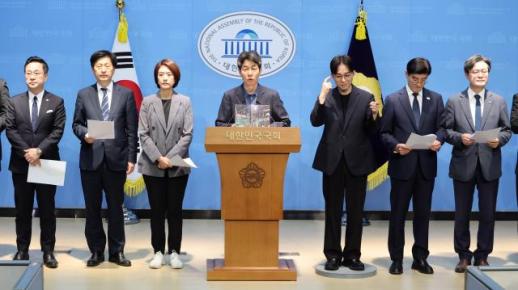 Political Tensions Rise Over GTX Construction Issues in Seoul Tensions escalated on May 18 during a full meeting of the National Assembly's Administrative Safety Committee, as both the ruling and opposition parties engaged in accusations against candidates for Seoul mayor. The Democratic Party and the People Power Party each alleged that their respective candidates, Oh Se-hoon and Jung Won-oh, violated election laws. The conflict intensified following allegations of Jung's misconduct and issues related to the rebar omission in the GTX-A project, as well as Oh's attendance at the audit garden completion ceremony. Democratic Party members of the committee reported Oh and acting mayor Kim Sung-bo to the Seoul Metropolitan Police Agency for allegedly violating Article 86, Section 2 of the Public Official Election Act, which prohibits actions that influence elections. This accusation stemmed from Oh's attendance at the completion ceremony held on May 12 at Gwanghwamun Square. In response, People Power Party members stated they would file a complaint against Jung for spreading false information regarding the GTX-A rebar omission. They claimed that Jung and his campaign team were inciting fear with sensational phrases like "raw GTX" and "Seoul's safety negligence". They emphasized that the Seoul city government had reported anomalies to the Ministry of Land, Infrastructure and Transport, countering Jung's assertion that the report was made five and a half months after the issues arose. They expressed deep regret over the use of public safety concerns in the election. Earlier in the meeting, lawmakers clashed over allegations against Jung and the controversies surrounding the GTX-A project and the audit garden. A Seoul city official stated that relevant institutions had been informed, which sparked further debate. People Power Party lawmaker Park Soo-min questioned, "Is it necessary for all matters to be reported directly to the mayor when they have already been communicated to the relevant institutions?" Conversely, Democratic Party members held a separate press conference, asserting that the People Power Party claimed the city had already reported the issues through official documents. They criticized the evidence presented as merely a few pages from a 400-500 page monthly construction management report, arguing that while the city was aware of the problems, it failed to adequately share this information for prompt action by relevant agencies.* This article has been translated by AI. 2026-05-18 22:51:00
 -
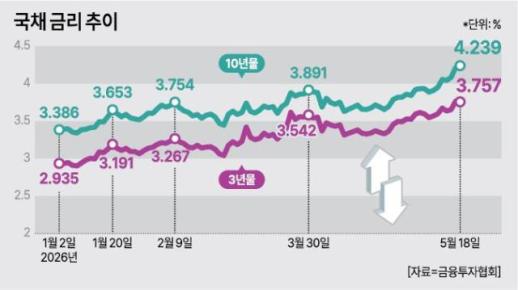 Inflation Fears Hit South Korea, U.S., and Japan as Bond Yields Reach Multi-Year Highs Concerns over inflation are escalating globally, pushing government bond yields to their highest levels in years. Analysts suggest that future interest rates will largely depend on international oil prices. According to the Korea Financial Investment Association, on May 18, the yield on three-year government bonds closed at 3.757%, while the yield on ten-year bonds reached 4.239%. This ten-year yield is the highest since October 13, 2022, when the "Legoland incident" occurred. In May alone, yields have risen by 16.2 basis points for three-year bonds and 31.6 basis points for ten-year bonds. The rise in South Korean government bond yields reflects growing inflation concerns. Sustained high oil prices have driven up energy supply costs, increasing upward pressure on prices, while the economy is performing better than expected. As a result, the Bank of Korea is increasingly likely to shift its monetary policy toward raising interest rates, a sentiment that is being reflected in the market. Additionally, there is heightened caution regarding government bond auctions, further complicating the situation. External factors are also influencing bond yields. Following a U.S.-China summit that yielded no significant outcomes, international oil prices have surged past $100 per barrel. Brent crude futures for July delivery have risen to $110 per barrel on the ICE Futures Exchange, while West Texas Intermediate (WTI) futures for June delivery have also surpassed $100 per barrel. This increase is attributed to concerns over stalled peace negotiations between the U.S. and Iran. Yields on government bonds in major economies are also climbing sharply. The rise in international oil prices has intensified inflationary pressures, leading to widespread concerns about central bank tightening. According to the CME FedWatch, the interest rate futures market reflects a 41.7% probability that the Federal Reserve will raise interest rates by December. The yield on the benchmark U.S. 10-year Treasury note reached 4.597% on May 15 and has remained above 4.6% as of May 18. The yield on the two-year U.S. Treasury note, which is sensitive to monetary policy, is above 4.10%, while the 30-year Treasury yield has exceeded 5.14%, marking its highest level since 2007. Japanese government bond yields have also surged, contributing to global bond market anxiety. Following an unexpected rise in Japan's inflation rate in April, the yield on 10-year Japanese government bonds has climbed to around 2.7%, the highest level in 29 years since 1997. In the UK, bond yields have reached multi-decade highs as a pro-expansion prime ministerial candidate emerges. Experts predict that the current surge in yields is unlikely to reverse anytime soon. Im Jae-kyun, a researcher at KB Securities, stated, "Despite a significant rise in yields, the government intervened verbally on May 15, but the Bank of Korea has shifted toward raising interest rates. Concerns about supply and demand are also emerging, making it difficult for market anxiety to ease quickly." Ultimately, international oil prices are seen as a key variable influencing future interest rate directions. Ahn Ye-ha, a researcher at Kiwoom Securities, noted, "Given the structural challenges in resolving the increased duration premium due to expanded fiscal burdens in major countries, market interest rates can only shift direction if oil prices decline significantly. This indicates that unless geopolitical uncertainties are resolved, volatility is likely to persist." 2026-05-18 22:49:02
 -
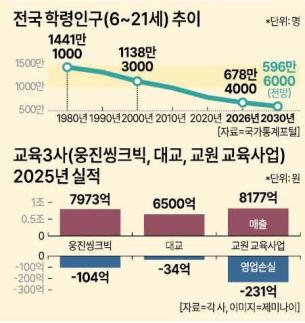 Education Industry Faces Crisis Amid Declining Birth Rates Amid a declining birth rate, leading education companies in South Korea are expressing a sense of crisis, stating they are at a "survival crossroads." The drop in birth rates directly impacts the school-age population, which is essential for the education market. Facing slowed growth, major education firms are seeking solutions through global expansion driven by artificial intelligence (AI) and edtech, as well as diversifying their portfolios to include senior care and lifelong learning. According to the National Statistical Portal, the school-age population (ages 6 to 21) is estimated at 6.784 million this year. This figure has been on a steady decline since peaking at 14.411 million in 1980. By 2030, the school-age population is projected to fall below 6 million, reaching approximately 5.966 million. The population crisis poses a "survival challenge" for education companies that have traditionally relied on this demographic for growth. Their core education business has been struggling, as evidenced by recent financial reports. For instance, Woongjin ThinkBig reported a consolidated revenue of 797.3 billion won in 2025, down 8.1% from 867.1 billion won the previous year. Its operating profit shifted from a profit of 9.2 billion won to an operating loss of 10.4 billion won. During the same period, Daekyo's revenue decreased by 2.03%, from 663.5 billion won to 650 billion won, with operating losses increasing from 1.6 billion won to 3.4 billion won. Kyowon Group's education division also saw a revenue drop of 5.5%, from 865.4 billion won to 817.7 billion won, while its operating losses expanded from 16.2 billion won to 23.1 billion won. In response to the declining school-age population, education companies are accelerating efforts to explore new markets as a necessary growth engine. Woongjin ThinkBig is targeting high-value overseas markets with its proprietary edtech and metaverse educational tools. Notably, its generative AI-based reading solution, Booxtory, won the Best Innovation Award in the AI category at CES 2025, positioning the company to challenge markets in the U.S., Japan, and Taiwan. Additionally, the company is increasing exports of its augmented reality reading platform, ARpedia, which is already available in 24 countries, to boost its technology-driven performance. Daekyo is shifting its focus to the Korean language education market, targeting multicultural families and foreign residents in South Korea. The company has developed specialized courses for the Test of Proficiency in Korean (TOPIK) and created dedicated learning platforms, significantly broadening its target audience to include foreigners living both domestically and abroad. The senior care and funeral service sectors have become another competitive arena for the big three education companies. Last year, Woongjin acquired Fried Life, the leading funeral service provider in South Korea, for approximately 883 billion won, rebranding it as Woongjin Fried Life and quickly becoming the top player in the funeral industry. Kyowon established Kyowon Life in 2011, solidifying its position as a top competitor in the sector by employing a hybrid strategy that combines home appliances and educational services. Daekyo has launched a senior-focused brand, Daekyo New Life, and has built a nationwide franchise network for home care and daycare centers. The company is aggressively expanding its influence in related services, including funeral services and AI care calls. An industry insider noted, "The rapid decline in the school-age population means that if we remain idle, we will inevitably face extinction. By exporting K-edutech to generate high profits and simultaneously entering the senior and funeral service sectors in a super-aged society, a two-track strategy will become the standard survival formula for the education industry."* This article has been translated by AI. 2026-05-18 22:46:47
 -
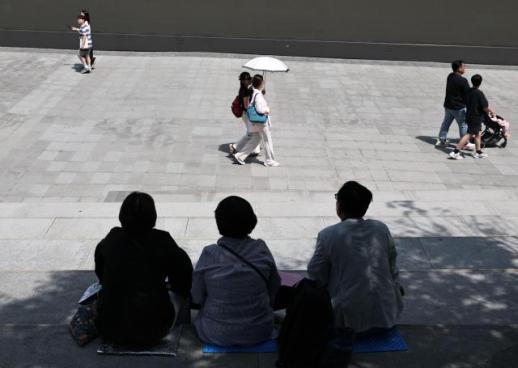 Weather Forecast: Continued Heat with Daytime Temperatures Above 30 Degrees On Tuesday, May 19, early summer weather is expected to continue across the country, with heat intensifying. In particular, daytime temperatures are forecasted to exceed 30 degrees Celsius, especially in the Gyeongsang region, necessitating caution for health management. According to the Korea Meteorological Administration, the morning low temperatures nationwide are expected to range from 14 to 20 degrees Celsius, while daytime highs will be between 24 and 33 degrees Celsius. In Daegu and southern Gyeongbuk, the maximum perceived temperature may rise to around 31 degrees Celsius, indicating a hot midday. However, temperatures are expected to drop quickly after sunset, resulting in a significant temperature difference of about 15 degrees Celsius, so appropriate clothing choices are advised. The sky will be partly cloudy nationwide, gradually becoming overcast from the evening. Thanks to favorable atmospheric dispersion, fine dust levels are expected to remain at 'good' to 'moderate' levels across all regions, making outdoor activities manageable. Sea conditions will be relatively calm across all waters. In the East Sea, wave heights will be between 0.5 and 1.0 meters, while in the West Sea and South Sea, wave heights will remain around 0.5 meters. In the offshore waters, wave heights will be 0.5 to 1.0 meters in the East Sea and 0.5 to 1.5 meters in the West and South Seas.* This article has been translated by AI. 2026-05-18 22:43:37
 -
 Voters in Jeonnam and Gwangju Express Support for Min Hyung-bae Amid Calls for Checks on Democratic Party Dominance In the Democratic Party's stronghold of Jeonnam and Gwangju, support for the party's candidate, Min Hyung-bae, is overwhelming. However, there are also signs of a push to elect candidates from the People Power Party to counter the party's dominance. Opinions on the administrative merger of Jeonnam and Gwangju lean more negative than positive.Aju Economy visited Gwangju and Suncheon on May 18 to gauge voter sentiment ahead of the June 3 local elections, which will see the election of the first integrated mayor of Jeonnam-Gwangju after 40 years. Five candidates have declared their intention to run: Min Hyung-bae from the Democratic Party, Lee Jeong-hyeon from the People Power Party, Lee Jong-wook from the Progressive Party, Kang Eun-mi from the Justice Party, and independent candidate Kim Kwang-man.Many citizens expressed their intention to vote for Min as the first integrated mayor. Park Young-taek, 71, met at Yangdong Market, stated, "I have always supported the Democratic Party and believe Min Hyung-bae would be a much better mayor than Lee Jeong-hyeon." Kim, a 25-year-old graduate student at Suncheon University, also expressed support for Min, saying, "He is the only incumbent lawmaker from Gwangju, possessing both expertise and political skills."Conversely, criticism of Lee Jeong-hyeon was noted, with one voter recalling his appearance on YouTube where he referred to the pro-Yoon Seok-youl faction as "hidden heroes, you are Yi Sun-sin," and defended the December 3 emergency martial law, stating, "He has proven himself unfit for the mayoral position."However, among voters in their 20s and 30s, there were calls for a 'punishment vote' against the long-standing dominance of the Democratic Party. Kwon, a 27-year-old intern in Gwangju, remarked, "If the Democratic Party continues to win every year, I wonder what development will occur in Honam. I believe their monopoly is harmful to Gwangju, so I support Lee Jeong-hyeon." Another voter, Lee, 30, who works at a sports center, stated, "The Democratic Party candidate will likely win anyway. Honam will not change, so I will vote for the People Power Party to provide some checks."Kang, a 21-year-old political science student at Jeonnam University, mentioned, "I am a member of the Democratic Party but am considering voting for the People Power Party as a punishment vote. The Democratic Party has been in power, yet nothing has changed in Gwangju." A 24-year-old college student added, "While the Democratic Party has significant support, there seems to be a growing disconnect among young voters. Parties like the Justice Party and Basic Income Party seem to position themselves as the Democratic Party's backup, so even though I dislike the People Power Party, I might vote for them this time."Criticism of the People Power Party included remarks about their failure to distance themselves from the pro-Yoon faction, with one voter stating, "It is shameless for them to come to Gwangju without having severed ties with that group. Their leader seems inexperienced in politics, often sending the wrong messages, and it appears they are only focused on protecting their own constituencies."Regarding the Jeonnam-Gwangju administrative merger, negative sentiments prevailed. Kang criticized the rushed process, saying, "They merged without even determining how to delineate the electoral districts for local governments. They promised public hearings, but the city councilors seemed to have already made decisions and just informed us, which is frustrating." Another voter echoed this sentiment, stating, "It felt like a hasty decision made under pressure from the president. Was this merger really necessary?"On the other hand, some citizens expressed optimism. Yoon, a 24-year-old job seeker, said, "As this is the first integrated mayor of Jeonnam-Gwangju, I am hopeful. If Gwangju and Jeonnam work together, there could be synergies in transportation, culture, and job creation. I hope the new mayor focuses on balanced regional development." Park also emphasized the importance of unity, stating, "There are population issues, and since Jeonnam and Gwangju were once one, we need to integrate again to create a new vision."* This article has been translated by AI. 2026-05-18 22:38:40
 -
 New Task Force Launched to Combat Illegal Medical Practices and Shorten Recovery Periods for Health Benefits The South Korean government has launched a task force to address the rising number of illegal medical institutions and improve the collection rate of health benefits that have been determined for recovery. On May 18, the Supreme Prosecutors' Office announced the formation of the "Joint Investigation Team for Illegal Medical Practices," which includes personnel from seven investigative and regulatory agencies, including the police and the Ministry of Health and Welfare.The task force comprises 30 members: four prosecutors, seven police officers, two special judicial police from the Ministry of Welfare, 12 from the National Health Insurance Service, one from the National Tax Service, three from the Health Insurance Review and Assessment Service, and one from the Financial Supervisory Service. The Seoul Western District Prosecutor's Office was designated as a specialized food and drug safety office in May 2013 and has experience operating a joint investigation team for rebates since 2014.The task force will operate under the leadership of the head of the Food and Drug Crime Investigation Division at the Seoul Western District Prosecutor's Office. It will include an investigation team (composed of police and special police from the Ministry of Welfare), a support team (from the National Health Insurance Service, Health Insurance Review and Assessment Service, National Tax Service, and Financial Supervisory Service), and a joint enforcement team (from the National Health Insurance Service and Health Insurance Review and Assessment Service).Initially, the support team will provide criminal information, allowing the enforcement team to conduct operations. Following this, the investigation team will focus on cases involving sham hospitals, excessive non-covered medical treatments, and fraudulent insurance claims. The prosecutor's office will then take over the cases for further investigation or processing.The joint investigation team aims to expedite the process of asset forfeiture and recovery through inter-agency cooperation from the outset of investigations. It will also support the recovery of assets preserved through the National Health Insurance Service. Additionally, the team plans to coordinate with the Ministry of Welfare to ensure swift administrative actions, such as business suspensions and fines, separate from criminal penalties.According to data from the National Health Insurance Service, from 2009 to 2025, 1,805 illegal medical institutions, including sham hospitals, were subject to enforcement and prosecution, resulting in a total recovery decision amounting to 29.16 trillion won. However, the actual amount recovered was only 256.3 billion won, or 8.79% of the total.The number of illegal medical institutions has been on the rise, with 28 in 2022, 50 in both 2023 and 2024, and 87 in 2025. Despite this increase, the average recovery decision amount during this period was 154.3 billion won, with a collection rate averaging only 11.27%.In response, the government has established the joint investigation team to eradicate the establishment and operation of illegal medical institutions and to confiscate the proceeds of related crimes.A spokesperson for the Supreme Prosecutors' Office stated, "We expect that the formation of this joint investigation team, which systematically combines the investigative capabilities of law enforcement with the expertise of relevant agencies in crime information collection and analysis, will shorten the time required for the entire process of recovering illegal assets after investigations."The spokesperson added, "Through thorough cooperation among agencies, we will strive to eliminate the establishment and operation of illegal medical institutions, such as sham hospitals, and to strengthen the financial health of the National Health Insurance system through prompt administrative actions."* This article has been translated by AI. 2026-05-18 22:36:00
 -
 Rainbow Robotics Achieves Record Quarterly Revenue Amid Ongoing Challenges Rainbow Robotics is experiencing significant growth, achieving its highest quarterly revenue to date, thanks in part to synergies with Samsung Electronics. However, ongoing losses and the nascent stage of its software capabilities pose challenges to qualitative growth. According to industry sources on May 18, Rainbow Robotics reported first-quarter revenue of 9.0625 billion won, a 116.6% increase from 4.18477 billion won in the same period last year. With Samsung's supply volumes now fully reflected, the company has surpassed 9 billion won in quarterly revenue for the first time since its founding. Considering that the total transaction volume with Samsung last year was approximately 10.4 billion won, this performance matches the annual cumulative total in just one quarter. Samsung Electronics exercised a call option at the end of 2024 to incorporate Rainbow Robotics as a subsidiary. The company has since strengthened its collaboration with the newly established 'Future Robotics Promotion Team' within Samsung, playing a key role in the group's future robotics technology development. Noh Tae-moon, President of Samsung Electronics' Device Experience (DX) division, stated earlier this year at CES 2026, "We will prioritize automation in manufacturing through collaboration with Rainbow Robotics and commercialize based on the technology we have developed." This formalizes a strategy of prioritizing manufacturing automation before commercialization. Consequently, Samsung's major production facilities, including the semiconductor production site in Pyeongtaek, are becoming significant testing grounds and stable revenue sources for Rainbow Robotics' technology. In terms of technology, Rainbow Robotics has secured numerous core technologies for key hardware components. Since its inception at KAIST's Humanoid Robot Research Center in 2011, the company has focused on developing technologies such as miniaturized actuators. As of this year, it has registered over 20 patents domestically and internationally. Building on this foundation, the company is accelerating the expansion of its 'dual-arm robot' lineup this year. This approach contrasts with major domestic companies like Hyundai Motor and LG Electronics, which are heavily investing in the costly and time-consuming development of bipedal humanoid robots. By prioritizing dual-arm robots, which have lower technical complexity, Rainbow Robotics aims to maximize immediate applicability in industrial settings. According to Rainbow Robotics, the dual-arm robots are still in the research and development platform stage. While they have been supplied to some of Samsung's production facilities, their use is currently limited to specific solution processes such as packaging and welding. The challenge lies in the pace of qualitative improvements behind the growth in revenue. Despite significant sales growth, the company recorded an operating loss of 1.56708 billion won due to fixed costs from research and development and the expansion of its new factory in Sejong. This figure represents an 11.7% increase from the operating loss of 1.4014 billion won in the same period last year. After incurring a substantial annual operating loss of 44.6 billion won in 2023, the company has failed to escape losses in every quarter since. Additionally, the investment value of its U.S. subsidiary, designated as a global outpost, has dropped by over 1 billion won, resulting in a book loss. While the company aims to enter the North American and European markets, there are significant barriers to transitioning to a profitable 'money-making robot' business. The software capabilities, which serve as the 'brain' of the robots, are still in their infancy. The integration of Samsung's proprietary artificial intelligence technology to enable robots to autonomously assess their surroundings and operate was only achieved last year. Rainbow Robotics aims to establish an AI ecosystem in the industrial robot sector this year, similar to Samsung's proactive development of the 'Galaxy AI ecosystem' for smartphones and TVs. An industry insider noted, "For Rainbow Robotics to succeed in standing on its own in the market without the massive umbrella of 'Samsung,' it is crucial to quickly and effectively build an independent technological ecosystem."* This article has been translated by AI. 2026-05-18 22:24:33
 -
 Korean Business Leaders Meet Japanese Prime Minister Ahead of Summit Ahead of the Korea-Japan summit scheduled for May 19 in Andong, South Korea, major domestic companies met with Japanese Prime Minister Sanae Takaichi in Tokyo to discuss strengthening economic cooperation between the two countries. Attention is focused on whether concrete business outcomes will emerge in advanced industries such as supply chains, artificial intelligence (AI), and energy during their meetings with Japanese business leaders.According to industry sources on May 18, the Korean delegation, led by Gu Ja-yeol, chairman of the Korea-Japan Economic Association and LS Group, departed for Japan earlier that day and held a series of meetings with Japanese government officials and key political figures. The delegation met with Prime Minister Takaichi around 3 p.m. and reportedly requested enhanced economic cooperation in key sectors, including global supply chain collaboration, AI data centers, and energy.Takaichi welcomed the delegation's visit, stating, "I greatly appreciate the Korea-Japan Economic Association's representatives. I have been invited to visit Andong, the hometown of President Lee Jae-myung, on May 19, and I believe that business leaders have played a crucial role in fostering friendly relations between our two countries." She added, "I pay my respects to the business leaders who have maintained communication and cooperation, whether our relationship was good or faced challenges."Earlier, the delegation also met with Ryota Takeda, chairman of the Japan-Korea Parliamentary Federation, who recently emphasized the need for technological cooperation between the two countries. Discussions likely focused on collaboration in advanced industries such as semiconductors. On May 19, the delegation is scheduled to meet with Foreign Minister Yawata Iwao and Minister of Economy, Trade and Industry Nishimura Toshio.The visiting delegation includes Gu Ja-yeol, Shin Dong-bin, chairman of Lotte Group, Gu Ja-eun, chairman of LS Group, Gu Ja-kyun, chairman of LS Electric, Kim Dong-wook, vice president of Hyundai Motor, Lee Hyung-hee, vice chairman of SK, and Lee Jae-eun, president of Samsung C&T.The Korea-Japan Economic Association, in collaboration with the Japan-Korea Economic Association, will hold the 58th Korea-Japan Economic Conference in Tokyo on May 19-20 under the theme "Next Step Together." The event is expected to focus on the restructuring of global supply chains and the intensifying competition in the AI industry. As the U.S.-China conflict continues and protectionist trends spread, the need for cooperation between Korean and Japanese companies in strategic industries such as semiconductor materials, components, equipment, batteries, automotive, and energy infrastructure is growing.There are also expectations for specific collaboration opportunities between companies from both countries. LS Group plans to expand its engagement with Japanese firms in the power equipment and wire sectors, while Hyundai Motor aims to enhance its collaboration in future mobility. Doosan is also looking to expand its connections in the semiconductor materials sector.* This article has been translated by AI. 2026-05-18 22:19:17
 -
 Samsung's Internal Strife Deepens Amid Strike Threats Samsung Electronics and its labor union returned to the negotiating table three days before a planned total strike, but experts predict that any outcome will severely impact the company's competitiveness. Since its founding in 1969, Samsung Electronics has been known for its lack of labor disputes, but the internal turmoil it is currently facing is expected to have greater consequences than anticipated. On May 18, political and industry sources reported that Samsung Electronics and its labor union resumed a second post-adjustment meeting at the Central Labor Relations Commission in Sejong. This meeting is effectively the last dialogue before the total strike. The situation is not favorable for the union. The Suwon District Court partially granted Samsung Electronics' request for a temporary injunction against unlawful labor actions by the Samsung Electronics branch of the super-union and the National Samsung Electronics Union. Legal experts interpret this decision as not denying the union's right to strike but confirming legal limits on the methods and scope of labor actions. The government is also increasing pressure. Prime Minister Kim Min-seok stated that if the Samsung Electronics strike poses significant damage to the national economy, all response measures, including emergency mediation, could be considered. President Lee Jae-myung also commented on social media that "both labor and management should be respected, and the rights of labor should be balanced with management rights." He further noted that fundamental rights may be restricted for the public good, signaling that the government's crisis awareness has reached a critical point. Despite this, the union has not backed down from the total strike option. Choi Seung-ho, chairman of the Samsung Group super-union, entered the second post-adjustment meeting stating, "I have nothing significant to say, but I will participate sincerely in this meeting." He did not respond to questions about how he interpreted the president's remarks. Separately from the efforts of management and the government to avert a strike, concerns have been raised that internal divisions within Samsung Electronics have reached a dangerous level. The conflict between the semiconductor and non-semiconductor sectors has become so pronounced that they seem difficult to view as part of the same company. The day before, a screenshot of remarks made by the union's vice-chairman, Lee Song-yi, in a union Telegram chat, suggesting "let's eliminate the company" and "let's spin off" went viral on the anonymous workplace community Blind, causing a stir. Although Lee clarified that her comments were distorted, the internal sentiment remains unsettled. Industry insiders view the public disclosure of such remarks as indicative of a breakdown in organizational trust at Samsung Electronics. Some employees have even suggested extreme measures, such as moving to Chinese company CXMT to leak technology if negotiations fail. Regardless of the truth of these claims, the mere discussion of such ideas within the company is seen as a serious warning sign for a semiconductor firm. The unexpected demands from the non-semiconductor union are further complicating the situation. The Samsung Electronics Labor Union Donghaeng and the National Samsung Electronics Union Suwon branch reportedly called for a portion of performance bonuses to be distributed to partner companies during the post-adjustment process. Industry analysts believe that the expansion of performance bonus discussions beyond semiconductor employee compensation to include partner distribution issues is dragging the negotiations into a quagmire. The Samsung Electronics union has been demanding that 15% of operating profit be fixed as the source for performance bonuses and that the cap on bonuses be eliminated. Concerns have been raised in the industry that if these demands are accepted, performance bonuses could effectively become semi-fixed costs, potentially triggering a ripple effect throughout the domestic industry. There are also assessments that unreasonable demands have intensified internal conflicts regardless of whether a strike occurs. Experts believe that even if a strike is averted, the issues will not be resolved. With the union's hardline rhetoric and internal divisions now exposed, restoring organizational cohesion will likely remain a significant challenge. Kim Yang-pyeong, a senior researcher at the Korea Institute for Industrial Economics and Trade, stated, "Once damage occurs in semiconductor manufacturing processes, it leads to reduced production and yield. More seriously, it will inevitably impact long-term trust and related aspects."* This article has been translated by AI. 2026-05-18 22:13:40
 -
 Lotte Chilsung Beverage Collects One Ton of Marine Waste at Geomundo Lotte Chilsung Beverage has partnered with the National Park Service to engage in environmental activities that promote marine ecosystem conservation and plastic resource recycling. The company announced on May 18 that it conducted a marine cleanup on Geomundo, located in Yeosu, South Jeolla Province, on May 14-15. Employees from Lotte Chilsung Beverage, along with officials from the National Park Service and the Korea National Trust for Nature, participated in the efforts. The volunteer team collected approximately one ton of marine debris, including discarded plastic, nets, and other waste, from the Mokneungore coast. Restoration work was also carried out on damaged rocky shores in the Dongdo and Seodo areas. This involved inserting a restoration material made from a mixture of stone powder and plant-based adhesive into the holes in the rocks. After the cleanup, the team visited the Geomundo Marine Climate Change Station to learn about the current status of marine environmental changes and the importance of climate change research. On the same day, a "Transparent PET Bottle Resource Recycling Campaign" was held at the Dobong Visitor Center in Bukhansan National Park. Lotte Chilsung Beverage supported the event by providing 2,000 bottles of its Isis water brand. Participants encouraged hikers to return the bottles to designated recycling bins at the trailhead upon their descent. The collected transparent PET bottles will be utilized in a "Bottle-to-Bottle" recycling system for food containers. This initiative is part of a memorandum of understanding signed in January by Lotte Chilsung Beverage and five other organizations to establish a transparent PET bottle resource recycling ecosystem. A representative from Lotte Chilsung Beverage stated, "Ecosystem conservation and resource recycling are core tasks of ESG activities that companies must continuously pursue. We will expand our ESG management practices through collaboration with various organizations." According to the Ministry of Oceans and Fisheries, an estimated 145,000 tons of marine waste is generated annually in South Korea, with over 80% of it being plastic waste.* This article has been translated by AI. 2026-05-18 22:06:00