
Journalist

Nodirbek Rasulov
-
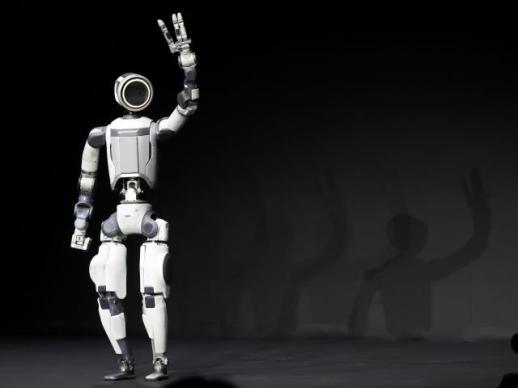 Korea Leverages Manufacturing Strengths in Physical AI Development As the United States and China advance in physical artificial intelligence (AI), experts agree that South Korea must actively leverage its existing industrial assets to develop physical AI technologies and utilize competitive manufacturing test beds to lead in validation and commercialization. According to industry sources on May 17, both the U.S. and China are focusing on the potential of physical AI to counteract declining manufacturing competitiveness due to high labor costs and low birth rates, consolidating national resources for technology development and commercialization. Reports from Japan's Nikkei Business and the U.S. Nexis Lexis estimate that South Korea ranks third in physical AI competitiveness, significantly behind the U.S. and China. While it possesses independent humanoid robot technology that is commercially viable and maintains strong competitiveness in industrial robotics, it lacks the extensive physical AI platforms of the U.S. and China and faces fierce competition from Japan, which has overwhelming industrial robot capabilities. The U.S. leads the market with major tech companies like NVIDIA, Tesla, Figure AI, and Amazon, while firms like Google and Microsoft, which previously focused on language model-based AI, have accelerated their research and development in physical AI and robotics since last year. In China, companies such as Baidu, Huawei, and Tencent ranked first to third in global physical AI patent applications last year, while startups like Unitree, Agibot, and Ubitech are commercializing various forms of robots, including humanoids, supporting the industrial ecosystem. In South Korea, companies like Boston Dynamics (Hyundai Motor), Rainbow Robotics (Samsung Electronics), LG Electronics (LG AI Research), HD Hyundai Robotics, Hanwha Robotics, and Doosan Robotics are investing heavily in physical AI development to enhance global competitiveness. The Software Policy Research Institute (SPRi) classifies physical AI into four categories: humanoids, autonomous vehicles, drones, and AGVs & AMRs (collaborative and mobile robots). Among these, humanoids have the advantage of being able to work alongside humans or replace them directly in labor settings, unlike other physical AI that requires dedicated robotic spaces. Morgan Stanley predicts that humanoids based on physical AI will expand beyond manufacturing and logistics into services and homes, forecasting that the related market will grow at an annual rate of 63%, reaching $38 billion (approximately 57 trillion won) by 2035. SPRi and the Korea Intelligent Information Society Agency view South Korea as having the potential to stand shoulder to shoulder with leading countries like the U.S. and China in the physical AI industry. The country boasts world-class manufacturing facilities in sectors like semiconductors, automotive, and shipbuilding, enabling the real-time collection and refinement of vast and precise data for robotic learning. Hyundai and Kia are accelerating the commercialization of unmanned factories utilizing Boston Dynamics' humanoid Atlas, a level of advancement achieved only by Hyundai and Tesla. Unlike generative AI, which requires high intelligence for white-collar job replacement, physical AI relies on cognitive AI technologies to accurately assess and respond to on-site conditions. Advanced sensor technology is crucial for this purpose. The LG Group is consolidating its capabilities in sensor technology for physical AI through collaboration among LG Electronics, LG Innotek, and LG CNS. The focus is on equipping robots with cameras and LiDAR sensors to analyze data, enabling AI to make optimal decisions. To achieve precise movements similar to humans, humanoids require a large number of servo motors. Servo motors are ultra-precise motors capable of controlling position, speed, and acceleration according to AI commands. While this field is primarily led by Japanese materials, components, and equipment manufacturers, many South Korean companies, led by LS Electronics, are also accelerating their efforts to secure competitiveness in this area.* This article has been translated by AI. 2026-05-17 18:16:55
 -
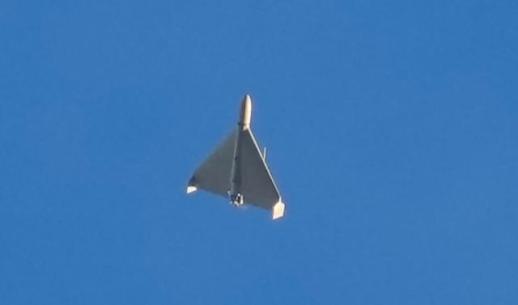 South Korea's Defense Industry Struggles in Attack Drone Market The presence of the Iranian Shahed-136 kamikaze drone is increasingly felt on the global battlefield. Recent reports suggest that this low-cost drone may have been used in a recent attack, highlighting the renewed threat posed by such drones. As drones emerge as a key element in modern warfare, South Korea's defense industry is still in the early stages of responding to the attack drone market. According to the defense industry on May 17, major companies and startups in South Korea, including Korea Aerospace Industries (KAI), are developing small attack drones. At the Drone Show Korea 2026 earlier this year, KAI unveiled its I-type small kamikaze drone designed for armored targets and II-type small kamikaze drone for personnel. LIG Defense and Aerospace showcased an AI-based swarm drone under development in collaboration with the Defense Science Research Institute. These drones represent a step forward from existing interception and anti-drone systems to more offensive capabilities. However, industry insiders cite a significant limitation in the development of attack drones: a lack of market viability and profitability. This year, the Ministry of National Defense allocated approximately 148.4 billion won ($112 million) for drone projects out of a total defense budget of 19.9653 trillion won ($15 billion). A substantial portion of this budget is earmarked for reconnaissance and surveillance, leaving limited investment for attack and expendable drones. The role of attack drones in defense projects remains minimal. One industry official stated, "We are focusing on developing unmanned systems that can be used in manned-unmanned hybrid systems, but we still face limitations in terms of mass production and price competitiveness." Smaller startups are facing similar challenges. Nears Lab, a maker of swarm AI drones, reported a revenue of 6.6 billion won ($5 million) and an operating loss of 16.6 billion won ($12.5 million) last year. The company recently secured a $10 million contract in the Middle East, seeking a turnaround, but profitability remains elusive. Another startup, Pablo Aviation, recorded a revenue of 10.9 billion won ($8 million) and an operating loss of 14.5 billion won ($11 million) last year. Moreover, South Korea's drone industry still relies heavily on Chinese components. Currently, many parts used in domestic drones, including batteries, motors, controllers, GPS, and cameras, are sourced from China, except for flight controllers. If these components were to be localized, they might lose price competitiveness compared to Chinese products. The government has secured a budget of 33 billion won ($25 million) this year to train 500,000 drone operators. The Ministry of National Defense plans to purchase 11,265 commercial small drones for training, distributing at least one to each squad in major army field units and training institutions. However, industry experts point out that the actual operational systems and regulations for battlefield use are still in their infancy. Kim Seung-yeon, president of the Korea Drone Utilization Association, remarked, "The domestic drone industry is realistically expanding primarily in the fields of information verification and surveying. For drones to be effectively utilized in combat, there needs to be an expansion of business scale and the establishment of conditions for soldiers to obtain drone operation certifications."* This article has been translated by AI. 2026-05-17 18:15:00
 -
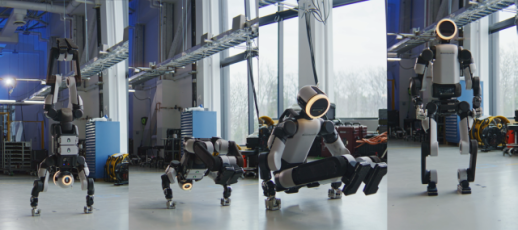 Boston Dynamics Accelerates Industrial Robot Market with Atlas Hyundai Motor Group's robotics subsidiary, Boston Dynamics (BD), is ramping up its efforts to penetrate the industrial robot market with its humanoid robot, Atlas. The company has already established a strong foothold in the industry with its quadrupedal robot Spot and logistics robot Stretch, leveraging decades of operational experience and a vast testing ground within the group. However, building a production system for Atlas and improving profitability remain significant challenges.According to industry sources, BD is focusing on advancing the technology needed to deploy the prototype of the bipedal robot Atlas, which garnered attention at CES 2026 in January, into manufacturing settings.The foundation of BD's commercialization strategy lies in the robot hardware and motion control technologies it has developed over decades, along with operational experience gained in industrial environments. While Chinese startups excel in cost and production speed, and U.S. AI companies have strengths in software capabilities, BD's competitive edge is its ability to commercialize various technologies and demonstrate their effectiveness in real production processes. Notably, Spot and Stretch have already been supplied to several companies, proving their utility in the field.Another advantage is BD's high accessibility to manufacturing sites. The company plans to utilize major production hubs, such as Hyundai Motor Group's Meta Plant America in Georgia in 2028 and the Kia plant in Georgia in the second half of 2029, as initial testing grounds for Atlas. This could establish a trust base for expanding its external client base.However, there are considerable hurdles to overcome before Atlas can be commercialized. BD aims to establish a production system capable of manufacturing 30,000 units annually by 2028, but it has yet to create a stable profit structure. Last year, BD's revenue reached 150.1 billion won, a 30% increase from the previous year, but it recorded a net loss of 528.4 billion won, widening the loss by about 20% compared to 2024 (440.5 billion won).Additionally, the possibility of an initial public offering (IPO) next month has increased management uncertainty. The plan is to secure investment funds for establishing the Atlas production system through the IPO, but if the company fails to enter a profit-making phase post-listing, its corporate value could plummet.When Hyundai Motor Group acquired BD from SoftBank in June 2021, a put option clause was established. If BD does not go public within four or five years after the acquisition, Hyundai Motor Group is obligated to buy back the 20% stake held by SoftBank at a pre-agreed price. The deadline for this option is next month, and if exercised, it could increase Hyundai Motor Group's burden of additional share purchases.Ultimately, for BD to dominate the humanoid market, it must translate its strong brand recognition and technological prowess into actual profits. Securing external clients quickly will also be crucial for successfully integrating Atlas into manufacturing environments. An industry insider stated, "Stably deploying Atlas in the field and converting that into recurring revenue is essential. The results from testing at Hyundai Motor Group's production sites will be a turning point for securing external clients." 2026-05-17 18:13:15
 -
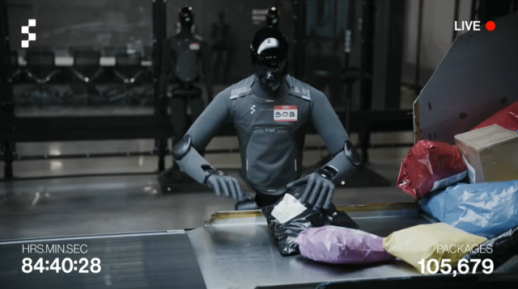 K-Physical AI: Concerns Grow Over South Korea's Position in US-China Tech Race Global attention is focused on an experiment by a prominent physical artificial intelligence (AI) startup, which aims to demonstrate that humanoid robots can replace human labor in manufacturing and logistics. As competition in physical AI technology intensifies among major countries, experts warn that South Korea has limited time to secure a leading position. According to industry sources, FigureAI, recognized as one of the top three humanoid robot companies alongside Tesla and Boston Dynamics (a Hyundai Motor Group subsidiary), has been conducting an experiment since May 13, 2026, to perform logistics sorting tasks solely with robots, without human intervention. The humanoids at FigureAI have worked continuously for 24 hours, sorting over 100,000 packages in 82 hours. Three robots, named Gary, Bob, and Rose, operated in shifts, working for 8 to 20 hours before undergoing charging and maintenance before returning to work. The duration of the experiment remains uncertain. Brett Adcock, CEO of FigureAI, stated on social media platform X, "We plan to run them until they break down. Watch the robots work autonomously 24/7." Adcock also mentioned plans for a future project comparing efficiency between humans and robots in the same tasks. However, some shortcomings have been noted. The robots achieved only half the efficiency of skilled human workers and occasionally dropped items during sorting. Nevertheless, experts have expressed astonishment at the level of physical AI technology in the U.S., noting that the robots performed naturally in a real working environment, not just in a lab setting. They do not take breaks for meals or smoking, and notably, they do not strike. The implications of this experiment are expected to be significant, comparable to the historic Go match between Lee Sedol and AlphaGo. It confirms the potential for physical AI and humanoid robot technology to replace blue-collar jobs. As the U.S. and China lead the physical AI competition, the need for the South Korean government and businesses to unite in enhancing technological competitiveness and accelerating commercialization has become increasingly urgent.* This article has been translated by AI. 2026-05-17 18:12:31
 -
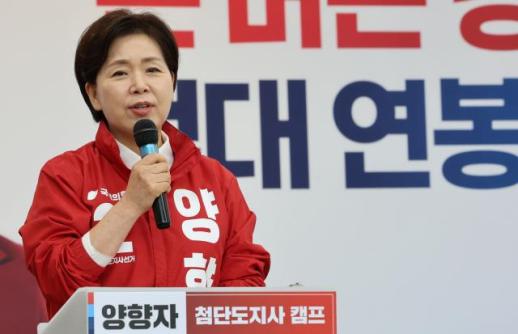 Semiconductors Become a Hot Topic in Local Elections Semiconductors have emerged as a critical issue in the upcoming local elections. With stocks of semiconductor companies like Samsung Electronics and SK Hynix soaring, public interest has surged around topics such as national dividends, union strikes, and the implementation of a special semiconductor law. On May 17, candidates for Gyeonggi Province’s local and district offices from the People Power Party held a press conference at the party's headquarters in Suwon. They voiced strong criticism regarding the government's proposed implementation guidelines for the special semiconductor law, which reportedly includes a requirement that semiconductor clusters be located outside the Greater Seoul area. This has sparked complaints of "discrimination against the Greater Seoul area" from candidates representing southern Gyeonggi cities such as Icheon, Yongin, Suwon, Hwaseong, Pyeongtaek, and Ansung. The southern Gyeonggi region is a key hub for the domestic semiconductor industry, housing significant manufacturing, materials, components, equipment, research and development (R&D), specialized personnel, and infrastructure. Yang Hyang-ja, the People Power Party candidate for Gyeonggi Governor, stated, "Semiconductors are not just an industry; they are the future of South Korea and a core national security industry. We need to achieve balanced development by enhancing existing industrial bases while also nurturing new ones." Yang, who began her career as a research assistant in Samsung's semiconductor memory design department in 1985 and rose to an executive position in 2014, warned that excluding the Greater Seoul area from the semiconductor cluster could disrupt the supply chain concentrated there. She noted, "Countries like the U.S., Taiwan, and Japan are consolidating national resources around existing semiconductor hubs. If we exclude Gyeonggi Province, we cannot maintain our global competitiveness." Participants at the press conference issued a joint statement calling for the removal of the clause excluding the Greater Seoul area from the semiconductor cluster, the realistic establishment of criteria for semiconductor cluster designation, the application of regulatory exceptions for national strategic industries to existing semiconductor production bases, and a dual strategy of enhancing existing semiconductor production bases while developing new ones. Political analysts suggest that semiconductor issues are heating up the local elections. The significant profits generated for shareholders by semiconductor companies like Samsung Electronics and SK Hynix, which have driven growth in the domestic stock market, are seen as a key factor. Many individual investors hold shares in these companies, making any factors affecting their stock prices a nationwide concern. Given the economic impact of semiconductor factories on Gyeonggi Province, the proposed guidelines could significantly influence public sentiment in the region. The demands from candidates like Yang for clear positions from Democratic Party candidates are closely related to this context. Additionally, political disputes over accountability for recent setbacks in the semiconductor industry have been recurring. On May 12, Kim Yong-beom, head of the Presidential Policy Office, suggested returning excess corporate tax revenue from the semiconductor boom to the public in the form of national dividends, which drew criticism from conservative factions. Park Chung-kwon, spokesperson for the People Power Party's central election committee, condemned the proposal as a "state-led declaration of plunder," arguing that it undermines the foundations of a market economy and threatens to regress South Korea into a communist-style distribution system. The ongoing tensions between Samsung Electronics and its union, which has announced a strike, could also impact voter sentiment in the local elections. Given the nature of the semiconductor industry, the losses from a strike could be substantial. Concerns are rising in the industry that a disruption in supply stability could lead to diminished customer trust and weakened global competitiveness. If this results in a drop in stock prices, it could lead to a loss of shareholder confidence nationwide. A political insider remarked, "Given the recent stock market trends, a decline in Samsung Electronics and SK Hynix stock prices could directly affect public sentiment. If these events lead to a significant drop in stock prices, it could shift the focus from political disputes to fundamental economic issues, influencing voter behavior."* This article has been translated by AI. 2026-05-17 18:11:21
 -
 Kim Jung-soo Takes Helm at Samyang Foods, Aiming for Second Growth Phase Kim Jung-soo, who spearheaded the success of the Buldak brand, is now focusing on the next growth strategy for Samyang Foods as he steps into the role of chairman. The company, which rose to prominence as a global food enterprise largely due to its Buldak Bokkeumyeon, is now preparing for a second leap forward by establishing local production facilities in China and expanding its global supply chain. On May 17, Samyang Foods reported that its revenue last year reached 2.3517 trillion won. This figure represents more than a 3.5-fold increase compared to the 642 billion won recorded in 2021 when Kim became vice chairman. During the same period, the operating profit margin surged from around 10% to 22%. Given that most food companies struggle to maintain single-digit profit margins amid rising costs and intensified competition, this achievement is remarkable. At the center of this growth is Kim Jung-soo. He drew inspiration for the development of Buldak Bokkeumyeon in 2011 after observing young people relieving stress at a spicy food restaurant in Myeongdong. Despite initial concerns about its spiciness and skepticism, Kim steadfastly promoted the product's identity as a spicy noodle. The subsequent rise of the 'Fire Noodle Challenge' on YouTube helped propel Buldak Bokkeumyeon into a global mega brand. Samyang Foods has ensured that this global trend does not fade into a mere fad. By linking the challenge culture in digital spaces to its marketing strategy, the company has cultivated the Buldak brand into a worldwide fan favorite. This innovative cycle has established a structure where consumer experiences with the product lead to digital content consumption, which in turn stimulates strong product sales. As a result, the Buldak brand is on the verge of surpassing 10 billion units sold, following the achievement of 9 billion units last year. The growth in international markets is evident in the figures. Samyang Foods' overseas sales surged from 93 billion won in 2016 to 1.8838 trillion won last year, nearly a 20-fold increase over nine years. Starting with its first $100 million export award in 2017, the company has consistently broken records, achieving $900 million in exports last year. The share of overseas sales has expanded from 26% to 80% during this period, with exports now reaching over 80 countries. Currently, Samyang Foods accounts for 60% of South Korea's total ramen exports. Samyang Foods is now accelerating investments in large-scale infrastructure to support global demand. A key focus is the establishment of a local production facility in China, the company's largest export market. Construction began in July 2022 in Jiaxing, Zhejiang Province, with the factory expected to be completed in 2027, capable of producing up to 1.13 billion units of Buldak Bokkeumyeon annually. Domestically, the Milyang factories 1 and 2, completed in 2022 and 2025 respectively, support an annual production capacity of up to 1.3 billion units. The company is also considering establishing additional global hubs, including regional offices. Kim is also focusing on shifting the brand's direction. At the 2023 Samyang Round Square Vision Declaration ceremony, he introduced the concept of 'Food for Thought,' emphasizing that food should serve as a medium for presenting ideas and attitudes beyond mere sustenance, aiming to expand the brand into an experience-based food company. Meanwhile, on May 12, Samyang Foods held a board meeting where it resolved to promote Kim Jung-soo to chairman. This marks a promotion approximately five years after he became vice chairman in December 2021. His official start date is June 1. A company representative stated, "This personnel change is part of our efforts to strengthen responsible management for global market expansion and enhancing corporate value."* This article has been translated by AI. 2026-05-17 18:09:00
 -
 Former Trade Negotiator Kim Hyun-jong Appointed Co-Chair of KADEX 2026 The organizing committee for the Korea Defense Industry Exhibition (KADEX 2026) announced on May 17 that it has appointed Kim Hyun-jong, who played a key role in the U.S.-Korea Free Trade Agreement and the termination of the U.S.-Korea missile guidelines, as the co-chair of KADEX 2026. KADEX 2026 has received applications from over 450 companies across 21 countries, with confirmed participation from ten nations, including the United States, Saudi Arabia, India, Canada, the Netherlands, Finland, Sweden, Vietnam, Latvia, and Portugal. Internationally, 63 companies from 20 countries will participate with 350 booths. Additionally, the committee has recently signed a contract with GLOBSEC, one of the world's top five security forums, which will feature more than four speakers at the ministerial level. The KADEX organizing committee stated, "By appointing Kim Hyun-jong, one of our country's leading experts in trade and security, we aim to maximize the effectiveness of Korea's representative defense exhibition." Kim, the new co-chair of KADEX, previously served as the head of the international trade advisory group during Lee Jae-myung's presidential campaign. During Roh Moo-hyun's presidency, he was the head of the Trade Negotiation Bureau at the Ministry of Foreign Affairs and Trade, where he designed and concluded simultaneous FTA negotiations with 45 countries, including the U.S.-Korea FTA. Under the Moon Jae-in administration, he aggressively concluded the renegotiation of the U.S.-Korea FTA, securing exemptions from tariffs on Korean steel. Later, as the second deputy director of the National Security Office, he is credited with fully terminating the 42-year-old U.S.-Korea missile guidelines through negotiations with both the Trump and Biden administrations, thereby restoring South Korea's sovereignty over missiles and space launch vehicles. Eom Gi-hak, co-chair of KADEX 2026, remarked, "As K-defense aims to become one of the world's top four defense exporters, the addition of someone who has actually led defense technology sovereignty recovery and U.S.-Korea security negotiations will elevate KADEX's international status and credibility. The new co-chair will oversee the attraction of official foreign delegations and the establishment of government cooperation channels with major defense importers, enhancing overall international exchanges."* This article has been translated by AI. 2026-05-17 18:06:00
 -
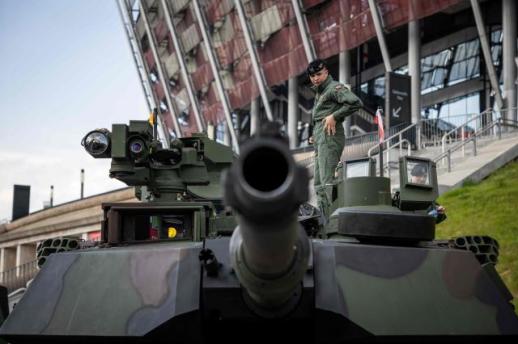 U.S. Halts Deployment of 4,000 Troops to Poland, Surprising Pentagon and European Allies The United States has suspended plans to deploy over 4,000 Army troops to Poland. On May 15, U.S. Defense Secretary Pete Hegseth announced the cancellation of the rotational deployment of the 2nd Armored Brigade Combat Team, part of the 1st Cavalry Division stationed at Fort Hood, Texas. This unit includes more than 4,000 personnel and equipment, with some troops and gear reportedly already en route to Europe. A Pentagon official expressed surprise to Politico, stating, "We did not expect this decision at all." U.S. and European officials have reportedly convened urgently to understand the reasons behind the decision and to discuss potential further actions. The specific reasons for the cancellation of the deployment to Poland have not been disclosed. Hegseth has previously praised Poland for its defense spending, which approaches 5% of its GDP. Former President Donald Trump also suggested relocating U.S. troops from Germany to neighboring Poland. Polish President Karol Nawrocki, a close ally of Trump, has publicly called for the transfer of U.S. troops stationed in Germany to Poland. Earlier, Trump announced the withdrawal of 5,000 U.S. troops from Germany immediately after German Chancellor Friedrich Merz criticized the U.S. response to the Iran conflict. In contrast, Poland has had minimal public disputes with the Trump administration, making this decision particularly unexpected. Retired General Ben Hodges, former commander of U.S. Army Europe, told Politico that the role of U.S. forces in Europe is primarily to deter Russia, protect U.S. strategic interests, and reassure allies. He noted, "Now, a very important asset that was supposed to be part of that deterrence has disappeared." The Pentagon clarified that this decision was not abrupt. Acting Pentagon spokesperson Joel Valdez stated, "The decision to withdraw troops followed a comprehensive and multilayered process reflecting the views of key commanders and the entire command structure of U.S. forces in Europe," adding that it was not an unexpected last-minute decision. However, concerns remain about the overall clarity of U.S. strategy in Europe. Bloomberg reported that the decision is part of a broader review of U.S. troop presence in Europe. Lithuanian Defense Minister Robertaas Kaunas told Bloomberg that Lithuania had been informed about the potential changes to U.S. troop rotations in Europe, indicating that the U.S. had alerted allies about a possible temporary halt in troop rotations while reviewing its deployment plans. However, he noted that he had not received any information regarding the withdrawal of U.S. troops from Lithuania. Poland, which was not notified in advance, expressed its surprise but sought to downplay the implications. Prime Minister Donald Tusk assured reporters, "We have been guaranteed that changes in U.S. troop deployments will not affect Poland's security," emphasizing that the decision is logistical and will not directly impact deterrence or our security. Polish Defense Minister Włodzimierz Kosiniak-Kamysz also stated on X (formerly Twitter) that this issue relates to previously announced changes in U.S. troop deployments in Europe and is not related to Poland. Currently, about 500 U.S. troops are permanently stationed in Poland, while approximately 10,000 are deployed on a rotational basis.* This article has been translated by AI. 2026-05-17 18:03:00
 -
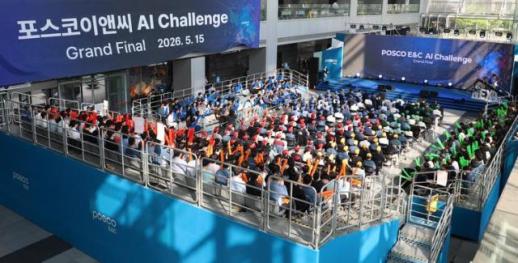 POSCO E&C Unveils AI Innovations at Company-Wide Challenge POSCO E&C has launched a company-wide AI challenge aimed at discovering innovative applications of artificial intelligence (AI) to transform construction site operations. Notably, an AI model for automating work report creation has been highlighted for its potential to save hundreds of hours of labor annually. On May 17, POSCO E&C announced the conclusion of its "Company-Wide AI Challenge," which began on March 24. The competition involved all employees, including field staff, who engaged in learning and applying AI technologies directly to their work. The challenge featured four categories: video, reports, AI agents, and a golden bell quiz, with nearly half of the workforce, totaling 1,887 participants. The standout achievement was the top entry in the AI agent category, the "Work Report Automation AI Agent." Previously, employees from partner companies communicated work details via social media, requiring site managers to manually compile these into daily reports. This AI agent automates that process, reducing repetitive tasks that previously took over 90 minutes each day. POSCO E&C estimates that this translates to approximately 375 hours of labor saved per site manager annually. In the report category finals, participants were tasked with using AI in real-time to produce executive-level reports without prior topic disclosure. POSCO E&C stated this approach validated practical AI application skills among employees. A company representative noted, "The greatest achievement of this competition is that employees have begun to see AI not as a technology unrelated to them, but as a 'colleague that changes their work.' We have laid the groundwork for a smart work culture that reduces repetitive tasks and allows for a focus on more essential duties through AI-driven innovation." However, challenges remain in training AI due to the prevalence of informal language, jargon, and typographical errors in the unstructured data typical of construction sites. To improve the quality of AI training data, efforts are needed to standardize scattered site data, along with the establishment of government guidelines.* This article has been translated by AI. 2026-05-17 17:54:09
 -
 DL E&C Proposes 10-Month Construction Timeline Reduction for Apgujeong 5 District As the selection of a construction company for the highly competitive Apgujeong 5 District reconstruction project approaches, DL E&C is intensifying its efforts to win over union members by emphasizing a shortened construction timeline and financial benefits, leading to a fierce bidding war with Hyundai Construction. According to Yonhap News on May 17, DL E&C announced on May 16 during a briefing at the joint promotional center for the Apgujeong 5 District reconstruction project in Gangnam, Seoul, that it proposed a construction period of 57 months, reduced from the previous timeline. A DL E&C representative stated at the briefing, "By shortening the construction period by 10 months, we aim to lower financial costs and project expenses, resulting in savings of approximately 100 million won per household for union members." The Apgujeong 5 District is a key redevelopment project along the Han River, transforming the area into a large complex with 1,397 units across eight buildings, ranging from five underground floors to 68 above ground. It is considered one of the most significant projects in this year's reconstruction market due to its excellent educational district and river views. Union members attending the briefing reportedly expressed high interest in the potential for improved project viability and the maintenance of construction quality due to the shortened timeline while examining the model of the complex. DL E&C also unveiled project conditions and financial support options during the event. They highlighted a 0% interest rate on project financing, a 150% loan-to-value ratio for relocation loans, and a maximum seven-year deferral for payment of contributions to alleviate financial burdens. The company also presented its design and view specialization strategy. The 'Acro Apgujeong' project is planned with a three-row structure for each building. Buildings 101-103 in the first row will feature low-rise designs to maximize Han River views, while the second row will consist of the high-rise 'Regent Triple Tower' to enhance symbolism and openness. The third row will include south-facing residential spaces and a central garden. In competition, Hyundai Construction is proposing the name 'Apgujeong Hyundai Galleria' to emphasize brand significance. Their strategy aims to build a large 'Hyundai brand town' by inheriting the historical and identity aspects of the existing Apgujeong Hyundai Apartments, following their previous contracts for the Apgujeong 2 District and selection as the preferred bidder for the 3 District. The final decision on the construction company for the Apgujeong 5 District will be made at the union's general meeting scheduled for May 30.* This article has been translated by AI. 2026-05-17 17:48:24