
Journalist

Park Heewon
-
 Conflict Over Performance Bonuses Intensifies Amid AI Boom in South Korea “I want to receive performance bonuses based on my results, but it feels like I’m playing a game where the outcome is already decided,” said Yoo, a 31-year-old employee at a major South Korean corporation. “The criteria for performance bonuses change every year, making it hard to predict. The issue isn’t the money; it’s that the standards keep changing and aren’t clearly defined.” As Samsung Electronics and SK Hynix, leaders in the domestic semiconductor industry, continue to achieve record-breaking results thanks to the AI semiconductor boom, conflicts surrounding performance bonuses and compensation systems are intensifying in the workplace. While U.S. tech giants are significantly increasing stock options and equity compensation to attract key AI talent, South Korea is witnessing repeated labor disputes over the criteria and distribution methods for performance bonuses. Samsung Electronics and its labor union signed a tentative agreement following a government mediation process, temporarily postponing a planned general strike. However, the potential for renewed conflict remains, depending on the results of a member vote on the tentative agreement scheduled for the 27th. As a key player accounting for about 20% of South Korea's total exports, any production disruptions at Samsung could significantly impact the domestic industry and financial markets. The core of the tentative agreement at Samsung Electronics is to fix the performance bonus pool for the semiconductor (DS) division at 10.5% of agreed business performance and to eliminate the payment cap, introducing an unprecedented compensation system. This change allows for substantial stock performance bonuses for employees, particularly in the memory division, marking a test of a new compensation model aligned with the AI semiconductor boom. This situation has strengthened calls for more transparency and predictability in the criteria and decision-making processes for performance bonuses. Industry experts argue that the unclear compensation system has exacerbated recurring labor disputes, and this agreement could serve as a new benchmark for performance distribution during the AI boom. This trend is expected to influence discussions on compensation systems at other ICT companies, including Kakao, which recently faced the possibility of its first headquarters strike after a vote in favor of a strike. The differences in compensation systems between South Korean and U.S. companies have become more pronounced in the wake of the AI boom. In South Korea, wage increases are primarily driven by performance bonuses rather than base salaries. An analysis of raw data from the Ministry of Employment and Labor's 'Business Labor Force Survey' by the Korea Employers Federation revealed that special payments (including performance bonuses) increased by 8.1% in the first half of 2025 compared to the same period the previous year, significantly outpacing the increase in fixed salaries (2.9%). However, the distribution of performance bonuses is heavily skewed towards large corporations. According to data received by Kim Wi-sang, a member of the People Power Party, from the Ministry of Employment and Labor, as of June last year, 43.8% of workplaces with over 300 employees and 46.2% of those with over 1,000 employees operated performance bonus systems, compared to just 6.4% of small businesses with fewer than 300 employees. Performance distribution systems are collective performance reward systems based on whether a company meets its management goals, distinguishing them from individual performance bonuses based on personal evaluations. South Korean companies tend to have a strong structure for distributing performance bonuses based on overall company performance. Cash bonuses and welfare benefits are predominant, often prioritizing organizational performance over individual contributions. This contrasts with the compensation systems of U.S. tech giants, which focus on securing key talent and individual contributions. Experts analyze that the recurring conflicts over performance bonuses stem not just from corporate culture but also from structural differences in labor market flexibility, performance evaluation methods, and risk-sharing frameworks. Eric Cambria, a professor at Nanyang Technological University, noted, “U.S. tech companies are intensely focused on securing key research personnel that will determine their AI competitiveness. The trend of concentrating stock options and long-term rewards on key developers is strengthening.” Indeed, competition for top talent among U.S. tech giants has intensified following the AI boom. Financial data reviewed by The Wall Street Journal indicates that OpenAI's average stock compensation per employee is approximately $1.5 million for 2025. Meta reflected $20.4 billion and Alphabet $27.1 billion in stock-based compensation for the same year. U.S. companies are also reinforcing structures that reflect not only overall company performance but also individual contributions and strategic input in their performance bonuses. Companies like Meta and Google are known to consider a comprehensive range of factors, including rank, individual evaluations, and organizational performance, when determining compensation. The demand for AI talent is surging. According to global recruitment platform Indeed, job postings for 'Forward-Deployed Engineers,' who directly apply AI systems in the workplace, skyrocketed from 643 in April last year to 5,330 in April this year, an increase of about 729%. Choi Jae-pil, a professor at Sungkyunkwan University's Graduate School of Business, stated, “As AI standardizes repetitive tasks, the phenomenon of concentrating rewards on 'superstar talent' that creates strategic value will intensify.” He added, “As AI enables more transparent evaluations of previously hard-to-quantify performance, the introduction of differentiated compensation systems by companies is likely to accelerate. Ultimately, in the AI era, the question of 'who is irreplaceable' will become the standard for compensation.” He further noted, “Whether companies can retain key talent will determine their competitiveness. Companies are likely to shift their compensation systems toward stock options and long-term incentives. However, South Korea still has a strong collective culture and cash-based performance bonus system, which may lead to greater internal resistance during the process of introducing differentiated compensation systems compared to the U.S.” Differences in labor market structures are also cited as a backdrop to the recurring conflicts over performance bonuses. Shin Hyun-han, a professor at Yonsei University's School of Business, pointed to 'labor market flexibility' as a reason why U.S. companies tend to disclose evaluation criteria and compensation systems more transparently. He explained, “In the U.S., dissatisfied key talents can quickly move to competitors, prompting companies to naturally offer higher compensation to retain talent. Consequently, the employees who remain in the organization are those who agree with the corporate culture.” In contrast, he noted, “In South Korea, the burden of potential wage loss and career uncertainty makes it difficult for employees to leave easily. As a result, dissatisfied employees often remain in the organization and voice their concerns.” He described this as a “vicious cycle of performance bonus disputes,” where no matter how much bonuses are increased, relative deprivation persists. Differences in evaluation methods also emerge. Professor Shin stated, “U.S. companies tend to clearly disclose KPIs (Key Performance Indicators) or OKRs (Objectives and Key Results), while South Korean companies often rely on qualitative judgments from evaluators.” He added, “As a result, information asymmetry deepens, and ultimately, the degree of freedom in dismissals influences the transparency of companies.” He emphasized that what is crucial for employees is “predictability,” suggesting that maintaining base salaries while differentiating performance bonuses could be a realistic alternative. He stated, “The clearer the criteria become, the easier it is for employees to accept the results or make rational choices to leave if necessary.” There is already a growing perception that “effort and rewards are not connected.” SJ, a thirty-something employee at a subsidiary of a major corporation, expressed his frustration, saying, “The companies we supply to are having performance bonus parties, but we end up with nothing.” He noted, “In a vertically integrated structure, the profitability of subsidiaries is often determined by internal trading structures or group-level distribution methods. There needs to be more transparent and consistent disclosure of evaluation criteria for individuals, departments, and business units so that employees can accept the results.” He added, “Currently, no matter how much performance we deliver, the company often explains it away with the logic of being in a 'crisis situation.' Clear criteria are necessary for employees to feel motivated and grow alongside the organization.” However, experts caution that simply adopting the U.S. compensation system is not the solution. Kim Jin-young, a professor at Korea University, stated, “The high compensation in the U.S. comes with the structure of accepting the risks of layoffs and income volatility. To share performance, there must be a structure that also shares risks during downturns.” He added, “In South Korea, there is often a focus solely on the high compensation of the U.S. model, but underlying it are employment instability and labor market risks. Rather than trying to solve inequality issues solely through internal performance bonuses, it is necessary to approach them from a broader social structural perspective.” Experts believe that as the AI era progresses, South Korean companies will face increasing pressure to reform their compensation systems. However, they agree that rather than simply imitating the U.S. performance compensation system, it is essential to redesign compensation structures that fit the labor market structure and organizational culture in South Korea. Professor Choi emphasized, “Ultimately, what matters is how fairly and reliably employees perceive the performance evaluation and compensation systems. In the AI era, changes in compensation systems must go hand in hand with transformations in organizational culture and labor market structures.”* This article has been translated by AI. 2026-05-23 11:07:06
 -
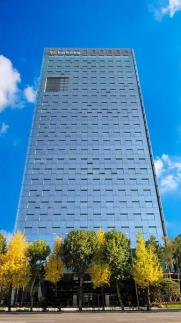 KB Kookmin Bank to Provide $230 Million in Financial Support for SMEs Affected by Middle East Conflict KB Kookmin Bank is set to provide 230 billion won (approximately $230 million) in financial support to assist small and medium enterprises (SMEs) facing challenges due to the ongoing conflict between the U.S., Israel, and Iran. On May 22, the bank announced it has signed a memorandum of understanding with the Technology Guarantee Fund to implement inclusive financial support aimed at helping SMEs overcome crises stemming from the Middle East conflict and global instability.According to the Ministry of SMEs and Startups, as of May 20, the number of reported cases of damage and concerns related to SMEs affected by the Middle East conflict has risen to 834, an increase of 35 from the previous week.Of the reported cases, 628 involved damage or difficulties, while 135 were categorized as concerns. The most common issue reported was transportation disruptions, accounting for 276 cases (43.9%), followed by other issues at 232 cases (36.9%). The prolonged conflict between the U.S. and Iran has led to a diversification of reported damages.In response, KB Kookmin Bank plans to make a special contribution of 5 billion won to the Technology Guarantee Fund, which will facilitate approximately 230 billion won in guarantee-backed loans. This includes 60 billion won in special contribution guarantees and about 170 billion won in guarantee fee support.Eligible companies must meet the technical requirements set by the Technology Guarantee Fund and include those directly exporting to the Middle East, companies affected by disruptions in the supply chain of Middle Eastern crude oil, and those facing difficulties due to rising exchange rates and logistics costs.These companies can receive a guarantee certificate with a 100% guarantee rate for three years through the special contribution agreement. They may also choose to receive a total of 1.2 percentage points in guarantee fee support over two years.A representative from KB Kookmin Bank stated, "We hope this agreement will provide practical assistance to companies that have suffered direct and indirect damages, as well as those facing financial burdens due to high oil prices and exchange rates. We will continue to support SMEs as their financial partner."* This article has been translated by AI. 2026-05-23 11:01:15
 -
 Activists Detained by Israeli Forces Return Home, One Reports Hearing Loss Two South Korean activists who were detained by Israeli forces while attempting to reach Gaza returned home on May 22. Kim Ah-hyun (alias Haecho) and Kim Dong-hyun arrived at Incheon Airport around 6:24 a.m. on a flight from Bangkok, Thailand. Speaking to reporters, Kim Ah-hyun recounted, "We were illegally abducted by Israel during our voyage to Gaza and imprisoned. The Israeli occupying forces were extremely angry, and many people were beaten while we were in custody." Kim Dong-hyun stated, "What Israel did to us was to hijack our boats in international waters and continuously torture and imprison civilians. We only experienced a fraction of the violence perpetrated by Israel, but it was truly unbearable." Kim Ah-hyun also shared details about his health, saying, "I was beaten multiple times, and now I have difficulty hearing out of one ear." Regarding their mission to Gaza, Kim Ah-hyun explained, "Many people are dying not only from bombings but also from starvation. I believed that as long as there are people there, we must attempt to sail again, regardless of the dangers in the Middle East." When asked about his passport being invalidated, he asserted, "I believe people have the right to live where they want and travel where they wish. Even if the government tries to stop me with legal procedures like invalidating my passport, I have the right to do what I want." Kim Ah-hyun remarked, "Many consulates are avoiding diplomatic conflicts with Israel due to the dangerous situation in the Middle East. In that context, I think the South Korean government has done what it needed to do."* This article has been translated by AI. 2026-05-23 10:58:31
 -
 Cadillac Escalade IQL Launches as Longest Electric SUV in Korea Cadillac launched the all-electric long-body flagship SUV, the Escalade IQL, in Korea on May 22. The Escalade IQL builds on the exceptional performance of the Escalade IQ, unveiled last November, featuring an extended length and a more spacious interior. It comes standard with the 'Super Cruise' feature, allowing drivers to take their hands off the steering wheel while maintaining attention on the road. This advanced driver assistance system from General Motors (GM) is currently available on approximately 23,000 kilometers of highways and major roads in Korea. With a length of 5,820 mm and a wheelbase of 3,460 mm, the Escalade IQL is the longest electric SUV currently sold in Korea, offering impressive body proportions and ample interior space. The vehicle's body is 105 mm longer than the Escalade IQ, providing more room in the third row and increased cargo capacity. The driver’s area features a 55-inch Horizon Curved LED display (35 inches for the driver and 20 inches for the passenger), creating a stunning visual experience for passengers. The executive seats in the second row, equipped with massage functions, enhance the luxurious riding experience. The Escalade IQL is powered by a 205 kWh large-capacity battery, certified to provide a driving range of 710 km on a single charge (combined standard). Its electronic four-wheel steering system offers agility that surpasses typical large SUVs. Additionally, it features Magnetic Ride Control 4.0, which detects road conditions up to 1,000 times per second to adjust damping in real-time, and an adaptive air ride suspension that automatically adjusts the ride height based on driving conditions, enhancing safety. A representative from Korea GM stated, "The newly launched Escalade IQL stands out with its long body, making it the longest electric SUV in the domestic market. Customers can experience first-class comfort and outstanding driving performance as soon as they take delivery." According to the Korea Automobile Importers and Distributors Association (KAIDA), 128 units of the Cadillac Escalade were sold in the first quarter of this year, placing it among the top sellers in the domestic luxury large SUV market.* This article has been translated by AI. 2026-05-23 10:57:00
 -
 Rising Interest in Temples Reflects 'Hip Buddhism' Trend The demand for visiting temples has been confirmed through actual travel data amid the rising trend of 'Hip Buddhism.' Tmap Mobility reported on May 22 that an analysis of Tmap driving data from 2023 to 2025 showed a continuous increase in temple visitation over the past three years. Notably, the number of temple destination settings last year increased by 26.9% compared to the previous year. This reflects the trend of consuming traditional Buddhism not just as a religion but as an everyday experience and cultural content. Last year, the most visited temple was Bulguksa, followed by Naksansa, Tongdosa, Haedong Yonggungsa, and Bomunsa. Interest in temple experience programs is also growing. According to the Korean Buddhist Cultural Business Corporation, a total of 349,219 participants took part in temple stay programs across 158 temples nationwide last year. The popularity of Buddhist cultural content continues to rise. The '2025 Seoul International Buddhist Expo,' held in April, attracted over 200,000 visitors over four days, setting a record for the event. During the expo, the number of destination settings for COEX increased by 4.1% compared to the previous week, and was 77% higher than the week following the event. Tmap Mobility stated, "We plan to analyze changing lifestyles and social trends from various perspectives based on driving data."* This article has been translated by AI. 2026-05-23 10:54:21
 -
 Government to Increase Waste Incineration Fee for Out-of-Region Waste 정부가 폐기물 소각시설이 있는 지방자치단체가 다른 지자체 폐기물을 처리할 때 추가로 받는 수수료의 가산금이 10%에서 20%로 올리는 방안을 추진한다. 공공 소각시설 설치 사업의 재정 지원은 확대한다. 기후에너지환경부는 22일 경제관계장관회의에서 이런 내용의 공공 소각시설 조기 확충 방안을 보고했다. 올해부터 수도권에서 생활폐기물 직매립이 금지되면서 수도권 쓰레기가 충청 등 타 지자체로 옮겨져 처리되는 문제가 발생하고 있다. 생활폐기물을 그대로 묻지 못하고 소각하거나 재활용품을 골라내는 작업을 거친 뒤 잔재물만 묻을 수 있는 조치가 시행됐지만 수도권 지자체들이 공공 소각시설을 제때 확보하지 못했기 때문이다. 특히 생활폐기물 직매립 금지가 2030년 전국으로 확대 시행되는 만큼 정부는 공공 소각시설 확충에 속도를 낼 예정이다. 우선 폐기물 처리수수료 가산금을 현행 폐기물 처리 수수료의 10%에서 20%로 늘린다. 가산금은 지자체가 공공 소각시설에서 다른 지자체 생활폐기물을 처리해줄 때 폐기물 처리 수수료에 더해 추가로 받는 금액이다. 이를 통해 주민 지원 기금을 더 확보하고 소각시설 주민 수용성을 높인다. 공공 소각시설 설치 사업 지방재정투자심사는 기후부가 행정안전부와 협의해 면제한다. 올해 5월 기준 사업 계획이 구체화한 20개 공공 소각시설 설치 사업이 1차 연도 지방재정투자심사 면제된다. 수도권에서는 부천시·의정부시·김포시·구리시·과천시, 충청권에서는 세종시·충주시·영동군·아산시, 호남권에서는 전주시·담양군·고흥군·영암군·장성군·완도군, 영남·강원권에서는 대구시·김천시·고령군·창녕군·철원군 등의 지방재정투자심사가 면제된다. 국고 지원 대상은 확대된다. 소각시설 설치비뿐 아니라 기존 시설을 철거하는 비용과 부지 매입비도 국고를 지원한다. 공공 소각시설 설치 사업 관련 설계 적정성 검토는 계획설계 단계에선 검토받지 않도록 절차를 간소화한다. 사업방식과 관련해서는 턴키 방식과 정액 지원 사업 등 행정절차에 드는 시간이 짧은 사업방식을 우선해서 지원한다. 국고 지원액을 최초 산정액으로 고정해 총사업비 관리 대상에서 제외되는 정액 지원 사업의 경우 국고 보조율을 확대한다. 기후부는 '공공 소각시설 확충 지원단'을 통해 사업 추진 상황을 지속해서 점검한다. 또 환경영향평가 관련 사항을 사전에 검토해 환경영향평가 협의가 장기화하는 것을 막겠다는 계획이다. 김성환 기후에너지환경부 장관은 "생활폐기물 발생지 처리 원칙이 현장에서 제대로 작동하기 위해서는 공공 처리기반을 제때 갖추는 것이 핵심"이라며 "직매립 금지 제도의 전국 시행에 차질없도록 현장의 문제를 지속적으로 해결해 나갈 것"이라고 말했다.* This article has been translated by AI. 2026-05-23 10:52:18
 -
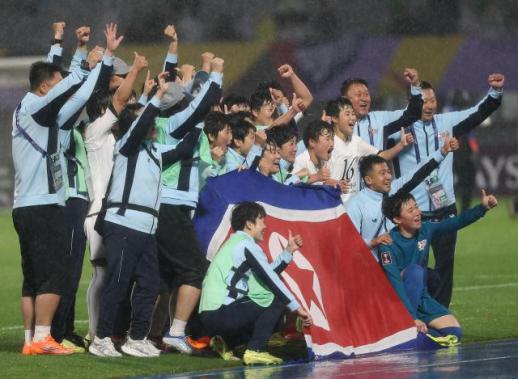 North Korean football club's South visit unlikely to thaw inter-Korean ties: report SEOUL, May 23 (AJP) - North Korean women’s football club Naegohyang FC’s recent visit to South Korea is unlikely to lead to a broader thaw in inter-Korean relations, a South Korean state-run think tank said Friday. A recent report by the Institute for National Security Strategy said the visit should be viewed not as a signal of reconciliation but as “a limited form of contact between two states through an international sporting event,” according to researcher Kim Bo-mi. Naegohyang FC arrived in South Korea on May 17 to participate in the Asian Football Confederation Women’s Champions League. The North Korean side defeated Suwon FC Women 2-1 in the semifinals on May 20 and is set to face Japan’s Tokyo Verdy in the final at 2 p.m. Saturday in Suwon. The visit marked the first trip by a North Korean sports team to South Korea since 2018, drawing attention amid prolonged tensions between the two Koreas. But Kim said the behavior of the North Korean delegation and Pyongyang’s state media coverage suggested the North was intentionally avoiding any narrative of inter-Korean reconciliation or ethnic unity. “North Korea made clear that it views South Korea not as a partner for exchange and cooperation, but as a separate state encountered in an international competition,” Kim wrote. During the tournament, North Korean players and officials also appeared cautious about attaching political meaning to the visit, repeatedly emphasizing that they were focused “only on football.” Kim said it remains unlikely that the visit will trigger rapid improvements in inter-Korean ties or revive large-scale sports exchanges such as unified Korean teams, which were pursued during periods of relatively friendly relations in the past. “For the time being, inter-Korean relations are likely to show a complex pattern in which military tensions and limited exchanges coexist,” she said. Kim urged Seoul to recognize North Korea’s participation in limited exchanges under international norms and develop policies that reflect the changing nature of inter-Korean relations. 2026-05-23 10:50:51
 -
 SpaceX IPO Highlights Shift in Capitalism as South Korea Lags Behind SpaceX's initial public offering (IPO) is not just a major stock listing; it signifies a shift in the direction of capitalism. Just as the Industrial Revolution transformed society through railroads, oil, automobiles, and the internet, space is now emerging as the next economic frontier. Notably, SpaceX's investment prospectus states, "We will build cities on the Moon and other planets." What once might have seemed like science fiction is now a business plan valued in the trillions by global financial markets. Historically, new civilizations have always begun with the "expansion of mobility." During the Age of Exploration, Europe dominated the seas and reshaped global order, while the United States established economic supremacy through railroads, aviation, and the internet. Today, the U.S. is attempting to pioneer an economic realm beyond Earth through private space enterprises. This is not merely about space exploration; it is a long-term project aimed at redesigning humanity's systems for production, habitation, communication, and logistics. In this context, SpaceX's IPO represents a convergence of economics, philosophy, and national strategy. Investors are not merely betting on a rocket company; they are wagering on who will seize the infrastructure of future civilization. While oil companies were once the lifeblood of industrial society, companies with space transportation networks and satellite systems are likely to become the arteries of future civilization. The challenge lies in South Korea's response to this monumental change. The SpaceX investment prospectus indicates that due to registration issues under South Korean capital market laws, it will be difficult for domestic retail investors to participate directly in the IPO. Despite Mirae Asset Securities being part of the underwriting group, the likelihood of a simultaneous domestic offering has diminished. While global capital markets operate transnationally, South Korea remains mired in complex reporting procedures and rigid regulatory frameworks. This scenario is not unfamiliar. Similar issues have arisen in AI, biotechnology, and platform industries. While the world competes at speed, South Korea spends time on reviews, approvals, and regulatory assessments. The perspective on innovative industries differs significantly; the U.S. asks, "How do we nurture growth?" while South Korea focuses on "How do we control it?" As a result, private space companies have emerged in the U.S., while South Korea has seen an increase in regulatory documentation. A more fundamental issue is the difference in national imagination. The U.S. allows private companies to dream of building cities on the Moon, and the capital markets fund that dream. In contrast, South Korean society still expends energy on real estate prices, short-term performance, and political strife. Management and control take precedence over bold visions for future industries. For the economy to grow, it requires not just technology but also a culture that believes in the future. Both the Industrial Revolution and Silicon Valley ultimately stemmed from national imagination. Of course, regulation is necessary, and protecting investors is important. However, the issue lies in finding balance. Excessive preemptive regulation increases the risk of lacking innovation more than it mitigates the risks of innovation itself. Currently, global capital markets are being reshaped around future industries such as AI, space, and quantum computing. If South Korea's capital markets remain shackled by the regulatory frameworks of the past manufacturing era, it will inevitably fall behind in global competition. National strategy must also evolve. The space industry should be approached not merely as a science and technology policy but as an issue of economic security and industrial hegemony. NASA does not do everything directly; the government sets direction and initial demand, while private companies handle speed and innovation. This is the American model of technological hegemony. South Korea must move away from a government-led approach and cultivate a private sector-centered ecosystem. Regulatory agencies should also shift from a focus on approvals to supporting innovation. Companies must adapt as well. Future industries are becoming a competition not just in manufacturing but in "designing civilization." Semiconductors, batteries, AI, and aerospace should not be viewed separately but as part of an interconnected ecosystem. Today, corporate competitiveness arises from platforms, networks, data, and imagination rather than factory size. The strength demonstrated by SpaceX ultimately lies in its narrative of designing future order rather than just the rockets themselves. The South Korean economy stands at a critical crossroads. In the face of low growth, declining population, and sluggish manufacturing, repeating past methods will hinder new leaps forward. What is needed is not just a few regulatory relaxations but a fundamental shift in national governance philosophy. The country must become one that increases challenges rather than reduces failures. It must transition from a managed economy to an innovative economy. Five hundred years ago, the nation that dominated the seas ruled the world. A century ago, the country that claimed the skies became a great power. Now, those who seize space and AI will likely lead the future order. SpaceX's IPO is not just a stock listing; it is a signal that "the future has already begun." South Korea must now decide whether to remain in the safety zone of regulation or participate in the race to pioneer a new civilization.* This article has been translated by AI. 2026-05-23 10:48:57
 -
 Teacher Who Reported School Misconduct Found Dead After Fall A teacher in his 50s was found dead after falling from an apartment in Gi-echeon City. According to police, the incident occurred around 2 a.m. on May 21. The teacher, identified only as Mr. A, had reported misconduct related to embezzlement and drunk driving by school officials in 2023. Following his whistleblowing, he was reportedly sued for defamation by individuals associated with the school. No suicide note was found at the scene, and police are investigating the circumstances surrounding the fall using CCTV footage and other evidence.* This article has been translated by AI. 2026-05-23 10:46:22
 -
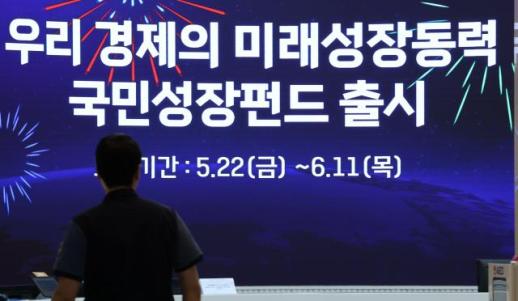 Launch of National Participation Growth Fund Offers Up to 40% Tax Deduction The National Participation Growth Fund, designed to invest in advanced strategic industries such as artificial intelligence, semiconductors, and secondary batteries, was launched on May 22. According to the financial sector, the Financial Services Commission has begun a three-week subscription period for the fund, which will be available on a first-come, first-served basis. This year, the total fundraising target is set at 600 billion won, with subscriptions available through 10 major banks and 15 securities firms, either in-person or online.Due to the first-come, first-served nature of the offering, it may close early if the allocation is exhausted. The government has allocated 20% (120 billion won) of the total sales for the first two weeks (until June 4) specifically for low-income individuals, targeting those with an annual earned income of 50 million won or less, or a total income of 38 million won or less. Additionally, during the first week, online subscriptions will be limited to 50% of the total.The investment limit is set at 100 million won per person annually, with a maximum of 200 million won over five years. The minimum subscription amount varies by sales firm, ranging from 100,000 won to 1 million won.Tax benefits are available for those who maintain their investment in a dedicated account for three years. A tax deduction of 40% applies to amounts up to 30 million won, 20% for amounts between 30 million and 50 million won, and 10% for amounts between 50 million and 70 million won, with a maximum deduction of 18 million won.Investors who hold their investment for over five years will benefit from a separate taxation rate of 9.9% on dividend income, which can help reduce health insurance premiums and the burden of comprehensive taxation on financial income. However, to receive these tax benefits, individuals must obtain and submit an income verification certificate for the Individual Savings Account (ISA) from the National Tax Service or the Government 24 website.Moreover, individuals who were subject to comprehensive taxation on financial income at any point between 2023 and 2025 can only subscribe through a general account, which has an annual limit of 30 million won. Comprehensive taxation on financial income applies when the total interest and dividend income exceeds 20 million won in a year.The National Growth Fund is a policy fund co-created by the government and the private sector. It will pool public funds to create a master fund, which will then be invested in 10 sub-funds related to advanced strategic industries, combining government finances and private investment. The government plans to raise 3 trillion won (600 billion won annually) from the public over five years out of a total of 150 trillion won. In the event of losses in the sub-funds, the government will cover up to 20% of the public investment using its subordinate financial contributions.However, it is important to note that the loss coverage applies to the public investment amount, not the total losses of the fund. For instance, if a sub-fund consists of 1 billion won in public investment, 200 million won in government finances, and 120 million won in private investment, and losses occur, the government will only cover losses up to 200 million won, which is 20% of the public investment. Therefore, the proportion of government loss coverage relative to the total size of the individual sub-fund may be lower than 20%.Additionally, investors will not be able to redeem their investments for five years, and the fund is classified as a high-risk investment product with no principal guarantee. As a result, individuals must undergo a suitability assessment to determine if their investment profile aligns with this product.* This article has been translated by AI. 2026-05-23 10:45:00