
Journalist

Park Heewon
-
 Hanwha Solutions Pushes Forward with $1.8 Billion Capital Increase Hanwha Solutions is demonstrating a strong commitment to a capital increase of 1.8 trillion won ($1.4 billion) despite two previous setbacks from financial authorities. The company has significantly enhanced its securities registration statement to address the authorities' concerns regarding the necessity of the capital increase, asset sale plans, and performance forecasts, leading to increased optimism about its success. According to industry sources on May 22, the securities registration statement submitted by Hanwha Solutions on May 14 will take effect on May 30. The Financial Supervisory Service (FSS) must issue a relevant disclosure by 8 p.m. on May 29 if it intends to reject the registration statement. If no further action is taken by that deadline, the statement will take effect, allowing the capital increase process to proceed as planned. During the FSS review process, Hanwha Solutions faced two rounds of correction requests over the past two months, requiring modifications to its plans. Initially, the capital increase amount was reduced from 2.4 trillion won to 1.8114 trillion won, but the FSS raised a second objection, citing insufficient explanations for investor protection. In the third securities registration statement submitted by Hanwha Solutions, the capital increase amount remains unchanged. Of the total, 907.7 billion won will be allocated for solar investments, including the establishment of a perovskite tandem production line, while 906.7 billion won will be used to repay debts accumulated due to a downturn in the petrochemical sector. This decision reflects the company's belief that reducing the capital increase amount is not feasible given the global uncertainties in the solar and petrochemical markets. The parent company, Hanwha Group, plans to participate in the capital increase with a subscription exceeding 120%, which will help offset most of the debt repayment costs. In response to the FSS's concerns, Hanwha Solutions has strengthened its registration statement by including detailed information on liquidity risks, alternative funding options including the sale of non-core assets, specific grounds for medium- to long-term profit estimates, and future credit rating outlooks. As a result, the length of the registration statement has increased significantly from 920 pages to 1,260 pages. As an additional funding method outside the capital increase, the company is considering selling part of its stakes in Hanwha Impact and Hanwha Hotels & Resorts. This move aims to secure approximately 300 billion won in liquidity by the third quarter of this year. The company predicts that if its credit rating falls from the current 'AA- (negative)' to below 'A+', it could incur over 75 billion won in additional financial costs due to rising corporate bond rates. The capital increase is one of the measures to prevent such financial burdens while aiming to reduce the consolidated debt ratio to below 150%. Additionally, the company has set a target to achieve sales of 33 trillion won and operating profit of 2.9 trillion won by 2030 without any further capital increases. Investment banking sources view the likelihood of Hanwha Solutions' third capital increase attempt succeeding as a toss-up. While the company has provided detailed financial information to investors in line with FSS requirements, some small shareholders continue to express opposition, raising concerns that the FSS may request further corrections. The FSS is responsible for reviewing the securities registration statement to protect investors but does not have the authority to cancel the company's decision to pursue a capital increase. However, if the registration statement fails to pass review three times, it is common for the company to voluntarily cancel the capital increase. Meanwhile, some small shareholders of Hanwha Solutions are demanding that the company secure funds by selling its stake in Korea Zinc held by its subsidiary, Hanwha Impact. However, Hanwha Solutions has reportedly expressed reluctance, as selling this stake would not directly result in cash inflow to the company.* This article has been translated by AI. 2026-05-23 19:19:59
 -
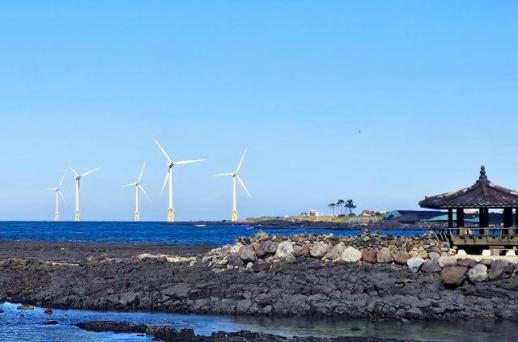 RE100 Energy Demand in South Korea Expected to Reach 160 TWh by 2038 RE100, which stands for 100% renewable energy, has become a benchmark influencing global supply chains and industrial competitiveness, leading to an increase in renewable energy demand among domestic companies. While long-term forecasts suggest sufficient renewable energy supply, concerns remain about grid limitations and other challenges. According to a report by the Korea Energy Economics Institute titled "Insights into the Global Energy Market - Trends in Domestic and International RE100 and Implications for Renewable Energy Policy," the number of companies participating in RE100 has steadily increased since its launch in 2014. Recently, there has been a rise in new memberships from large global companies with significant electricity demands, expanding the volume of renewable energy addressed by RE100. The participation of South Korean companies in RE100 began in earnest in 2020 when six subsidiaries of SK Group joined. Major manufacturing and IT firms such as Samsung Electronics, SK Hynix, Hyundai Motor, LG Energy Solution, Naver, and Kakao have since joined, bringing the total number of participating companies to 36 as of this year. These companies are estimated to consume 66.7 TWh of electricity in 2024. However, the level of renewable energy procurement remains low. By the end of 2024, the procurement rate for renewable energy among domestic RE100 companies is expected to reach only 12%. To fully meet their renewable energy needs, an additional 59.6 TWh will be required. The demand is projected to increase sharply in the coming years. The report estimates that the electricity demand from domestic RE100 companies will reach 160 TWh by 2038. Assuming they meet their renewable energy procurement goals, the achievement rate for RE100 among these companies is expected to reach 83.2% by that year. From a supply perspective, there is expected to be sufficient volume in the medium to long term. Based on the government’s 11th Basic Plan for Power Supply and Demand, the combined supply of renewable energy and clean hydrogen and ammonia is estimated to be about 249.6 TWh by 2038. It is projected that renewable energy and clean hydrogen will account for approximately 35.4% of the central power market in that year. However, there are many variables that could affect the implementation of RE100. Smooth certification processes for hydropower, biomass, and clean hydrogen used domestically are essential. Additionally, various practical constraints such as grid limitations, regional acceptance, and transmission and distribution network shortages could arise simultaneously. The report suggests that policy responses should not only focus on expanding capacity but also on establishing a market, grid, and institutional framework. This means that large-scale renewable energy expansion centered on the central power grid should be complemented by the development of distributed renewable energy based on industrial complexes, urban areas, and localities. Investments to ensure grid stability and flexibility are also identified as key challenges. As inverter-based power sources like solar and wind energy increase, different technical responses will be necessary compared to traditional power grid operations. Expanding transmission and distribution networks, along with energy storage systems (ESS), demand response (DR), and ancillary services, will help alleviate output control and inter-regional grid congestion issues. The report states, "Responding to RE100 has become a new market order that influences global supply chains and industrial competitiveness. Securing renewable energy volumes is linked to industrial and trade policies and can directly impact investment attraction and export competitiveness." It concludes that expanding renewable energy volumes and establishing a stable procurement system will be crucial for maintaining the competitiveness of the manufacturing sector.* This article has been translated by AI. 2026-05-23 19:18:00
 -
 Five Candidates Enter Race for Next Head of Credit Finance Association Five candidates from the finance, academia, and political sectors have declared their intention to run for the next president of the Credit Finance Association. According to the association on May 22, the application period for the 14th president closed on May 19, with the following candidates submitting their applications: Kim Sang-bong, a professor at Hansung University; Park Kyung-hoon, former CEO of Woori Financial Capital; Yoon Chang-hwan, former policy chief to the National Assembly Speaker; Lee Dong-cheol, former CEO of KB Kookmin Card; and Jang Doo-jung, former policy advisor to the Ministry of Economy and Finance. Kim Sang-bong holds a degree in economics from Sogang University, where he also earned his master's degree, and he obtained a Ph.D. in economics from Texas State University. He has worked at Seoul Economic Daily, Shinhan Card, and SK Management & Economics Research Institute, and has served twice as an advisor to the Credit Finance Association. Park Kyung-hoon graduated from Seoul National University with a degree in international economics. He has held positions at Hyundai Corporation and Woori Bank, and served as the Chief Financial Officer of Woori Financial Group. He later became the CEO of Woori Financial Capital and is currently an outside director at Hanwha Savings Bank. Yoon Chang-hwan studied law at Chonnam National University and completed a doctoral program in political science at Dongguk University. He has served as the policy chief to the National Assembly Speaker and led the AI policy advisory team for the campaign of Lee Jae-myung during the 21st presidential election. He currently heads the AI and AI Transformation Strategy Center for the credit finance industry and serves as CEO of the Global AI Next Center. Lee Dong-cheol graduated from Korea University with a law degree and completed an LLM at Tulane University in the United States. He has extensive experience in the card and financial holding sectors, having served as Chief Strategy Officer of KB Financial Group, CEO of KB Kookmin Card, and Vice Chairman of KB Financial Group. Jang Doo-jung graduated from Chung-Ang University with a law degree and completed his graduate studies at Yonsei University. He has worked at Hyundai Capital and Kookmin Lease, and served as the head of the financial business division at NICE Information Service. He has also been a policy advisor to the Deputy Minister of Economy and Finance and an executive director at the Korea Credit Guarantee Fund. The association's presidential selection committee will conduct a document review of the applicants by May 27, narrowing the field to three candidates. Interviews and a secret ballot will follow next month, after which a single candidate will be confirmed and presented for approval at the general assembly, with the aim of finalizing the presidential selection by next month.* This article has been translated by AI. 2026-05-23 19:15:00
 -
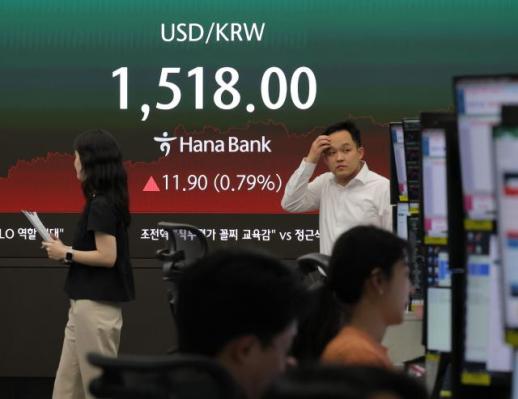 Korean Won Approaches 1520 Against Dollar Amid Middle East Tensions The won-dollar exchange rate has approached the 1520 won mark, prompting foreign exchange authorities to intervene verbally to stabilize the currency. The exchange rate finished the week at a high level, the highest in about a month and a half since April 2. The Bank of Korea and the Ministry of Economy and Finance issued a joint message shortly before the close of trading in the Seoul foreign exchange market, stating, "The foreign exchange authorities are monitoring the movement of the won-dollar exchange rate, which appears excessive compared to fundamentals, with caution." They added, "We will take decisive action if necessary." On that day, the exchange rate for the won against the U.S. dollar closed at 1517.2 won, up 11.1 won from the previous session. This is the highest closing figure since April 2, when it was 1519.7 won. The exchange rate opened at 1504.7 won, down 1.4 won, but quickly turned upward, increasing its gains in the afternoon. At one point during the day, it reached 1519.4 won, nearing the 1520 won level. The intraday high was also the highest since April 2, when it reached 1524.1 won. International oil prices, which had fallen overnight, rose in the Asian market, triggering a flight to safer assets. In Asian trading, the price of West Texas Intermediate (WTI) crude oil for July delivery rose by 1.84% to $98.11 per barrel. Uncertainty surrounding peace negotiations between the U.S. and Iran has contributed to rising international oil prices. Reports indicated that Iran's Supreme Leader Ayatollah Ali Khamenei instructed against exporting highly enriched uranium abroad, dampening expectations for peace. Meanwhile, U.S. President Donald Trump reaffirmed the U.S. position on securing Iran's highly enriched uranium, indicating that both sides remain at an impasse on this issue. Foreign investors sold a significant amount of domestic stocks, with net sales totaling 1.9223 trillion won in the stock market that day. This marks the 12th consecutive trading day of net selling. The weakening of the yen also played a role. The yen-dollar exchange rate rose by 0.15 yen to 159.10 yen per dollar. The Japanese government is considering additional budget measures in response to the prolonged instability in the Middle East, contributing to the yen's decline. Lee Jin-kyung, a researcher at Shinhan Investment Corp., stated, "The won-dollar exchange rate is under pressure from a strong dollar externally and uncertainty regarding peace negotiations, which is exerting downward pressure on the won. The continued net selling of domestic stocks by foreign investors has created an environment favoring dollar purchases, which is also linked to the weakness of Asian currencies like the yen."* This article has been translated by AI. 2026-05-23 19:12:28
 -
 Lotte Energy Materials Sells 90% Stake in Lotte EcoWill to Relson Private Equity 롯데에너지머티리얼즈가 릴슨프라이빗에쿼티와 주식매매계약을 체결하고 롯데에코월 지분 90%를 매각한다고 22일 밝혔다. Lotte Energy Materials announced on May 22 that it has signed a stock purchase agreement with Relson Private Equity to sell a 90% stake in Lotte EcoWill. The company specializes in curtain wall construction, which involves creating a separate glass exterior wall outside concrete walls. Last year, Lotte EcoWill reported approximately 130 billion won in sales and an operating profit of about 12 billion won, with an EBITDA exceeding 10%, indicating strong cash generation capability. Lotte Energy Materials stated, "We decided to proceed with this sale to adjust our business portfolio toward future materials." The company plans to concentrate more on securing the future competitiveness of its core copper foil business. The funds raised from this sale will be utilized for investments in four high-value-added product portfolios: AI circuit foils for data centers, ultra-thin foils for semiconductors, battery foils for energy storage systems (ESS), and battery foils for existing electric vehicle batteries. At its Iksan plant in South Korea, Lotte Energy Materials aims to expand its production capacity for AI circuit foils from the current 3,700 tons to a total of 16,000 tons by 2027. The Malaysian plant will also focus on increasing production of battery foils for ESS, laying the groundwork for a structural turnaround this year. Lotte's chemical division is undergoing a business restructuring to strengthen its core competitiveness. The company is continuing to reorganize its domestic basic materials business and divest unrelated operations while focusing on expanding functional materials and high-value businesses, striving to transition to a business model centered on advanced technology materials. Additionally, Lotte Energy Materials announced last month that it would invest approximately 50 billion won in its Iksan plant, the only domestic production base for circuit foils, to complete the material industry value chain. Despite challenging market conditions due to the electric vehicle sector, the company is making bold investments to secure future competitiveness and restructure its business.* This article has been translated by AI. 2026-05-23 19:09:58
 -
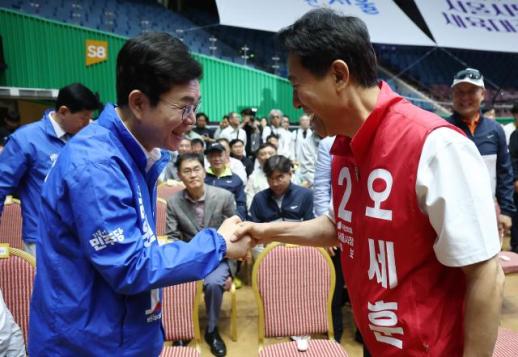 Oh Se-hoon Leads Jung Won-o in Tight Seoul Mayor Race As the local elections approach in 12 days, the race for Seoul mayor is becoming increasingly competitive. Recent polling indicates that Oh Se-hoon, the candidate from the People Power Party, is narrowly leading Jung Won-o of the Democratic Party within the margin of error, making him a key player in the final stretch of the campaign. According to a poll released on May 22, Oh garnered 44.8% support, while Jung received 42.0%. The gap between the two candidates stands at 2.8 percentage points, which falls within the margin of error of ±3.1 percentage points. The survey, conducted by ResearchWell on behalf of New Daily from May 20 to 21, included responses from 977 residents of Seoul aged 18 and older. In this poll, Kim Sung-cheol from the Reform Party received 2.1%, while other candidates collectively garnered 2.6%. Additionally, 6.1% of respondents indicated they did not support any candidate, and 2.4% were unsure. Support for the candidates varied by gender, with Oh performing better among male voters and Jung receiving more support from females. Oh led with 50.5% among men, compared to Jung's 38.7%. Conversely, Jung had 45.0% support among women, while Oh received 39.6%. Age demographics also showed distinct patterns. Jung was favored among voters in their 40s and 50s, while Oh had strong support among those in their 20s, 30s, and seniors over 70. Notably, Oh achieved over 50% support in the 30s (57.1%) and among seniors (51.2%). Jung, on the other hand, received 58.5% support from voters in their 40s and 57.7% from those in their 50s. Regionally, Oh's advantage was particularly pronounced in the southeastern districts, a traditional conservative stronghold. In the four districts of Seocho, Gangnam, Songpa, and Gangdong, Oh received 52.0% support, leading Jung by 13.6 percentage points (38.4%). In contrast, in the first district, which includes Jongno, Jung received 43.0%, slightly ahead of Oh's 40.1%. When asked about their reasons for supporting the candidates, both groups exhibited significant 'negative preference' dynamics. Among Jung's supporters, 28.8% cited dislike for the People Power Party, while 27.3% supported him because they liked President Lee Jae-myung, and 22.4% liked Jung himself. For Oh's supporters, 29.7% indicated they were motivated by dislike for President Lee, 27.8% liked Oh, and 17.1% disliked the Democratic Party. Regarding past allegations of violence against Jung, 43.6% of Seoul residents felt that further clarification was necessary. Only 17.8% believed the issue had been sufficiently addressed, while 18.9% thought it did not require clarification as it was a political attack. Meanwhile, 54.1% of Seoul residents rated President Lee's governance positively, while 39.5% expressed disapproval. Party support showed the Democratic Party at 41.0% and the People Power Party at 36.8%. The survey utilized automated response technology (ARS) with wireless virtual numbers provided by three telecommunications companies, achieving a response rate of 5.9%. The margin of error is ±3.1 percentage points at a 95% confidence level. More details can be found on the Central Election Polling Review Committee's website.* This article has been translated by AI. 2026-05-23 19:06:00
 -
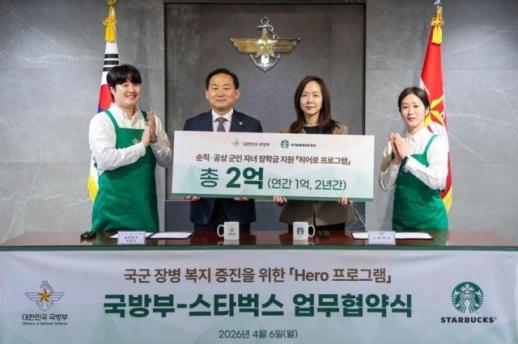 Defense Ministry Suspends Collaboration with Starbucks on Soldier Welfare Program The Defense Ministry has temporarily suspended its collaboration with Starbucks Korea on a soldier welfare program following criticism that the company trivialized the May 18 Democratic Uprising by hosting a 'Tank Day' event. A Defense Ministry official stated on May 22, "We have decided to temporarily suspend and postpone the beverage support project for remote military units in collaboration with Starbucks Korea." The official added, "We will carefully determine the direction of this matter, considering public sentiment and Starbucks Korea's social responsibility." Last month, the Defense Ministry entered into a memorandum of understanding with Starbucks Korea for the 'Hero Program,' which aimed to provide beverage support for remote military units, scholarships for children of deceased or injured soldiers, and employment support programs for soldiers about to be discharged. Starbucks Korea faced backlash for using phrases like 'Tank Day' and 'Desk Tapping' during a tumbler promotion in May, which were seen as mocking the May 18 Democratic Uprising and the torture and death of activist Park Jong-cheol. The company subsequently canceled the promotion. As a result of the controversy surrounding Starbucks Korea's 'Tank Day' marketing, a boycott movement has emerged across society, including among government officials. On the previous day, Minister of the Interior and Safety Yoon Ho-jung posted on X (formerly Twitter), stating, "In light of this situation, the Ministry will not provide products from companies that trivialize or commercialize the history and values of democracy." Earlier on the same day, Minister of Veterans Affairs Kwon Oh-eul expressed his deep regret regarding Starbucks Korea's marketing related to the May 18 Democratic Uprising. Following the controversy, the Veterans Affairs Ministry reportedly issued internal guidelines to refrain from using Starbucks gift cards and other products in its events for the next two to three years.* This article has been translated by AI. 2026-05-23 19:03:26
 -
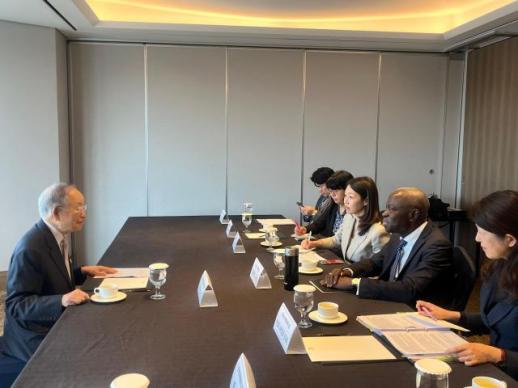 Korean Business Leader Warns of Samsung Electronics Bonus Controversy Sohn Kyung-sik, Chairman of the Korea Employers Federation, raised concerns on May 22 about the potential escalation of labor disputes stemming from the ongoing bonus controversy at Samsung Electronics. During a meeting in Seoul's Lotte Hotel with Gilbert Houngbo, Director-General of the International Labour Organization (ILO), Sohn discussed the Samsung bonus issue and ongoing domestic matters, including artificial intelligence (AI) collaboration initiatives. This year, Samsung Electronics is projected to achieve an operating profit of approximately 300 trillion won, prompting labor unions to demand a share of the company's profits. Sohn expressed that "the semiconductor industry requires substantial upfront investments" and warned that widespread demands for profit sharing could introduce uncertainties for corporate management and the national economy. He added, "Even after agreements, internal conflicts regarding equity among divisions continue," noting that such movements could exacerbate tensions not only between companies and industries but also within Samsung itself. The meeting between Sohn and Houngbo was part of a collaborative effort for a 'Global AI Hub' that the South Korean government is pursuing. A joint statement regarding the establishment of this hub, involving nine international organizations including the ILO, was released on May 21. Sohn remarked, "It is significant for Korea, a leader in AI technology, to play a pivotal role in global AI collaboration," emphasizing that the federation is actively participating in social dialogue with labor and government to effectively respond to the AI transition. He also mentioned plans to attend the ILO conference in Geneva next month, expressing hope that discussions would balance the perspectives of various countries and stakeholders.* This article has been translated by AI. 2026-05-23 19:00:53
 -
 Justice Ministry Orders Review of Starbucks 'Tank Day' Controversy The Justice Ministry has instructed the Supreme Prosecutors' Office to review the status of events related to Starbucks' 'Tank Day' promotion amid ongoing controversy. On May 22, the ministry announced in a press release that it had directed the Supreme Prosecutors' Office to assess the status of surveys, contests, and events utilizing the promotional items. However, in response to reports from multiple media outlets suggesting potential disciplinary actions against purchasers of the promotional items, the ministry stated, "This is completely untrue." A ministry official added, "We have never conducted an event using Starbucks products before, so disciplinary actions are out of the question." Earlier, several media outlets, including TV Chosun, reported that the Justice Ministry had instructed the Supreme Prosecutors' Office to report on the purchase records of Starbucks products. The reports indicated that the ministry requested details specifically for items such as Starbucks tumblers, gift cards, and e-gift certificates, excluding simple coffee purchases. The controversy surrounding Starbucks' 'Tank Day' promotion erupted on May 18, prompting strong criticism from government officials, including President Lee Jae-myung, Justice Minister Jeong Sung-ho, and Minister of the Interior and Safety Yoon Ho-jung. This has led to a widespread boycott of Starbucks within government circles. Minister Yoon declared a de facto boycott of Starbucks on social media the day before, stating, "We will not provide products from companies that trivialize the history and values of democracy or exploit them for commercial purposes." Minister Jeong also expressed on social media on May 20, "If the ruling and opposition parties had agreed to include the spirit of May 18 in the constitutional preamble just 13 days ago, and if it had passed through the National Assembly, such an outrageous act as Starbucks' 'Tank Day' would not have even been conceivable. The path to restoring justice and common sense is long and arduous, but the Justice Ministry will fulfill its responsibilities."* This article has been translated by AI. 2026-05-23 18:58:11
 -
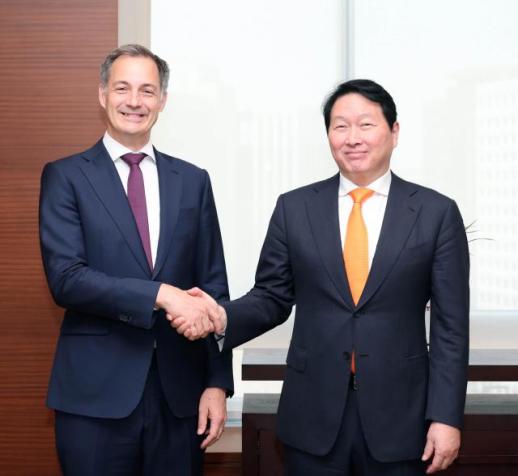 SK Group Chairman Choi Tae-won Meets UNDP President De Croo to Discuss Private Sector Role in Global Development Choi Tae-won, Chairman of the Korea Chamber of Commerce and Industry (KCCI), met with Alexander De Croo, the newly appointed President of the United Nations Development Programme (UNDP), on May 22 at the KCCI headquarters in Seoul. They discussed expanding the role of the private sector in global development cooperation and ways to create social value. The UNDP is a UN agency responsible for planning and managing projects aimed at economic and social development in developing countries. De Croo, who took office in December 2022, previously served as the Prime Minister of Belgium. The meeting included Choi, along with Lee Hyung-hee, Vice Chairman of the Seoul Chamber of Commerce and Industry and SK Group, and De Croo, accompanied by Anne Jupe, Director of the Seoul Policy Center. Choi stated, "The complex global challenges we face today, such as regional extinction, polarization, and climate crises, cannot be solved by governments or international organizations alone. I hope that the KCCI's execution capabilities combined with the UNDP's global network will lead to tangible changes based on a common language of social value." Choi specifically requested UNDP's participation and interest in the upcoming '3rd Korea Social Value Festa' scheduled for September. The Social Value Festa is an event where businesses, governments, international organizations, and civil society come together to seek solutions to social issues and sustainable growth. He suggested, "Let’s co-plan a global session linked to the UNDP strategy to spread awareness." De Croo introduced the UNDP's strategic plan, emphasizing the necessity of collaboration with private enterprises in key areas such as artificial intelligence, digital transformation, climate response, governance, and sustainable finance. He urged Korean companies, including SK, to take a more active interest in the UNDP's various public-private cooperation activities. Choi has consistently discussed ways to link social value with economic growth. In March, he participated in the '2026 Value and Growth Forum,' where he emphasized, "A new growth model is possible only if businesses, governments, and civil society work together."* This article has been translated by AI. 2026-05-23 18:55:33