
Journalist

Park Heewon
-
 Hyundai Mobis hosts Silicon Valley robotics forum with record turnout SEOUL, May 19 (AJP) - Hyundai Mobis held its fifth annual Mobis Mobility Day in Sunnyvale, California, drawing a record crowd of about 400 attendees as the South Korean auto parts maker pushes into robotics and physical AI amid a broader shift away from its traditional mobility focus. The event, held Monday local time, drew more than double the turnout of the previous year, reflecting mounting interest from local startups, automakers, and investors in the company's expanding technology agenda. Robotics and physical AI dominated the agenda, with presentations from staff at Hyundai Mobis' North American research center covering autonomous driving, software-defined vehicles, and electrification. The company also shared its robotics investment and R&D strategy, while holding in-depth discussions with automaker representatives on the back of recent order wins tied to Hyundai Motor Group Metaplant America coming online. The event also served as a barometer of shifting sentiment in Silicon Valley, where investor attention has moved beyond IT and semiconductors toward companies with core technologies in emerging sectors such as robotics and AI hardware. Hyundai Mobis said it plans to host an additional Mobis Mobility Day in Asia in the second half of this year, extending its open innovation program — previously focused on North America and Europe — to scout promising startups in robotics and automotive semiconductors across the region. 2026-05-19 11:43:02
 -
 Japan's Q1 Economic Growth Rate Hits 0.5%, Exceeding Expectations Japan's real gross domestic product (GDP) growth rate for the first quarter of this year was 0.5%, marking the second consecutive quarter of growth despite risks from the Middle East. According to Nikkei Asia, the Japanese Cabinet Office announced that real GDP increased by 0.5% from the previous quarter and by an annualized rate of 2.1% from January to March. This figure surpasses the market forecast of 1.6% compiled by QUICK, a subsidiary of the Nikkei Group. Consequently, Japan's economy has continued to expand following a 0.8% annualized growth in the fourth quarter of last year. Private consumption, which accounts for more than half of GDP, led the growth with a 0.3% increase from the previous quarter. Business investment in equipment also rose by 0.3%. Exports grew by 1.7%, while imports increased by 0.5%. However, the larger increase in exports boosted net exports, contributing positively to the growth rate. Private residential investment also saw a 0.5% rise. Nonetheless, the GDP figures reflect only limited impacts from the conflict in the Middle East, which was triggered by the U.S. and Israel's attacks on Iran at the end of February. With rising raw material prices due to instability in the region, there are concerns that inflation and consumer spending may face increasing pressure on the Japanese economy in the future. Other economic indicators are already showing the effects of the conflict. Household consumption in Japan fell by 1.3% in March compared to the previous month, and government surveys indicated weakened consumer sentiment in March and April. Industrial production also decreased by 0.5% in March from the previous month, significantly impacted by concerns over the supply of key raw materials like naphtha, which affected the chemical sector's output. Experts predict that Japan's economic growth is likely to slow in the latter half of this year. A survey conducted by the Japan Economic Research Center among economists projected a growth rate of only 0.45% for the April to June period. The impact of rising raw material prices is expected to be reflected in various product prices after summer, potentially fueling inflation and constraining the growth of real wages, which could hinder consumer recovery. As a result, the Bank of Japan's monetary policy decisions are expected to become more complex. Nikkei Asia reports that the Bank of Japan may consider raising interest rates as early as June, but it faces the challenge of balancing concerns over slowing growth and inflationary pressures.* This article has been translated by AI. 2026-05-19 11:41:03
 -
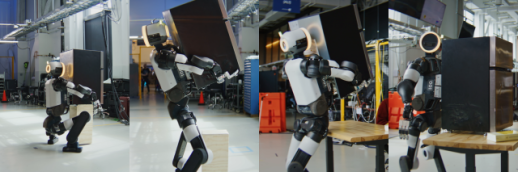 Boston Dynamics' Atlas Robot Successfully Moves 23kg Refrigerator Boston Dynamics' humanoid robot, Atlas, has demonstrated its ability to lift and move a heavy refrigerator. As the company prepares for the robot's deployment at Hyundai Motor Group's new factory in Georgia in 2028, Atlas has showcased both its full-body control capabilities and its ability to handle external objects. In a video released on May 19 on Boston Dynamics' YouTube channel, Atlas is seen bending its knees slightly to lift a 23kg (50lb) refrigerator. While carrying the refrigerator, it maintained its balance as it moved to a table behind it, then executed a 180-degree turn to safely place the refrigerator on the table. Performing this task requires advanced full-body control technology that allows the robot to maintain a balanced posture while lifting objects of varying sizes and weights. This marks a significant milestone, indicating that Atlas is moving beyond laboratory demonstrations to operate in more variable industrial environments. A Boston Dynamics representative stated, "The ability to estimate its state using sensors in the absence of external information and to integrate a continuous series of movements, as shown in the video, proves that Atlas can perform high-level tasks in real industrial settings. Atlas quickly learned these movements through large-scale simulation-based reinforcement learning and implemented them in real environments within weeks." Atlas has successfully transported not only the 23kg refrigerator but also a refrigerator weighing up to 45kg (100lb). The successful movements highlight Atlas's high performance and compatibility as a developmental model. For instance, the actuators used in Atlas are standardized into two types, and both arms and legs are designed with the same structure to facilitate easy parts replacement. This approach is expected to enhance cost efficiency based on economies of scale. Boston Dynamics also released behind-the-scenes training footage of Atlas, showcasing the robot performing a 360-degree turn while lifting one leg and executing backflips. The ability to control the upper and lower body separately requires advanced control technology that minimizes interference between joints while maintaining movement continuity. Movements like handstands and backflips are crucial for assessing Atlas's flexibility and balance, as well as for teaching it how to recover from slips or falls. Meanwhile, Hyundai Motor Group announced its vision at CES 2026 in January, stating its goal to expand robotics in everyday life and industry to drive human progress. The company plans to strengthen strategic partnerships with leading global AI firms and collaborate with Google DeepMind to accelerate the development of future humanoid technologies.* This article has been translated by AI. 2026-05-19 11:39:00
 -
 KT Implements Quantum-Resistant Security System for Defense KT announced on May 19 that it will apply quantum-resistant encryption (PQC) to key defense systems as part of the "2026 Quantum-Resistant Encryption Pilot Transition Support Project" organized by the Ministry of Science and ICT and the Korea Internet & Security Agency (KISA). The company is conducting a PQC demonstration project in collaboration with the Ministry of National Defense and the Army Information and Communications School, forming a consortium with Daeyoung S-Tech and ESI. In this project, KT will implement quantum-resistant encryption modules across critical infrastructure segments, including the smart unit platform (edge) to user PCs, CCTV to network video recorders (NVR), drones to ground control systems (GCS), and 5G routers to core networks. The performance and applicability of these systems will be validated in real battlefield environments. The smart unit platform is a crucial area for PQC transition, as it integrates equipment from different manufacturers and multi-layered network structures. KT plans to apply and validate quantum-resistant encryption throughout the entire lifecycle of defense data from end to end. Based on the verification results and operational experience gained from this project, KT aims to expand the application of quantum-resistant encryption beyond defense to public and private sectors. The company will also continue to develop next-generation security service models that meet global security standards. Jeon Myung-jun, Executive Vice President of KT's Enterprise Services Division, stated, "By carrying out pilot projects in the defense sector, we will enhance the reliability of South Korea's communication and security technologies and lead the establishment of a secure AX environment." Meanwhile, according to global market research firm IQT, the global quantum technology market is expected to grow to 135.8885 trillion won by 2030, with quantum cryptography projected to achieve an average annual growth rate of 59%.* This article has been translated by AI. 2026-05-19 11:36:24
 -
 US approves $4 billion arms sales to South Korea SEOUL, May 19 (AJP) - The U.S. State Department has approved potential arms sales to South Korea worth over $4 billion, including upgrade programs for Apache attack helicopters. The department’s Bureau of Political-Military Affairs said Monday that it approved a possible Foreign Military Sale requested by the South Korean government for 24 MH-60R helicopters, along with related weapons and equipment. The estimated cost of the helicopter package is $3 billion. The State Department said the proposed sale would improve South Korea’s capability “to meet current and future threats” by strengthening “the multi-mission helicopter capability of its Navy.” It separately approved a $1.2 billion AH-64E Apache upgrade program, saying it would strengthen the South Korean Army’s attack helicopter capability. The department said the proposed sales would support U.S. foreign policy and national security objectives by improving the security of a major ally that is “a force for political stability and economic progress in the Indo-Pacific region.” It added that the sales would not alter the basic military balance in the region and would have no adverse impact on U.S. defense readiness. The approvals do not mean final contracts have been signed. Under the U.S. Foreign Military Sales process, the proposed sales must go through congressional notification procedures before any deal is finalized. The approvals also come days after Trump left open questions over U.S. arms sales to Taiwan following his recent summit with Chinese President Xi Jinping last week. 2026-05-19 11:35:58
 -
 Han Byeong-do Urges Cooperation for National Assembly Session Amid Tensions Han Byeong-do, the floor leader of the Democratic Party, emphasized the need for a National Assembly session on May 19, urging the People Power Party to cooperate in electing the next leadership. "The clock of the National Assembly must not stop. I call for significant cooperation," he stated, reiterating the importance of convening the session.During a meeting at the National Assembly, Han noted, "We must complete the election of the leadership before the local election campaign period from May 21 to June 2," and requested the People Power Party to assist in holding the session on May 20.He added, "The new leadership must be in place by May 30 to begin their duties normally. The National Assembly Act stipulates that the new leadership should be elected five days before the expiration of the previous leadership's term. The People Power Party is violating the law," he said.Han further stressed the urgency of preparing emergency measures for the prolonged situation in the Middle East and expediting legislation to support the KOSPI 8000 era. He also called for the completion of prosecutorial reforms and the normalization of the real estate market.In response to Jang Dong-hyuk's criticism of the upcoming Japan-Korea summit, Han remarked, "It is clear what the intention is behind holding a summit right before the elections. The level of awareness from the leader of the main opposition party is truly disheartening."He added, "It seems he has quickly forgotten the international embarrassment of returning empty-handed from his visit to the U.S., where he couldn't even meet with a minister or vice minister. The Yoon Suk-yeol administration is doing its utmost to restore South Korea's international standing, which was undermined by his administration. I hope he will exercise restraint."* This article has been translated by AI. 2026-05-19 11:34:03
 -
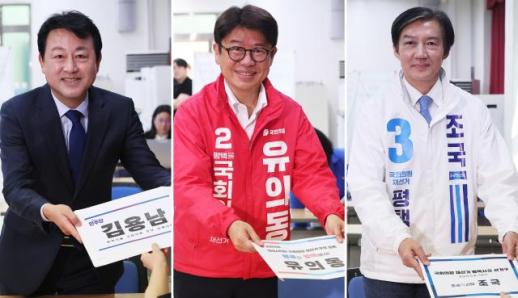 Close Race in Pyeongtaek: Jo Guk Leads with 29.3%, Kim Yong-nam at 25.5% A recent poll indicates a tight race among candidates for the Pyeongtaek by-election, coinciding with local elections. Jo Guk of the Jo Guk Innovation Party leads with 29.3%, followed by Kim Yong-nam of the Democratic Party at 25.5%, and Yoo Yi-dong of the People Power Party at 22.4%. The poll, conducted by Ace Research from May 16 to 17, surveyed 504 adults aged 18 and older residing in Pyeongtaek. Other candidates, including Hwang Kyo-ahn of the Liberty and Innovation Party at 9.4% and Kim Jae-yeon of the Progressive Party at 6%, trailed behind. In hypothetical matchups, the progressive candidates showed stronger support. In a head-to-head scenario, Kim Yong-nam garnered 45.5% against Yoo Yi-dong's 29.1%, with 11.6% undecided and 7.4% unsure. In another matchup, Jo Guk received 44.9% compared to Yoo Yi-dong's 30.7%, with 10.1% undecided, 7.7% unsure, and 6.5% opting for none. This survey utilized a wireless virtual number system provided by three telecommunications companies, employing an automated response system (100% wireless) with a response rate of 7.8%. The margin of error is ±4.4 percentage points at a 95% confidence level. For more details, please refer to the Central Election Poll Review Committee's website.* This article has been translated by AI. 2026-05-19 11:30:47
 -
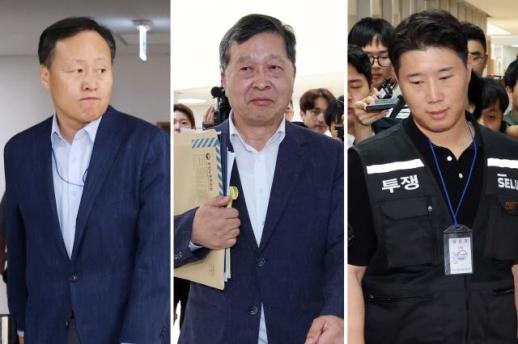 Samsung Electronics Strike Looms as Mediation Talks Continue As the second day of mediation by the Central Labor Relations Commission (CLRC) unfolds, attention is focused on whether Samsung Electronics and its labor union can find common ground. The CLRC is conducting the second day of mediation talks for Samsung Electronics' 2026 negotiations from 10 a.m. to 7 p.m. at the government complex in Sejong. The meeting is closed to the public. Prior to entering the meeting, Choi Seung-ho, chairman of the Samsung Electronics union's joint action headquarters, refrained from making any comments. Ye Myung-gu, head of the Device Solutions (DS) division's people team, stated, "We will do our best until the end" before entering the meeting room. Park Soo-geun, chairman of the CLRC, commented upon entering the meeting that some opinions are being narrowed down, saying, "We will confirm the differences that existed this morning." He added regarding the mediation proposal, "We will assess whether a resolution is possible between the two parties and will present a proposal if it appears unlikely. However, there is still a possibility for an agreement, so we will decide after observing the situation." He also noted that a draft proposal has not yet been prepared. The negotiations come ahead of a planned strike on May 21, following a request from Minister of Employment and Labor Kim Young-hoon to resume mediation talks starting the previous day. During the prior meeting, both sides outlined their positions and engaged in discussions over key issues such as performance-based pay criteria and limits. The CLRC believes that both sides are making progress. Park Jang-beom, a mediation officer at the CLRC, remarked, "Both parties have been proactive. We have heard enough from both sides, and we have seen some changes in the various proposals discussed, which have progressed smoothly so far." As the meeting continues, there is keen interest in whether the two sides will reach an agreement. The CLRC plans to listen to both parties and find common ground to formulate a mediation proposal. However, if the meeting extends, it may continue into May 20. The first round of mediation held on May 11-12 also concluded in the early hours of May 13. The government has indicated that it may invoke emergency mediation powers if the strike at Samsung Electronics becomes a reality.* This article has been translated by AI. 2026-05-19 11:28:03
 -
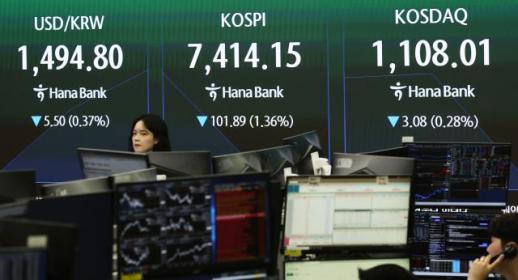 International Oil Prices Continue to Rise as Exchange Rate Shows Mixed Trends The won-dollar exchange rate opened lower but showed mixed trends in the 1500 won range. As of 9:55 a.m. in the Seoul foreign exchange market, the exchange rate for the Korean won against the U.S. dollar was 1500.1 won. The rate opened at 1493.8 won, down 6.5 won from the previous session. The slight decline in the value of the dollar and mixed performance in the New York stock market are believed to have influenced the rise in international oil prices. In the New York stock market, the Dow Jones Industrial Average closed up 159.95 points (0.32%) at 49,686.12. The Standard & Poor's (S&P) 500 index fell 5.45 points (0.07%) to close at 7,403.05, while the Nasdaq Composite index dropped 134.41 points (0.51%) to finish at 26,090.73. Concerns over the prolonged conflict in the Middle East have contributed to the continued rise in international oil prices. The July futures for Brent crude rose 2.60% to $112.10 per barrel, while West Texas Intermediate (WTI) crude futures increased by 3.07% to $108.66 per barrel. The dollar showed weakness, with the dollar index, which measures the value of the dollar against major currencies, falling by 0.33% to 99.03. This decline is attributed to stabilizing U.S. Treasury yields. U.S. Treasury yields stabilized after a sharp rise during the trading session. The yield on the 10-year Treasury note surged to 4.659% in after-hours trading but closed at 4.591%. The exchange rate is expected to decline further due to comments from President Donald Trump regarding his decision to postpone military action against Iran. Min Kyung-won, an economist at Woori Bank, stated, "The active selling response from heavy industry and export companies is likely to widen the decline in the exchange rate. The expectation of progress in negotiations, as President Trump indicated he is engaged in serious talks with Iran, is also positive for the won."* This article has been translated by AI. 2026-05-19 11:26:00
 -
 Musk Loses Lawsuit Against OpenAI as Anthropic Acquires Stainless A U.S. jury has dismissed Elon Musk's lawsuit against OpenAI. At the same time, competitor Anthropic has acquired the AI development infrastructure company Stainless to strengthen its API and agent ecosystem. "Lawsuit filing deadline has passed"… Musk loses against OpenAI According to reports from TechCrunch and other outlets on May 19, a jury in a California federal court ruled in favor of the defendants in Musk's lawsuit against Sam Altman, Greg Brockman, OpenAI, and Microsoft on May 18. The jury unanimously determined that "the deadline for filing the lawsuit had already passed." Musk had claimed that the co-founders of OpenAI transitioned the nonprofit research organization into a for-profit entity to pursue private interests. He accused OpenAI of "stealing from charity" and pointed out that Microsoft was deeply involved in the commercialization process. During the trial, testimonies regarding the background of OpenAI's organizational transition and key figures in Silicon Valley were presented, but the main focus was on the legal statute of limitations. OpenAI argued that the damages Musk claimed had occurred before 2021, asserting that the lawsuit itself was time-barred, a position the jury accepted. Judge Yvonne Gonzalez Rogers stated immediately after the verdict that "there was sufficient evidence to support the jury's decision." Industry observers noted that this ruling significantly alleviated major legal uncertainties that could have impacted OpenAI's restructuring or initial public offering (IPO). OpenAI criticized Musk's claims as "unfounded post hoc assertions," stating they were merely attempts to disrupt a competitor. Microsoft also affirmed its commitment to continue AI collaboration for individuals and businesses worldwide. Musk promptly expressed his intention to appeal. He wrote on his X (formerly Twitter) account, "It is clear that Altman and Brockman used the charity to pursue personal gain, and I will appeal to the Ninth Circuit Court of Appeals to protect the U.S. donation and charity system." Anthropic acquires Stainless… internalizing SDK infrastructure On the same day, AI company Anthropic officially announced its acquisition of the developer tools startup Stainless. While the specific acquisition amount was not disclosed, reports suggest the deal exceeds $300 million (approximately 410 billion won). Founded in 2022, Stainless has gained attention for its technology that automatically generates and manages software development kits (SDKs) for various programming languages, including Python, Java, Go, and TypeScript, based on API specifications. Major AI companies, including OpenAI and Google, have reportedly utilized this solution. A key advantage is its ability to automatically maintain and update SDKs required for AI agents to connect with external services. This capability reduces repetitive SDK management tasks, enhancing development efficiency and establishing itself as a core infrastructure in the AI API ecosystem. Following the acquisition, Anthropic plans to gradually phase out the hosting products operated by Stainless. Industry analysts view this as effectively internalizing a critical development infrastructure previously used by competitors. Anthropic explained, "We have been building official SDKs using Stainless technology since the early API operational phase." Alex Lattre, founder of Stainless, also noted, "Seeing the results produced by developers in the Claude ecosystem made collaboration between our companies a natural choice."* This article has been translated by AI. 2026-05-19 11:22:25