

Journalist

Park Jong-ryeol
-
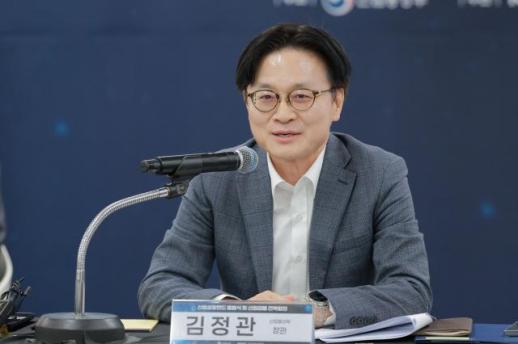 Minister Kim Jung-kwan Visits Kazakhstan, Middle East, and Czech Republic to Strengthen Energy and Industrial Cooperation Minister of Trade, Industry and Energy Kim Jung-kwan will embark on a diplomatic tour from June 7 to 18, starting in Kazakhstan and continuing to three Middle Eastern countries—Saudi Arabia, Qatar, and the United Arab Emirates (UAE)—before concluding in the Czech Republic. The aim is to enhance resource diplomacy and cooperation in advanced industries. According to the Ministry of Trade, Industry and Energy, Kim will hold the 11th Korea-Kazakhstan Joint Committee on Trade, Economy, and Science and Technology in Astana from June 7 to 9. The discussions will focus on expanding cooperation in energy, resources, digital technology, and eco-friendly sectors. Following the official European tour of the President, Kim will visit Saudi Arabia, Qatar, and the UAE as a follow-up to the President's special envoy's trip to the Middle East from June 13 to 16. He plans to meet with senior officials, including ministers from the resource and industrial sectors, to discuss securing stable supply chains for key resources such as crude oil and LNG. Additionally, he will address tailored industrial cooperation that encompasses manufacturing infrastructure and advanced industries in each country. Kim will conclude his trip with a visit to the Czech Republic on June 17 and 18 to review the implementation of the nuclear power project. He will chair the second meeting of the 'Dukovany Project Implementation Monitoring Committee,' which was established in February, to assess the progress and future plans of the Dukovany nuclear power plant construction project led by Korea Hydro & Nuclear Power. He will also participate in events promoting Korea-Czech nuclear partnerships and visit a robotics testbed at the Czech Technical University in Prague to discuss expanding bilateral cooperation in various fields. Kim stated, "In light of the ongoing uncertainties due to conflicts in the Middle East, the importance of securing stable energy and resources has increased significantly. Through my visits to Kazakhstan and the Middle East, I aim to discuss supply strategies for crude oil and LNG, strengthen cooperation in critical minerals, plants, and nuclear power, and support our companies in establishing a foothold overseas." * This article has been translated by AI. 2026-06-07 13:51:00
 -
 South Korean footballers hold 1st training session in Mexico ahead of World Cup opener SEOUL, June 7 (AJP) - With this year's World Cup set to kick off later this week, South Korean footballers held their first training session in Mexico on Saturday, drawing hundreds of fans there. They will play their first three group-stage matches in the expanded 48-team quadrennial tournament co-hosted by Canada, Mexico, and the U.S. The warm-up session took place in Zapopan, near Guadalajara, just a day after their arrival in Mexico, following three weeks of preparation in Utah, which was considered an ideal training location due to its similar altitude to Mexico, during which they also played two friendly matches against Trinidad and Tobago and El Salvador. South Korea, grouped with Mexico and South Africa, will face Czechia, better known as the Czech Republic, in its opening group-stage match scheduled for Thursday. "Having two friendlies helped us figure out what we need to work on," Hong said at a press conference. "The key is to refine our strategies over the remaining days. Since weather conditions here are different from those in Utah, we have to make adjustments. There isn't enough time to do many things, so we have to focus on a few priorities," he added. South Korea, ranked 25th in the latest FIFA rankings, may have the edge over 41st-ranked Czechia, but Hong said the European side will still be a tough opponent. 2026-06-07 13:48:53
 -
 Pakistan to Deliver Letter to Iran's Supreme Leader Amid Peace Talks Amid a stalemate in U.S.-Iran peace negotiations, efforts by mediating countries are underway to revive dialogue. According to reports from Iranian state news agency IRNA and DPA, Pakistan's Interior Minister Mohsin Naqvi arrived in Tehran on the evening of June 6. Iran's semi-official ISNA news agency reported that Naqvi is expected to deliver a letter from Pakistan Army Chief Asim Munir to Iran's Supreme Leader Ayatollah Seyyed Mojtaba Khamenei. Munir has been a key figure in facilitating the U.S.-Iran peace talks held in Islamabad and is known to have direct communication with U.S. President Donald Trump. As Naqvi is considered close to Munir, there are expectations that he will convey messages aimed at promoting dialogue between Iran and the U.S. Naqvi first met with Iran's Interior Minister Eskandar Momeni. He is also scheduled to meet with high-ranking Iranian officials, including President Masoud Pezeshkian and Foreign Minister Abbas Araghchi. In related developments, Lebanese Army Commander Rudolf Haikal is also reported to be heading to Pakistan. Reuters noted that while the Lebanese side did not disclose specific reasons for the visit, it appears to be at the invitation of Pakistan. Iran has set a ceasefire between Israel and the Lebanese militant group Hezbollah as a precondition for peace negotiations with the U.S. Conversely, Lebanon has stated that the ceasefire issue should be addressed separately from U.S.-Iran negotiations, raising the possibility of Pakistan mediating on this matter. However, Iran and the U.S. continue to exchange limited attacks while maintaining an official ceasefire. On June 6, the Islamic Revolutionary Guard Corps (IRGC) announced that it fired upon four oil tankers attempting to pass through the Strait of Hormuz without permission. In retaliation, the U.S. shot down a suicide drone launched by Iran targeting the tankers and struck Iranian coastal bases.* This article has been translated by AI. 2026-06-07 13:42:00
 -
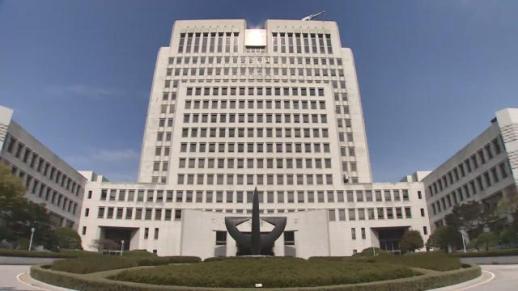 Supreme Court Rules Military Personnel Must Complete Sexual Violence Treatment Programs if Status is Set to Change According to the legal community on June 7, the Supreme Court's first division, led by Justice Cheon Dae-yeop, ruled that a military service member facing a loss of status due to a confirmed sentence must be ordered to complete a sexual violence treatment program, despite not being subject to such orders under the probation law's special provisions.The case involved A, a current non-commissioned officer, who was prosecuted for sexually assaulting B, the wife of a junior soldier, in 2020.Both the first and second trials found A guilty and imposed a fine of 8 million won. However, they did not issue a treatment order, citing special circumstances under Article 56 and Article 64, Section 1 of the probation law, which precludes such orders for active military personnel.Article 56 of the probation law states that the law does not apply to individuals subject to military court law, while Article 64, Section 1 allows for the application of Article 56's provisions to those subject to community service or educational orders, creating special provisions for military personnel.These special provisions consider the unique nature of military command and the need to protect the authority of commanders. This legal principle also applies to treatment orders under Article 16 of the Sexual Violence Punishment Act.However, the Supreme Court stated, "The lower court's judgment misunderstood the legal principles regarding the special circumstances that prevent the imposition of treatment orders under Article 56 of the probation law and Article 16, Section 2 of the Sexual Violence Punishment Act, affecting the verdict."The court explained, "Probation and treatment orders are executed after a judgment is finalized. Even if a person is classified as a 'military law subject' at the time of sentencing, if their status is set to change due to the finalization of the criminal judgment, the execution of probation or treatment orders will occur after the loss of that status."It further noted, "Considering the legislative intent of the special provisions, when determining whether to impose probation or treatment orders, it should not be assumed that such individuals fall under the category of 'military law subjects.' Therefore, the court can impose probation or treatment orders regardless of the special provisions when sentencing leads to a loss of status."The court concluded that since A was found guilty of sexual assault and fined 8 million won, he would automatically lose his status as an active military member under the former Military Personnel Act. Thus, the fact that he was considered a military law subject at the time of sentencing does not qualify as a 'special circumstance' under Article 16, Section 2 of the Sexual Violence Punishment Act.The former Military Personnel Act stipulates that individuals sentenced to a fine of 1 million won or more for sexual violence crimes under Article 2 of the Sexual Violence Punishment Act cannot be appointed as officers, non-commissioned officers, or warrant officers if the sentence is finalized within three years. It also states that individuals who fall under any disqualifying conditions in Article 10, Section 2 of the former Military Personnel Act will be dismissed.* This article has been translated by AI. 2026-06-07 13:21:00
 -
 Lotte Wellfood Opens 'Dwaeji Bar Bakery' Pop-Up in Seoul Lotte Wellfood's popular ice cream brand, Dwaeji Bar, is expanding its universe through a temporary pop-up store. The company announced on June 7 that it will operate the 'Dwaeji Bar Bakery since 1983' pop-up store near Sharosu-gil in the Bongcheon-dong area of Seoul until June 21. This pop-up is themed around the recently launched 'Dwaeji Bar Bread,' bringing the unique concept of an ice cream brand opening a bakery to life in an offline setting. Celebrating its 43rd anniversary this year, Dwaeji Bar aims to provide a brand experience that resonates across generations by incorporating a 'newtro' (new retro) sentiment into the pop-up. The entire space is infused with the world of the brand's character, Dwaejangnim, effectively conveying the history of Dwaeji Bar and the story behind the development of Dwaeji Bar Bread. Various interactive experiences are available for consumers. Visitors can participate in a 'Custom Dwaeji Bar Bread' event, where they draw toppings from a machine and receive those toppings along with the Dwaeji Bar Bread. Additionally, they can engage in a decorating experience using chocolate pens on the surface of monaka snacks, allowing them to join the ongoing 'Dwaeji Bar Bread Decorating Contest' on social media. This event is seen as a continuation of Lotte Wellfood's recent focus on experiential pop-up marketing. The company has been expanding its outreach to younger consumers with recent pop-ups such as the 'Crunchy Stress Relief Academy' in Daechi-dong and the 'Xylitol Pop-Up Store' in Seongsu-dong. A Lotte Wellfood representative stated, "We planned this pop-up store to present the beloved Dwaeji Bar in a fresh and fun way to younger generations. We will continue to offer marketing that allows people to discover unique joys within familiar experiences."* This article has been translated by AI. 2026-06-07 13:15:00
 -
 Baemin Reports 53% Growth in Domestic Agricultural Sales This Year Baedal Minjok's direct purchase of agricultural products has seen significant growth this year. The company, which operates Baemin B Mart, announced on June 7 that sales of agricultural products directly sourced from domestic producers increased by 53% from January to May compared to the same period last year. During this time, overall fruit sales at B Mart rose by 61% year-on-year. Seasonal fruits linked to local producers, including strawberries from Gyeongnam's Hadong and Gyeongbuk's Goryeong, melons from Gyeongbuk's Seongju, blueberries from Jeonnam's Damyang and Jeonbuk's Hwasun, and watermelons from Gyeongnam's Haman and Chungnam's Buyeo, drove this growth. Strawberry sales surged by 74%, while melons and tangerines saw increases of 103% and 64%, respectively. Watermelon sales skyrocketed by 271%, and domestic blueberries grew by 132%. Currently, there are 56 farms and businesses across the country that have direct trading contracts with B Mart, with partnerships expanding from Jeju's Seogwipo to Gangwon's Yanggu. B Mart is hosting a promotional event this month to boost local agricultural consumption. The 'Honorary Watermelon' event, running until June 21, offers discounts of up to 45% on watermelons sourced from local producers in regions such as Chungbuk's Eumseong, Chungnam's Buyeo, and Nonsan. Additionally, from June 17 to 23, a meat promotion featuring Jeju pork and Nonghyup's premium beef will offer discounts of up to 50%. From June 24 to 30, B Mart will hold a peach promotion in conjunction with a cafe festival in Gyeongsan, Gyeongbuk, featuring around 7,000 discounted packs of Shinbi peaches from the Gyeongsan Jain Agricultural Cooperative. Jeon Jae-deok, B Mart MD at Woowa Brothers, stated, "We will refine our win-win model that connects B Mart's rapid delivery infrastructure with the expansion of domestic agricultural product sales channels. We will continue to invest and collaborate to establish a platform trusted by both local farmers and consumers."* This article has been translated by AI. 2026-06-07 13:12:00
 -
 Gudai Global Appoints Koo Chang-geun as Co-CEO to Strengthen Global Distribution Gudai Global has appointed Koo Chang-geun, the former CEO of CJ ENM and a key architect behind the transformation of CJ Olive Young into an omnichannel beauty platform, as its new co-CEO. This move is seen as a strategic effort to enhance global distribution and improve management systems. The company announced on June 7 that Koo will officially take on the role of co-CEO on June 8. Koo previously worked as an analyst at Samsung Securities before joining CJ Group, where he held various leadership positions, including CEO of CJ Foodville, CJ Olive Young, and CJ ENM. During his tenure at CJ Foodville, Koo led initiatives to strengthen production capabilities and separate the café brand Twosome Place for growth. As CEO of CJ Olive Young, he focused on transitioning the business from a drugstore-centric model to a comprehensive omnichannel beauty platform. Koo has extensive experience in optimizing retail locations, enhancing online shopping platforms, developing private brands, and expanding K-beauty global direct-to-consumer channels, which bolstered the competitiveness of distribution platforms. His appointment aligns with Gudai Global's current efforts to expand its global distribution infrastructure, particularly following the acquisition of Hanseong USA and the launch of its subsidiary in Japan. Gudai Global, which owns 11 brands including Chosun Beauty, Tirtir, and Skin Food, is ramping up its North American and Japanese market strategies, aiming to increase the number of its stores in Sephora to over 1,800 by the end of the year. Koo's experience in platform development at Olive Young is expected to complement Gudai Global's global distribution strategy. CEO Cheon Joo-hyeok stated, "With Koo Chang-geun joining as co-CEO, we can further strengthen our global distribution strategy and management systems. We will write a new chapter for K-beauty together." Koo remarked, "Gudai Global already possesses brands that have proven their potential in the global market. I will lead the expansion of our excellent brand portfolio to reach wider in the global market." Meanwhile, Gudai Global is preparing for an initial public offering (IPO). During a convertible bond investment process last August, the company presented a plan to investors to pursue an IPO within three years. Earlier this year, it selected Mirae Asset Securities as the lead underwriter, with NH Investment & Securities, Citigroup Global Markets, and Morgan Stanley as co-underwriters.* This article has been translated by AI. 2026-06-07 13:00:00
 -
 NVIDIA CEO Jensen Huang to Meet SK Group's Chey Tae-won Again NVIDIA CEO Jensen Huang is set to meet with SK Group Chairman Chey Tae-won again. Following their initial gathering over samgyeopsal on the first day of Huang's visit, the two will continue their discussions over Kkanbu Chicken, highlighting the growing collaboration between NVIDIA and SK in AI semiconductors. According to industry sources, Huang is scheduled to meet Chey at Kkanbu Chicken in Gangnam, Seoul, around 7 p.m. This location is notable as it was where Huang held a 'Kkanbu Chicken and Beer' meeting with Samsung Electronics Chairman Lee Jae-yong and Hyundai Motor Group Chairman Chung Eui-sun during his visit last year. Huang is expected to attend a ceremonial first pitch at a professional baseball game at Jamsil Baseball Stadium at 5 p.m. before heading to the meeting. The return to the chicken restaurant, which gained attention during last year's gathering, has sparked increased interest from both business and media circles. This meeting occurs amid a series of interactions between Huang and Chey. On June 2, Chey met Huang at Computex 2026 in Taiwan, and on June 5, they gathered again at a samgyeopsal restaurant near Hongdae in Seoul, along with LG Group Chairman Koo Kwang-mo and Naver Chairman Lee Hae-jin. It is reported that Huang's group also visited a nearby chicken restaurant afterward. Chey has previously explained the frequent meetings with Huang as a reflection of their mutual trust and reliance. With SK Hynix being a key supplier of high-bandwidth memory (HBM) for NVIDIA's AI accelerators, the connection between the two companies' executives is becoming increasingly significant. The ongoing meetings between Chey and Huang are interpreted as more than just social gatherings; they are expanding to cover topics such as post-HBM4 supply collaboration, AI data centers, and next-generation packaging responses. Industry insiders believe that discussions on the AI semiconductor supply chain, HBM, and AI data center collaboration will be major agenda items during this meeting. SK Hynix has established itself as a core partner for NVIDIA's HBM, and SK Group is pushing to expand its AI value chain beyond semiconductors to include energy and data center infrastructure. An industry source remarked, "The fact that Jensen Huang repeatedly meets with Chey Tae-won in Korea underscores the weight of the collaboration between SK and NVIDIA. While the scenes of chicken and samgyeopsal may seem lighthearted, they actually reflect high-level coordination around the AI semiconductor supply chain."* This article has been translated by AI. 2026-06-07 12:42:00
 -
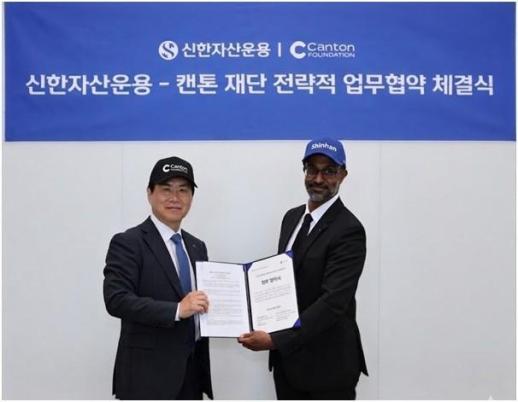 Shinhan Asset Management's Lee Seok-won: Transforming ETFs into Key Players In the financial industry, latecomers have two strategies: follow the leaders or create new markets. Lee Seok-won, CEO of Shinhan Asset Management, chose the latter. A former head of the National Pension Service's strategy division, he has rapidly transformed the organization since taking the helm this year, focusing on ETFs and Target Date Funds (TDF) as dual growth pillars. He is particularly expanding differentiated products centered around the SOL ETF, including high-dividend, covered call, AI semiconductor, and shipbuilding offerings to enhance the company's presence. Lee's entrepreneurial spirit in finance prioritizes understanding customer demand over competing on scale. He is currently experimenting with transforming Shinhan Asset Management into an "irreplaceable partner for customers." Rethinking the ETF Market: A Contrarian Approach The domestic asset management industry has long been dominated by Samsung Asset Management and Mirae Asset Management, making it challenging for latecomers to disrupt the market. Most follow the lead of top products or engage in fee competition. However, Lee's approach was different. Shortly after his appointment, he elevated the ETF business to a strategic priority, establishing a dedicated ETF business group and expanding the organization. He brought in a Chief Investment Officer (CIO) and implemented a group leader system to enhance decision-making speed. This was not merely a reorganization; it was a declaration to make ETFs a future growth driver for the company. The results have been swift. The net assets of the SOL ETF surged from approximately 12 trillion won at the end of 2024 to over 23 trillion won by the end of May 2026, marking an exceptional growth rate in the industry. Notably, products focused on AI semiconductors, covered calls, and high dividends have captured the interest of individual investors, establishing themselves as flagship offerings of Shinhan ETFs. Lee does not view ETFs as mere financial products. He sees them as financial platforms connected to investors' lives. For retirees seeking monthly dividends, he offers covered call ETFs, while growth-oriented investors can access AI semiconductor ETFs. His strategy involves designing products based on customer needs. Ultimately, his approach is straightforward: instead of following the leaders, he aims to create the markets that customers desire. This is the first hallmark of Lee's entrepreneurial spirit in finance. Connecting Pensions and ETFs: Designing a Long-Term Investment Ecosystem Viewing Lee solely as an ETF expert is only part of the picture; his true strength lies in pensions. He previously served as the head of the National Pension Service's fund management division, making him an expert in pension management and long-term asset allocation. This experience is reflected in his management of Shinhan Asset Management. Lee is optimistic about the future of the pension market, as South Korea transitions into a super-aged society, making pensions a significant growth area for the financial industry. Consequently, he is focusing on strengthening the TDF business. By establishing the Shinhan Easy TDF and Shinhan Quick Response TDF systems, he is expanding the market. As a result, the TDF management scale at Shinhan Asset Management has rapidly increased, along with its market share. What he emphasizes is not merely selling products but fostering a culture of long-term asset management. Korean investors still engage heavily in short-term trading. However, in an aging society, long-term investment and asset allocation are crucial. Lee aims to create this investment culture by linking ETFs and pensions. In fact, he stated in an interview, "Maximizing the economic benefits for customers is the reason for an asset management firm's existence," indicating a focus on viewing customer assets from a long-term performance perspective rather than short-term gains. Thus, his management philosophy leans more towards trust than growth. He believes that building trust is essential for customers to entrust their retirement assets. Pensions do not yield results overnight; they require 10 to 20 years. Lee is a CEO who invests in that time. Productive Finance and Digital Assets: A Leader Preparing for the Future Another characteristic of Lee is his interest in future markets. He does not limit himself to ETFs and pensions; he is also active in investing in innovative companies and digital assets. Shinhan Asset Management has established an Innovative Investment Finance Division and launched a Business Development Company (BDC) fund. This represents a prime example of productive finance, aimed at directing capital towards innovative companies. It signifies a commitment to not just managing money but also nurturing growth companies. Lee's interest in digital assets is also high. Recently, Shinhan Financial Group has established a cooperative framework with the Canton Network, which includes global financial institutions. This is a global project aimed at building infrastructure for tokenization and digital assets. Lee envisions enhancing the global competitiveness of Korean financial products through this initiative. This is not merely about adopting technology. He sees the future of finance shifting towards digital assets and tokenization. While it may not be a large market now, he believes it could become a crucial component of financial infrastructure in the future. Especially in the age of AI, he emphasizes to his team members, "Let’s become irreplaceable talents." In an era where AI replaces simple tasks, expertise and differentiation become increasingly important. This message applies not only to the organization but also to Shinhan Asset Management itself. In the ETF market, pension market, and digital asset market, the goal is to become an irreplaceable asset manager. Ultimately, Lee's entrepreneurial spirit in finance can be summarized in three pillars: customer-centricity, long-term investment, and future innovation. He is currently working to transform Shinhan Asset Management from a mere asset manager into a lifelong partner for investors. SWOT Analysis:Strength: Lee has extensive experience in long-term asset allocation and pension management as a former head of the National Pension Service's strategy division. He has rapidly restructured the ETF organization and led the growth of the SOL ETF while balancing the simultaneous growth of pensions and ETFs.Weakness: Compared to Samsung Asset Management and Mirae Asset Management, Shinhan Asset Management still has limited market dominance and brand power. The growth of ETFs is also concentrated in a few popular products, which poses a challenge.Opportunity: The expansion of the pension market due to aging, the increase in individual investor ETF participation, and the growth potential of digital assets and tokenization present significant opportunities for Shinhan Asset Management.Threat: Intensifying fee competition in the ETF market, polarization in the asset management industry, and increasing global market volatility remain ongoing risks. Regulatory changes related to digital assets also pose uncertainties.* This article has been translated by AI. 2026-06-07 12:39:00
 -
 South Korea posts 2nd-fastest OECD growth on chip boom, but long-term risks mount SEOUL, June 7 (AJP) - South Korea posted the second-fastest economic growth among major economies in the first quarter, driven by a semiconductor boom. According to data released by the Organization for Economic Co-operation and Development (OECD) on Sunday, South Korea's real gross domestic product (GDP) grew 1.7 percent in the first three months of this year, ranking second among 35 member countries. Only Denmark grew faster at 1.9 percent, while the OECD average stood at 0.4 percent. South Korea's strong performance marked a dramatic reversal from the fourth quarter of last year, when its economy contracted 0.2 percent and ranked near the bottom among OECD member countries. The rebound has been fueled largely by strong semiconductor exports as global demand for artificial intelligence (AI)-related technology continues to surge, prompting international organizations and investment banks to raise their growth forecasts for South Korea. Robust exports have also pushed the country's current account surplus to record levels. The cumulative current account surplus reached an all-time high of $102.7 billion in the first four months of this year, more than four times the level recorded a year earlier. Reflecting this trend, the OECD recently raised its growth forecast for South Korea to 2.6 percent from 1.7 percent, while several global investment banks have become even more optimistic, with some projecting economic growth of around 3 percent this year. The OECD expects the surplus to expand further, potentially reaching around 10 percent of GDP by 2027 if exports remain strong. South Korea is "projected to have a sharp increase in its external balance, from 6.6 percent of GDP in 2025 to around 10 percent of GDP in 2027, helped by continued strong IT-related exports," it said. Despite the upbeat outlook, concerns remain over the country's long-term growth potential, as the OECD projects that South Korea's potential growth rate, a measure of how fast the economy can grow without triggering inflation, will fall to 1.52 percent next year and dip below 1.5 percent by late 2027, the lowest level since it began compiling such data. The contrasting outlook suggests that South Korea's short-term economic strength, powered by a historic chip boom, masks longer-term challenges including an aging population, slowing labor productivity, and weak domestic demand. The weakening won also adds to worries, as the currency recently fell to around 1,560 against the greenback, its weakest level in more than 17 years, last seen during the global financial crisis in March 2009 when it hit almost 1,600. Consumer prices also rose 3.1 percent last month from a year earlier, surpassing the 3 percent mark for the first time in more than two years. Financial officials said the economy remains fundamentally sound, pointing to record current account surpluses and strong exports, though they admitted that rising import costs and a weaker currency could weigh on households and businesses in the months ahead. 2026-06-07 12:29:20