

Journalist

Park Jong-ryeol
-
 AI Reduces Work Hours by 1.5 Weekly, But Productivity Gains Lag A recent analysis by the Bank of Korea revealed that while the introduction of artificial intelligence (AI) has reduced work hours by an average of 1.5 hours per week, it has not translated into increased productivity. This phenomenon, termed 'productivity disconnect,' arises because AI implementation has not led to organizational redesign or workforce reallocation. According to the 'BOK Issue Note: Does AI Increase Productivity? An Analysis of Initial Three-Year Effects' released on June 7, AI usage has been shown to shorten work hours by an average of 3.8%. This equates to a savings of approximately 1.5 hours per week. The time-saving effects of AI are particularly pronounced among low-skilled workers and those who heavily utilize AI. The Bank of Korea noted that as proficiency in AI increases, the marginal efficiency gains from technology adoption also rise. Furthermore, AI helps to mitigate productivity gaps among low-skilled workers by compensating for their lack of experience. When translating these reductions in work hours into potential productivity gains, the Bank estimates an increase of about 1.0%. However, the time saved through AI usage has not resulted in actual production increases. The correlation between individual reductions in work hours and increases in work output was estimated to be zero. The Bank explained that while AI has improved efficiency at the individual task level, its benefits have not spread to enhance overall workflow, organizational structure, or workforce reallocation, leading to the observed 'productivity disconnect.' Bottlenecks in production processes and distortions in performance reward systems were also identified as factors hindering productivity transformation. Conversely, groups with strong performance incentives and high job autonomy have seen productivity gains. This includes self-employed individuals, professionals, and intensive AI users. By age group, younger workers (ages 15-39) increased their output by approximately 0.6 percentage points more than those aged 50-64. The Bank interprets this as a result of younger workers' greater adaptability to digital technologies, allowing them to connect AI usage more effectively to productive activities. In terms of occupation, professionals increased their output by 0.7 percentage points more than office workers, while the top 50% of AI users demonstrated a 0.5 percentage point greater improvement in productivity compared to the lower half. This suggests that higher intensity of AI use is likely to overcome initial friction costs, such as learning expenses and validation burdens, leading to tangible productivity enhancements. Oh Sam-il, head of the Bank's Employment Research Team, stated, "Currently, AI has entered the 'efficiency' stage but has not yet fully transitioned to the 'productivity' stage. This can be viewed as a typical transition process in the early stages of adopting a general-purpose technology. Depending on future policy responses and changes in corporate organization and labor market structures, the productivity trajectory could change significantly." He added, "To realize the productivity effects of AI, it is crucial to redesign work processes and organizational structures, reallocate job roles, and establish performance-based incentive systems. Continuous monitoring of changes in the skill development pathways for younger workers is also necessary."* This article has been translated by AI. 2026-06-07 12:03:00
 -
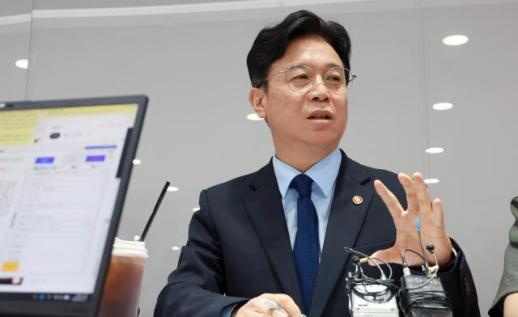 Labor Minister Kim Young-hoon to Discuss AI and Labor Solutions at ILO Conference Minister of Employment and Labor Kim Young-hoon will address global labor standards at the International Labour Organization (ILO) conference, focusing on the theme of "people-centered artificial intelligence (AI) transition." He plans to lead an unprecedented delegation that includes representatives from the National Assembly, the Economic, Social and Labor Council, and labor and management to share South Korea's experiences in labor policy and social dialogue in the AI era.According to the Ministry of Employment and Labor, Minister Kim will attend the 114th ILO Conference in Geneva, Switzerland, from June 8 to 10 as the chief government representative.The ILO Conference is the highest decision-making body of the organization, involving representatives from 187 member countries, including government, labor, and employer representatives, to discuss international labor standards and key labor issues. This year's conference will focus on the impact of AI on the labor market and the creation of quality jobs.In his speech on June 10, Minister Kim will outline the South Korean government's labor policy direction under the theme of "people-centered AI transition." He will emphasize the importance of maintaining human dignity and the value of labor amid rapid advancements in AI technology and changes in industrial structure, while also discussing the protection of workers' rights, strengthening social safety nets, and policies for industrial transition based on social dialogue.Notably, this conference will see participation from the National Assembly and social dialogue organizations. Lawmakers Lee Hak-young, Kim Wi-sang, Kim Joo-young, and Kim Hyung-dong, along with Kim Ji-hyung from the Economic, Social and Labor Council, will share South Korea's interest in global labor issues and experiences in social dialogue regarding AI and industrial transition.During the conference, Minister Kim will also meet with ILO Director-General Gilbert Houngbo to discuss ways to enhance cooperation between South Korea and the ILO. This meeting is expected to further detail discussions held during Houngbo's visit to South Korea last month regarding sharing employment and labor policy experiences and cooperation in the AI sector.Additionally, Minister Kim will present South Korea's ongoing cooperation projects in the employment and labor sector aimed at developing countries. The ministry plans to host a "Korea-ILO Cooperation Project Partnership Reception" during the conference to share project outcomes with delegations from Cambodia, Vietnam, Mongolia, and Paraguay. This initiative supports improvements in vocational training, youth employment, industrial safety, and social economy, with an investment of 16.6 billion won from 2024 to 2026.Minister Kim will also engage in labor diplomacy with major European countries. He is invited by the French government to attend a G7 labor ministers' reception and plans to meet with the Dutch Minister of Social Affairs and Employment and the Spanish Minister of Labor and Social Economy to discuss responses to AI industrial transition, social dialogue, and labor market changes.Following the conference, a delegation including members of the National Assembly, the Economic, Social and Labor Council, the Korean Confederation of Trade Unions, and the Korea Employers Federation will visit Germany. The delegation will examine how Germany has managed conflicts through labor-management-government dialogue during the AI and digital transition and will present South Korea's "Labor-Inclusive Industrial Transition" policy.A ministry official stated, "As the impact of AI and digital transition on the labor market grows, this will be an opportunity to strengthen international cooperation and share South Korea's policy experiences. We plan to actively promote the importance of people-centered principles and social dialogue during the industrial transition process."* This article has been translated by AI. 2026-06-07 12:03:00
 -
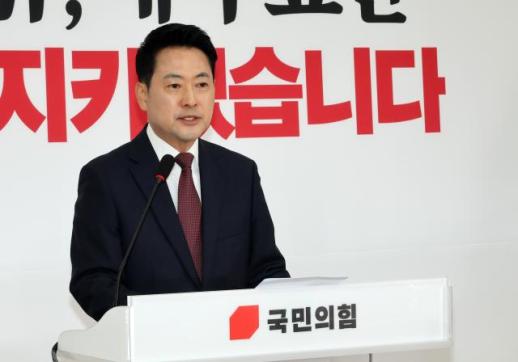 Jang Dong-hyuk Calls for Meeting with President Lee on Election Issues Jang Dong-hyuk, the leader of the People Power Party, publicly proposed a meeting with President Lee Jae-myung on June 7, stating, "Anytime today or in any format would be acceptable." The meeting aims to convey citizens' concerns regarding the ballot shortage during the June 3 local elections and to seek a responsible response from the president. During a press conference at the National Assembly, Jang emphasized the need for the government to provide a satisfactory answer to the youth protecting Olympic Park, demanding an immediate response from President Lee. He criticized President Lee and the Democratic Party for ignoring the growing calls for by-elections across the country. Referring to the gatherings at Olympic Park as a "well-organized civic resistance movement," Jang warned, "If anyone tries to silence the voices of the citizens and trample on legitimate resistance, they will face the judgment of the people." Additionally, Jang urged the ruling party to initiate a national investigation and special prosecution aimed at reforming the National Election Commission and the Public Election Act. He stressed the importance of the National Assembly fulfilling its duty to clarify the situation and hold responsible parties accountable. However, he noted that in the current climate where citizens are demanding by-elections, investigations and special prosecutions alone are not ultimate solutions. He emphasized the need for sufficient and responsible measures to calm public anger and allow citizens to return to their daily lives. Jang stated, "We cannot delay the public demand for reform of the Election Commission and the electoral system. If we dismantled a functioning prosecution, we cannot leave the far more serious Election Commission untouched." He also argued for the elimination of early voting, suggesting that dismissing claims of electoral fraud is not enough; rather, the roots of such claims must be addressed. He proposed that abolishing early voting and extending the voting period to three days could be potential solutions, clarifying that the goal is not to restrict voting rights but to enhance the process while eliminating controversy.* This article has been translated by AI. 2026-06-07 11:51:00
 -
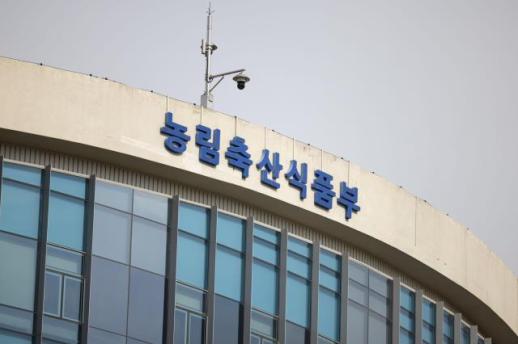 Agriculture Ministry Awards 45 Million Won to 11 Officials for Outstanding Achievements On June 7, the Ministry of Agriculture, Food and Rural Affairs announced that it has awarded a total of 45 million won to 11 officials, including Jeon Han-young, the Director of Rural Policy, for their exceptional achievements.According to the ministry, Minister Song Mi-ryong presented special awards and commendations to employees who delivered outstanding results that the public can feel during a ceremony held at the Government Sejong City Complex on June 5.This award follows President Lee Jae-myung's directive at a Cabinet meeting last year to ensure that civil servants who achieve exceptional results receive significant rewards. The ministry established a plan for special performance awards in February, incorporating both internal recommendations and public nominations through its website for achievements that resonate with citizens.The first round of special performance awards this year considered a total of 17 nominations for exceptional achievements from the first quarter of the year since the new government took office. A rigorous evaluation process involved both internal and external experts, as well as a public evaluation panel, with a strong emphasis on results from an 'online perception evaluation' where citizens participated directly. Ultimately, 11 individuals were selected, including one at the director level, five at the section chief level, and five at the assistant level.The reform of the wholesale market distribution structure was highlighted as the most significant achievement. The ministry awarded 6 million won to Kim Jun-hyun, a senior official, for his contributions to enhancing the public functions of the wholesale market, such as stabilizing price volatility and supporting producers. Additionally, 4 million won was awarded to Song Tae-hung, an assistant official, for establishing a competitive framework among wholesale corporations to protect the interests of producers and consumers.Another notable achievement was the early consumption of some new grains through a grain loan system, which was recognized for alleviating supply burdens during the harvest season and contributing to stable supply management. Jeong Jeong-hee, a senior official, and Park Jeong-gon, an assistant official, received 5.5 million won and 4.5 million won, respectively, for their roles in interpreting relevant laws to create a new rice supply stabilization strategy.Policy promotion was also cited as a key achievement. Jeon Han-young, recognized for maintaining the highest number of subscribers on the central government's YouTube channel through innovative promotional planning, received 5 million won. The ministry praised his passionate efforts in communication, stating that he opened new horizons for policy engagement.The Ministry of Agriculture, Food and Rural Affairs plans to regularly award special performances on a quarterly basis to its headquarters and affiliated institutions, while also providing ad-hoc awards for exceptional achievements to foster a culture of innovative performance across the public sector.Minister Song Mi-ryong stated, "Civil servants who create exceptional results must receive corresponding rewards," adding, "We will continue to generate innovative policy outcomes that citizens can feel through fair evaluations and significant rewards."* This article has been translated by AI. 2026-06-07 11:45:00
 -
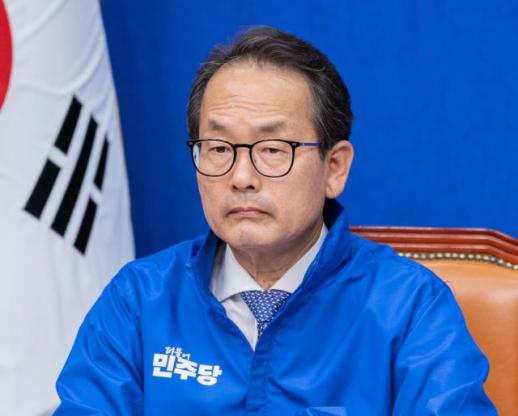 Ruling Party Criticizes Opposition's Handling of Election Management Issues Kang Jun-hyun, the chief spokesperson for the Democratic Party, criticized Jang Dong-hyuk of the People Power Party on June 7 for politicizing the Election Commission's management of ballots, urging him to stop the political theatrics aimed at gaining political leverage. During a press briefing at the National Assembly, Kang noted, "There is a growing sentiment within the People Power Party to blame all causes and responsibilities on President Lee Jae-myung." He expressed concern over the party's tendency to obscure its core issues and engage in relentless attacks, stating, "The fundamental problem lies in the poor election management caused by a shortage of ballots." Kang emphasized that while the Election Commission is an independent body under the Constitution, the government and ruling party have not shied away from addressing the issues. He added, "The Democratic Party has committed to all accountability measures, including a national investigation, and we are also considering reforming the Election Commission." He further pointed out, "President Lee has also declared a firm commitment to holding the Election Commission accountable," and criticized the People Power Party for solely blaming the president while ignoring the real issues at hand. Kang concluded by stating, "One of the significant messages from this election is a warning to the People Power Party, and I hope they take it to heart. If they wish to call for a national investigation or a special prosecutor, they must first cooperate in the formation of the National Assembly's second half of the term." 2026-06-07 11:36:00
 -
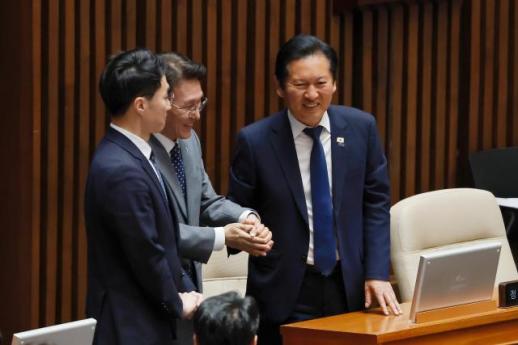 Conflict Erupts in Democratic Party Over Leadership Issues and Election Results The Democratic Party achieved a majority victory in the June 3 local elections and by-elections, emphasizing issues like the impeachment of the president. However, the party lost control of the capital city, Seoul, and suffered defeats in four by-elections, leading to claims of a "half-hearted victory." This has intensified factional conflicts as the party prepares for its upcoming leadership contest. According to political sources on June 7, some party members are criticizing the leadership of Jung Cheong-rae, while others argue that the impact of the special prosecutor law pushed by pro-Lee Jae-myung factions and the president's strong real estate regulations played significant roles in the election outcomes. Kim Yong, a former deputy head of the Democratic Research Institute and a close aide to President Lee, expressed his dismay on Facebook on June 6, stating, "I was left speechless watching the local election results unfold. Jung's perception that this election was a nationwide victory for the Democratic Party, while the loss in Seoul is painful, reflects a disconnect from public sentiment." He added, "Now is not the time to celebrate a victory with a tally of 12 to 4. The heavy responsibility for strategic failures and absence must be shouldered by the party leadership, including the party leader." On the same day, Prime Minister Kim Min-seok addressed the KBC '2026 New Honam Forum' in Gwangju, stating, "Some view the election results as a victory, while others see them as insufficient. We must transform the tension following the election into an opportunity for innovation by firmly grasping two clear paths forward." However, some lawmakers believe it is unfair to place the blame for the loss in Seoul solely on Jung. They argue that the public's anger over real estate issues and the backlash from the special prosecutor law, which granted authority to dismiss charges, cannot be overlooked. During the election period, President Lee demonstrated a strong commitment to real estate regulations and pushed for a national investigation into alleged election manipulation led by pro-Lee factions. Following the introduction of the special prosecutor law related to incidents involving President Lee, the opposition party, People Power Party, formed a coalition to resist what they termed the "disregard for the public's judgment." Additionally, there have been criticisms that the government and ruling party politicized the controversy surrounding the May 18 Tank Day. People Power Party leader Jang Dong-hyuk countered during the campaign by promoting the idea of "freedom for a cup of coffee." In response, Senior Spokesperson Kang Jun-hyun held a press conference, stating, "There may be differing opinions, and we will establish an evaluation committee that includes internal and external experts to conduct a thorough analysis." Meanwhile, some analysts interpret the current factional competition within the Democratic Party as intensifying ahead of the August party convention. Jung is reportedly seeking re-election, while Prime Minister Kim is expected to resign from his position to pursue party leadership. Former party leader Song Young-gil, who recently re-entered the National Assembly through the by-elections, is also mentioned as a potential candidate for party leader. 2026-06-07 11:36:00
 -
 Chungbuk's Future Rests on Becoming an AI Startup Hub "Governor, you have stated your intention to make Chungbuk a startup special zone. In ten years, should Chungbuk be remembered as a region producing semiconductors and biopharmaceuticals, or as the area that birthed the most AI entrepreneurs in South Korea?" Chungbuk has always been at the center of South Korea. Located in the heart of the country, it serves as a transportation hub connecting the capital region with Yeongnam and Honam. With the growth of Osong's biopharmaceuticals, Ochang's semiconductors, and Chungju's advanced industries, it has played a crucial role in the nation's manufacturing sector. However, Chungbuk faces another challenge. While industries grow, young people are leaving, and although factories are increasing, the region's future remains uncertain. Newly elected Governor Shin Yong-han has directly addressed this issue. He emphasized integration, harmony, livelihood, and jobs, presenting 'Startup Special Zone Chungbuk' as the core vision of his administration. This declaration marks a shift from creating industrial complexes to fostering a startup ecosystem. Chungbuk now stands at a crossroads: will it remain an industrial center, or leap forward as the hub of entrepreneurial innovation in the AI era? The startup special zone is Chungbuk's survival strategy. The biggest crisis facing local governments in South Korea is population decline. However, this decline is merely a symptom; the root cause lies in the lack of job opportunities, which stems from the absence of new businesses. The essence of regional extinction ultimately lies in the lack of entrepreneurship. Shin Yong-han's emphasis on the startup special zone during his campaign reflects this understanding. In a post-election interview, he stated that he would create an environment where Chungbuk's talent no longer migrates to the capital region but instead starts businesses and grows locally. He also promised to establish a 200 billion won investment fund and a system for failed entrepreneurs to make a comeback. This aspect should not be viewed merely as an economic pledge. Historically, local governments have competed to attract businesses, measuring success by the number of industrial complexes and factories established. However, in the AI era, the rules of competition are changing entirely. It is no longer factories that hold the competitive edge, but people; not buildings, but ideas; and not budgets, but ecosystems. Silicon Valley became the global center of innovation not because of massive factories, but due to the presence of Stanford University, entrepreneurs, investors, and a culture that embraces failure. Similarly, Shenzhen, once a manufacturing city, has now become a symbol of entrepreneurship and innovation. Ultimately, a region's future competitiveness will likely be determined by how many businesses it fosters rather than how many it attracts. In this context, Shin Yong-han's vision for a startup special zone represents both a strategic and survival plan for Chungbuk. It signifies a shift from a factory-centered economy to one focused on entrepreneurship. Can AI startups thrive in a land known for semiconductors and biopharmaceuticals? Chungbuk's greatest strength lies in its existing foundations for future industries. Osong is home to biopharmaceuticals, Ochang to semiconductors, and Chungju and Jincheon are developing battery industries. Cheongju Airport is evolving into a central airport for the region, and the Gangho Axis is positioning Chungbuk as a new national growth axis. The challenge is that these assets have yet to be connected into a cohesive ecosystem. Industries grow independently, universities operate separately, research institutes function in isolation, and entrepreneurship remains in a different realm. In the AI era, this fragmentation becomes a significant weakness. Today, most innovative companies that drive the world emerge at the intersections of different industries. New value is created when AI meets biopharmaceuticals, semiconductors connect with software, and manufacturing converges with data. Chungbuk possesses that potential. If biopharmaceutical companies in Osong connect with semiconductor firms in Ochang, if local university research leads to startups, and if investment capital links with regional startups, Chungbuk can evolve from a mere industrial base to an innovation hub. In the AI era, competitiveness will no longer stem from production capacity but from connectivity. Who can connect more talents? Who can link more technologies? Who can unite more ideas? These factors will determine the future. Chungbuk is home to 19 universities, graduating numerous young people each year. However, many leave for the capital region. The issue of talent outflow that Shin Yong-han emphasizes is ultimately related to this context. The future of Chungbuk is likely to be determined not by the number of semiconductor factories but by the number of young people who remain in the region. The success of the startup special zone also hinges on this. Many people perceive Chungbuk's competition as being with Daejeon or Sejong, given Daejeon's status as a research and development hub and Sejong's role as the administrative capital. However, competition in the AI era does not operate in that manner. Chungbuk's competitors are not specific regions but cities with innovative ecosystems. Chungbuk's true competitors are cities like Austin in the U.S., Tel Aviv in Israel, and Shenzhen in China. The commonality among these cities is that entrepreneurship is at the heart of their local economies. Shin Yong-han, who has experience as a CEO and venture investment expert, stated during his campaign announcement that "we need a serving manager, not a ruling administrator." This statement is not mere political rhetoric. It signifies a shift from an administration-centered governance model to an economy-centered one. In the past, local governments focused on budget allocation. Moving forward, their role must be to nurture entrepreneurs, connect investors, and build innovative ecosystems. In the AI era, local governments must also become platforms. A platform where entrepreneurs gather, investors converge, and universities and businesses connect. If Chungbuk succeeds in becoming a startup special zone, it will not only transform itself but could also redefine the model for regional development across South Korea. This marks a transition from an era of creating industrial complexes to one focused on establishing startup ecosystems. The success of Shin Yong-han's administration ultimately depends on this. What matters more than how much budget has been secured is how many young people remain in Chungbuk. More significant than the number of companies attracted is how many new businesses are born. More critical than the number of buildings constructed is how many new entrepreneurs emerge. Shin stated, "I want to be evaluated based on results as a governor." Thus, in four years, Chungbuk residents will have clear questions to ask: How many AI startups has Chungbuk created? How many young people has Chungbuk retained? How many future jobs has Chungbuk generated? If these questions can be answered, Chungbuk could become South Korea's first true startup special zone. SWOT Analysis: Strengths: Chungbuk is one of the few regions with a biopharmaceutical cluster in Osong, a semiconductor industrial complex in Ochang, and a foundation for battery industries. It also has transportation infrastructure, including Cheongju Airport and the Gangho Axis. Additionally, Governor Shin Yong-han's clear vision for a startup special zone is a significant strength. Weaknesses: The scale of the startup ecosystem is smaller compared to the capital region, and the venture investment market is limited. There is a continuous outflow of talented individuals to the capital region, and concerns about a lack of experience in regional administration persist. Opportunities: The AI revolution presents new opportunities for Chungbuk. By combining semiconductors, biopharmaceuticals, and battery industries with AI, a new startup ecosystem can be established. The development of the Gangho Axis and policies for balanced regional development can also serve as growth drivers. Threats: The concentration of resources in the capital region remains strong. Competition with Daejeon and Sejong is fierce. If the startup special zone remains merely a support initiative and fails to build an ecosystem, it will struggle to achieve results. ABC asks Governor Shin Yong-han. 2026-06-07 11:36:00
 -
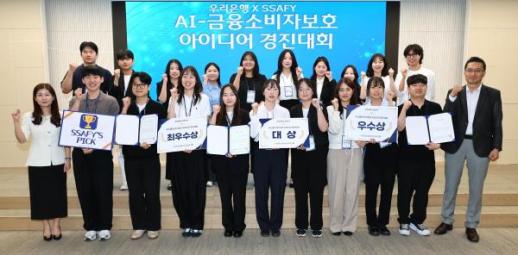 Woori Bank Hosts AI-Driven Financial Consumer Protection Idea Contest Woori Bank is collaborating with young talent to develop financial consumer protection solutions using artificial intelligence (AI).On June 5, Woori Bank held the 'AI-Financial Consumer Protection Idea Contest' in partnership with students from the Samsung Software-AI Academy (SSAFY).The contest aimed to generate practical ideas that utilize AI technology to address issues in financial consumer protection. Participants proposed various solutions focused on improving financial accessibility for vulnerable groups and preventing new forms of financial fraud amid the rapid digitalization of finance.A total of 116 teams entered the preliminary round, with seven teams advancing to the finals. The finalists presented AI applications in four areas: protecting the rights of vulnerable groups, preventing mis-selling, avoiding complaints, and preventing financial fraud.The grand prize was awarded to the 'Woori Guard' team for their proposal of an AI-based pre-designated protection system for individuals with dementia. This solution was highly regarded for its potential to safeguard consumer rights even in situations of cognitive decline.The excellence award went to the 'Garados' team, which suggested an AI safety net that protects financial transactions for Woori WON mobile subscribers, covering everything from calls and texts to transfers. The 'Haejuri Fan Club' team received the merit award for their proposal of a customized financial support service called 'Woori On Fit AI,' which suggests necessary financial tasks and helps prevent unfavorable choices.Following the finals, additional programs were held for participants, including a visit to the bank's museum and a special lecture on consumer protection.A Woori Bank official stated, "We have confirmed that the ideas from young people can significantly contribute to protecting the rights of financial consumers through AI technology. We will support the implementation of these proposals to create a more convenient financial environment."* This article has been translated by AI. 2026-06-07 11:24:00
 -
 U.S. Military Shoots Down Two Iranian Drones in Hormuz Strait The U.S. military has shot down two Iranian suicide drones in the Hormuz Strait. The U.S. Central Command announced on June 6 that it intercepted the drones, which were threatening international maritime traffic in the region. The command stated, "We are maintaining a defensive posture in response to Iran's aggressive actions." Earlier that day, Central Command reported the downing of four Iranian suicide drones launched toward the Hormuz Strait. Hours later, Iran reportedly fired seven ballistic missiles at U.S. bases in Kuwait and Bahrain, leading to further localized clashes between the two sides.* This article has been translated by AI. 2026-06-07 11:15:00
 -
 New Regulations Enhance Traceability for Imported Frozen Mackerel and Pollack Traceability regulations for imported seafood, including frozen mackerel and pollack, are set to be strengthened. The Ministry of Oceans and Fisheries announced that it will enhance oversight of the distribution process from the moment seafood is imported until it reaches consumers' tables, allowing for quick identification of distribution routes in case of issues.Starting June 29, the ministry will implement revised guidelines for the traceability of imported seafood. This revision extends the designated period for 22 existing items until April 30, 2029.To ensure transparency in the distribution of imported seafood, the ministry has been enforcing a traceability management system. Under this system, importers and distributors of designated seafood must report transaction details at each distribution stage, from customs clearance to final sale.The recent revision adds five new items to the list, including frozen mackerel, frozen pollack, frozen squid, and both frozen and chilled squid. The designated period for the previously managed items, such as eel and frozen yellow croaker, has also been extended to April 30, 2029. As a result, the total number of items under traceability management has increased from 22 to 27.Companies involved in the import and distribution of these items are required to report to the National Fisheries Products Quality Management Service within five days of receiving the seafood, either electronically or in writing. This reporting obligation applies to both importers and distributors. Online reporting is available through the service's traceability system website.Park Seung-jun, Director of Aquaculture and Fisheries Policy at the Ministry of Oceans and Fisheries, stated, "This revision strengthens the foundation for thoroughly tracking and managing the entire distribution process of frequently consumed imported seafood."* This article has been translated by AI. 2026-06-07 11:12:00